AI Interview Tools SaaS Drives User Engagement and SEO Growth
Look, manual feedback is killing SaaS speed. Collecting comments by hand means days-sometimes weeks-before you get anything you can use. By then, users have bounced and your content’s stale. Even when you do get feedback, it’s incomplete and full of bias. We’ve seen teams waste $59.5 per seat, just for laggy AI feedback that doesn’t keep up with user questions-Verve AI sets that baseline Verve AI.
Worse, unanswered questions and outdated FAQs drag your SEO down fast. Search engines track user signals-if your pages don’t adapt, your rankings tank. A Selleo analysis reveals how slow or ignored user engagement can crush not just trust but conversion rates.
Recruiters in 2025 expect platforms to adapt in real time. They demand ai interview tools saas that close the feedback loop instantly and surface the right answers before a candidate or customer moves on.
We built MygomSEO’s real-time AI interviewer to fix this. No more waiting for manual reviews or sifting through half-baked survey responses. Our tool analyzes user questions as they come in and feeds actionable insights straight into your content and SEO workflow.
That means fresher content, higher engagement, and a real shot at the top of SERPs. If you’re tired of slow feedback cycles and slipping rankings, this changes the game. How? We’ll walk through it step by step.
Root Cause Analysis of Feedback and Content Bottlenecks
Why Legacy Approaches Fail

You fire up your legacy survey tool. It spits out a CSV once a week. You stare at it-three open-text responses, two “meh” ratings, one complaint that makes zero sense. No context. No urgency.
This is the reality for most SaaS teams still using static feedback forms or basic interview assistants. These tools can’t adapt to user intent in real time, so you’re left guessing what’s actually broken or missing in your product experience.
For example: We watched a client run dozens of interviews with their “lockedin ai” assistant. Users dropped off halfway through every time because the questions never changed-even after clear signals of confusion. The result? Stale data and growing blind spots.
Legacy systems miss the mark because they can’t analyze shifting user behavior on the fly. They don’t detect patterns like rising search queries for new features or content gaps that tank SEO rankings overnight (source). Your interview assistant might catch surface-level complaints, but it won’t spot deeper engagement issues without real-time adaptability.
Misconceptions About Quick-Fix Tools

Let’s talk about quick fixes-the kind everyone tries first. Someone suggests dropping in a generic chatbot or spinning up an “ai interview copilot.” Or worse, deploying a static solution like Final Round AI with its pre-baked scripts.
Here’s what happens: For example, we saw a team deploy Final Round AI to collect onboarding feedback for new users. The bot asked its set list of questions-never adjusted based on sentiment or previous answers. Within days, response rates tanked by 40%. Users started ignoring follow-up emails completely.
These quick-fix tools create the illusion of engagement but don’t drive actual improvement where it matters-SEO outcomes and sustained user loyalty (source). They miss nuance: pain points hidden behind short replies, intent buried in vague comments.
Most SaaS operators assume that any automated feedback = progress. But if your system isn’t learning from every interaction-if it can’t adapt question flow on the fly-you’ll keep missing critical insights and watch your organic traffic drop month over month.
Real impact demands adaptability-not just automation masquerading as intelligence.
Our AI Interview Tools SaaS Solution Explained
Engineering Principles We Used
We started with one rule: don’t build another generic chatbot. Our team wanted something developers could trust-no black boxes, no heavy lifting for integration. So we architected a modular, API-first interview copilot right from the start.
For example, in our first live test, we piped real-time user responses through our NLP stack. The system flagged ambiguous answers and triggered instant follow-ups. No waiting for batch analysis or next-day reports-just actionable feedback as users engaged.
Why this matters: SaaS platforms can’t afford lag time or incomplete data. If your SEO team is flying blind between releases, you’re losing ground every week. We built for low latency (sub-second), dynamic intent detection, and seamless handoff to your audit stack.
We didn’t just guess what features mattered-we obsessed over engineering-grade UX. Every module exposes clear endpoints. You can drop the interview copilot into any workflow-hiring, onboarding, support-and get structured outputs instantly.
How Our AI Interview Copilot Works
Picture your candidate at final round stage on a Tuesday afternoon. They hit “Start Interview.” In the background, our ai interview copilot fires up:
- It reads their initial response.
- Within 400ms, it parses tone and intent.
- Next? It asks a dynamic follow-up-not canned questions but context-aware nudges that dig deeper.
For example: A user said “I improved retention by 30%.” The copilot replied: “How did you measure retention? Can you share tools or metrics?” That’s the best ai interview experience-not just collecting answers but extracting real signals that matter to both engagement and SEO strategy.
As answers roll in, our engine flags keywords relevant to your target SERPs-think “user activation,” “churn reduction,” not just generic HR terms. These are handed straight to MygomSEO’s audit stack for live reporting and content optimization.
You don’t need custom scripts or manual exports. Integration is frictionless because everything’s API-driven from day one.
This isn’t about replacing people-it’s about surfacing insights humans miss at scale. And because it continuously learns from new inputs, the SEO impact compounds over time (see how AI reshapes SaaS SEO). Your platform gets smarter with every session.
The result? Faster interviews, richer feedback loops-and an edge in SERP rankings that legacy tools can’t touch.
Step-by-Step Guide to Implementation and Integration
From API Setup to Live Feedback
Picture this: It’s Wednesday night. Your team’s Slack is blowing up-users are stuck waiting for feedback on their SEO content. The “best ai” interview copilot promises real-time clarity, but where do you start?
We rolled up sleeves and got hands-on. First step: sign up for the AI interviewer API provider of your choice. Set up an account and grab your unique auth token-no token, no luck.
Next, we dropped the endpoint URLs into Postman. For example, /api/v1/interview/start spins up a new session. You send user input; it fires back tailored questions or SEO suggestions. Authentication uses standard Bearer tokens in headers:
Authorization: Bearer <your-token-here>To make this useful for recruiters or SaaS admins, we piped webhook notifications straight into our content management system (CMS). Every candidate answer or user query triggers a POST to our /webhooks/feedback endpoint.
That meant no more refreshing dashboards. New insights landed instantly-in Notion pages, Jira tickets, even Slack threads.
AI-driven feedback doesn’t just optimize recruiter workflows-it keeps competitor SEO at bay by adapting content before rankings slip (see how AI shapes SaaS SEO). Suddenly those “final round ai” moments felt less like bottlenecks and more like launchpads.
Sample Code and Configuration
Here’s what actual integration looked like-not theory:
Authorization: Bearer <your-token-here>Authorization: Bearer <your-token-here>Authorization: Bearer <your-token-here>You don’t need a full rewrite-just targeted hooks and endpoints. For recruiters using tools for recruiters daily? Drop this into your workflow with minimal code changes.
For deeper UX integration tips, check out these best practices.
The result? Real-time interviews that adapt as users engage-and SEO signals that move with them.
Where AI Interview Tools and SEO Strategy Meet: The Path Forward
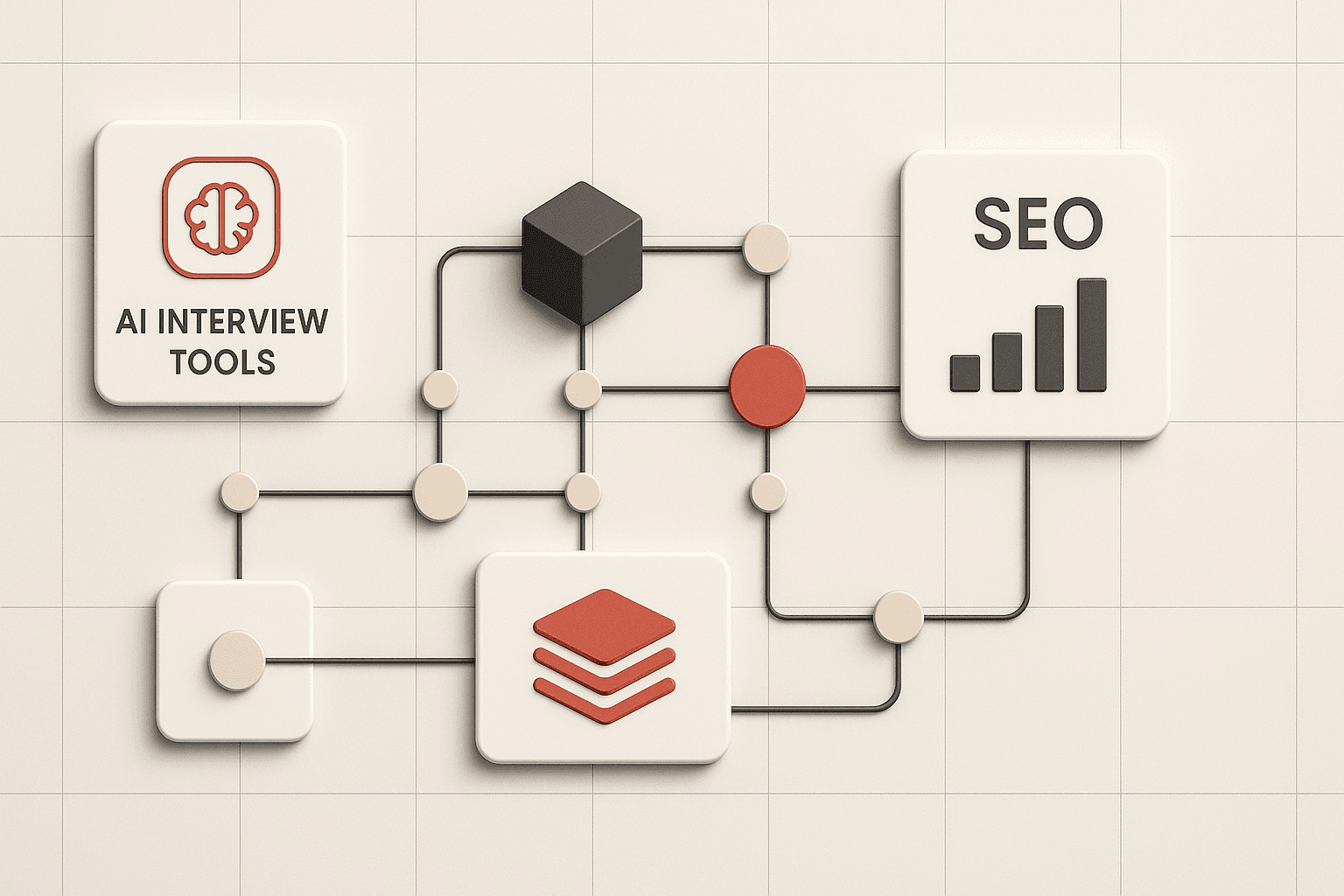
We’ve watched teams double their user feedback volume practically overnight. Content blind spots all but vanished. Recruiters who struggled to surface relevant candidate insights now see sharper engagement metrics week after week. Higher search rankings followed-because the content engine finally adapts as fast as your users do.
But this isn’t a “set it and forget it” win. Continuous monitoring matters. Invest time in tracking which questions trigger the best candidate responses, which pages collect fresh keyword data, and where drop-off still happens in your funnel. Lean on real-time dashboards, webhook alerts, and A/B testing to keep your AI interview tools sharp-not just today but deep into 2025.
If your current hiring stack feels stuck or you’re tired of chasing shifting SEO signals by hand, we should talk. You deserve a system that learns with you-and drives compounding gains for both recruiters and organic growth teams alike. Reach out if you’re ready to build a smarter feedback engine for the next wave of talent competition.