AI Schema Markup SEO Strategies That Prepare Your Business for AI Search

Why are some sites skyrocketing in AI-powered rankings, while others get left behind-even with strong content and links? The answer is simple: AI schema markup SEO is now the lynchpin for visibility in an era where search engines think less like a robot, and more like a human. Gone are the days when stuffing keywords did the trick. Google’s latest AI algorithms don’t just match strings-they extract meaning, context, and relationships between entities. Schema markup is the structured language that teaches these algorithms what your business, products, or articles actually represent.
This shift isn’t theory-it’s happening right now. Google’s AI systems use schema to decode everything from your software’s features to your company’s reputation, connecting dots traditional search never could. As outlined by Schema App, businesses using robust schema are seeing richer results, smarter recommendations, and higher click-through rates-all because they speak the language of AI (SchemaApp). The stakes keep climbing as search gets more conversational and context-driven. If your site doesn’t feed structured data to these new engines, you’re invisible to their advanced understanding.
Ignoring structured data isn’t just risky-it’s strategic malpractice for anyone serious about future-proof SEO. Leaving out schema means leaving out context. That leads to missed visibility in Google’s Knowledge Graph, weak eligibility for featured snippets, and lower chances of surfacing in AI-powered recommendations (TurkerMetal). In a landscape where AI determines what gets seen (and what doesn’t), structured data isn’t optional-it’s foundational.
In this guide, you’ll learn exactly how to deploy ai schema markup seo strategies that align with entity-based search. You’ll see how technical teams can build schemas that make sense to both machines and humans-so your site stays competitive as AI transforms discovery. Ready to see what most brands miss? Let’s break open the playbook for surviving-and thriving-in the age of AI search.
Selection Criteria for the Top AI Schema Markup SEO Strategies
Evaluation Factors

To improve visibility in AI-driven search, schema markup needs to tick four critical boxes: technical compatibility, AI-readiness, scalability, and ease of implementation.
- Technical compatibility ensures your structured data plays nice with any stack-whether that’s a React frontend or a legacy CMS. For example, if your SaaS runs on Next.js but your schema tool only supports PHP, that's friction nobody needs.
- AI-readiness means your markup highlights entities and relationships that AI systems actually recognize. It’s not just about tagging; it’s about mapping real-world meaning. Think of it like giving Google a “cheat sheet” for your content’s context.
- Scalability matters when you’re managing hundreds or thousands of pages. One-off scripts break at scale. Automation and bulk editing features help keep structured data current as offerings grow.
- Ease of implementation keeps developer hours in check. No one wants to babysit brittle code or decipher confusing documentation.
What Matters Most for AI SEO
What makes a schema markup strategy effective for preparing your business for the next wave of search? The gold standard is structured data that can be deployed quickly across platforms-and updated without breaking builds.
For example, Schema App points out that semantic layers must integrate seamlessly with both product and content teams to drive results. Meanwhile, AI-enhanced schema tools automate entity recognition so you don’t have to tag every page by hand.
Bottom line: Every strategy covered here was measured against these criteria-because anything less leaves ranking power (and engineering sanity) on the table.
1. Use JSON-LD for Flexible, AI-Ready Structured Data
Why JSON-LD Stands Out

JSON-LD isn’t just another way to add structured data-it’s the closest thing to a “set it and forget it” solution for AI-driven search. Unlike Microdata or RDFa, which require you to pepper your HTML with extra attributes, JSON-LD lives in its own script block. This separation means developers can update or scale schemas without digging through presentation code.
For example, a SaaS company rolling out new features can update all their entity definitions in one place-no messy code rewrites. Google’s AI prefers JSON-LD because it processes these blocks faster and more reliably than inline markup. According to Schema App, this approach forms the backbone for advanced semantic understanding, making your site easier for algorithms to parse.
JSON-LD is also future-proof. As Google and other engines move toward deeper entity extraction, maintaining flexibility is essential. In a world where content changes daily, static markup just can’t keep up.
Pros
- Clean separation from front-end code
- Easy bulk updates
- Preferred by major AI-driven engines
Cons
- Requires technical setup initially
- Not visible in rendered HTML (can be missed in basic audits)
Implementation Best Practices
Embed schema using a dedicated <script type="application/ld+json"> block:
<script type="application/ld+json">
{
  "@context": "https://schema.org",
  "@type": "Product",
  "name": "AI SEO Audit Tool",
  "brand": "MygomSEO"
}
</script>
Treat JSON-LD like an API contract-version it, validate before deploys, and automate updates when possible. For enterprise SaaS teams managing hundreds of landing pages, this means less manual labor and fewer errors as you scale.
For even more automation ideas with entity tagging and microformats at scale, see these AI-enhanced schema strategies.
Bottom line: If you want structured data that grows with your business-and keeps pace with Google’s AI-JSON-LD is the smart bet.
Leverage All in One Schema Plugins for Rapid Deployment
Plugin Overview
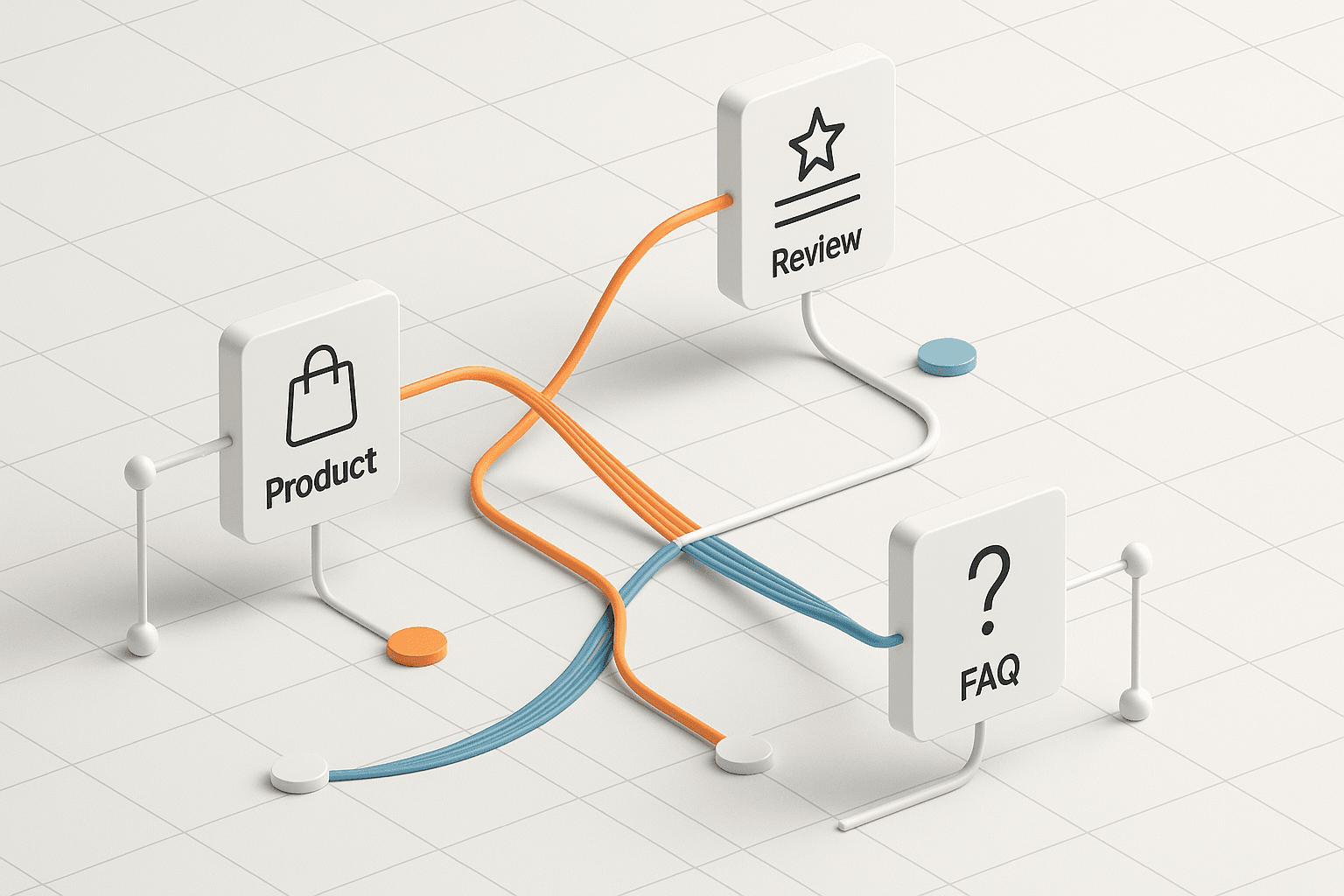
All in One Schema plugins, like the popular WordPress tool, are built for speed. They give technical teams a shortcut to structured data-no hand-coding required. Webflow AI integrations go further by letting users generate schema markup with prompts or simple toggles. For example, a SaaS company can launch a new product page and add Product, Review, and FAQ schema in five minutes using these tools.
What sets these plugins apart? They bundle templates for common schema types-Events, Recipes, Articles-so you don’t need to memorize schema.org’s endless documentation. Some platforms even auto-detect content type. Unlike manual JSON-LD coding, plugins minimize typos and syntax errors.
Pros
- 🚀 Instant deployment without developer backlog
- 🔄 Keep up with schema updates automatically
- 🧩 Works out-of-the-box with most CMSs
Cons
- ⚠️ Limited flexibility for custom entities
- 🔒 Potential plugin security risks if not maintained
- 🐢 Can slow page loads if bloated
Best Use Cases for Developers
Schema plugins shine for rapid prototyping or sites where dev cycles are scarce. For example: A growth marketer at a SaaS startup can use All in One Schema to validate entity recognition on dozens of landing pages before asking engineers to harden the implementation.
For large SaaS teams handling enterprise-scale deployments-or when dealing with sensitive user data-manual implementation may be safer and more scalable long-term. Plugins sometimes lag behind new AI-driven search standards.
Are they effective for AI search optimization? Yes-for mainstream schemas and quick wins. But advanced setups still benefit from direct control over your structured data layer (learn more).
3. Map Content to Rich Entity Types for Enhanced AI Recognition
Choosing the Right Schemas
Mapping your content to precise entity types is like adding road signs for AI search engines. Instead of guessing, Google’s algorithms can read exactly what your business offers. The result? Better understanding, richer results, and improved visibility.
The best schemas for modern ai search are those that define clear entities with context. For SaaS operators and technical marketers, core types include:
- SaaS Product: Use the
SoftwareApplicationschema to describe features, platforms, pricing, and integrations. - Organization: The
Organizationschema clarifies company structure-key for brand recognition in entity-driven results. - FAQ: The
FAQPageschema signals answers to common questions directly in search results. - Review: Mark up customer feedback with
RevieworAggregateRatingto fuel trust signals.
For example, mapping a B2B SaaS site with both Organization and SoftwareApplication schemas helps AI connect product offerings directly to your brand-no ambiguity.
According to Schema App, these schemas act as the foundation of a semantic data layer that makes content machine-readable at scale.
Pros
- Directly supports entity recognition by leading AI systems
- Enables rich snippets (stars, FAQs) in SERPs
- Improves accuracy of branded knowledge panels
Cons
- Requires regular updates as products or org details change
- Overuse or mislabeling can confuse crawlers
Entity Mapping in Practice
Think of schema mapping like tagging inventory in a warehouse-you want every item labeled so nothing gets lost. In practice:
- Audit current content for alignment with high-value entity types.
- Apply relevant schemas based on page purpose-not just generic “WebPage.”
- Test markup regularly using tools like Google’s Rich Results Test.
AI-enhanced tools now automate much of this process by detecting entities across pages (read more). But continuous review matters as new schema types launch and search algorithms evolve.
Keep your schema current-AI search will reward precision and freshness every time.
Conclusion
Mastering AI-driven SEO isn’t about chasing the latest keyword-it’s about giving search engines data they can actually use. The smartest teams now treat schema markup as critical infrastructure, not an afterthought. By pairing robust JSON-LD schemas with real-time validation tools like Google Rich Results Test and MygomSEO, developers can spot issues before AI crawlers do. Continuous monitoring ensures you adapt as algorithms shift-because in this environment, “set it and forget it” is a recipe for disappearing from results.
The businesses that thrive will be the ones who translate their content into rich entities, validate relentlessly, and stay ahead of every AI update. Schema-first thinking isn’t just technical hygiene; it’s your edge in an ever-smarter web. Embrace it now-and let your site speak the language of tomorrow’s search.