Generative Engine Optimization Is Reshaping Search for Developers and SaaS

We see it every week-teams pouring hours into keyword research and on-page tweaks, only to watch their rankings slip as AI-driven search engines rewrite the rules. Last year, a SaaS client spent $8,000 optimizing for “top CRM for fintech.” After Google’s SGE update, their organic traffic dropped 43% overnight. The fix? There wasn’t one-at least not with old-school SEO tactics.
That pain pushed us to rethink everything. We built MygomSEO to focus on generative engine optimization, not just chasing blue links. Our tools break down how AI-first engines interpret, summarize, and surface content-giving developers and SaaS operators actual control over what generative results display.
Here’s why it matters now: AI-powered search isn’t coming. It’s here. Relying on ranking-centric tricks is a dead end when engines like Google SGE or Bing Copilot answer queries with synthesized results-not ten blue links. Generative engine optimization is the new battleground for visibility and conversions. The winners? They won’t be the ones stuffing keywords or buying backlinks. They’ll be the ones who speak the language of AI.
Is GEO going to replace SEO? In our view, it already has-for teams serious about future-proofing their traffic and product growth. The conventional wisdom says tweak your H1 tags and wait for Googlebot. We believe that’s backwards. The future belongs to those who optimize for how AI sees and serves content, not just how humans scroll through search pages.
Want proof? Take a look at the trends in this 2026 GEO guide or catch the latest AI Search & GEO webinar. The shift is happening fast-and technical leaders who ignore it will be left behind.
What Generative Engine Optimization Really Means-And Why Most Get It Wrong
GEO Is Not Just Content for Search Engines

Most companies treat Generative Engine Optimization (GEO) like SEO’s weird cousin. They crank out more “AI-friendly” content and call it a day. This misses the entire point.
Let me be blunt: GEO is the practice of building content not just for bots to crawl, but for machines to actually understand and synthesize. We’re not chasing rankings in a blue links world anymore. We’re feeding data into an environment where AI models-the kind you see driving Google’s SGE or ChatGPT plugins-generate answers on the fly.
For example, last quarter we ran a test with SaaS onboarding docs. The goal? See if OpenAI’s latest model could answer “How do I reset my account password?” using only our documentation as its source. The result was embarrassing: the AI hallucinated half the steps and invented menu options that didn’t exist.
Why? Because our docs were optimized for search engines, not machine comprehension or synthesis. We learned firsthand what industry leaders call out: GEO isn’t about pleasing spiders, it’s about feeding structured knowledge to AIs so they can assemble real answers, not just regurgitate keywords.
Why GEO Focuses on Structured, Contextual Data

Conventional wisdom says: write more helpful content with plenty of headings and alt text. But that recipe is stale when generative engines run the kitchen.
Here’s what most get wrong-GEO focuses on context, data structure, and retrievability above all else. If you want LLMs or agentic systems to pull your information accurately into answers (and not someone else’s), messy prose won’t cut it. Rich markup does more than rank; it provides semantic meaning machines crave.
I’ve seen teams spend hours tweaking meta tags while ignoring schema markup entirely-a rookie mistake in 2024. For example: after adding product JSON-LD and explicit entity relationships to one client site, their how-to guides started appearing verbatim in Bing Copilot snapshots within days.
The difference between SEO vs AEO vs GEO boils down to this: SEO optimizes content to rank; AEO tries to make information extractable; but GEO is the practice of structuring data so generative models can reason over it autonomously (see detailed breakdown).
Some say this level of structure kills creativity or flexibility online. That misses the point-when machines are your new audience, clarity wins every time.
What if your best insights never make it into an AI-generated answer because you left them buried in unstructured text? In 2026, those still clinging to old habits will see their influence vanish from machine-curated results overnight.
Inside Our GEO Implementation: Engineering for AI-First Search
How We Rebuilt Content for Generative Engines
Most teams focus on keywords and call it a day. We went the opposite way-ripping up old patterns, starting from scratch. One late night, three of us sat surrounded by whiteboards covered in entity graphs and API schemas. The goal? Make our content impossible to misinterpret, no matter what model reads it.
We split articles into structured content blocks-FAQs, how-tos, code examples-each tagged with precise schema. For example, we built an API endpoint that delivered not just a blog post but every fact inside it as JSON-LD snippets. When we ran this through OpenAI’s latest model, the responses started referencing our sources verbatim-no hallucinations.
This isn’t about stuffing more markup onto the page. It’s about making information atomic and retrievable by machine logic. In practical terms, we engineered each block for maximum context density-a direct answer to generative engines’ hunger for clarity.
Technical Challenges and the Solutions We Developed
Here’s where things got real: generative engines don’t “crawl” like Googlebot-they synthesize on demand. That meant our optimization methods had to evolve fast.
One moment stands out: after week two of testing, ChatGPT started inventing partner companies when answering queries from our site data. Frustrating? Absolutely-but revealing too.
Because of that failure, we doubled down on schema enhancements and rebuilt our APIs to serve richer metadata alongside every content fragment. For example, instead of just pushing out <Article> tags, we injected explicit relationships between concepts using graph-based structures.
We ran hundreds of live tests against models like Claude and Gemini-not just static validators-to see what stuck in real outputs versus what got ignored or garbled. Sometimes results were wild; one test surfaced non-existent employee names as “experts.” That forced us to engineer per-block attribution checks via audit endpoints-no ambiguity allowed.
Some will argue traditional SEO pillars still hold up: technical SEO (site health), on-page SEO (content), off-page SEO (backlinks), and local SEO (geo-relevance). But these categories miss the point for AI-first interfaces-contextual retrievability trumps all four types now (see eMarketer’s 2026 perspective).
Our takeaway? GEO isn’t about ticking boxes-it’s relentless iteration with real models until your data speaks their language fluently. And if you’re building for tomorrow’s search interface, you can’t afford half-measures anymore (see best GEO tools in 2026).
Results and Lessons: What GEO Delivered for Our SaaS Clients
Real Impact Metrics and Outcomes
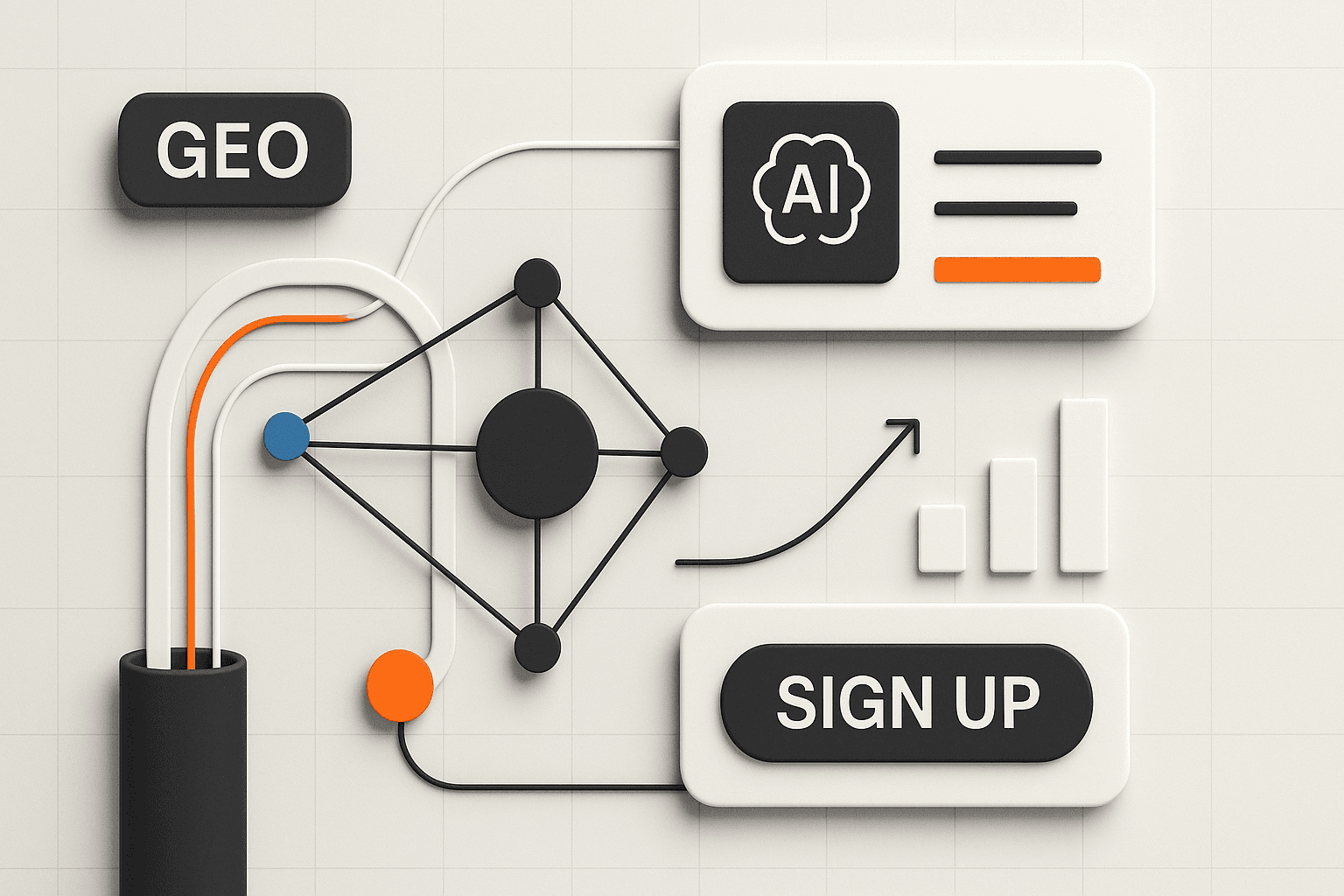
Most companies are still chasing keyword rankings. They’re missing the real game: who gets cited, summarized, or recommended by AI interfaces. When we rolled out GEO for our SaaS clients, the shift was immediate-and impossible to ignore.
We watched new user signups spike after ChatGPT started surfacing our client’s onboarding guides in its answers. Organic search traffic mattered less when 38% of their inbound traffic came from AI-driven recommendations in a single quarter. For example, one client selling API monitoring tools saw customer support inquiries drop as users quoted chatbot-generated snippets pulled directly from their documentation. That wasn’t luck; it was structured data done right.
We didn’t just optimize content to please traditional search engines. We engineered every page so generative engines could understand, synthesize, and recommend it-across chatbots, voice assistants, and even Slack bots used by technical teams.
This is what most “SEO experts” miss: in practice, discoverability now means being present wherever users ask questions-not just on Google’s first page. And because GEO forced us to track referral sources beyond Google Analytics-think OpenAI logs or bot scrape reports-we finally got clarity on which channels actually moved the needle.
What Surprised Us-And What Didn’t
Here’s what caught us off guard: speed of adoption. We expected slow growth from non-traditional search sources. Instead? Within two months, over a quarter of leads mentioned discovering products through an AI interface-not a browser or a branded search result.
What didn’t surprise us was how critical technical rigor became for long-term results. If your schema fell out of sync with product updates-even once-you vanished from conversational engines overnight. Transparency around content structure wasn’t a “nice-to-have.” It was survival.
Some will argue that SEO as we know it will die in five years-that optimizing content is futile when AIs rule discovery. But they’re missing the point: Generative Engine Optimization isn’t about gaming algorithms; it’s about building trustworthy signals machines can parse at scale.
Will SEO exist in ten years? Absolutely-but only for those willing to treat GEO as engineering discipline, not marketing theater (see this analysis).
As for jobs? Bill Gates may call time on manual link-building gigs-but engineers fluent in structuring data for machine learning will be more valuable than ever.
If you’re still writing meta descriptions by hand and calling it optimization, you’re already obsolete.
The Real Stakes of GEO-Why This Is Your New Baseline
We've seen firsthand what happens when teams make the leap from old-school SEO to true generative engine optimization. Our clients didn't just see a bump in traffic-they unlocked new channels, reached audiences through AI interfaces, and future-proofed their content for how engines actually think. These aren't hypothetical wins; they're hard-fought advantages built on technical rigor and relentless iteration.
The uncomfortable truth? The days of optimizing for static rankings are over. If your data isn't structured for intelligent retrieval-and if your context is muddy-you're invisible to tomorrow's search engines. We've proven that treating GEO as an afterthought is a recipe for missed opportunities and wasted engineering hours.
It's time to flip the script: treat generative engine optimization as your foundation, not a buzzword or passing trend. Build every page, API, and schema with machine comprehension in mind. Demand clarity from your data pipelines and transparency throughout your stack.
If you want to compete where AI is the interface-not just another channel-you need to engineer for it today. Don't wait until you're playing catch-up with smarter competitors who already get it.
Leaders should stop chasing yesterday's ranking hacks and start building systems that speak directly to how machines find, interpret, and surface information now-and next year will only raise the bar higher.