SEO Compliance in Financial Services for AI-Driven Strategies

The stakes in financial services SEO compliance have never been higher. One wrong move with your content, and you’re risking more than just rankings-you’re inviting regulatory headaches. But here’s the upside: Data from Quality financia shows educational content generates 54% more leads and builds real trust with your audience (source). That’s why nailing SEO compliance in financial services isn’t just a technical checkbox; it’s a growth engine and a safety net rolled into one.
So, what is SEO for financial services? In short, it’s about making your firm discoverable online-while meeting strict industry rules. Think of it as threading a needle: you want to rank for competitive keywords, but every headline, meta tag, and landing page has to pass legal muster. The rise of AI-driven search changes the game again. You can’t just optimize for Google; you must also account for AI models surfacing your content in new, unpredictable ways (learn more).
In this tutorial, you’ll learn how to integrate AI-powered SEO strategies without crossing compliance lines. We’ll cover what makes financial sector SEO uniquely challenging-like disclosure rules, data privacy requirements, and the need for bulletproof audit trails. You’ll see practical steps for building compliant content that also performs in an AI-first search landscape.
Curious how top banks and fintechs balance aggressive growth goals with regulatory risk? Ready to see how AI can sharpen your SEO while keeping compliance teams happy? Let’s break down the playbook, one step at a time.
Prerequisites for Building a Compliant SEO Strategy
Knowledge You Need
By the end of this part, you’ll know what expertise is essential. You need more than just keyword research skills. You must understand how compliance shapes content in finance. For example, knowing why the FCA bans misleading marketing is as important as optimizing metadata. Compliance consideration means every SEO decision-link building, schema markup, or AI-driven copy-must be filtered through regulatory awareness.
Think of it like driving a sports car: speed (SEO results) matters, but staying in your lane (compliance) keeps you on the road.
Tools, Accounts, and Data Sources
You’ll need a robust stack. Start with an SEO audit tool like Screaming Frog or Ahrefs-these flag technical gaps fast. Layer on AI utilities: platforms that check your site’s E-E-A-T signals and scan for risky language shifts triggered by generative models (see more). Add compliance checklists specific to finance-don’t rely on generic templates.
For data sources: pull from official rate tables, product disclosures, SEC filings, and trusted financial publishers. This isn’t just about facts; it’s about showing Google-and regulators-that your information comes from credible origins (TransPerfect explains).
Key Regulatory Standards
Here’s what you must watch: FCA rules if you touch UK markets; SEC if you’re US-based; GDPR for anything involving EU customer data; FFIEC for U.S. banking IT standards.
Compliance in financial services isn’t red tape-it protects trust and credibility. A Contadu study found that bridging AI and traditional SEO requires deep knowledge of these frameworks to avoid costly compliance pitfalls.
Laying the Foundation: Structuring SEO for Compliance
Outlining the Structural and Technical SEO Musts
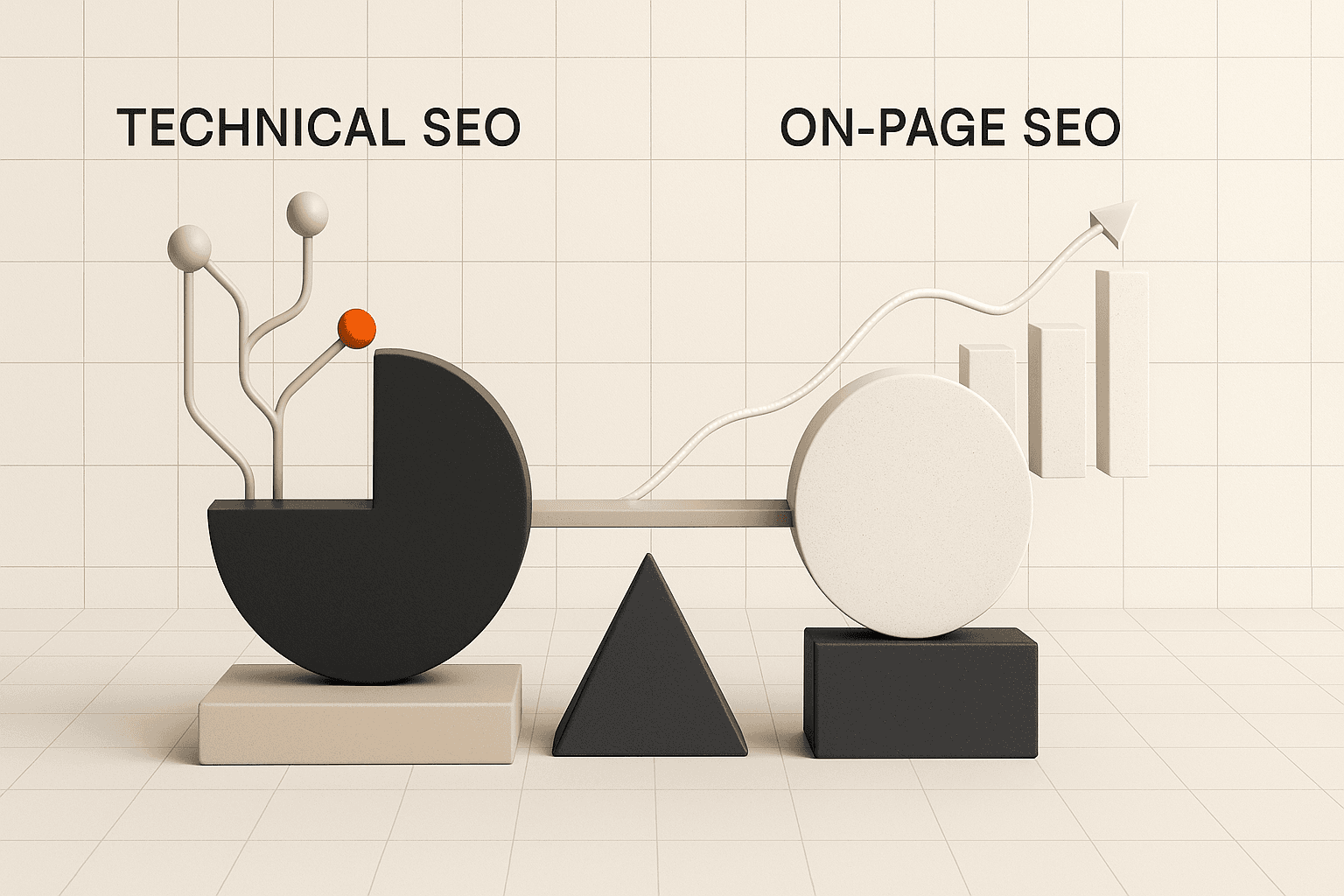
By the end of this section, you’ll know which technical SEO elements need to be compliant-and why they matter.
Let’s cut through the noise. There are four types of SEO: technical, on-page, off-page, and local. For financial services, your main focus is technical and on-page. Why? These are where compliance issues bite hardest.
Start with site architecture. You need a crawlable structure-think XML sitemaps, logical URL hierarchies, and internal links that don’t dead-end. A flat site structure works like a well-organized file cabinet; regulators can find what they need fast.
Technical musts don’t stop there:
- HTTPS everywhere (not just login pages)
- Fast load times (under three seconds is best practice)
- Accessible code: alt text for images, ARIA roles for interactive elements
- No hidden text or cloaking-regulators spot these dark patterns quickly
For example: if your product comparison page hides rates in expandable tabs not readable by screen readers or bots-you’re risking both fines and lost trust.
According to AI Visibility Is the New SEO for Financial Services, AI-driven discoverability now pulls data from structured sources like rate tables and government feeds. If your schema isn’t set up right, you simply won’t show up.
Mapping Compliance to On-Page and Technical SEO

Now let’s talk about mapping compliance directly onto your content and metadata.
Every claim-APY rates, “no annual fee”, disclosures-must be easy to audit. That means:
- Schema markup clearly identifying financial products
- Meta descriptions mirroring real content (no clickbait)
- Structured data for reviews or calculators with clear source attribution
A Contadu analysis found teams moving from generic meta tags to granular schema as AI search evolves.
Pitfalls? Watch out for misleading CTAs (“guaranteed approval!”), buried disclaimers, or vague headings. These are magnets for regulatory scrutiny.
Data from mikekhorev.com shows organic SEO delivers 5.3x ROI compared to paid search in finance-a result only possible when every layer is structurally sound and audit-ready.
Keep it clean; keep it transparent. That’s how you future-proof your compliance foundation in an AI-first world.
Incremental Growth: Integrating AI for Scalable SEO and Compliance
Using AI for Audit and Content Generation

By the end of this part, you’ll understand how to leverage AI for both SEO audits and compliant content creation.
Let’s get practical. Can ChatGPT do an SEO audit? Not in the strictest sense-AI can’t crawl your site like Screaming Frog or MygomSEO. But it excels at analyzing exported data, interpreting patterns, and flagging compliance risks if you feed it the right prompts.
For example, upload a CSV of your meta descriptions to ChatGPT. Ask: “Which entries could mislead users under FCA guidelines?” The model scans at scale-catching risky language you’d miss manually.
AI also shines in surfacing optimization opportunities. For instance, tools powered by models like GPT-4 can rewrite headings or suggest schema improvements tailored for financial services as seen here. When paired with clear prompts about search intent and regulatory constraints, these systems boost both visibility and compliance consideration in every update.
What does an SEO audit mean in this context? It’s not just about technical health but also ensuring each page aligns with sector-specific rules-think disclosures, disclaimers, targeting restrictions.
Ensuring AI Outputs Stay Compliant
Here’s where unchecked AI gets dangerous. Large language models sometimes “hallucinate”-inventing facts or outdated advice that won’t pass regulatory review. Imagine publishing a mortgage rate pulled from old data-that’s a fast way to draw scrutiny.
It’s like using autopilot on a plane: efficient but risky without human monitoring. You need to build compliance guardrails into your workflow.
For example, set up prompt templates that reference current regulations (“Only use SEC-approved terminology”). Layer automated keyword filters that catch banned phrases before publication.
Some firms even route all AI-generated copy through legal review bots before hitting publish-a step now baked into many modern financial content strategies.
Bottom line: In search-driven industries like finance, scalable SEO means pairing smart automation with rigorous checks at every stage. That keeps your brand both visible-and bulletproof against compliance risk.
Testing Your Compliant SEO Implementation
Automated Testing for Compliance and SEO Health
In this part, you'll learn how to set up automated checks that catch both compliance gaps and SEO must be issues before they reach production. Think of these tools as your first line of defense-like a spell checker, but for regulations and rankings.
For example, you can run Selenium scripts that crawl your site, flagging missing disclosures or outdated schema markup. Pair that with Lighthouse CI to surface accessibility problems or broken canonical tags. Specialized platforms like Screaming Frog let you automate scans for improper redirects, duplicate content, or missing alt text-must be a consideration in the financial sector.
You also need ongoing monitoring. Use Google Search Console alerts alongside AI-powered tools such as Ai Technical SEO Analysis for Financial Services Firms to track changes that impact both visibility and compliance. These solutions help you move fast while staying safe.
Manual Review and Documentation
Automated tools are powerful, but you'll still need human judgment. In this section, you'll learn how manual reviews fill gaps where automation falls short-think ambiguous language or nuanced regulatory requirements.
For example, have compliance officers review monthly sitemaps and on-page content against FCA or SEC checklists. Document every pass/fail result with screenshots and timestamps. This record is your evidence when auditors ask how your seo must be compliant with current regulations.
Store documentation in a central repository-Google Drive works if permissions are tight. This process makes audits smoother and proves you take compliance seriously in an AI-driven world (AI Visibility Is the New SEO for Financial Services).
Conclusion
You’ve walked through the real-world workflow for deploying AI-driven, compliant SEO in financial services. You now know how to blend robust version control, detailed audit logs, and proven release processes to keep your site both visible and regulator-ready. Building compliance into every update-right down to production deployments-means you’re not scrambling when auditors come calling.
Keep evolving your process: use automation where it strengthens evidence trails, but never take a hands-off approach with compliance reviews. Document everything, monitor aggressively post-launch, and treat every SEO change as a living record. This discipline doesn’t just satisfy regulators-it protects your brand’s reputation and ensures AI remains an asset, not a liability.
Tomorrow’s leaders in financial SEO won’t just rank well-they’ll set the bar for accountable innovation. Stay sharp and build systems that prove it at every step.