AI SEO Audit Tools Drive Technical SEO Results for Modern Teams
Is SEO still relevant in 2025? For technical teams driving modern SaaS or e-commerce, the answer is a resounding yes-if you’re using the right tools. AI SEO audit tools aren’t just a shiny upgrade. They automate tedious technical checks, catch issues humans miss, and let lean teams compete with legacy giants. In a world where manual audits can cost $139.95 per month and up for basic reports (Zapier data shows), automation isn’t just nice to have-it’s table stakes.
But the real power of AI SEO audit tools goes deeper than speed. These platforms dig through code, sitemaps, and server configs to surface hidden errors that can tank rankings or slow down your site. Instead of chasing vague “best practices,” you get engineering-grade diagnostics that flag what’s broken, why it matters, and how to fix it-fast. As Ranklytics explains, AI-driven audits cut through the noise and prioritize what actually moves the needle for search.
Why does this matter now? Technical marketers and developers are under pressure to deliver results at scale-without ballooning costs or getting lost in spreadsheets. Traditional, checklist-based audits break down on modern stacks: they miss dynamic content, slow deployments, or API-driven sites. AI workflow automation solves this problem, letting your team review hundreds of pages-or thousands of endpoints-in minutes (see HackTheSEO for examples).
In this article, you’ll learn how today’s leading AI SEO audit tools stack up on performance, reporting depth, cost-effectiveness, and support for modern development workflows. You’ll see where each tool excels-and where the trade-offs lie-so you can choose the right fit for your stack and scale. If you want actionable insights-not generic advice-you’re in the right place. Let’s dig in.
Evaluation Criteria for Comparing AI SEO Audit Tools
How We Score Each Tool
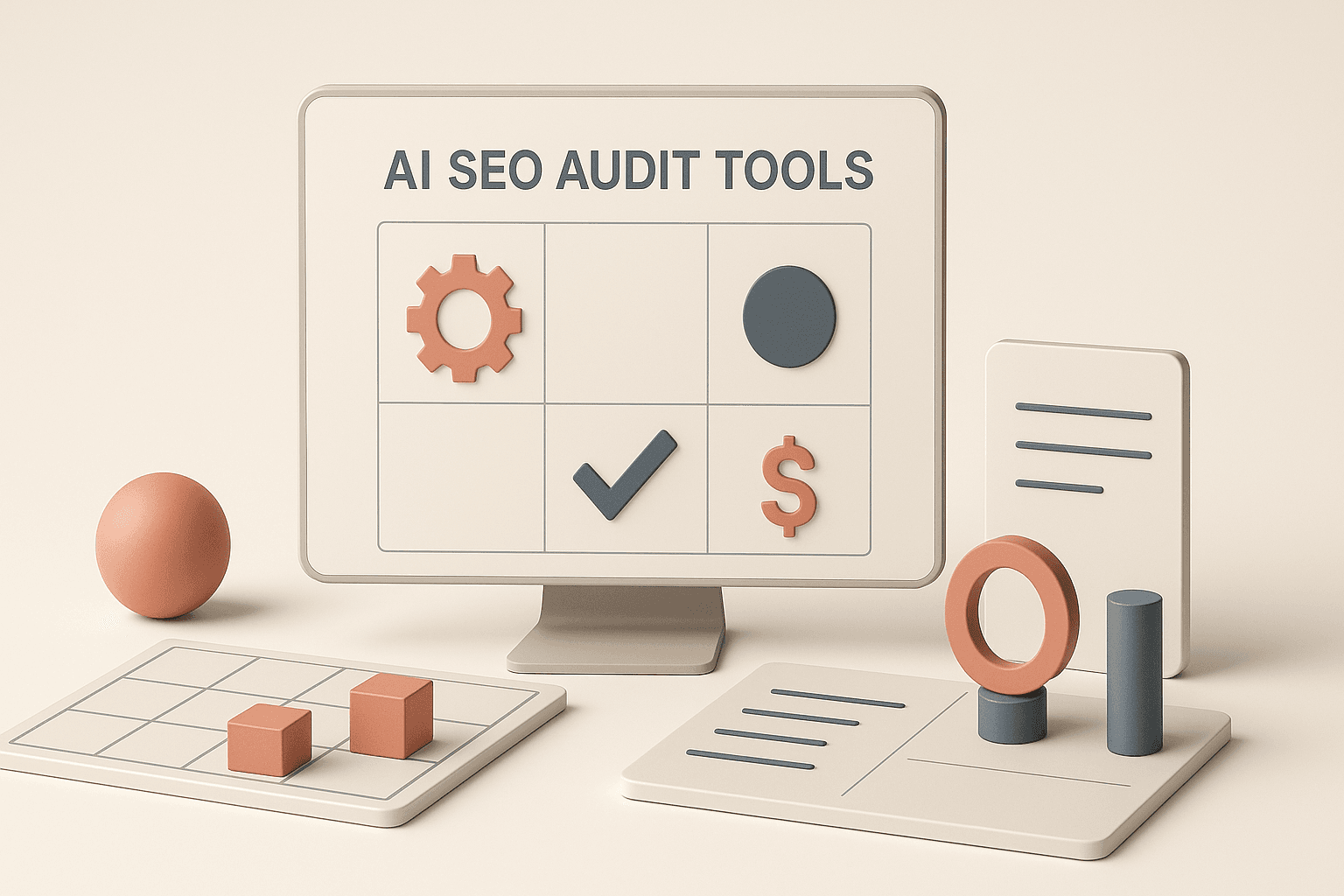
Every audit tool gets put through the same wringer. The team scores tools across four areas: technical depth, usability, reporting quality, and pricing transparency. Technical depth tests how well the tool catches both common and obscure technical SEO issues-think crawl errors, broken links, or odd canonical tags.
On-page SEO coverage matters too. For example, a SaaS operator might need detailed feedback on missing meta tags or poor heading structure. Tools that flag these basics and suggest fixes get higher marks.
Integration is another focus. An audit tool that plugs into your workflow-like pushing findings into Slack or Jira-scores better than one stuck in its own dashboard. Usability isn’t just about pretty interfaces; it’s about speed to insight. If you can’t find the crawl budget report in two clicks, that’s a problem.
Reporting gets measured by clarity and actionability. Does the export tell you what to fix now versus what can wait? Finally, pricing must be upfront with no surprises buried in fine print.
These criteria mirror real-world needs-a startup CTO wants actionable tech SEO alerts before launch day, while an agency may care more about slick client reports. This framework ensures we judge tools on results they deliver in daily use cases-not just feature lists.
Why Transparent Evaluation Matters

A transparent process cuts through marketing noise and hype cycles. It’s like comparing laptops by actual battery life rather than flashy ads-what matters is performance under pressure.
Real transparency means showing where each tool shines or struggles based on clear standards-not gut feel or vendor promises. For example, some AI audit tools spot duplicate content fast but miss JavaScript rendering issues (see How To Use AI To Perform A Complete SEO Audit For Your Website). Others may ace integration but lag on actionable on-page recommendations (AI Workflow Automation: Integrating an AI SEO Audit Tool).
This approach also helps users match tools to their specific business context instead of chasing trends. Like picking a wrench over a hammer when fixing a pipe-it’s about fit for purpose.
Quick Reference: Four Types of SEO
SEO breaks down into four main types: technical SEO (site architecture), on-page SEO (content optimization), off-page SEO (backlinks), and local SEO (location signals).
What Is an SEO Penalty?
An SEO penalty is when search engines reduce your site’s rankings due to violations like thin content or spammy links-a risk that robust audit tools help identify before damage spreads.
Top AI SEO Audit Tools Compared Side by Side
Tool 1: Overview, Features, Strengths, Weaknesses, Best For
Overview: Tool 1-let’s call it Ranklytics AI-focuses on automating site audits with machine learning. It crawls websites for technical and on-page SEO issues and generates prioritized recommendations. The tool integrates easily into existing developer workflows.
Features:
- Automated crawl of entire domains
- Technical SEO checks (structured data, canonicals, status codes)
- On-page optimization suggestions using NLP
- Customizable reporting dashboards
- API access for workflow integration
Strengths: Ranklytics AI stands out for speed and breadth. For example, it can scan up to 100,000 URLs in a single run. Its NLP-driven content analysis offers keyword intent insights most manual audits miss. The API enables SaaS operators to automate weekly audits without human intervention (How To Use AI To Perform A Complete SEO Audit For Your Website).
Weaknesses: While detailed, the interface can overwhelm first-timers with dense data visualizations. Some advanced technical checks-like JavaScript rendering diagnostics-require setup beyond default settings.
Best For: Ranklytics is ideal for agencies managing multiple client sites or larger SaaS platforms needing scale and automation. Developers who want deep technical detail and direct API control will find strong value.
Tool 2: Overview, Features, Strengths, Weaknesses, Best For
Overview: Tool 2-HacSEO-is built around workflow automation and actionable guidance. Unlike Ranklytics’ developer-first focus, HacSEO targets teams wanting quick wins from AI-powered website audit outputs with less manual finetuning.
Features:
- One-click whole-site technical audits
- Automated issue prioritization based on traffic impact
- Workflow automation (alerts when issues appear)
- Built-in competitor benchmarking tools
- Chrome extension for instant page-level checks
Strengths: HacSEO excels at surfacing high-impact fixes fast. For example: when a new critical error appears (broken canonical or blocked resource), HacSEO notifies your Slack channel immediately (AI Workflow Automation: Integrating an AI SEO Audit Tool). The Chrome extension makes it easy to spot-check pages during development sprints.
Weaknesses: Depth trades off against ease-of-use here; while you get clear action items fast, there’s less customization available on reporting fields or crawl parameters than Ranklytics offers. Advanced users may find the lack of granular control limiting over time.
Best For: Small to mid-sized businesses that need fast results but lack dedicated SEO engineers will benefit most. Marketing teams focused on keeping their core pages healthy without extensive setup time should consider HacSEO.
Side-by-Side Comparison Table

Feature/Criteria | Ranklytics AI | HacSEO |
|---|---|---|
**Automated Crawl Scale** | Up to 100k URLs/run | Up to 10k URLs/run |
**Technical Depth (checks)** | Advanced | Moderate |
**On-page Content Analysis** | Yes (NLP-based) | Yes (rules-based) |
**Workflow Integration/API Access** | Full REST API | Limited |
**Reporting Customization** | High | Basic |
**Competitor Benchmarking** | No | Yes |
**Chrome Extension Support** | No | Yes |
**Alerting/Automation Capabilities** | Webhooks/API | Built-in notifications |
**Ease of Use / Learning Curve** | Steep | Shallow |
**Pricing Model Range (\*)** | Tiered by volume | Flat plus usage caps |
(*) Pricing details change frequently; check vendor sites for current tiers.
Real-world Use Case Example
For example: An enterprise SaaS team uses Ranklytics’ API integration to schedule daily crawls across their marketing stack-flagging schema errors before product launches go live. In contrast, a small e-commerce business plugs HacSEO into their workflow so marketers get notified in Slack whenever a key product page loses mobile indexability overnight-a fix they can deploy that same morning without developer intervention.
Industry Perspective & Common Questions
The “80/20 rule” in AI-powered SEO means these tools aim to surface the top ~20% of issues causing ~80% of organic traffic loss with minimal manual effort (What Is AI SEO? Benefits of Integrating Artificial Intelligence Into ...). By focusing resources where they matter most-site architecture flaws or major content gaps-you maximize ROI from every audit pass.
As for ChatGPT’s effect on SEO: While ChatGPT itself doesn’t directly change search rankings, its technology powers smarter content analysis tools inside many leading seo audit tool platforms today. This provides a competitive edge-the best seo strategies now use generative models not just for writing but also real-time website audit interpretation and actionable recommendations.
In summary: Both Ranklytics AI and HacSEO provide a robust website audit experience using modern machine intelligence-but each fits different operational needs depending on team size and technical appetite.
Common Pain Points and Limitations of AI SEO Audit Tools
What Users Struggle With Most
AI SEO audit tools promise speed and scale, but users often hit roadblocks. The biggest gripe? False positives. For example, some tools flag “missing meta descriptions” on intentionally blank pages-noise that distracts from real issues. Over-generalized suggestions are another pain point. A SaaS operator might get a report recommending “improve content quality” with no insight into keyword intent or user journey.
Pricing confusion also frustrates teams. Many tools advertise “free SEO” or offer a free SEO audit, but the most useful features sit behind paywalls or require monthly commitments. Choosing the best SEO audit tool sometimes feels like picking a phone plan-hidden limits everywhere.
Technical depth is another concern. AI can miss subtle problems like JavaScript rendering quirks or incorrect hreflang setups. Generic reports won’t catch these edge cases, leaving technical marketers to dig deeper manually (source).
There’s also anxiety about Google’s stance on AI-generated content. Contrary to rumor, Google does not automatically punish sites for using AI-written copy-it focuses on value and originality instead (source). But relying solely on generic AI suggestions risks thin content that fails to stand out.
Overcoming AI SEO Audit Challenges
How do technical teams mitigate these headaches? First, treat every automated finding as a starting point-not gospel truth. For example: if an audit flags hundreds of “slow-loading images,” verify with Lighthouse or WebPageTest before tasking engineers.
Pairing AI audits with manual reviews helps catch nuanced issues that bots miss-like complex redirects after login or dynamic page rendering inconsistencies.
It’s smart to document recurring false positives in your workflow for later exclusion or custom rules (see guide). That keeps focus sharp during future audits.
If the AI bubble bursts tomorrow? Teams owning their process will adapt fastest-they’ll pivot to hybrid auditing: mixing automation with engineering rigor and human review.
In short: use free SEO audits and advanced tools as accelerators, not replacements for expertise. The best results come when tech leads challenge both machine findings and marketing assumptions-every sprint, every release.
Which AI SEO Audit Tool Is Best for Your Needs?
There’s no universal winner in the world of AI-powered SEO audits. The right tool depends on your business size, technical skill set, and how deep you need to go with analysis. For lean SaaS teams or solo developers, a fast, automated audit tool saves time and flags obvious issues-ideal when speed trumps customization. Mid-sized businesses or agencies juggling multiple clients benefit more from platforms that offer granular reporting, integration hooks, and customizable rules.
The key differences boil down to control versus convenience. Some tools push easy one-click reports but gloss over edge cases or advanced diagnostics. Others hand you detailed exports and API access but expect you to know what to do next. If your team has strong technical chops, prioritize features like custom crawl settings and exportable data. For less technical marketers who still want clear guidance, look for tools that translate complex findings into actionable steps.
No matter which platform fits best today, a few workflow upgrades pay off across the board: Set up regular automated audits so nothing slips through the cracks. Pair machine-generated insights with human review-AI catches patterns fast but misses nuance only a real developer will spot. Finally, keep an eye on your site’s unique challenges instead of chasing every generic suggestion.
SEO is evolving as quickly as the tech behind it-and so should your toolkit. Stay curious about new features but demand transparency before trusting any “AI” recommendation blindly. The smartest teams use these audit tools not as crutches but as force multipliers for engineering-grade SEO progress every sprint.