Local SEO for SaaS Businesses Boosts Regional Growth and Visibility
Can a SaaS platform win customers in Dallas, Berlin, or Singapore-without a single local office? With the right local SEO strategy, the answer is yes. Local SEO for SaaS isn’t just for coffee shops or dental clinics. It’s become a high-stakes lever for regional growth-even in the cloud software world.
Most SaaS operators think of SEO as a global play. But regional market share is won by those who crack the local code. The tactics aren’t identical to what works for neighborhood businesses. Where a bakery wants to rank for “cupcakes near me,” a SaaS team needs to dominate “Texas payroll software” or “GDPR compliance SaaS Berlin.” The competition is fierce, and the stakes-monthly recurring revenue, lead velocity, and customer lifetime value-are much higher.
In this article, we break down how local SEO for SaaS drives real business results: higher-quality leads from targeted regions, improved keyword rankings where it counts, and scalable tactics that keep up with fast-changing product lines. We’ll compare strategies using four criteria: regional keyword ranking (can you own your city or state?), direct impact on SaaS sales, lead quality (not just traffic, but conversion-ready visitors), and scalability (does the approach work as you expand into new markets?).
For technical founders and marketers used to A/B testing every landing page, transparency in evaluation matters. Our framework isn’t built on hunches-it’s grounded in measurable outcomes and repeatable processes, drawing on research-backed insights from industry experts (see source, see source).
Curious how top SaaS brands carve out regional dominance without a local office? Or why some tactics scale-and others stall? Read on to see which local SEO moves actually move the needle for ambitious software teams aiming to win region by region.
Strategy One: Localized Landing Pages for SaaS Growth
Overview and Implementation Process

Localized landing pages let SaaS companies speak directly to prospects in specific regions. Instead of a single generic demo page, you spin up tailored versions for each target city, state, or country. For example, a compliance SaaS might create “Payroll Compliance Software in Texas” and “Payroll Compliance Software in California.” Each page can showcase region-specific testimonials, case studies, or support contacts.
Technical implementation starts with the URL structure. Most teams use subdirectories (/us/texas/), but some prefer subdomains (tx.example.com). Dynamic content is key-pulling local data (like regulations or pricing) into templated sections using your CMS or a headless setup. Schema markup helps search engines connect each page to its intended market; include LocalBusiness schema and address details relevant to that region.
Optimizing for local search goes beyond keywords. Add location-based meta tags and update Google Business Profiles if you maintain physical offices. Use internal links between regional pages to boost crawlability. For more local seo tips on boosting online presence, see Harnessing the Power of Local SEO.
Strengths, Weaknesses, and Best Use Cases

Localized landing pages excel at regional targeting-a top need for SaaS firms with distributed sales teams or strict regulatory differences by state or country. These pages capture leads who search for “[Product] in [Location],” improving both relevance and conversion rates over generic alternatives.
However, there are trade-offs. Building many unique pages takes time and coordination between marketing and engineering. Content overlap becomes a risk if you cut corners-Google may flag near-duplicate copy across locations. Tight template management helps mitigate this risk but doesn’t eliminate it entirely.
Separate landing pages aren’t essential for every SaaS company. If your product is truly geography-agnostic-with no regional sales staff or legal requirements-a single robust page may suffice. But when localized trust signals drive deals (think healthcare compliance software), these pages become hard to skip.
This strategy pairs best with compliance-driven markets (HIPAA, GDPR) where buyers want proof you understand their locale’s laws-or verticals where regional teams personalize outreach at scale.
For further guidance on optimizing your business's visibility through targeted local SEO strategies, see The Ultimate Guide to Boosting Your Business's Visibility.
Strategy Two: Google Business Profiles and Regional Citations for SaaS
Overview of Google Business Profiles for SaaS
Most people associate Google Business Profile (GBP) with restaurants or local shops. But SaaS operators shouldn’t ignore it. If your company has a physical office, support center, or even distributed teams in key markets, GBP can be a powerful trust signal.
For example, a CRM platform with a Boston address can show up when prospects search “CRM software near me.” This boosts click-through rates and signals legitimacy-especially for buyers who want local support or demos. According to The Complete Guide To Local SEO, optimizing GBP increases visibility in regional search packs.
Should every SaaS use GBP? Not always. Fully remote or global-only companies may struggle to align their virtual model with Google’s location policies. However, if you have official offices-even coworking spaces-or run local events, there’s real upside.
Key tip: Fill out all fields (address, phone, hours). Add photos of your team or workspace. Collect reviews from customers in each region you serve. These steps help build trust and improve engagement for small businesses and SaaS alike.
Citation Management: Strengths, Weaknesses, and Best Use Cases
Citation building is about more than Yelp or Yellow Pages. For SaaS companies, the best sources include industry directories (Capterra, G2), tech community hubs (Product Hunt), and business listings like Crunchbase.
Citations act as digital “references”-validating your existence across the web. They’re crucial for boosting authority in both traditional local search and B2B spaces (see details). The more consistent your NAP (name-address-phone) data is across platforms, the stronger your local pack presence becomes.
Strengths:
- Trust signals: Appear more established to cautious buyers.
- Local pack visibility: Show up next to regional competitors.
- Click-through improvement: Credibility drives action-more demo requests or trials.
Weaknesses:
- Relevance gaps: Remote-first SaaS may not benefit if they lack real-world locations.
- Maintenance load: Inconsistent citations dilute results; manual updates are tedious without automation.
Best use cases? Companies with satellite offices, hybrid teams spreading across multiple cities, or those offering region-specific onboarding/support see the most value here. It’s like planting flags on a map-each one builds credibility where it counts most.
For detailed tips on maximizing these strategies for small businesses and software firms alike, check out Harnessing the Power of Local SEO.
Side-by-Side Comparison of Local SEO Approaches for SaaS
Feature Table: Local Landing Pages vs Google Business Profiles
Feature | Local Landing Pages | Google Business Profiles |
|---|---|---|
Setup Effort | High | Moderate |
Ongoing Maintenance | Medium | Low |
Impact on SaaS Sales | Direct (trackable) | Indirect |
Lead Quality | High | Variable |
Regional Search Ranking | Strong (long-tail keywords) | Solid (Maps + local pack) |
Scalability | High (with automation) | Limited by office count |
Cost | Moderate to High | Low |
For example, a best accounting SaaS expanding into Texas might build local landing pages for Dallas, Austin, and Houston. Each page targets “best accounting SaaS in Dallas” searches. In contrast, a competitor may set up a Google Business Profile for each office, aiming for map-based visibility.
Performance, Cost, and Scalability Analysis
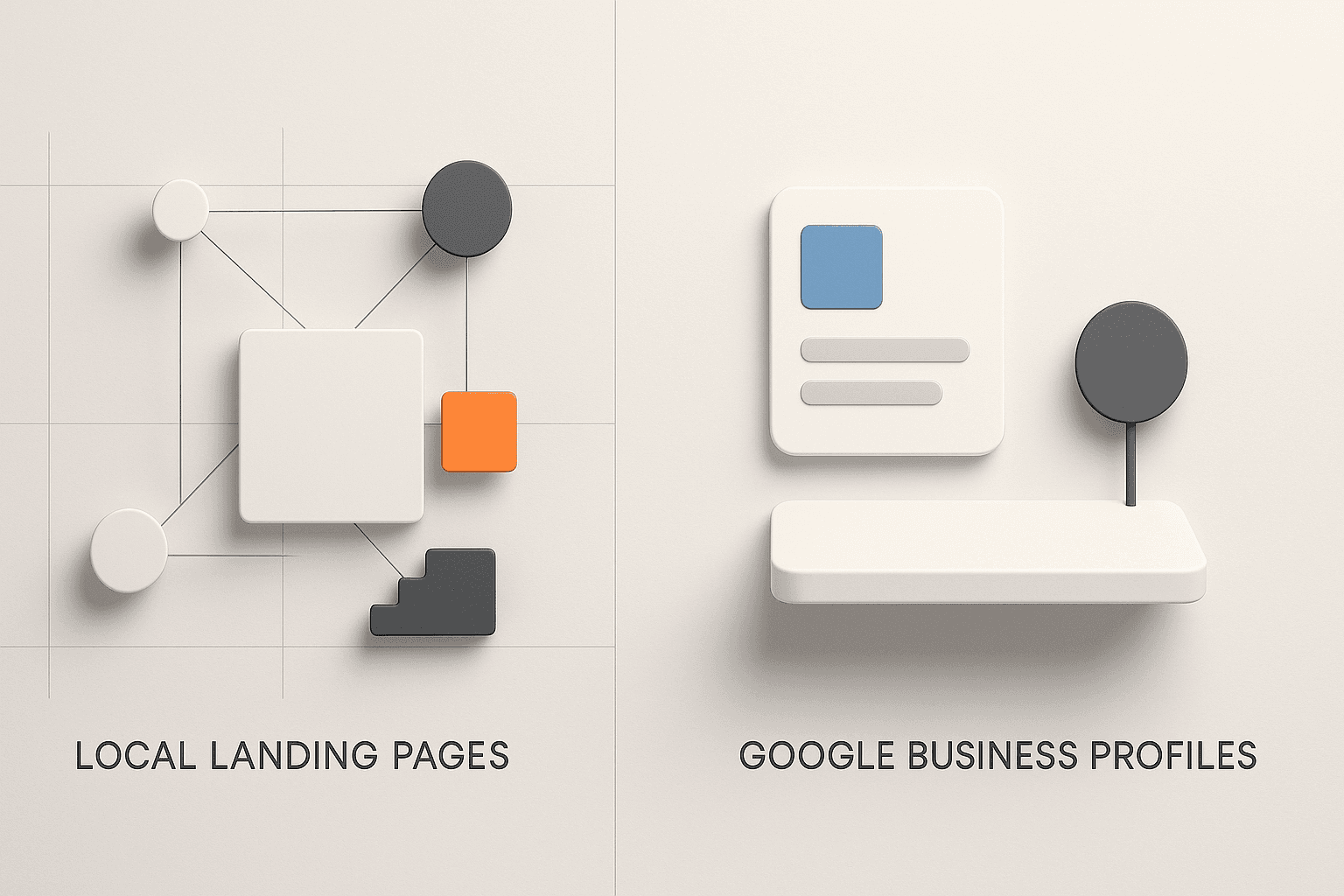
Local landing pages give SaaS teams full control over messaging and conversion flow. They fit companies with technical resources-think dynamic page generation or advanced schema markup. The effort pays off when targeting regulated industries or regions with unique customer needs. For example: an accounting SaaS can tailor content for California privacy laws without diluting main product messaging.
Google Business Profiles require less upkeep but limit customization. They excel at boosting trust-especially if the company has physical offices or support teams in-region. However, lead intent is mixed; not every Maps searcher is ready to buy enterprise software. That’s why many see these profiles as brand amplifiers rather than direct sales engines (source).
Scalability is another key factor. Automated landing page systems scale to dozens-or hundreds-of regions without extra manual work once built out. It’s like setting up dominos: push one and the rest follow easily. By comparison, Google Business Profiles scale only as fast as your real-world footprint grows.
Cost follows complexity: landing pages demand design, dev time, and copywriting-upfront and ongoing if markets change often (see reference). Google Business Profiles are free but offer fewer levers for growth beyond basic updates.
Verdict: Landing pages suit SaaS firms chasing high-quality leads in tightly defined markets-best accounting SaaS models included. Google Business Profiles work best for regionally anchored brands needing trust signals or presence validation.
In short: If you need precision targeting at scale-and can invest technically-choose localized landing pages. If you want quick wins on credibility with minimal setup, go with Google Business Profiles (learn more here). Most mature companies combine both to maximize regional reach without sacrificing efficiency or cost control.
Conclusion

SaaS businesses face unique local SEO challenges-tracking regional traction, prioritizing resources, and bridging the gap between SEO and sales. The right approach depends on your model. Programmatic landing pages give compliance-focused or regionally structured SaaS firms granular control over lead capture and keyword targeting but require technical investment to avoid duplicate content pitfalls. Automated citation building and Google Business Profiles reinforce trust for SaaS with physical presence or distributed teams, yet offer diminishing returns for entirely remote products.
The high-value play is alignment: tailor your tactics to how-and where-your customers buy. Accounting SaaS targeting state-specific regulations benefits more from localized landing pages and vertical directories than a global-first collaboration platform would. Conversely, remote-first tools often see greater ROI from scalable programmatic strategies rather than chasing local listings.
For every SaaS operator, the mandate is clear: map your go-to-market structure against regional search demand before committing resources. Start by auditing current visibility in target geographies; then pilot one focused tactic (landing pages or citations) based on team strengths and market realities.
Local SEO for SaaS isn’t about ticking boxes-it’s about engineering discoverability that matches how real buyers make decisions in their own backyard. As search engines continue to personalize results by location, the edge goes to companies who adapt fast, measure rigorously, and iterate with purpose.