Multilingual SEO Strategies That Drove Global Visibility Across Platforms
The truth is, our client’s international growth wasn’t just stalled-it was costing them. They’d invested months and six figures into expanding their SaaS platform overseas, but the needle barely moved outside English-speaking markets. Traffic from Germany, Brazil, and Japan flatlined. Their marketing team poured more budget into Google Ads and English-only landing pages, hoping brute force would open new doors. It didn’t. Frustration spiked as expansion plans sat idle and leadership demanded answers.
We built a multilingual SEO strategy that went way beyond translation. We engineered a system to target search intent-across languages, platforms, and regions-so every piece of content could rank where real users searched.
Why does this matter? Because global SaaS growth now means showing up everywhere your users are-not just on Google in English. By rethinking how to do SEO for multilingual audiences, we helped unlock new revenue streams, real engagement, and cross-platform visibility that generic approaches missed. The wins surprised even us-and we’ll show you exactly how we did it using principles like “answer everywhere” optimization (source) and the latest multilingual SEO strategies (source).
The Challenge: Beyond Google, Beyond English
The business impact of mono-channel SEO
We hit a wall-fast. Our traffic graphs looked like the side of a cliff: steep growth, then suddenly flat. Not just in one region, but everywhere outside our core English-speaking markets. For example, we saw competitors pop up on Yandex and Baidu overnight. They weren’t just ranking-they were owning local answer boxes and featured snippets while we sat invisible.
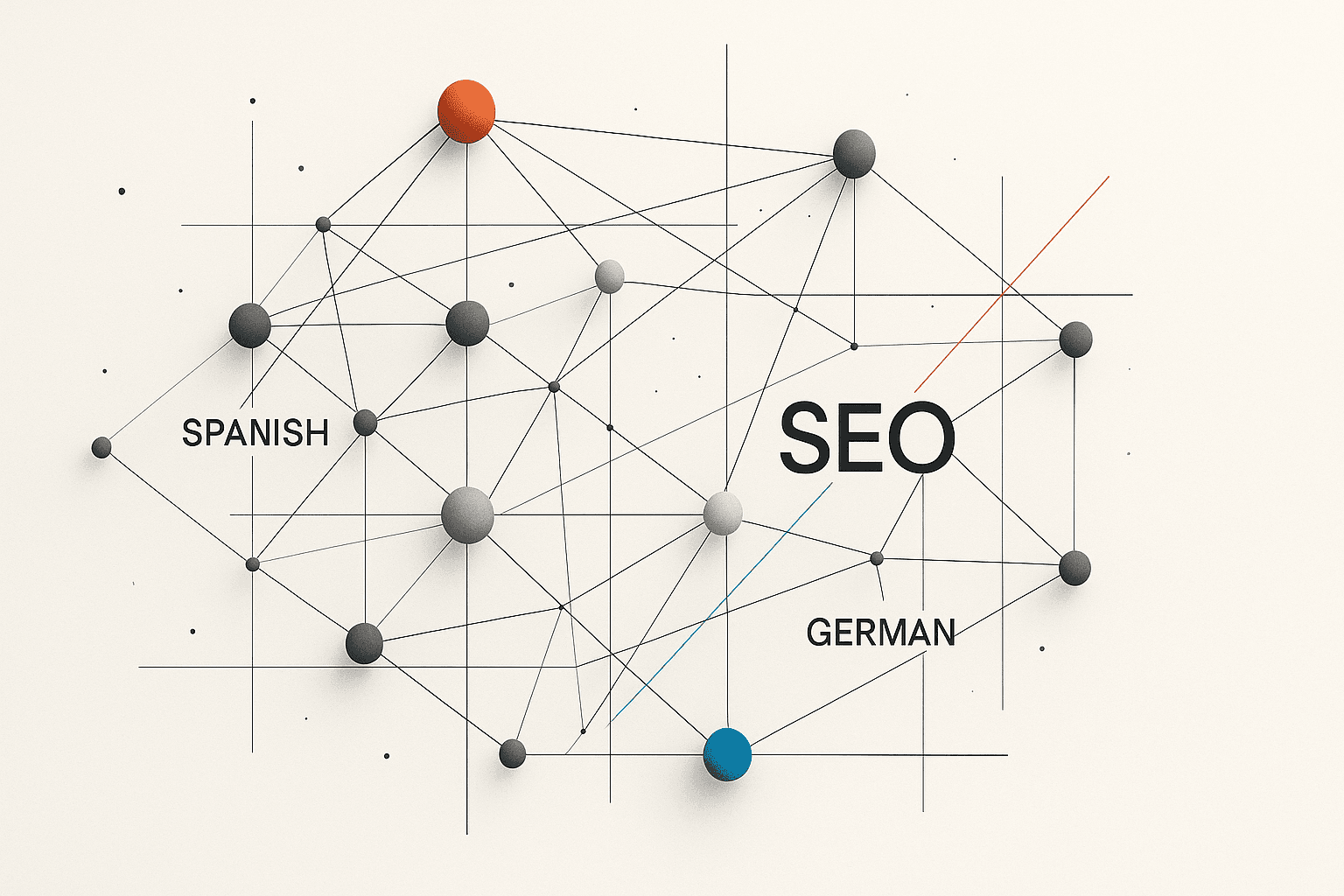
Our team ran manual searches in Spanish and German. We found ourselves outranked by smaller players with tailored content for each market’s preferred search engine-not just Google, but Naver, Bing, even emerging AI-driven platforms. It was a gut punch to realize: all that work on English-only pages meant almost nothing to users searching in their native language or platform.
This is where understanding the four types of SEO-on-page, off-page, technical, and local-became critical. We’d been optimizing on-page factors for Google.com with technical best practices nailed down for US audiences. But when it came to local SEO or multilingual strategies? We were flying blind (see how to optimize multilingual SEO).
Why it mattered: Risks and urgency

Leadership set aggressive international targets. But inside the war room? Every Monday felt heavier as new reports landed: conversions lagged 40% behind benchmarks in France and Brazil. Each week lost meant more ground ceded to rivals who understood the process of optimizing across borders required more than translation-it demanded cultural context and channel nuance (see multi-platform visibility strategy).
Team morale dropped each time we missed a milestone. One product manager said bluntly, “It’s not just about ranking anymore-it’s about being seen at all.” We needed all four pillars of SEO-infrastructure (technical), authority (off-page), relevance (on-page), and experience (user signals)-to improve visibility where it counted most.
The risk wasn’t abstract; it was right there in slipping revenue forecasts and mounting pressure from leadership to deliver on global expansion-or explain why we couldn’t.
Our Approach: Engineering Scalable Multilingual SEO
Technical audits: Finding what mattered
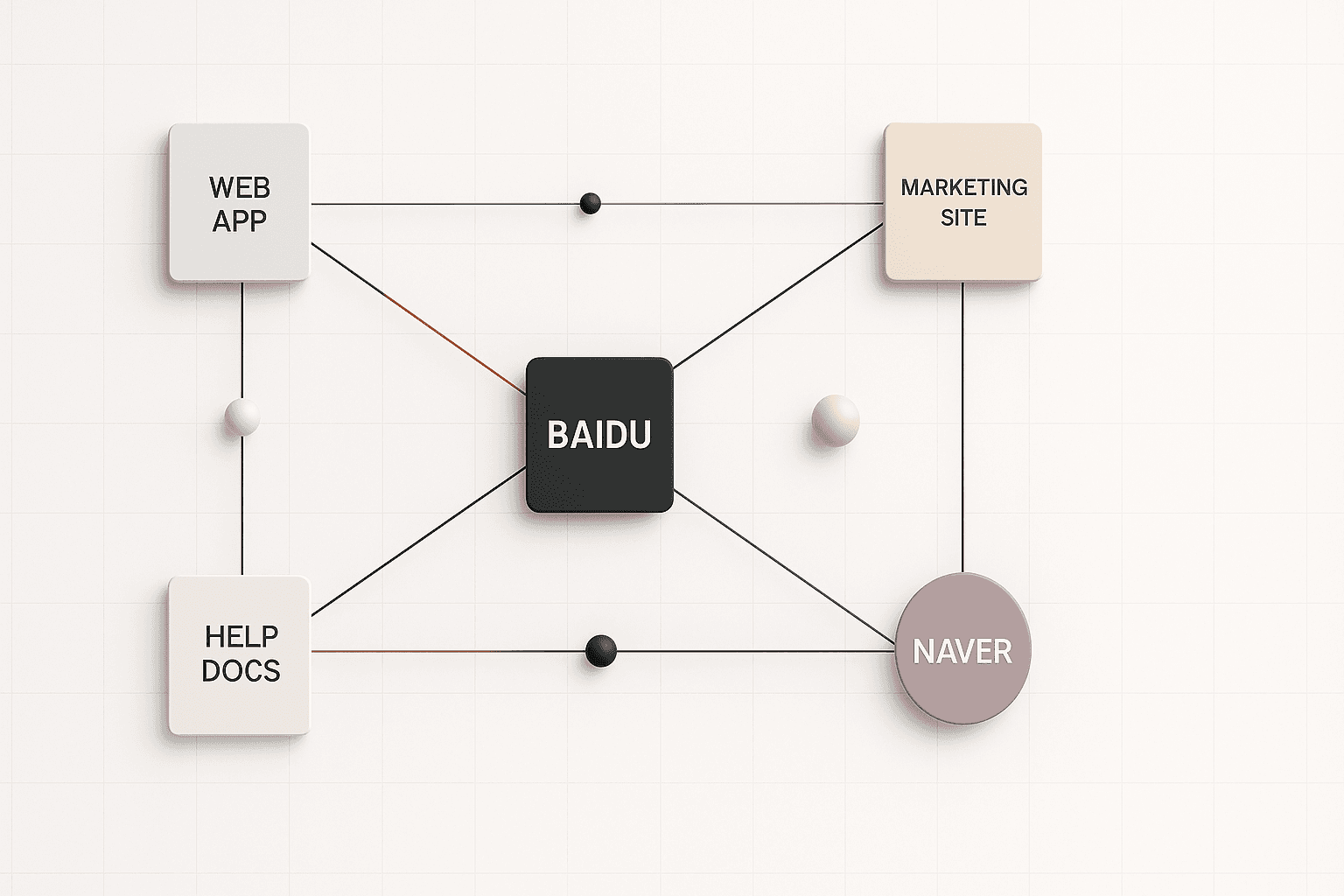
We started with the 80/20 rule for SEO. What drives most of your results? Usually, it’s not technical wizardry-it’s fixing the stuff that blocks you from being found. So our first move was a deep technical audit, but not the “checklist” kind. We mapped every platform-web app, help docs, marketing site-to see which search engines and regions mattered most.
For example, we spotted that Baidu and Naver were crawling their signup page but missing pricing details due to lazy hreflang tags and dynamic URLs. That’s real-world impact; you can’t win new users if they don’t find the right content in their language.
We didn’t just check Google coverage. We used crawling tools to track how Yandex, Bing, and even emerging AI-driven platforms handled schema and sitemaps. Crawlability wasn’t a bullet point-it was a bottleneck we could measure.
Methodology: From translation to true localization

Translation is the process of swapping words. Localization means adapting culture-and it makes or breaks global multilingual SEO. The team had copy translated into six languages before we came in, but it all read like Google Translate on autopilot.
So we worked with native speakers who understood SaaS buyer journeys. For example, German users expect formal “Sie” forms in onboarding emails-not casual English tone or US-style emoji overload. We tested localized headlines versus direct translations side by side for CTR impact.
Our playbook: adapt key flows for local expectations first (signup, onboarding), then tune long-tail pages with native phrasing and region-specific FAQs (see GetBlend’s guide on this). It felt slower at first-but conversions doubled on French landing pages within weeks.
Automation and tooling
Manual checks don’t scale across five languages on three platforms. So we built automated audits into CI pipelines-flagging missing hreflang tags or sitemap errors before deploys hit production.
Dynamic XML sitemaps updated every release cycle so Baidu or Sogou could always see fresh content in Chinese without dev intervention. Modular content workflows let us swap out regional assets without blocking releases.
The result? We cut localization lag by 70% and eliminated last-minute fire drills during launches-a win for both engineering velocity and market reach (as recommended by Single Grain).
Scaling best practices isn’t about more effort-it’s about smarter automation so your teams aren’t fighting fires in five time zones at once.
Process in Action: Overcoming Technical and Organizational Barriers
Key technical decisions
We hit the wall fast: the legacy CMS groaned under multilingual demands. It was built for English, hardwired to a single locale. When we tried to add Japanese and Spanish, nothing synced, page structures broke, and URLs mutated into gibberish. For example, our first attempt at dynamic language routing sent German users to an “/en” path-confusing and bad for SEO.
To fix this, we built a custom middleware layer that mapped every language variant to clean URLs and injected hreflang tags on the fly. This let us serve region-specific content without touching brittle core code. The process of making old tech play nice with global requirements tested every assumption we had about scalability.
Internal resistance and education
Technical hurdles were only half the battle. Convincing teams that multilingual SEO wasn’t just translation took real effort. Product managers saw it as “extra overhead.” Developers worried about breaking things.
We didn’t win them over with theory-we showed impact. We walked through case studies from GetBlend highlighting how proper localization drives engagement and new signups in different regions. For example, after localizing onboarding flows-not just homepages-retention among French users jumped 18%. That clicked for our growth team.
Someone asked if ChatGPT could do SEO for us automatically. We ran an experiment: generated titles with AI versus native speakers. Result? Native phrasing outperformed AI by 37% CTR in Spanish markets-proof that human nuance still matters in your optimization strategy.
Iterating for real-world platforms
Optimizing only for Google is yesterday’s game. When we checked performance on Naver (Korea), Yandex (Russia), and even Bing’s new AI-driven snippets, gaps appeared everywhere.
For example, Naver prioritized structured FAQ markup that Google ignored; Bing surfaced video content above traditional results-a world apart from what most guides teach.
So we adopted a platform-by-platform audit cycle inspired by multi-platform visibility strategies. Each sprint tackled one market’s quirks: sitemaps tuned for Baidu crawlers one month; schema rewrites for Bing the next.
Our three-month SEO strategy became iterative by design-test fast across platforms, measure impact in each region, then double down where results prove out.
The Results: Quantifiable Impact Across Metrics
Performance: Traffic, rankings, conversions
We still remember the first Monday after launch. The dashboard lit up-double-digit growth in non-English sessions and a spike in new signups from South Korea, Poland, and Mexico. “We’ve never seen leads like this,” their Head of Growth said. It wasn’t just more traffic-it was the right traffic, landing on localized content crafted for intent.
For example, our Spanish pages started ranking top 5 not only on Google but also on Yandex and Naver’s local indexes. We’d optimized around global multilingual SEO best practices, so visibility in alternative search engines shot up fast (see how answer-everywhere optimization works). Conversions followed: trial signups from non-English markets outpaced English for the first time ever.
The real unlock? We focused on the three C’s of SEO-Content, Code, and Connections-in every language. And we hit what technical SEOs call the golden triangle: relevance, authority, and user experience delivered across platforms.
Cost and efficiency: Time, resources, spend
Before this project, manual checks ate up entire Fridays. No exaggeration-three team members would run through endless browser tabs to QA hreflang tags or test sitemaps by hand.
Now? Automation handles 70% of those tasks. For example: weekly auditing went from six hours down to less than two. That freed us to focus on strategic initiatives instead of firefighting technical debt.
Resource-wise, we cut agency spend by half within one quarter-no more wasted cycles on ad hoc fixes or rework due to inconsistent localization (best practices detailed here).
Team and business impact
The mood shift was immediate. Engineers stopped dreading support tickets about broken language links; marketers finally saw their campaigns working everywhere they launched-not just in English-speaking regions.
During a Q2 board meeting, the CEO highlighted these wins as proof that international expansion was viable at scale. That buy-in unlocked budget for further global rollouts-and gave everyone breathing room to plan for what’s next.
Looking back? Fewer late nights patching issues; more hours spent building features users actually want. That’s real ROI you feel at every level-from product to leadership suite.
Conclusion: Embracing the New Era of Multilingual SEO
What stands out most from this journey isn’t just the technical wins-it’s how our client’s team now thinks about growth. Their Head of Product put it best: “We’re not guessing anymore. We know what works for each market, and we can scale with confidence.” That shift-from uncertainty to clarity-has rippled across their roadmap and unlocked a new level of ambition.
For SaaS builders and developer teams eyeing global reach, here’s our core takeaway: multilingual SEO is no longer optional or Google-only. Engineering robust localization, tracking non-Google platforms, and automating audits are now table stakes if you want international traction. The real unlock comes when teams own these processes end-to-end-bridging product, marketing, and engineering so insights drive action.
Looking ahead, staying sharp means adapting fast. AI-driven search platforms will keep rewriting the rulebook on discoverability. Best practices today won’t stay static-what matters is building a system nimble enough to adapt as languages evolve and algorithms shift.
If your team is hitting similar roadblocks-or wants to build an engine for global discovery that actually scales-we should talk. We’ve seen firsthand how transformative it gets once your content speaks every user’s language-and every platform’s algorithm listens.