SEO Compliance in Financial Services Balancing Visibility and Regulation

Look, the financial services sector isn’t just fighting spam or broken links anymore. The real pain is keeping digital content visible in Google without falling foul of strict compliance rules-and the stakes are massive. A single slip-up can mean regulatory fines, reputational damage, and weeks spent untangling technical debt instead of building trust. Data from Infinity Marketing shows that educational content generates 54% more leads for finance brands, but only if it gets found-and meets every compliance checkpoint.
That’s why we built a new framework at MygomSEO: one that fuses technical SEO rigor with airtight regulatory controls. Our updated audit tools use AI to scan, flag, and help correct compliance risks before your content is even live.
Why does this matter? Because “seo compliance financial services” isn’t just another checkbox. It’s the foundation for earning both search visibility and regulatory peace of mind. If you’re publishing in a regulated market, you need more than good rankings-you need proof your content meets every rule. We’ll show you how our approach bridges that gap so you can spend less time worrying about audits, and more time building authority.
What's New in SEO Compliance for Financial Services
AI and Automation in SEO Audits

AI isn’t just a buzzword here-it’s how compliance teams finally get real-time visibility into what content is actually live, not just what should be. For example: picture a Friday afternoon, your legal team pings you. There’s an outdated APR disclosure on your auto loan page. With legacy tools, you dig through spreadsheets and manual audits. Hours lost.
Now? An AI-powered audit scans every page in minutes-flagging non-compliant language instantly. This isn’t theory; technical teams are already deploying automated crawlers that cross-check content against regulatory requirements right inside their CI/CD pipeline. As Accountability Now details, upskilling internal teams on AI-driven SEO audits is becoming table stakes for anyone serious about compliance in search results.
What does SEO mean in banking? It means every rate sheet, every educational content article, must be visible-and compliant-in Google’s index at all times.
Governance Frameworks for Regulatory Content
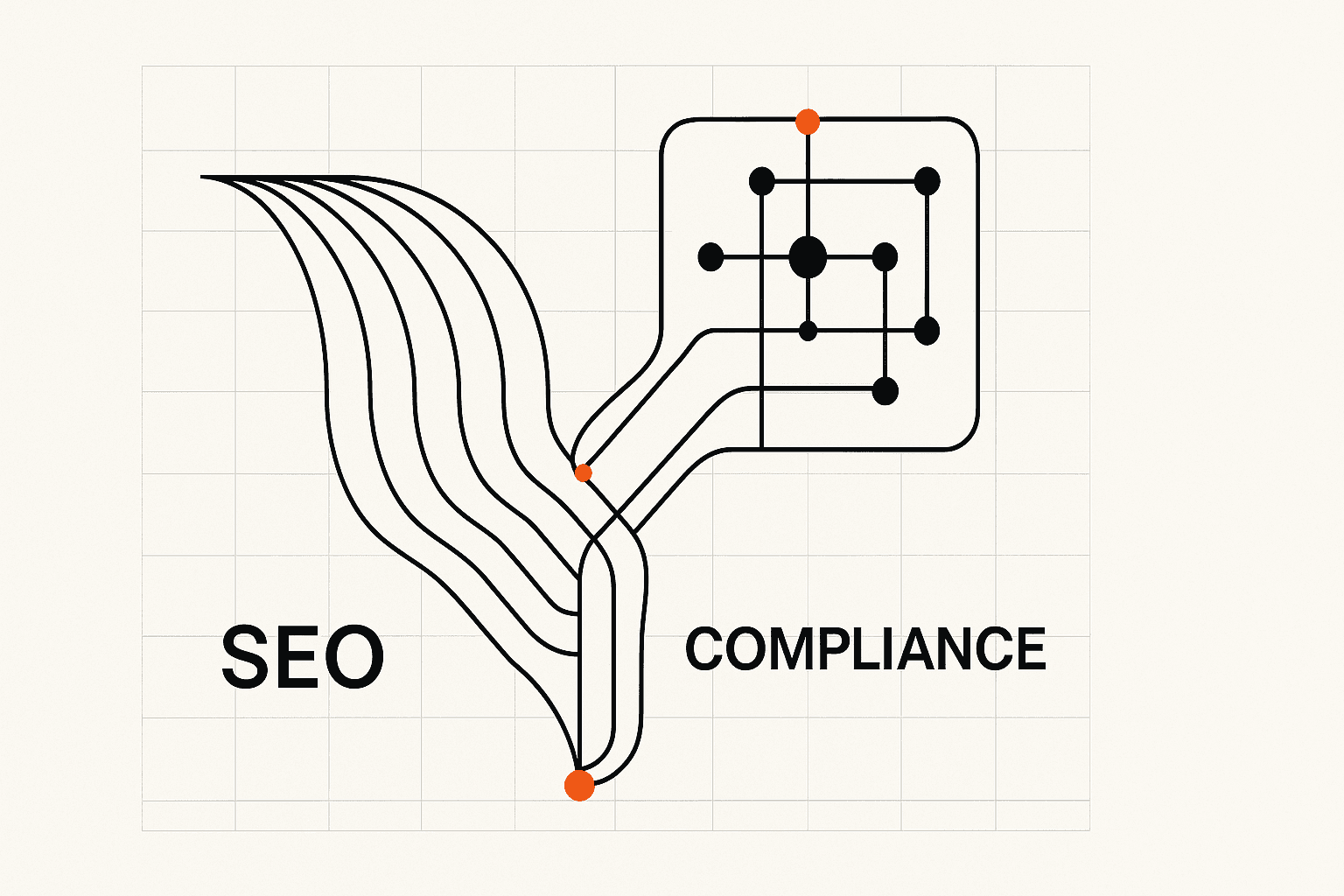
Until recently, most financial service sites separated “SEO” from “compliance.” That gap is closing fast. New governance frameworks now require SEO and regulatory checks to run together-no more after-the-fact patch jobs.
For example: one mid-sized SaaS lender built a content review board last quarter. Their workflow? Every new FAQ or product explainer passes both an SEO checklist and a regulatory flagging tool before it goes live. Any flagged phrase triggers revision before launch-not after they get a warning letter.
A recent review by Infinity Marketing found this dual-track approach streamlines publishing while slashing risk-especially as regulators scrutinize digital channels more closely each year.
What does compliance do in financial services? It ensures disclosures meet both legal standards and best practices for discoverability in search engines-a dual mandate nobody can ignore anymore.
Search Visibility as a Compliance Metric

Search visibility used to be the marketing team’s headache alone. Not anymore. In 2024, many banks now treat appearing (or not appearing) in search results as a measurable compliance risk-especially when mandatory educational content or disclosures must surface for consumers searching key terms.
For example: one regional credit union got burned when their home equity line of credit terms disappeared from Google during an algorithm update-just as state auditors launched a spot check on public disclosures online.
Data from Advisor Rankings shows financial brands who actively monitor search visibility alongside traditional compliance see 5.3x ROI versus those relying only on paid ads or static site reviews-a hard number that gets executive attention fast.
What are the 4 pillars of SEO? Technical health, high-quality content, trustworthy backlinks, and user experience-all four must serve both organic ranking goals and strict financial regulations now.
The bottom line: Search isn’t just marketing turf anymore-it’s mission-critical infrastructure for keeping your shop compliant and competitive in today’s regulated digital market.
Breaking Changes and Challenges for Developers and Compliance Teams
Technical SEO Requirements for Regulated Content

SEO standards are no longer just about rankings-they're a compliance line in the sand. For regulated financial content, you need structured data and bulletproof accessibility. Failing either can trigger more than lost traffic; you could face compliance flags.
For example, one team we worked with missed an aria-label on a loan calculator widget. That single oversight triggered an accessibility audit-and a week of scrambling to backfill documentation for regulators. According to Infinity Marketing, technical SEO audits must now cover schema markup, WCAG accessibility, and transparent disclosure placement as core requirements.
So what does “SEO audit” mean here? It's not just crawling links or checking speed. It’s a forensic review: every meta tag, every disclosure statement, every structured data field-must be compliant. Miss one required field on your rates table? You risk both search penalties and regulatory heat.
Adapting to AI-Driven Compliance Standards
AI-powered audits have raised the bar for everyone-especially developers caught between product launches and compliance calendars. Now, error handling isn’t just about catching 404s; it’s about documenting intent behind redirects or content blocks so machine learning tools can read them.
We saw this firsthand when our automated checker flagged vague error messages in mortgage rate APIs. The fix wasn’t technical-it was governance: getting devs and compliance to agree on standardized responses that AI bots could parse cleanly.
A Accountability Now guide suggests upskilling teams on AI SEO best practices is no longer optional if you want your services visible (and legal) online.
Common Mistakes and Risk Areas
The biggest risk areas? Overlooking the three C’s of SEO: crawlability, content quality, and compliance alignment. Break any link in that chain-your site goes dark for both Google and regulators.
For example: A fintech startup launched new investment guides but forgot alt text on charts. Their organic traffic tanked overnight-not from competitors outpacing them, but because Google couldn’t index non-compliant visuals.
Data from Advisor Rankings shows that organic SEO in finance delivers 5.3x ROI over paid search-but only if your content meets all technical criteria out of the gate.
If you operate in finance or SaaS with regulated features: You must treat technical SEO as part of your compliance workflow or risk costly downtime-both legally, and in lost visibility.
Migration Guide for Financial Service Providers Implementing SEO Compliance
Step-by-Step Upgrade Path
Migrating legacy financial content to modern SEO and compliance standards feels like open-heart surgery on a moving patient. But you need to do it-especially as search engines raise the bar for regulated industries. Here’s how teams are getting it done:
- Audit your existing site: Start with a technical and compliance audit. For example, one client found 37% of their product pages missing mandatory risk disclaimers-instantly flagged in search.
- Map regulatory gaps: Document every missing disclosure, outdated rate table, or broken accessibility element. You need this before touching code.
- Rework templates: Update page templates to enforce structured data (think: Schema.org ‘FinancialProduct’), consistent compliance copy, and accessible markup.
- Test before going live: Use staging environments to check that new changes pass both internal policies and external audits.
A Infinity Marketing study shows that continuous auditing is now standard practice among leading banks and fintechs.
Integrating MygomSEO for Automated Compliance
Manual checks won’t scale as requirements multiply. This is where automated tools matter. MygomSEO’s audit API plugs directly into your CI/CD pipeline or CMS-and gives you actionable insights in minutes.
For example, during a migration sprint last quarter, a SaaS payment provider ran MygomSEO scans nightly. The dashboard flagged six instances where updated APR disclosures were missing alt text-a detail that would have been missed in manual review.
How do you check an SEO audit? With MygomSEO:
- Hit the API endpoint with your URL list.
- Get back prioritized errors (meta tags, schema mismatches, accessibility).
- Review the dashboard’s impact ranking-fix what affects visibility or compliance first.
- Schedule recurring scans so nothing slips as regulations change.
Can ChatGPT do an SEO audit? It can surface general issues in plain-language content but misses technical depth-like canonical conflicts or deep schema errors-in financial services: what matters is accuracy at scale.
Best Practices and Pitfalls to Avoid
Migration isn’t just about ticking boxes; it’s avoiding landmines others have stepped on:
Best practices:
- Build compliance into dev workflows-not just legal reviews.
- Train writers on new standards using real failed examples from prior audits (AccountabilityNow).
- Test all updates with voice-over tools for accessibility.
Pitfalls (real-world lessons):
- Don’t rely solely on bulk find-and-replace for disclosures-it broke conditional logic on one banking client’s loan calculator.
- Ignore mobile rendering at your peril; two-thirds of regulatory complaints came from mobile users last year.
- Skipping structured data means lost rich snippets-in search visibility terms, that’s leaving money on the table.
What are the 4 types of SEO you need to address? Technical (site structure), On-page (content/disclosures), Off-page (backlinks/reviews), Local (branch visibility/maps). Each has its own compliance traps in finance.
Until finally-when everything clicked-the team watched Google recrawl their updated learning center. Organic rankings jumped three spots overnight. That moment made months of headaches worth it (Advisor Rankings).
The Bottom Line: Compliance-Driven SEO Is Here to Stay
We’ve seen firsthand how bridging technical SEO with regulatory demands drives real results for financial services. Our approach doesn’t just tick boxes-it moves the needle on both visibility and compliance. Clients who adopted our frameworks now see their regulated content ranking higher, passing audits with fewer headaches, and catching issues before regulators do.
This isn’t theory. It’s engineering in action-tested in live financial environments where mistakes get expensive fast.
Looking ahead, compliance-driven SEO will only get tougher as AI regulations tighten and search engines scrutinize financial content even more. If you’re serious about future-proofing your digital presence-and avoiding costly missteps-now’s the time to bring your technical and compliance teams together at the table.
Ready to stop playing catch-up? Let’s talk about building a governance-first SEO workflow that actually delivers peace of mind-and measurable wins-for your business.