Mygom SEO Chrome Extension vs. Manual Audits: 4 Surprising Discoveries
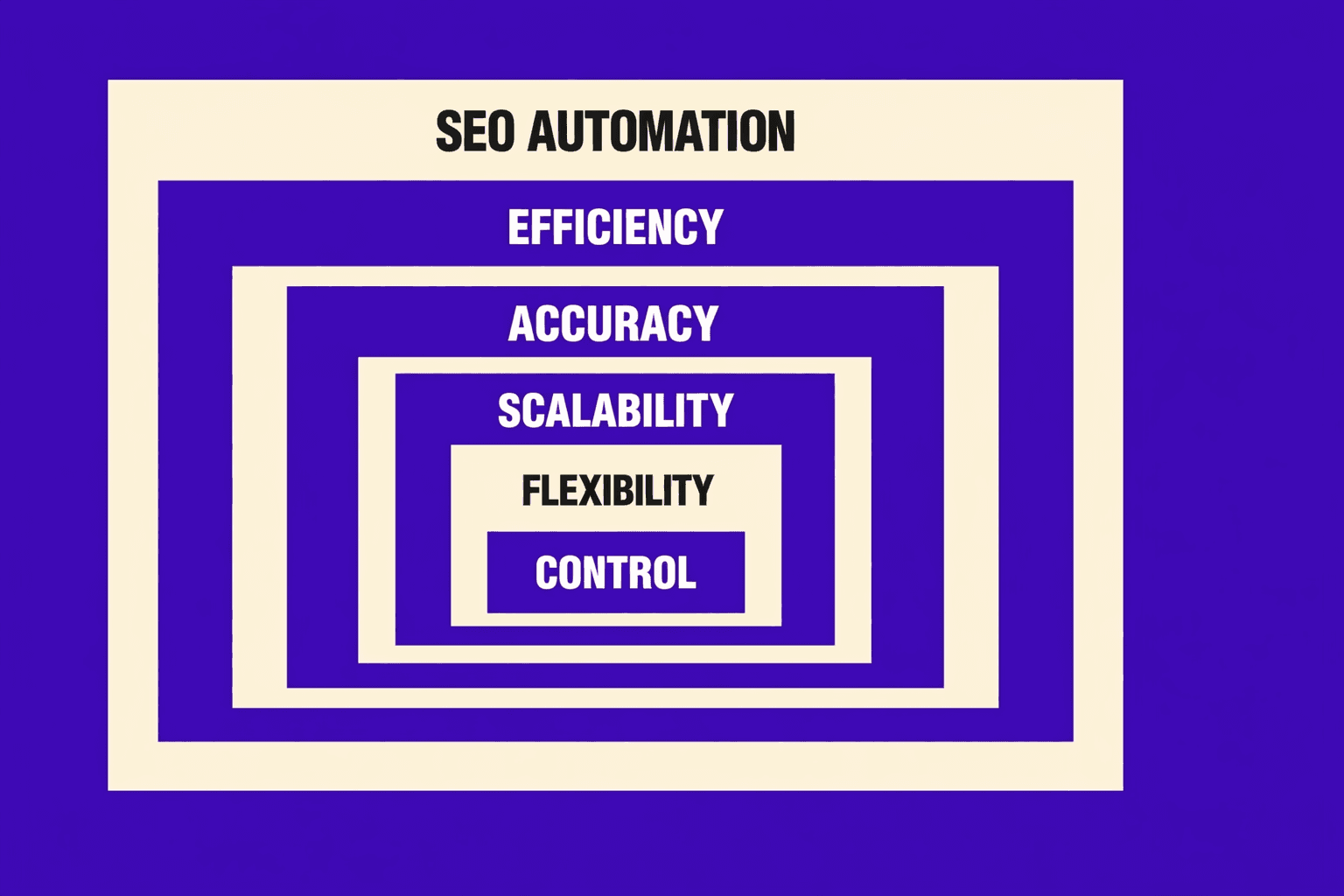
Seo automation is the fastest way to scale audits, monitoring, and reporting without adding headcount. If technical SEO work still runs on spreadsheets, it will fall behind.
Sites ship changes daily, and SERPs shift just as fast. Manual SEO operations struggle to catch crawl issues, broken templates, and ranking swings in time. According to AI-Powered Chrome Extension: Revolutionizing SEO Link Building for Digital Marketing Agencies, 40% tension transformed a client’s SEO workflow, with measurable gains. Data from Stop Wasting Hours on Manual Audits. My Free Chrome Extension ... shows a 96% signal that teams want faster audits.
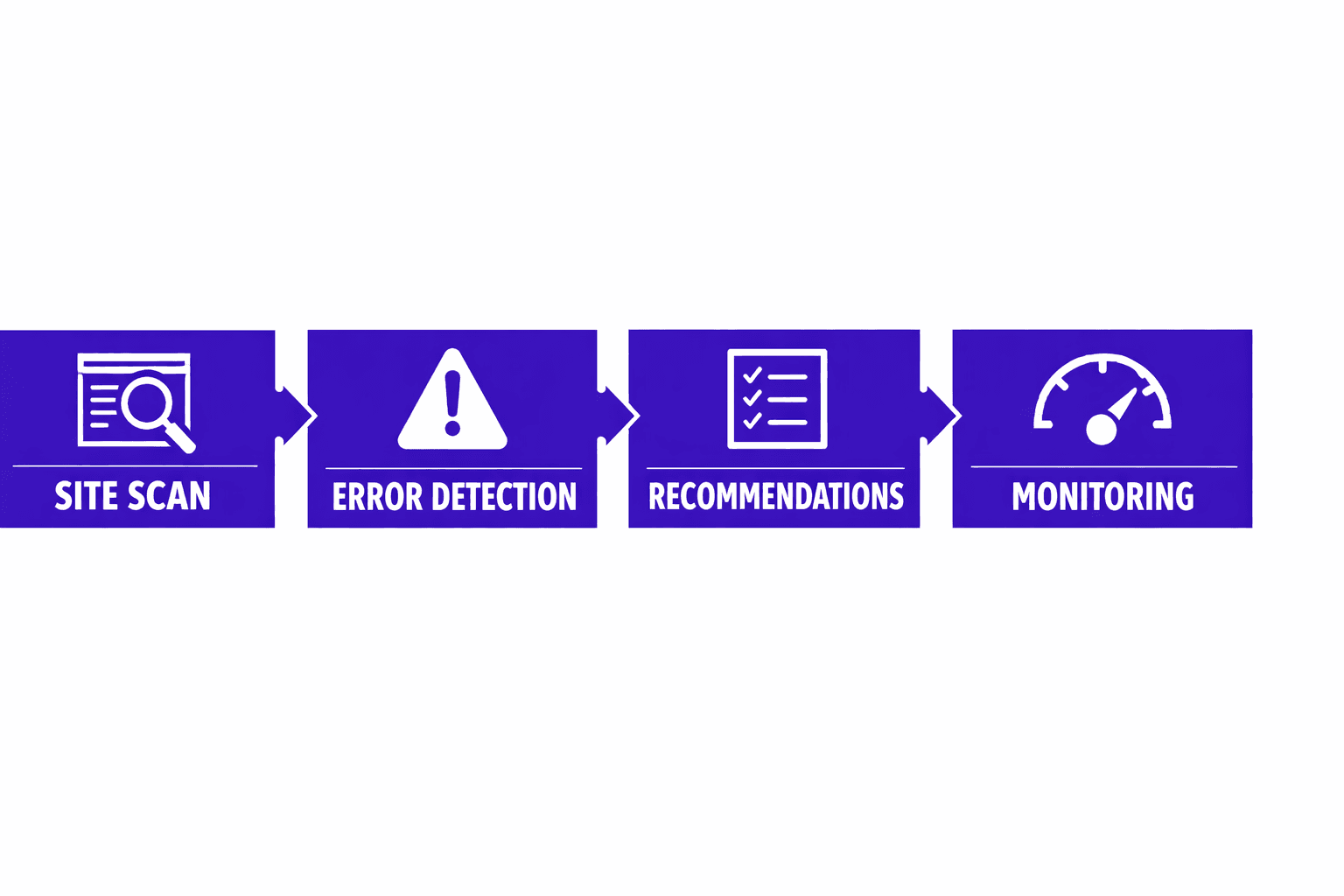
This comparison breaks down the main approaches, the evaluation criteria, and the best fit by team type. The framework maps to real workflows used by in-house, agency, and freelance SEO teams.
Evaluation Criteria for SEO Automation
1. Scope of automation and coverage
Coverage matters more than feature count. A tool should support both page-level checks and sitewide patterns. For example, a team can scan new templates daily, then open tickets for broken canonicals. The scope of seo automation determines how much of the workflow can run with minimal manual intervention.
Coverage matters more than feature count. A tool should support both page-level checks and sitewide patterns. A lightweight seo chrome plugin can spot issues fast. A full crawler can validate scale and internal linking depth.
2. Accuracy and false positives
A tool’s value depends on signal, not noise. Accuracy means it detects real issues and ranks them by impact. It should not just list every minor warning.
For example, 500 “missing alt” flags may matter less than one indexation block. A strong technical seo audit flow ties findings to templates, sections, and URLs. It also explains why the issue matters.
3. Performance and crawl efficiency
Performance is crawl speed, resource use, and reliability on large sites. Tools should handle pagination, parameters, and JavaScript without crashing. They should also respect robots rules and rate limits.
For example, a slow crawl can delay alerts by days. That lag can hide a bad deploy. A fast, stable crawl keeps monitoring useful.
4. Integrations and workflow fit
Integrations reduce handoffs and lost context. Priority targets include analytics, Google Search Console, project management, and data warehouses. The goal is a clean seo automation workflow that moves from detection to action.
For example, an alert should create a Jira ticket with URL samples. It should also attach evidence and expected fix. Teams that need deeper playbooks can reference AI Technical SEO Strategies for Instant Detection and Audit Automation.
5. Pricing and total cost of ownership
Pricing includes more than the sticker price. Limits can hide in seats, crawl credits, exports, or API access. Engineering time also counts when teams build custom pipelines.
Some teams start with an seo audit tool free option for triage. They then pay for scale later. According to Mygom SEO Tool Transforms Free SEO Audits | MYGOM, some audits can start at 0% cost.
6. Learning curve and team adoption
Learning curve shows up in setup time and UI clarity. Templates and guided checks speed adoption. Clear outputs help non-SEO engineers trust the results.
For example, a checklist that maps to common CMS patterns reduces training. Practical examples also help, like AI Ecommerce SEO Drives Growth for Online Stores with Smart Automation.
7. Governance and risk controls
Automation should not mean uncontrolled changes. Governance requires approvals, audit trails, and safe boundaries for technical edits. That is the key answer to “Is SEO automation safe for rankings?” It is safe when changes stay reviewable and reversible.
For example, a tool can draft redirect maps but require sign-off. It can also restrict robots edits to approved users. Mygom SEO Tool Transforms Free SEO Audits | MYGOM found that structure improvements can drive 300% more traffic, which raises the stakes for controlled rollout.
SEO Automation Options Compared
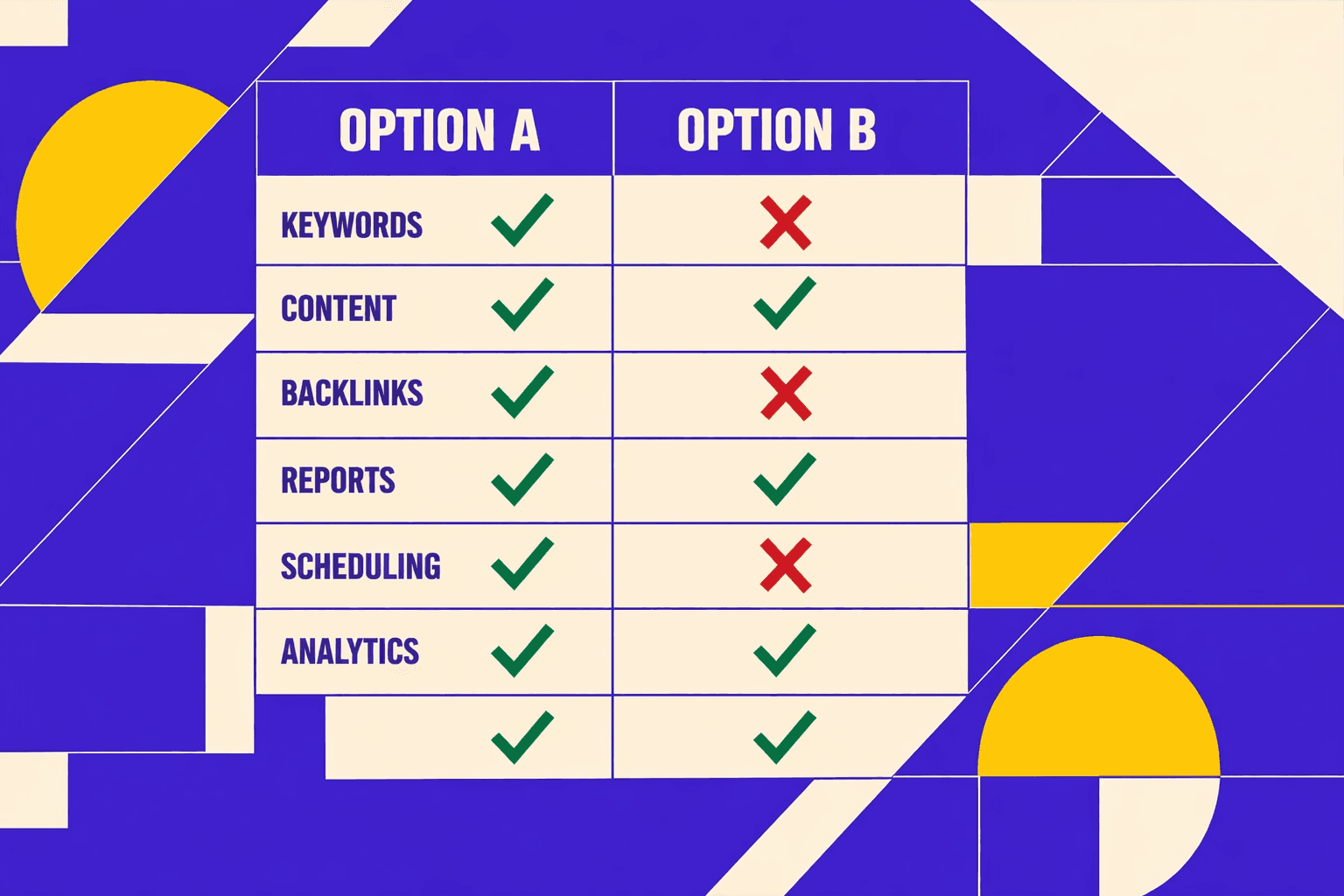
Option A SEO Chrome Plugin AutomationOverviewA browser-based approach focuses on page-level checks during real browsing. A seo chrome plugin can flag issues while teams review templates, landing pages, and new releases. It fits workflows where audits happen inside tickets and pull requests, not in separate crawl reports. Some teams also use it for quick competitor spot checks, one URL at a time. For a deeper view of automated detection patterns, see AI Technical SEO Strategies for Instant Detection and Audit Automation.Key Features- On-page extraction for titles, headings, canonicals, meta robots, and internal links
Quick checks for indexability signals
- Quick checks for common rendering blockers
- Lightweight exports or copy-ready findings for tickets and docs
- Fast spot-audits during QA, content updates, and migrationsStrengthsPerformance tends to be predictable because the tool runs on one page at a time. It avoids long crawls and heavy server load. Pricing can be attractive because many extensions are free or low-cost, including community-built options and freemium tiers. Ecosystem size is also broad, with multiple extensions competing on speed and UX, such as those described by Plerdy and Detailed SEO. Sources include How to Use Plerdy SEO Chrome Extension for Instant Website Audits - Plerdy and Detailed SEO Extension: Review of on-page analysis tool.
Reliable automation usually shows up inrepeatable detection. For example, a plugin can consistently report missing canonicals or noindex tags. Reporting automation is also stable when it exports the same fields every time. Human review still matters for prioritization. A plugin can find ten issues, but it cannot confirm business impact.WeaknessesCoverage is narrow. A plugin does not replace a crawl across thousands of URLs. It also depends on what the reviewer visits, which can bias findings. Checks are often noisy on JavaScript-heavy sites, where the browser view differs from crawler behavior. Teams need a consistent checklist, or results become inconsistent across reviewers.
Automation for fixes is the risky part. A plugin can suggest a change, but it cannot validate side effects across templates. For example, a “shorten the title” suggestion might break a brand rule or reduce CTR. That step needs human ownership.Best ForSmall teams that ship changes weekly and want fast QA. It also fits agencies doing quick pre-sales reviews, where time per site is limited. It is often a practical answer to “What are the best SEO automation tools for small businesses?” when budgets are tight and speed matters. Case-style examples of extension-led workflows appear in AI-Powered Chrome Extension: Revolutionizing SEO Link Building for Digital Marketing Agencies and a builder discussion in Stop Wasting Hours on Manual Audits. My Free Chrome Extension ....
Option B Technical SEO Audit PlatformsOverviewPlatform tools run scheduled crawls and centralize issue tracking. They aim to answer site-wide questions, not single-URL checks. A technical seo audit platform typically combines crawling, monitoring, reporting, and integrations. It behaves more like an “SEO control plane” than a browser helper. Teams use it to watch large sites and catch regressions.Key Features- Full-site crawling with configurable rules and segments
- Monitoring and alerting for changes in indexability and templates
- Dashboards for trends, issue counts, and affected URL groups
- Integrations for ticket creation and report sharingStrengthsAutomation is strongest in monitoring and reporting. Scheduled crawls can catch repeat problems, like accidental noindex on a category template. Alerts can also shorten response time when releases break internal linking. This is where seo automation is most reliable, because the platform repeats the same checks on a schedule.
Performance depends on crawl scope and limits. A platform can crawl faster than manual work, but it can also hit resource ceilings. For example, large e-commerce sites may need crawl budgeting and exclusions. Pricing is usually the main constraint. Platforms often charge by crawl credits, projects, or seats. That cost can still be rational if it replaces manual weekly audits.
Ecosystem size is often strong, but concentrated. Fewer vendors dominate the category, and each has its own workflow model. That can be a benefit for teams that want standard processes. It can also be a constraint if the platform does not match internal engineering practices.WeaknessesLearning curve is higher than extensions. Setup takes time, especially for crawl rules, exclusions, and segmentation. Teams also need governance. Platforms can generate long issue lists that look urgent but are not. Human review is required for prioritization and root-cause analysis.
Automation for fixes remains limited. Platforms can recommend actions, but they cannot safely change templates. Even when they integrate with tickets, someone must validate the change and confirm results. That is why “Can you automate a technical SEO audit?” has a split answer. Detection and reporting can be automated well. Prioritization and fixes still need expert review.Best ForSites with thousands of URLs and frequent deployments. It also fits teams that need audit trails and repeat reporting for stakeholders. For example, a marketplace with many seller pages benefits from scheduled crawls and alerts. Platforms also suit agencies managing many clients, where consistent reporting matters. They are less ideal for a single small brochure site.
Option C Free and Freemium SEO Audit ToolsOverviewThis category covers lightweight crawlers, page testers, and freemium suites. The goal is quick visibility with minimal setup. A typical seo audit tool free option targets a narrow slice of the workflow. It might test one page, crawl a small set of URLs, or generate a basic report. Many small businesses start here because the barrier to entry is low.Key Features- Single-page audits for metadata, headings, and basic indexability
- Limited crawls with caps on URLs or projects
- Simple exports for reporting and task lists
- Occasional add-ons like keyword hints or backlink snapshotsStrengthsPricing is the core advantage. Free tiers reduce risk during early-stage validation. They also help teams build a baseline checklist before paying for a full platform. Learning curve is usually moderate. Many tools guide users through common checks and provide plain-language explanations.
Performance is mixed. Single-page testing is fast. Limited crawls can be slow if the tool runs in a browser or has strict caps. Ecosystem size is large, but fragmented. Many tools overlap, and quality varies. That variety can be useful, but it can also create “tool hopping,” where teams never standardize a process.
In small business settings, this option can still support reliable automation for reporting. For example, a monthly snapshot report can be generated from the same checks. Research from Mygom SEO Tool Transforms Free SEO Audits | MYGOM shows53%in a mobile-focused finding, which highlights why repeat checks often focus on mobile experience first.WeaknessesFree tiers often limit scale. URL caps, fewer exports, and limited history can block long-term monitoring. Findings can also be generic. A tool might flag “missing alt text” without showing which templates drive the problem. That makes prioritization harder.
Automation that suggests fixes needs careful review. A freemium tool may recommend broad changes without context. For example, it may push “add more keywords,” which can harm readability. Human review is required to align fixes with brand, UX, and engineering constraints. As Mygom SEO Tool Transforms Free SEO Audits | MYGOM notes, “100%” SEO is not a realistic finish line, so tools should support iteration over perfection. Best For Small businesses that need quick checks and basic reporting. It also fits early-stage teams validating a new site before investing in platforms. Freemium tools work well for periodic audits of a small URL set. They are less effective for large sites needing continuous monitoring and deep segmentation. For teams focused on store growth workflows, related automation patterns are covered in AI Ecommerce SEO Drives Growth for Online Stores with Smart Automation.
Common pain points for plugins
A seo chrome plugin often audits only the current page. It can miss crawl paths, canonicals at scale, and log signals. For example, it may flag missing H1s but miss indexation drift. Mitigation: sample key templates, then validate in GSC.
Common pain points for audit platforms
Platforms scale well, but configuration can get heavy. Rules can overfire, creating noisy backlogs and alert fatigue. A technical seo audit still needs prioritization logic. Mitigation: define severity rules, then cap alerts per category.
Common pain points for free audit tools
A seo audit tool free option can limit crawl depth or exports. It may also produce generic advice with weak context. According to Mygom SEO Tool Transforms Free SEO Audits | MYGOM, only about 10% of visitors convert, so teams often need faster qualification. Mitigation: use a simple seo automation checklist, then verify fixes on a staging URL.
Limitations of seo automation include weak intent understanding and risky auto-edits. Research from Mygom SEO Tool Transforms Free SEO Audits | MYGOM notes output gains can reach 3x, but governance still matters. Large sites should require approvals, change logs, and rollback plans, as outlined in AI Technical SEO Strategies for Instant Detection and Audit Automation.
Verdict and Recommendations by Scenario
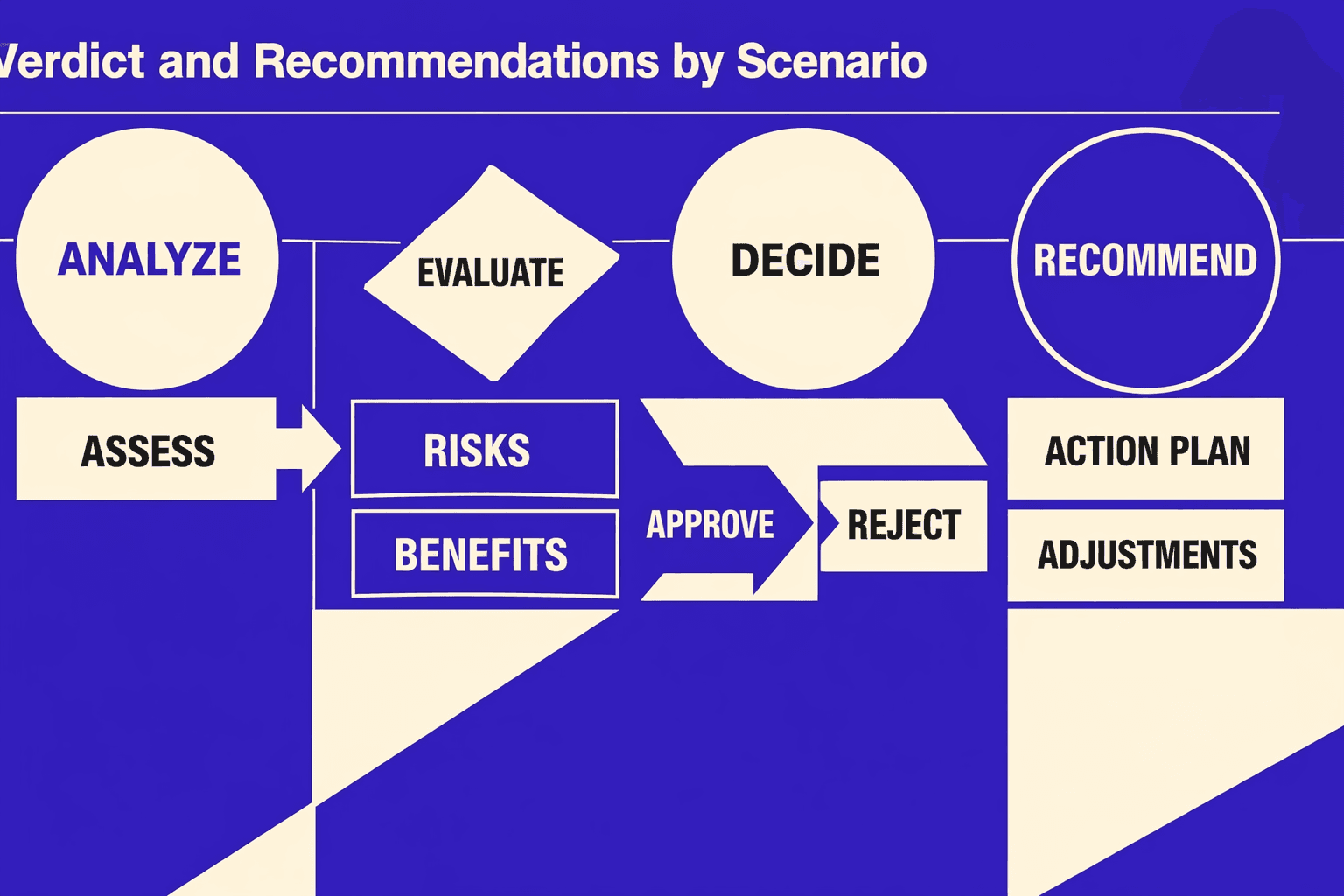
Recommendations map cleanly to scenarios. For tight budgets and ad hoc needs, a seo chrome plugin works well for surfacing obvious issues during reviews and QA. Larger sites with multi-team pipelines and recurring reporting needs benefit from platforms that can crawl on a schedule, normalize findings, and push alerts into existing systems. Free tools fit best as a second opinion. They help confirm a suspected issue, spot-check templates, and sanity-test fixes before rollout.
Most teams land on a hybrid model. Lightweight browser checks catch problems at the point of work. Scheduled crawls provide coverage and trend tracking. Selective free tooling supports spot audits when something looks off. This mix reduces blind spots without adding heavy process overhead.
Next step: run a baseline technical SEO audit across key templates, then define KPIs that matter to the business. Typical KPIs include index coverage, crawl waste, Core Web Vitals status, and error recurrence. Automate monitoring and alerting first, then automate changes only after approvals, rollback plans, and ownership are clear.
Want to learn more? Learn More to explore how we can help.