How Google AI Overviews Are Killing Organic Traffic (And What to Do About It)
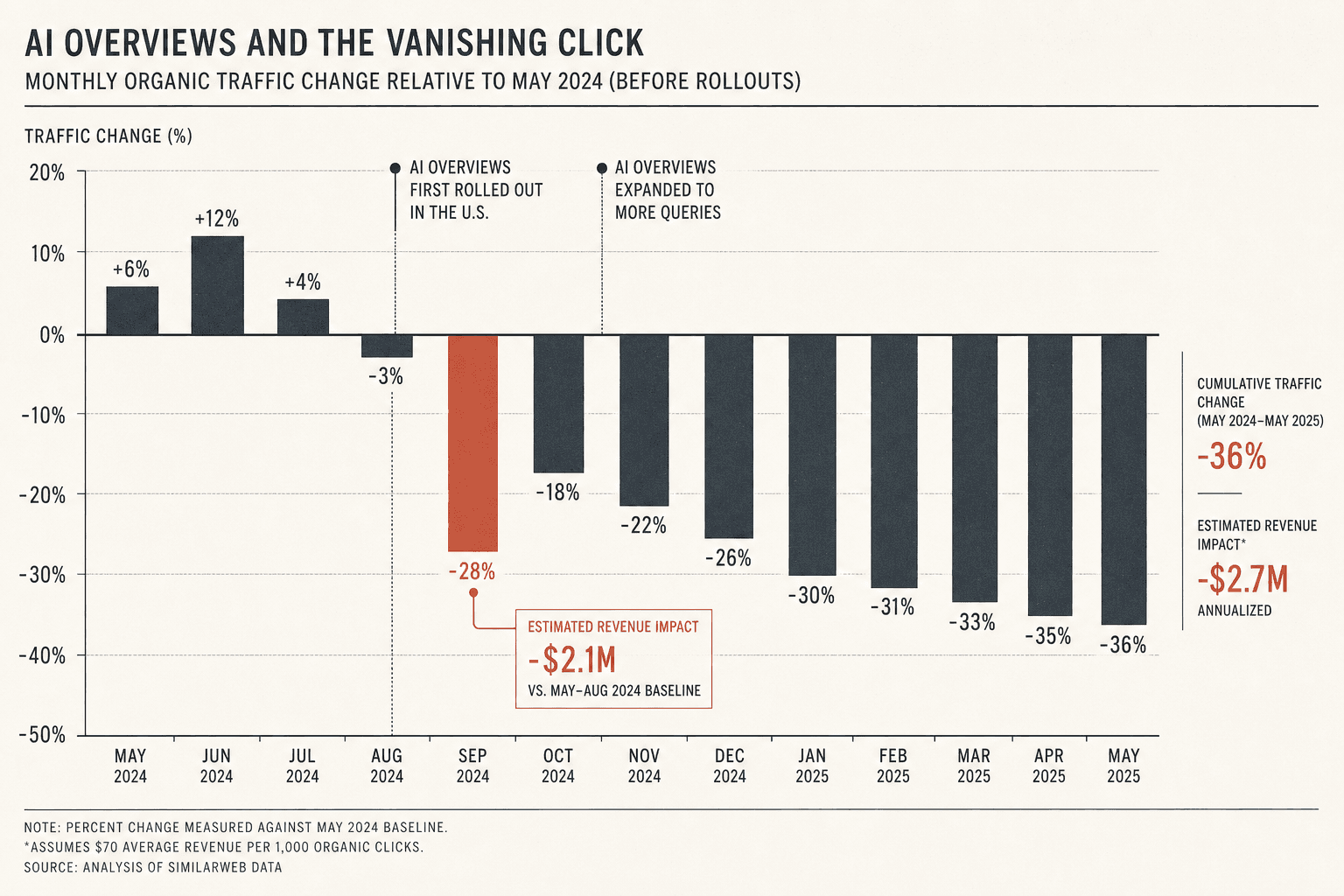
AI overviews seo is rewriting the click map for informational search. You can still hold rankings while clicks, leads, and website traffic slide anyway. According to Is AI Killing Web Traffic? How AI Overviews Impact Organic Website Traffic, AI Overviews can cut position-one organic CTR by 58%. Data from Is AI Killing Web Traffic? How AI Overviews Impact Organic Website Traffic also shows Google still drives 61% of local discovery, so you cannot ignore its new answer layer.
We built Mygomseo to track AI Overview citations, prompt shifts, and content changes at scale. That gave us a live view of what earns visibility in AI answers.
In this guide, we will show why traffic drops happen, how we adapt, and which fixes recover lost visibility fast. The goal is simple: stop chasing blue links alone and start winning the answer box too.
AI Overviews SEO Traffic Drops and What It Costs
The symptoms we see first
If your top-of-funnel blog is slipping, you are not imagining it. In ai overviews seo, the first signal is often weirdly calm. Impressions stay flat, or even rise a bit. Rankings move around, but not enough to explain the loss. Then clicks drop anyway, and CTR starts sliding across informational pages.
That is the pattern teams bring us most. One week, nothing looks broken in Search Console. The next week, the same pages drive fewer visits from the same search results. Founders see it in pipeline reviews first. In-house teams feel it when monthly traffic reports stop matching lead volume.
We had one of those mornings ourselves. Forty-seven browser tabs. Week three of research. The pages still ranked. The impressions still showed up. But the clicks were gone, and nobody could explain why fast.
Why informational pages get hit hardest
Yes, AI Overviews can reduce organic traffic. They hit hardest on queries Google can answer inside the page. Think definitions, comparisons, quick how-tos, and early research questions. If Google can summarize the answer directly, fewer people need to click through.
That explains the second painful question too. Why is traffic dropping if rankings have not changed much? Because ranking is no longer the whole game. Your page can still appear high, while the AI answer captures attention first and solves enough of the query.
Research from HubSpot shows marketers are already seeing google ai overviews traffic change the click pattern. Mashable also reported on research showing AI summaries reduce outbound clicks from results pages. The loss is strongest when the visit was optional.
The business impact beyond vanity traffic
This is where the damage stops being cosmetic. Fewer blog visits means fewer demo assists later. Your remarketing pools shrink. Email capture drops. Over time, branded demand gets weaker because fewer new buyers ever enter your world.
That is why founders and lean teams feel this faster than big publishers. If blog traffic feeds pipeline, each lost click has downstream value. Forbes argues AI answers often erase the need for a visit when the searcher only wants a fast answer. According to Rewarx, some sellers should expect traffic reductions of up to 40% on exposed query patterns.
Root Cause Analysis Behind Google AI Overviews Traffic
The click loss mechanism
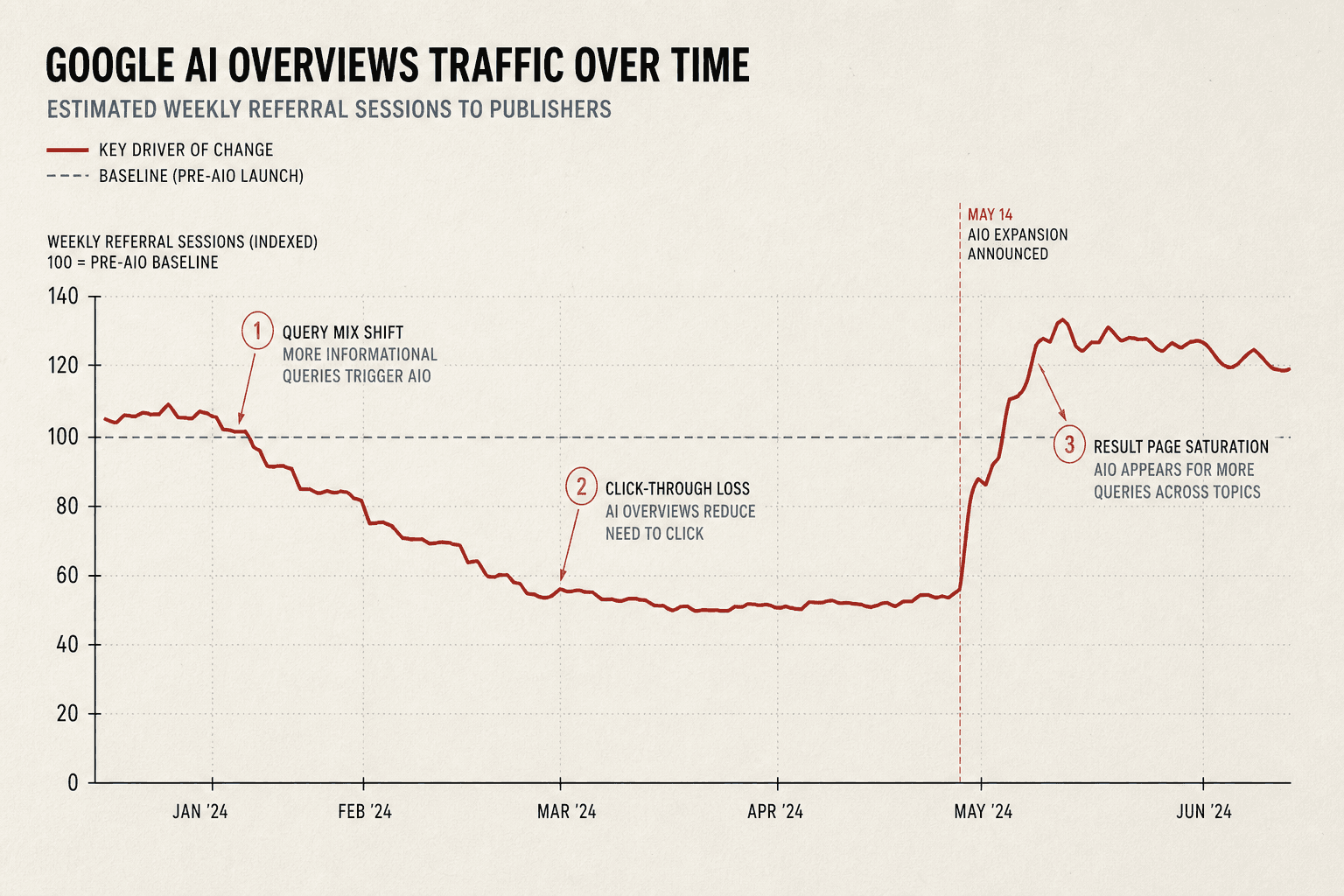
The hard part is this: the drop is not only rankings. It is behavior. Inai overviews seo, the real change happens inside the search results page itself.
Google now compresses informational intent into one fast answer. Users get the definition, summary, steps, and comparison before they reach your page. That means fewer clicks, even when your rankings still look fine. HubSpot explains this shift clearly in Is AI Killing Web Traffic? How AI Overviews Impact Organic Website Traffic.
This is why teams misread the problem. They see stable positions in the search engine and expect stable traffic. But AI search changes the path. Position still matters, yet citation eligibility matters more when Google can answer first.
For example, we had 47 browser tabs open in week three. Rankings held. Clicks did not. The page was visible, but the answer was already consumed on the SERP.
According to Google AI Overviews Are Eating Your Website Traffic. Here’s How To Get That Traffic Back, even a site with 500 month in organic visits can feel this loss fast. The issue is not just traffic volume. It is lost intent before the visit starts.
Why old SEO quick fixes fail
This is where bad advice spreads. Teams react by publishing longer posts, stuffing FAQ blocks, or spraying schema across every page. Those moves may change surface signals, but they do not fix the root cause.
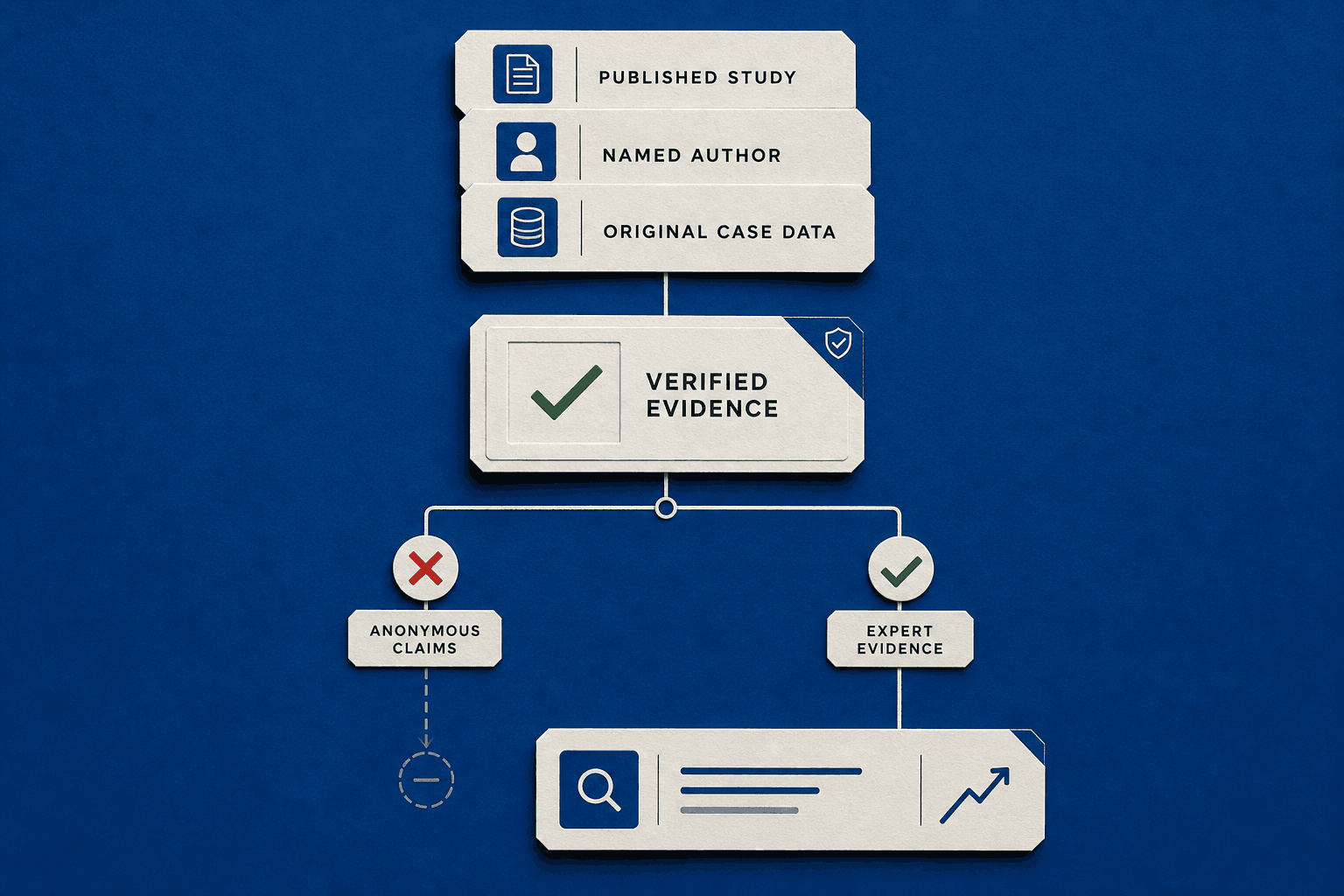
The root cause is poor answer extraction. If Google cannot lift a clean answer from your page, it will cite someone else or skip you. Rewarx makes a similar point in AI Overviews Killing Organic Traffic - What Ecommerce Sellers Need to Know.
So, do AI Overviews kill SEO? No. They kill lazy SEO patterns. If your content only chases length, old templates, or generic keyword use, it loses value faster inside AI results.
Research from Google AI Overviews Are Eating Your Website Traffic. Here’s How To Get That Traffic Back shows that losing 200 month visits becomes very possible when overview answers absorb the click.
What Google is rewarding inside AI answers
What content gets cited in AI Overviews? Usually, pages that make extraction easy. Clear entities help. Concise definitions help more. Fresh evidence, direct claims, and tight query-answer alignment all raise your odds.
Google also needs crawlable sections. That means clean headings, direct paragraphs, and answers placed where systems can parse them fast. Streamworks highlights this shift in Google AI Overview: How It's Changing SEO and Lowering Click-Throughs.
So the fix is practical. Build pages that answer one question clearly, prove the claim, and show why the source is current. That is the real survival move inai overviews seo.
AI Overview SEO Strategy for Visibility in Search Results
Restructure pages for extractable answers
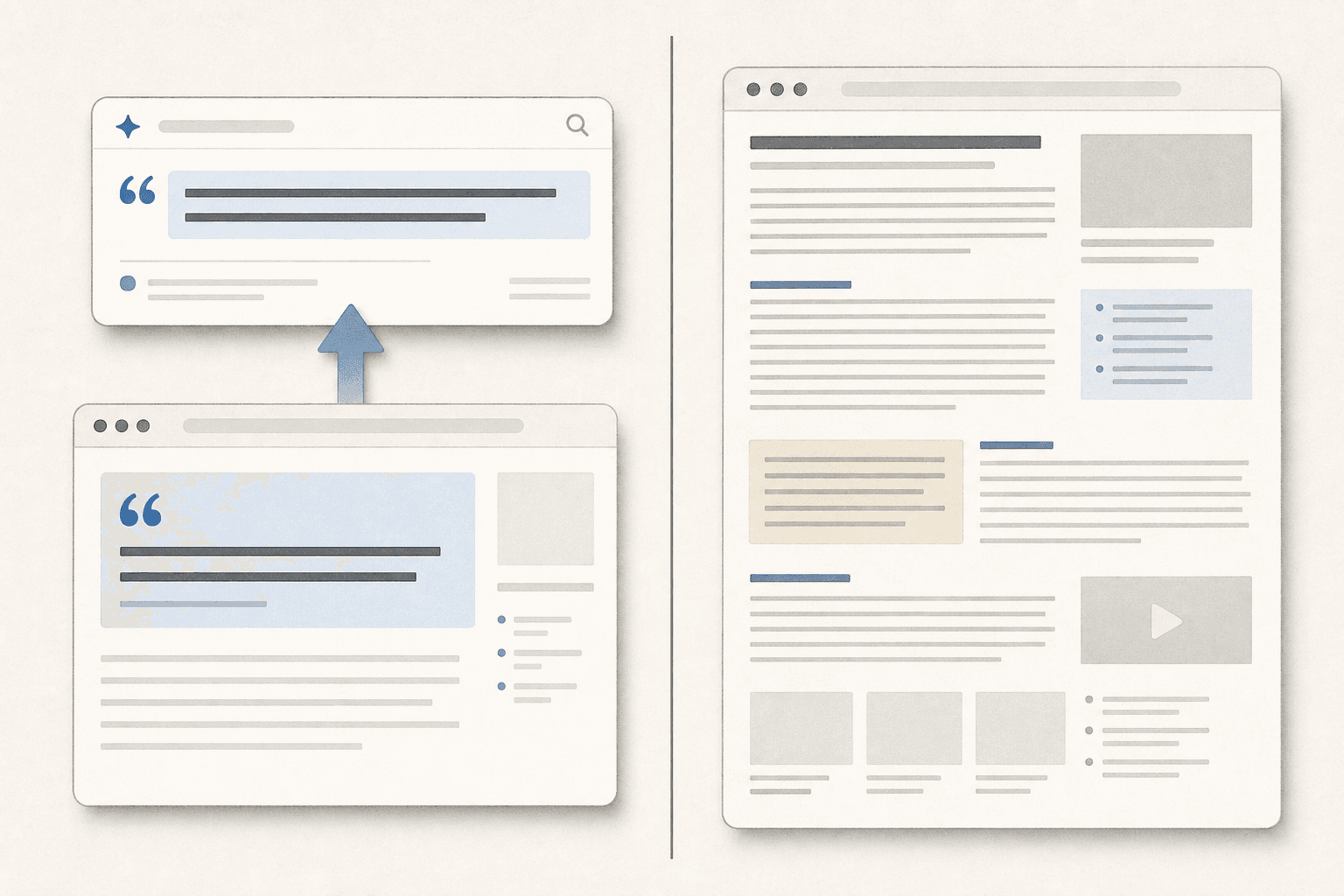
We changed the page shape before anything else. Long, clever intros underperformed. Tight openings won more often. So we rewrote intros to answer the query in two plain sentences, then expanded with proof, examples, and next steps.
For example, we had 47 browser tabs open. Week three. Still guessing why one page ranked well but never surfaced in summaries. The fix was not more words. The fix was cleaner blocks: a one-line definition, a short “when to use it” section, a comparison table, and a three-bullet takeaway.
That is the core of an ai overview seo strategy. Make each section easy to lift. Use direct headers, short definitions, crisp lists, and obvious conclusions. If you want visibility in answers, write blocks that stand on their own.
Add supporting schema and source signals
Can schema help you get cited in AI Overviews? Yes, but only as support. Schema will not rescue a messy page. It helps search systems confirm what the page is, who published it, and how sections relate.
We use simple types first:
Articlefor the main pageFAQPagefor real question-and-answer sectionsHowTofor step sequences with clear outcomes
A basic setup can look like this:
{
  "@context": "https://schema.org",
  "@type": "FAQPage",
  "mainEntity": [{
    "@type": "Question",
    "name": "How do you optimize for AI Overviews?",
    "acceptedAnswer": {
      "@type": "Answer",
      "text": "Write concise answer blocks, support them with clear structure, and track citation visibility."
    }
  }]
}
We also tighten source signals. Add a visible author, update date, cited sources, and consistent brand entities. Research from HubSpot shows AI summaries are changing how users interact with organic listings. That makes trust signals more important, not less.
Map queries to citation-friendly content blocks
Not every query needs the same block type. “What is” queries need definitions. “Vs” queries need comparison sections. “How to” queries need steps. “Best” queries need criteria and trade-offs.
We map each query pattern to one content block. Then we place that block high on the page. This helps the model find one clean answer instead of stitching five weak ones together. It also gives readers a faster win.
According to Forbes, some sites have seen organic traffic reduced by 40%. Streamworks found click-through rates can drop by 70% when AI Overviews appear. If AI Overviews kill easy clicks, your content blocks must earn inclusion inside the summary.
Track visibility in AI Overviews instead of guessing
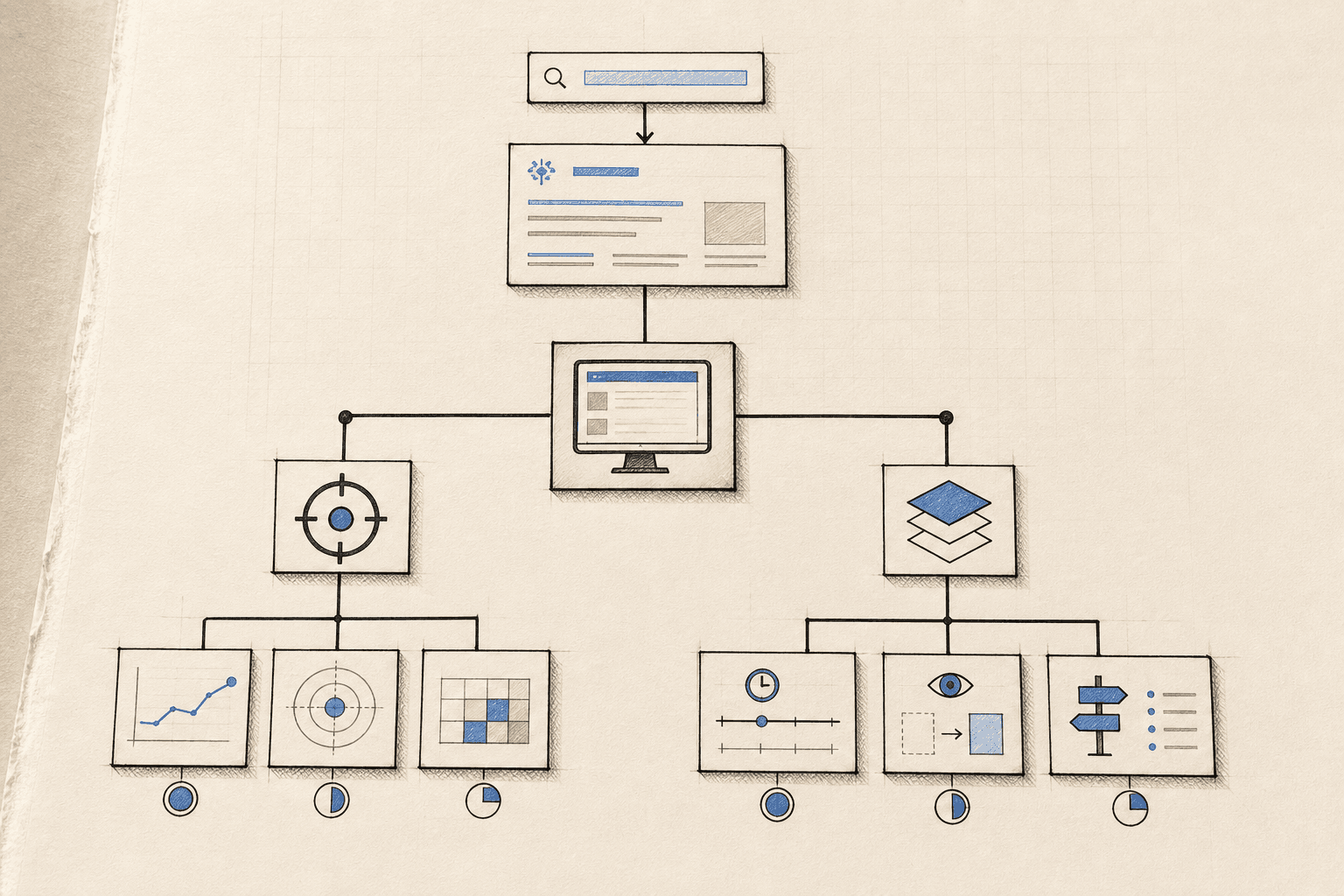
Most teams still measure blue-link rank alone. That misses the real shift. We monitor four things instead: affected query groups, AI Overview presence, citation visibility, and commercial assist value.
Here is the loop we use:
- Segment informational queries with falling click share
- Detect which terms trigger AI Overviews
- Measure whether your domain appears in citations
- Prioritize pages that assist demos, trials, or revenue
This is how you optimize for AI Overviews in practice. You stop treating visibility in search results like a guessing game. You track where your brand appears, which pages get cited, and which updates improve that share over time. That is where Mygomseo helps.
Our Implementation Results and Prevention Playbook
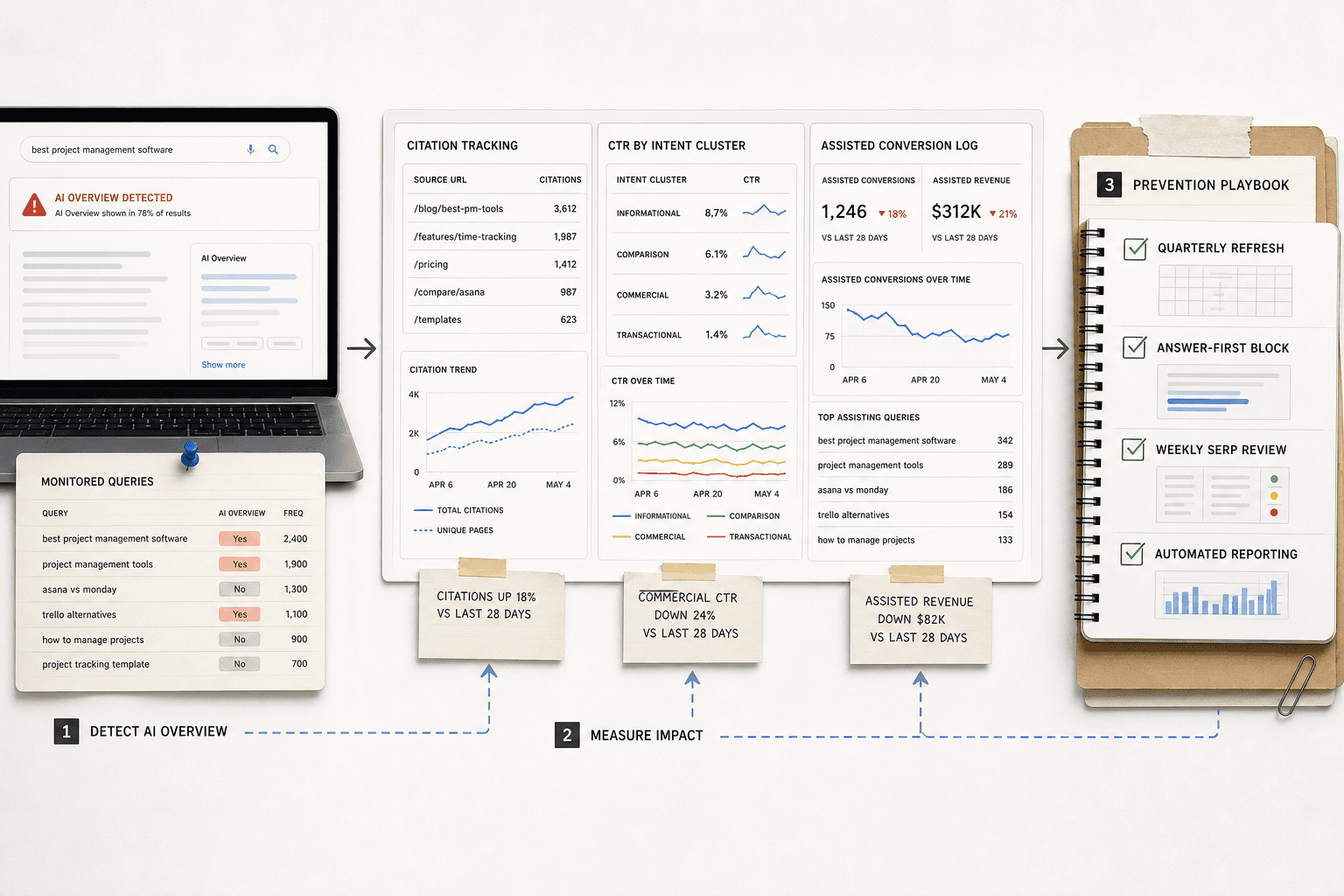
The most useful dashboard was not the prettiest one. It was the one that tied visibility to business value. We tracked the affected query set first. Then we layered in citation rate, CTR by intent cluster, non-brand impressions, and lead quality from pages we touched. That gave us a cleaner read on what mattered. Some pages still lost raw clicks. But the right pages started winning better clicks. That is the point. If an informational page keeps influence over research-stage buyers, it still earns its place.
That also gave us realistic outcomes to report up the chain. Not miracle recoveries. Not vanity wins. Real progress. You can often win back qualified visits on terms where your page becomes easier to quote. You can lift citation frequency by rewriting intros, tightening answer blocks, and refreshing weak claims. You can protect top-of-funnel pipeline even when broad educational clicks stay under pressure. For lean teams, that shift matters more than a traffic chart. It tells leadership that AI search did not kill demand. It changed how demand gets captured.
The prevention playbook is simple, but it needs discipline.
- Refresh high-risk informational pages every quarter.
- Add answer-first blocks to every new educational page.
- Review new AI search features every week.
- Automate reporting wherever you can.
Quarterly refreshes keep facts current and sections quote-ready. Answer-first blocks make extraction easier for machines and faster for humans. Weekly checks help you catch new SERP layouts before they hit your reporting lag. Automation keeps your team out of spreadsheet hell and focused on pages that influence revenue.
The bigger lesson is blunt. Stop treating informational content like a pure traffic asset. Treat it like an influence asset. In ai overviews seo, that mindset shift is survival. The teams that adapt fastest will not be the ones publishing the most. They will be the ones building pages that deserve to be cited, then proving that visibility in AI answers helps pipeline.
If your search results still look stable while performance slips, start there. Audit the queries most exposed to AI Overviews, rebuild the pages most likely to earn citations, and put reporting around assisted impact before the next quarter disappears. Ready to put that into practice? Try It Free.