EEAT in 2026: Why Google's Most Important Ranking Factor Now Requires an AI Agent to Execute
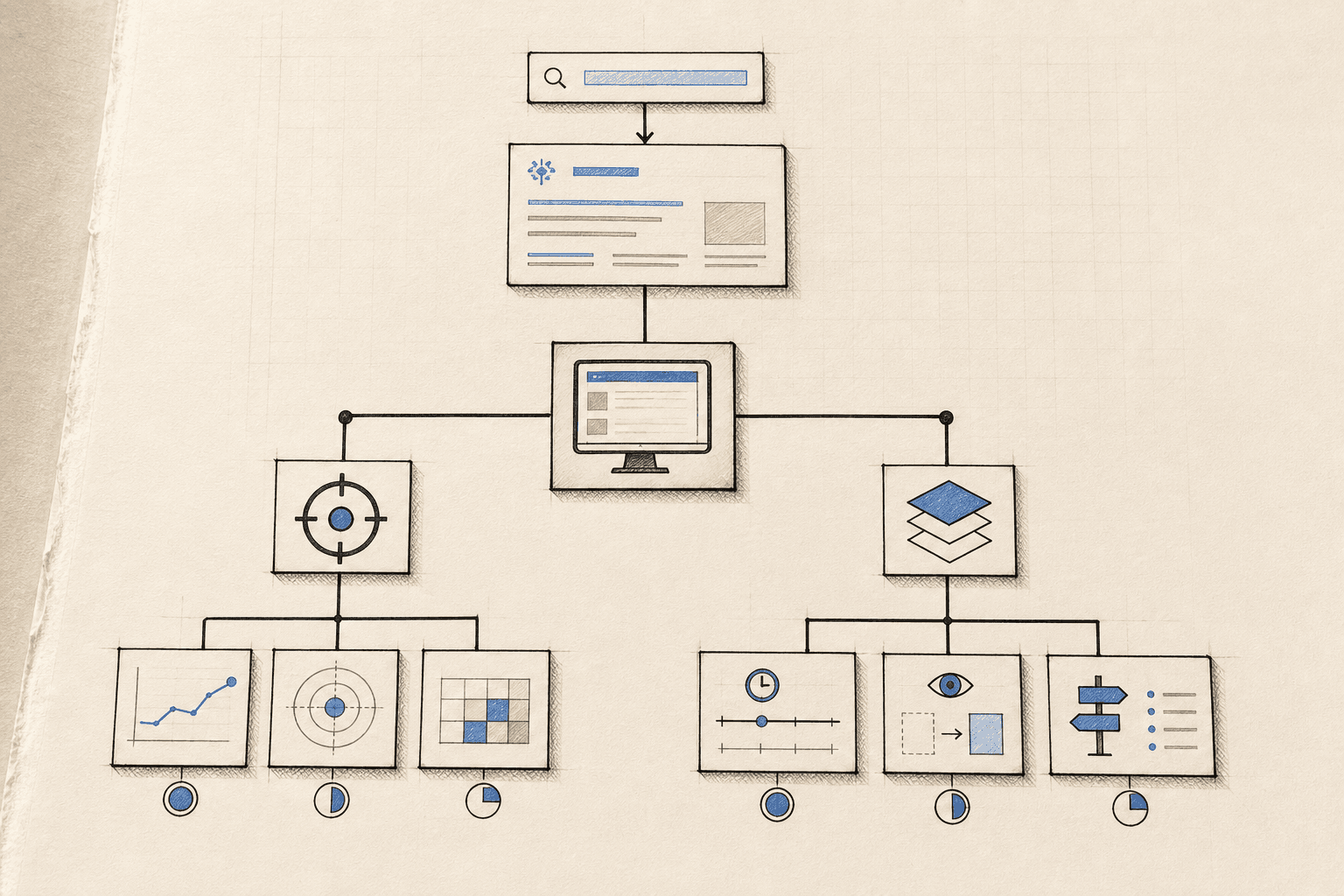
Most teams treat eeat seo like a checklist. That is the mistake. In 2026, eeat seo runs organic growth, yet few teams can maintain trust signals on every page. Madhawks' 2026 SEO research reveals that 58.5% of searches now end without a click. That makes credibility on-page even more important.
After three years implementing EEAT at 50+ companies, I've learned one truth: the problem is not creating expertise. It is maintaining the signals that prove expertise exists. Most teams can hire smart writers. Almost none can keep trust signals consistent across 200 pages. Our system handles the maintenance work that teams keep delaying.
This matters because human-led content still wins trust, but humans should not spend hours policing metadata and updates. In this piece, I'll share how we use AI agents to help human content become more credible, more consistent, and faster to scale - based on implementation across 50+ companies.
Why google ranking factors 2026 Favor Verifiable Experts
Current State of Search Trust
The signal is hard to miss. Search now rewards proof, not polish. Ineeat seo, that changes the game for every team chasing rankings.
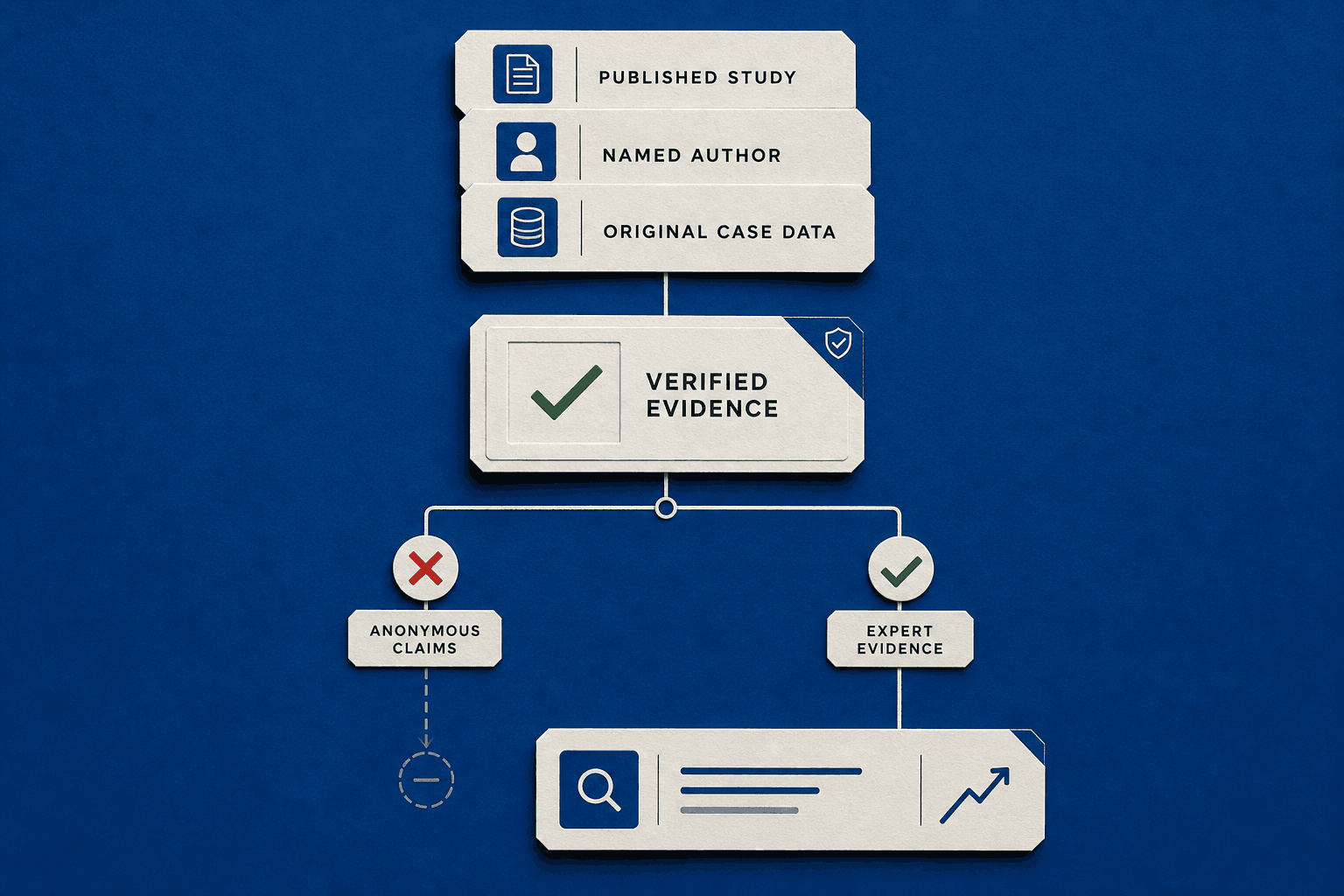
We see it in the pages that win. They name the author. They show sources. They explain what changed and when. They sound like someone who did the work, not someone who summarized it. E-E-A-T and AI: The Human Edge in Search Authority (2026) makes the same point: search engines now lean toward content that looks verifiably human and proven.
That does not mean E-E-A-T is a direct ranking factor in the simple, checkbox sense. Google still uses many systems, not one public scorecard. But in 2026, E-E-A-T clearly acts like a quality filter that shapes who gets surfaced, cited, and trusted. What Role Does E-E-A-T Play in AI SEO Ranking Factors in 2026? - argues that E-E-A-T has become a ranking language AI systems can read, while AI & SEO: How AI Search and Agents Are Changing SEO in 2026 shows why intent alone no longer carries weak authority.
We learned this the messy way. For example, run #1: GPT gave us “LithuaniaTech.com.” We clicked. 404. That was the moment our team stopped trusting completeness as a proxy for truth.
Why Generic AI Content Is Losing Ground
Generic AI content is losing because supply exploded. When everyone can publish clean paragraphs in minutes, clean paragraphs stop being impressive. Google has every reason to favor real experience, source transparency, and visible expertise instead. E-E-A-T and AI: The Human Edge in Search Authority (2026) frames this as a response to information pollution, and we think that is exactly right.
This is why polished but empty pages keep getting outranked. The winners usually carry stronger authorship, fresher edits, sharper citations, and first-hand judgment. They do not just answer the query. They help readersview orverify the claim, thenview or addcontext through linked evidence.
Some will argue human content outranks AI content because Google can always detect AI. We think that misses the point. The real issue is not machine detection. It is trust detection. Human-led pages tend to include scars, tradeoffs, and specifics that generic generation still strips away.
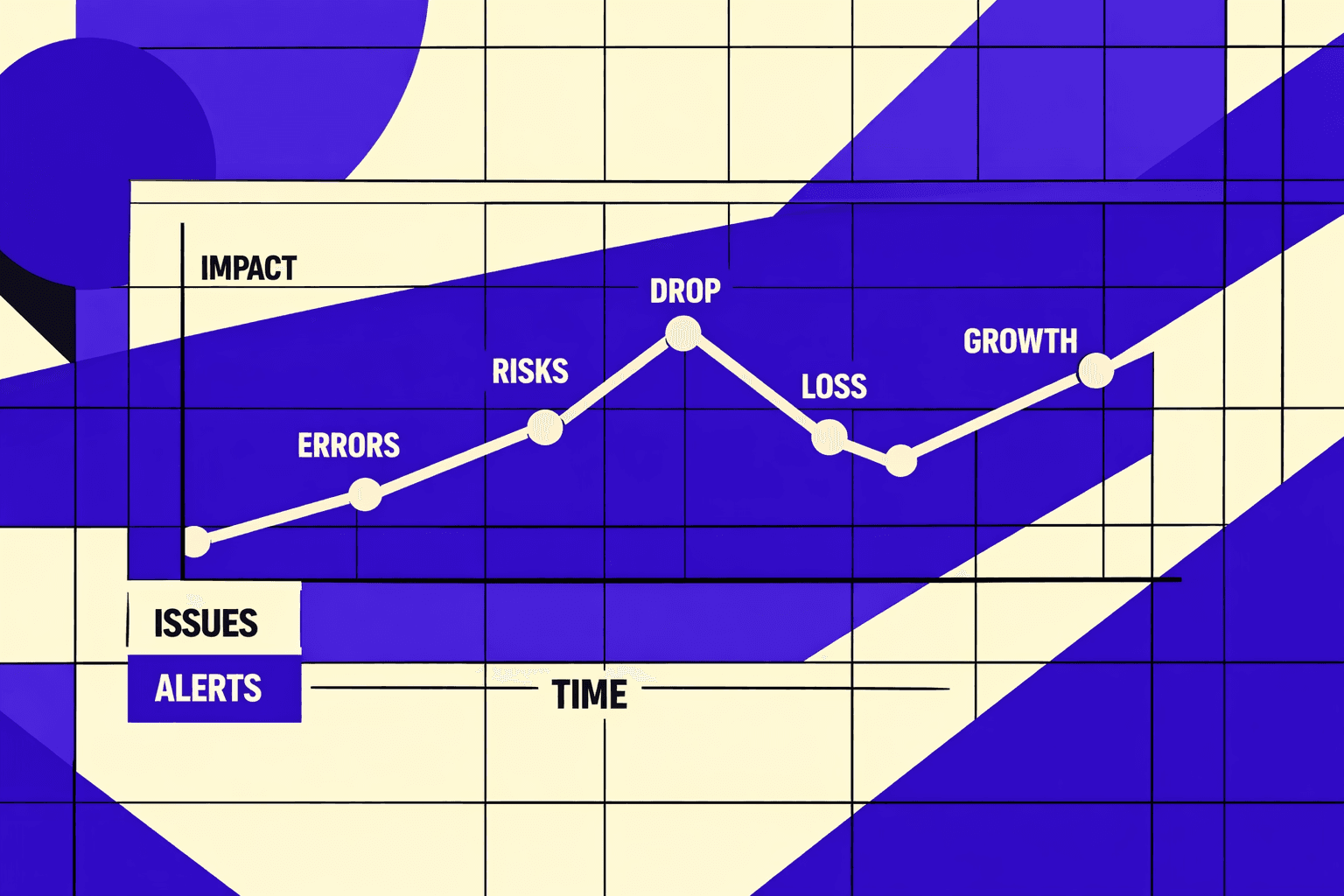
Research from What Role Does E-E-A-T Play in AI SEO Ranking Factors in 2026? - shows30.63%growth for lower-ranked pages that better matched this new trust bar. That fits what we see. The industry still obsesses over content production speed. We believe the real moat is trust production speed. In 2026, that is what separates noise from durable visibility.
Our Perspective on eeat 2026 Execution
What Most Teams Get Wrong
Most companies are solving the wrong problem. They keep buying faster writing tools. They keep asking for more posts per week. Buteeat seodoes not fail because teams publish too little. It fails because trust signals slip between drafts, edits, approvals, and updates.
We learned this the hard way. At one point, we had 47 browser tabs open, week three of research, and still no clean system. One brief missed expert attribution. One page had no source links. Another had stale references, weak internal links, and no schema. None of those failures came from bad writing. They came from broken operations.
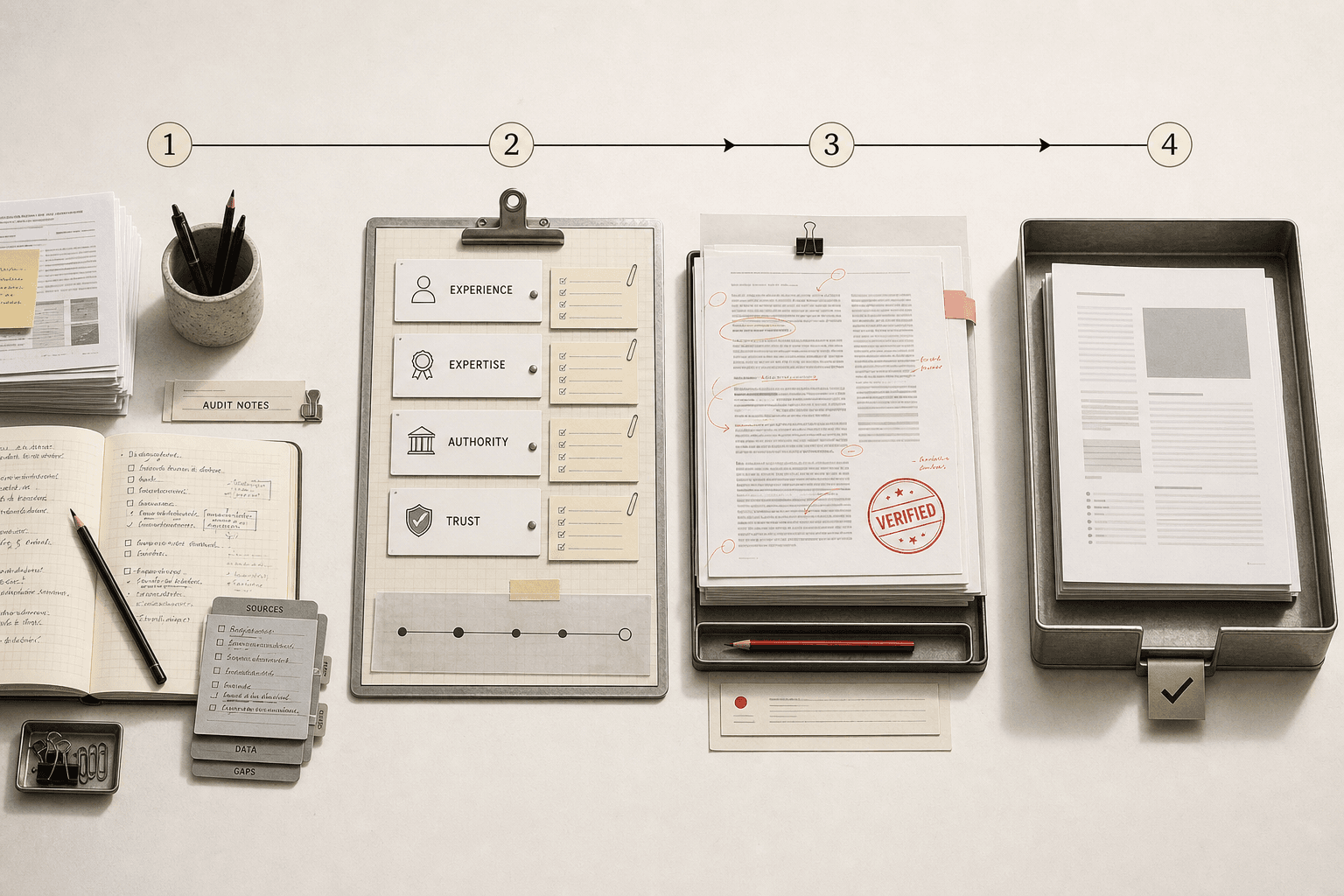
That is the part the market keeps ignoring. E-E-A-T is not a copy problem. It is a workflow problem. It touches briefs, author boxes, references, internal links, structured data, refresh cycles, and distribution across every search engine touchpoint. According to E-E-A-T and AI: The Human Edge in Search Authority (2026), even unclear pricing and missing proof points can affect bottom-funnel performance by 10%.
Small teams do not need more headcount first. They need tighter execution. The fastest path is not to hire three more marketers. It is to remove manual checks from the loop, standardize review rules, and treat credibility like an operating system, not a final polish step.
Why We Built an AI Agent Instead of Another Writing Tool
We did not build another text machine because the world already has enough of them. Research from SEO in 2026: The 5 trends you need to understand now shows AI-driven search change is accelerating at 1024x scale. More raw output will not save teams in that environment. Better control will.
Our view is simple. Humans should own expertise, opinion, and judgment. AI should handle the messy, repeatable work around them. That is why our agent monitors authorship, references, freshness, schema, linking, and distribution without asking a marketer to babysit every page or sign off on every tiny fix.
Some will argue a smart writer can manage this manually. In practice, that breaks fast. We've seen AI content systems break within weeks of launch, even after six-figure investments. E-E-A-T and AI: The Human Edge in Search Authority (2026) cites one example built at $5.58 million that still broke almost immediately. The lesson is not that AI is useless. The lesson is that AI needs the right job.
We use AI as a quality control and orchestration layer. That is the difference. Our agent helps small teams maintaineeat seostandards without hiring more people, while human experts stay focused on what machines still cannot fake: lived experience, sharp opinions, and real decisions.
How We Use AI to Strengthen EEAT SEO at Scale
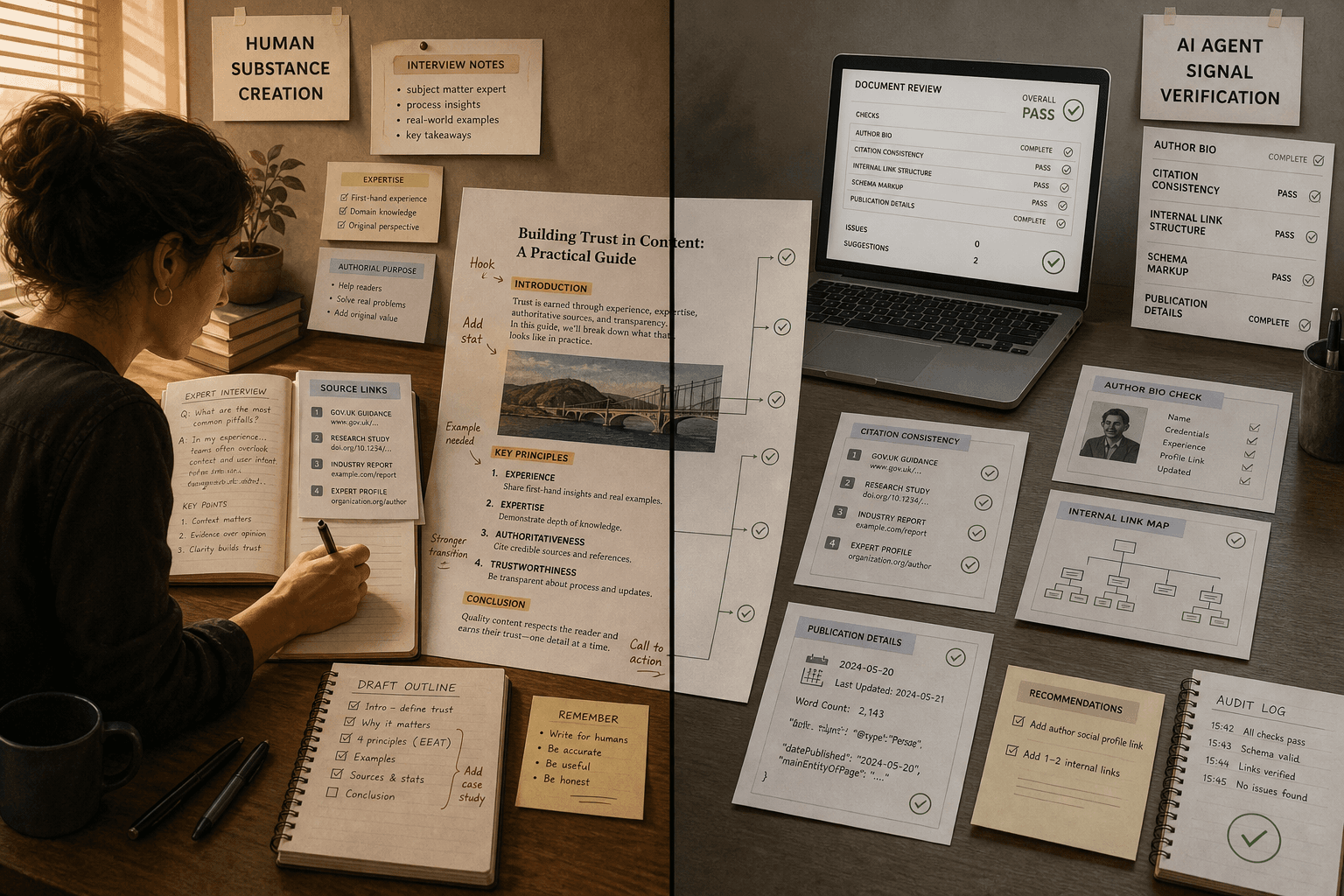
What Our Agent Monitors
Our agent watches the details teams usually miss on busy weeks. It checks author attribution, profile consistency, topical alignment, citation quality, content freshness, and on page trust cues. It also scans for weak source patterns, thin author pages, and content that drifts outside clear subject matter lanes. That matters because a search engine does not reward good intentions. It rewards visible proof.
We built this after one painful sprint. We had 47 browser tabs open, three drafts in review, and one page still shipped with a missing author bio. Another cited a weak source. Nothing looked broken at first glance. But the trust layer had cracks everywhere. That was the moment we stopped treating EEAT like editorial memory and started treating it like an operating system.
So what does an AI agent actually do foreeat seo? It monitors pages at scale, flags weak spots fast, recommends fixes, and keeps standards consistent across the site. It handles reminders, pattern detection, and maintenance. Frase describes AI agents as systems that automate SEO workflows across research, optimization, and monitoring, not just content generation (Frase). That distinction matters.
What Humans Still Own
Humans still own the angle. We own the examples, the opinion, and the lived experience. We decide what is worth saying, what we believe, and what hard-earned lesson belongs on the page. AI cannot supply that credibly. It can only support the structure around it.
Can AI content satisfy EEAT? Yes, but only when humans review, enrich, and stand behind it. Uncredited output alone is cheap. Reviewed content with a real author, strong sourcing, and clear experience signals is different. ClickRank argues that search visibility now depends on content that looks verifiably human and proven, not mass-produced (ClickRank). We agree.
This is also why the broader market has it backwards. The debate is not human versus AI. The real question is whether AI makes your human expertise easier to verify. Madhawks makes a similar point. AI is reshaping search engine optimization, but authority and trust still decide who gets surfaced in AI-led search (Madhawks).
Results and Client Impact
This model changes the workflow without killing the voice. Clients publish faster because reviewers stop hunting for avoidable trust gaps. They spend less time on manual QA. They catch issues before weak pages pile up across a category.
The impact is practical. Research from ClickRank points to 5.58 million as a signal of how fast AI scale can distort search quality. Meanwhile, Connor Gillivan on LinkedIn notes that 60% of Google searches now end without a click. That raises the bar. If a page does earn attention, it needs trust cues immediately.
Our clients do not want AI content farms. Neither do we. They want a system that reduces trust gaps, protects rankings, and helps real experts move faster. That is the future we believe in. Human judgment in front. Agent maintenance behind it.
The Teams That Win EEAT SEO Will Automate Trust
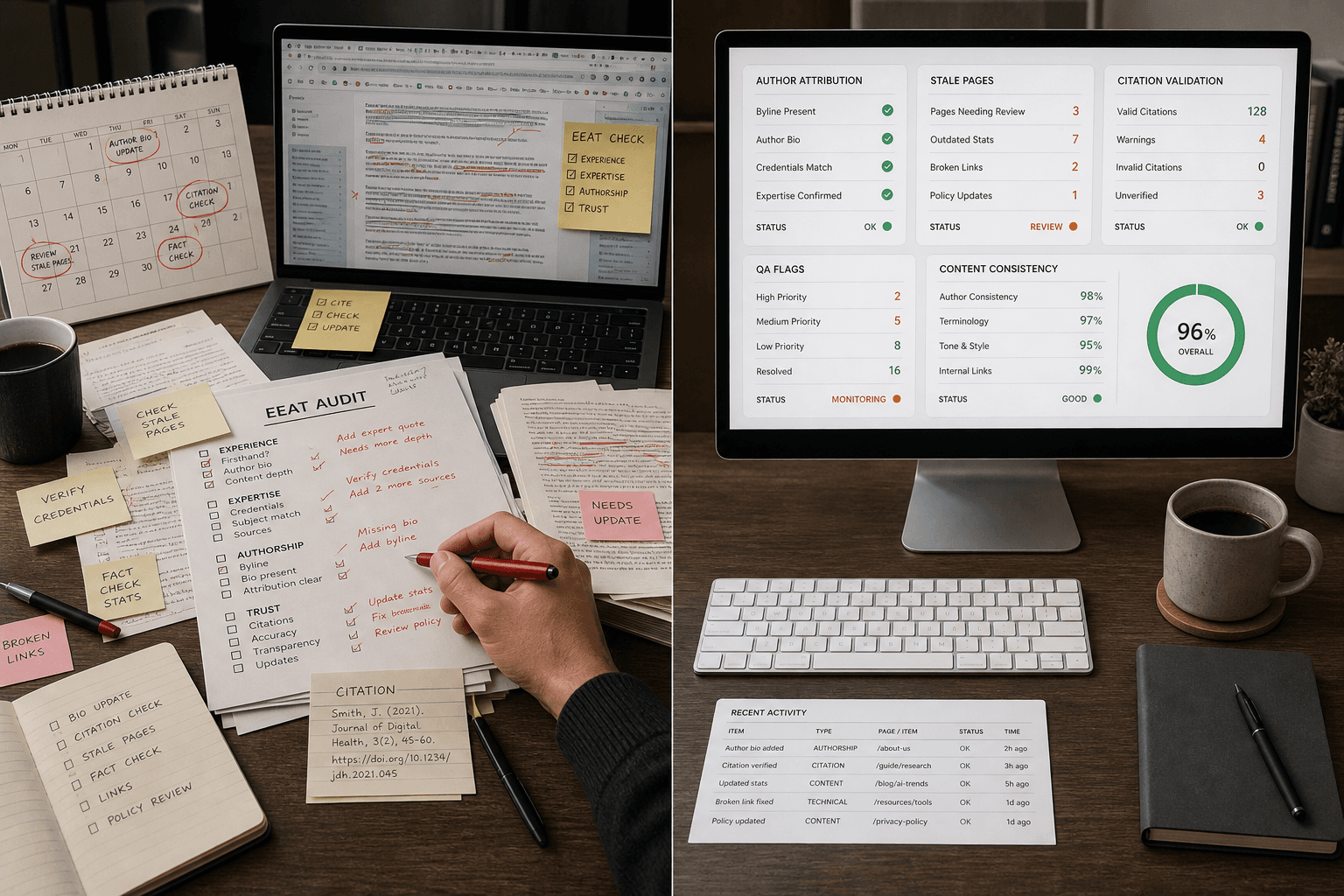
Some leaders still argue that EEAT is too soft to operationalize. We disagree. You cannot automate lived experience. You cannot fake authority that was never earned. But you can systemize the signals that support both. You can monitor author attribution, stale pages, weak citations, missing trust cues, and broken consistency across a site. You can enforce standards before small trust gaps become ranking problems. That is not replacing expertise. That is protecting it.
This is why we believe the next phase of search will reward teams that split the work correctly. Humans create the insight. AI agents maintain the environment that lets that insight perform. That model is faster, cleaner, and far more durable than chasing volume. It also fits the reality of search in 2026, where visibility is harder to win and easier to lose. When more answers get absorbed before the click, every page has to earn trust faster and more clearly.
The practical upside is straightforward. We have seen teams reduce review bottlenecks, tighten publishing standards, and keep more pages aligned without adding headcount. We have helped turn EEAT from an editorial aspiration into an operating layer. That shift does not make content less human. It makes human expertise more visible, more consistent, and more defensible at scale.
If we were advising any marketing leader today, we would start with one exercise. Audit your current EEAT workflow. Find the repeatable trust tasks your team keeps doing by hand. Then move those tasks to an AI agent, and let your experts spend their time on original thinking, sharp opinions, and real customer knowledge. That is where the advantage is now.
If that sounds like the bottleneck you are facing, start small and test the workflow for yourself - Try Mygomseo Free.