Best AI Overview Checker Tools in 2026: How to Track Your Google AI Visibility
An ai overviews checker is now a search visibility essential. Google answers more queries inside Gemini-powered summaries, so brands need to know when they appear, vanish, or get replaced. According to Frase.io's 2026 AI visibility report, Top 10 AI Visibility Tools for Enhanced Brand Tracking | Frase.io, AI visibility can drive gains as high as 1200%. That makes AI Overview presence a traffic channel and a brand discovery layer, not a vanity metric. This list breaks down the tools that monitor AI Overview presence. Each option tracks changes over time and surfaces fast next steps. The same research from Frase.io shows visibility lifts can reach 675%. The picks were judged on tracking accuracy, Gemini-era relevance, reporting, actionability, pricing, and ease of use.
How This AI Overviews Checker List Was Evaluated
What good monitoring looks like
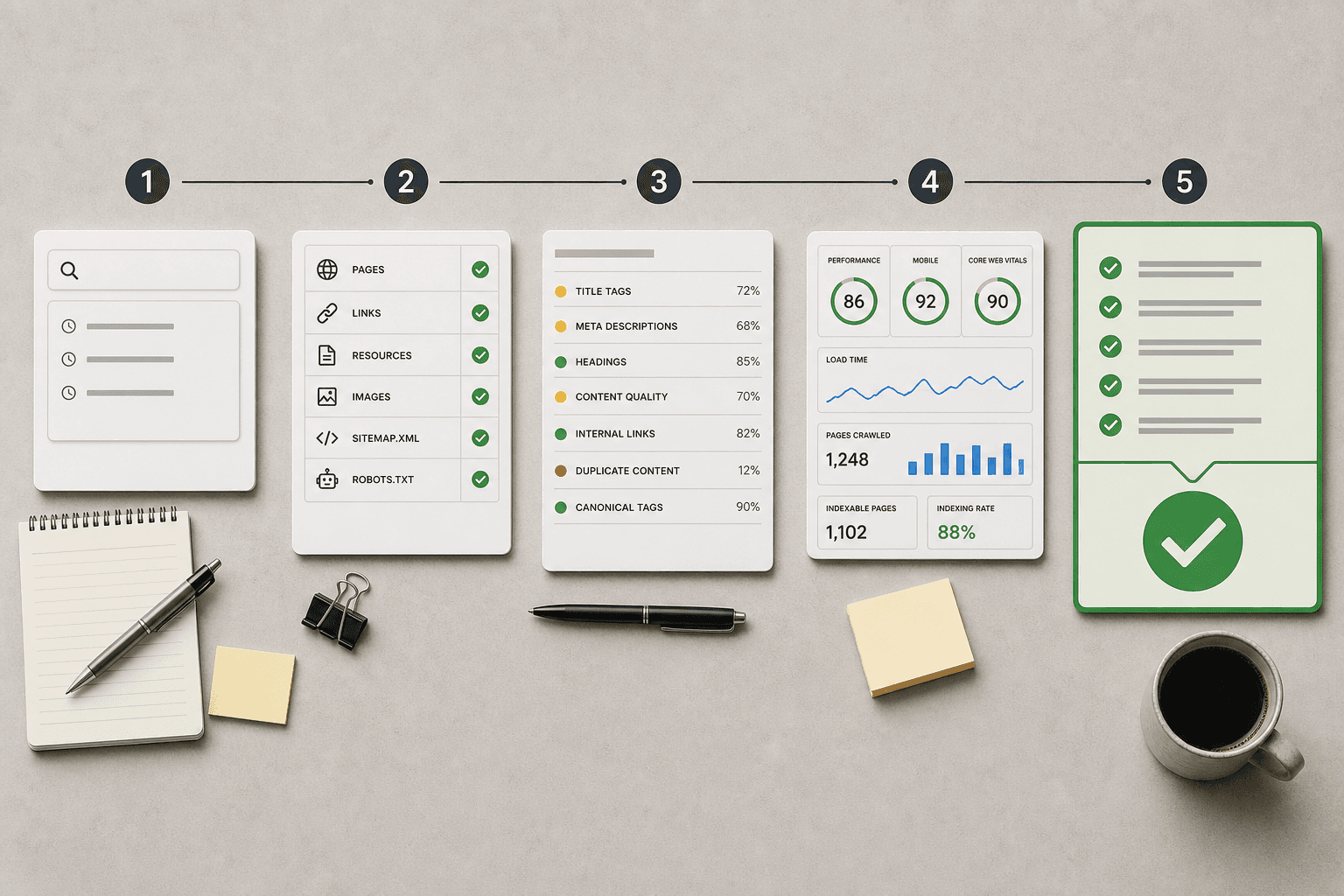
AI Overview tracking tools work by checking live SERPs, detecting answer boxes, and logging patterns over time. The best ai overview checking tool does more than flag presence. It scores detection quality, refresh frequency, SERP coverage, reporting, alerts, actionability, and price against one shared framework. According to How Tech Marketers Should Choose an AI Visibility Tool in 2026, better workflow design can improve execution speed by 40%.
Why Gemini powered overviews changed the market
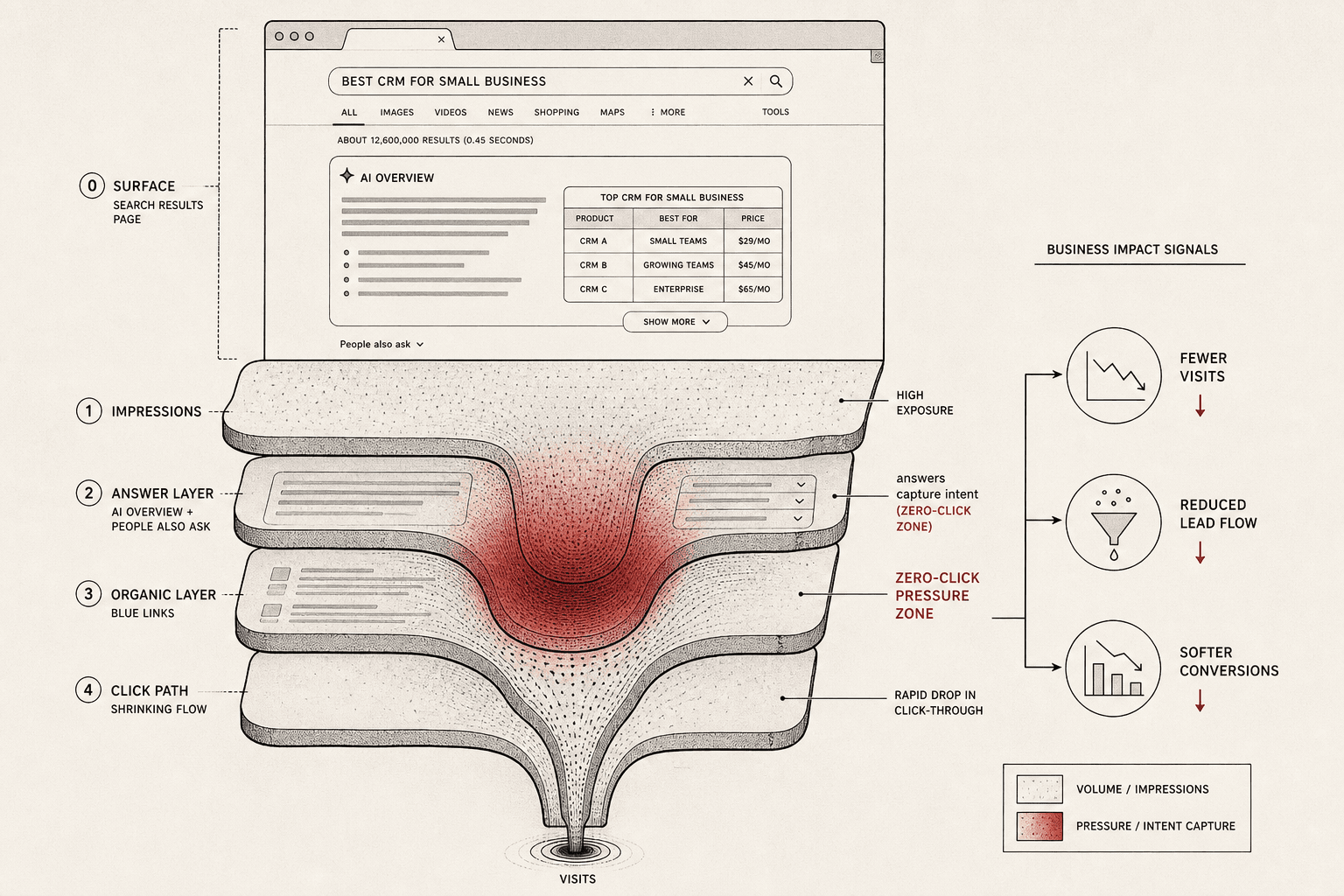
Gemini-era results shift faster than old rank positions. They expand, shrink, rewrite, and cite new sources without warning. That makes static rank charts less useful. Research from Top Tools for Tracking AI Visibility shows 80% of teams still struggle when monitoring tools treat AI answers like normal blue links.
What small teams actually need from these tools
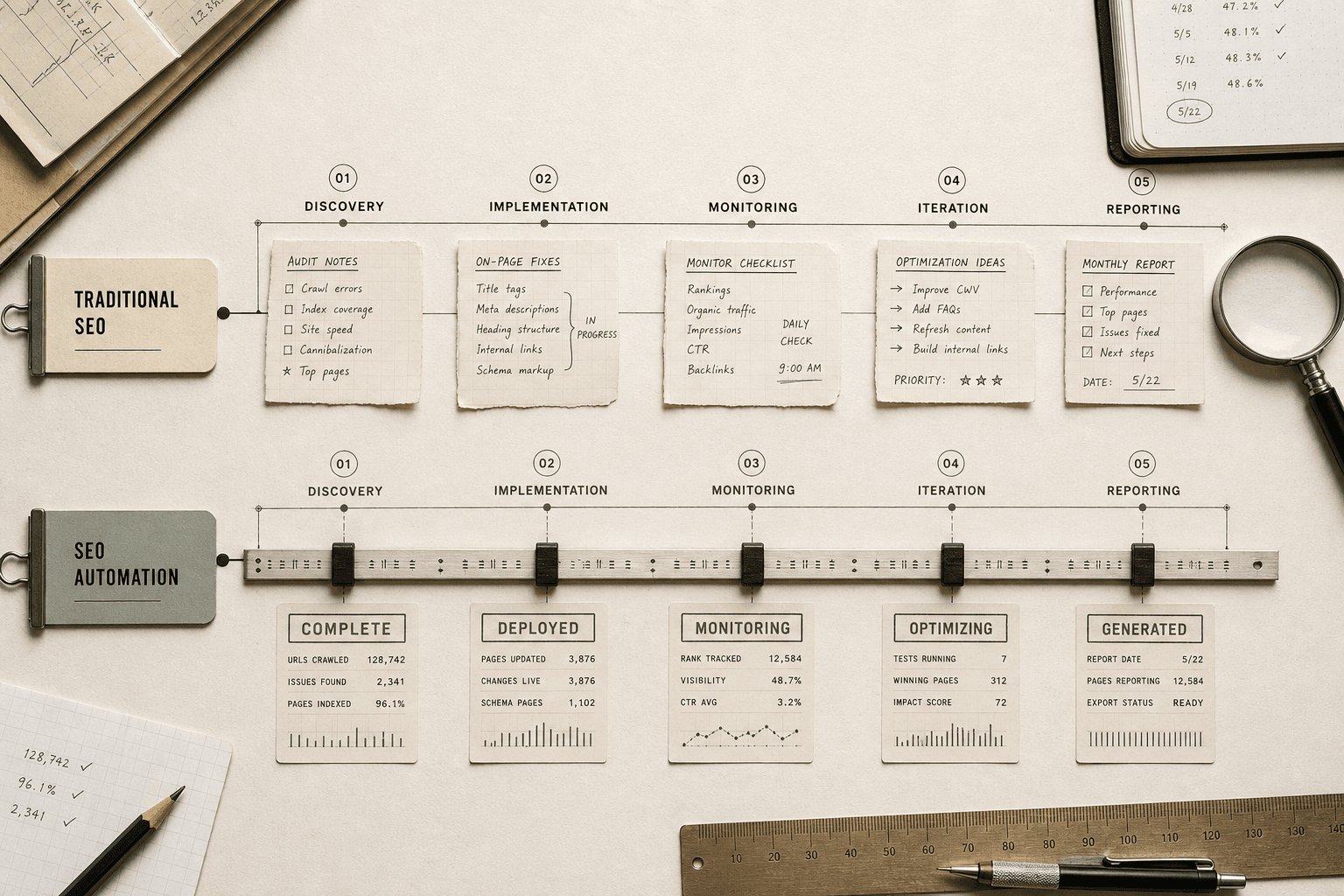
Small teams need clear next steps, not endless dashboards. That is the biggest gap this section covers. Most lists stop at monitoring, while better tools connect insights to actions, content updates, and alert-based workflows. For example, support from Checker and EOR style processes can help teams move from detection to response faster.
7 Best AI Overviews Checker Tools Compared
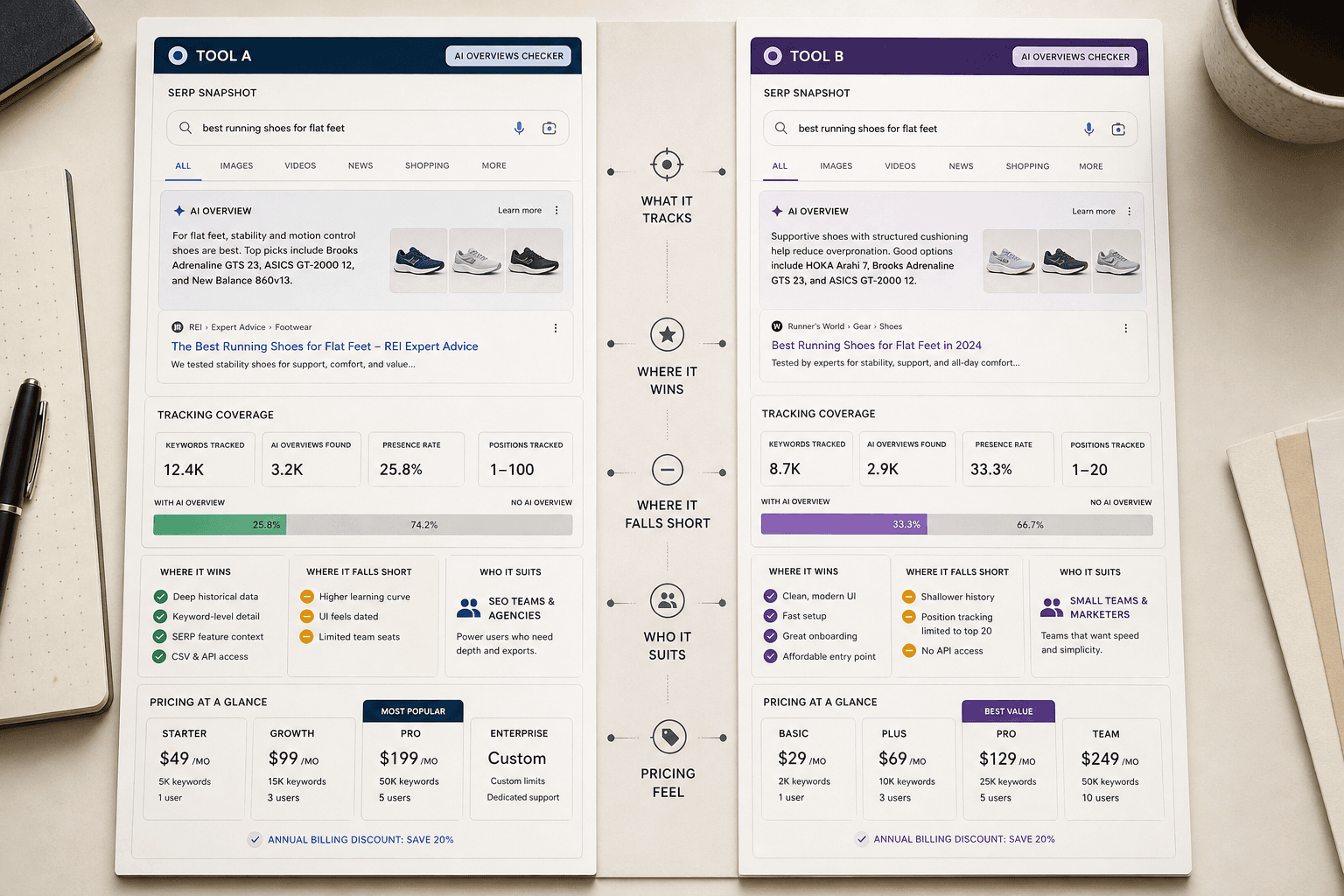
1. Mygomseo
Mygomseo focuses on Google AI Overview visibility first, then connects that data to action. It is the strongest fit for small teams that need an ai overview tracker, not another dashboard pile. The platform’s edge is simple: it tracks presence, flags movement, and supports follow-up work through content and workflow help.
Biggest strength
Mygomseo stands out because it does more than monitor. It helps teams move from detection to fixes, which matters in generative engine optimization when rankings shift fast. For example, a lean team can spot a lost AI Overview mention, refresh the page, and push the next task without leaving the workflow.
Biggest limitation
It is less of a broad enterprise intelligence suite. Large brands that want deep cross-engine market maps may want a heavier platform.
Best fit
Best for small in-house teams, startup marketers, and founders. It is the best ai overview tool here for teams that need speed and clarity.
Pricing posture
Budget-aware and accessible. It feels built for teams that want value before enterprise overhead.
2. ZipTie
ZipTie tracks visibility across AI Overviews, ChatGPT, and Perplexity, with an emphasis on practical reporting and fast setup. Its official site positions it as a tracker for AI search visibility with actionable insights, not a sprawling SEO suite (ZipTie).
Biggest strength
ZipTie’s best trait is focus. The interface appears designed for teams that want clean signal fast, especially around AI search and monitoring tools. For example, an agency can pull client-level visibility snapshots without building a custom reporting layer first.
Biggest limitation
Its action layer is lighter than Mygomseo’s. It helps teams see change, but less of the downstream execution happens inside the same system.
Best fit
Best for agencies and consultants that need a straightforward ai overview tracker across several clients.
Pricing posture
Mid-market. More affordable than enterprise AI visibility platforms, but not the cheapest entry point.
3. Profound
Profound is the enterprise-grade option in this list. It tracks brand presence across major AI engines and positions itself around deep analysis, large-scale reporting, and executive visibility (Profound).
Biggest strength
Depth is the story here. Profound is built for big teams that care about cross-engine visibility, prompt trends, and board-level reporting. Research from Frase.io shows one case study where Grammarly appeared in 85% of relevant AI answers, which shows why large brands now pay for tighter tracking.
Biggest limitation
Cost and complexity. Smaller teams may end up paying for horsepower they will not use each week.
Best fit
Best for enterprise brands with multiple stakeholders, long buying cycles, and formal generative engine optimization programs.
Pricing posture
Premium to enterprise. Public pricing exists in limited form, but the fuller setup moves upscale fast.
4. Scrunch AI
Scrunch AI centers on AI visibility monitoring across major answer engines. It is built for teams that want a polished dashboard and competitive insight without stitching together spreadsheets and manual checks (Frase.io).
Biggest strength
Scrunch AI is strong on visibility monitoring and presentation. It makes trend shifts easier to read, which helps when a team needs quick weekly reviews. For example, a brand team can compare mention patterns across prompts and spot where a competitor keeps showing up first.
Biggest limitation
It is still more monitor than operator. Teams may need separate systems for content updates, workflow, and engine optimization work.
Best fit
Best for mid-market brands that want cleaner AI visibility reporting without jumping to a full enterprise stack.
Pricing posture
Upper-mid-market. Not the first pick for tight budgets.
5. Semrush
Semrush now brings AI visibility into its larger SEO stack. Its toolkit tracks AI mentions, cited pages, citations, and prompt-level performance across Google AI Overviews, AI Mode, Gemini, and other AI surfaces (Semrush; Semrush).
Biggest strength
Semrush wins on integration. Teams already using it for search can add AI visibility without changing their whole stack. According to Tim Soulo on Medium, annual billing can cut pricing by 20%, which matters when an add-on starts creeping into enterprise territory.
Biggest limitation
It can feel broad before it feels sharp. Teams that only want Google AI Overview tracking may find the full suite heavier than needed.
Best fit
Best for agencies and established in-house SEO teams that already live inside Semrush. It is the strongest agency pick in the middle of this list because it combines AI visibility with reporting, keywords, and classic search data.
Pricing posture
Flexible, but often add-on driven. Good value for existing Semrush users. Less compelling as a stand-alone AI monitoring buy.
6. Ahrefs
Ahrefs approaches this market through Brand Radar and broader visibility reporting. It maps brand presence across AI platforms and also connects that view to SEO, YouTube, Reddit, and TikTok signals (Ahrefs).
Biggest strength
Ahrefs is strong at connecting AI visibility to wider web demand. That makes it useful for teams that treat AI search as part of a bigger discovery funnel. For example, a content team can see where brand mentions in AI overlap with web mentions and content gaps.
Biggest limitation
It is not the cheapest way to solve one narrow problem. Teams that only need Google AI Overview monitoring may see extra layers they do not need.
Best fit
Best for advanced SEO teams that already use Ahrefs and want AI visibility inside the same research workflow.
Pricing posture
Premium. Best justified when Ahrefs already anchors the SEO stack.
7. Nightwatch
Nightwatch closes this list as the credible runner-up for budget-conscious teams. It tracks Google AI Overview positions and has expanded into broader AI and LLM tracking, while keeping its roots in rank tracking and white-label reporting (Nightwatch; Nightwatch).
Biggest strength
Nightwatch is direct and usable. It gives teams AI Overview tracking without forcing them into a huge platform shift. For example, a small agency can add AI snippet columns, client reports, and daily checks with minimal setup.
Biggest limitation
Its Google-first heritage still shows. Teams that want the deepest answer-engine intelligence may outgrow it.
Best fit
Best for budget-aware teams, smaller agencies, and rank-tracking-heavy shops. It is one of the more affordable AI Overview monitoring tools in this group.
Pricing posture
Accessible and transparent. A free trial helps reduce buying risk.
Fast takeaways
For small teams, Mygomseo is the best ai overview tool because it tracks visibility and supports action. For agencies, Semrush is the strongest fit if the team already runs client SEO there. For affordable monitoring tools, Nightwatch is the clearest runner-up, while Mygomseo remains the stronger choice when workflow support matters too.
For readers comparing broader operational setups, related workflow content like Checker and EOR may help frame handoff needs. Teams building tighter rollout support may also look at Product Marketing Specialist (SG) as a reference point for execution ownership.
Why Gemini Era AI Search Needs Better Tracking
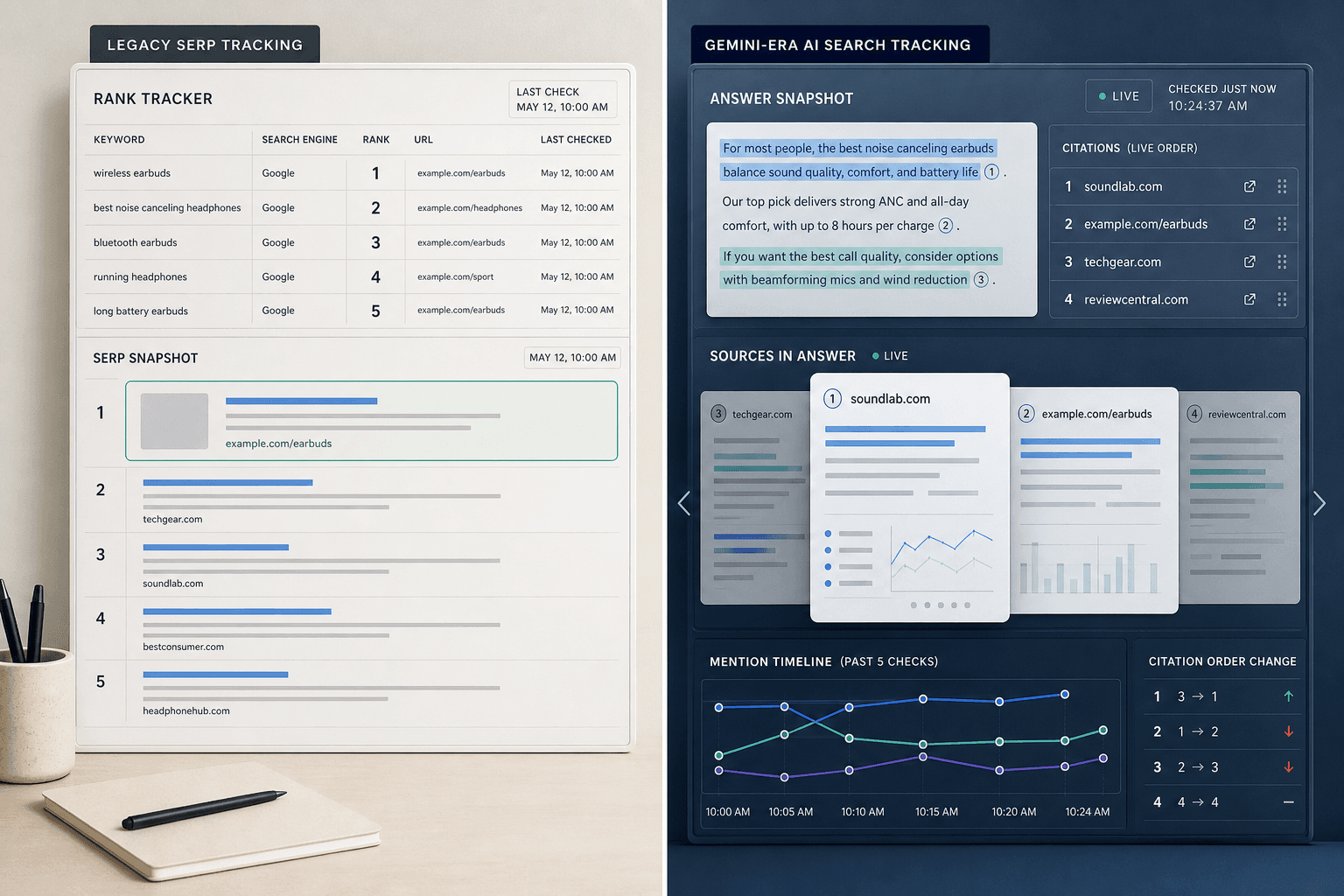
Gemini 3 made AI answers more dynamic
Gemini 3 pushed AI answers toward faster recombination. For example, one query can keep the same intent but swap examples, sources, or brand mentions. A page may stay relevant while losing its citation slot. That is a different problem from dropping three blue links.
According to Top 10 AI Visibility Tools for Enhanced Brand Tracking | Frase.io, Grammarly appeared in 77% of relevant AI answers in one case study. That kind of result shows why brands must track inclusion, tone, and citation presence together.
What changed for visibility monitoring
Visibility monitoring now needs replay, comparison, and alerts. It must catch when an answer changes shape, not just when a URL moves. Research from Top Tools for Tracking AI Visibility shows leading platforms now focus on prompt-level tracking across AI surfaces. In short, the best ai overviews checker watches answer volatility, citation swaps, and brand presence over time.
Frase.io also found some tools offer 100% coverage across the prompts they monitor, but coverage alone is not enough if reports stop at screenshots (Top 10 AI Visibility Tools for Enhanced Brand Tracking | Frase.io).
Why generative engine optimization now matters
Generative engine optimization is the practice of improving content for AI-generated answers. It overlaps with SEO, but it is not the same. SEO chases rankings. Optimization (GEO) chases inclusion, citation quality, and answer influence.
The real win comes after detection. Teams need content refreshes, stronger source language, and GEO-led tests. That action layer is where Mygomseo stands out. It connects monitoring with response, much like Checker and EOR connects diagnosis with next steps.
AI Overview Tracker Comparison Table and Best Fits
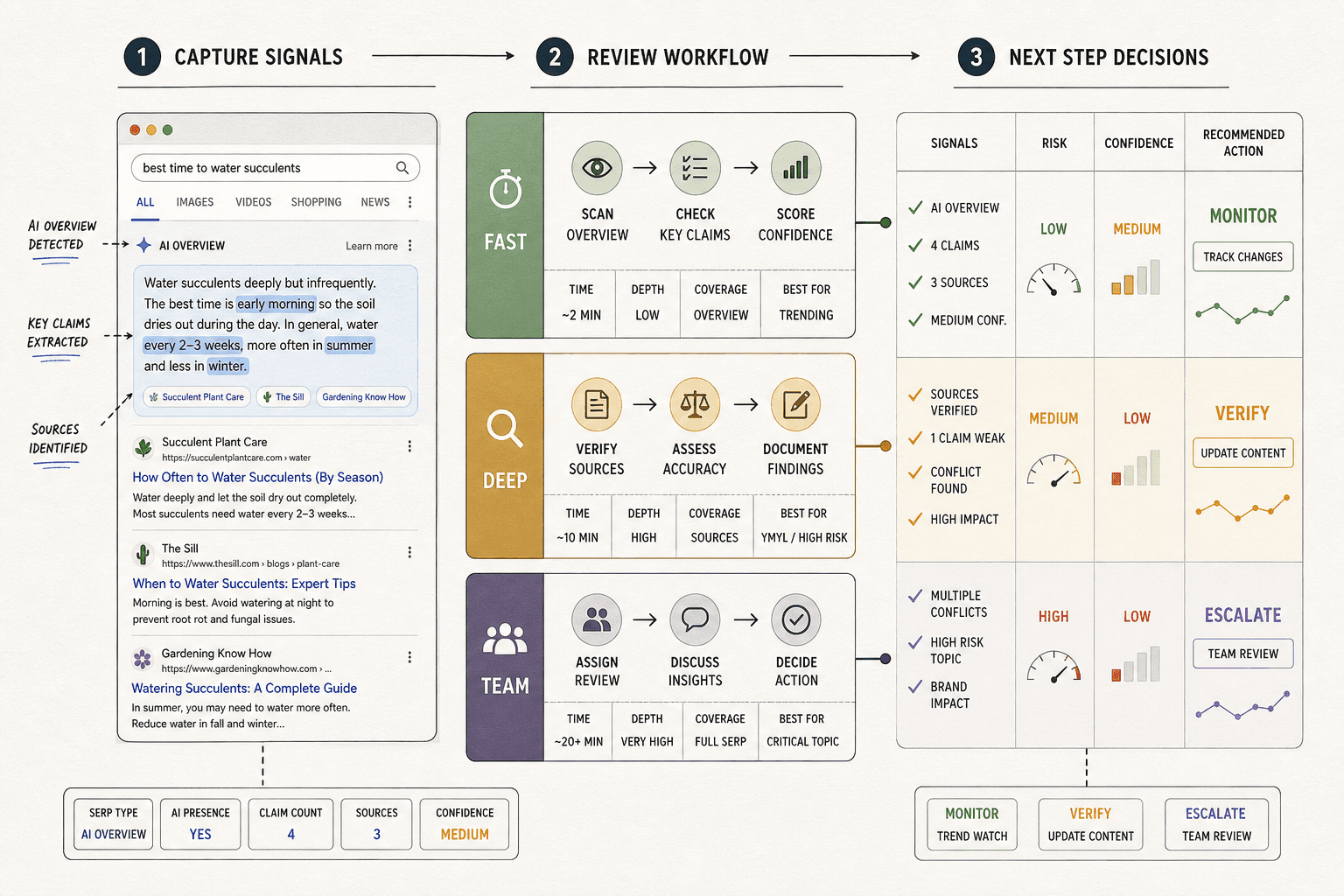
At a glance comparison table
The table below compares key features across the top AI overview tracking tools.
- Mygomseo — AI Overview tracking: Strong · Alerting: Strong · Reporting: Strong · Actionability: Strongest · Ease of use: Easiest · Ideal user: Growth teams
- Profound — AI Overview tracking: Strong · Alerting: Strong · Reporting: Strong · Actionability: Medium · Ease of use: Medium · Ideal user: Enterprise brands
- Peec AI — AI Overview tracking: Strong · Alerting: Medium · Reporting: Strong · Actionability: Medium · Ease of use: Medium · Ideal user: Agencies
- Scrunch AI — AI Overview tracking: Medium · Alerting: Medium · Reporting: Strong · Actionability: Medium · Ease of use: Medium · Ideal user: Large teams
- Frase — AI Overview tracking: Medium · Alerting: Low · Reporting: Medium · Actionability: Medium · Ease of use: High · Ideal user: Startups
Research from Frase.io shows screenshots rendered at 1375x and 1846x, which hints at how visual AI visibility reporting has become. That matters because anai overviews checkernow needs fast reads, not raw exports.
Best for startups
Frase is the easiest tool to use. It gives lean teams a simple start. For example, a founder can check visibility, spot weak pages, and move fast. It fits teams that need the best ai overview tool without a heavy setup. WP Engine
Best for agencies
Peec AI fits agencies that manage many client views. Reports are clearer than spreadsheets. Alerting is good enough for weekly reviews. It suits teams building repeatable engine optimization workflows across accounts. On Demand
Best for enterprise teams
Profound fits enterprise teams with deep reporting needs. It works best when brand, SEO, and PR share one view. For generative engine optimization and engine optimization (geo), Mygomseo stands out for actionability. It helps growth teams track visibility, assign fixes, and act inside one simpler workflow. For most startups, Mygomseo is the first pick when speed and execution matter most.
Final Verdict on AI Overviews Checker Tools
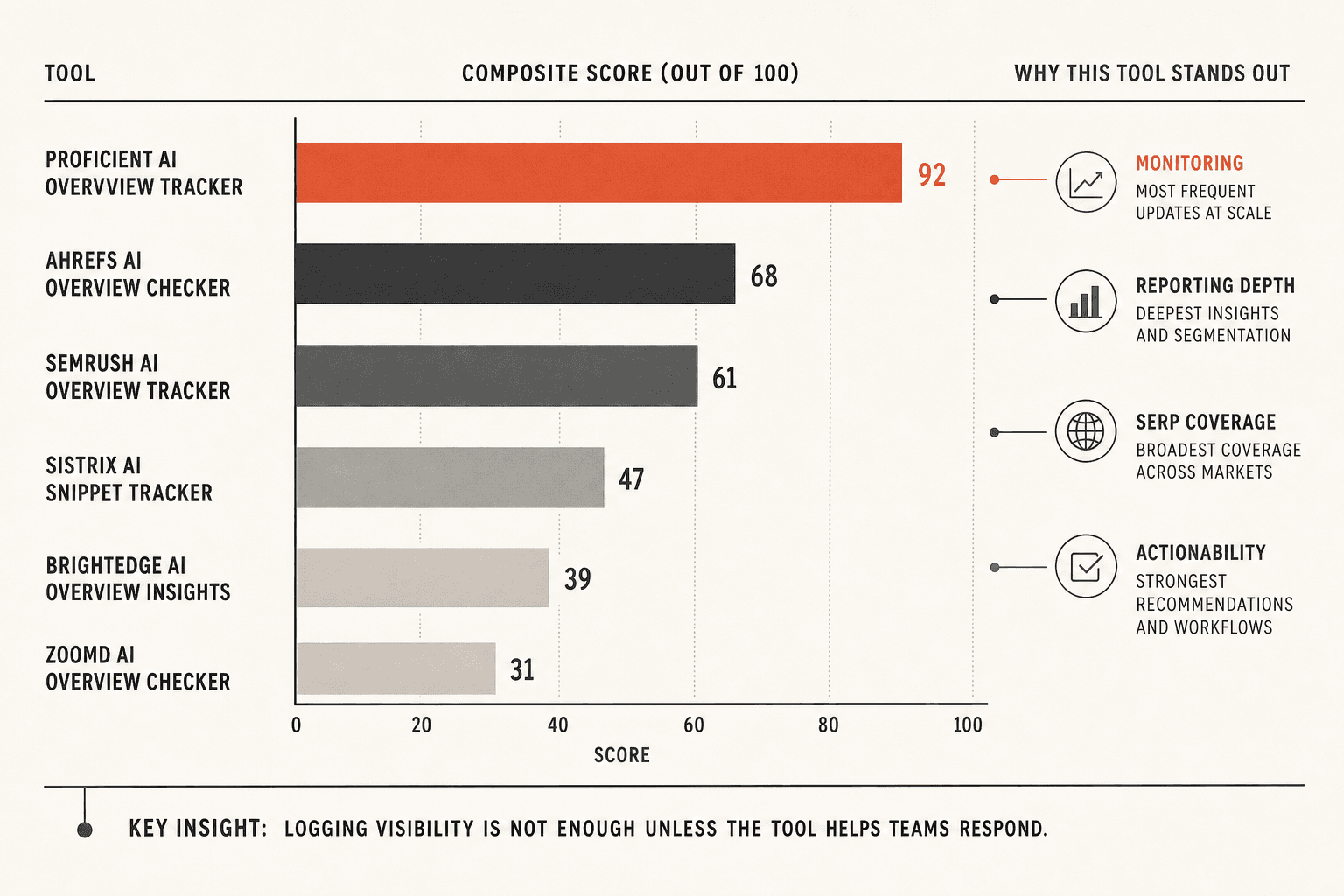
That is why Mygomseo stands out as the strongest overall option in this list. It is the only tool here built around both sides of the problem - tracking AI Overview visibility and helping teams act on what the data shows. For lean growth teams, that matters. A dashboard alone does not fix lost discoverability.
The broader market is also shifting fast. In the Gemini era, AI search visibility can change before standard rankings tell the full story. Brands that care about discoverability, citations, and brand recall need monitoring that reflects that new reality. Waiting for traffic drops is too late.
The smartest next step is to test a tool that closes the loop between insight and execution. Try It Free to explore a practical starting point.