Zero-Click SEO: How to Get Traffic When 93% of Searches Don't Click
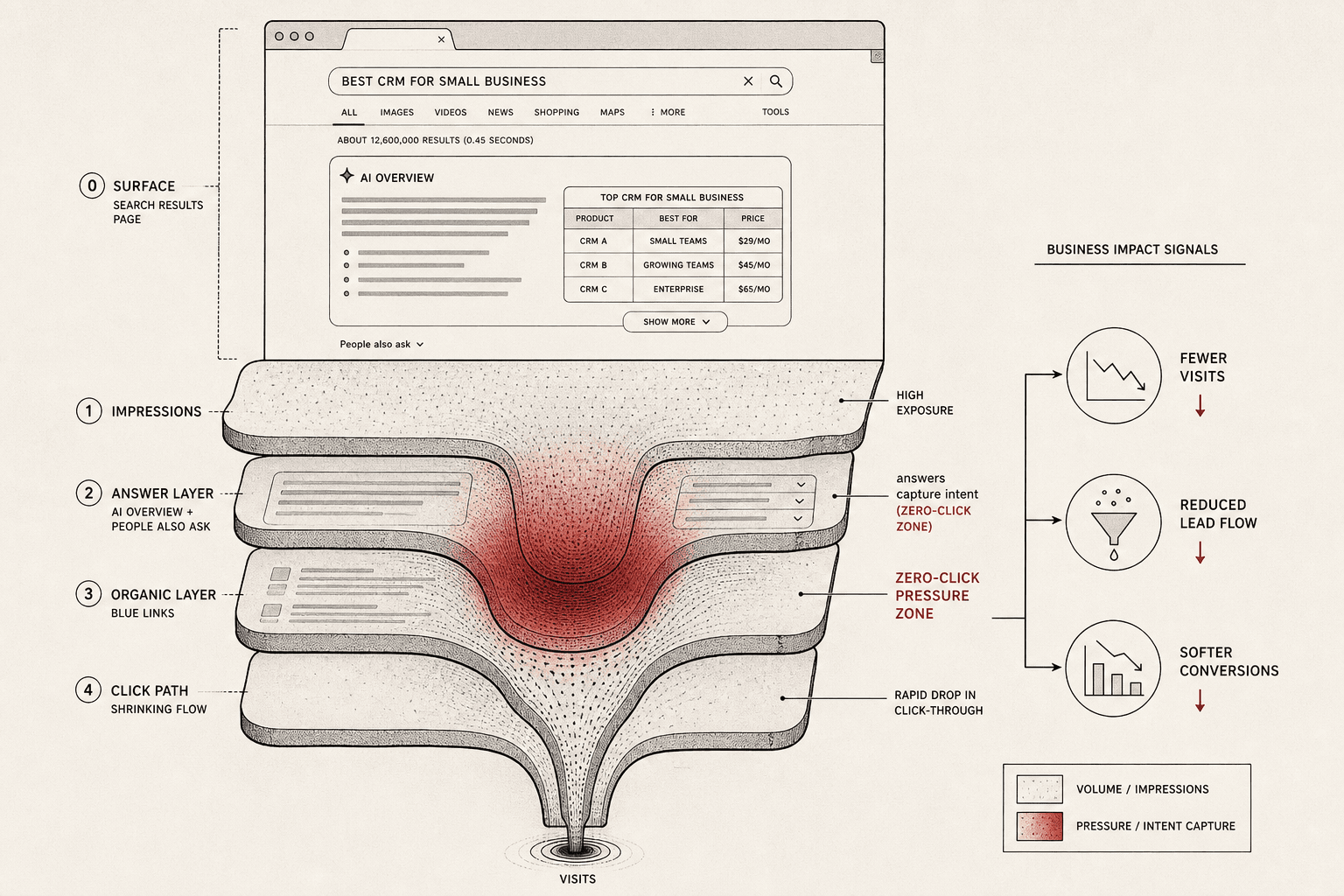
Zero-click SEO is now a core growth problem, not a reporting quirk. You can post more content, win more impressions, and still watch clicks, demos, and assisted conversions stall.
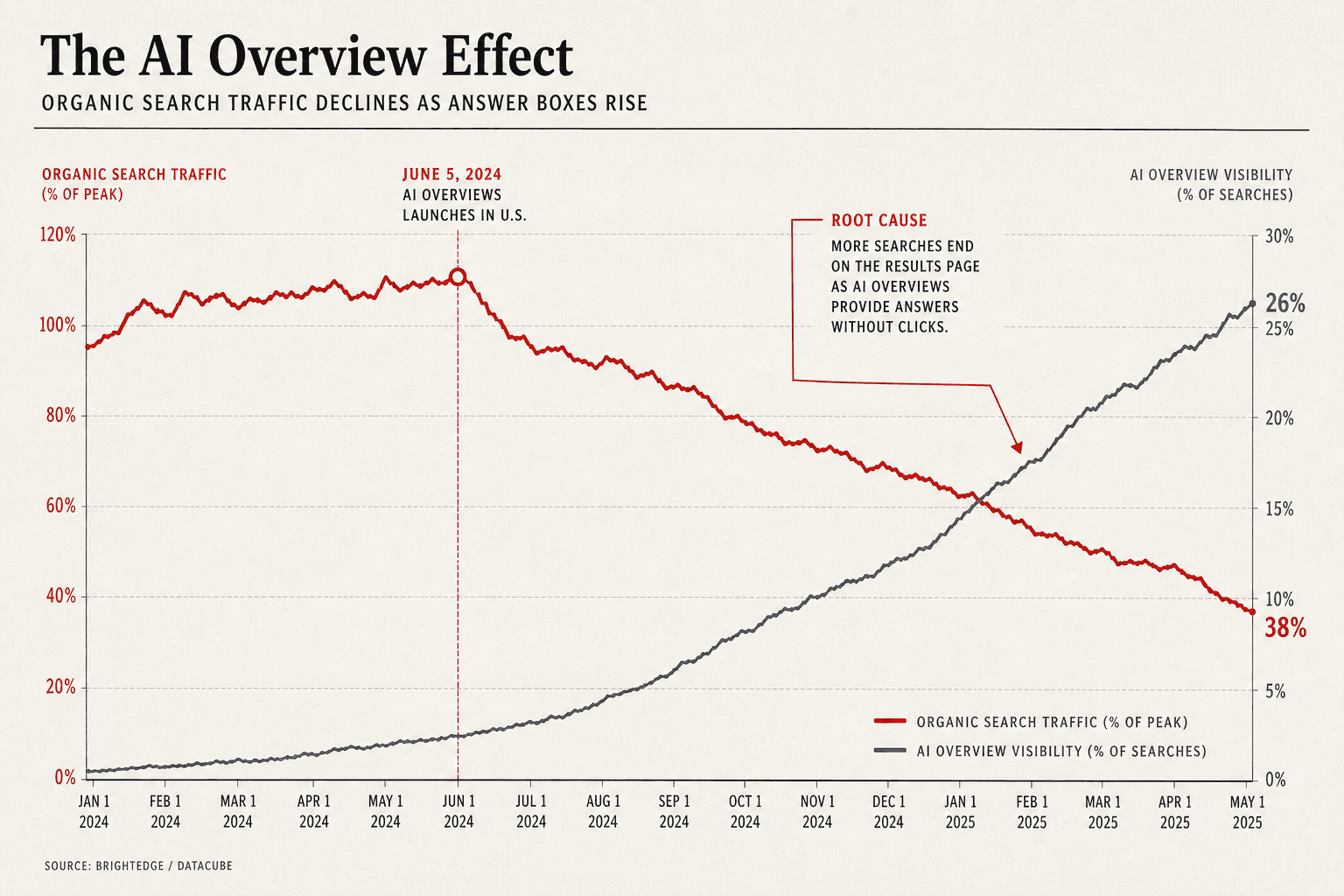
That is what zero-click SEO means: search visibility that earns answers on the SERP, but fewer site visits. Research on AI Mode search behavior shows that up to 93% of AI Mode searches can end without a click - significantly reducing organic click-through rates. Data from Click Behavior in Zero-Click Search: Why Rankings No Longer ... shows a 38% drop tied to zero-click search behavior.
We built SEO systems at Mygomseo for SaaS teams getting squeezed by AI-driven SERP shifts. Our framework shows why impressions rise while pipeline flattens, and how to fix the root cause. In this article, we break down what changed, what still works, and how to recover traffic that actually drives growth.
Zero-click SEO symptoms and business impact
What the problem looks like in analytics
If you want to know whether zero-click SEO is hurting your site, start with the pattern, not one metric. Impressions rise. Rankings hold. CTR slips. Assisted conversions get softer. That mix tells you users don't need to visit your page to get a partial answer.
We saw this in one weekly pipeline review. Search Console looked fine at first glance. The chart moved up and to the right. Then we opened assisted conversion paths in GA4. Branded visits held, but non-brand blog touches stopped pushing people forward.
That is the trap. Visibility looks healthy, so the team feels progress. Demand capture, though, gets weaker. Search without clicks creates that mismatch. You show up more often, but fewer buyers enter your funnel.
The pattern often shows up across three stages. In awareness searches, AI overviews answer basic questions fast. In comparison searches, buyers get summary tables before they click. In branded search, they arrive later and with less curiosity, because Google already framed the shortlist.
Quick fixes usually miss the cause. Teams rewrite title tags. They push more blog volume. They refresh meta descriptions every month. Those moves can lift CTR at the margins, but they rarely fix buyer behavior shifts.
For a deeper take on why this keeps happening, check out this clip from CNBC Television:
Why this hurts pipeline not just pageviews
For SaaS teams, this problem hits harder than a traffic dip. Early research visits often shape later demo requests. When those visits disappear, attribution gets blurry. Pipeline weakens before dashboard alarms go off.
Research from Click Behavior in Zero-Click Search: Why Rankings No Longer ... shows a projected 25% drop in organic traffic as search behavior shifts. The same analysis found that some publishers have already faced losses around 43%. Those numbers matter because fewer first touches usually mean fewer qualified return visits later.
So the real damage is not vanity traffic. It is weaker intent formation. It is fewer remarketing audiences. It is fewer comparison page visits before sales contact. That is why zero-click SEO becomes a revenue problem fast, not just an SEO problem.
Root Cause Analysis of AI Overviews Traffic Loss
Why answers get extracted before users visit
The real problem is bigger than lower CTR. In zero-click SEO, search engines now build answers before the visit happens. They pull facts, definitions, steps, and comparisons from several pages, then stitch them into one result. Your page can shape the answer and still lose the click.
That is why AI Overviews traffic drops even when rankings look stable. The engine no longer waits for a user to choose one blue link. It tries to resolve intent on the results page first. If your content is generic, thin, or split across five weak pages, it becomes easy to mine and hard to visit.
We saw this in one painful review session. Forty-seven browser tabs were open. Week three of research. Still guessing why strong impressions produced soft pipeline. Then the pattern clicked: our pages mentioned the topic, but none resolved it cleanly enough to become the obvious source.
Featured snippets, AI overviews, and AI mode reward a different kind of page. They favor pages that answer fast, define entities clearly, and keep the topic tight from top to bottom. Research on click behavior in zero-click search shows that position-one CTR can exceed 70% on navigational queries, which demonstrates clicks still happen when intent demands a site visit.
Informational queries work differently. Analysis from Google AI Mode and Zero-Click: 93% of Searches No Longer ... shows AI Overviews can dramatically reduce clicks on some how-to searches, with certain queries seeing near-total cannibalization. So how do AI Overviews affect organic traffic? They compress discovery traffic first, especially when the answer can be assembled without your full page.
Why old SEO playbooks fail in AI mode
Many teams still treat this like a title tag problem. They test headlines, tweak meta descriptions, and push more keyword variants. Those moves can help at the margin. But they do not fix the bigger issue: your content is no longer the best source for extraction and trust.
Old SEO playbooks were built for ranking pages, not answer assembly. They rewarded keyword targeting, content clusters with overlap, and separate posts for tiny query variations. In ai mode and featured snippet environments, that structure often backfires. It creates fragmented coverage, mixed definitions, and weak signals about what your page actually owns.
Does ai mode replace traditional SEO? No longer in the simple sense of ten links and ten clicks. But it does change what good SEO looks like. The winning move is not more pages. It is clearer pages, stronger entities, tighter facts, and fuller answers that deserve to be cited and clicked.
Our zero-click SEO strategy and implementation
How we redesign content for extraction and trust
Early on, we had a painful moment. We opened a search result, then checked the AI answer beside it. Our page ranked. Our brand was absent. The answer used our topic, our framing, and competing sources. That was the wake-up call. Visibility alone was no longer enough.
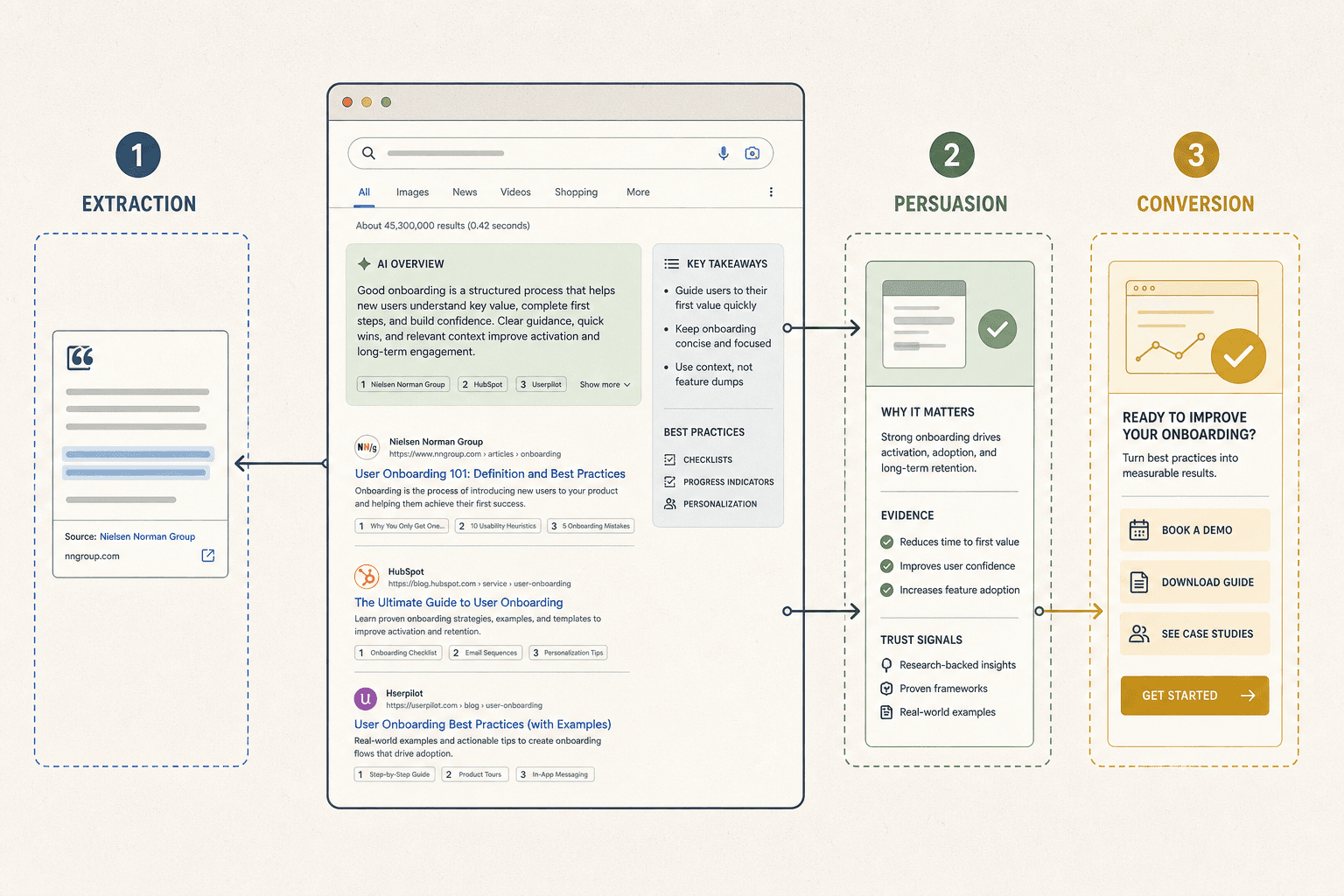
So we changed the page model. We stopped writing long intros that delayed the answer. We started mapping intent into blocks. Each page now has a clean definition, a direct answer, comparison points, proof, and a next step. That structure helps users fast. It also helps search systems parse the page.
Can you optimize content for search without clicks? Yes. You just need to design for what the results page now wants to extract. That means short answer sections, plain language headings, scannable facts, and clear entity signals. It also means giving users a reason to continue once they do land.
Our template now starts with an answer block near the top. Then we add a comparison section, a proof section, and a conversion path. If the query suggests doubt, we include objections. If the query suggests evaluation, we include decision criteria. If the query suggests action, we place the CTA close to the answer.
We also tightened heading logic. Each H2 handles one intent layer. Each H3 answers one follow-up question. That makes the page easier to scan. It also creates cleaner extraction points for featured snippets, AI Overviews, and ai mode and related experiences.
Schema helps, but only when it supports the page. We usually keep it simple. Article schema for editorial pages. FAQ schema when there are true question-and-answer sections. Product or service markup when the page supports a commercial intent. We do not add markup as decoration.
Entity reinforcement matters too. We repeat the core subject in natural ways across headings, examples, internal links, and image alt text. We also support each claim with proof. That can be product screenshots, customer quotes, mini case notes, author expertise, or original examples. Trust is easier to extract when proof sits close to the claim.
What should you change first for zero-click SEO? Start with the first screen of your highest-value pages. Add a direct answer. Add a clear heading path. Add proof near the top. Then connect that page to related cluster pages with internal links that reinforce topic depth.
The workflow we built for SEO and AI visibility
Our workflow starts before writing. We classify the query by intent, click value, and extraction risk. Informational terms often need stronger answer blocks. Commercial terms need comparison points and sharper CTAs. Analysis shows AI Overviews can dramatically reduce clicks on some how-to searches, with certain queries seeing near-total cannibalization. Meanwhile, research from Google AI Mode and Zero-Click studies shows some purchase-style searches trigger AI answers far less often, around 4%, so we do not treat every query the same.
Next, we build the brief as a page system, not a blog outline. The brief includes the core answer, supporting entities, comparison angles, FAQs, proof assets, and CTA type. That gives writers one job. Create a page that works on page and inside search without clicks.
Then we configure the page. We use one clean H1. We place the primary answer high on the page. We add jump links when the topic is broad. We include FAQ-style sections where users don't want fluff. We also link to adjacent pages in the cluster, so the topic feels complete instead of isolated.
Our CTA strategy changed too. Lower-click environments need lower-friction offers. Instead of pushing every visitor to book a demo, we often offer a template, checklist, benchmark, or short teardown. That matches the user mindset better. It also captures demand that might never come back.
We report on more than sessions now. We track impressions, cited placements, snippet ownership, branded lift, assisted conversions, and page-level CTA rates. Research shows that being cited in an AI Overview can drive 35% more clicks than pages that are visible but not cited. That is why our dashboard treats citation visibility as a performance signal, not a vanity metric. Click Behavior in Zero-Click Search: Why Rankings No Longer ...
In practice, the workflow is boring by design. Strong template. Clear headings. Useful schema. Tight internal links. Better proof. Softer CTAs. That is the point. When users don't click, and mode and summary layers keep expanding, disciplined pages beat clever ones.
Featured snippets results and search without clicks prevention
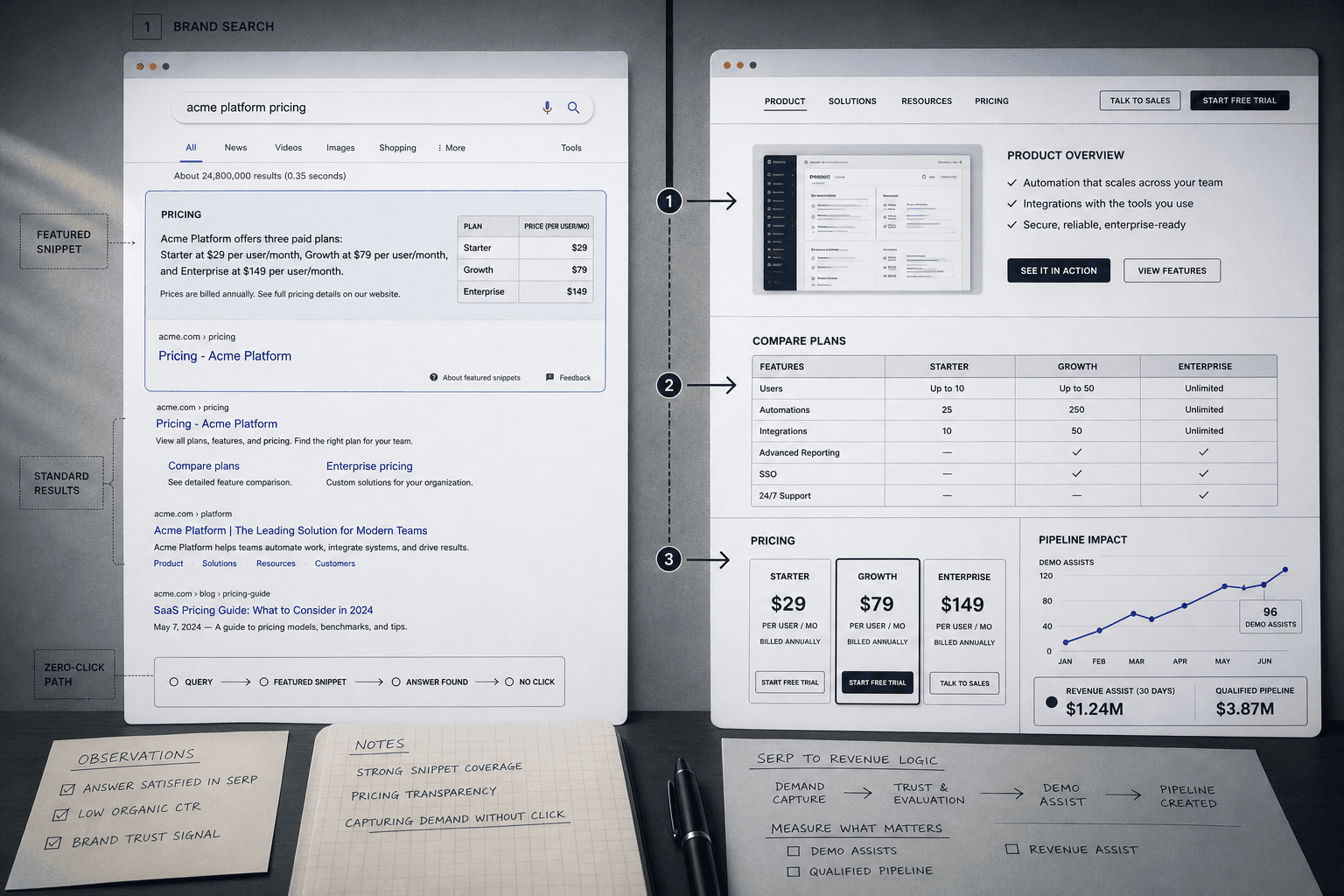
We changed our reporting too. Instead of last-click attribution, we tracked demo assists. Instead of vanity metrics, we watched branded search growth as a trust signal. We measured topic-level visibility across commercial and educational queries to see where our authority was compounding. We compared landing page mix before and after the rebuild. The data proved stronger non-blog pages were pulling in better-fit visitors. When those signals moved together, SEO became easier to defend because the outcomes tied back to revenue, not just sessions.
The prevention work is simple. The discipline is the hard part.
Audit extraction readiness across your key pages - check whether your product comparison page surfaces a clear table in the first 200 words, or if your pricing guide still buries the numbers below the fold. Refresh pages that still rank but no longer answer fast - if your "how to choose" article takes three scrolls to reach the decision criteria, rewrite the intro. Tighten topical ownership so one strong page leads each core intent - consolidate your scattered "best practices" posts into a single authoritative guide rather than splitting authority across five thin pieces. Watch SERP feature shifts before click loss turns into pipeline loss - if Google starts testing a comparison widget on your target keyword, you have a narrow window to adapt before traffic craters.
This is the practical takeaway. If users do not click the way they used to, your SEO system cannot rely on the old handoff. It has to earn trust inside the results page, reinforce authority across the journey, and create more ways for demand to convert after that first search. That is what zero-click SEO actually asks of modern content teams. Build pages that can be quoted. Build journeys that can still convert. Measure what influences revenue, not just what gets a session.
If your traffic looks fine but business impact feels flat, that gap is your signal to rebuild the system. Ready to put that into practice? Try It Free and start mapping stronger search entry points.