Rank Tracking Software in 2026: Why Position Numbers Aren't Enough Anymore
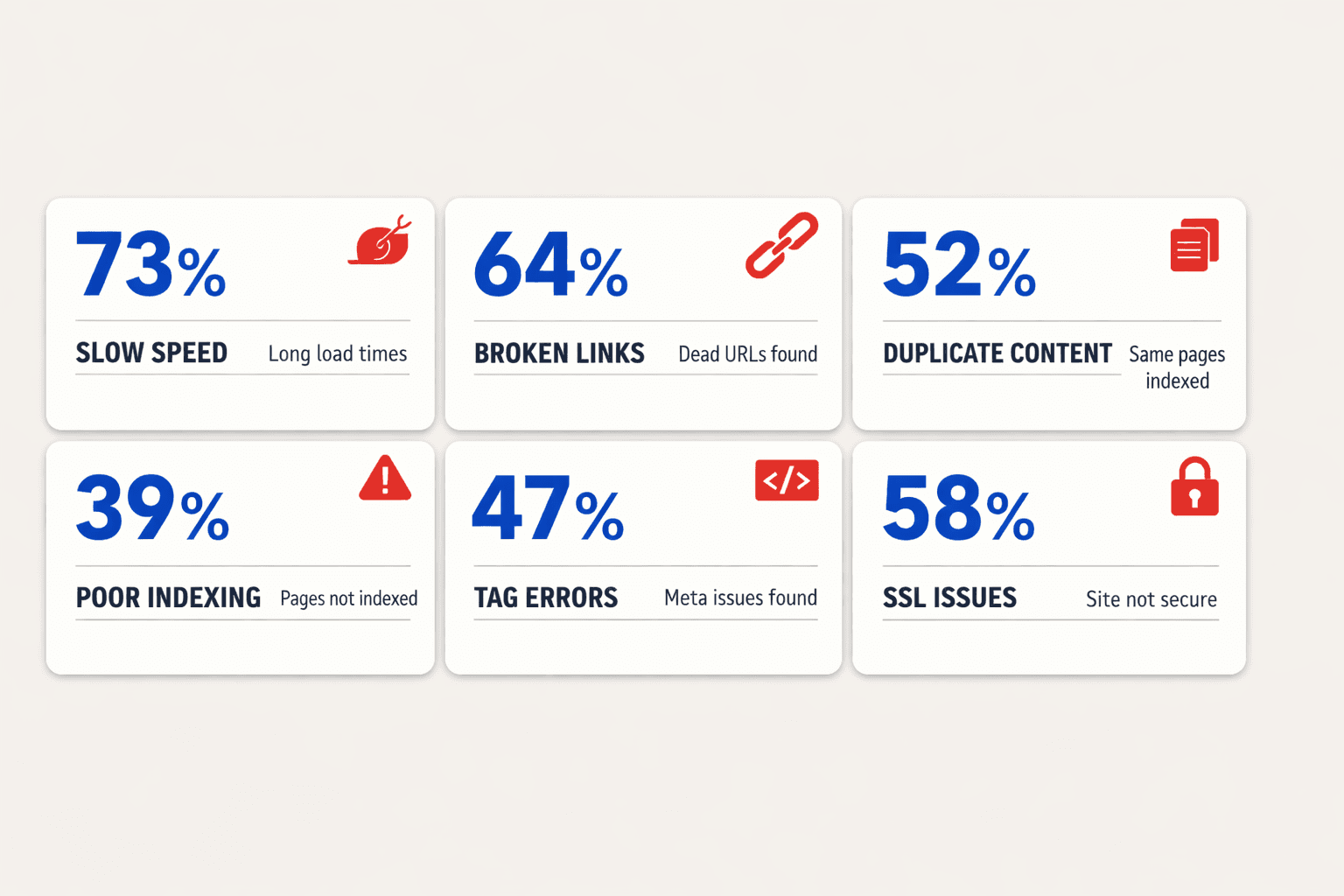
Rank tracking software still matters. But in 2026, rank tracking software alone no longer tells the full SEO story. What is it? It is software that monitors where pages appear for target queries over time. That sounds simple. The SERP is not. AI Overviews, zero-click results, and crowded features can bury traffic impact behind a small ranking shift. According to Best Perplexity Rank Tracking Tools in 2026: Tested and Compared, brands appear in only 30% of tracked AI search queries. Research from Rank Tracking: The Complete Guide for 2026 shows some keywords earn as little as a 0.5% click-through rate. This comparison examines traditional trackers and agentic platforms using the same criteria: reporting, insight, and action. The goal is simple: help teams choose based on workflow, not hype.
How This Rank Tracking Software Comparison Works
Evaluation criteria
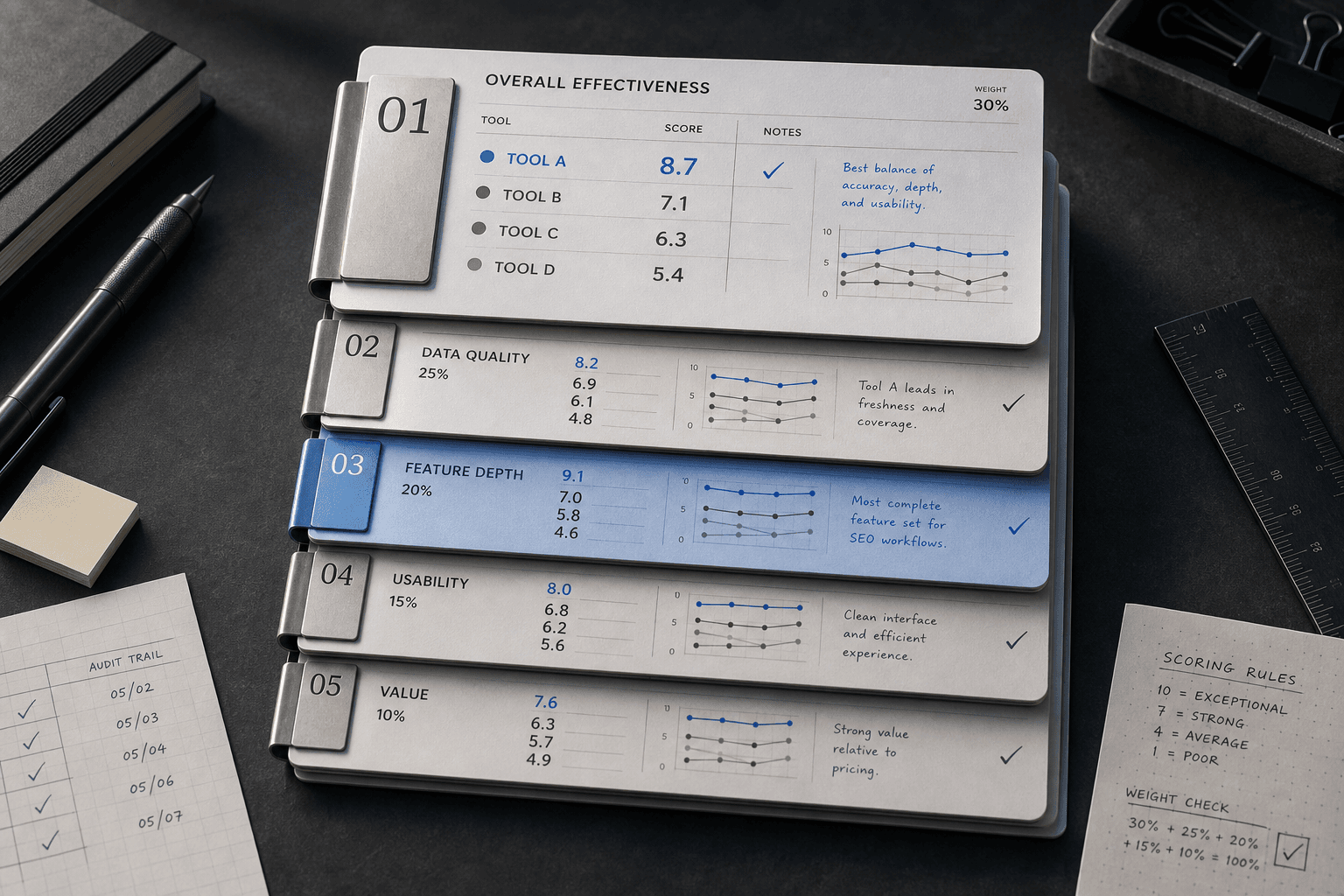
This rank tracking software comparison uses five criteria. Each one reflects how teams work in 2026, not how SEO worked years ago. The review checks data accuracy, SERP context, actionability, automation, and reporting value. It also keeps the same structure for both options: Overview, Key Features, Strengths, Weaknesses, and Best For. Nightwatch explains that rankings shift by device, location, language, and search engine, so accuracy depends on careful setup.
Data accuracy asks a simple question. How accurate is keyword position tracking? The short answer is: useful, but never absolute. A good seo rank tracker can show direction fast, yet the number still depends on where, how, and when the search happened. For example, a page at position eight on mobile in Chicago may not hold the same spot on desktop in Austin. Nightwatch
Why position data alone can mislead
A ranking can look strong and still hide weak performance. That is the core gap this comparison focuses on. Keyword position tracking without traffic, page quality, and intent signals can create false confidence. A team may celebrate moving from position 11 to 7, while the page still misses the query intent and drives poor conversions.
Modern SERPs make that gap wider. Ads, AI answers, maps, videos, and forum results can push the best seo rank lower on the screen. For example, a report may show a gain, but real clicks stay flat because the page sits below richer results. Searchable found only 45% overlap between brands that rank well on Google and those cited by AI platforms. Best Perplexity Rank Tracking Tools in 2026: Tested and Compared
What modern teams should measure next
So what should teams track besides rankings? They should track clicks, conversions, page quality, search intent match, SERP features, and AI citation visibility. They should also track whether tools turn findings into tasks. SEORCE notes that some tracking tools in 2026 now combine daily ranks with AI visibility and workflow triggers, not just charts. 12 Best Rank Tracking Tools for Smarter SEO Monitoring in 2026
That is the real divide in this comparison. It is not about who collects more position data. It is about who turns ranking data into action.
Traditional SEO Rank Tracker Tools
Overview
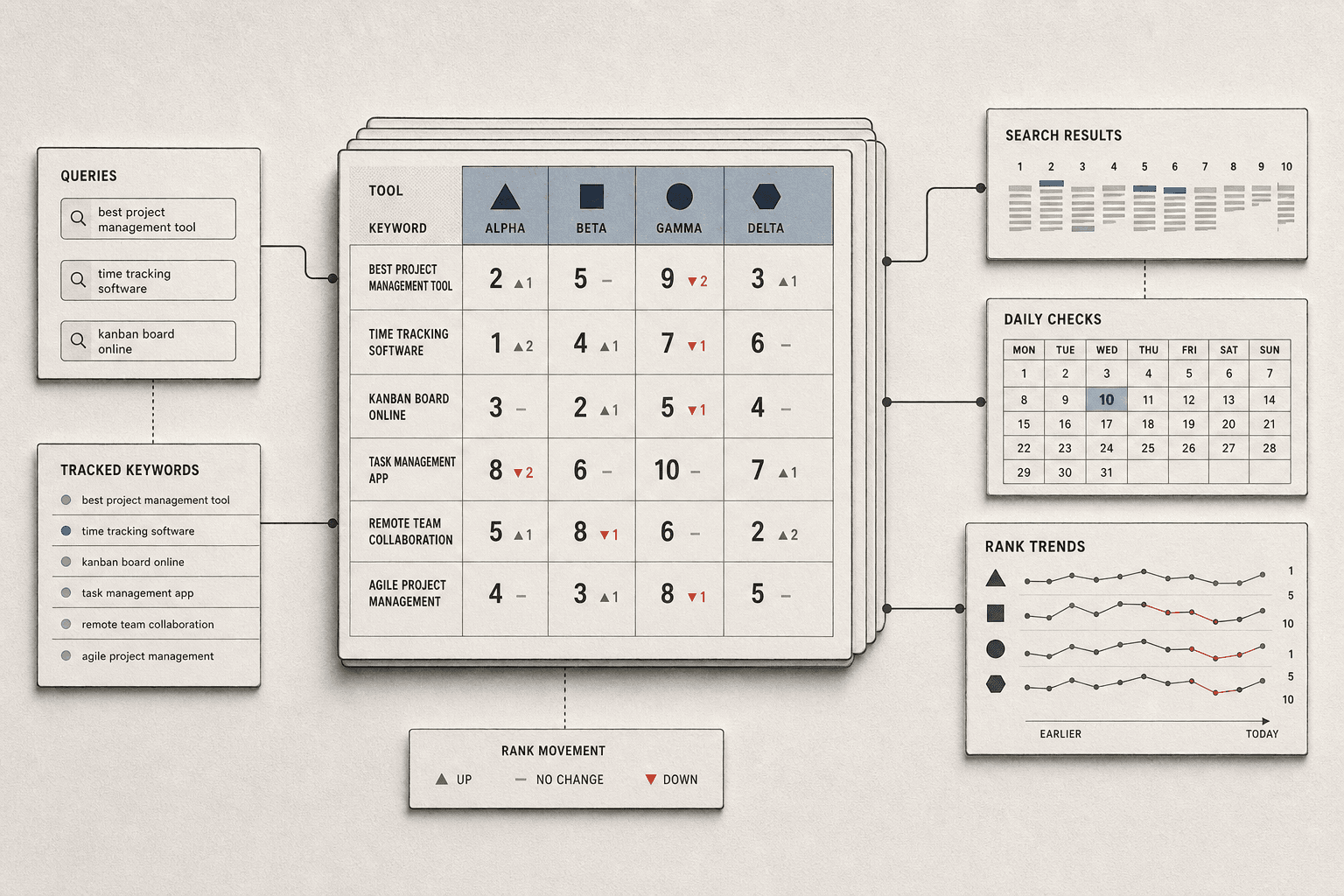
Traditional rank tracking tools are built to monitor keyword movement across search engines, devices, and locations. In simple terms, this type of rank tracking software tells teams where a page appears for a target query. That makes it useful for baseline SEO reporting. It also gives teams a shared scoreboard for visibility.
Most platforms in this category focus on measurement first. They check positions, log changes, and show trends over time. For example, a marketing team might track “project management software” on mobile in Chicago and desktop in London. The tool shows what moved, but usually not why it moved.
Key Features
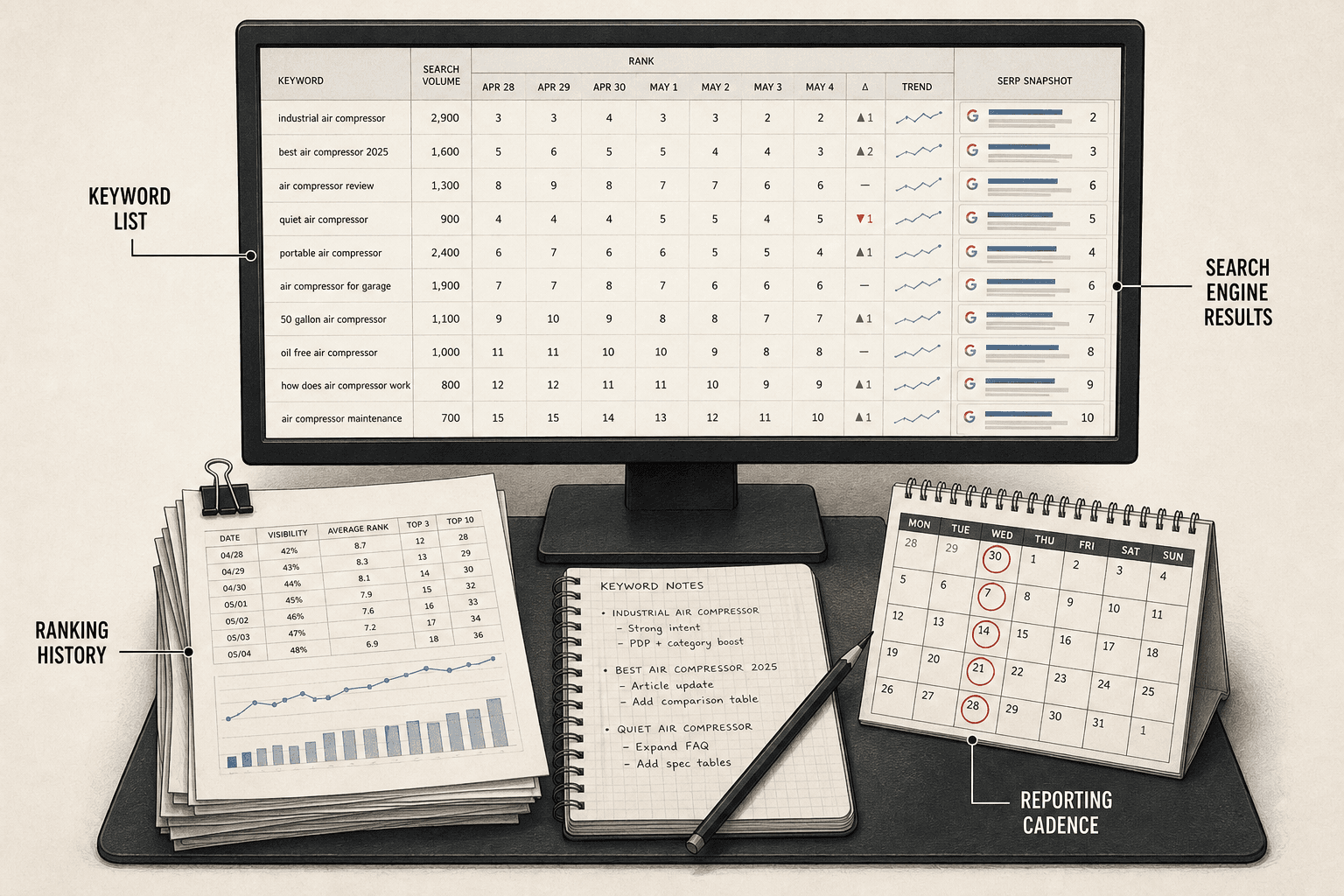
The core feature set is familiar across most rank tracking tools. Standard functions include daily ranking updates, competitor tracking, location-based checks, historical charts, and scheduled reports. Many platforms also group keywords by page, tag, or campaign. That helps agencies and multi-site teams keep large lists organized.
Historical reporting is one of the stronger features. According to Rank Tracking: The Complete Guide for 2026, useful rank analysis often depends on wider review windows such as 30 days. Research from Rank Tracking: The Complete Guide for 2026 also highlights trend views that extend to 90 days. That matters because a single-day jump can mislead.
For a visual walkthrough of how teams are starting to automate tracking workflows, check out this tutorial from Amit Tiwari:
Strengths
The main benefit of a traditional seo rank tracker is clarity. It gives teams a simple view of position changes across markets, pages, and devices. That makes benchmarking easier, especially when several teams need the same report. Mature reporting is another strength, since scheduled exports and dashboards fit agency workflows well.
These tools also support scale. A large brand with many sites can track thousands of keywords in one system. Unlike ad hoc spreadsheets, a dedicated seo rank tracker creates a clean record over time. For reporting discipline, that still matters.
Weaknesses
The limits appear after the report lands. Traditional platforms often stop at the signal. They show that rankings moved, but offer little help on which page to fix first. In 2026, that gap matters more because ai search features can change clicks without changing a blue-link position.
This creates common pain points. Teams get noisy alerts, vanity reporting, and endless charts. For example, a page can rise three spots while traffic stays flat. The team knows what moved, but not what to do next.
Best For
Traditional trackers fit teams that need dependable reporting and easy benchmarking. They work best for agencies, franchises, and multi-site marketing groups. They also suit leaders who need regular visibility reports for clients or executives. Where action systems focus on next steps, traditional tools still serve teams that value measurement first.
Agentic Rank Tracking Tools Like Mygomseo
Overview
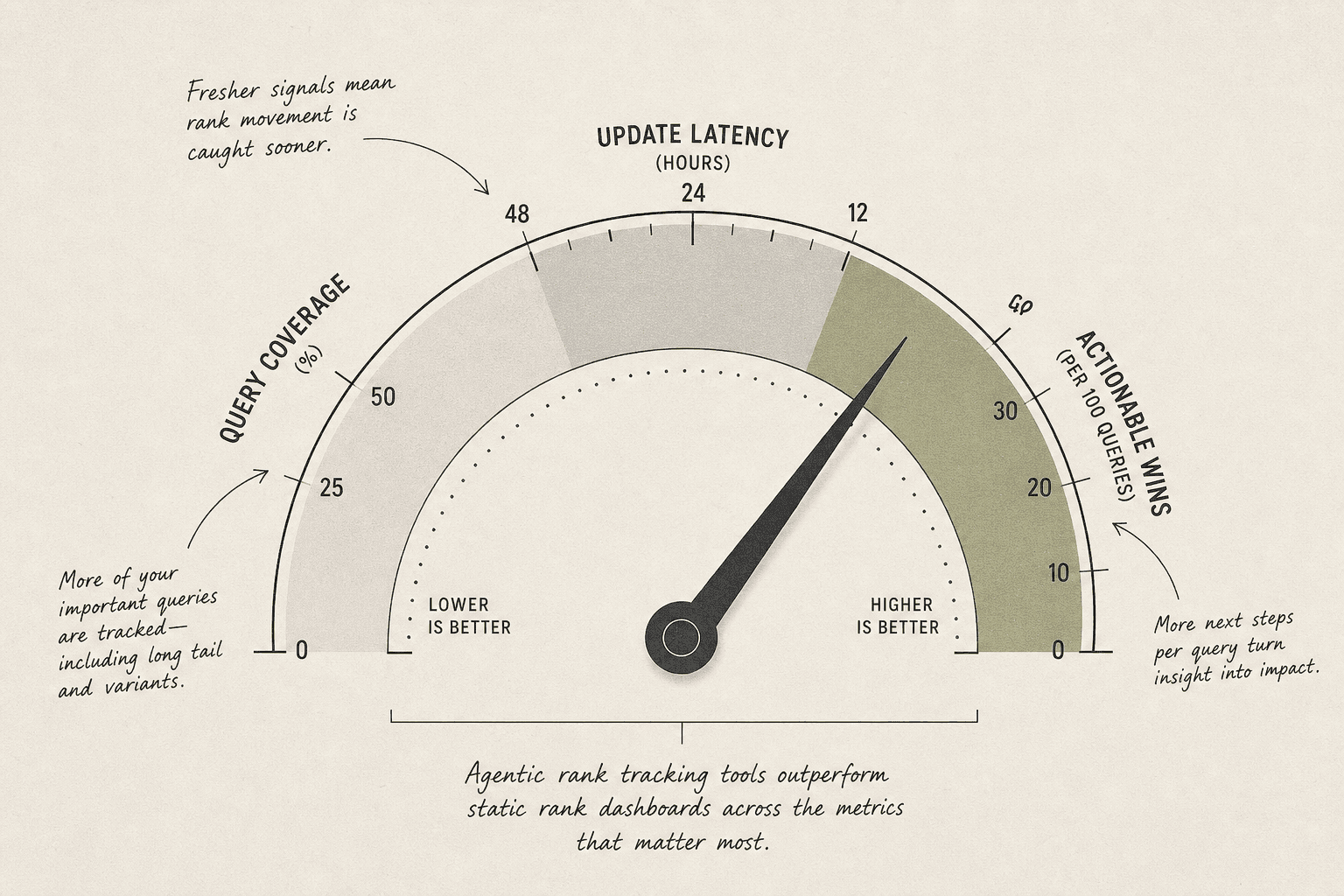
Agentic platforms expand whatrank tracking softwaredoes. They do not stop at reporting movement. They connect ranking data to diagnosis, prioritization, and the next task. In practice, that means the tool flags a drop, explains likely causes, and suggests what to change next.
This matters because modern search results are crowded. AI search features, SERP overlays, and mixed intent can blur the meaning of a single position. For example, a page may hold steady, yet lose attention because the results page changed shape. Searchable’s review of Perplexity tracking tools reflects this shift toward interpreting visibility, not only counting positions (Best Perplexity Rank Tracking Tools in 2026: Tested and Compared).
Key Features
Across the main feature categories, agentic tools in this space aim to close the gap between insight and execution. First, they still track rankings across keywords, pages, and competitors. Second, they add SERP interpretation, such as layout changes, intent shifts, and whether AI search elements may affect clicks.
Third, they generate content recommendations based on pages that slipped, stalled, or never broke through. Fourth, they support workflow automation, such as routing issues into a task queue or assigning fixes by priority. Fifth, some add publishing support, so approved updates can move from suggestion to live change with fewer handoffs. This wider scope is why some teams now include these products in the best rank tracking conversation, not only among reporting tools in SEO lists (Best Rank Tracking Software 2026: 11 Tools Tested).
Strengths
The main strength is reduced manual analysis. A standard tracker says a keyword moved. An agentic platform says what likely caused it and what deserves attention first. That shortens decision time for lean teams.
The second strength is tighter execution. For example, a content lead can see a slipping page, review suggested changes, and push an approved update in one workflow. According to Rank Tracking: The Complete Guide for 2026, trend direction across60 daysoften tells a clearer story than a daily snapshot. Agentic systems are built around that broader view.
Weaknesses
This category is newer, so buying criteria are less familiar. Teams must judge automation quality, recommendation logic, and review controls, not just data coverage. Trust also matters. If the setup is weak, the output can be noisy.
It can also be too much for teams that only need clean reports. Some buyers want rank tracking software for dashboards, not action layers. Seorce notes that some tools still offer short trial windows, including7 days, which can limit deep evaluation of workflows (12 Best Rank Tracking Tools for Smarter SEO Monitoring in 2026).
Best For
Agentic tools fit small marketing teams, founders, and operators with limited time. They suit teams that need fewer tabs, fewer handoffs, and clearer next steps. They also fit brands that want human review before major publishing changes, rather than blind automation.
They are less suited to teams that only need weekly ranking reports. In that case, a simpler tracker may be enough.
Best Rank Tracking in 2026 Depends on Fit
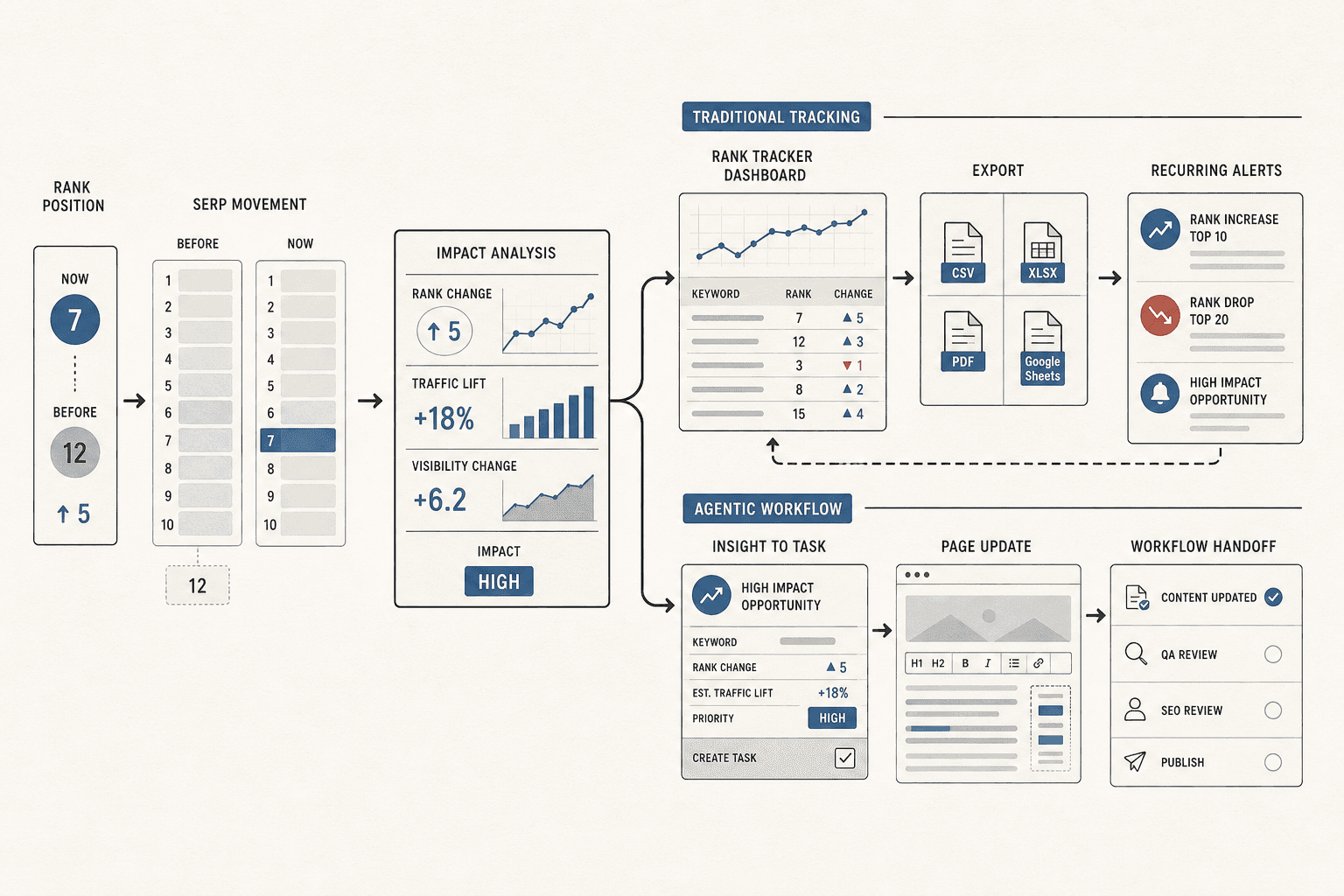
That is where the split becomes clear. Traditional tools remain strong for clean monitoring and stakeholder reporting. Agentic platforms push further by turning keyword position tracking into diagnosis, prioritization, and execution support.
- Setup — Traditional rank trackers: Usually fast for dashboards and keyword lists · Agentic tools like Mygomseo: Takes more input upfront to guide actions well
- Reporting depth — Traditional rank trackers: Strong historical charts, filters, and exports · Agentic tools like Mygomseo: Stronger on context than long-form reporting
- Actionability — Traditional rank trackers: Shows movement, but teams interpret next steps · Agentic tools like Mygomseo: Connects movement to fixes, tasks, and updates
- Automation — Traditional rank trackers: Alerts and scheduled reports are common · Agentic tools like Mygomseo: Recommendations, workflows, and publishing support
- Pricing model — Traditional rank trackers: Often scales by keywords, seats, or projects · Agentic tools like Mygomseo: Often reflects workflow depth and automation value
- Ideal use case — Traditional rank trackers: Visibility monitoring across large keyword sets · Agentic tools like Mygomseo: Small teams that need rankings translated into work
The best choice depends on workflow, not hype.
- Reporting-heavy teams should lean toward traditional rank tracker platforms. They fit structured dashboards, recurring exports, and broad multi-site oversight.
- Lean in-house teams should look closely at agentic tools. They reduce manual analysis and shorten the path from insight to update.
- Founders usually need clarity, not another chart. A tool that explains what changed and what to fix often fits better than one that only logs movement.
- Content-led growth teams benefit most when rankings connect to page refreshes, internal links, publishing queues, and topic expansion.
The practical verdict is not that one model replaces the other. Traditional rank tracking tools still fit teams that need reliable visibility monitoring. Agentic rank tracking software fits teams that want rankings turned into execution, especially when AI search and messy SERPs make raw numbers harder to trust.
The next phase of SEO rank tracker value is obvious: less watching, more doing.
For teams that want a practical next step, Try It Free to explore simple tools for sharing projects and building clean connections.