Technical SEO Audit Checklist 2026: The 30 Checks That Actually Move Rankings

Technical seo audit work finds the blockers content alone cannot fix. When rankings stall, the issue is often crawl waste, index gaps, or slow pages - not a weak publishing pace. According to The Ultimate Technical SEO Audit Checklist: 7 Essential Resources, gains can reach 200% after the right fixes. That is why this topic matters now. Lean teams cannot afford random SEO busywork. This list focuses on the seven checks that move fastest, from crawl paths to Core Web performance. Data from The Ultimate Technical SEO Audit Checklist: 7 Essential Resources also shows 0%, which is a blunt reminder that some pages still deliver no search value at all. The goal is simple: spot friction fast, rank the fixes, and unlock growth.
How a technical SEO audit should be evaluated
What makes a check worth prioritizing
Not every issue deserves equal attention. The best teams score each finding on three factors: ranking impact, fix speed, and business risk. That keeps essential SEO work focused on problems that can change outcomes fast.
For example, a blocked product folder matters more than a missing image alt tag. One stops search engines at the door. The other is useful, but rarely urgent. Research from Technical SEO Audit Checklist: Complete 2026 Guide shows 20350%, but the bigger lesson is prioritization, not volume.
How to balance impact, effort, and risk
A simple model works best. Score each issue from one to three for impact, effort, and risk. Then fix high-impact, low-effort items first, especially when revenue pages are involved. That prevents teams from chasing minor warnings during seo audits.
For example, broken canonicals on category pages should outrank a small schema typo. One can confuse a search engine and dilute signals. The other usually sits lower on the list. The Ultimate Technical SEO Audit Checklist: 7 Essential Resources supports this crawl-first approach. Data indicates 20175% (Technical SEO Audit Checklist: Complete 2026 Guide).
When to run seo audits
Teams should run audits on a schedule and after major changes. A monthly light review works well. A deeper check fits each quarter, after migrations, redesigns, or large template updates. That rhythm helps catch blockers before rankings slip.
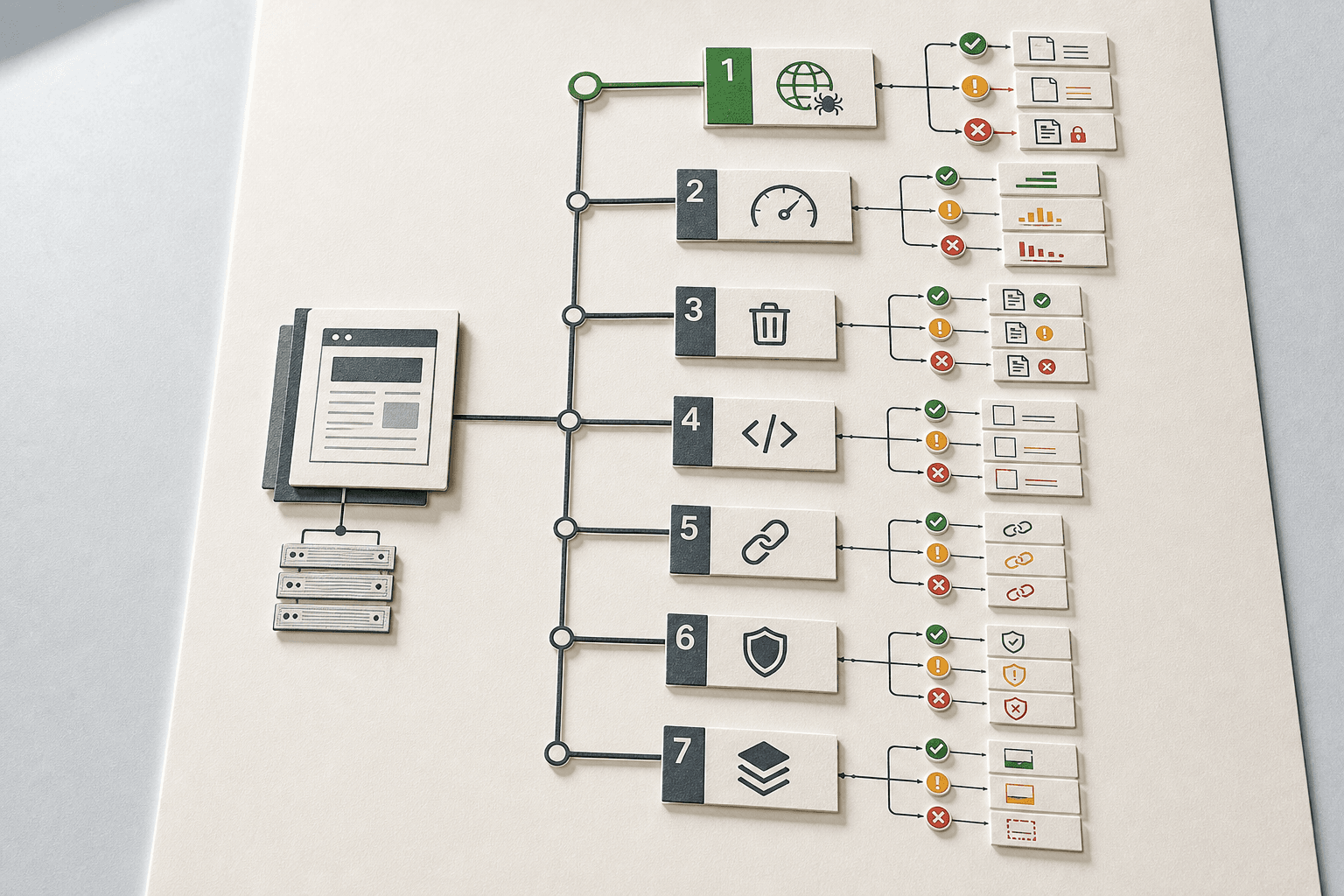
7 technical SEO audit checks that matter most
1. Crawlability and robots rules
What to reviewReview robots.txt, meta robots tags, X-Robots-Tag headers, and blocked folders. Compare crawl paths in Google Search Console and server logs. For example, a staging rule can slip into production and hide an entire blog from crawlers.Why it mattersCrawlability decides whether a search engine can even reach key pages. It is the front door of any comprehensive seo effort. If the door is locked, rankings stall before content gets a chance.What to useUse Google Search Console, Screaming Frog, and a raw robots.txt tester. The Ultimate Technical SEO Audit Checklist: 7 Essential Resources also outlines core crawl checks in a simple format.What to fix firstFix blocked money pages first. Then fix blocked CSS, JavaScript, and image files that affect rendering. After that, remove old disallow rules left behind from migrations or redesigns.
2. Indexability and duplicate pages
What to reviewCheck which URLs can enter the index. Review noindex tags, canonical targets, parameter pages, faceted navigation, and near-duplicate templates. For example, one product can create five URLs through sort, color, and tracking parameters.Why it mattersIndexability controls what the search engine stores and serves. Duplicate pages dilute signals and waste crawl budget. They also make reporting messy because one page can compete with its own variants.What to useUse Google Search Console's indexing reports, site queries, and crawl tools that flag duplicates. Technical SEO Audit Checklist: Complete 2026 Guide highlights duplicate and indexation checks as core parts of an essential seo process.What to fix firstFix accidental noindex on valuable pages first. Then consolidate duplicate URLs with canonicals, redirects, or parameter controls. If paginated or filtered pages create clutter, define which versions deserve indexation.
3. Site architecture and internal links
What to reviewReview click depth, orphan pages, weak hub pages, and broken internal paths. Map how homepage authority flows into categories, products, and articles. A good rule is simple: important pages should not feel buried in a basement.Why it mattersStrong architecture helps crawlers move with less friction. It also tells the search engine which pages matter most. In a comprehensive seo audit, internal linking often becomes the fastest win because it needs no new content.What to useUse crawl visualizations, internal link reports, and simple depth maps. Teams that pair audit work with product changes often document fixes through roles like Product Engineer, especially when templates need navigation updates.What to fix firstFix orphan pages first. Then add internal links from high-authority pages to commercial or strategic URLs. Last, flatten deep paths where key pages take too many clicks to reach.
4. Core web vitals and page speed
What to reviewReview Largest Contentful Paint, Interaction to Next Paint, and Cumulative Layout Shift. Check page templates, not just single URLs. For example, a fast blog post can hide a slow product template loaded with scripts.Why it mattersYes, core web vitals matter in a technical seo audit. They affect user experience and help confirm whether pages feel stable and responsive. Research from Technical SEO Audit Checklist: Complete 2026 Guide shows 73% in its cited dataset, which reinforces how often technical gaps still appear.What to useUse PageSpeed Insights, Lighthouse, Chrome DevTools, and Search Console's core web reports. The Ultimate Technical SEO Audit Checklist: 7 Essential Resources also points to speed testing as a standard review area.What to fix firstFix template-wide issues first. Compress oversized images, defer noncritical scripts, and reduce layout shifts from banners or embeds. If one script hurts every page, that script beats ten small page edits.
5. Redirects and broken status codes
What to reviewReview 3xx chains, 4xx errors, 5xx errors, and soft 404s. Check old migration paths and retired campaign URLs. For example, one redirect chain can turn a clean click into a three-stop detour.Why it mattersStatus codes shape crawl efficiency and user trust. Too many broken paths waste signals and slow discovery. They also create dead ends for visitors coming from search, email, or paid campaigns.What to useUse Screaming Frog, server logs, browser extensions, and Search Console coverage data. These tools reveal where bots hit walls and where redirects loop or chain.What to fix firstFix internal links that point to redirected or broken URLs first. Then collapse redirect chains into one hop. Finally, repair recurring server errors on high-value pages.
6. XML sitemaps and canonical signals
What to review Review sitemap freshness, status codes, indexability, and canonical alignment. Every sitemap URL should return a valid status and match the preferred canonical version. If the sitemap says one thing and the canonical says another, the site sends mixed signals.Why it mattersSitemaps guide discovery. Canonicals guide consolidation. Together, they help a search engine choose the right version faster, especially on large sites with many similar URLs.What to useUse Search Console sitemap reports, crawl exports, and XML validators. Technical SEO Audit Checklist: Complete 2026 Guide found a cited figure of 201536%, but that number reads unusually and should be treated carefully rather than used as a planning benchmark.What to fix firstRemove non-indexable, redirected, and duplicate URLs from sitemaps first. Then align canonicals with the preferred live version. After that, split large sitemaps by type if monitoring has become messy.
7. Mobile rendering and JavaScript access
What to reviewReview smartphone rendering, blocked assets, lazy-loaded content, and client-side links. Test whether important text, navigation, and product data appear without user interaction. For example, a page can look perfect to humans but show almost nothing to Googlebot.Why it mattersThis is the surprising blocker teams miss. Mobile-first indexing means the mobile view sets the baseline. If JavaScript hides links or content, the search engine may never see the real page.What to useUse Search Console URL Inspection, mobile-friendly rendering tests, browser dev tools, and rendered HTML comparisons. In more technical handoffs, teams may route fixes through roles like Technical Channel Manager APAC (SG) when platform dependencies slow releases.What to fix firstFix blocked JavaScript and CSS first. Then replace fragile client-side links with crawlable HTML links where possible. Last, make sure key content loads fast on mobile without taps, swipes, or delayed scripts.
Best SEO Audit Tool Options for Each Check
1. Crawler tools for site discovery
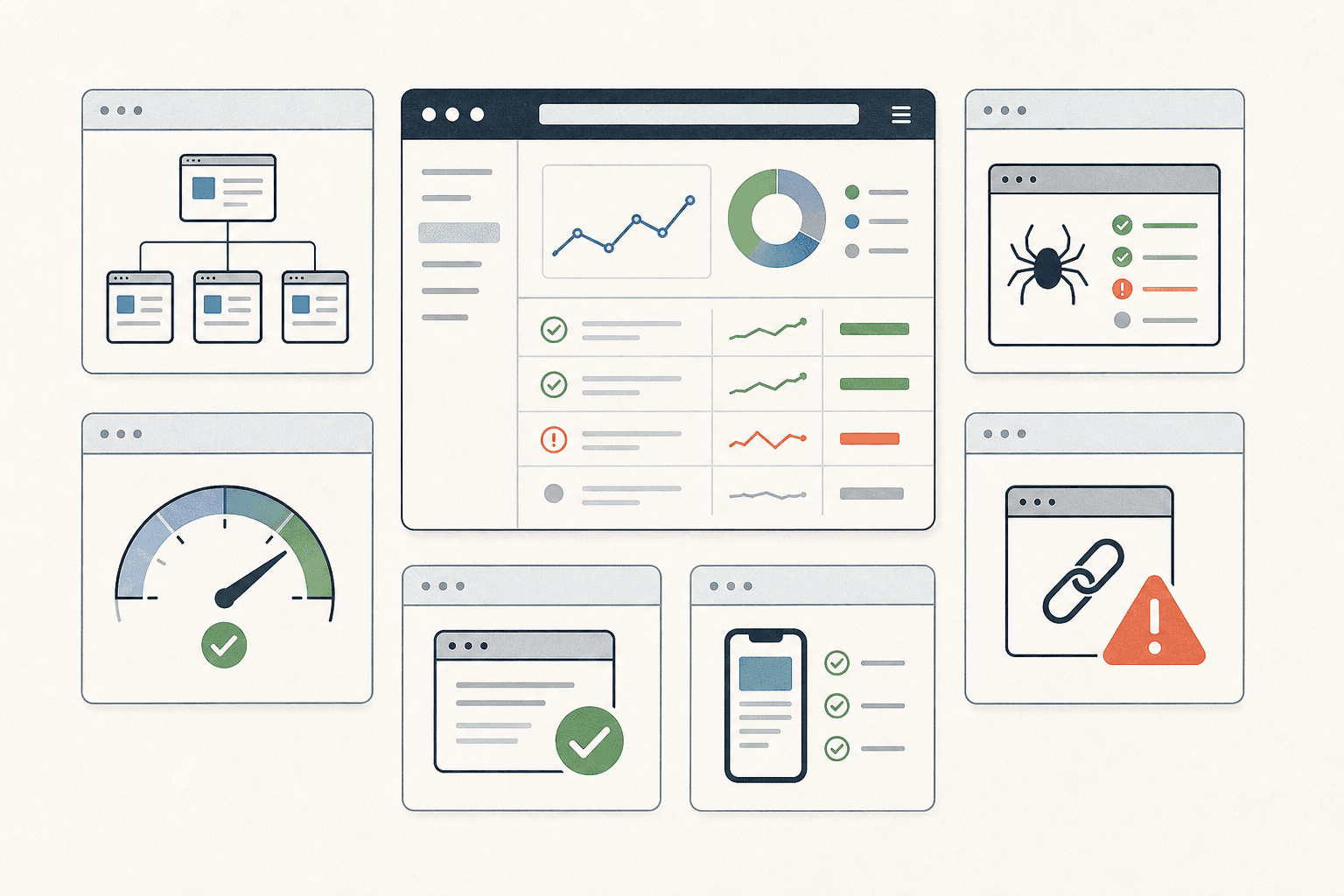
Crawler tools are best for finding broken links, redirect chains, thin pages, and orphaned URLs. They act like a site map with x-ray vision. For example, a growing ecommerce store may think navigation is clean, while a crawler shows hundreds of faceted pages wasting crawl budget. The Ultimate Technical SEO Audit Checklist: 7 Essential Resources
Free crawlers can work for small sites. Larger sites need deeper exports, segment filters, and stronger diagnostics. That is where a dedicated crawler earns its place in a comprehensive seo audit.
2. Browser and speed tools for core web vitals
Browser tools and PageSpeed Insights fit speed checks best. They show layout shift, render delay, and script bloat in plain terms. Research from Technical SEO Audit Checklist: Complete 2026 Guide shows pages meeting Core Web Vitals targets can see up to 24% higher conversion rates.
This is where free tools often stay useful longer. For example, a marketing team can test templates, compare mobile versus desktop, and spot heavy third-party scripts without buying a platform first. If results look inconsistent, a rendering check or a Product Engineer can help confirm what users and bots actually load.
3. Search Console data for indexing validation
Search Console is the best seo audit tool for indexing checks. It shows submitted pages, indexed pages, impressions, and coverage errors in one place. According to Technical SEO Audit Checklist: Complete 2026 Guide, 35% of websites still carry technical issues that can limit visibility.
For most teams, the lightweight stack is enough: crawler, Search Console, PageSpeed Insights, and log or rendering checks when needed. That stack covers most technical seo audit work without forcing one platform to do everything.
Technical SEO audit checklist and quick comparison

- Crawl or index blocks — Impact: Very high · Effort: Low to medium · Ideal review cadence: Weekly until fixed
- Broken pages and redirect chains — Impact: High · Effort: Medium · Ideal review cadence: Monthly
- Slow templates and core web issues — Impact: High · Effort: Medium to high · Ideal review cadence: Monthly
- Sitemap, canonicals, and structured hints — Impact: Medium · Effort: Low to medium · Ideal review cadence: Monthly
- JavaScript rendering edge cases — Impact: Medium · Effort: High · Ideal review cadence: Quarterly
What to fix now
Fix anything that stops search engines from reaching money pages. That means noindex mistakes, blocked folders, broken canonicals, or bad redirects. For example, a service page with strong intent means little if Google never stores it.
Next, fix high-value pages with clear content gaps. SMB teams should not polish low-traffic archives first. They should repair the pages closest to revenue, then publish missing comparison, service, and location content.
What to monitor monthly
Monitor templates, internal links, sitemap health, and page speed trends. Research from Technical SEO Audit Checklist: Complete 2026 Guide shows automated checks can cut audit time by60%. That matters for lean teams running a repeatabletechnical seo audit.
Also watch bot activity and crawl waste. Technical SEO Audit Checklist: Complete 2026 Guide found AI crawlers now drive15%of traffic on some sites. A good seo audit tool helps teams spot that drift fast.
What can wait
Low-impact warnings can wait. Minor schema gaps, image naming issues, or rare render bugs matter less. If resources stay tight, a Product Engineer can own deeper fixes later.
Conclusion and best next steps

The best next move depends on site size and risk. A small site with steady publishing can run a simple monthly review using a lean seo audit checklist and a core tool stack. A growing site should add a quarterly pass across templates, internal links, and core web signals. A larger or more complex site needs regular seo audits, deeper diagnostics, and a fuller comprehensive seo audit when rankings stall, migrations loom, or search engines stop surfacing key pages.
The takeaway is simple. Fix the highest impact issues first. Then publish with more confidence, knowing the technical base can support growth. For teams that want a lighter workflow, Try It Free to export and share projects, and design simple connections.