How to Get Cited in Google AI Overviews: The 2026 Citation Playbook
Google AI Overviews are rewriting search, fast. If your content is not built for google ai overviews, ranking alone will not save you. Google now summarizes answers above standard results, which changes how users discover brands and decide who to trust. According to How to Rank in Google AI Overviews (2026): The Data-Backed Playbook, AI Overviews appeared on 48% of queries studied. That means your blue link can still rank and still lose attention. In plain terms, Google AI Overviews are AI-generated search summaries that pull and cite sources directly in results. This guide shows you how to earn those citations with stronger formatting, better EEAT signals, clean schema, and tighter tracking. You will leave with a repeatable workflow and clear checkpoints to measure visibility.
Prerequisites for AI Overviews SEO
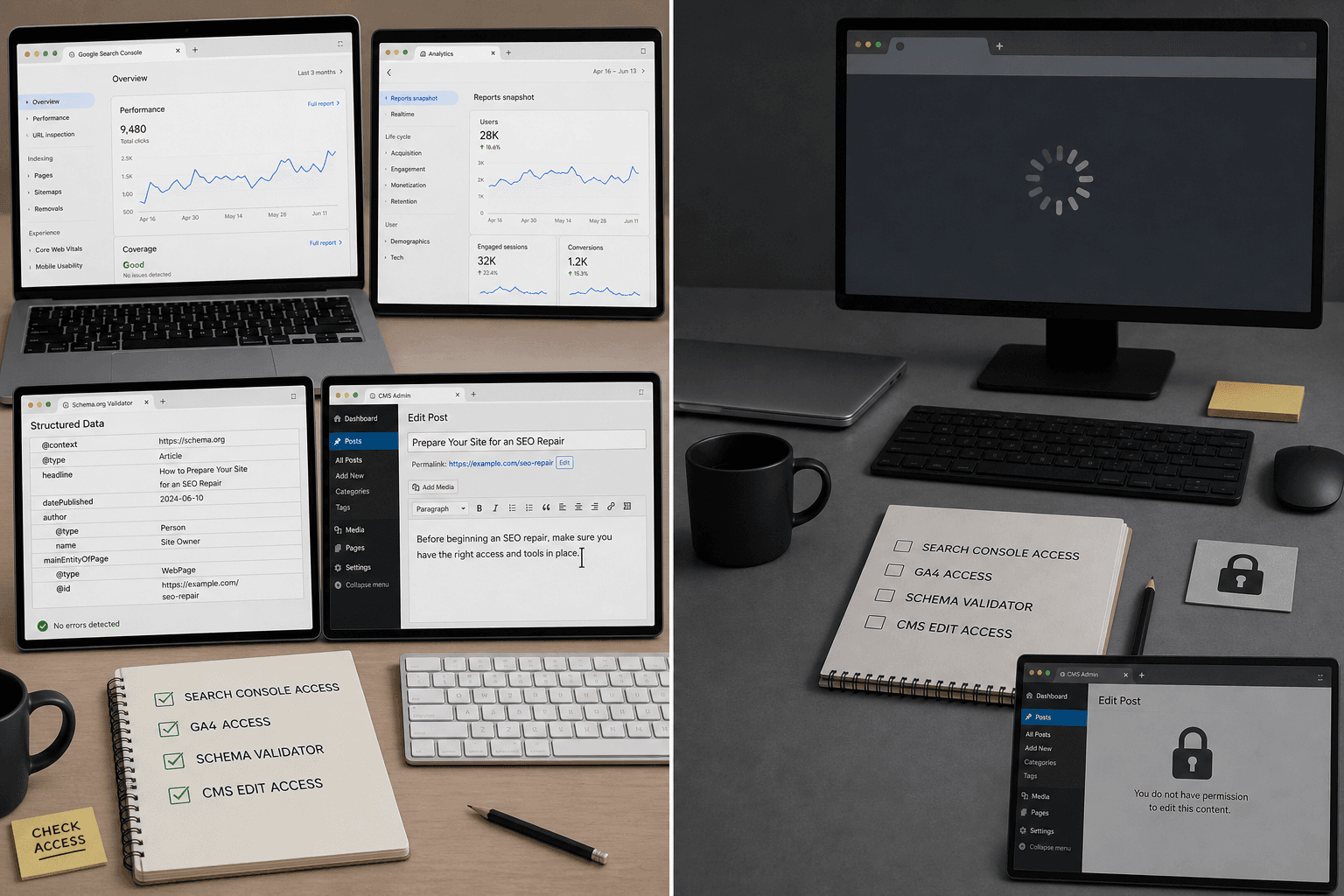
Tools and accounts you need
Open Google Search Console and check page-level queries first. Open GA4 and confirm organic landing page data loads. Use a schema validator to test article, FAQ, or how-to markup. Log into your CMS so you can update headings, copy, and structured data.
You should now have every system needed for edits and checks. Verify that Search Console and GA4 show the same site property. If they do not match, stop and fix access first.
Pages to prioritize first
Choose 3 to 5 pages with existing impressions and clear topic fit. The best candidates answer factual questions with direct, scannable sections. For example, a page titled “What Is Payroll Reconciliation?” beats a vague brand story page. These pages are more likely to rank in ai overviews because they solve a precise query fast.
At this point, your shortlist should feel tight, not broad. Prioritize pages already getting search demand, especially pages where overviews in results would fit the query. Skip pages with thin copy or mixed intent.
Baseline metrics to record
Record each page’s current rankings, impressions, and click-through rate. Then check whether the page already appears in AI summaries. Research from How to Get Featured in Google AI Overviews (2026 Playbook) shows AI Overviews grew by 58% year over year, so baseline tracking matters.
You should now have a short optimization list and a clean starting benchmark. Verify that every chosen URL has one row of notes. In 30 days, compare those notes against new visibility in google ai overviews.
Step 1 Optimize content for Google AI Overviews citations
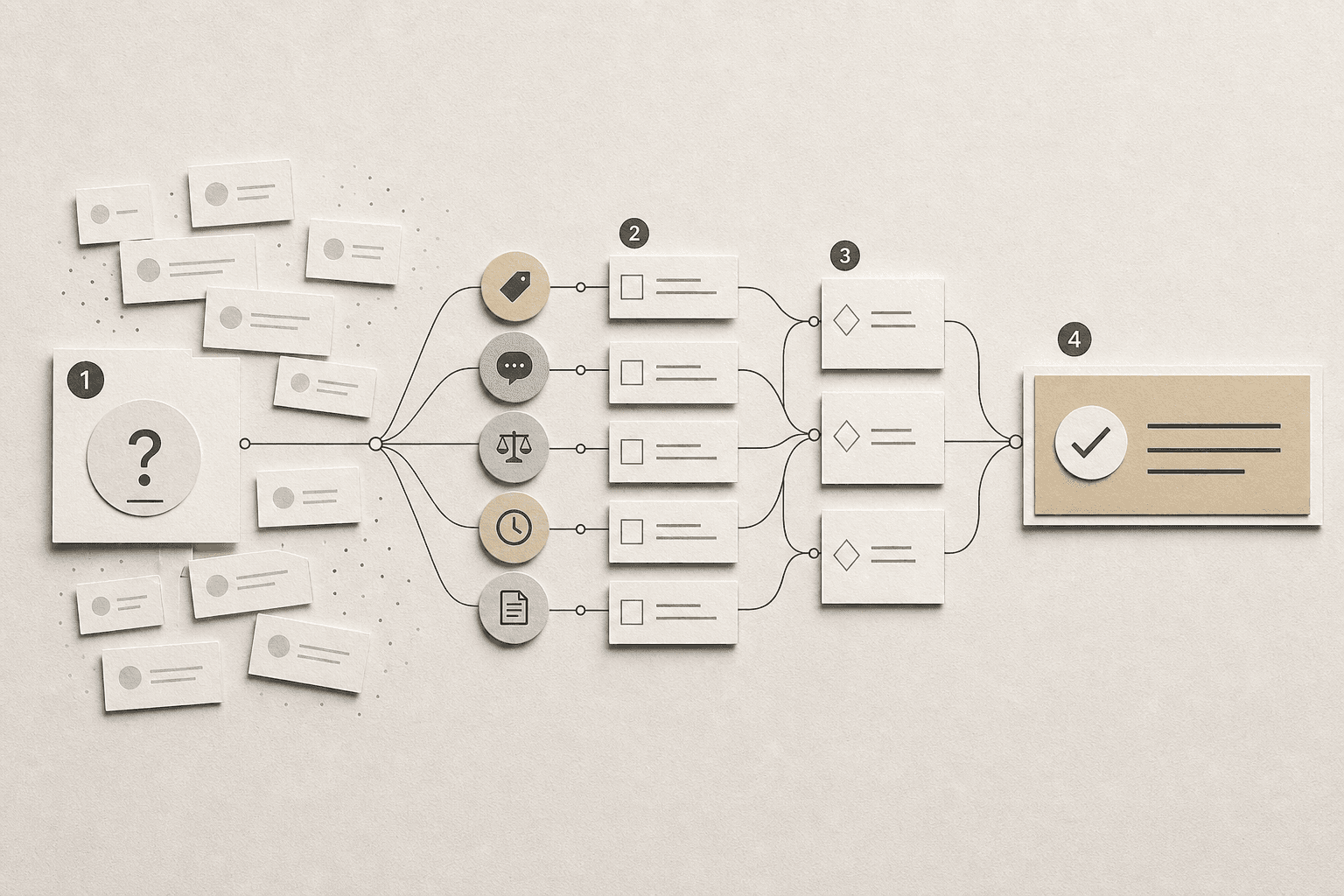
Map one page to one answer intent
Pick one primary question for the page. Then state the answer in the first 100 words. Think of your page like a tool, not a brochure. A reader should know the page’s job right away.
Use this workflow:
- Identify the main query behind the page.
- Remove secondary angles that deserve separate pages.
- Write a two-sentence answer near the top.
- Match each H2 to one supporting sub-question.
- Cut sections that do not support the main answer.
For example, a page about “how to reduce cart abandonment” should not also explain email platform setup, loyalty programs, and branding strategy. Those are different jobs. Keep the page focused on one need and one outcome.
You should now see a tighter page brief and cleaner section plan.
Verify that a reader can answer, “What question does this page solve?” in five seconds before proceeding.
Rewrite for extractable answer blocks
Turn long paragraphs into blocks that can stand alone. AI systems favor content they can lift fast. That means short definitions, direct claims, numbered steps, bullets, tables, and comparison blocks. Good overviews citation candidates make sense even when removed from the rest of the page.
Use this structure inside each section:
- Open with a direct answer sentence.
- Follow with two to three short support lines.
- Add a list, table, or steps block.
- End with a one-line takeaway.
For example, do not write a 200-word intro on schema strategy. Write: “Product schema helps search systems identify price, availability, and reviews.” Then list the fields that matter. That gives you a clean ai overviews citation unit.
Research from How to Rank in Google AI Overviews (2026): The Data-Backed Playbook shows AI Overviews can appear in up to 60% of U.S. searches, so pages need faster extraction and clearer answers.
For a visual walkthrough of this process, check out this tutorial from Surfer Academy:
You should now see sections that read like modular answers instead of essays.
Verify that each block still makes sense when copied into a doc without the paragraph above it.
Use formatting AI systems can quote fast
Format for skimming first. Then format for quoting. This is usually the same thing. Clear structure helps readers, ChatGPT, Perplexity, and search systems process your page with less guesswork.
Add these elements where they fit:
- Summary boxes with one clear takeaway.
- Numbered instructions for process content.
- Bullet lists for features, pros, and requirements.
- Short comparison tables for choices or tradeoffs.
- Concise statements that can stand alone as citations.
Use a simple comparison block like this:
- Definition block — Best use: Explain a term · Why it helps: Easy to quote
- Numbered steps — Best use: Show a process · Why it helps: Clear order
- Comparison table — Best use: Compare options · Why it helps: Fast scanning
At this point, you should see a cleaner page structure where each section answers a single user need. Headings should work like street signs. Summary boxes should work like pull quotes. Each block should earn its place.
Verify the update by skimming only the headings, lists, and table labels. If you can understand the page without extra context, your format is ready for ai overviews citation and stronger overviews citation potential.
Step 2 Add EEAT signals and structured data

1. Strengthen firsthand experience and author trust
Add visible author details first. Show the full name, job title, short bio, and relevant credentials. Add a last updated date near the title.
Then add proof of real experience. Include original examples, process notes, screenshots, test results, or lessons from actual work. For example, if you explain local SEO, show a real client workflow, a redacted report, or a before-and-after content update.
Use this checklist:
- Add a named author to the page.
- Add a short author bio with expertise.
- Add a visible updated date.
- Add one original example from your team.
- Link the author name to a bio page.
You should now see a page that feels written by a real person, not a content machine.
Verify that the author box appears on desktop and mobile before proceeding. Check that the updated date matches the actual revision date in your CMS.
2. Support claims with sources and entity signals
Back every factual claim with support. Link to trusted sources, internal proof, product docs, research, or public standards. If you mention a feature, policy, or result, make sure a reader can verify it.
Keep names, dates, and claims consistent across your site. If your homepage says your founder has 12 years of experience, your bio page should say the same. If your product page lists one feature set, your blog should not describe a different one. This consistency supports stronger entity signals for ai overviews seo.
For example, if you claim your team improved citation visibility, add a short case example and link the source material. Frase stresses clear sourcing and factual support for overviews citation workflows. Mekaa also recommends citation-ready claims with evidence close to the statement.
Research from How to Rank in Google AI Overviews (2026): The Data-Backed Playbook shows 83% of AI Overview citations came from pages outside the top 10 organic results. That does not remove the need for trust. It raises the need for clear support.
You should now have fewer unsupported statements and stronger entity consistency across key pages.
Verify that every strong claim links to a source, document, or proof point before proceeding.
3. Implement schema that clarifies the page
Add structured data that matches the page type. Use Article for blog content. Add FAQ when the page answers short questions. Use HowTo for step sequences. Add Organization for brand details, Person for authors, and Product when the page discusses a tool or feature.
Does structured data help rank in AI Overviews? Not directly as a guaranteed ranking factor. But it helps systems understand who wrote the page, what the page is about, and how page elements connect. That makes classification easier for google ai overviews and ai mode. Averi and Frase both point to schema as a clarity signal, not a magic switch.
Use a simple JSON-LD block like this:
{
  "@context": "https://schema.org",
  "@type": "Article",
  "headline": "How to Optimize Content for AI Citations",
  "author": {
    "@type": "Person",
    "name": "Jane Smith"
  },
  "publisher": {
    "@type": "Organization",
    "name": "MygomSEO"
  },
  "dateModified": "2026-07-23"
}
What EEAT signals matter for AI Overviews SEO? Focus on visible authorship, expertise, source support, updated content, brand consistency, and original evidence. At this point, your page should look easier for Google to trust and easier for systems to classify.
You should now see valid markup, visible author proof, and better support behind each claim.
Verify progress by testing schema markup, checking visible author details, and confirming every claim has support.
Conclusion
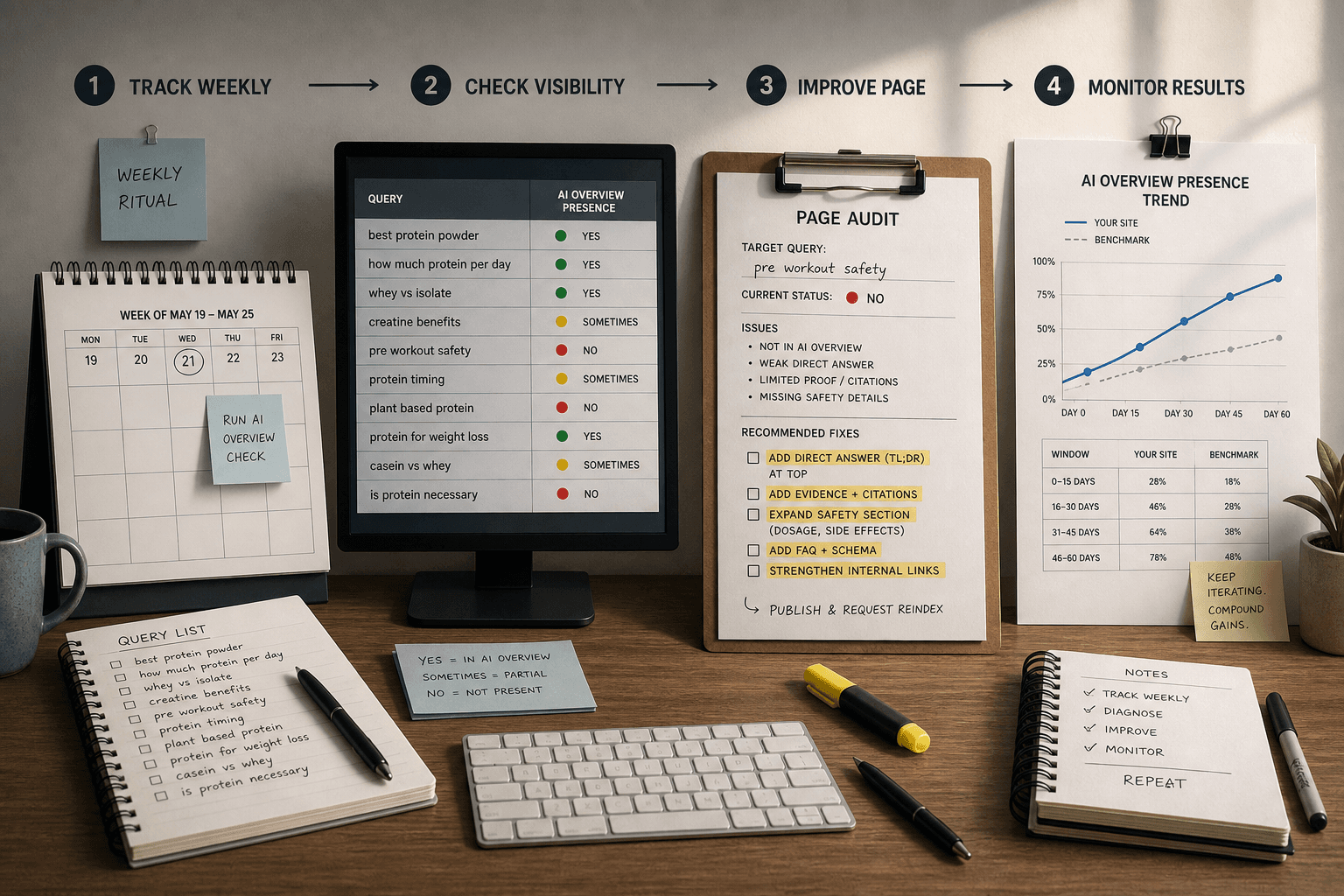
Your next move is simple. Track your target queries every week. Log whether each page shows in an AI Overview, standard search results, or neither. Then stop doing that by hand once the list grows. Use MygomSEO’s AI Overview tracker to watch citation presence, query movement, and visibility trends in one place. You should now have a live monitoring process, plus a short list of pages that need another optimization pass.
If a page still does not break through, fix the page with intent first. Make the answer sharper. Add stronger source support. Cut filler. Update stale sections. In most cases, the problem is not effort. The problem is that the page still makes Google work too hard to trust the answer or extract it cleanly. Verify that each revised page answers one clear query, supports key claims, and stays current before you move on.
Treat the next 30 to 60 days like a controlled test. Compare your baseline against fresh signals. Look for new AI Overview appearances, impression growth, and assisted clicks. Check which query patterns trigger citations and which formats keep getting skipped. At this point, your goal is not one lucky win. Your goal is a repeatable process you can run across every high-intent page on your site.
That is the real shift with google ai overviews. You are no longer optimizing only for ten blue links. You are building pages that can be pulled into answers, trusted faster, and cited in the moments that shape demand. Do that well, and your content works harder without getting longer.
Keep the loop tight, keep the evidence strong, and keep shipping updates. That is how you turn AI Overviews SEO from a one-time project into a durable growth channel. Want a lighter way to manage the process? Try It Free to export and share projects and design simple connections.