Agentic SEO Workflow: From Keyword Drop Alert to Fixed Page in Under 10 Minutes
Agentic seo changes the game when rankings slip. Instead of finding a drop days later, you catch it fast and fix it before traffic leaks. That matters when your team is small, busy, and already covering five jobs at once. According to You can order food in 10 minutes. But Google rankings don ..., you can get food in 10 minutes, but SEO results do not show up on demand. So when a keyword falls, waiting is expensive.
In this tutorial, you’ll build an automated workflow in MygomSEO that moves from alert to diagnosis to fix. You’ll see why each step matters, how the system decides what to do, and how to adapt the workflow to your own pages. Keep reading, and you’ll stop guessing when rankings drop.
Part 1 Building Your Agentic SEO Project Plan
What Youll Build
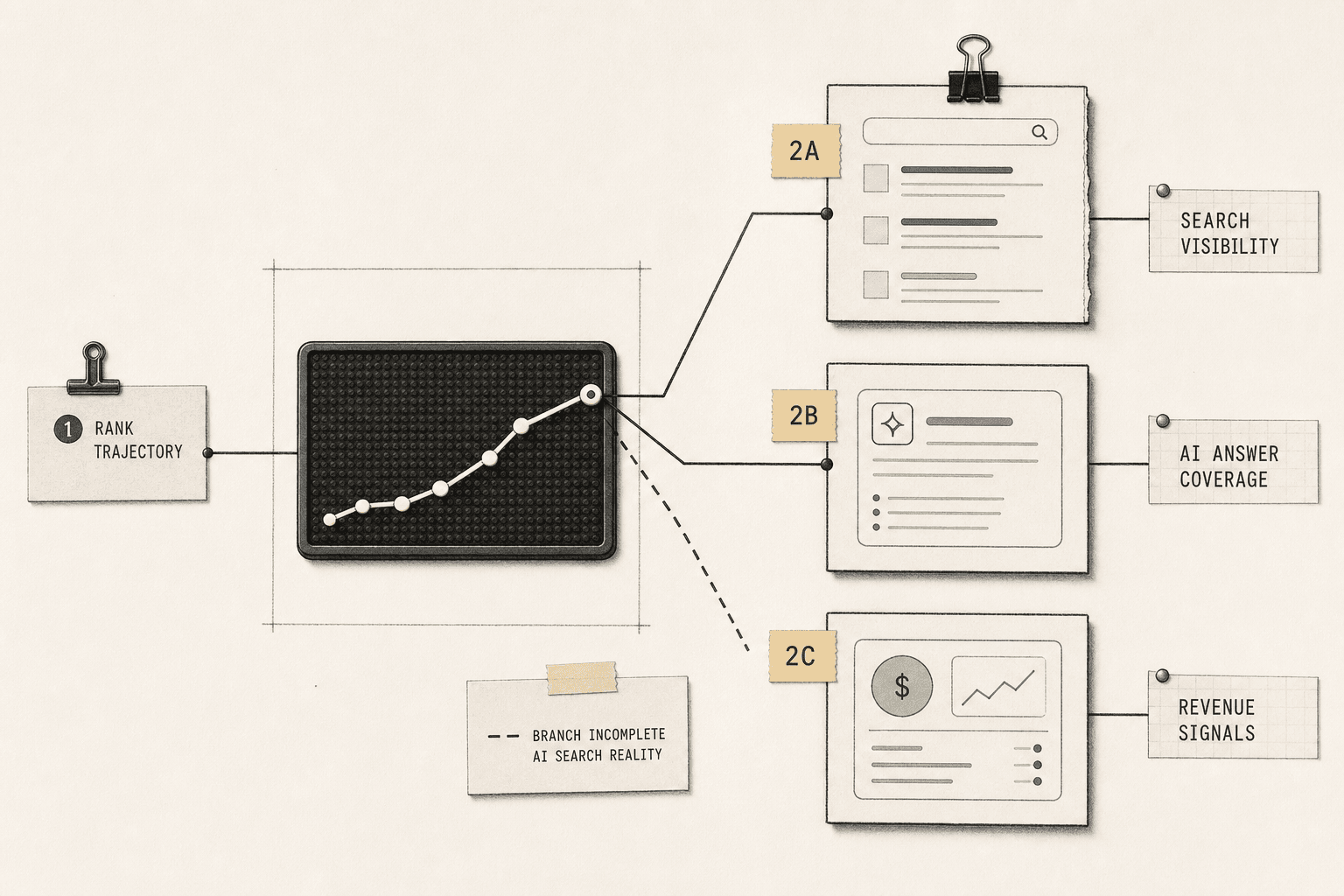
By the end of this section, you’ll know what your system must do. The goal is simple: detect a ranking drop, diagnose the cause, and publish the right fix automatically. Think of it like a smoke alarm for search engine optimization. It should not just ring. It should also check the room, find the fire, and start the right response.
Start with one page and one target keyword. For example, track your pricing page for “crm onboarding software.” That makes the seo workflow easy to judge. If rankings fall, you can see what changed and whether the fix worked.
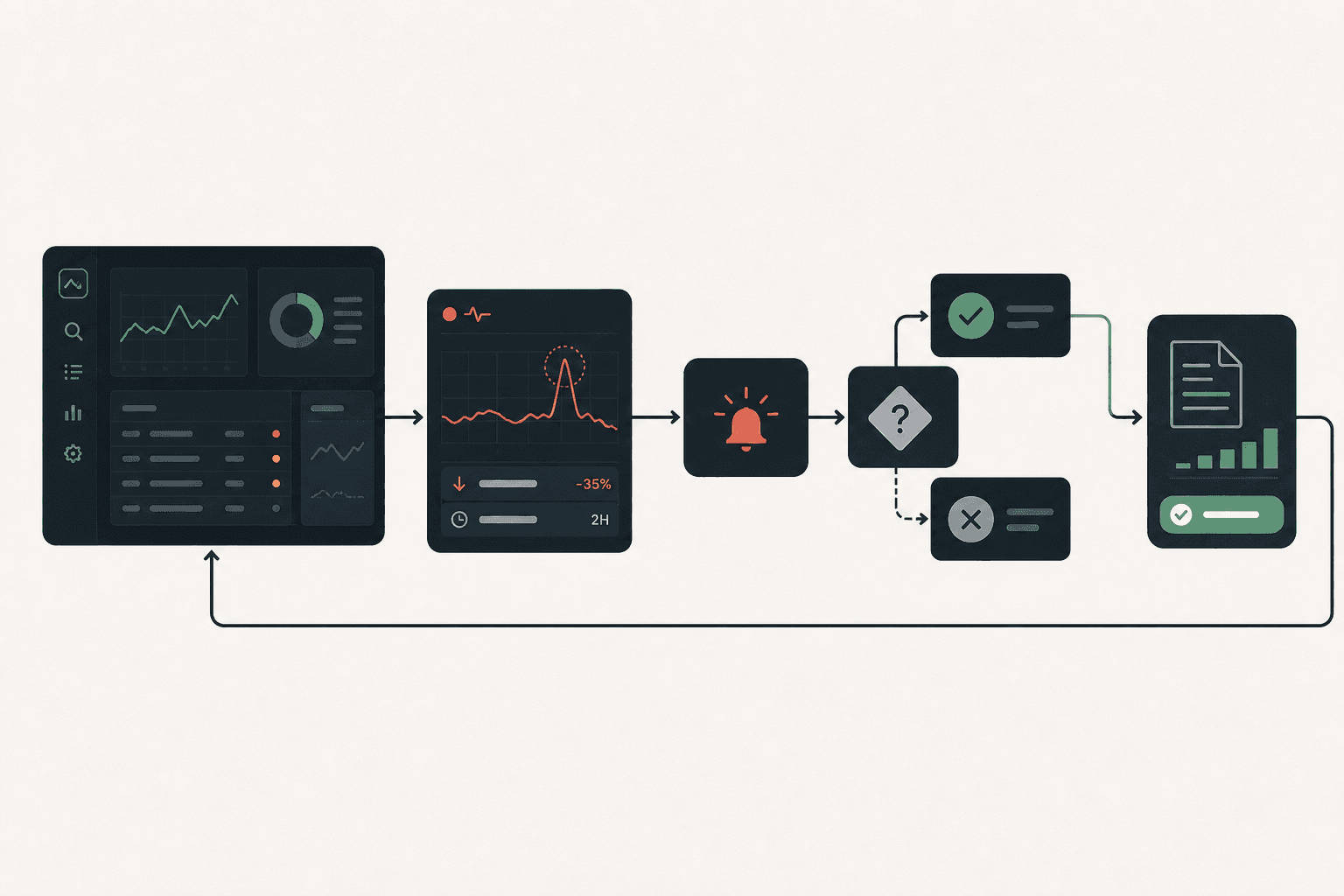
Agentic seo means your system does more than report data. It monitors the page, analyzes signals, decides the next move, acts inside MygomSEO, and then verifies the result in the search engine.
For a visual walkthrough of this process, check out this tutorial from Useractiv:
What Youll Learn
In this part, you’ll learn the core loop: monitor, analyze, decide, act, and verify. Each step has one job. That matters because simple systems break less often and teach you faster.
You’ll also learn why narrow scope wins early. Research from Give me 8 Minutes and You'll Win at SEO in 2025 shows 68% in a search engine context, which is a good reminder to measure real movement, not guesses.
Why this workflow matters for lean teams
If you run a small business, yes, you can use seo automation. You do not need a full-time specialist. You need a repeatable engine optimization process your team can trust.
For example, one marketer can manage alerts, content fixes, and checks in one place. That is the same logic behind Save time with bulk workflows for similar connections. You remove busywork and keep human review for high-impact decisions.
Part 2 Prerequisites for SEO Automation Setup

Knowledge and skill level
You do not need deep technical search engine optimization skills. You only need basic SEO knowledge, plus access to your site and reporting tools. If you can read a page title, check clicks, and review a keyword trend, you are ready.
Think of this like setting up a smart thermostat. You do not need to build the device. You just need power, permissions, and a clear target. According to Give me 8 Minutes and You'll Win at SEO in 2025, 60% fits best when you focus on practical execution, not theory.
Tools accounts and access you need
Your stack should stay lean. For agentic seo, you need five inputs:
- A MygomSEO account
- CMS access to edit the page
- Analytics data for clicks and sessions
- Search Console data for queries and impressions
- A rank tracking software source for daily position checks
Do you need rank tracking software for SEO automation? Yes, if you want clear alerts. Search Console helps, but it often lags. Rank tracking software gives a faster view of movement in the search engine results page. If your team likes process work, this setup pairs well with Save time with bulk workflows for similar connections.
Choosing the first page and keyword to automate
Start with one page that already gets steady traffic. For example, pick a service page with the same weekly demand. Avoid a brand-new post or a seasonal page. Stable pages make cause and effect easier to spot.
Before you turn on automation, write down your baseline. Record current rankings, clicks, page health, and recent edits. Also note title changes, link updates, and content revisions from the last month. This gives MygomSEO a clean starting point, so you can see what changed and why.
Part 3 Building the Agentic SEO Workflow in MygomSEO
Step 1 Monitor keyword movement
In this step, you will learn how to start with the smallest useful signal.
Begin with one page and one keyword. Do not monitor fifty terms on day one. Use your rank tracking software to watch the daily position for that keyword. Then send that ranking into MygomSEO as a simple input.
For example, if your page ranks in position 4, that number becomes your baseline. If it drops to position 8, MygomSEO logs the change. This is the easiest form of seo automation because you are tracking one clear metric, not a messy dashboard.
Your first monitor can follow a plain rule:
- Check the keyword ranking once per day.
- Compare today’s rank with the rolling baseline.
- Flag the page if the drop passes your limit.
- Write the event to a change log.
At this point, your system should answer one question well: did the keyword move down enough to matter?
Step 2 Set the drop threshold and trigger
In this step, you will decide when the system should act.
Do not trigger on every tiny wobble. Rankings move a little all the time. You need a threshold that filters noise. A simple starting rule is this: trigger only if the keyword falls by three or more positions and stays there for two checks.
Why use two checks? Because one bad reading can be random. A second reading adds confidence. It keeps your workflow calm and useful.
For example, if your keyword moves from 4 to 6, do nothing yet. If it moves from 4 to 8 and stays there on the next pull, trigger the workflow. That alert now becomes a job in MygomSEO.
This answers the first automation question clearly. You automate keyword drop detection by combining rank data, a threshold, and a repeat check before action.
Step 3 Diagnose the root cause automatically
In this step, you will teach MygomSEO how to inspect likely causes in order.
Do not let the system guess. Give it a checklist. Think like a mechanic. You check the obvious parts first, then move deeper.
Use this order:
- Title changes
- Content decay
- Internal link loss
- Technical issues
- Competitor movement
If the page title changed recently, test that first. A weaker title can cut relevance fast. If the title is stable, compare the current page copy with the last strong version. Look for removed sections, outdated examples, or missing keyword context.
Next, check internal links. If two strong pages stopped linking in, authority may have slipped. Then test technical signals like noindex tags, canonicals, broken schema, slow load, or crawl blocks. Last, check competitor movement. If rivals improved their page, your loss may come from a better result, not a broken one.
This is how an ai seo agent diagnoses ranking loss. It follows ordered checks, matches signals to evidence, and narrows the cause before acting.
Step 4 Generate the recommended fix
In this step, you will turn diagnosis into action.
Each cause needs a matching response. Clear rules matter here. They keep MygomSEO from making wild edits.
For example:
- If the title changed and rankings fell, restore or rewrite the title.
- If content decayed, refresh weak sections and add missing detail.
- If internal links dropped, suggest new links from related pages.
- If technical issues appear, send the issue to the right owner.
- If competitors improved, expand the page to close the gap.
Now the system drafts the fix first. That draft might include a new title, updated headings, added sections, and internal link suggestions. According to SEO advice: Stay ahead, focus on revenue, test limits, delegate, and build a strong team. | Matt Diggity posted on the topic | LinkedIn, one client grew organic traffic by 000% through AI-led execution. The lesson is simple. Automation works best when actions follow evidence.
If you manage many similar pages, the logic feels like Save time with bulk workflows for similar connections. One rule can drive many clean updates.
Step 5 Approve and publish the update
In this step, you will control how changes go live.
Yes, agentic seo can update content automatically. But you should choose the level of control. Small teams often start with human approval. MygomSEO drafts the fix, routes it to a reviewer, then publishes after approval.
A simple approval path works well:
- Draft the update.
- Show the detected signal and root cause.
- Let a reviewer approve, edit, or reject.
- Publish to the CMS.
- Log what changed, when it changed, and what triggered it.
That final log closes the loop. It gives you a record of the keyword drop, the diagnosis, the action, and the publish date. Later, you can compare ranking recovery against that history and improve the workflow. That is how your seo automation gets smarter without adding more manual work.
Part 4 Testing Your SEO Workflow Before You Trust It
How to simulate a ranking drop
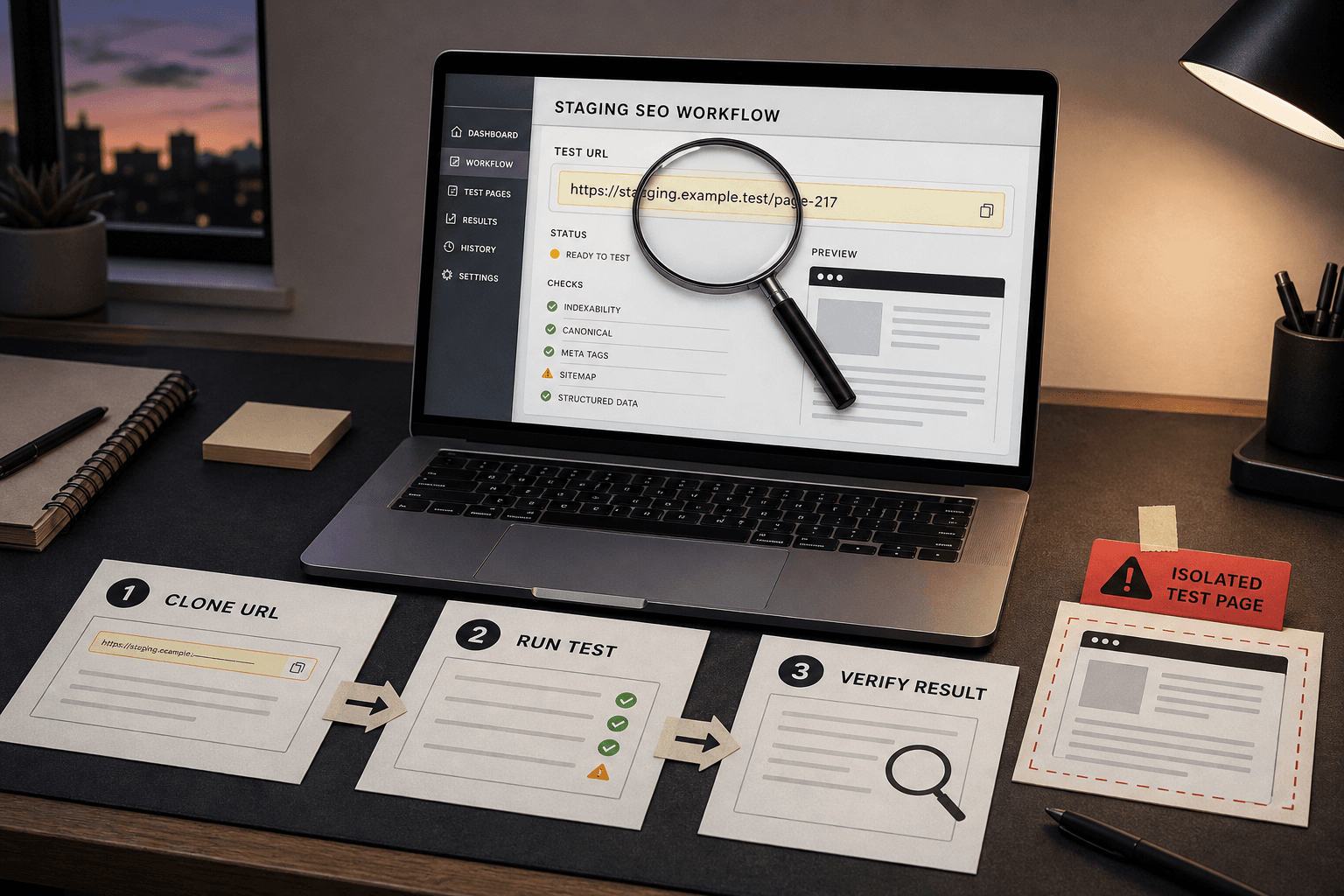
In this section, you’ll learn how to create safe test cases. Start with dry runs. Use old ranking drops from your rank tracking software, or build staged examples in MygomSEO with copied page data.
For example, take a page that lost positions after a title rewrite. Feed that event into your seo workflow. Then check if MygomSEO flags the drop, inspects the right signals, and recommends restoring the stronger title.
Think of this like a fire drill. You do not wait for a real fire. You practice the response first. If your system cannot pass a fake drop, it should not touch a live page.
How to validate diagnosis accuracy
In this section, you’ll learn how to score the system. Measure three things: detection speed, root cause accuracy, and fix quality. Detection speed shows how fast the alert appears. Root cause accuracy shows if the system picked the real reason. Fix quality shows if the recommendation matched the problem.
For example, a page may drop because internal links disappeared. A weak system may blame content decay and rewrite copy that was never the issue. That is why you review each test against known outcomes before allowing live publishing.
According to Give me 8 Minutes and You'll Win at SEO in 2025, Reddit now gets nearly 10x more search traffic for many niche queries. That shift is a good reminder. Search engine results change fast, so your diagnosis logic must be tested against real market conditions.
How to review fixes and rollback safely
In this section, you’ll learn the guardrails your agentic seo setup needs. First, require approval when confidence is low, traffic impact is high, or the page drives revenue. Second, save the old title, copy, links, and metadata before any update.
Third, create a rollback checklist. Restore the prior version, clear caches, resubmit the page, and log what changed. If you manage several similar pages, Save time with bulk workflows for similar connections shows why process discipline matters.
Set alerts for failed publishes, weak confidence scores, and repeated misdiagnoses. That is how you test seo automation safely and keep engine optimization decisions under control.
Conclusion: Put Your Agentic SEO System to Work
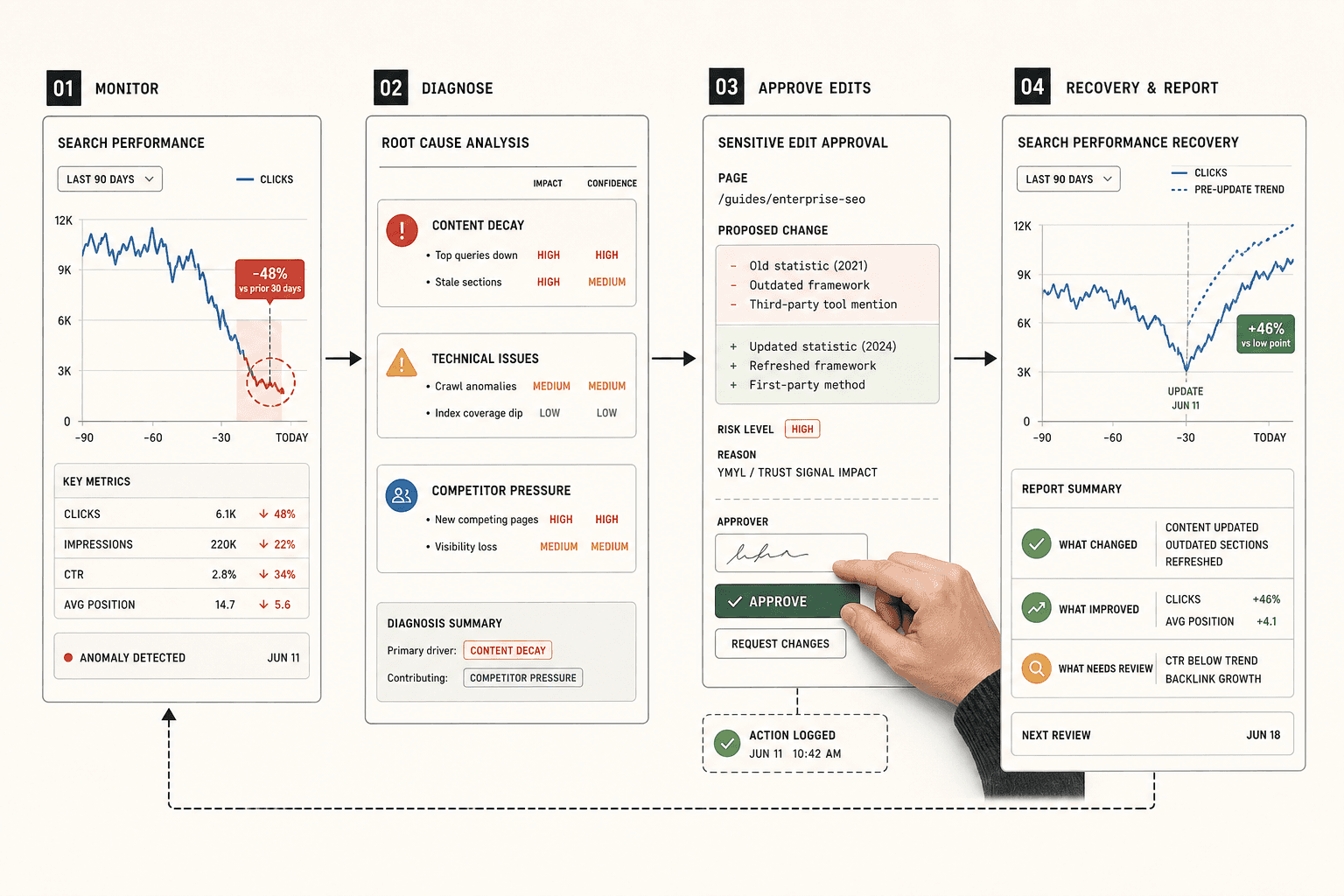
The smart move is a phased launch. Start with one live page. Then expand to one content cluster. Roll it out wider only after the workflow proves it can detect problems accurately, choose sensible actions, and document every change. This keeps risk low while your confidence goes up.
You also need rules before scale. Set approval steps for sensitive edits. Keep logs for every trigger, diagnosis, and publish action. Assign clear owners for monitoring, exceptions, and rollbacks. Build simple reporting that shows what changed, what improved, and what still needs review. Automation without accountability is just a faster way to make a mess.
From here, your next step is clear. Add more pages. Improve the diagnosis layer so it can separate content decay from technical issues or competitor pressure with better precision. Then connect performance reporting to leads, pipeline, or revenue so your search engine optimization workflow shows business impact, not just ranking movement.
That is the real win. You did not just build an SEO automation experiment in MygomSEO. You built an operating system for finding drops, fixing them, and proving the result.
The teams that win with agentic seo will not be the biggest. They will be the ones that build tight systems, test hard, and scale what works. Want to explore the next step? Try It Free to export and share projects, and design simple connections.