Best Automated SEO Tools in 2026: Ranked by What They Actually Do
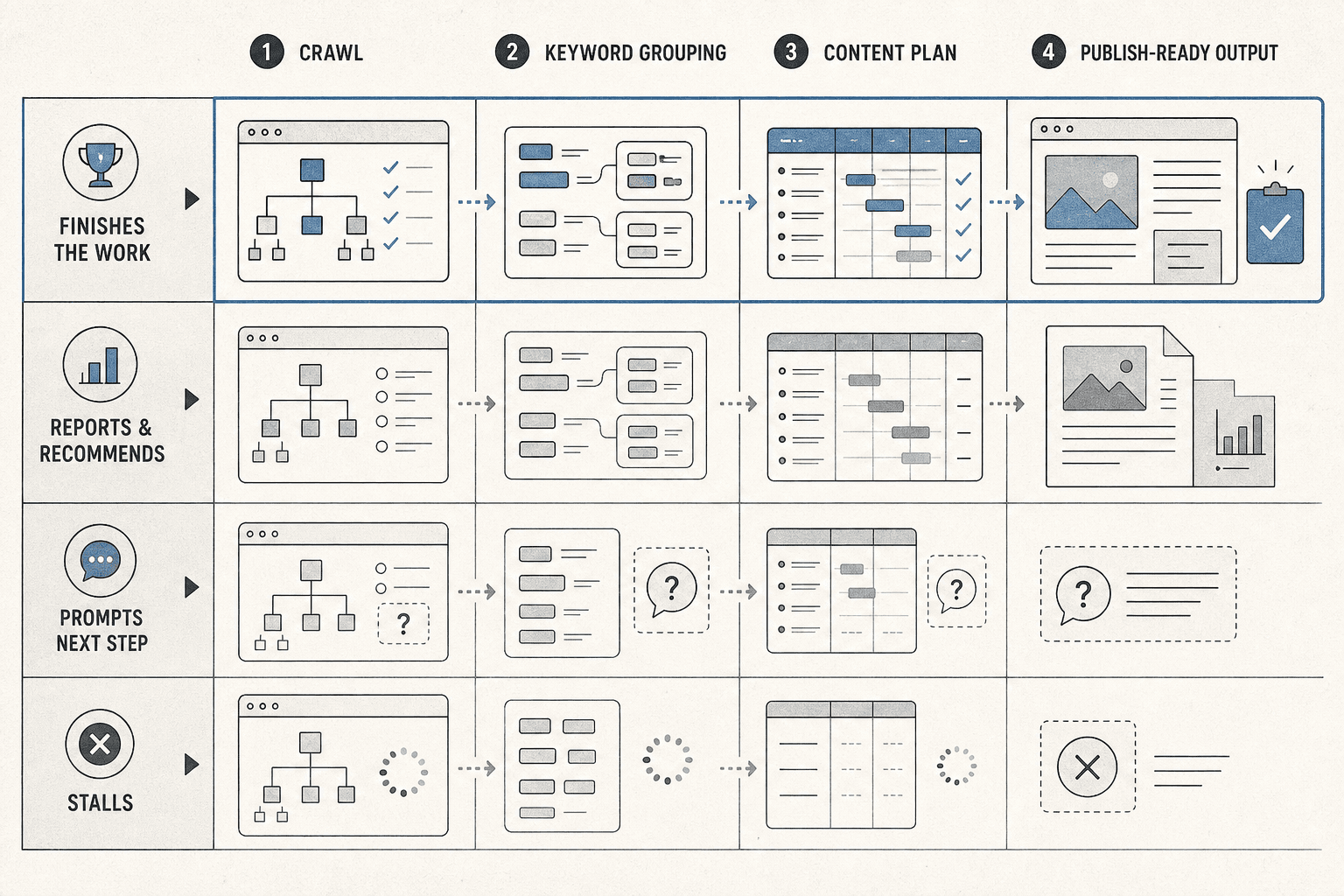
An automated seo tool should do more than flag problems - it should help teams fix them fast. Yet most buyers still get dashboards, alerts, and audits instead of execution. That gap matters because founders and lean marketing teams don't need more reporting - they need content written, pages updated, and workflows pushed live. According to 12 AI SEO Tools That Actually Work in 2026 (Tested), the right AI workflows can drive 4x faster output. Meanwhile, data from 10 Best SEO Tools in 2026 (Ranked by Real-World Performance) shows how crowded this market has become. This list ranks seven tools by one simple test: do they just report, or do they act? That makes the next picks worth a closer look.
How This Automated SEO Tool Ranking Works
The core test is action versus reporting
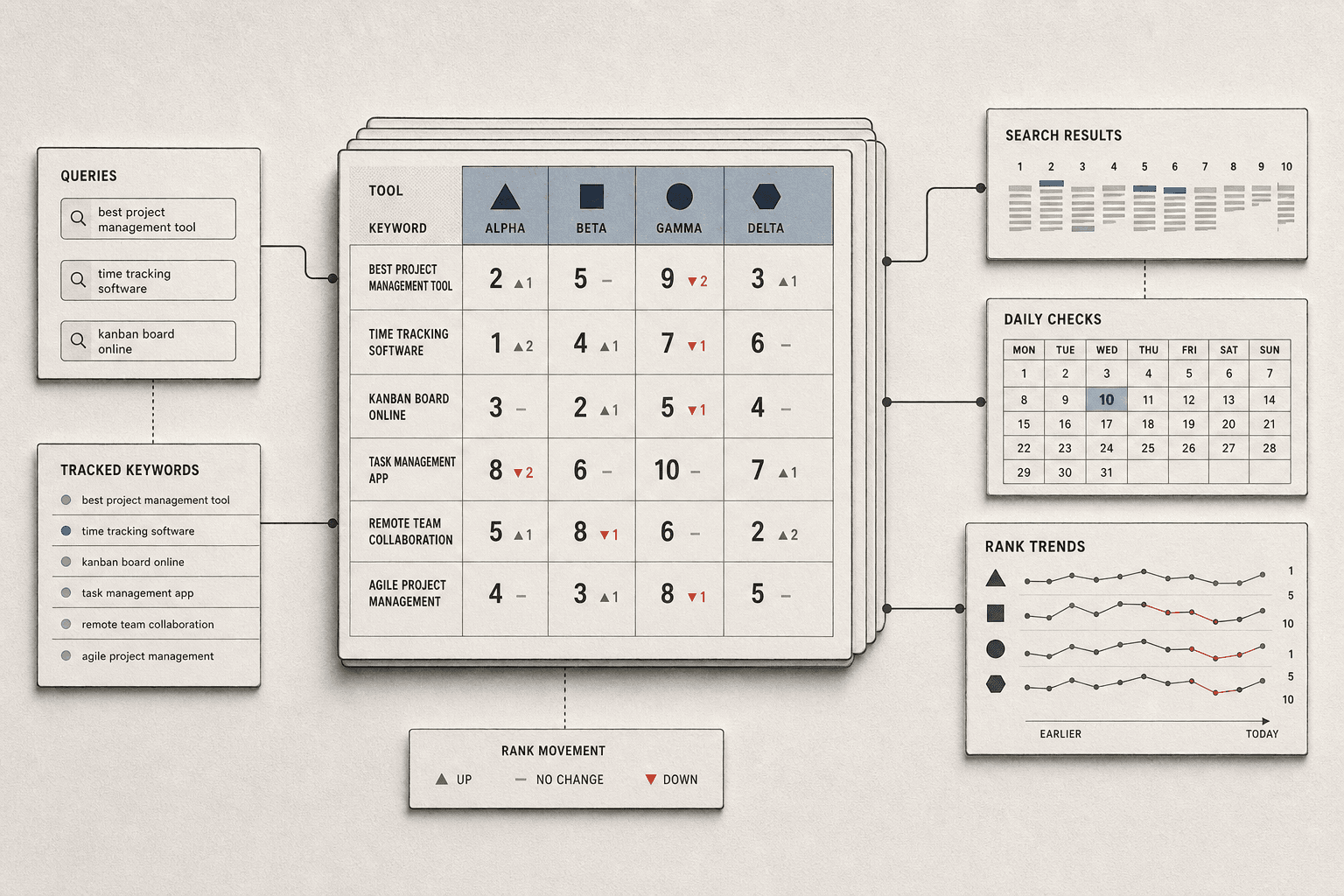
The first question is simple. Does the tool spot an issue, or fix it? For example, one platform may flag thin pages. Another may draft the update, add links, and push changes live. That second path earns a higher score here.
This matters because teams buy momentum, not more tabs. Keyword research still matters. Analysis still matters too. But the best tools to simplify execution move from insight to shipped output.
For a visual walkthrough of this process, check out this tutorial from Tim The SEO Guru:
The four scoring factors used in this list
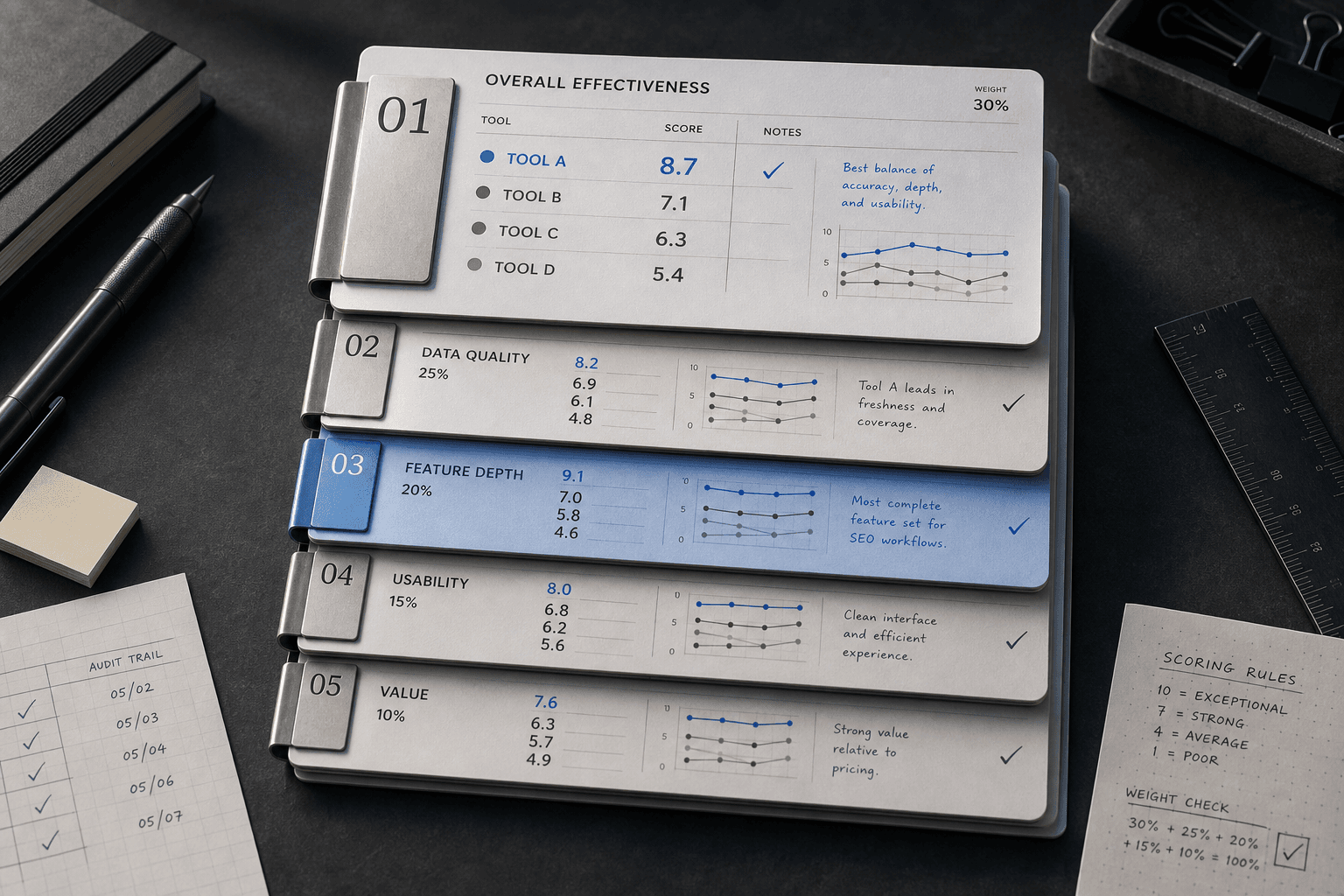
Each tool was scored on four factors:
- Execution depth - how much work it completes.
- Content automation - how well it creates or refreshes pages.
- Deployment ability - whether it can publish or update directly.
- Ease of use - how fast a lean team can operate it.
According to Darkroom Agency, top AI SEO workflows can improve output by 5x. That only matters when the workflow reaches production.
Why execution matters more than feature count
Many roundups reward bigger dashboards. This list rewards operational output instead. A tool can have twenty charts and still create backlog. By contrast, a strong automated seo tool should help you move from idea to live page with less friction.
Pricing also shapes usability. Marketer Milk notes some SEO tools start at $39, which keeps testing accessible for small teams. For hands-on practice, Google Search Console offers a useful starting point.
Top Automated SEO Tools Ranked 1 to 3
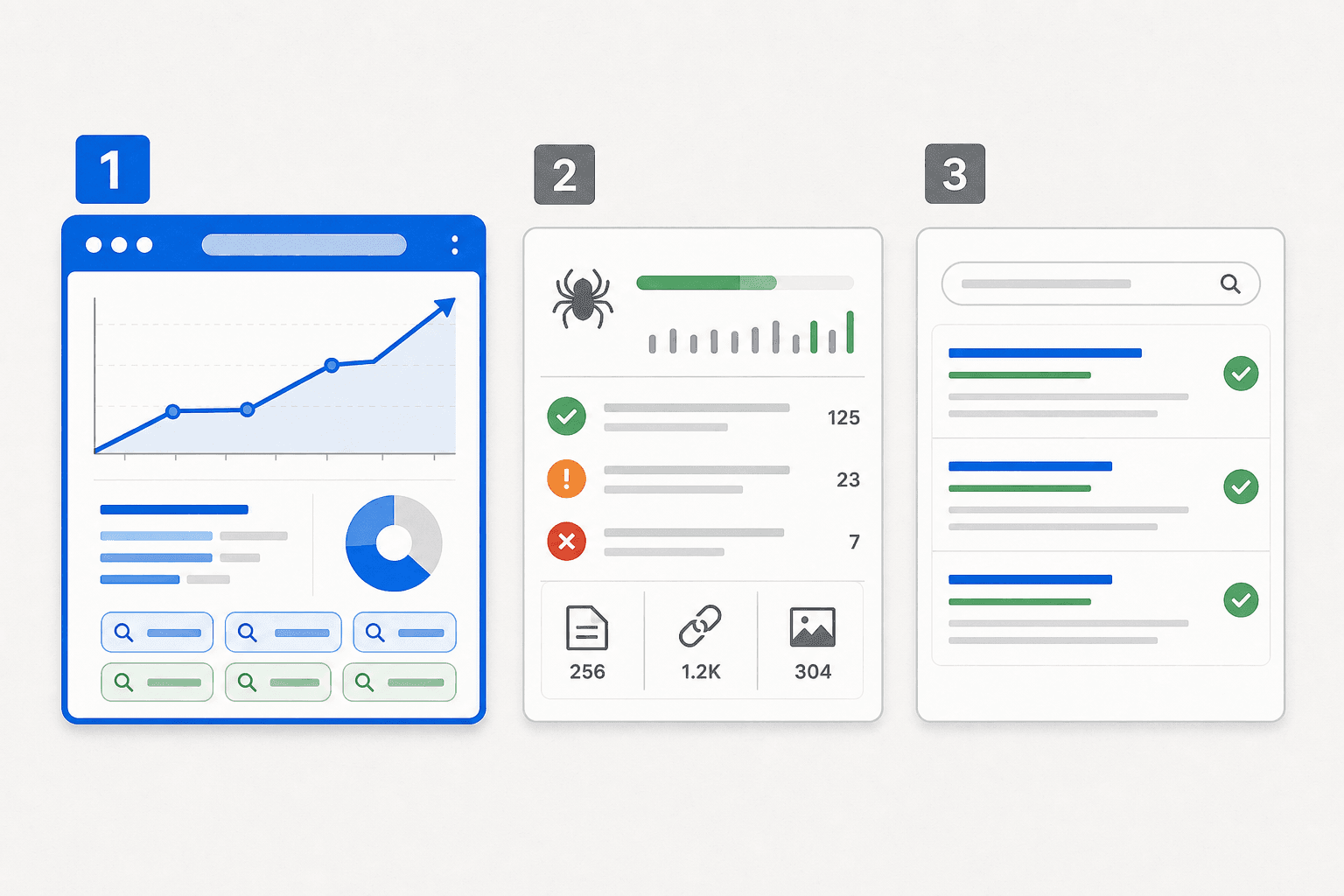
1. Mygomseo
Mygomseo ranks first because it behaves like an agent, not a dashboard. This automated seo tool moves from planning into execution fast. For example, it can map topics, draft content, publish pages, and keep improving output over time.
This tool automates the full workflow around organic growth - content planning, briefs, drafting, publishing flow, and repeat optimization. For small teams that need shipped work rather than more tabs, that matters among ai-powered seo tools.
What it actually executes is the key difference. Mygomseo can take a live idea and turn it into published output. It also supports ongoing updates after launch, which helps simplify your weekly SEO process. That makes it the best automated seo tool here for small teams.
Where it stops is deep technical SEO remediation. It is not the first pick for complex log analysis or enterprise site architecture. Best fit is lean in-house teams, startups, and founders who need one system to keep work moving from plan to publish.
Pros
- Strong execution from strategy to publishing
- Built for ongoing optimization, not one-off reports
- Good fit for lean teams with limited bandwidth
Cons
- Less ideal for heavy enterprise technical audits
- May replace parts of a larger SEO stack
Best For
Small teams that need output without adding headcount.
2. Alli AI
Next comes Alli AI, which is a serious executor. It focuses less on full editorial workflow and more on pushing on-page SEO changes live. For example, a team can update titles, meta descriptions, schema, and internal links across many pages without waiting on developers.
What it automates is on-page deployment at scale. That includes rule-based edits, code snippets, and page-level SEO changes. In the ai seo tools 2026 market, that makes Alli AI stand out as one of the few tools that does more than flag issues.
What it actually executes is real site change deployment. That is its biggest strength. Unlike report-first platforms, Alli AI can help teams implement fixes directly on the website. It is closer to an operations layer than a research suite.
Where it stops is broader content orchestration. It does not own the full path from topic planning to published content in the same way. Best fit is marketing teams with active sites that need faster on-page execution across dozens or hundreds of URLs.
Pros
- Strong on-page deployment engine
- Reduces developer dependency for routine changes
- Useful for large batches of SEO edits
Cons
- Weaker for full content lifecycle management
- Less useful as an all-in-one planning hub
Best For
Teams that already know what to change and need speed.
3. Semrush
Semrush ranks third because it is still more report-heavy. It is one of the strongest research platforms in SEO. It covers audits, keyword research, competitor tracking, and content guidance in one large suite.
What it automates is discovery and monitoring. It surfaces issues, tracks rankings, and suggests improvements across content and technical SEO. According to 10 Best SEO Tools in 2026 (Ranked by Real-World Performance), mid-range all-in-one SEO platforms start at $139, which frames Semrush as a broad platform buy, not a lightweight add-on.
What it actually executes is more limited. Semrush tells teams what to do well, but humans still handle most publishing and implementation. That makes it powerful, though less agentic than Mygomseo and less deployment-focused than Alli AI.
Where it stops is direct action on most work. Research from Top 6 AI SEO Tools to Simplify Your Workflow in 2026 - Fyresite shows $129 pricing for specialized AI SEO tooling, which highlights the trade-off: point tools may execute faster, while Semrush wins on breadth. Best fit is teams that want deep insight, established workflows, and strong reporting.
Pros
- Excellent research depth
- Strong rank tracking and competitor analysis
- Broad suite for mature SEO programs
Cons
- More guidance than execution
- Can feel heavy for lean teams
Best For
Teams that value insight first and execution second.
Best SEO Automation Tools Ranked 4 to 5
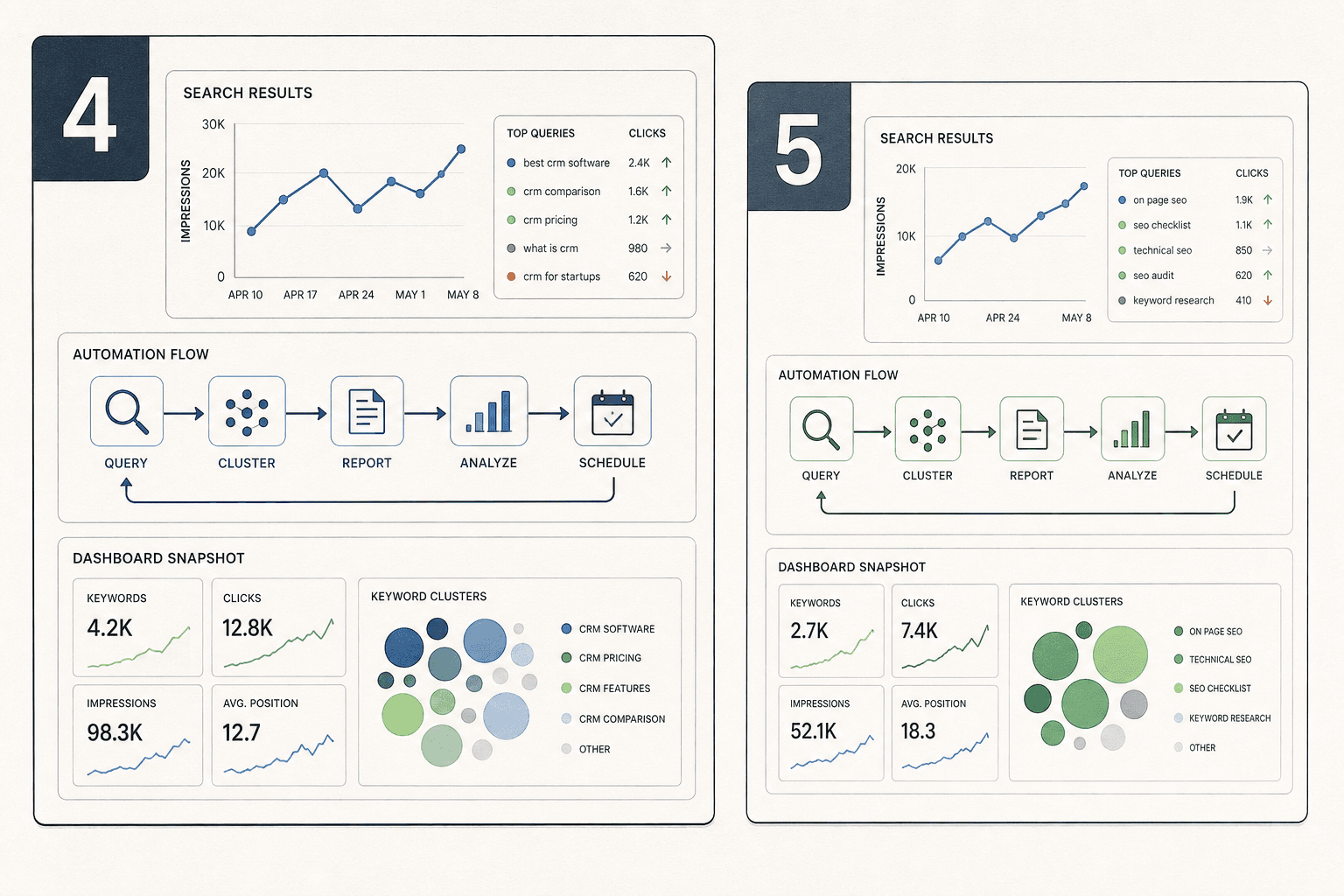
4. Surfer SEO
Surfer SEO is the strongest specialist in this middle tier, improving content quality fast while stopping short of full execution. That makes it a partial automated seo tool rather than an end-to-end operator - a pattern common among content optimization specialists, according to Nightwatch's 2026 SEO tool rankings.
Its automation scope is narrow but useful. Surfer SEO analyzes top-ranking pages, suggests terms, and scores drafts against live SERP patterns. For example, a content lead can turn a weak outline into a tighter brief in one sitting. 24 best SEO tools I'm using in 2026 (free + paid) | Marketer Milk
Execution level is the real limit. Surfer SEO helps teams write and optimize, but it does not publish pages, update CMS fields, or push technical fixes live. A writer still needs to edit the draft. An editor still needs to approve it. A marketer still needs to upload it.
Pros
- Strong content optimization workflow
- Clear on-page guidance
- Useful for keyword research support
- Faster brief creation for content teams
Cons
- No direct publishing layer
- No true sitewide deployment
- Manual handoffs remain after optimization
Best For
Surfer SEO fits lean teams that already have writers. It works best when content output matters more than technical execution. Among the best seo automation tools, it is a specialist, not a builder.
5. Ahrefs
Ahrefs offers the largest backlink index in the industry (over 295 billion indexed pages) and is widely considered the gold standard for competitive gap analysis and link intelligence. It is less useful when the team wants software to act. So, does Ahrefs automate SEO work? Partly. It automates discovery and reporting, not implementation. 10 Best SEO Tools in 2026 (Ranked by Real-World Performance)
Its strength is depth. Ahrefs surfaces ranking gaps, link targets, and topic opportunities with serious precision. For example, a strategist can spot a competitor’s missing page cluster before lunch. According to Best AI SEO Software 2026: I Burned $900 and Six Weeks Testing ..., $52 can start a lighter stack elsewhere, which shows how premium Ahrefs feels by comparison.
Pros
- Excellent keyword research
- Best-in-class gap analysis
- Strong backlink intelligence
Cons
- No publishing workflow
- No direct implementation
- Manual handoffs to content and dev teams
Best For
Ahrefs suits analysts, strategists, and in-house SEO leads. Teams needing action can pair research with Google Search Console. Data indicates $99 is common in this category (The Best SEO Tools for 2026 (And How Much They Cost)).
AI Powered SEO Tools Ranked 6 to 7

6. Clearscope
Clearscope earns this spot by focusing on one thing exceptionally well: content brief optimization. For example, a content team can paste a draft and receive term suggestions, readability scores, and competitive content gap analysis in under two minutes. In the crowded field of ai seo tools 2026, that still matters.
For example, a team can paste in a draft and get term suggestions fast. That helps editors tighten structure and coverage. It is useful ai-powered seo, but it is not an automated seo tool. The tool points. A human still writes, edits, approves, and publishes.
That is the key split between AI-powered SEO and SEO reporting tools. AI-powered SEO tools to simplify workflows can suggest briefs, outlines, and content changes. Reporting tools mostly surface issues and rankings. But both can still stop short of delivery.
Pros
- Strong content briefs
- Clear topical guidance
- Easy for content teams to learn
Cons
- No true hands-off publishing
- Human review stays required
- Execution ends at recommendation
7. Screaming Frog
Screaming Frog is the surprising runner-up style pick. It is everywhere in SEO stacks. It is also excellent at technical audits and bulk analysis. Marketer Milk includes it among widely used SEO platforms.
For example, a technical SEO team can crawl a 10,000-page e-commerce site in minutes, flag all 404 errors, identify duplicate title tags, and export structured data issues into a prioritized spreadsheet - all without writing code. That makes it a strong operations tool. According to The Best SEO Tools for 2026 (And How Much They Cost), some SEO tools start at $20. Research from Nightwatch shows a lean stack can run about $90 monthly. Even so, cost is not the real issue here.
The real issue is execution. Screaming Frog finds problems. It does not fix them alone. That is why useful does not equal automated. Teams needing action can pair audits with free community tools like Google Search Console, but they still need people to ship changes.
Automated SEO Tool Comparison and Verdict
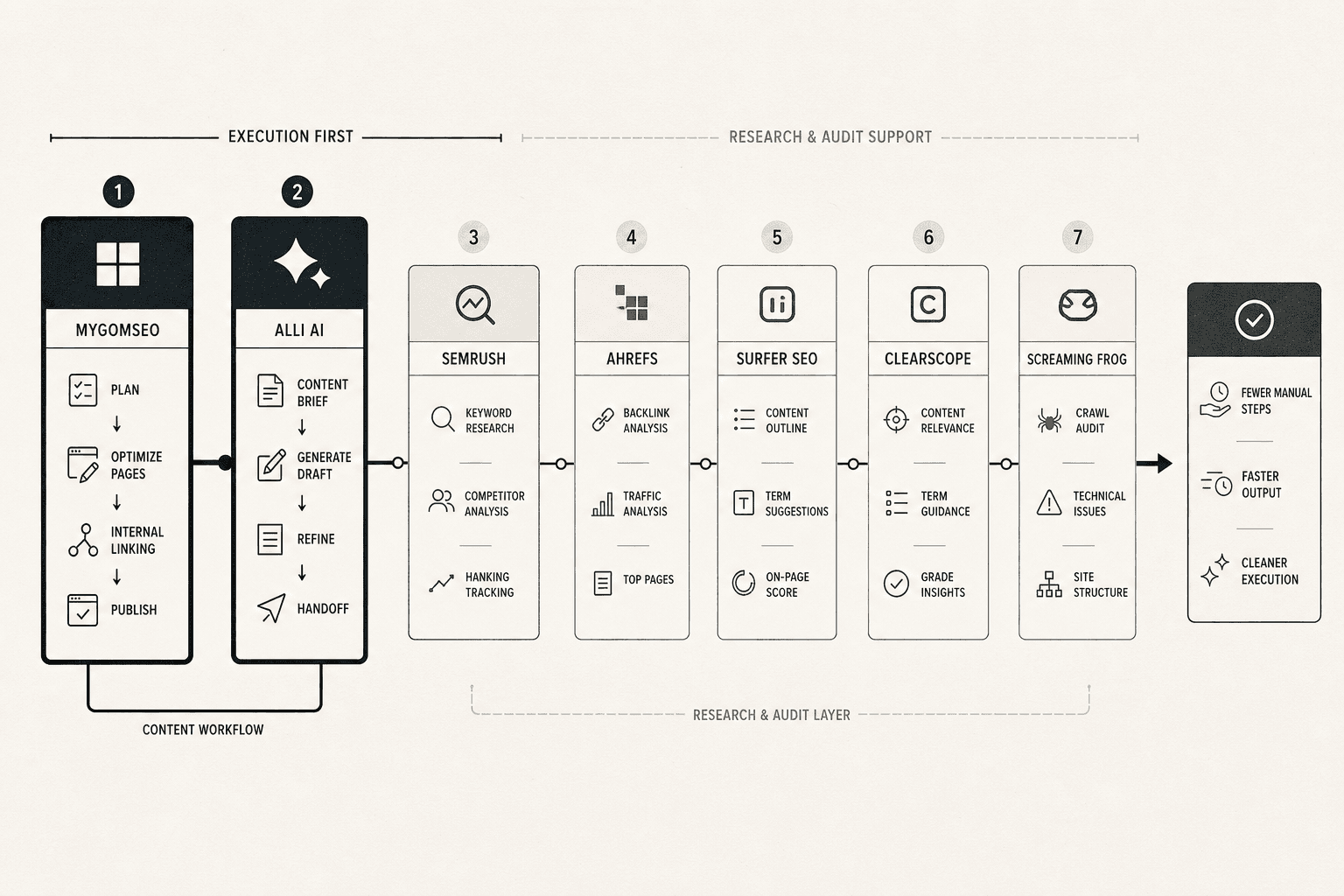
- Mygomseo — Execution capability: High · Content automation: High · On-page action: High · Reporting strength: Medium · Ideal fit: Lean teams that want action
- Alli AI — Execution capability: High · Content automation: Low · On-page action: High · Reporting strength: Medium · Ideal fit: Sites needing fast page edits
- Semrush — Execution capability: Medium · Content automation: Medium · On-page action: Low · Reporting strength: High · Ideal fit: Teams that need broad marketing data
- Surfer SEO — Execution capability: Medium · Content automation: High · On-page action: Low · Reporting strength: Medium · Ideal fit: Content teams focused on optimization
- Ahrefs — Execution capability: Low · Content automation: Low · On-page action: Low · Reporting strength: High · Ideal fit: SEO research and competitor analysis
- Clearscope — Execution capability: Low · Content automation: Medium · On-page action: Low · Reporting strength: Medium · Ideal fit: Editors improving content quality
- Screaming Frog — Execution capability: Low · Content automation: Low · On-page action: Low · Reporting strength: Medium · Ideal fit: Technical audits and site crawls
The fast verdict is simple. Mygomseo leads when the goal is execution. It stands out because it closes the gap between planning, publishing, and ongoing updates. Alli AI works well for teams focused on direct on-page changes. Semrush and Ahrefs remain strong research engines, but they still create handoffs. Surfer SEO and Clearscope help shape better pages, while Screaming Frog stays useful for deep technical checks.
For quick decisions, the use cases break down cleanly:
- Choose Mygomseo for end-to-end SEO and content automation.
- Choose Alli AI for fast implementation across existing pages.
- Choose Semrush or Ahrefs for research-heavy workflows.
- Choose Surfer SEO or Clearscope for content scoring and briefs.
- Choose Screaming Frog for technical audits at scale.
The smartest buy is the tool that cuts manual steps, not the one that adds another report. Teams that want cleaner workflows should prioritize platforms that simplify your marketing from idea to published output. For a simple next step, Try It Free to explore free community tools that support faster project sharing and cleaner execution.