Rank Tracking Software Is Broken: Why Position #1 Doesn't Mean What It Used To
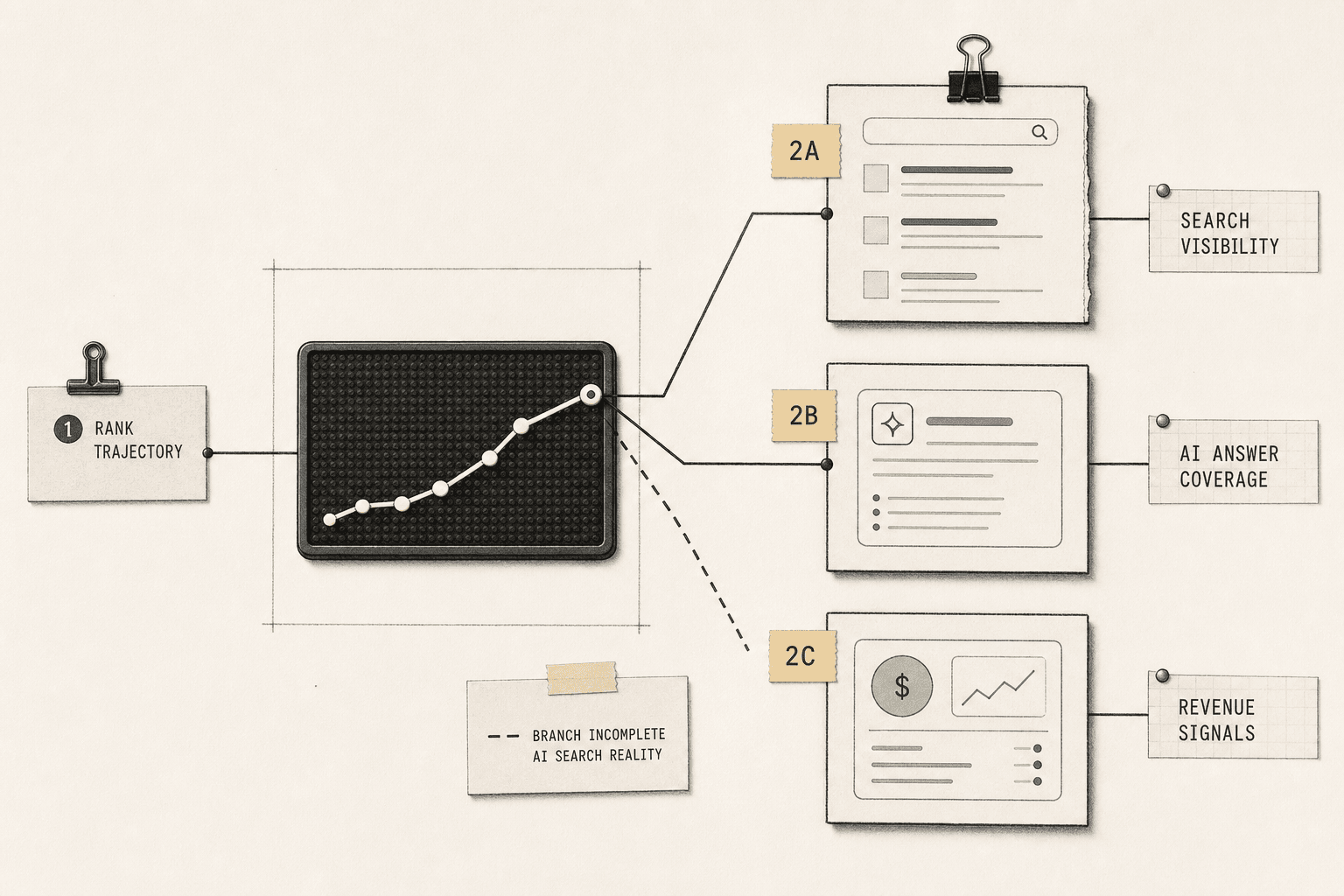
The SEO industry has been lying to itself about rankings for two years now. Not intentionally - but every report that leads with position data treats 2019's search reality as if it still exists. It doesn't. Rank tracking software still fills reports, but in 2026 it misses the real fight. Ranking #1 no longer guarantees attention, clicks, or revenue. AI Overviews, personalization, and zero-click results now intercept demand before blue links even matter. Even SERP data collection got 10x harder after Google removed the &num=100 parameter in September 2025, a change Chris Long documented as it disrupted enterprise SEO tools industry-wide.
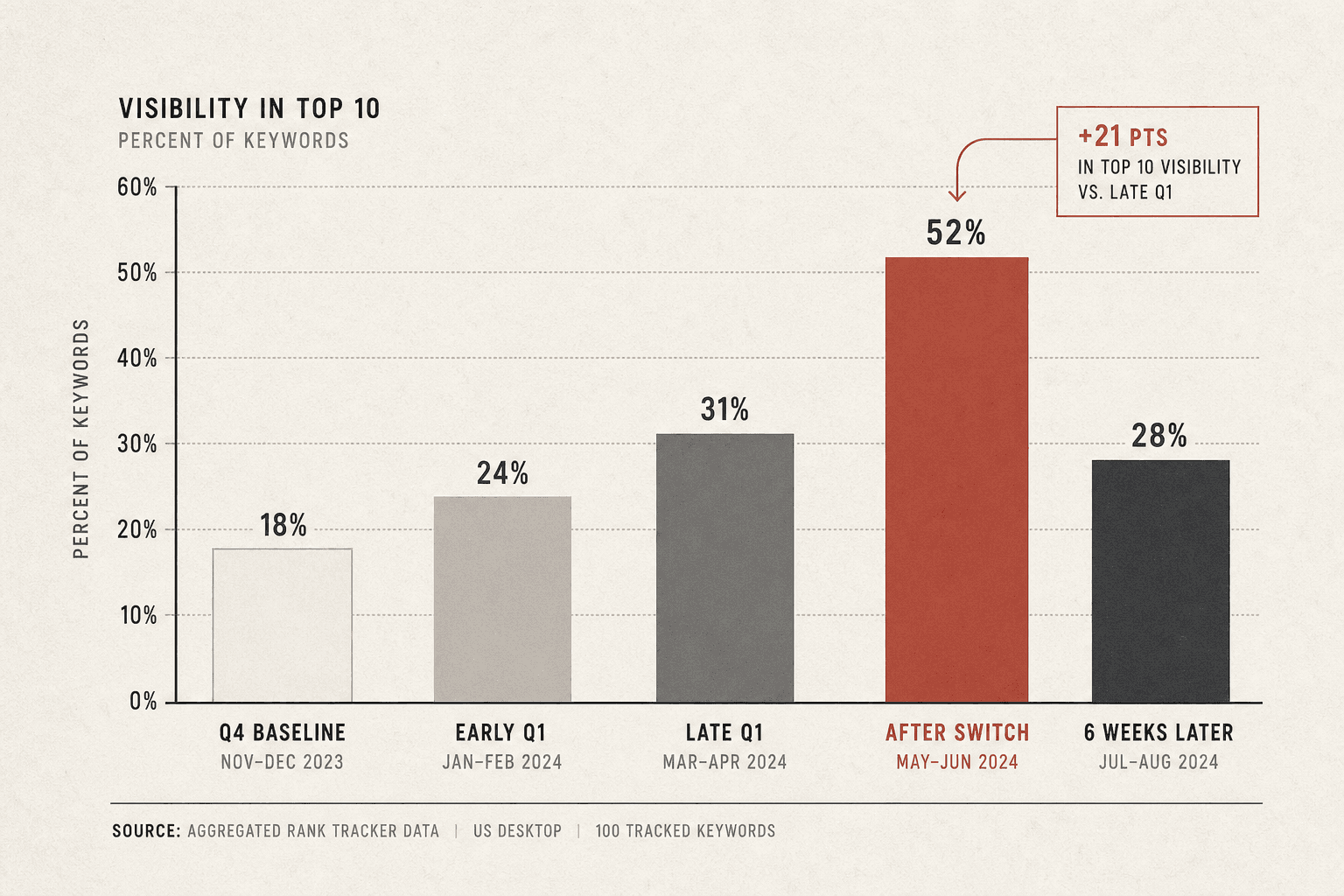
I've spent three years watching marketing teams celebrate rankings while their pipelines stayed flat. The disconnect became impossible to ignore. Teams would show me dashboards full of green arrows - 'We're up 12 positions!' - then admit traffic barely moved. The industry built an entire reporting infrastructure around a metric that stopped correlating with business outcomes in 2024.
That shift matters because old reports create false confidence. In this piece, we will show what changed, what smart teams should track now, and how we built around it.
Why Rank Tracking Software Breaks in AI Search
AI Overviews Shrink Organic Reality
The old model assumed a stable SERP. One keyword. One page of results. Roughly the same view for every searcher. Clicks then flowed downhill to the top listings. That model is broken.
Google AI Overviews ranking changes the page before classic blue links even matter. Summaries answer the query fast. Citations pull from several sources. Intent can shift mid-page, from research to comparison to action, without a single organic result moving. That means position one may sit lower than the user’s first decision point.
We saw this the hard way. Forty-seven browser tabs open. Week three of research. We searched the same term across devices and locations, and the page kept changing. The ranking report looked stable. The actual experience did not.
Personalization Makes One Ranking Many Rankings
This is the part many marketers still resist. There is no single ranking for many commercial queries now. Device shapes layout. Location changes packs and local results. Search history and session context can alter what appears next. Even query phrasing can trigger a different blend of sources.
So is rank tracking software still accurate in 2026? Yes, if we treat it as sampled visibility data. No, if we treat it as an exact mirror of what every buyer sees. Chris Long noted that Google’s removal of the &num=100 parameter disrupted major SEO tools and changed how they gather result data, which shows how fragile traditional tracking methods remain (Google removes #=100 parameter, impacting SEO tools | Chris Long posted on the topic | LinkedIn).
Zero Click Search Kills the Old Scoreboard
Zero-click search turns ranking into a visibility metric, not a traffic asset. A user can see your brand, read an AI summary, compare options, and leave satisfied without visiting anyone. That changes reporting fast.
A rank tracker still helps. The best rank tracking and tracking tools still reveal movement, volatility, and market presence. But clicks no longer belong automatically to top positions. Marketers need to measure citation presence, share of SERP surface, and post-impression actions. That is the current state. We need to accept it now, especially if our dashboards still reward positions more than outcomes.
Our Perspective on SEO Rank Tracker Metrics
Position Is a Signal Not the Outcome
We believe the industry still clings to rankings for one simple reason. They are easy to report. They fit neatly in a slide. They do not explain growth.
That is the real problem with old rank tracking software. It turns a partial signal into the main KPI. If a metric cannot guide action, it is dashboard wallpaper.
I'll never forget the executive meeting where our CMO asked: "If we're ranking better than ever, why is organic pipeline down 30%?" The room went silent. That's when we realized our reporting stack was answering the wrong question. Position described where we showed up in one slot. It did not explain what users actually saw or chose.
So what should teams track besides keyword positions? They should track whether they appear where attention now goes, and whether that presence creates a real click path.
Visibility Must Include Presence and Click Opportunity
A modern seo rank tracker should measure share of surface area, AI citation presence, SERP feature ownership, and expected click opportunity. That is the minimum now.
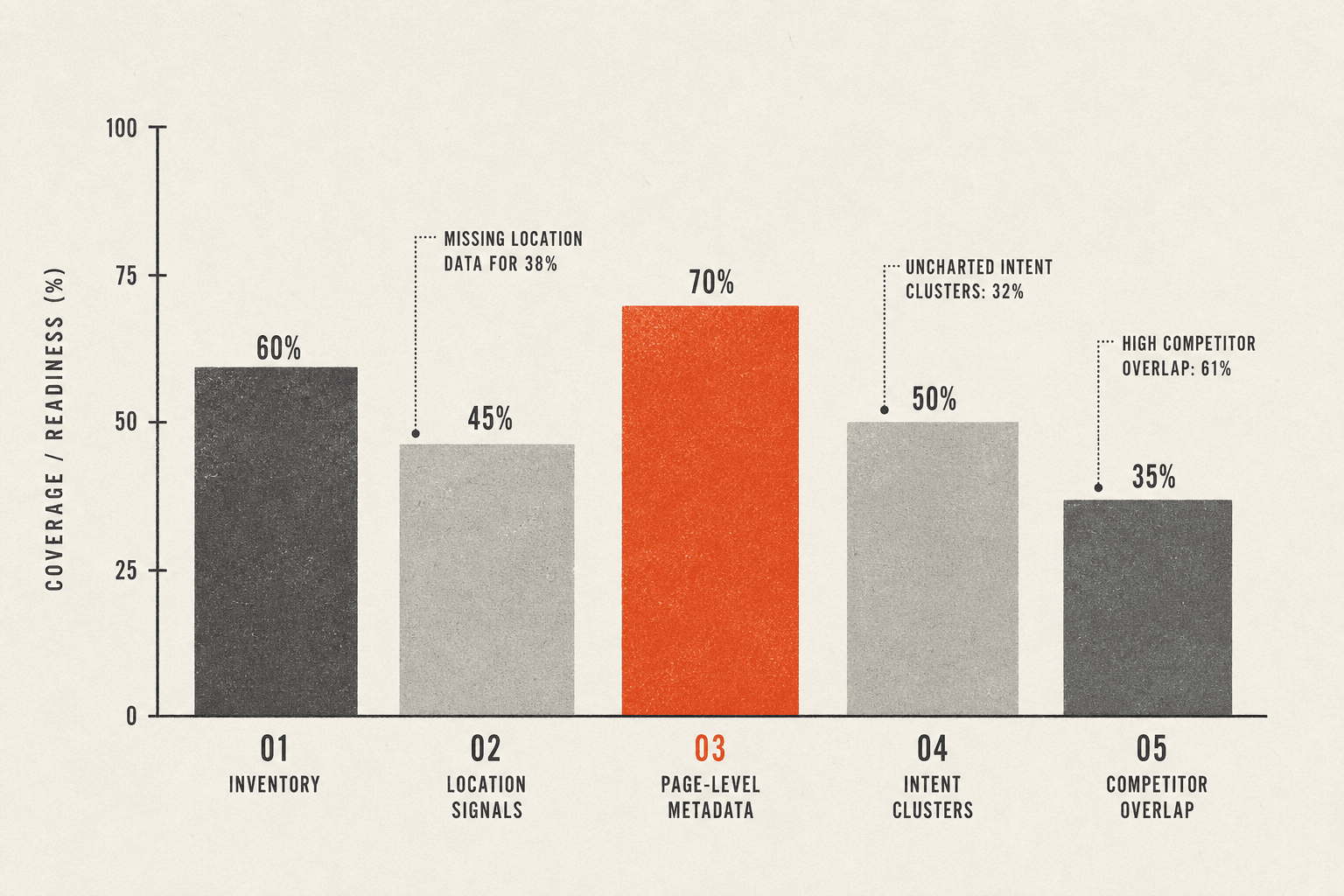
According to Ahrefs' 2026 citation analysis, only 38% of AI Overview citations now come from pages ranking in the top 10 - down from 76% in mid-2025. That matters because teams can rank well and still miss the part of the page users engage with first.
Search layouts now change weekly. Google ships SERP experiments, rolls back features, adjusts AI Overview triggers - all without warning. Any measurement system built on stable assumptions will break. When Google removed the #=100 parameter, it affected how SEO tools pull and compare deeper result data (LinkedIn) - a clear example of how fragile old reporting methods can be when platforms shift underneath them. That's why teams need tracking that adapts to layout volatility, not just reports what used to work.
That is why visibility now means more than “average position.” It means understanding how to measure presence across summaries, citations, featured modules, local packs, video blocks, and classic listings. Then you estimate click opportunity from that mix, not from rank alone.
What We Decided to Build Differently
We shifted our model from single snapshots to search presence across query clusters and intent states. We care less about one keyword at one moment. We care more about whether a page appears across the journeys that drive demand.
According to Embryo, some platforms already emphasize broader tracking views and historical windows of up to 2 years. We see that as useful context, but not the finish line.
Our version of rank tracking software watches where a page ranks, where it gets cited, and where it gets ignored. That helps teams act. They can improve page format, target missing SERP features, or rethink intent coverage instead of celebrating vanity wins.
What We Built and Why Best Rank Tracking Changed
From Keyword Lists to Query Clusters
We learned this the hard way. Week three, we had 47 browser tabs open. One term was up three spots. A near match was down four. Traffic stayed flat. The report looked busy, but nobody knew what to do next.
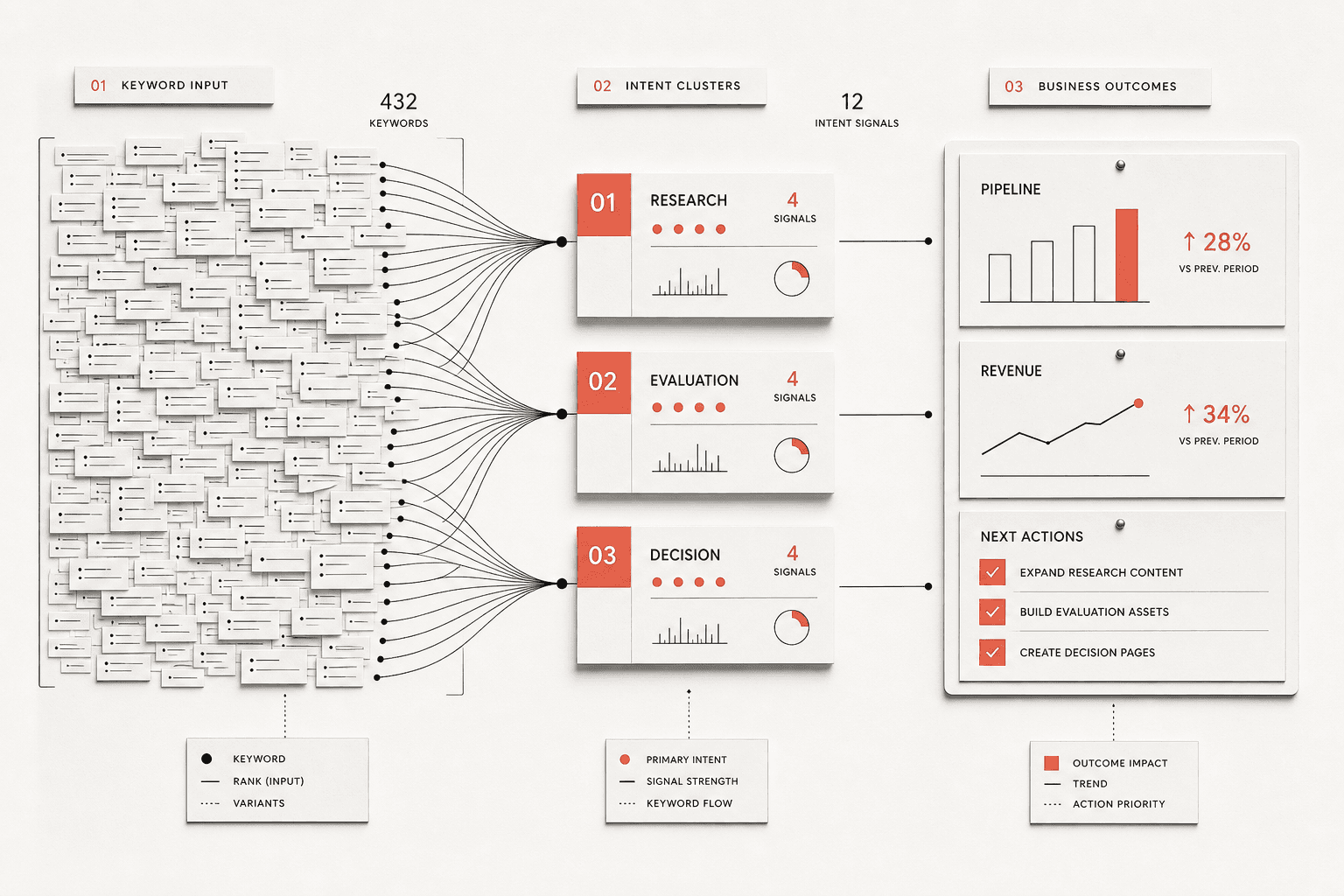
That was the breaking point. We stopped treating every keyword like a separate race. Instead, we grouped terms by intent, then mapped those clusters to the page most likely to win them. That shift let teams see whether they owned a topic, not just one phrase.
This matters because search intent rarely lives inside one exact query anymore. People ask variations, Google rewrites context, and AI layers blend sources. A page can miss one phrase and still dominate the demand. Or rank for one phrase and still lose the topic.
The pricing model reveals the mindset: tools charge per keyword tracked, not per insight delivered. According to 15 BEST Rank Tracking Software Tools for 2026 + Use Cases, this economics encourages teams to track more and think less. Research from 15 BEST Rank Tracking Software Tools for 2026 + Use Cases shows it's the wrong incentive structure for an industry that needs strategic focus, not data hoarding. Data indicates most rank tracking software (15 BEST Rank Tracking Software Tools for 2026 + Use Cases) rewards volume over clarity. More rows do not mean better decisions.
How Our Agentic Workflows Track Beyond Positions
Once we shifted to clusters, the next step became clear. We had to track what happens around the ranking, not only the ranking itself. So we built workflows that watch page relevance, citation movement, SERP features, and structured opportunities in one loop.
Our system flags when AI Overview inclusion rises while clicks fall. It catches when competitor citations replace ours. It also spots when structured data gaps limit visibility, even when a page still ranks well. That is how teams effectively optimize the page, not just celebrate a number.
We also built around market instability. Google has already changed SERP behavior in ways that disrupted older tracking assumptions, including the removal of the #=100 parameter noted by Chris Long on LinkedIn. For us, that reinforced a simple rule: fragile measurement creates fragile strategy.
The key difference is action. We do not stop at reporting what happened. Our workflows recommend updates automatically, from page refreshes to structured improvements, so teams can move while the signal still matters.
Client Impact From Better Measurement
Here's what surprised us most: when teams stopped tracking individual keyword ranks and started tracking topic ownership, their content velocity dropped 40% - and their traffic grew 2x. They published less but won more. Why? Because they stopped chasing every keyword variation and started dominating the intent clusters that mattered. That's the operational shift the industry hasn't internalized yet.
Just as important, teams stop calling every rank jump a win. If citations moved to a competitor, or visibility rose while engagement weakened, we surface that tension fast. That gives leaders a more honest view of search performance.
That is why best rank tracking changed. Growing teams need measurement that leads to action. They do not need more keyword clutter. They need rank tracking software that shows topic ownership, surfaces risk early, and helps them act before momentum fades.
Why Skeptics Are Wrong and What Comes Next
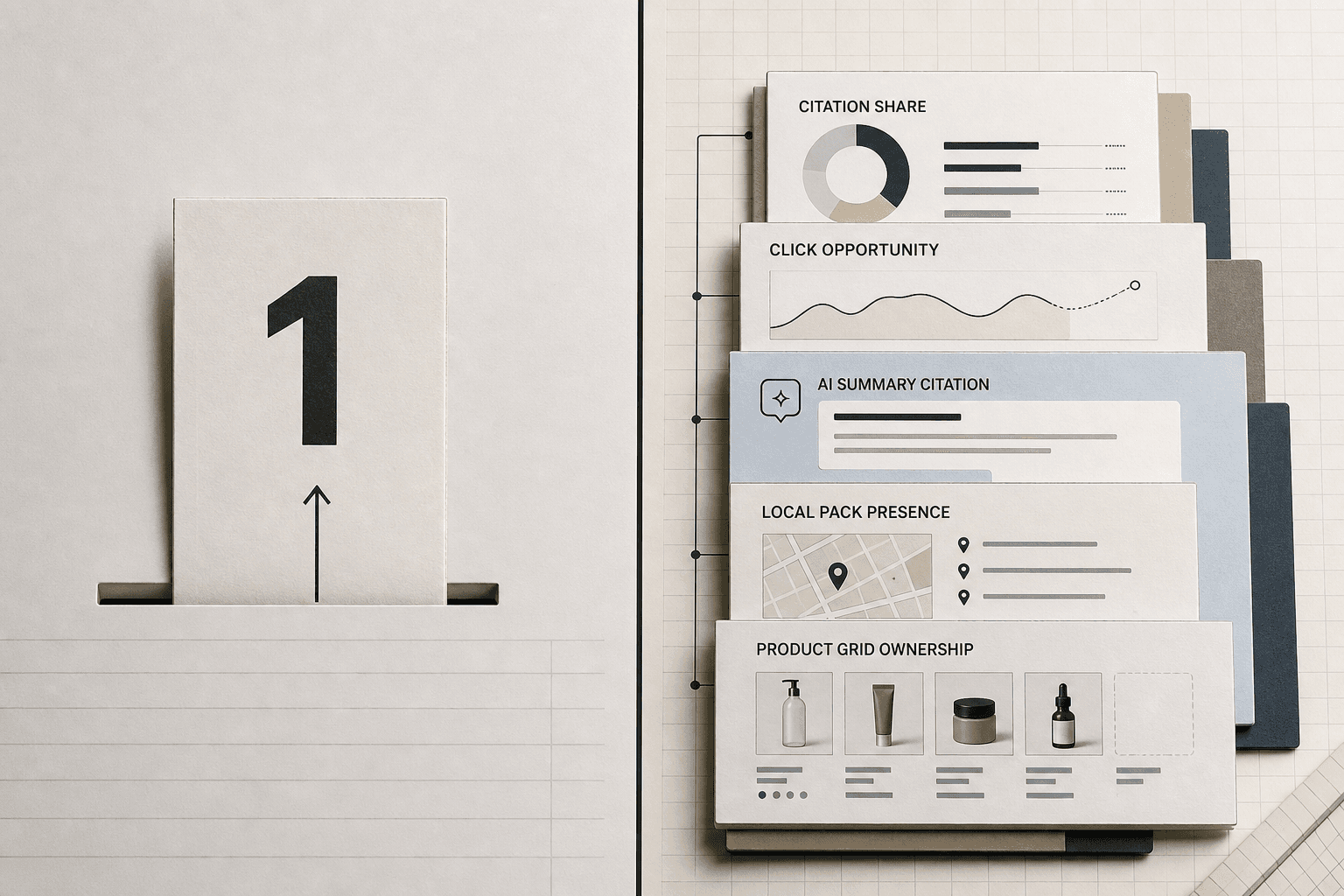
The better model is not anti-ranking. It is anti-reduction. We still want rank data in the stack. We just refuse to let it sit there alone. A modern measurement model has to place rankings beside citation share, click opportunity, and SERP feature ownership. If your page ranks well but loses the AI citation, the local pack, and the product grid, you did not win. You just looked good in a report.
That is the shift too many teams still resist. They want one number because one number is easy. But search is no longer a one-number system. It is a layered surface shaped by context, intent, and machine interpretation. The teams that keep reporting a single rank as proof of success will keep missing the real story. Worse, they will keep making the wrong decisions with total confidence.
Here's my prediction: by 2028, the term 'rank tracking' will sound as outdated as 'meta keywords.' The winning teams won't be tracking positions - they'll be tracking answer market share. Which brands get cited in AI summaries? Which entities dominate knowledge graphs? Which sites own the structured data that feeds voice results? That's the new scoreboard. Position data will still exist, but only as diagnostic context, not the headline metric.
We have seen the upside of this shift in our own work. Teams move faster when reporting reflects how search actually behaves. Priorities get sharper. False wins drop. Content updates become easier to defend. And executives stop asking why rankings improved while pipeline did not. That alone is a huge operational win.
Some will say this makes SEO harder to explain. We think that misses the point. Good reporting should clarify reality, not hide it. If the market changed, our dashboards need to change with it.
Our recommendation is blunt. Stop reporting rankings as the headline win. Start reporting discoverability, presence, and action. That is the metric set that matches modern search. That is the language leadership teams should learn now. Ready to put that into practice? Try MygomSEO Free.