Agentic Marketing 2026: When AI Runs Your Campaigns (Not Just Assists)

Agentic marketing is the shift most teams still refuse to make. They stack AI tools on top of broken workflows, then wonder why growth still depends on handoffs, prompts, and manual checks.
That model is already cracking. According to 10 Eye Opening AI Marketing Stats to Take Into 2026, 1% is the number many teams may be built around if they keep mistaking assistance for execution. More tools do not fix brittle systems. They create more dashboards, more delays, and more failure points.
We built Mygomseo for a different future. We write, publish, and monitor SEO autonomously, not just suggest the next move.
In this article, we will show why rule based automation is stalling and what true agentic systems change. That is where modern growth is going.
The Current State of Agentic Marketing
Why AI assisted work still depends on humans
Most AI systems in marketing still wait for instructions. They draft emails, suggest headlines, or summarize research. Useful? Yes. Autonomous? Not even close. Salesforce reported that 75% of marketers have adopted AI, yet 84% still run generic campaigns, which tells us adoption alone does not change operations (Salesforce).
This hit home during a particularly brutal sprint. One week, we had 47 browser tabs open. We were testing prompts, checking SERPs, fixing drafts, and moving assets between tools for content. Every step looked faster in isolation. The full workflow still depended on us to decide what happened next.
That is the limit of assisted work. A copilot can help execute a task. It cannot hold a target in memory, assess tradeoffs, and choose the next best move across channels. Marketing leaders do not need more disconnected tools for. They need systems that can work toward outcomes.
Where traditional marketing automation breaks
Traditional automation follows rules. If a lead clicks, send an email. If a form fills, add a tag. If traffic drops, trigger an alert. That model still has value, and we use it where stability matters. But it breaks when goals shift, inputs change, or channels influence each other.
That difference answers a core question: what is agentic marketing? We define it as a goal-driven operating model where agentic ai systems interpret targets, choose actions, and improve performance over time. It does not wait for a human to map every branch first.
So how is agentic marketing different from marketing automation? Marketing automation 2026 still depends on prewritten logic. Agentic systems reason through uncertainty. They can compare options, act across steps, and adjust when the environment changes. Improvado describes the market moving toward connected AI workflows, not isolated prompts (Improvado). Marketing Dive also notes that 2026 will push brands toward sharper choices as AI reshapes execution models (Marketing Dive).
This is why agentic ai is becoming the next operational layer in content and SEO. In these channels, speed matters, but continuity matters more. The winners will not be the teams with the most AI add-ons. They will be the teams with systems that can interpret a goal, act on it, and keep learning. That is also why execution depth matters in areas like Top 7 Legal SEO AI Strategies Law Firms Need to Stay Ahead.
Why Autonomous AI Marketing Beats AI Assisted Workflows
Goals outperform rules
Rule-based systems follow instructions. They wait for a trigger, then complete a narrow task. That works for fixed processes. It breaks when rankings drop, search intent shifts, or content stalls. Autonomous ai marketing systems work from goals instead. They target outcomes like traffic, rankings, and publishing pace, then adjust actions as live signals change.
This hit home during a particularly brutal sprint. I had drafts in one tool, briefs in another, and keyword notes in a sheet. Nothing was technically broken. Still, nothing shipped. The drag came from the gaps between tools for writing, review, publishing, and monitoring.
That is the real limit of AI assisted work. It improves productivity inside a task. It does not remove the handoffs around the task. Research from The Ultimate Guide to AI Marketing Campaigns in 2026 - Improvado shows some AI-driven campaigns can produce 67X stronger returns in the right conditions. The lesson is not the headline number. The lesson is that faster execution changes the economics.
Closed loop execution creates compounding gains
The bigger advantage comes after publishing. Most teams use ai tools to generate content, then stop. They wait for humans to review performance and decide the next move. That delay kills momentum. Autonomous ai marketing closes the loop. It writes, publishes, monitors, and adapts based on what actually happens.
This is where lean teams win. The goal is not more content sitting in drafts. The goal is end-to-end execution with feedback loops. According to 9 marketing predictions for 2026 as AI fuels polarity - Marketing Dive, some brands are already seeing 9x lifts from smarter AI activation. Speed matters, but learning speed matters more.
Can AI agents run SEO without human oversight? In bounded systems, yes. They can execute content production, publishing, internal linking, and performance checks without constant intervention. They should still operate within clear brand, legal, and editorial limits. That is the difference between reckless automation and realagentic marketing.
Research from The Ultimate Guide to AI Marketing Campaigns in 2026 - Improvado also points to 3X gains when teams connect data, execution, and optimization. We see the same pattern. Fewer handoffs. Faster iteration. Better output. If you want a practical example in SEO, see Top 7 Legal SEO AI Strategies Law Firms Need to Stay Ahead.
Our Perspective on AI Agents Marketing in SEO
What we built at Mygomseo
We built Mygomseo around one hard lesson. SEO breaks when every task lives in a different tab. One tool finds keywords. Another drafts copy. A person edits. Another person uploads. Then nobody checks what happened next.
We remember one early week clearly. We had 47 browser tabs open. Week three of research. Still guessing which topic to ship first. That moment shaped our view of ai agents marketing. The problem was never content alone. The problem was fragmented execution.
So we built a system that acts end to end. It identifies search opportunities, generates pages, publishes them, and keeps watching performance after launch. That is the bar. If the workflow stops at suggestions, it is still assistance.
How our agentic workflow actually works
A true agentic SEO system starts with a goal. Rank for a cluster. Expand topical coverage. Win qualified traffic in a niche. From there, the system chooses the next best action.
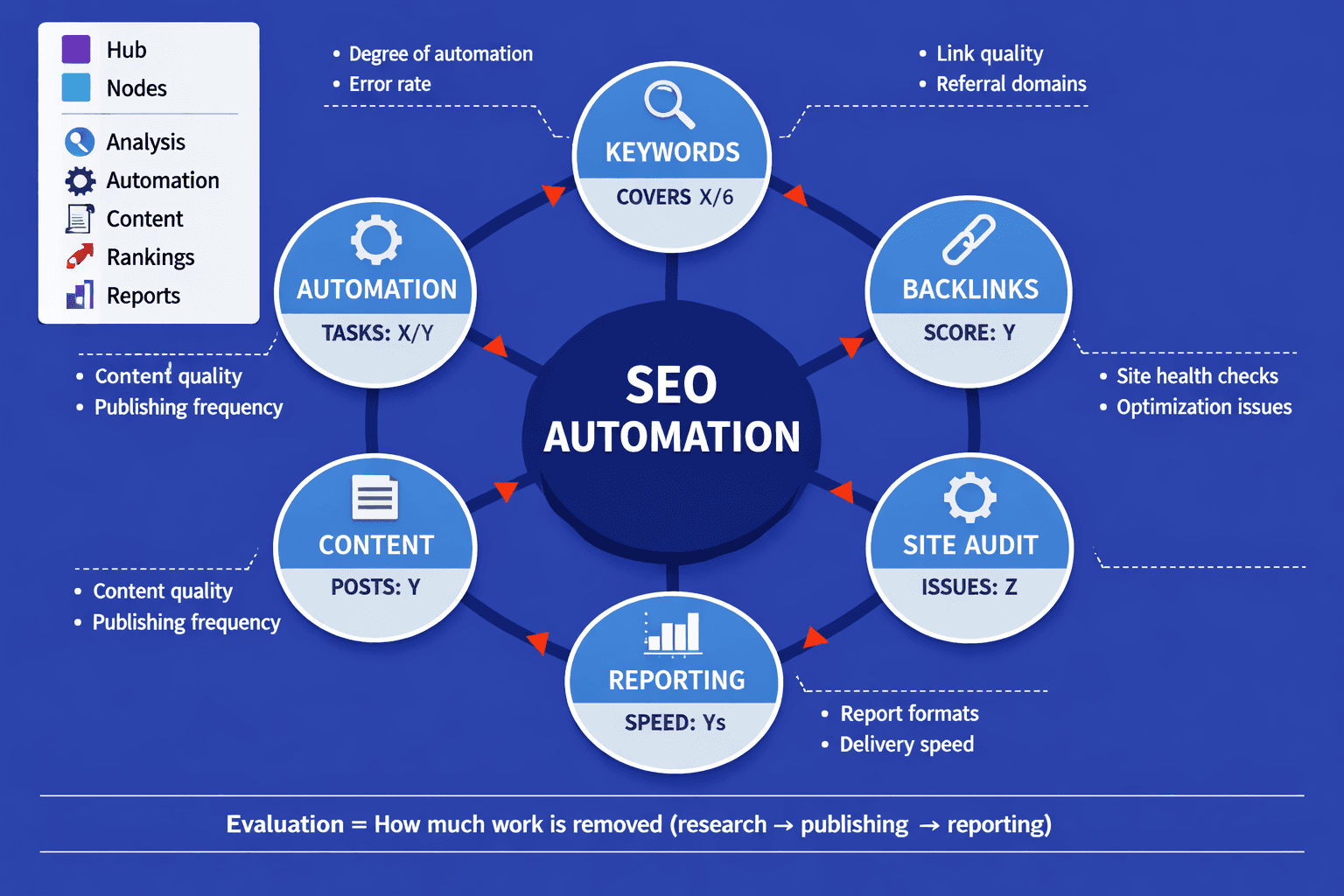
At Mygomseo, orchestration is the technical difference. Our agents do not sit in isolation. They evaluate context, compare outcomes, and trigger the next step without manual chaining. One agent finds an opening. Another builds the page. Another publishes. Another checks what changed after indexing and decides what to improve next.
That matters because SEO is not a single task. It is a sequence with feedback. Research from Salesforce found that 85% of marketers say AI is reshaping their SEO strategy. The winners will not be teams with more prompts. They will be teams with tighter loops.
We also pay close attention to trends for content velocity and search behavior. According to Improvado, AI helped compress a major campaign into roughly two days with an estimated $2,000 production budget. That example is not about SEO alone. It proves a larger point. Execution is getting faster, and systems that cannot act will fall behind.
Results and client impact that matter
The real value is not novelty. It is access. SMBs and startups can now run an SEO engine that once demanded a strategist, writer, editor, publisher, and analyst. We think that changes the market more than any new dashboard ever will.
Client impact shows up in simple ways. Teams launch faster. Topic coverage expands without hiring pressure. Follow-up work happens without someone setting calendar reminders. Monitoring stays active after publish day, which is where most content programs quietly fail.
This shift also matches the broader market. Improvado reports that AI-driven workflows can accelerate production by 7x in the right campaign setup. We see the same pattern in SEO. When agents own the chain, output compounds.
For founders and marketing directors, that is the point. Do not ask whether AI can help write. Ask whether your system can identify, create, publish, and improve without constant supervision. If it cannot, you are not buying the future of SEO. You are buying a faster bottleneck.
Why Skeptics Are Right - and Why They Still Miss What Comes Next
But the wrong response is to cling to manual work and call it control. Manual marketing does not remove risk. It hides it in delays, handoffs, inconsistent reviews, and missed signals. The real answer is governed execution. Set hard constraints. Define approval points where they matter. Track outcomes in tight loops. Let the system act, then measure what happened.
That is the real line between old automation and what comes next. Rule-based tools follow instructions. Agentic marketing works toward outcomes. It operates inside boundaries, learns from feedback, and improves with use. That is the model we believe will define marketing automation 2026.
We have seen what this shift changes in practice. Teams move faster because execution no longer stalls between strategy and publishing. Content programs stay active because monitoring does not stop after launch. Leaders gain clearer control because goals, constraints, and performance live in one system instead of scattered tools. That is the point. We do not need more dashboards. We need systems that can act responsibly.
Some teams will keep buying separate assistants for research, writing, optimization, publishing, and reporting. We think that path is already aging out. More tools create more prompts, more tabs, and more operational drag. The teams that win will not be the ones with the biggest stack. They will be the ones with autonomous systems tied to clear business goals, clear rules, and clear accountability.
For us, the lesson is simple. Autonomy without guardrails is reckless. Guardrails without autonomy are too slow. The future belongs to teams that combine both.
Our results point in the same direction. We built Mygomseo to execute the full SEO cycle, not just support one step. That gives lean teams a practical way to produce, publish, monitor, and improve without adding headcount or stitching together another fragile workflow.
Stop buying more assistants. Start evaluating systems that can execute, learn, and compound results. If that is the shift your team is weighing now, Learn More and reach out to discuss your goals.