Autonomous SEO Agents vs Traditional Tools: What's Actually Different
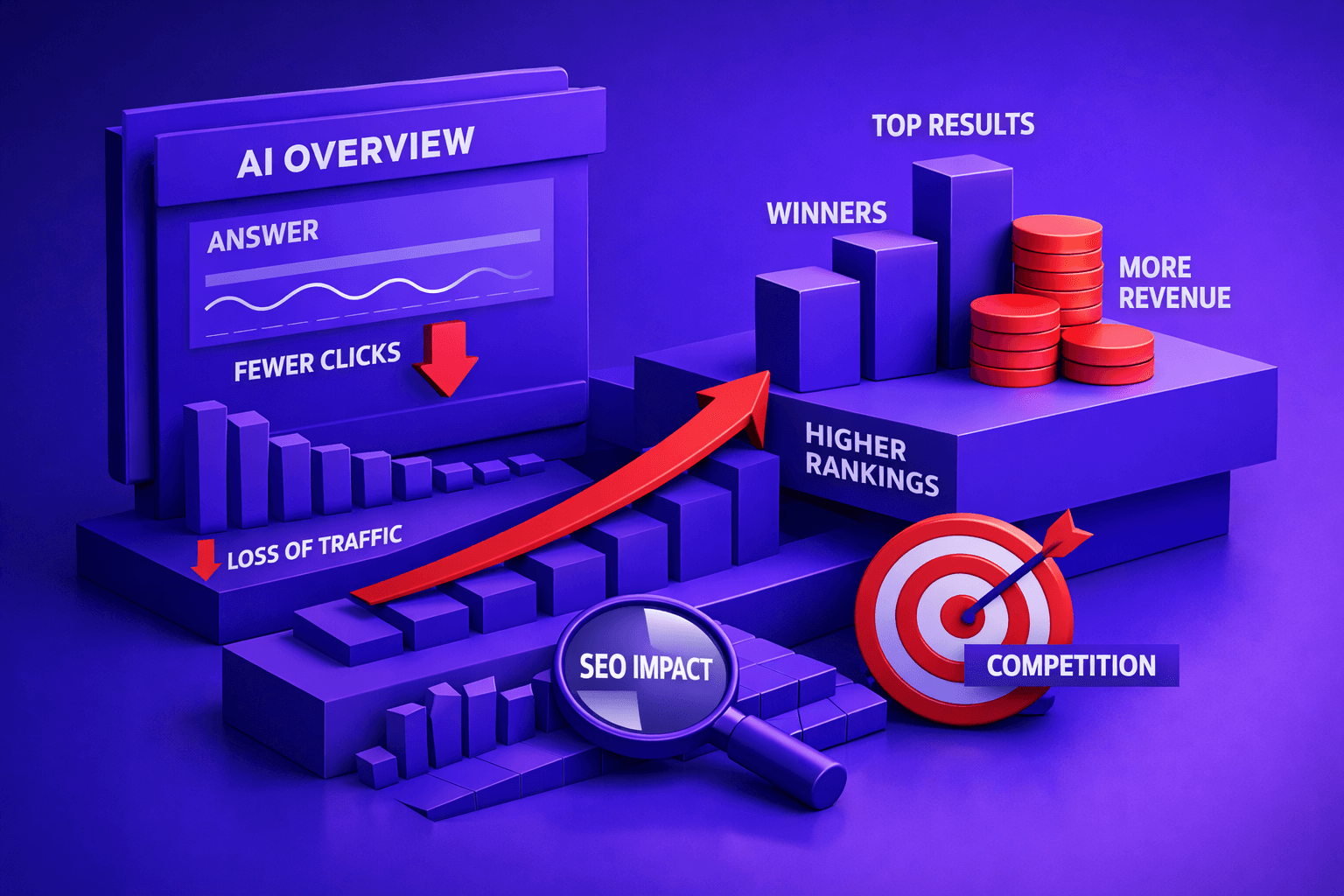
An autonomous seo agent does more than flag problems. It executes SEO work with minimal human input. That shift matters because most teams still rely on dashboards that surface issues but leave research, writing, publishing, and tracking to people. According to Traditional SEO vs AI SEO: Key Differences and How to Future-Proof ..., 30% of AI summaries often pull from early-page content, which raises the stakes for faster execution. Research from A Guide to Traditional SEO vs AI SEO - Huemor also points to 300x growth in AI-driven search visibility. This comparison examines how autonomous agents and traditional SEO tools differ on automation depth, decision-making, pricing, and team fit. It serves marketing teams, founders, ecommerce brands, and agencies.
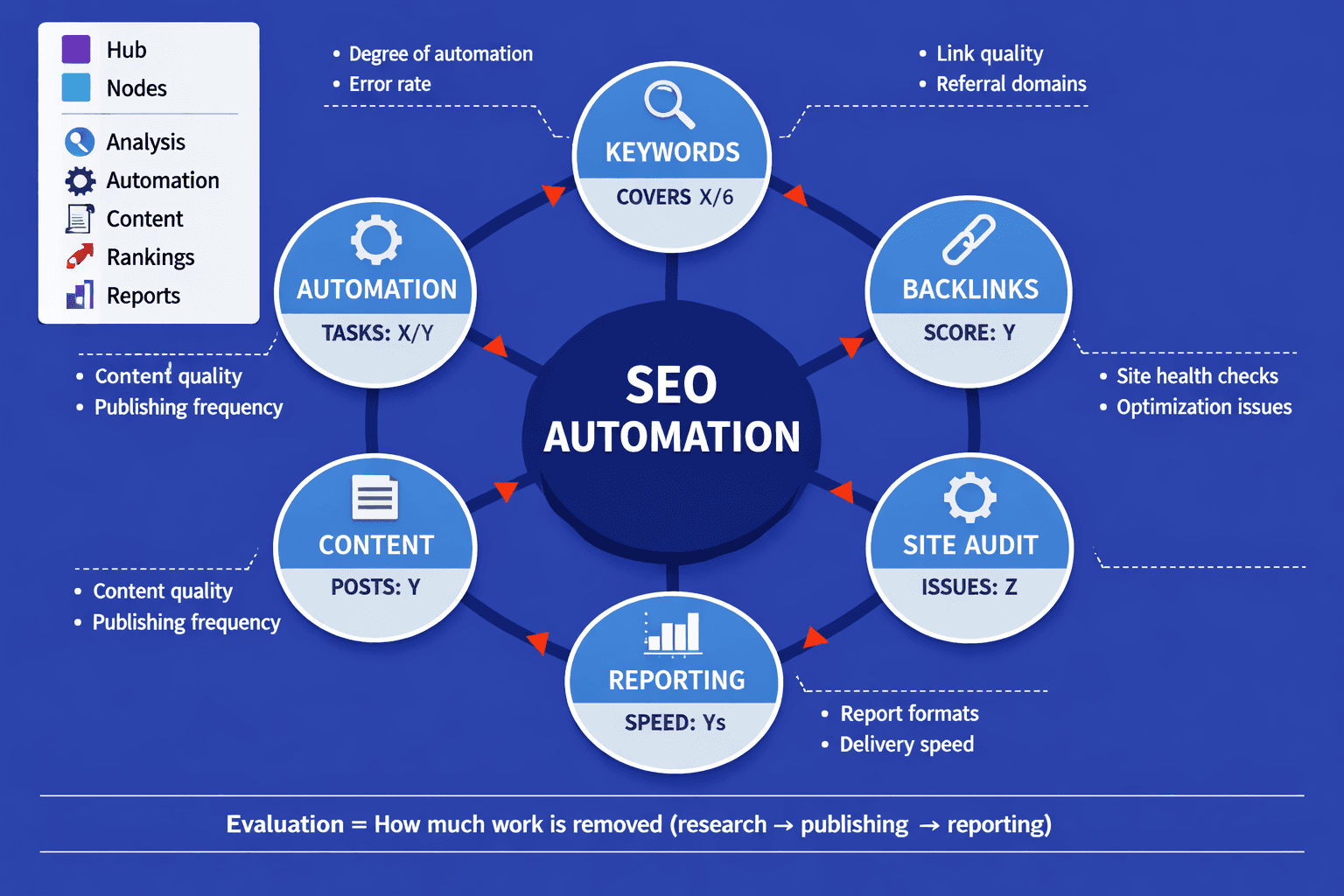
Evaluation Criteria for SEO Automation Tools
Automation depth
Automation depth measures workflow coverage. A traditional platform often focuses on audits, rank tracking, and keyword research, then waits for a person to act. By contrast, deeper systems can move from finding an issue to drafting a fix, updating links, and pushing content live. For example, a team can compare this with OpenClaw for SEO: How to Automate Technical Audits with AI Agents.
Decision making capability
This criterion checks whether the tool only suggests tasks or also ranks and executes them. Some ai tools generate long lists. A stronger system decides what matters first, based on impact and effort. Nightwatch notes that AI-driven SEO shifts work from manual review toward faster analysis and action (Traditional SEO vs AI SEO: Key Differences and How to Future-Proof ...).
Hands off operation
Hands-off use measures daily effort. Setup matters, but steady-state workload matters more. For example, one platform may need constant prompts, approvals, exports, and rewrites. Another may run scheduled audits, draft pages, and produce reports with limited oversight. That does not remove people entirely. It reduces the number of routine steps.
Pricing and resource needs
Cost goes beyond the monthly fee. It includes writer time, SEO specialist input, editor reviews, and extra subscriptions. An all-in-one system may cost more upfront but lower tool stacking. Research from Traditional SEO vs AI SEO: What You Actually Need to Know shows Google handles about 13.7 billion searches per day, which raises the value of efficient execution.
Risk control and visibility
The last test focuses on safety. Autonomous SEO agents can be safe for search engines if teams review outputs, enforce brand rules, and avoid spam patterns. AI tools cannot fully automate SEO without risk, because judgment still matters for compliance, accuracy, and brand fit. Reporting must stay clear, with visible edits, approval paths, and audit trails.
Autonomous SEO Agent Analysis
Overview
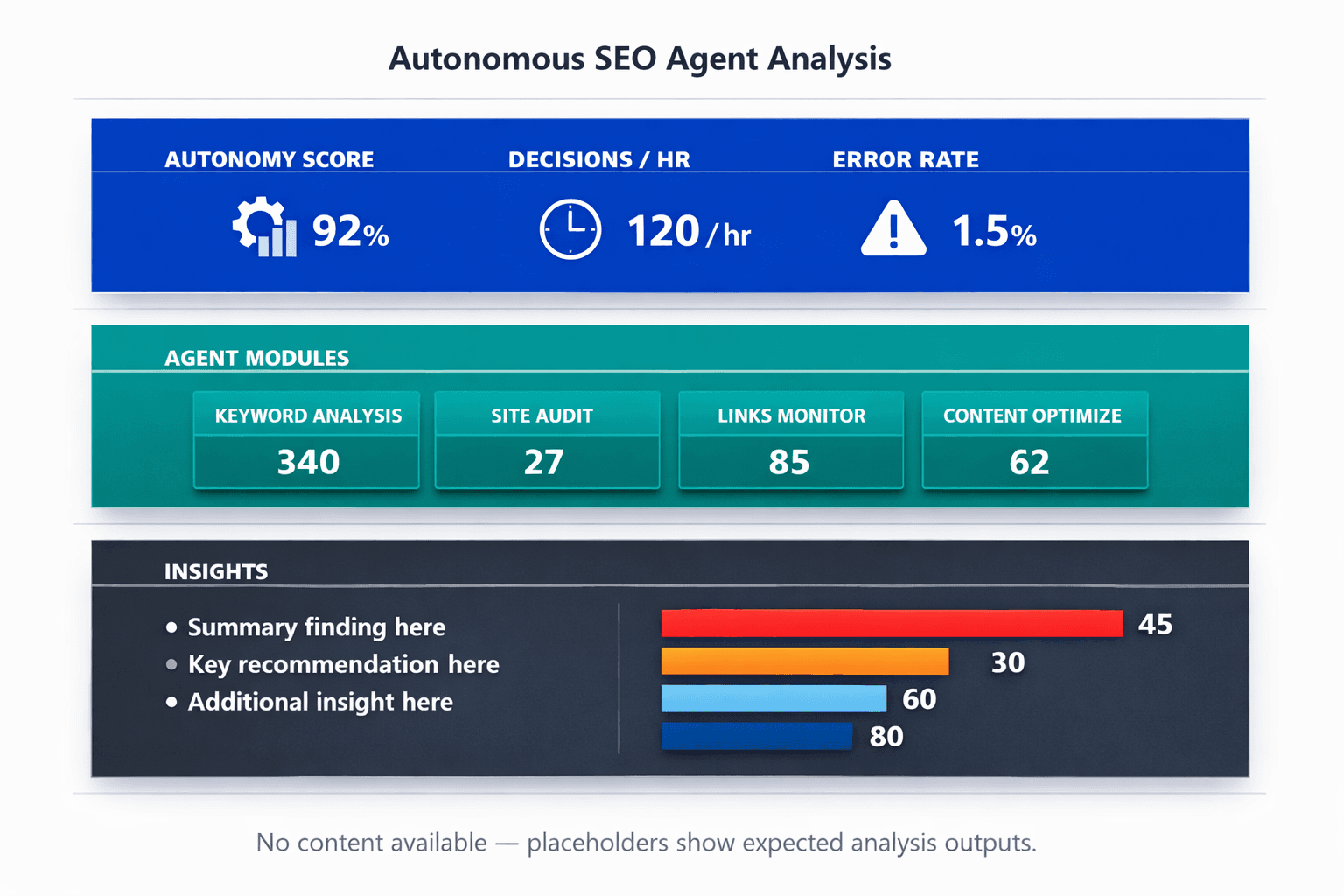
An autonomous seo agent acts more like an operator than a dashboard. It scans a site, finds gaps, sets priorities, creates assets, and can often push updates without constant input. Traditional SEO focuses on surfacing issues, while this model focuses on execution across the same workflow. Semrush and Nightwatch both note this shift from diagnosis to action.
For example, a SaaS team may spot weak product pages on Monday. By Tuesday, the system can cluster terms, draft briefs, refresh copy, and queue updates. That workflow compression is the main shift. According to From traditional to AI-driven: How SEO is changing, AI has been reshaping search work for 4 years.
Key Features
Most platforms group several tasks into one system. Common features include automated audits, keyword clustering, content briefs, article generation, on-page updates, internal linking suggestions, publishing flows, and performance tracking. Unlike simple AI tools, the stronger systems connect these steps into one loop instead of separate outputs. Page One Power identifies this workflow integration as a key differentiator. Huemor notes similar patterns in modern platforms.
Some also use live site data to guide decisions. For example, they may detect orphan pages, assign new link targets, and draft revised metadata in one pass. Teams that want deeper audit workflows may also explore OpenClaw for SEO: How to Automate Technical Audits with AI Agents.
Strengths
The strongest advantage is scale with fewer handoffs. Instead of moving between crawlers, spreadsheets, writers, and CMS tools, teams work from one operating layer. That saves coordination time and reduces stalled tasks, according to analysis from Semrush and industry reports from Nightwatch.
Decision support also goes further than prompt-led systems. While ai assistants answer requests, an autonomous seo agent can act on rules, goals, and site changes. It behaves less like a chatbot and more like a junior operator with a checklist.
Weaknesses
Human review still matters. Outputs may miss tone, nuance, legal context, or product accuracy on sensitive pages. Some teams also prefer tighter manual control over edits, approvals, and publishing rights.Huemor Semrush
Coverage also varies. Some platforms handle content well but offer less depth in technical SEO, backlink work, or enterprise governance. Research from From traditional to AI-driven: How SEO is changing shows the shift has been building for 7 years, but maturity still differs by vendor.
Best For
This model fits lean teams that need action, not only reports. SaaS brands, ecommerce stores, and small agencies often benefit most because they manage recurring SEO work with limited staff. Teams comparing broader location workflows may also read AI Local SEO Tools Compared for Geo-Targeted Visibility.
It does not fully replace an SEO specialist. It can automate audits, clustering, briefs, article drafts, page updates, links, publishing steps, and tracking. But specialists still guide strategy, review risk, and handle exceptions where search engines and brand rules demand judgment.
Traditional SEO Tools Analysis
Overview
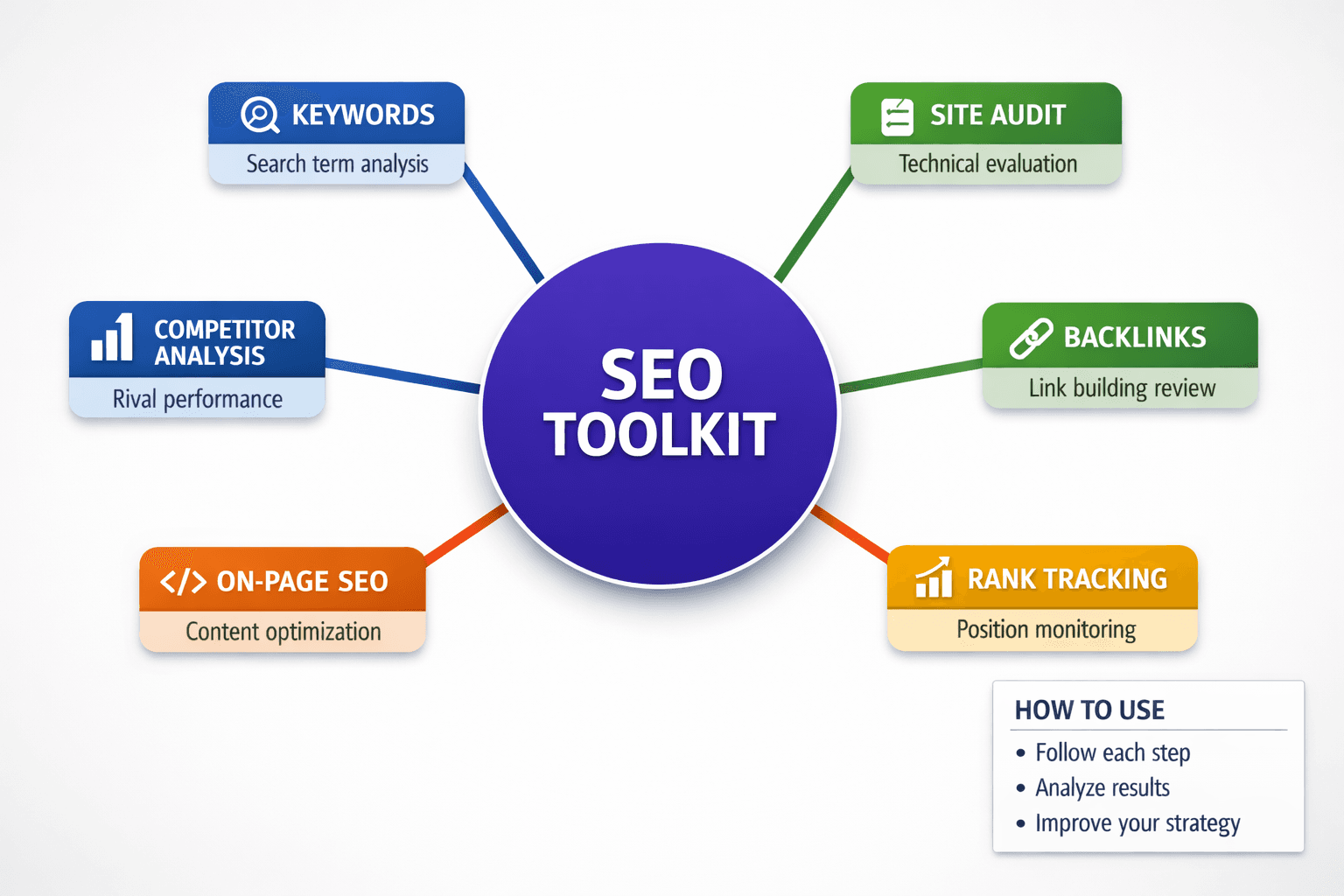
Traditional SEO tools are built to collect signals, flag issues, and organize opportunities across sites, search engines and reporting views. They are strong at analysis. They are weaker at execution. Unlike an autonomous seo agent, these platforms usually stop at insight and depend on people to decide what matters next and who will do it. That model still works well for teams that want direct control over every step (Semrush; Nightwatch).
For example, a platform may surface declining rankings, thin pages, and internal link gaps in one dashboard, but teams still need to act on those insights. The tool identifies the problem; humans execute the fix. Research from From traditional to AI-driven: How SEO is changing shows the shift from traditional methods to AI-led workflows has been building for 6 years.
Key Features
Most traditional suites cover the core research layer well. Common features include rank tracking, site audits, backlink analysis, keyword research, competitor monitoring, and reporting dashboards across web properties. In practice, SEO focuses on diagnosis first. Teams inspect crawl errors, compare competitors, watch keyword movement, and export reports for review (Huemor; Page One Power).
This depth matters for technical teams. It also explains why many companies still pair these tools with separate writing, project management, and publishing systems. Readers exploring audit-heavy workflows may also find The 4 Technical SEO Checks Every Developer Should Automate useful.
Strengths
The main advantage is flexibility. Skilled SEOs can dig deep, test assumptions, and build custom workflows around business needs. Manual tools are often better for experienced teams because those teams already know how to turn raw data into action. Where AI tools aim to reduce decisions, traditional platforms preserve them (Nightwatch; Semrush).
Mature products also tend to offer broader integrations and sharper specialization. One tool may excel at technical audits. Another may lead in link analysis or enterprise reporting. Data indicates adoption conversations are moving quickly, with From traditional to AI-driven: How SEO is changing published 5 days ago highlighting how active this transition remains.
Weaknesses
Manual execution is the bottleneck. After the audit, teams still need writers, editors, strategists, developers, or CMS managers to act. Tool sprawl adds friction. One system handles research, another handles content, and another handles reporting.
That raises cost and coordination load. It also slows response time when priorities change. For teams comparing automated audit options, OpenClaw for SEO: How to Automate Technical Audits with AI Agents offers a useful contrast.
Best For
Traditional SEO tools fit in-house SEO specialists, larger teams, and firms with defined approval chains. They also suit organizations that want maximum control over recommendations, timing, and rollout. In short, teams should choose traditional tools over an autonomous seo agent when they value precision, oversight, and custom process design more than hands-off operation.
Autonomous SEO Agent Comparison and Best Fit
| Criteria | Autonomous SEO Agent | Traditional SEO Tools |
| --- | --- | --- |
| Setup time | Moderate upfront setup | Usually faster initial setup |
| Automation depth | High across workflows | Low to moderate |
| Decision-making | Prioritizes and acts on goals | Surfaces data for human review |
| Content production | Built into the workflow | Often handled outside the platform |
| Publishing | Commonly integrated or assisted | Usually manual or separate |
| Reporting | Continuous and tied to actions | Strong dashboards and diagnostics |
| Pricing model | Software plus automation value | Software subscription first |
| Team involvement | Lower ongoing effort | Higher ongoing effort |
| Control level | Guided control with review points | Maximum manual control |
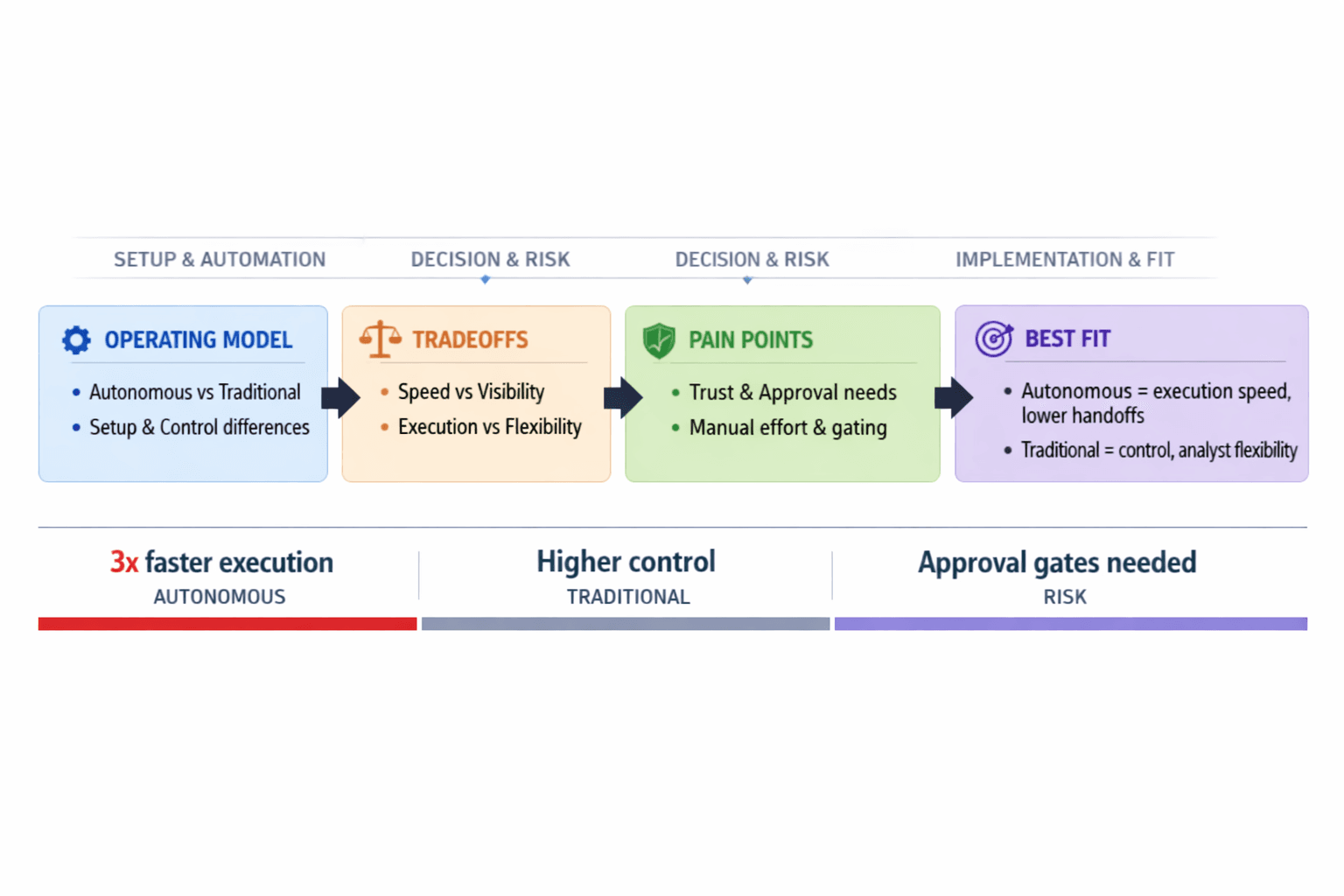
The tradeoff is clear: autonomous systems compress the workflow and prioritize execution speed, while traditional suites expand visibility and preserve analyst flexibility.
Pain points also differ by model. Autonomous agents raise trust questions early. Teams may want approval gates, brand checks, and extra review for edge cases. That matters for regulated content, high-value pages, and complex site structures. Traditional tools create a different burden. The software may identify the right move, but execution stalls when teams lack writers, strategists, developers, or operators. Work then spreads across multiple tools and owners, which slows output and weakens accountability.
Pricing looks different when viewed in practical terms. An autonomous platform may carry a higher subscription fee than a standard dashboard tool. Yet software cost alone rarely reflects the real spend. Manual stacks often require added budget for content writers, SEO leads, editors, publishing support, and reporting labor. In that model, the tool finds the work, but the team still performs it. Autonomous systems shift more of that burden into the product itself. Traditional tools keep labor outside the platform, which can work well for expert teams but less well for lean ones.
The learning curve follows the same pattern. Autonomous systems usually need clear goals, review rules, and content guardrails at the start. After that, ongoing workload drops. Manual suites are easier to access on day one, but they reward SEO expertise, process discipline, and steady operator time over the long run. In short, autonomous products reduce recurring effort. Traditional tools reward mature teams that know how to turn insight into action.
The best fit depends on team shape. Choose an autonomous seo agent when a lean team needs output, speed, and fewer handoffs. Choose traditional SEO tools when an expert-led team wants deep control over timing, methods, and approvals. Consider a hybrid model when governance is strict but execution capacity is limited. In that setup, the traditional suite informs oversight, while the autonomous seo agent handles production and routine execution.
The key takeaway is simple. Teams should compare labor model, not software labels. Scan the workflow, price the human effort, and match the system to the team’s actual capacity. The next phase of SEO will likely favor platforms that connect insight to execution with fewer gaps.
Want to learn more? Learn More to explore how Mygomseo can help.