AI Content Writer vs Human Editor: The Smartest Split of Work for Lean Teams
Is seo copywriting a speed game or a trust game? The answer is both, because teams now face pressure to scale content output while maintaining the quality, consistency, and brand trust that drive conversions. According to AI vs Human Writers: Complete Comparison Guide - founder/mode, AI can cut time-to-first-draft by 40% in the right workflow. But speed alone does not settle the human versus AI debate. A AI Content Writer vs Human Copywriter: Who Wins in 2025? study found 65% stronger results after AI drafts were refined by human editing. This comparison breaks down where AI should lead, where humans should step in, and how each model shapes speed, quality, ROI, and ai content strategy.
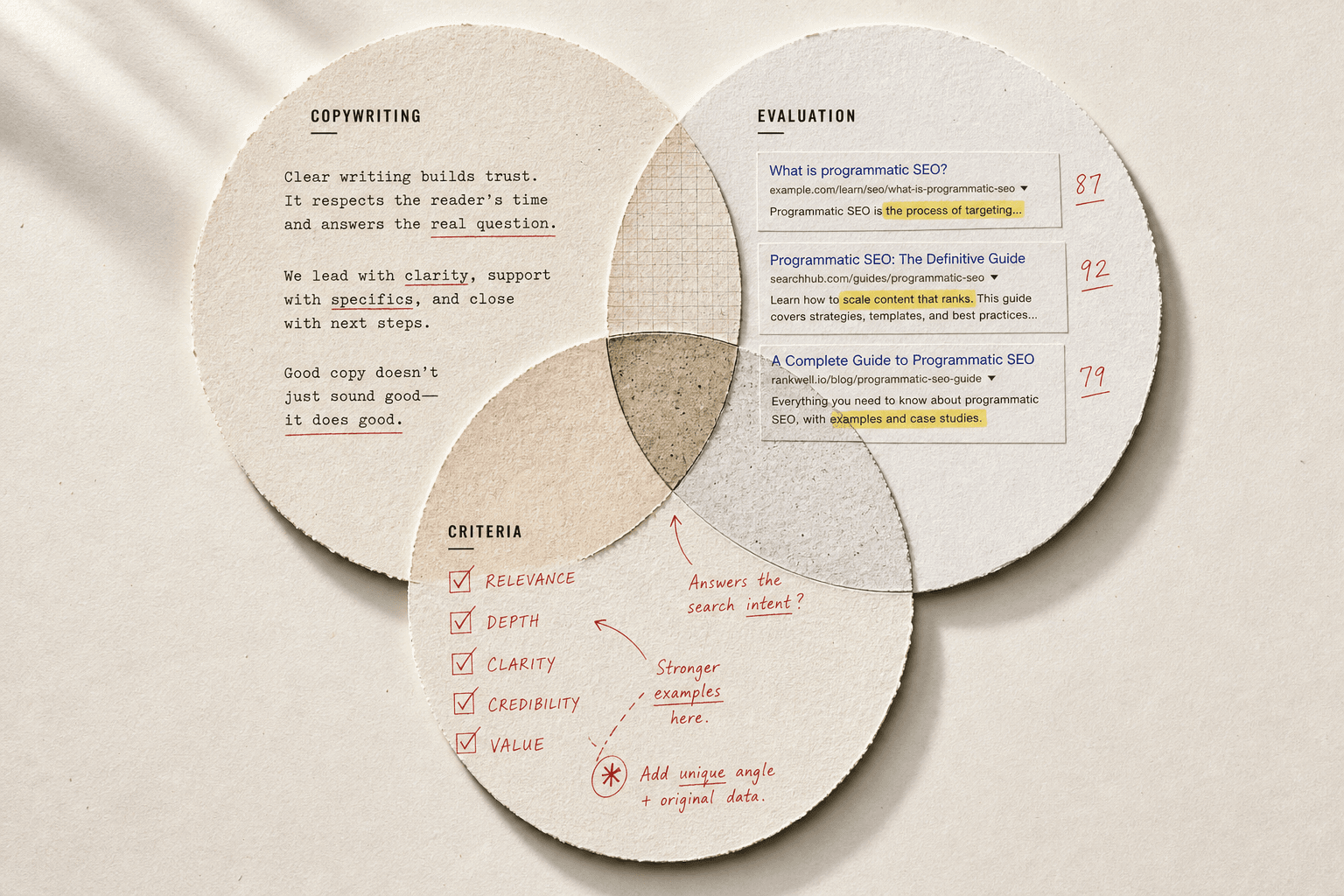
SEO Copywriting Evaluation Criteria
How This Comparison Measures Performance
The best workflow for seo copywriting starts with clear scoring rules. This comparison uses the same lens for each model. The criteria are speed, cost, consistency, search intent alignment, brand voice, editing load, and conversion potential.
That matters because output alone is not the real test. A fast draft can still slow the team later. For example, a cheap article that misses intent may need a full rewrite before publishing.
Performance also depends on the handoff inside the content workflow. One team may let AI draft, then send a strategist for intent checks, and an editor for final polish. Another may skip review, publish faster, and create rework when claims, tone, or structure miss the mark.
What Counts as Quality in SEO Copywriting
Quality in seo copywriting is not just clean grammar. For example, a SaaS homepage targeting enterprise buyers needs different proof points than a startup landing page - case studies and security compliance versus speed-to-value and free trials. Quality means the piece answers the query, matches the stage of buyer intent, sounds on-brand, and supports conversion. It also needs facts, logical structure, and a clear next step.
In practice, quality shows up in fewer revisions and smoother content production. For example, a strong draft gives the editor targeted fixes, not a blank-page rescue job. Research from AI Content Writer vs Human Copywriter: Who Wins in 2025? shows human-led work can drive 10x ROI in conversion-focused cases.
Why Brand Trust Changes the Decision
Brand trust changes the model choice because trust is fragile. While AI can help you rank faster through volume, a page that ranks but weakens credibility through generic tone or thin claims ultimately costs more in lost conversions than it saves in production time. That risk grows when review steps are vague.
This is why the article compares AI, human, and hybrid models with the same standards. There is no universal winner. According to AI Content Writer vs Human Copywriter: Who Wins in 2025?, human editing improved lead conversion by 22% in one comparison. Unlike single-model thinking, a hybrid setup can balance scale with judgment when handoffs stay clear.
SEO Copywriting Options Compared
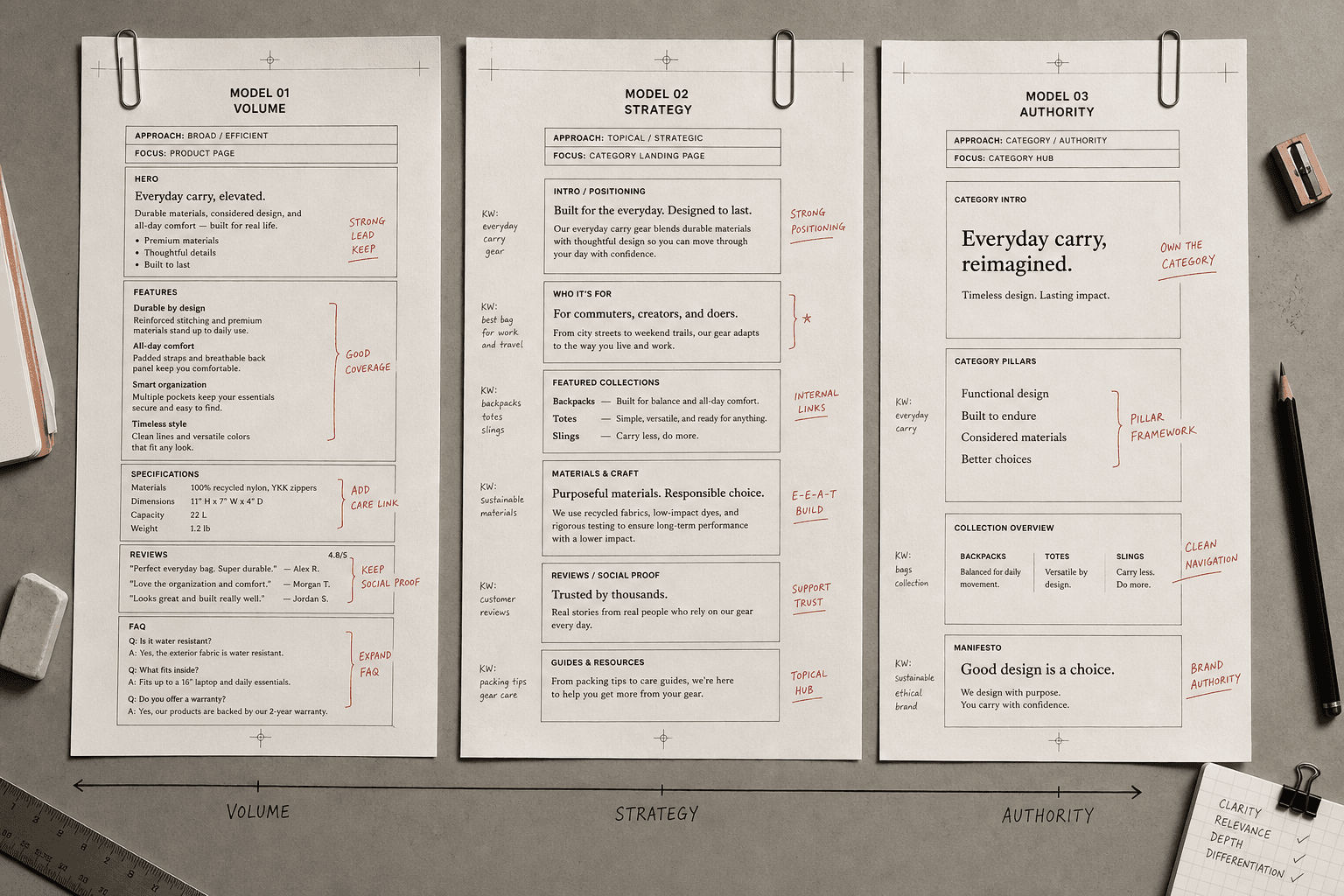
AI SEO Copywriting
Overview
AI SEO copywriting works best when speed and volume matter most. It can turn briefs, keyword clusters, and search intent signals into usable drafts fast. In practice, it acts like a production engine inside a larger content workflow.
Key Features
AI tools usually support topic research, outline generation, first drafts, and content refreshes. They are strong at pattern matching across large content sets. That makes them useful for repetitive content production, such as location pages, FAQ updates, and product description variants.
Strengths
The main advantage is scale. AI can produce multiple draft angles in minutes, which helps teams test structure and coverage before human review. For example, an ecommerce team can refresh hundreds of collection pages faster than a manual process would allow.
AI also helps standardize execution. If the brief is clear, it can keep headings, keyword use, and formatting consistent across a large batch. AI vs Human Writers: Complete Comparison Guide - founder/mode describes this as a practical edge for teams managing high output.
AI can support conversion work, but usually at the draft level. It can organize benefits, objections, and calls to action in a logical order. Research from AI Content Writer vs Human Copywriter: Who Wins in 2025? notes that human-edited AI content improved by 22%, which suggests AI can contribute when editing stays in the loop.
Weaknesses
Its limits show up in nuance. AI often misses emotional subtext, sharp positioning, and trust-sensitive wording. That matters in industries where claims, tone, or buyer hesitation carry more weight than surface-level relevance.
Originality is another weak point. AI can remix familiar patterns well, but it may flatten ideas into safe language. Despite popular belief, Google does not penalize content just because AI wrote it. Google focuses on helpful, reliable content, not the production method. The issue is quality control, not authorship.
AI also needs oversight for facts and brand fit. A Zapier survey found that only 2% of AI-generated output is usable without revision, highlighting the critical role of human oversight. That reinforces a simple point: AI is good for draft speed, not final trust.
Best For
AI is best for teams that need volume, fast refresh cycles, and repeatable formats. It fits list pages, support articles, metadata, and structured landing page drafts. It is less suited to founder stories, sensitive claims, or brand-defining pages.
Human SEO Copywriting
Overview
Human SEO copywriting is strongest when business context shapes the message. It connects research with judgment, interviews, and positioning choices. In this model, the writer does more than draft. The writer interprets what the market needs to hear.
Key Features
Human-led work usually includes expert interviews, message strategy, brand voice development, and editorial judgment. It is better at reading tone, friction, and audience hesitation. That makes it useful when search intent alone does not explain why someone buys.
Strengths
Humans bring context that tools still struggle to infer. A writer can hear a founder explain a product, spot a stronger angle, and rebuild the page around that insight. For example, a cybersecurity firm may need language that sounds credible to buyers but still clear to nontechnical stakeholders.
This approach also protects brand trust. Strong human writers adjust wording for risk, credibility, and differentiation. AI vs Human Content: Finding the Balance emphasizes that human input remains important where persuasion and brand voice carry more value than raw speed.
Human writers are also better at strategic restraint. They know when not to chase a keyword if it weakens positioning. In seo copywriting, that judgment often separates traffic content from revenue content.
Weaknesses
The trade-off is speed. Human work takes longer because it depends on research, interviews, drafting, and revision. That slows output and makes large-scale content production harder to sustain.
Cost also rises with complexity. A strong writer can handle strategy and execution, but that skill is not cheap. Unlike AI systems, human teams are harder to scale quickly across dozens of similar pages.
Best For
Human-led work is best for homepage copy, sales pages, thought leadership, and interview-based content. It fits brands that compete on trust, expertise, or a distinct point of view. It is less efficient for high-volume refresh work.
Hybrid SEO Copywriting
Overview
Hybrid SEO copywriting uses a handoff model. AI handles research support, outlines, and early drafts. Humans then refine messaging, check facts, and shape the final version for clarity and trust.
Key Features
This model splits labor by task type. AI speeds up the first pass. Humans handle judgment-heavy work, including positioning, examples, and final polish. In practice, it functions like a relay race, not a solo run.
Strengths
The hybrid model balances speed with control. It reduces blank-page time while keeping humans in charge of message quality. That makes it practical for teams building an ai content strategy without handing the whole process to software.
It also improves handoffs when roles are clear. For example, AI can assemble a search-informed outline, while an editor rewrites claims, tightens voice, and checks evidence before publishing. AI vs Human Strategy: Finding the Perfect Content Balance presents this mixed model as the most workable path for many teams.
Weaknesses
Hybrid systems can fail if ownership is unclear. If AI drafts too much and editors only skim, weak content slips through. If humans rewrite everything from scratch, the speed gains disappear.
This model also needs process discipline. Teams must define who briefs, who edits, and who approves. Without that structure, the content workflow becomes messy instead of efficient.
Best For
Hybrid works best for companies that want scale without losing brand control. It suits blog programs, landing page batches, and mid-funnel assets that need both speed and judgment. For most teams, it offers the clearest answer to whether AI is good for SEO content that converts: yes, but usually with a human finishing the job.
Common Pain Points in Content Workflow
Where AI Led Workflows Break
AI-led systems move fast, but speed can hide drift. A draft may match the keyword and still miss the brand. For example, a finance startup may get clean copy that sounds like a generic software blog. That gap is why AI content still needs human editing.
Human review catches tone issues, weak claims, and search intent misses. It also checks facts before publishing. Research from AI vs Human Writers: Complete Comparison Guide - founder/mode shows teams can target up to a 70% reduction in time with hybrid workflows, but only when review steps stay clear.
Where Human Led Workflows Slow Down
Human-led work protects nuance, but it often creates queue problems. One strategist waits on a brief. One writer waits on feedback. One editor blocks publishing for the whole week. For example, a B2B company preparing for a product launch may need eight supporting articles, but with a single subject matter expert reviewing every piece, the bottleneck turns a two-week sprint into a six-week delay. Content production slows because too much knowledge sits with too few people.
This gets worse in small teams. For example, a founder may approve every page personally. Quality stays high, but output drops fast. In seo copywriting, that means missed refresh cycles, delayed campaigns, and uneven publishing rhythm.
Why Hybrid Handoffs Fail
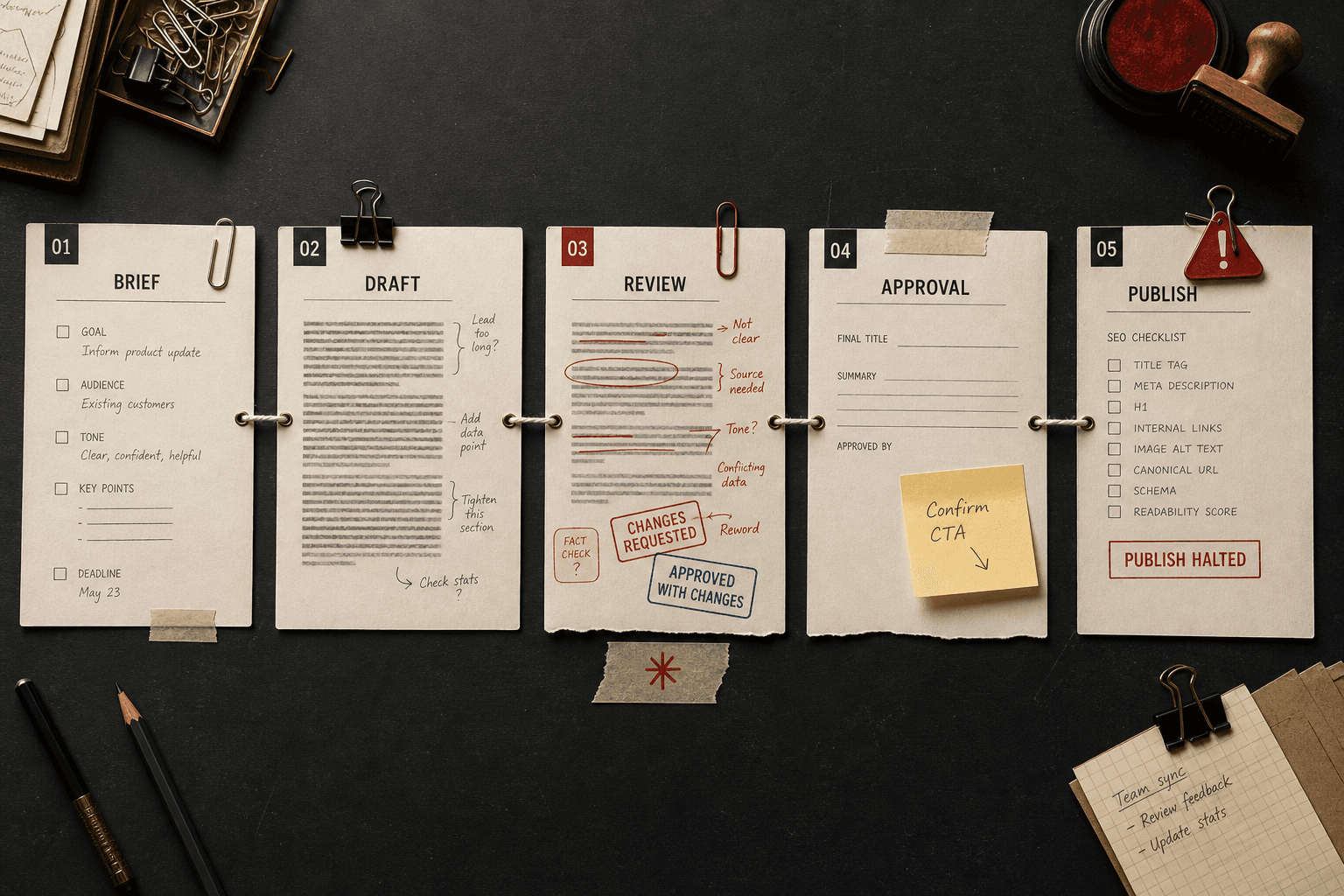
Hybrid models often fail at the seam. AI writes the first pass. A human edits the middle. Another person publishes the final version. If nobody owns the full path, gaps appear. Titles change, links break, and brand claims slip through without final review.
The biggest mistakes in SEO copywriting workflows are simple. Teams leave ownership vague. They mix drafting, approval, and publishing into one messy step. AI vs Human Content: Finding the Balance found that 30% of marketers still worry about quality and authenticity with AI content, which explains why unclear handoffs can damage trust.
- AI-led — Speed: High · Quality: Medium · Cost: Low · Trust: Medium-low · Editing effort: High · Best use case: Drafts, updates, scaled content
- Human-led — Speed: Low · Quality: High · Cost: High · Trust: High · Editing effort: Medium · Best use case: Messaging, positioning, trust-sensitive pages
- Hybrid — Speed: Medium-high · Quality: High · Cost: Medium · Trust: High · Editing effort: Medium-high · Best use case: Teams needing scale with control
A healthy content workflow solves more than writing speed. It defines who briefs, who edits, who approves, and who publishes. Without that structure, AI creates noise, humans create bottlenecks, and hybrid systems create confusion.
Best SEO Copywriting Fit by Scenario
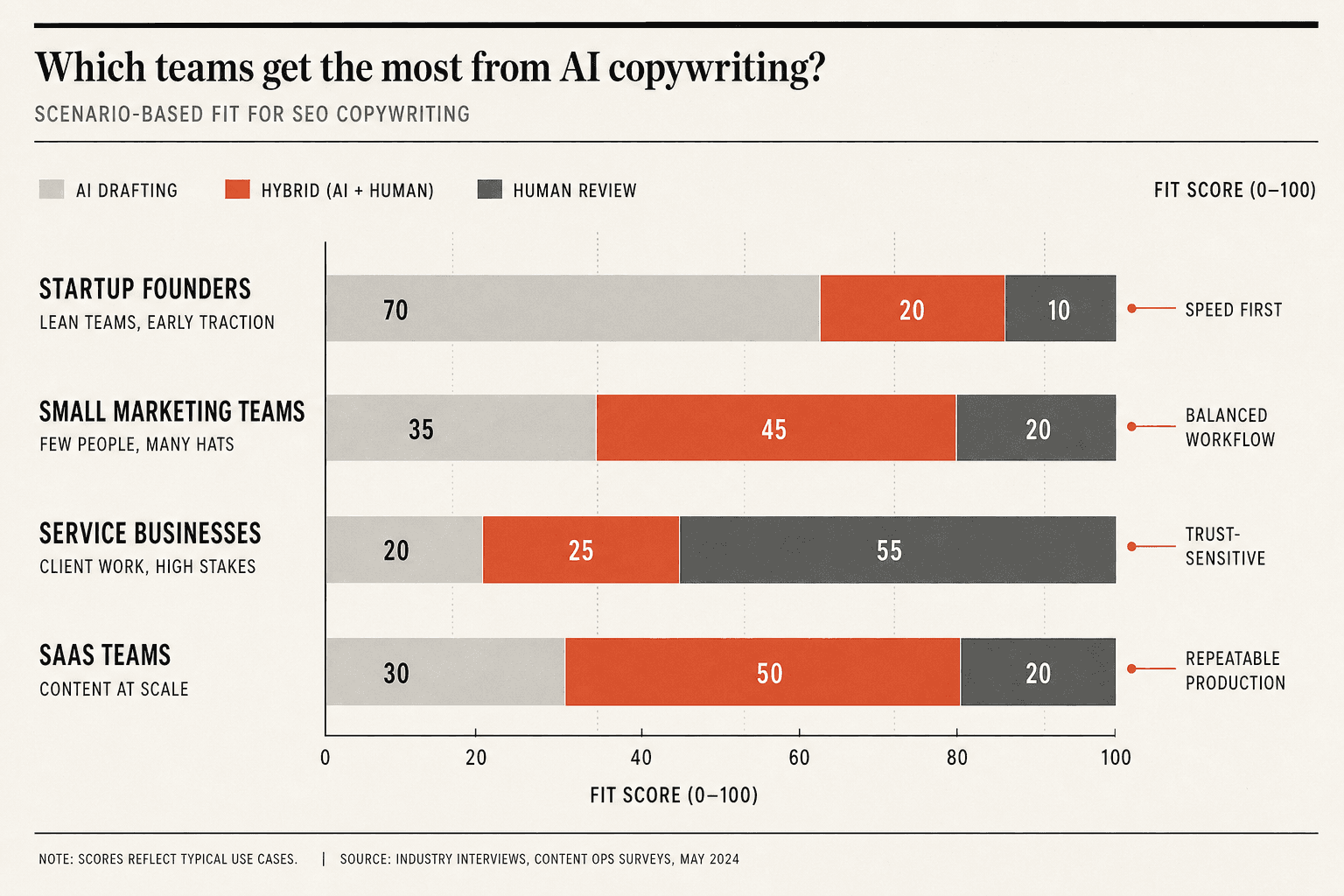
That split works well by business type. Startup founders often need speed first, so AI can handle early blog drafts, basic landing page variants, and topic expansion. Small marketing teams usually need balance, which makes a hybrid content workflow the safer choice. Service businesses need strong claims, clear positioning, and local trust signals, so human review should stay close to the final copy. SaaS companies building repeatable content production often benefit most from a structured hybrid model, where AI supports briefs, outlines, and draft development while humans shape messaging, proof, and conversion logic.
The practical move is to stop debating tools in the abstract. Start by defining handoff rules. Decide what AI owns, what humans approve, and what never ships without review. Add checkpoints for facts, brand voice, search intent, and legal or trust-sensitive claims. Then build an ai content strategy around those rules, not around hype. Strong systems protect quality because they make ownership clear.
In practice, the best model is the one that matches the page type, the team capacity, and the risk level. If the goal is scale, let AI lead. If the goal is persuasion, let humans lead. If the goal is steady growth without chaos, use a hybrid system and make the handoff airtight.
The teams that win next will not choose between speed and trust. They will design a content workflow that keeps both. Want to learn more? Learn More to explore how this can work in practice.