Most SEO Dashboards Are Too Polite: They Show Data, Not Decisions
Decision making breaks when dashboards stop at reporting. Teams get more charts, more tabs, and less clarity on what to do next. According to Samuel Atam, some dashboards take 6 weeks to build and still fail to drive action. That is the problem in marketing right now. Lean teams are buried in graphs but still lose hours choosing the next move.
Modern teams need dashboards that tell them what to act on next and why it matters now. The best systems don't just report traffic, rankings, or content output - they surface the specific actions that will move the needle.
This matters because speed wins. We will show why most dashboards fail, what we built instead, and how action-led reporting improves outcomes for SEO and AI marketing teams.
Why Decision Making Fails When Dashboards Just Report
Reporting tells us what happened not what to do
Reporting has value. It gives visibility. But visibility is not action. A dashboard that only says traffic dropped, rankings stalled, or conversions dipped still leaves the hardest question unanswered: what should we do next?
That is where most teams get stuck. The dashboard shows the problem, then pushes interpretation into Slack, meetings, and side comments. For SMB teams, that delay hurts more. They rarely have an analyst sitting nearby to turn seo reporting into a clear priority list.
We learned this the hard way. One review session looked polished on screen. The data visualization was clean. The lines were sharp. Then the room went quiet. Everyone could see the decline, yet nobody agreed on the first move. The dashboard had reported the issue, but it had not reduced the work of thinking.
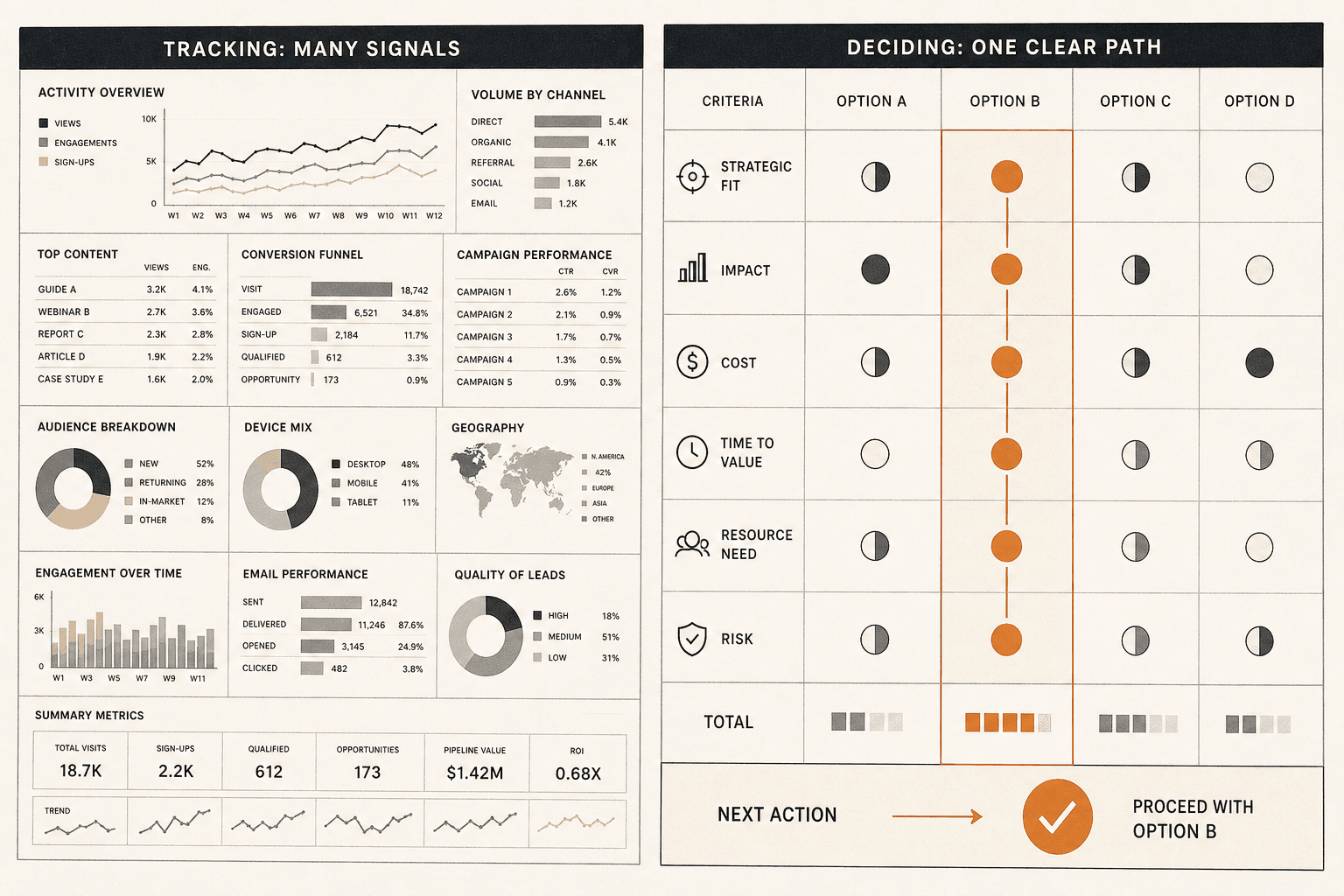
A useful dashboard should shorten the path from signal to response. It should show what changed, why it matters now, and which action deserves attention first. That is how dashboards improve decision making in practice.
For a visual walkthrough of this process, check out this tutorial from Maven Analytics:
Pretty charts create false confidence
Good dashboard design can make weak thinking look credible. That is the trap. Clean layouts and polished graphs often create the feeling of control before a team has any real direction. As Samuel Atam argues, dashboards fail when they stop at display and never guide action.
We believe an actionable dashboard does four things fast:
- It highlights the metric that changed.
- It adds context around impact and urgency.
- It recommends the next action.
- It shows who should act.
That is why I prefer focused reporting over metric sprawl. Fewer charts often create better decisions. Tools like Looker Studio can help implement this approach when configured thoughtfully.
Lagging metrics slow urgent decisions
Lagging metrics matter, but they rarely help in urgent moments. By the time a monthly summary confirms a drop, the team has already lost time. Research from Instagram shows high-performing systems can improve outcomes by 9x, but only when people act fast enough to use the signal.
If a dashboard forces someone to scan ten metrics before acting, it has failed. The job is not more reporting. The job is less cognitive load. Leaders should stop rewarding dashboards that look complete and start demanding dashboards that tell teams what to do next.
Current State of Dashboard Design and SEO Reporting
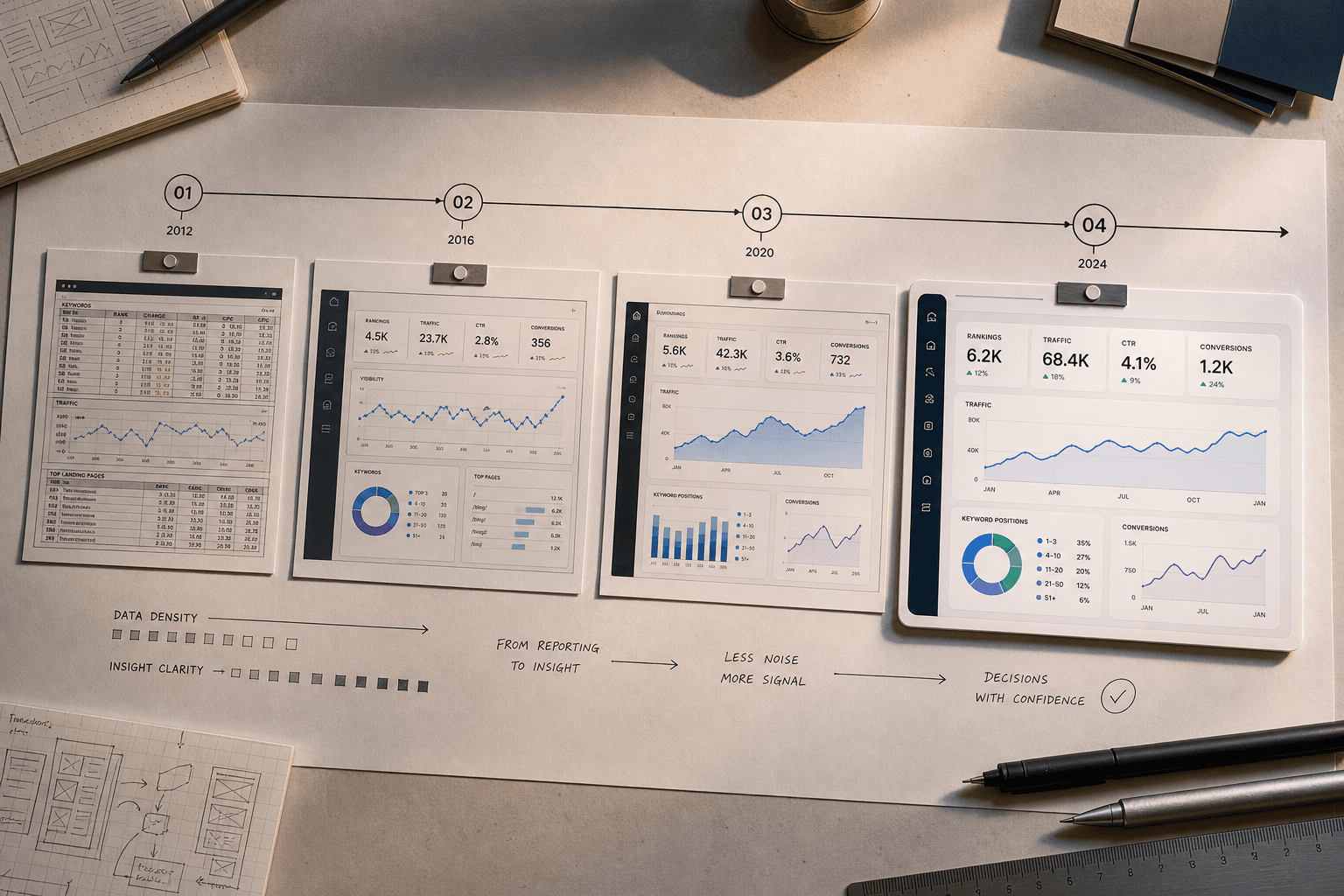
The industry still rewards visibility over clarity
The market still treats more visibility like progress. I think that is backwards. Strong data visualization matters for decision making because it should reduce doubt, not decorate it. When teams can see everything but still cannot choose, the dashboard design has failed.
We see this all the time. A team opens a polished report, scrolls through trend lines, then asks the same question anyway: what should we do first? That gap is the real problem. As Samuel Atam argues, even good dashboards fail when they stop at display and never create action (Why Good Dashboards Still Fail to Drive Decisions).
The charts were not broken. The numbers were not missing. But nothing in the dashboard told us which move had the highest upside that day.
SEO reporting is full of summaries and thin on direction
This problem gets sharper in seo reporting. Most teams track rankings, clicks, traffic, and conversions with discipline. That sounds mature. In practice, it often creates a neat archive of what happened, not a clear answer on what to do next.
A report might show a drop in non-brand clicks, a rise in impressions, and flat conversions. Useful? Yes. Useful enough for decision making? Not by itself. Without a recommended next step, teams stall, debate, and lose momentum.
That is why I believe better reporting needs stronger interpretation. A summary should lead to priority. If it does not, it belongs in storage, not in a weekly workflow. This is also why tailored systems like Bespoke Looker Studio Reports and Dashboards matter more than generic exports.
AI is increasing output but not improving priorities
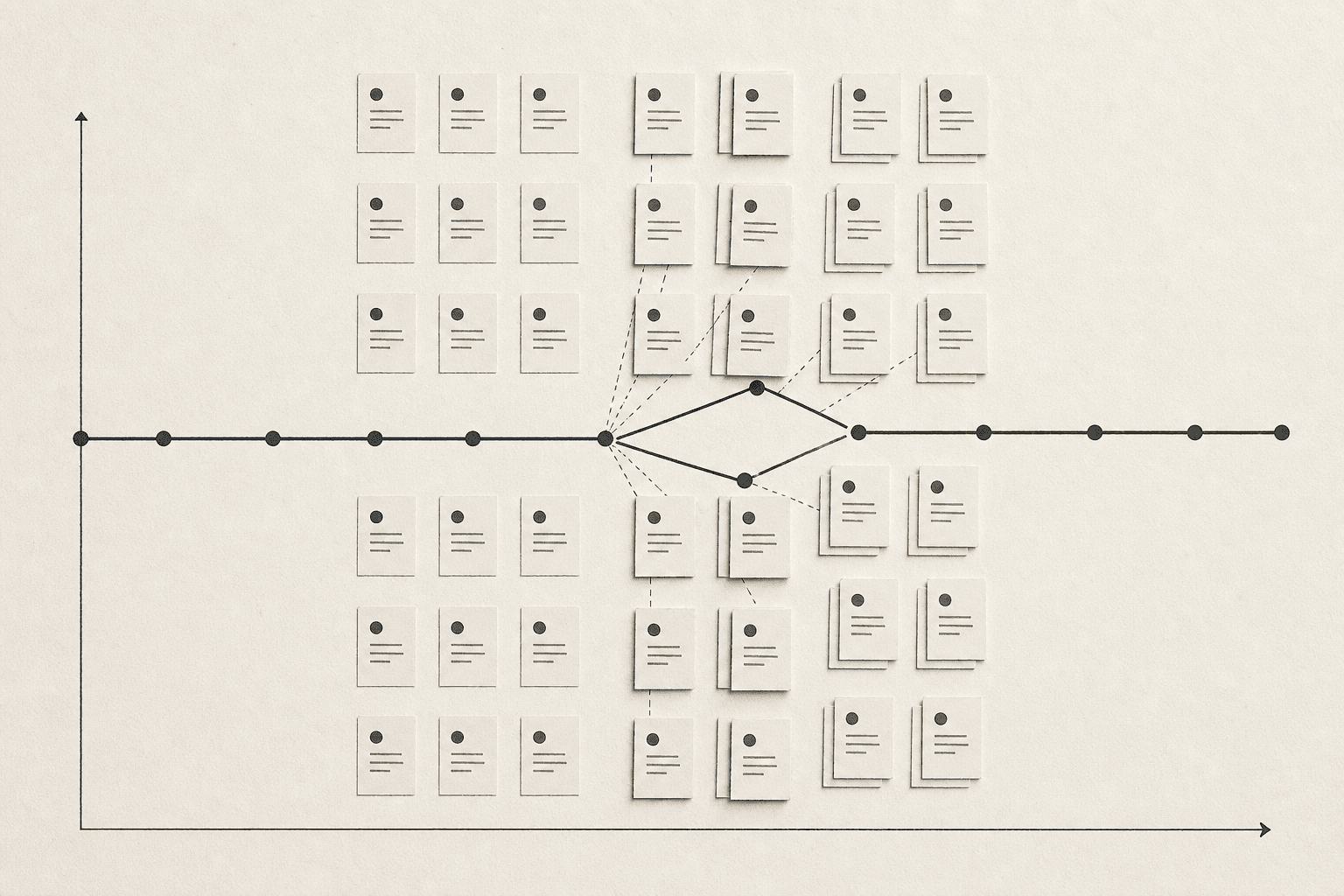
AI made reporting faster. It also made weak dashboard design more dangerous. Teams now publish more pages, test more angles, and generate more campaign activity, but they do not gain more time to interpret the signals.
Research from Instagram shows 2X. Instagram found 3X. According to Instagram, 7x. The exact claim matters less here than the pattern: output is rising faster than human attention.
That is the current state. Tools automate collection well. Few automate strategic recommendations with enough confidence to be trusted. Leaders should stop rewarding dashboards for completeness and start demanding guidance, urgency, and a reason to act now.
Our Perspective on Data Visualization That Triggers Action
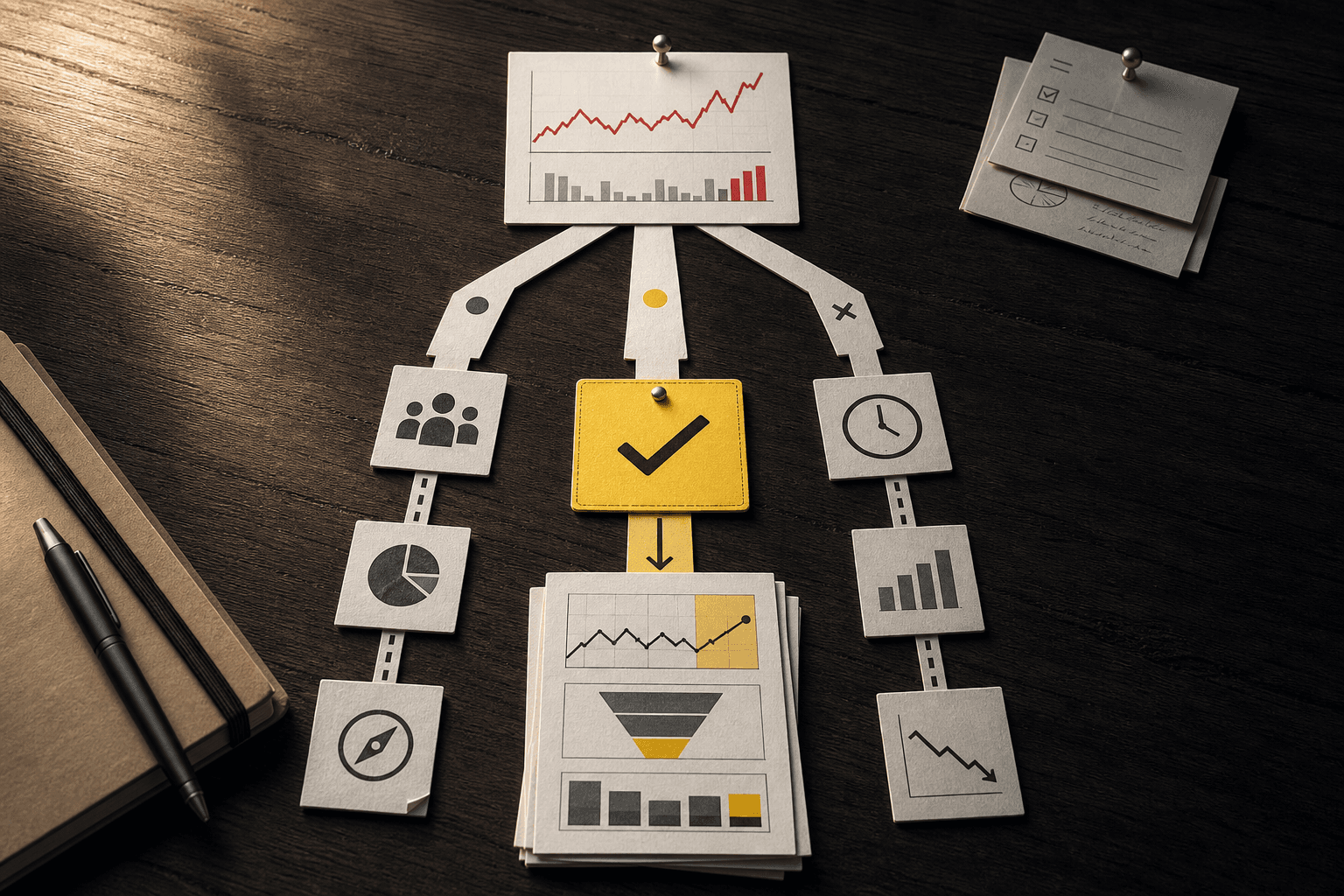
We built around decisions not dashboards
We learned this the hard way. Last quarter, our content team faced this exact problem. We'd just published 14 high-intent pages targeting SaaS buyers. Traffic impressions jumped 47%, but clicks stayed flat at 2.1%. We spent 20 minutes staring at the dashboard, debating whether to revise meta descriptions, adjust the content angle, or wait for Google to settle. The dashboard showed the problem clearly. It gave us zero guidance on what to try first.
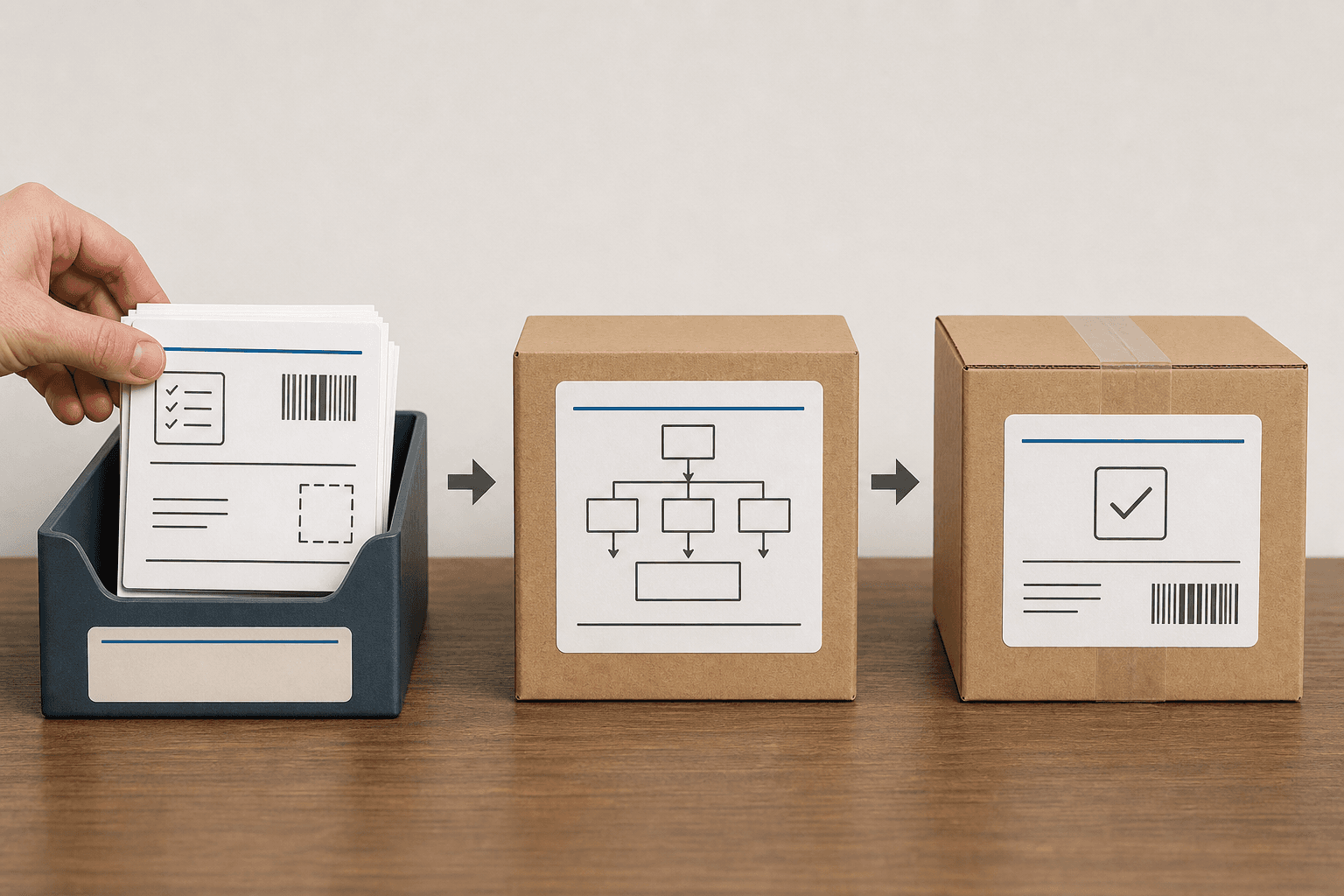
That moment changed how we build. We stopped asking which widgets to show first. We started asking which action the team should take first. That shift turned decision making from a reporting problem into a workflow problem.
So our system starts before the visual layer. We define triggers, thresholds, and likely actions first. Then we shape the interface around those choices. That is also why generic Bespoke Google Data Studio Reports and Dashboards often need more strategy built into them.
Every metric needs a recommendation layer
A metric without guidance is just a pause button. We believe the job of seo reporting is not to display more numbers. It is to compress judgment into a usable next move.
Each performance signal in our system connects to three things. First, a recommendation. Second, a confidence level. Third, a business reason. Teams should see not only what changed, but why it matters now.
That output needs to be practical. Update this page. Publish this cluster. Refresh this social post. Fix this drop before traffic compounds downward. As Samuel Atam argues in Why Good Dashboards Still Fail to Drive Decisions, dashboards fail when they stop at visibility and never push users toward action.
Some teams want full context before they move. We get that instinct. But lean teams rarely have that luxury. A recommendation layer beats another filter menu every time. It gives speed a structure.
Urgency beats completeness for lean teams
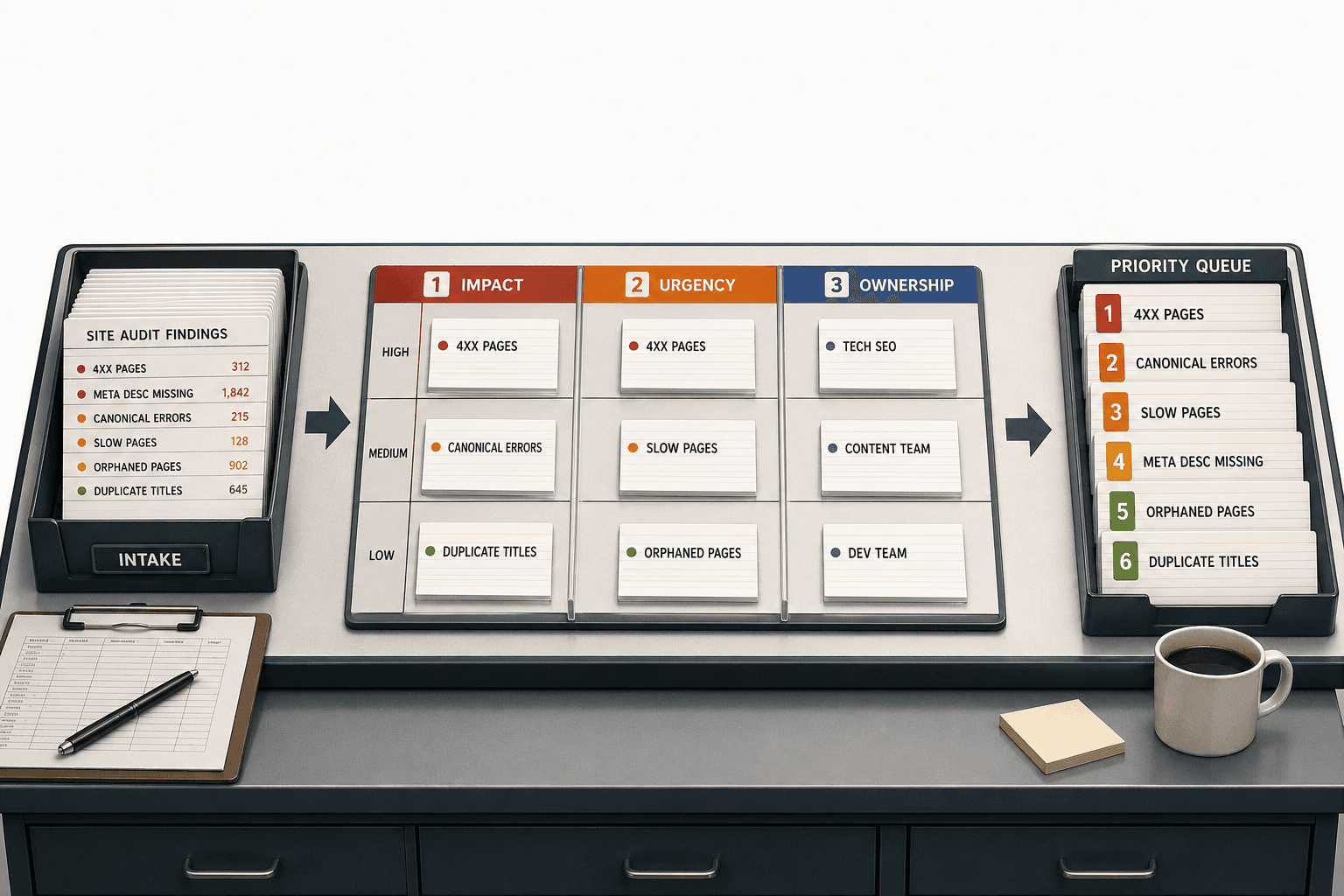
Most small teams do not need a prettier wall of charts. They need a faster way to know what deserves attention today. That is why our dashboard design favors urgency over completeness.
We rank signals by likely impact and timing. A mild traffic dip can wait. A sudden drop on a high-intent page cannot. In practice, that makes data visualization feel less like a report and more like an operating system.
The broader lesson is simple. Decision making improves when dashboards stop acting like archives. Leaders should build tools that tell teams what to do next, why it matters now, and what happens if they wait. If you want deeper reporting structure, Bespoke Looker Studio Reports and Dashboards offer one path - but the system behind them must be built for action first.
The Evidence Our Results and What Leaders Should Do Next
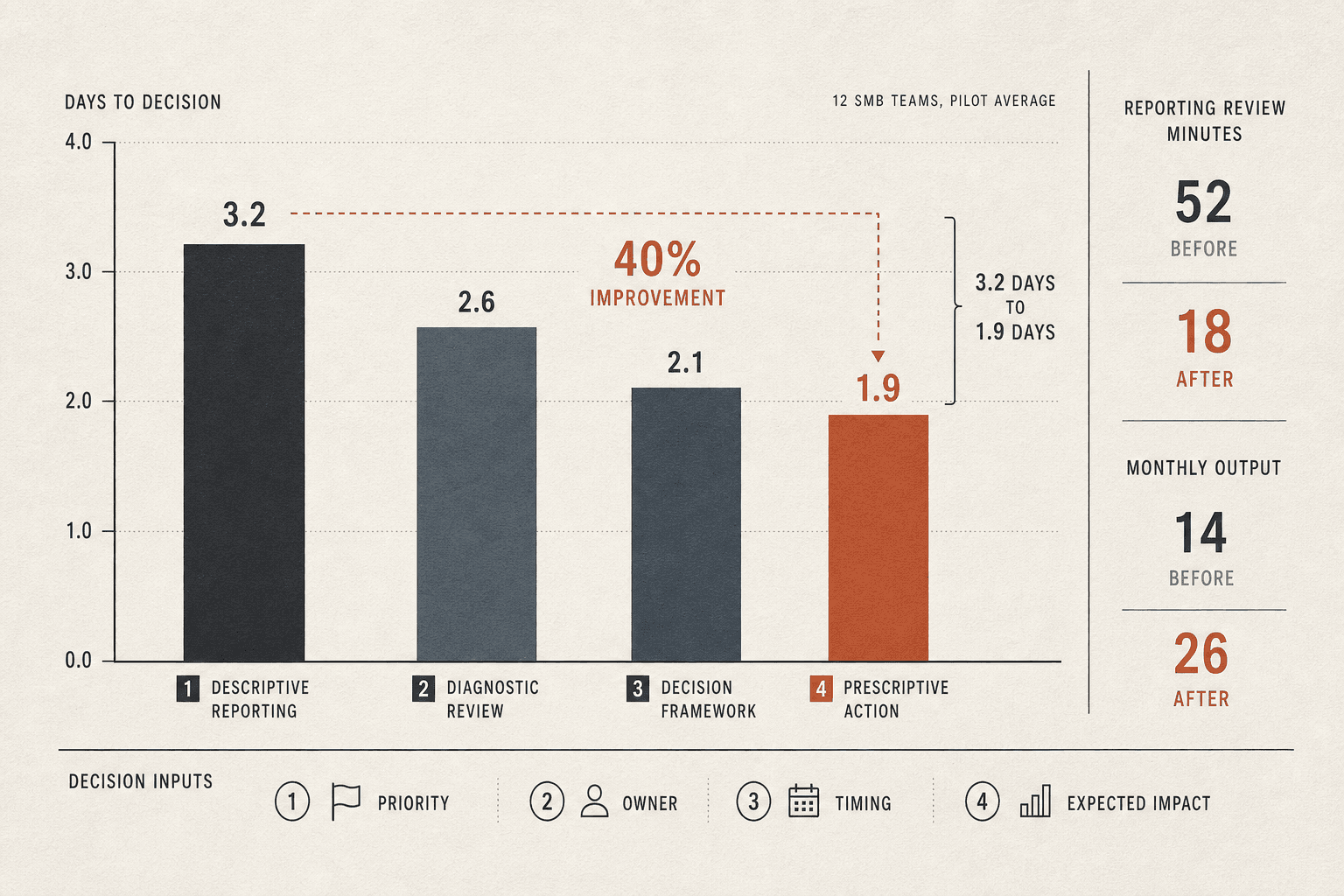
That matters because hesitation is the hidden tax inside most dashboards. Teams open the report, scan the metrics, flag a few issues, and still leave without a clear next move. Then the real decision making happens somewhere else. It moves into Slack threads, status calls, side docs, and backlog meetings. By the time someone picks a priority, the moment has passed. Rankings slip further. Decaying pages stay stale. Ready-to-publish content sits idle. What looks like a reporting problem is really an execution problem.
We learned that once recommendations sit inside the workflow, the pace changes. Teams stop treating dashboards like review decks. They start using them like operating systems. A page with strong opportunity and clear decay signals gets refreshed. A cluster with high readiness gets published. A trend with urgency gets assigned before it cools off. That is the kind of decision making most marketing teams actually need. Not more visibility. More momentum.
Some leaders push back here. They worry that recommendation logic can flatten nuance. That concern is fair. Strategy should never become blind automation. But that objection misses the larger issue. Most teams are not suffering from too much prescription. They are suffering from stalled action. A vague dashboard preserves optionality, but it also preserves drift. And drift is expensive. If the system never turns evidence into priorities, owners, and timing, it is not protecting strategy. It is delaying it.
This is why we believe the future of decision making is prescriptive, not descriptive. Reporting alone made sense when data was scarce and analysis was the bottleneck. That world is gone. Today, the bottleneck is attention. Teams already have more metrics than they can use. AI will only increase that flood. In that environment, the value of dashboard design will not come from showing everything. It will come from narrowing the field to the few actions that deserve immediate effort.
That shift will separate teams that move from teams that watch. The winners will not be the ones with the most elaborate seo reporting stack. They will be the ones that connect signals to action with enough clarity that execution becomes the default. We think leaders should start redesigning reporting around four things: priority, owner, timing, and expected impact.
- Priority answers what matters most right now.
- Owner removes the dead space between insight and action.
- Timing adds urgency before opportunity fades.
- Expected impact helps teams choose confidently, not politically.
If those four pieces are missing, the dashboard is still asking people to do the hardest part alone. That is the old model. It does not hold up anymore.
Strong data visualization reduces judgment friction. Dashboard design should speed decisions, not create more meetings. And the best reporting? It stops acting like a mirror and starts acting like a guide - one that improves decision making.
If your team keeps reviewing data but struggles to move, stop asking for more charts and start demanding recommendations built for action. The teams that win in the next five years won't be those with the most data. They'll be those who turn signals into action fastest. That shift starts with rethinking what dashboards should do: not report what happened, but guide what happens next. Learn More.