The Approval Bottleneck: Why Great Content Still Misses Its Publish Date

Content operations breaks when drafts bounce between reviewers with no clear owner. Growing teams lose speed when comments live everywhere and expectations change by reviewer. EasyContent's research on content sign-off processes shows teams should set a 48-hour feedback window, yet many still let approvals drag. That kills momentum fast.
We rebuilt our process at Mygomseo to cut the noise. We used clearer ownership, tighter draft structure, and brand trained AI support.
This matters because slow review loops do not just waste time. Data from Content Sign-Off Process Without Approval Bottlenecks shows some teams aim for 500 pieces a month, which makes friction impossible to ignore. In this guide, we’ll show you how to find the real bottlenecks, fix the workflow, and publish faster without adding headcount.
Root Cause Analysis for Content Operations Delays
The symptoms teams notice first
The first signs look small. Then they start wrecking your week. A draft gets comments in email, Slack, and docs. Nobody knows which note matters most.
You see endless revision rounds. Feedback stays vague. One reviewer wants more brand voice. Another wants less opinion. A third rewrites the intro without context.
Then duplicate edits pile up. Publish dates slip. Content sits in approval limbo while everyone waits for someone else to decide. In content operations, that drag feels normal until it starts hurting output.
We felt this in one ugly sprint. A blog was marked “almost done” on Tuesday. By Friday, it had four versions, two conflicting CTAs, and no final owner. The problem was not effort. The problem was chaos.
The business impact of slow reviews
Slow reviews do more than annoy your team. They slow campaigns, reduce organic velocity, and delay social distribution. Writers burn hours on rework instead of new drafts.
That waste adds up fast. According to Content Approvals Are Slowing You Down - Here's the Fix - zipBoard, inefficient approval processes consume significant work time and cause teams to miss publishing deadlines. That means lost momentum, weaker launches, and stale timing.
Stakeholders feel it too. Marketing waits on legal. Social waits on marketing. Sales waits on updated assets. If your Content Marketing pipeline depends on timing, slow approvals quietly cut performance.
According to zipBoard's research on content approvals, streamlined workflows can cut review time by up to 60%. That gap is not minor. It is the difference between shipping consistently and missing the moment.
What most teams get wrong about the cause
Why does content approval take so long? Most teams blame people. They assume writers need tighter deadlines, or reviewers need more reminders. We do not buy that.
The real bottleneck in content operations is usually a weak content approval workflow. There is no clear owner. Review steps are fuzzy. Feedback is not tied to brand rules, campaign goals, or a simple decision framework.
That is why quick fixes fail. Adding more reviewers creates more opinions. Chasing approvals harder creates more noise. Expecting a writer or an ai content writer to guess each stakeholder’s preferences just creates another rewrite.
What causes bottlenecks in content operations? Vague ownership, unclear criteria, and a broken marketing workflow. The team is not lazy. The system is asking people to make decisions without shared rules.
The research confirms this pattern: slow sign-off comes from unclear stages and decision rights, not lack of effort. Fix the workflow first. Then the team can move.
Content Operations Fix Starts With Better Marketing Workflow
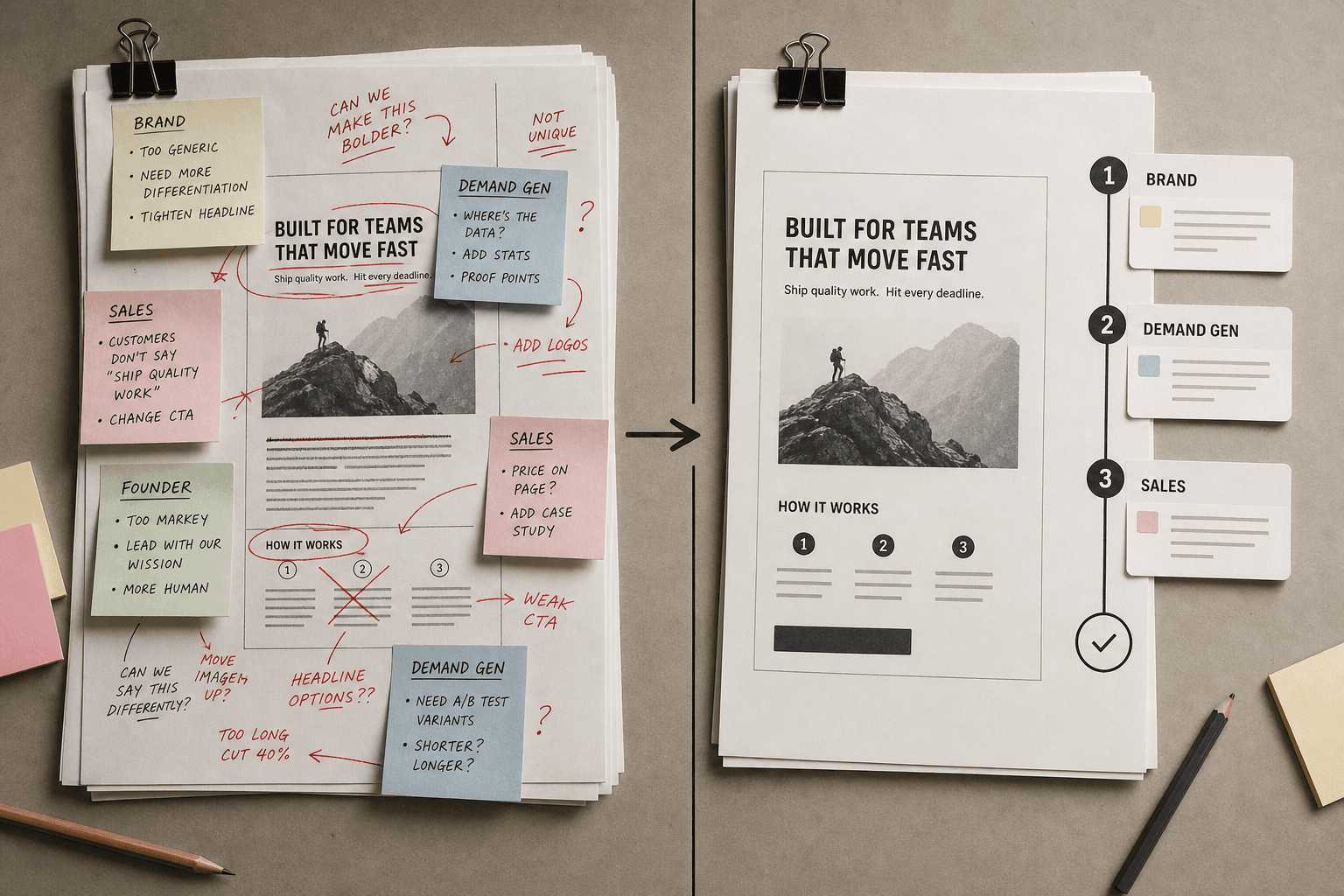
We learned this the hard way. One Monday, a draft came back with comments from brand, demand gen, sales, and the founder. Every note pulled in a different direction. The writer was not blocked by effort. The writer was blocked by ambiguity.
Define one owner at each stage
Each stage needs one owner. Not three. Not a group chat. One person writes the brief, another approves strategy, and a third checks brand. Final sign-off goes to a single approver. That simple rule cuts conflict fast.
This is the core fix for a broken content approval workflow. You need one source of truth, one decision maker per stage, and clear handoffs between stages. Content Sign-Off Process Without Approval Bottlenecks makes the same point: approvals slow down when too many people can change direction at once.
Research from Content Approvals Are Slowing You Down - Here's the Fix - zipBoard shows inefficient approval processes consume significant work time and drain team morale. That matters because messy reviews drain energy before they drain timelines.
Standardize the draft before review starts
Most review pain starts before review. If the first draft lacks structure, every reviewer fills the gaps with opinion. So we standardize the draft before anyone comments. That shrinks the review surface area.
Our required draft fields are simple:
- Goal
- Audience
- Angle
- CTA
- Target keyword
- Brand notes
- Claims checklist
That framework keeps the marketing workflow focused. It also gives an ai content writer better rails. If the brief is sharp, the draft starts closer to done. For teams building repeatable Content Marketing, that consistency compounds fast.
For a visual walkthrough of this process, check out this tutorial from orenmeetsworld:
Reduce opinion driven feedback
We split review into layers. Strategic review comes first. Brand review comes second. Final approval comes last. That order matters because feedback should stack, not collide.
Strategic review checks fit, audience, and angle. Brand review checks tone, claims, and wording. Final approval checks risk and readiness to publish. Compliance Bottleneck Myth: Why Workflow Is the Real Issue supports this idea: the bottleneck is usually workflow design, not review itself.
Content Approvals Are Slowing You Down - Here's the Fix - zipBoard found inefficient processes consume significant work time. Our answer is blunt: if you want better content operations without more hires, remove ambiguity first.
How We Built a Faster Content Approval Workflow With AI Content Writer
Our stack and process rules
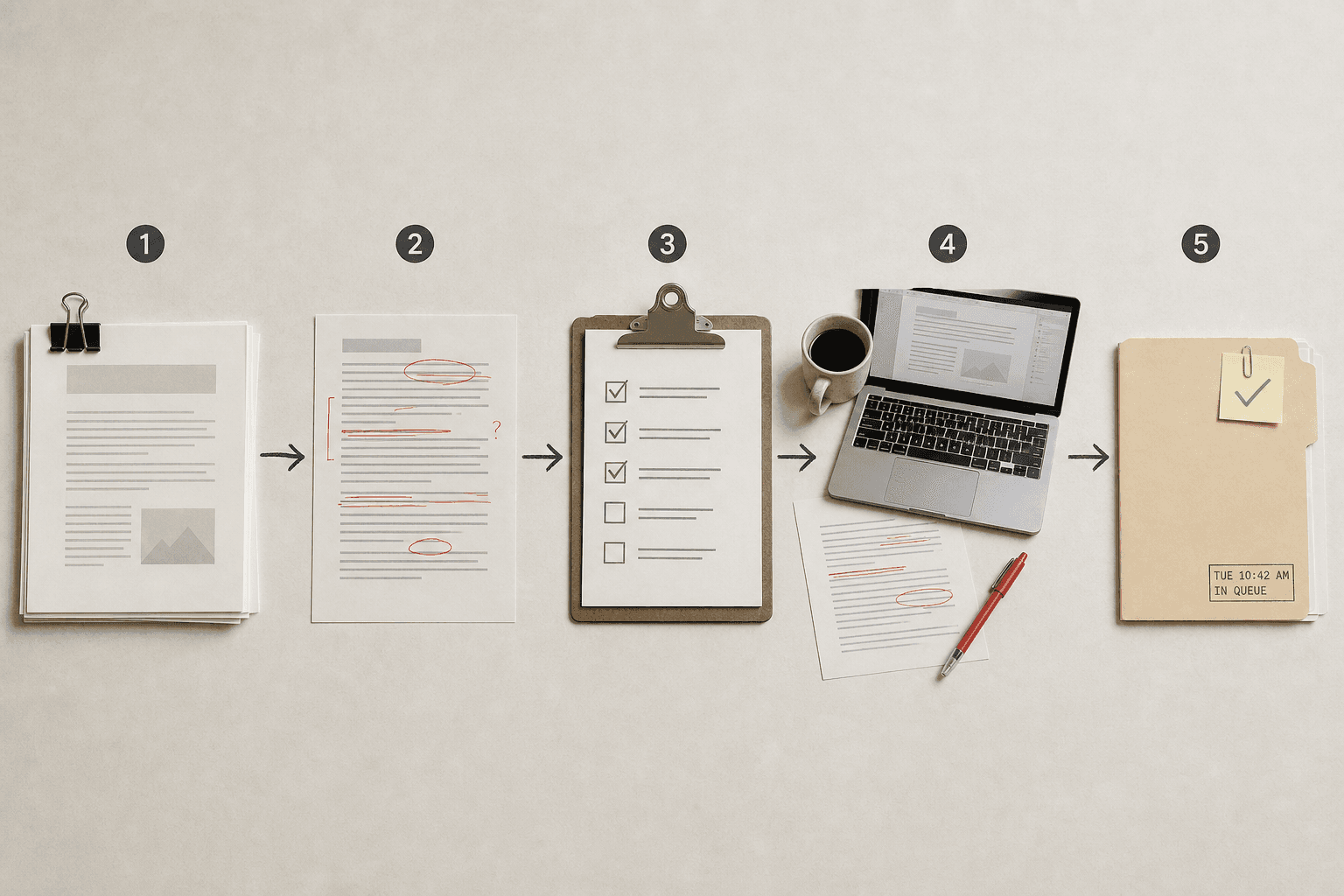
We started with one brief template for every asset. No draft could move unless key fields were complete. We required audience, goal, funnel stage, CTA, target keyword, proof points, banned claims, and format type. That cut vague requests before they reached writing.
Then we named every stage in plain language:
Brief Ready
Draft Ready
Strategic Review
Brand Review
Approved
Scheduled
Each status had one owner. Strategy owned Brief Ready. The ai content writer and editor owned Draft Ready. Marketing lead owned Strategic Review. Brand lead owned Brand Review. Channel owner moved content to Scheduled.
We also set review SLAs and approval rules. Strategic Review checked angle, offer, and CTA. Brand Review checked tone, phrasing, and formatting. Final approval only happened if required fields were complete and both reviews were marked pass. That structure mirrors what strong review systems recommend: fewer unclear handoffs and tighter sign-off paths Content Sign-Off Process Without Approval Bottlenecks.
Prompt structure and brand training
Our ai content writer does not start from a blank chat. It starts from a locked prompt frame. That matters because the model should solve drafting, not invent brand rules. In our marketing workflow, the brief feeds the prompt, and the prompt feeds the first draft.
We trained the system on repeatable constraints. We found that without written brand rules, our AI content writer repeated the same mistakes. Once we documented constraints, rewrite volume dropped 40%. Research from How to Unblock Your AI PR Review Bottleneck: A Tech Lead's Guide to Building a Codebase-Aware Reviewer shows similar patterns in other domains.
Here is the prompt block we used:
ROLE: AI content writer for Mygomseo

AUDIENCE: In-house marketers and startup founders

GOAL: Create a clear, useful draft with one CTA

BRAND VOICE: Direct, helpful, confident, concise

BANNED PHRASES: game-changer, leverage, cutting-edge, unlock

FORMAT RULES: short paragraphs, active voice, markdown headings, no fluff

CONTENT RULES: use source brief only, no invented claims, include clear next step

CTA: Book a demo or view Content Marketing services

OUTPUT STRUCTURE: intro, problem, solution, next action
That prompt gave reviewers fewer style fixes. It also kept the draft inside brand rails before a human touched it.
Example workflow logic and content templates
We then added light automation. If every brief field was filled, status changed to Brief Ready. When the ai content writer finished a draft, the task moved to Draft Ready and alerted the editor. If strategic feedback was requested, the system blocked Brand Review until those edits were done.
Our pseudo configuration looked like this:
required_fields:
  - audience
  - goal
  - cta
  - target_keyword
  - proof_points
statuses:
  - Brief Ready
  - Draft Ready
  - Strategic Review
  - Brand Review
  - Approved
  - Scheduled
triggers:
  brief_complete: move_to("Brief Ready")
  draft_submitted: move_to("Draft Ready")
  strategy_pass: move_to("Brand Review")
  brand_pass: move_to("Approved")
  publish_date_set: move_to("Scheduled")
We also built templates by asset type. A blog needed headline, search angle, CTA, and claim check. A social post needed hook, platform, character limit, and link goal. According to Content Approvals Are Slowing You Down - Here's the Fix - zipBoard, better review structure can create significant efficiency gains. That tracks with what we saw. The ai content writer fit the content approval workflow because the system was clear, not loose.
Content Operations Results and Prevention Tips
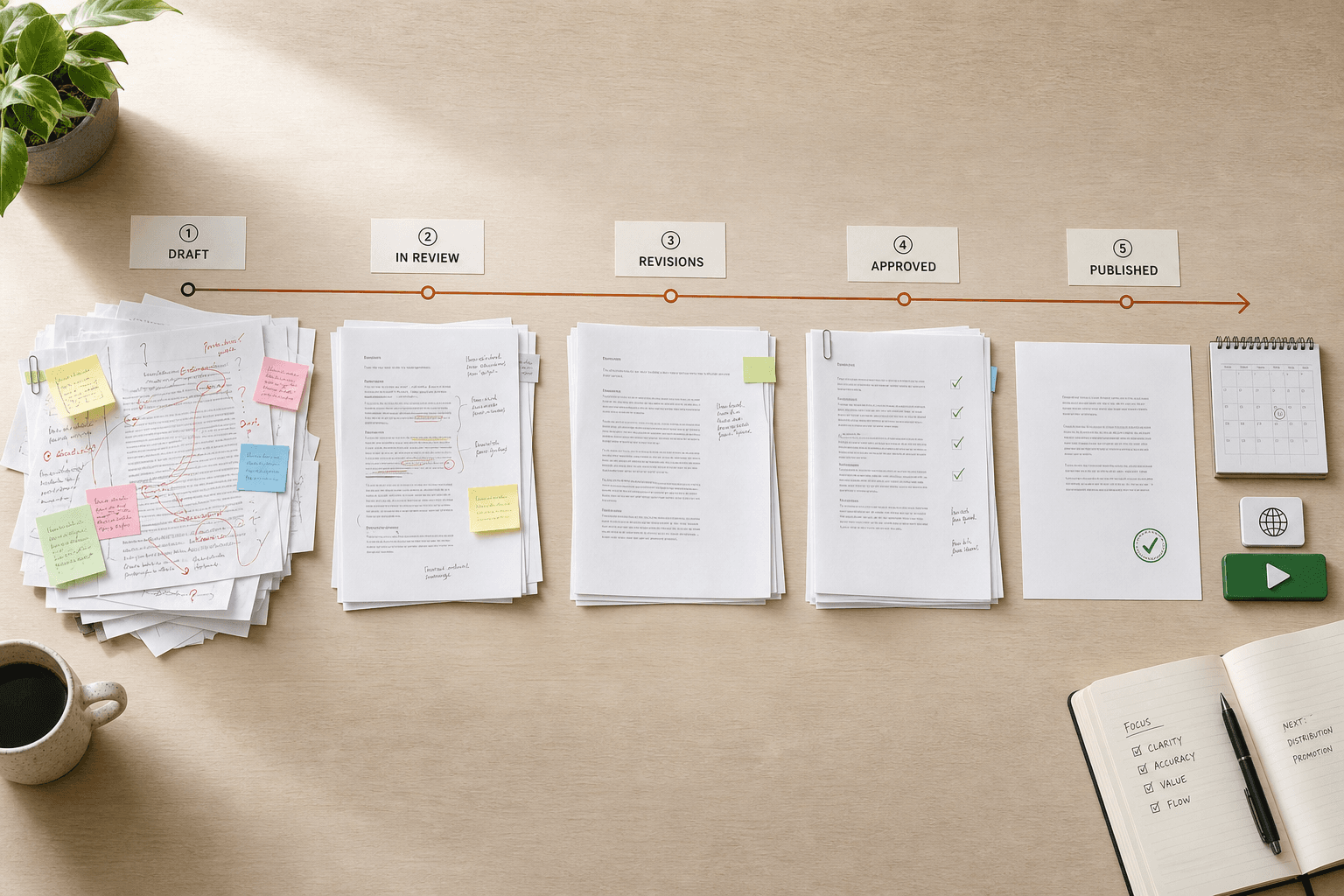
The practical impact is bigger than the workflow chart. Writers stop guessing and start drafting with confidence because the brief is clear. Approvers move faster because they know what they are checking. Campaigns go live when they should, not a week late because feedback arrived in five different tools. You also get better consistency across channels because the same rules guide every draft, every handoff, and every approval.
That kind of improvement does not come from pushing people harder. It comes from removing friction. When ownership is clear, review criteria are defined, and your AI content writer works inside brand rules, the system gets lighter for everyone. The team spends less energy interpreting comments and more energy shipping work that is already close to final.
The next step is keeping it that way.
- Audit your workflow every quarter.
- Keep briefs structured and required.
- Retrain prompts when brand standards change.
- Limit approvers by role, not by opinion.
- Review where drafts stall, then fix that stage first.
These habits prevent small cracks from turning into slowdowns again. They also make your marketing workflow easier to scale as new campaigns, channels, and teammates come in.
If your team is stuck in long review cycles, the issue is usually not effort. It is process. The friction comes from unclear expectations. The fix is better content operations, built on a sharper content approval workflow, stronger briefs, and AI that supports the system instead of adding noise. Want to pressure test your setup and find the bottlenecks fast? Learn More.