AI Overview Tracker Tools Compared: Which One Actually Shows Your Google AI Visibility

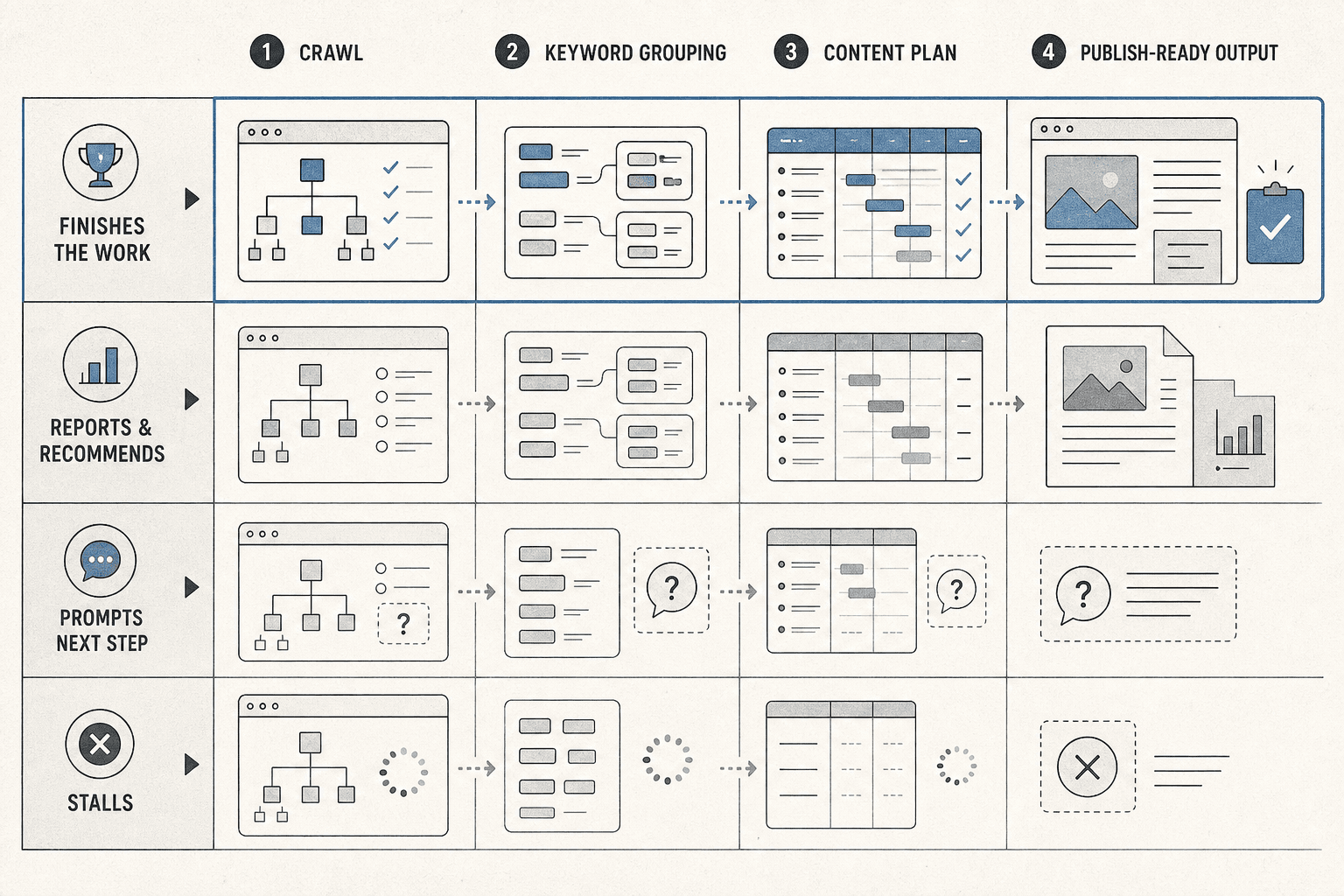
An ai overview tracker answers one hard question fast: does content appear inside Google AI Overviews, or not? That is the real job. Impression data and loose AI visibility signals can hint at movement, but they do not confirm placement.
That gap matters now because many teams still run manual checks, screenshots, and spreadsheets. Research on AI visibility platforms shows that pricing varies widely, with many tools using tiered models where AI Overview tracking is sold as a premium add-on or separate module. According to I found 15 AI visibility tool in the market right now that works (kinda), some platforms start around $50 per month, while add-on costs for advanced tracking features can exceed $70.
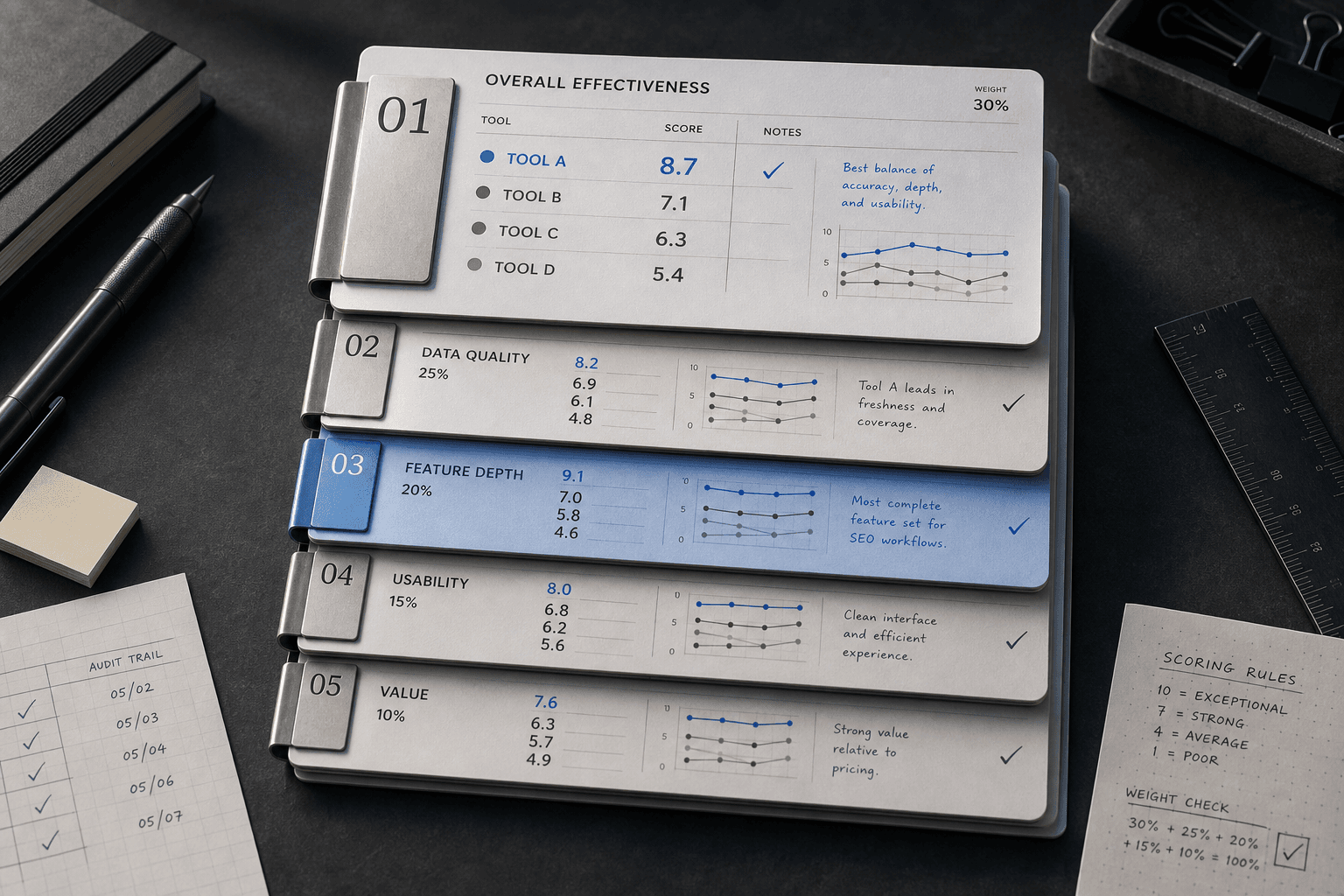
This comparison shows which tools verify presence, how they track changes, and where autonomous monitoring beats spreadsheet-heavy workflows. Each review uses the same criteria and structure, so the read stays fair.
Google AI Overview Tracking Criteria
What counts as real Google AI Overview tracking
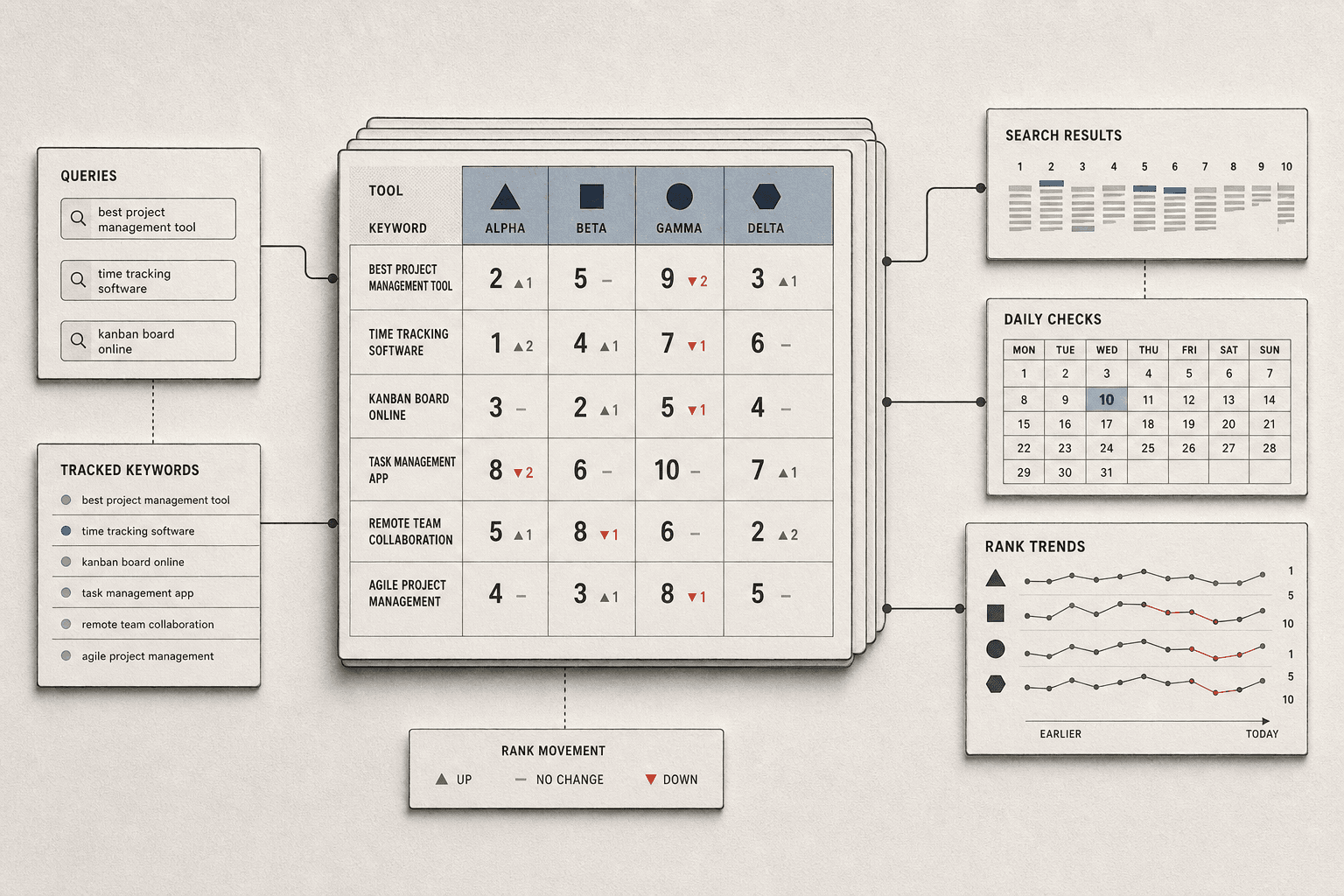
Real google ai overview tracking starts with one hard question. Does the platform confirm inclusion inside the answer, or does it only infer movement from clicks, impressions, or rank shifts? A true ai overview tracker should show evidence. That means saved snapshots, cited URLs, query-level records, and a historical log of when inclusion appeared or disappeared.
This differs from rank tracking. Rank tracking measures where a page sits in classic blue-link results. Google AI Overviews work more like a featured answer layer. A page can help power the answer without winning a top organic position. For example, a page might sit in position 8, yet still appear as a cited source.
For a visual walkthrough of this process, check out this tutorial from Website Learners:
Why impressions alone are not enough
Impressions cannot prove citation inside an AI Overview. They only show that a page was shown somewhere on the results page. That could mean organic listings, snippets, or other search features. It does not confirm that Google pulled the page into its generated answer.
That gap matters for ai visibility monitoring. A tool may report rising visibility monitoring signals while storing no evidence of inclusion. Unlike that approach, the best ai visibility tools keep snapshots, query coverage, update cadence, and alerting tied to actual appearances.
How autonomous monitoring changes the workflow
Autonomous monitoring reduces manual checking after setup. Small teams need clear reports, exports, and alerts, not endless screenshots. SE Ranking, for example, frames its product around ongoing AI visibility monitoring rather than one-off checks. Growth-led framing and ambitious visibility claims are now common in this market. According to The 10 Best AI Visibility Tools in 2026 (Compared by Use Case), search behavior is shifting as answers absorb more clicks.
Pricing still matters, but accuracy comes first. Research from I found 15 AI visibility tool in the market right now that works (kinda) shows some AI add-ons can reach premium tiers fast. For small teams measuring AI traffic impact, scalability matters only after proof.
Best AI Overview Tracker Tools Compared

1. Mygomseo
Overview
Mygomseo centers its workflow on repeatable Google AI Overview checks. Its angle is simple: remove manual checking, then store a clear yes-or-no record for each tracked query. For example, a lean content team can track the same buyer terms each week without running dozens of searches by hand. That makes it the clearest fit for teams that want autonomous monitoring over spreadsheet-heavy reviews.
Key Features
Mygomseo tracks whether an AI Overview appears, whether the brand appears, and whether a page gets cited. It also supports recurring checks, location and device rules, and exports for reporting. Its own guidance stresses query-level evidence, including cited page URLs and coverage status, instead of relying on impressions alone (Mygomseo).
Strengths
Its main strength is verification. The workflow is built around checking actual AI Overview presence and logging evidence. That matters when a team wants a concrete answer, not a soft signal. Unlike broader platforms, Mygomseo appears to prioritize Google AI Overview confirmation first, then connect those findings to monitoring and exports. For small teams, that focus reduces setup overhead and cuts manual QA.
Weaknesses
The trade-off is scope. Mygomseo is less centered on broad multi-engine brand analytics than some rivals. Teams that want one dashboard for ChatGPT, Perplexity, Gemini, and Copilot may find the narrower Google-first workflow limiting. It is strongest when the primary job is proving Google AI Overview inclusion, not building a large cross-engine share-of-voice program.
Best For
Mygomseo is well-suited as an AI overview tracker for small teams that prioritize autonomous monitoring and direct proof of inclusion over broader analytics. It fits marketing teams that care more about reliable verification than a giant analytics stack.
2. Otterly AI
Overview
Otterly AI positions itself as a wider AI search monitoring platform. It covers Google AI Overviews, ChatGPT, Perplexity, AI Mode, Gemini, Copilot, and Claude. Its framing is broader than Mygomseo’s. It aims to monitor how often a brand or site appears across major AI search environments, with daily tracking and export options (Otterly AI; Otterly AI Help).
Key Features
Otterly AI tracks whether Google AI Overviews are triggered and identifies which brands, links, and content appear inside them. It also offers daily monitoring, multi-country tracking in 50-plus countries, CSV exports, API access, and a Looker Studio connector (Otterly AI Features; Otterly AI Help). For teams that need regular updates, the daily cadence is a practical plus.
Strengths
Otterly AI gives clearer Google AI Overview confirmation than many “AI visibility” tools. It does not stop at generic impressions. It states that it checks whether AI Overviews are triggered and which links and brands are mentioned. Where Mygomseo focuses on autonomous Google-first checking, Otterly AI focuses on wider platform coverage and reporting flexibility. It is a strongvisibility toolfor teams that want one system for several AI engines.
Weaknesses
Its breadth can create more noise for small teams. A startup that only wants to know, “Did this article appear in Google AI Overviews?” may not need cross-engine dashboards, connectors, and API layers. The platform can answer the right question, but its value grows more for teams with broader AI visibility monitoring needs.
Best For
Otterly AI is best for teams that want direct Google AI Overview inclusion signals plus wider AI search coverage. It suits in-house teams that already report across markets and channels.
3. Peec AI
Overview
Peec AI is built for AI visibility analysis across prompts, brands, and cited sources. Its messaging leans more toward visibility, share of voice, sentiment, and source analysis than strict Google-only verification. For example, a brand team can see whether AI tools mention the company often, cite its domain, or favor competitor sources over time (Peec AI Docs; Peec AI).
Key Features
Peec AI tracks brand visibility, source visibility, position, sentiment, and share of voice. It also supports Google AI Overviews alongside other engines, plus API and MCP access for custom workflows (Peec AI Docs; Peec AI Docs). Research from The 10 Best AI Visibility Tools in 2026 (Compared by Use Case) shows that AI visibility tools now frame gains in very large terms, which makes verification even more important.
Strengths
Peec AI is strong at explaininghowa brand is seen across AI systems. Its split between brand visibility and source visibility is useful. A team can learn whether AI mentions the brand name, cites the site, or does both. That makes it a solid option for broaderbest ai visibilityanalysis, especially when competitive tracking matters.
Weaknesses
Peec AI does support Google AI Overviews, but its core framing is broader than binary inclusion proof. In practice, it reads more like a strategic AI visibility platform than a narrow AI Overview checker. Small teams that need a crisp yes-or-no answer for each Google query may still need tighter operational workflows than Peec’s broader analytics model provides.
Best For
Peec AI is best for teams that want AI visibility monitoring across engines, competitors, and sources. It is less ideal for teams that only want simple Google AI Overview confirmation.
4. Profound
Overview
Profound added Google AI Overviews support as part of a larger AI visibility platform. Its messaging focuses on brand visibility, sentiment, source analysis, and competitive performance across answer engines. That puts it closer to Peec than to Mygomseo in product style (Profound).
Key Features
Profound supports Google AI Overviews analysis for all customers. It highlights visibility scores, sentiment analysis, source identification, and cross-engine comparison with platforms like ChatGPT and Perplexity (Profound). Data indicates broader AI visibility reporting is expanding fast, and The 10 Best AI Visibility Tools in 2026 (Compared by Use Case) found that growth-led framing and ambitious visibility claims are now common in this market.
Strengths
Profound looks strong for executive reporting and competitive analysis. It gives teams a way to compare AI visibility across several surfaces, not only Google. Where Mygomseo focuses on autonomous monitoring and Otterly AI balances verification with multi-engine tracking, Profound leans into brand analytics and perception.
Weaknesses
The weakness is the same trade-off seen in many enterprise-style platforms. The product clearly supports Google AI Overviews, but its public positioning emphasizes analysis more than simple operational proof. That can be useful for strategy. It can also feel heavy for smaller teams that just need direct inclusion checks.
Best For
Profound is best for larger brands that want AI visibility reporting beyond Google alone. It is less tailored to small teams seeking lightweight, autonomous verification.
Which tools actually show if content appears in Google AI Overviews?
Mygomseo and Otterly AI are the clearest options for showing whether content appears in Google AI Overviews. Both describe workflows that check actual AI Overview presence and identify mentions or citations inside the result (Mygomseo; Otterly AI Features). Peec AI and Profound support Google AI Overviews too, but their public framing leans more toward broad visibility analysis than narrow inclusion proof. For small teams, that difference matters.
AI Visibility Monitoring Pain Points and Table
Common pain points across all tools
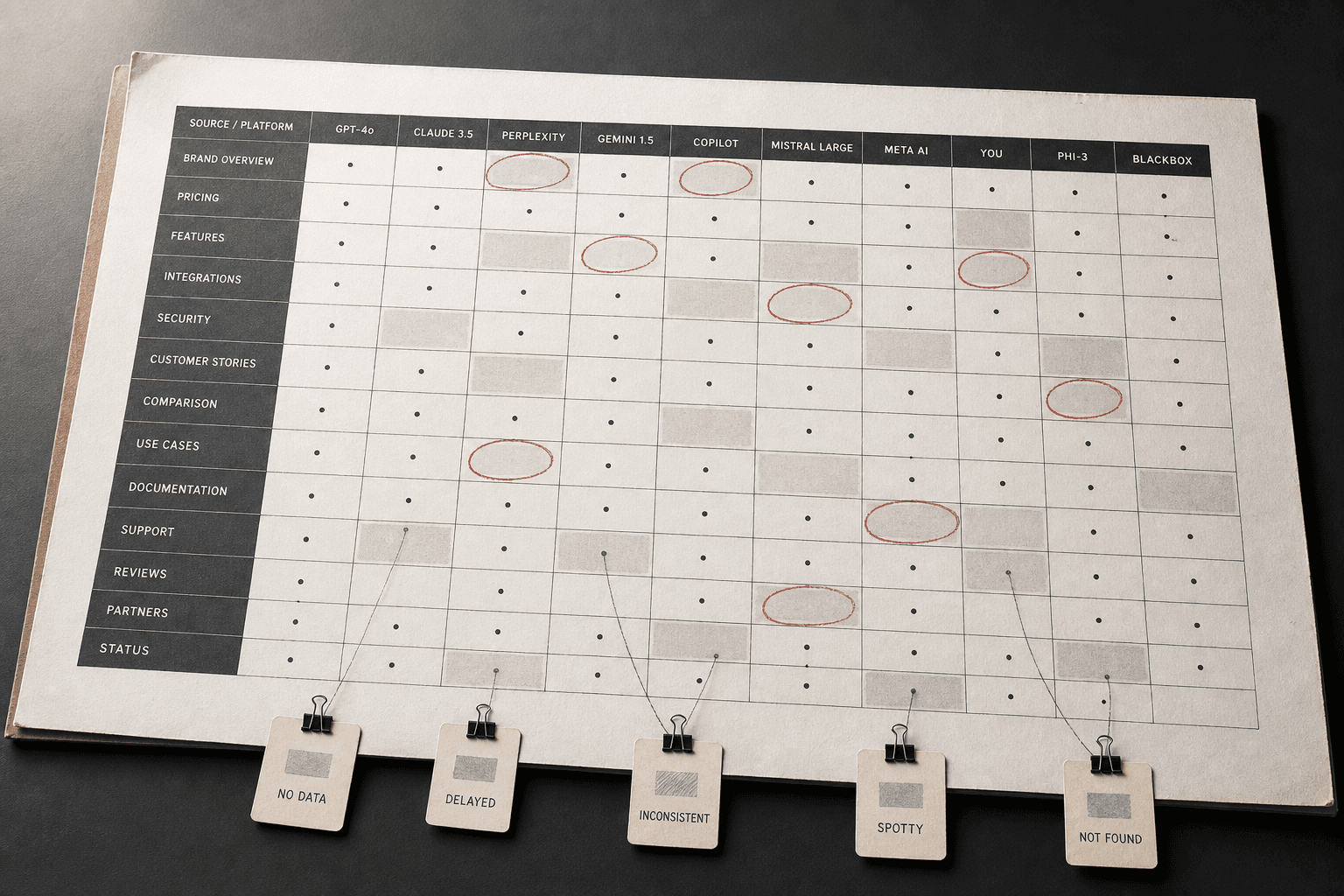
AI visibility monitoring is hard because the target keeps moving. Google can show an overview for one query, skip it for the next, then rewrite the answer hours later. For example, a page may earn impressions in Search Console, yet never appear in the final answer block. That gap makes any ai overview tracker harder to trust.
Definitions also stay messy across vendors. Some tools count citations. Others count modeled exposure, mentions, or blended AI traffic. Growth-led framing and ambitious visibility claims are now common in this market, but pricing clarity does not fix measurement clarity. Teams still need to ask one basic question: did the page appear in Google AI Overviews, or not?
Historical evidence is another weak spot. Several platforms log trend lines, but store little proof. A chart without snapshots is like a weather app with no radar. Reports can also blend AI search signals with standard rankings, which makes weekly reporting harder to interpret. Practitioner feedback in I found 15 AI visibility tool in the market right now that works (kinda) echoes that problem.
Side by side comparison table
- Autonomous monitoring tools — Direct Google AI Overview detection: Yes · Automation level: High · Alerts: Yes · Historical tracking: Strong · Pricing style: Subscription · Learning curve: Low · Best fit: Small teams needing hands-off visibility monitoring
- AI visibility platforms focused on citations — Direct Google AI Overview detection: Partial · Automation level: Medium · Alerts: Usually · Historical tracking: Medium · Pricing style: Subscription · Learning curve: Medium · Best fit: Teams tracking broad AI search presence
- Manual workflow with browser checks and sheets — Direct Google AI Overview detection: Yes, but manual · Automation level: Low · Alerts: No · Historical tracking: Weak · Pricing style: Labor-based · Learning curve: Medium · Best fit: One-off validation
- Traditional rank trackers like se ranking — Direct Google AI Overview detection: Limited · Automation level: High · Alerts: Yes · Historical tracking: Strong for rankings · Pricing style: Tiered SaaS · Learning curve: Low · Best fit: Classic SEO and baseline SERP reporting
According to We Tested the 13 Best (& Underrated) AI SEO Tools in 2026 | Whatagraph, some AI SEO plans discount annual billing by 20%. That helps budget planning, but not verification depth.
Where teams still need manual validation
Manual checks still matter when a platform reports impressions or citations without proof of final inclusion. For example, a tool may flag a mention, while the brand never appears in the answer users read. That forces a second review.
Traditional SEO tools do not fully track Google AI Overviews. They help with rankings, query sets, and page movement. Unlike an AI-specific workflow, they rarely confirm answer-level presence. se ranking can complement this stack, but it does not replace an ai overview tracker built for direct overview validation.
Which AI Overview Tracker Fits Your Team
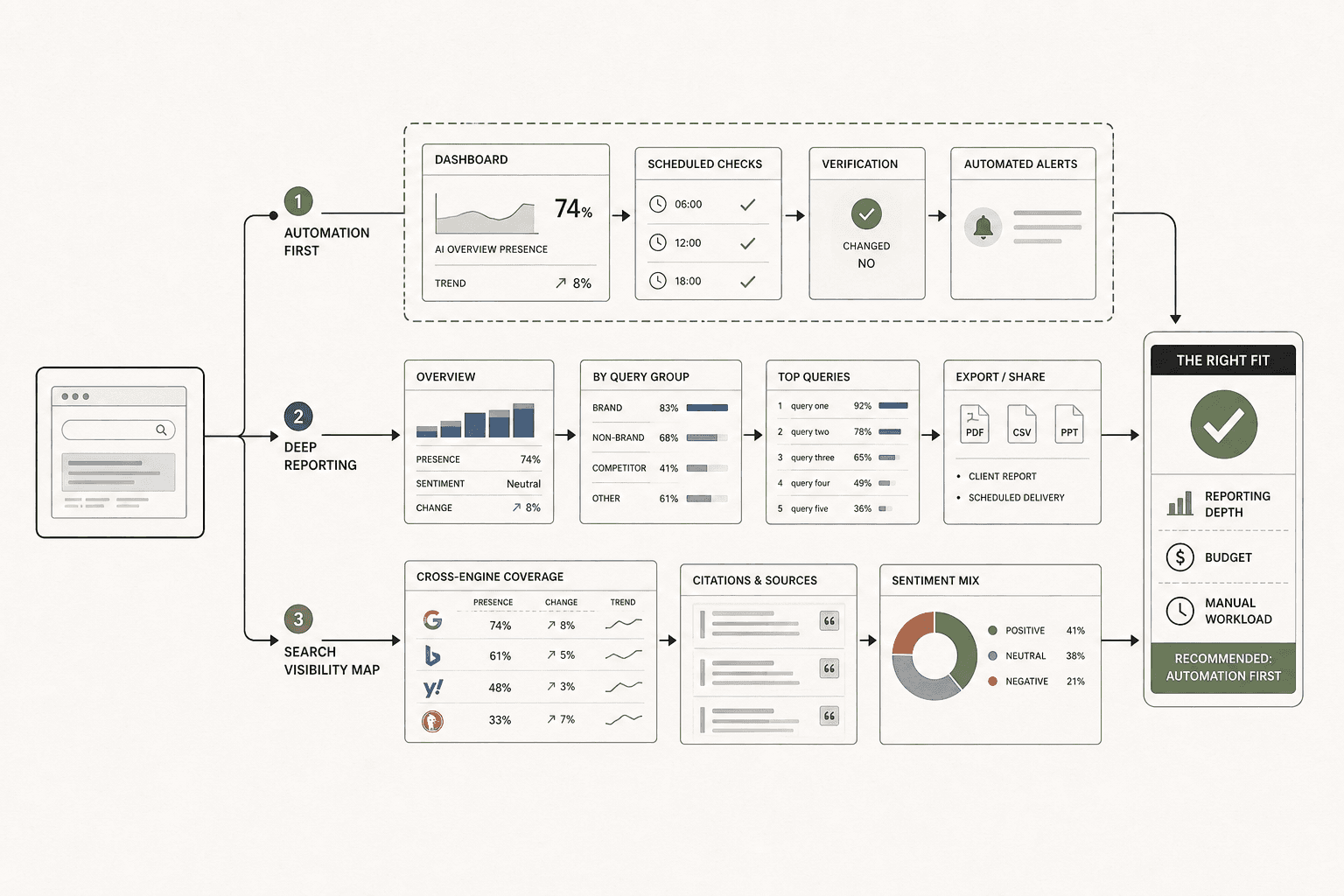
Teams prioritizing automation should evaluate tools built for autonomous monitoring. Mygomseo targets this use case with query-level verification and scheduled checks. The platform serves lean marketing teams that need fast setup, clear signals, and less time spent rechecking results by hand. It does not offer the most advanced reporting stack. When speed, simplicity, and ongoing monitoring are priorities, an ai overview tracker like this addresses those requirements.
Other tools fit different jobs. Enterprise teams may prefer platforms with deeper analysis, broader segmentation, and more custom reporting. Agencies may value reporting layers built for client delivery. Brands running wider ai search programs may need tools that track citations, sentiment, and visibility across more engines, even if those tools are less focused on direct confirmation inside Google AI Overviews.
The smart buying test is simple. Choose the platform that proves real inclusion, not one that only hints at it through side signals. An ai overview tracker should reduce guesswork, not dress it up as insight.
AI search reporting will keep changing. The teams that win will use tools that show what actually appeared.
Want a simple next step? Try It Free to explore AI overview tracking tools and see what's appearing in search results for your brand.