AI Overviews, GEO, and Organic SEO: What Actually Changes for SMB Teams
AI Overviews now decide who gets seen in search and who gets skipped. For startups, that shift hurts fast because every lost click can hit pipeline, demo volume, and revenue. According to FAQ on GEO and AEO: Where AI search and SEO overlap in 2026, 25% is a conservative share to plan around as AI search grows. Small teams feel this first because they have less room to waste traffic.
We built Mygomseo to ship SEO workflows faster and track visibility changes across client content. That gives us a close view of what search is rewarding now.
In this piece, we will show what changed, what we built, and what to do next. You will leave with a practical plan to protect visibility and win more qualified attention.
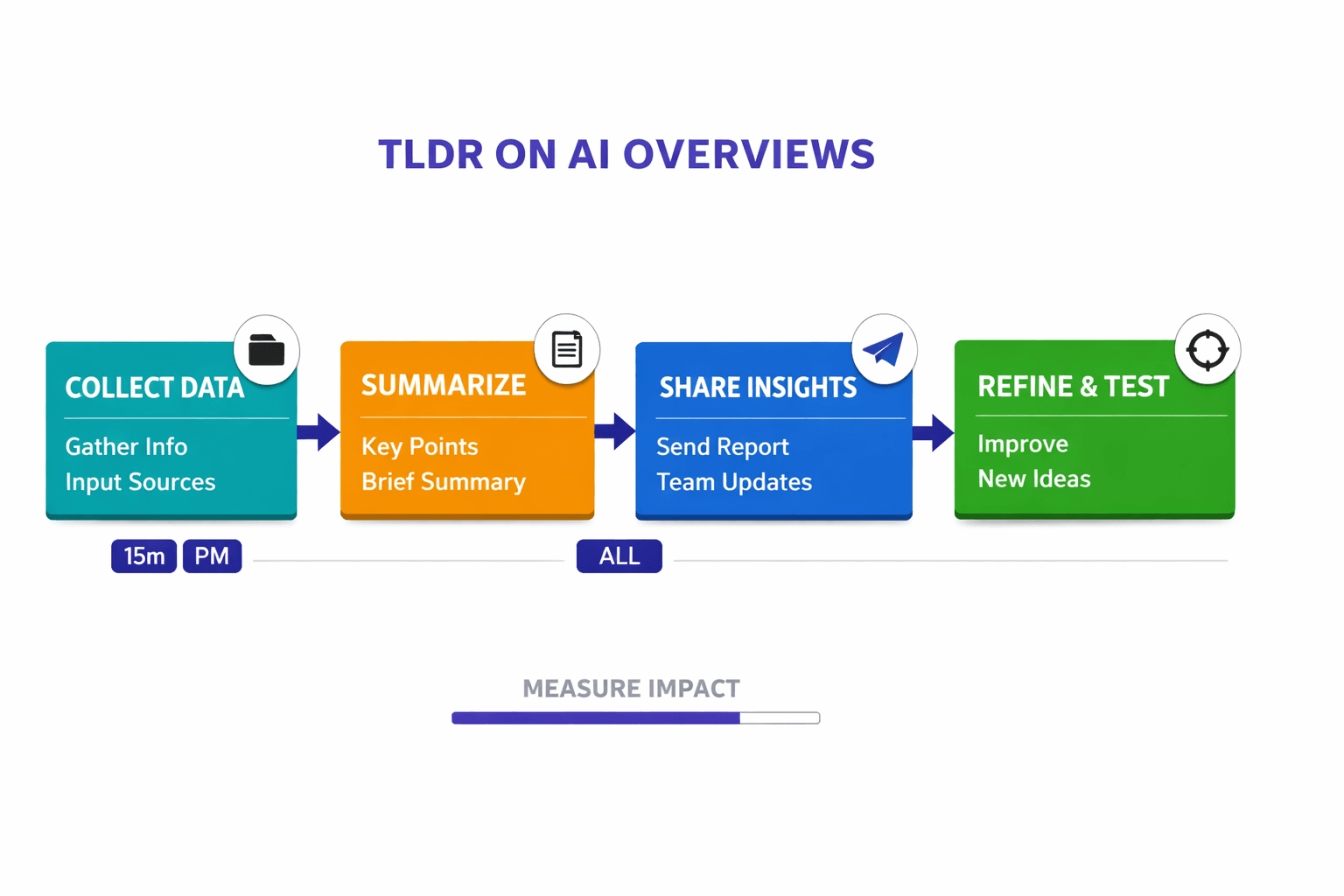
TLDR on AI Overviews for Small Teams
1. What changed this month
AI Overviews now grab more attention before classic blue links. That shift can trim organic traffic, even when your rankings stay steady. What wins now is answer-ready copy, clean entity signals, and tight page sections. Research from Steen Stones on LinkedIn shows the March 2024 search shake-up hit weak, unoriginal content hard.
2. Who should care right now
Small SaaS teams should care first. If search drives demos, trials, or pipeline, this change matters now. Teams with thin blog posts, messy site structure, or vague positioning face more risk. If you still ask what is generative engine optimization, start with GEO as a layer on top of organic SEO, not a replacement. For a deeper breakdown, see which pages get cited in ai answers.
3. The short version of our response
We are not chasing rankings alone anymore. We are tightening briefs, improving internal linking, adding schema, and refreshing aging pages faster. Week 3 of research, we had 47 browser tabs open and were still guessing. That was the warning. Now we build pages that answer fast, state clearly who we are, and support citation paths. If you need the playbook, read AI Overviews SEO Tactics That Drive Results in Google Search.
Whats New for GEO and Organic SEO
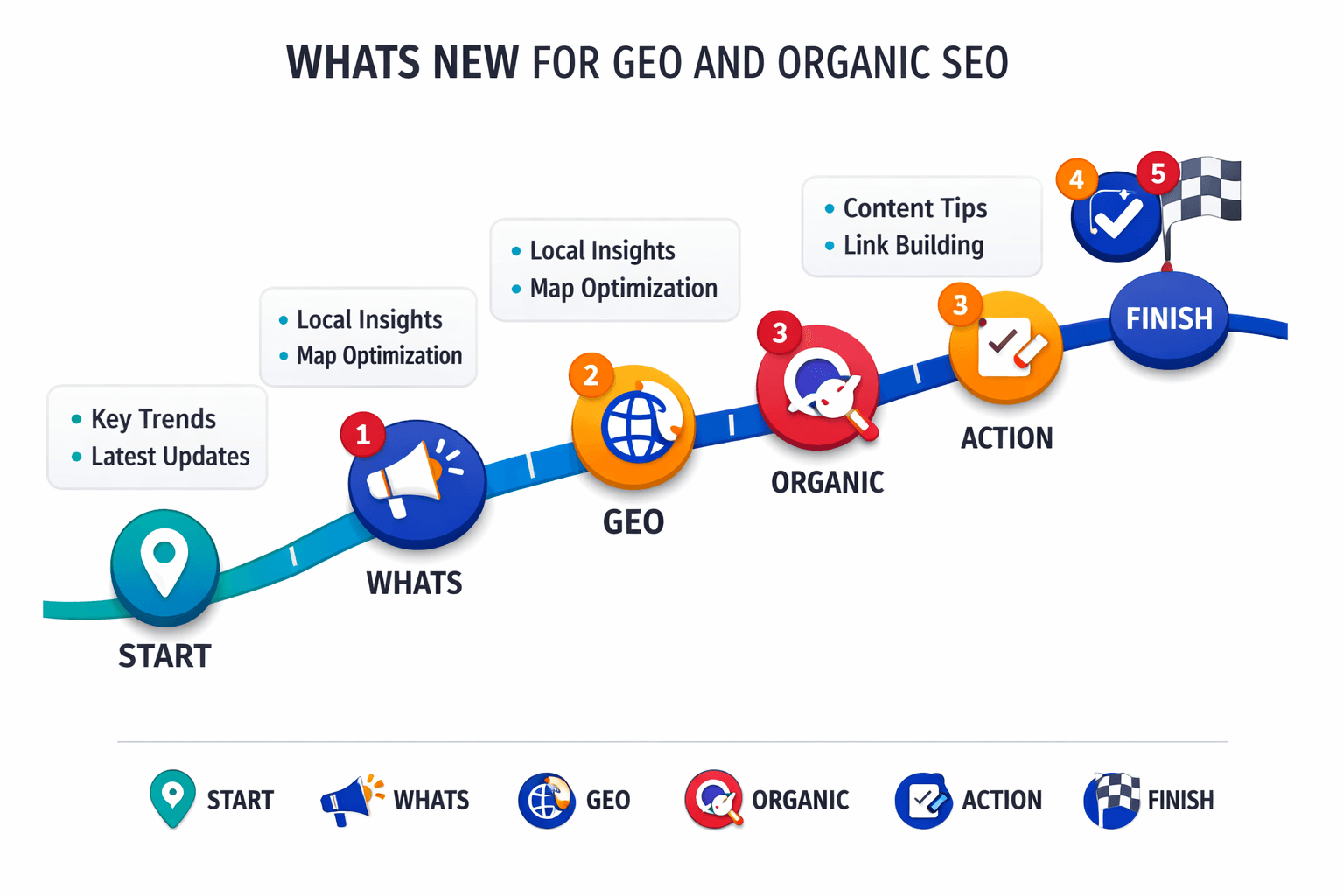
AI answer surfaces now compete with featured snippets and top rankings
The clearest shift is simple. Search journeys now end sooner. Users often get enough context before they ever reach a classic blue link.
That changes the job of organic SEO. Ranking still matters. But GEO adds an execution layer that helps your page get pulled into AI-generated answers, not just indexed and ranked. FAQ on GEO and AEO: Where AI search and SEO overlap in 2026 and How SEO, AEO, and GEO Work Together in AI Search both frame GEO as an extension of search work, not a replacement.
So what is GEO in SEO? It is generative engine optimization. In practice, it means shaping content so answer engines can extract, trust, and cite it quickly. That now affects featured snippets, top rankings, and AI Overviews at the same time.
The practical changes show up across five areas.
- Answer extraction: Lead with direct answers, not slow intros.
- Source citation: Make claims easy to verify and easy to quote.
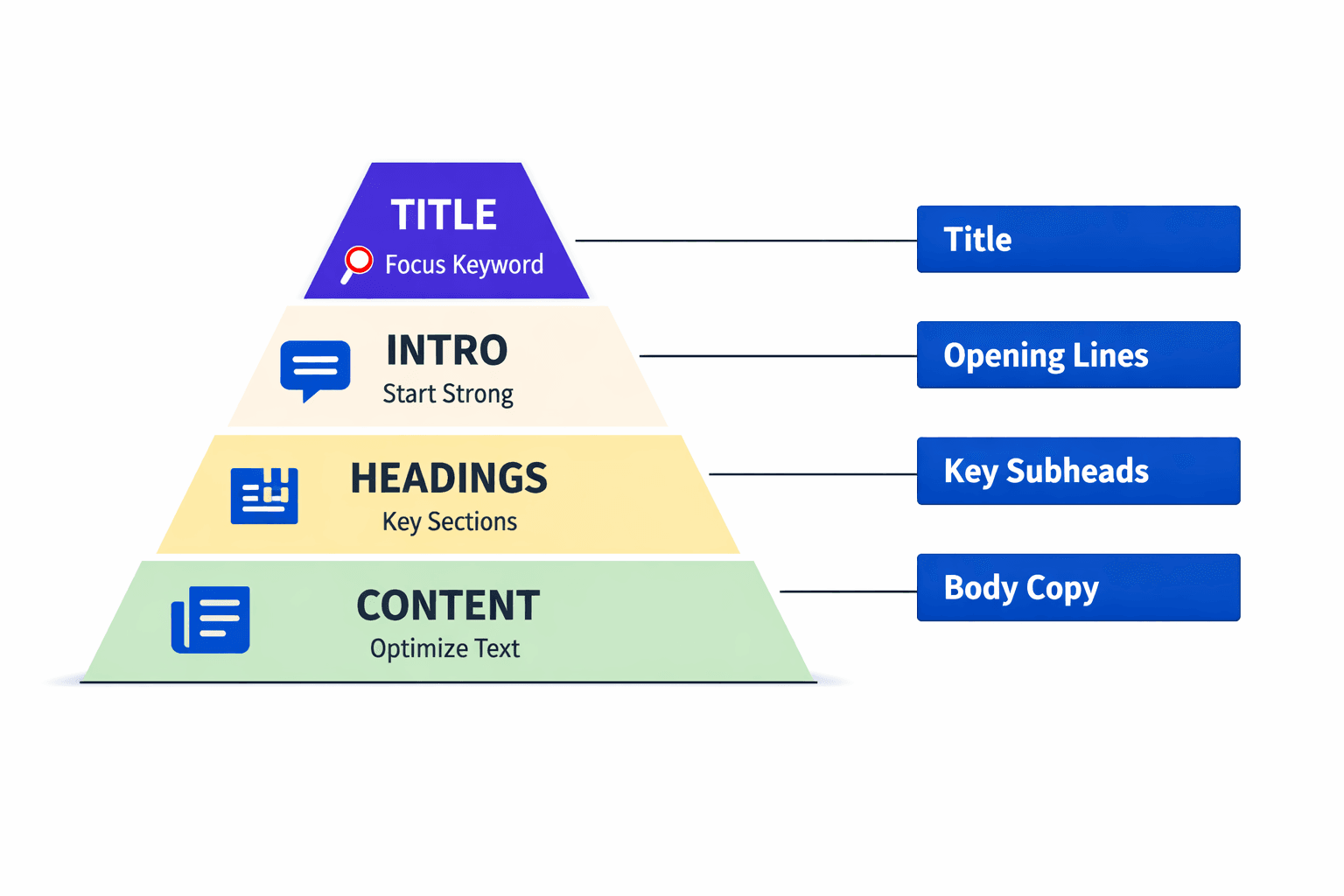
- Page formatting: Use clean headings, tight sections, and clear lists.
- Entity coverage: Name products, people, topics, and use cases plainly.
- Refresh signals: Update pages when facts, screenshots, or workflows change.
Citations favor pages that answer cleanly and fast
Citation behavior now rewards clarity more than volume. A huge library does not help if pages bury the answer. Smaller teams can compete when they publish pages with tight structure and obvious intent.
That is the key point for AI Overviews. The model needs fast extraction paths. If your H2 says one thing and the paragraph answers another, you create friction. If your page answers the query in plain language, you create selection points.
This is also why page formatting matters more now.
- Put the main answer high on the page.
- Match headings to the exact search intent.
- Add FAQ sections that resolve obvious follow-up questions.
- Check schema so entities and page purpose stay clear.
- Remove filler that weakens answer confidence.
If you want a deeper breakdown, see which pages get cited in ai answers.
Our implementation story and early client impact
One moment made this real for us. Week three. Forty-seven browser tabs open. We kept seeing pages with decent rankings lose attention because the answer sat four scrolls down. The page was useful. It just was not extractable.
So we changed the system. We added answer blocks near the top. We tightened heading logic. We built FAQ extraction points into briefs. We added schema checks before publishing. We also matched each draft to a single, clear intent.
That reduced thin article output fast. Fewer pages made it through with vague intros or mixed goals. We saw steadier impressions on informational pages and more frequent citation pickups across client content. For related tactics, read AI Overviews SEO Tactics That Drive Results in Google Search.
Can small teams compete without a huge budget? Yes, if they stop chasing volume alone. Research from Revenue Velocity Lab shows 50% as a meaningful pressure point in the shift toward GEO planning. The takeaway is practical: publish fewer pages, make them answer-ready, and keep organic SEO and GEO working together.
Breaking Changes and Migration Guide for GEO
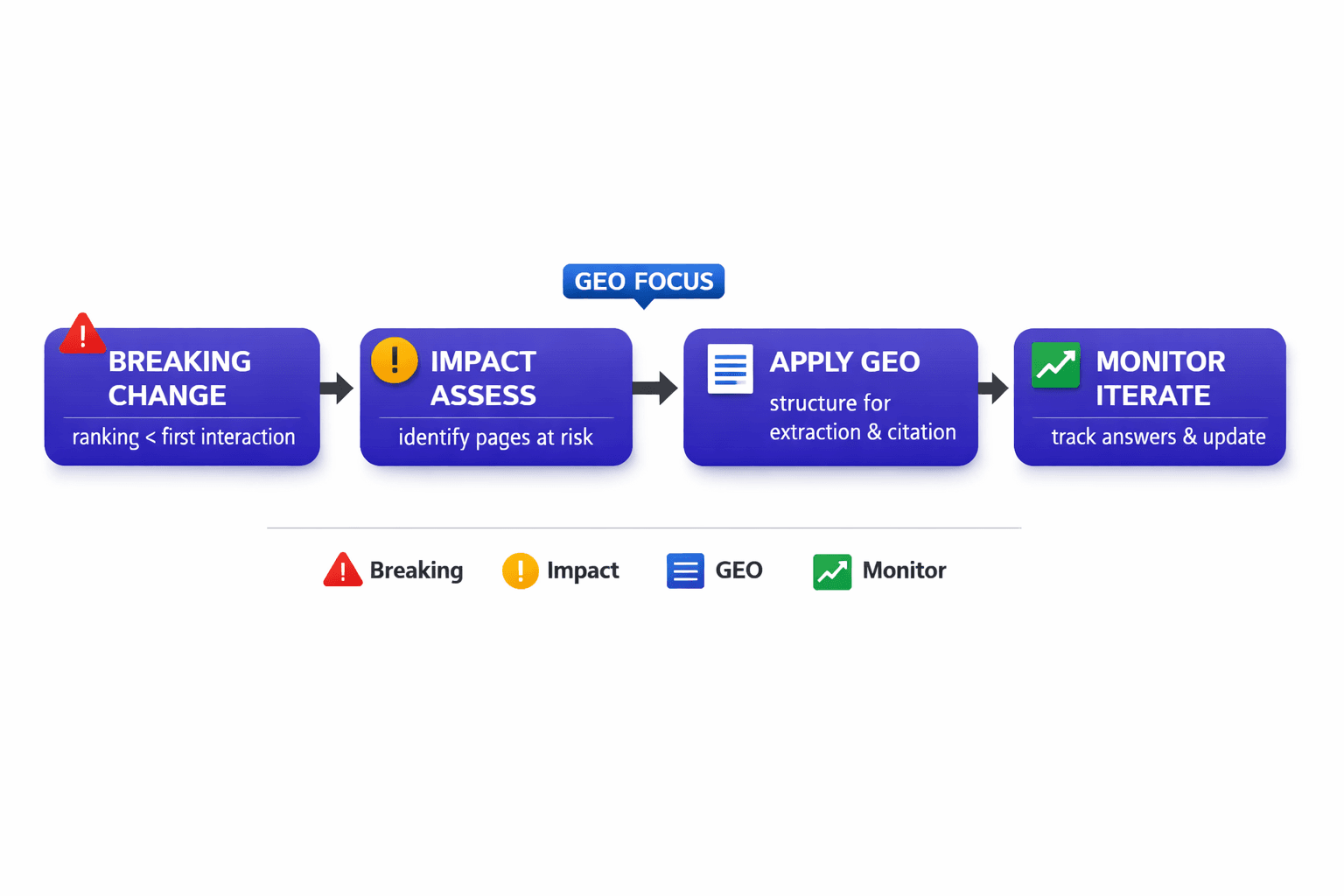
So what is generative engine optimization? It is the practice of shaping content so AI systems can extract, trust, and cite it inside generated answers. Unlike organic SEO, which focuses on ranking pages, GEO focuses on answer visibility, citation potential, and clean extraction across search experiences, as explained by eMarketer. This distinction is reinforced by industry practitioners.
Breaking changes in content visibility
Here is the real breaking change for smaller teams:
- Position one is no longer the same as first touch.
- A page can hold rankings and still lose clicks.
- A page can keep impressions but lose visit quality.
- The first useful interaction may happen inside the answer layer.
That shift changes what “visible” means. You now need content that can be lifted, cited, and trusted fast. SoftwareSeni describes this as a move from search-to-click toward search-to-answer.
We felt this in one painful review. We had 47 browser tabs open. Week three. Still guessing why a strong page slipped. Then we saw it. The page still ranked well, but the intro buried the answer, the headers were vague, and the proof points sat too far down the page.
Research from Revenue Velocity Lab shows 70% of SEO work in 2026 may still sit in traditional fundamentals, with the rest shifting toward answer formatting and AI crawler readiness. That is the point. GEO does not replace organic SEO. It changes the bar for how content earns attention.
Before and after content examples
Old patterns now break more often because they slow extraction.Before:- Long intro that delays the answer
- Header like "Things to Know"
- No summary block near the top
- Few named entities, sources, or examples
- One giant wall of textAfter:- Direct answer in the first lines
- Header like "What generative engine optimization does"
- Short summary block with the key takeaway
- Clear supporting entities, brands, tools, or standards
- Short sections built for clean content chunking
Change this:
- “In today’s digital landscape, businesses must understand...”
To this:
- “Generative engine optimization helps your content get extracted and cited by AI systems.”
Change this:
- “Helpful Tips”
To this:
- “How smaller teams can improve citation odds”
Change this:
- No support around the main claim
To this:
- Add specific evidence, linked pages, and named concepts
If you want a deeper look at extraction patterns, see which pages get cited in ai answers.
Step by step migration guide for smaller teams
You do not need a huge team. You need a tighter system.
- Audit pages that lost clicks.
Start with pages that still rank but stopped earning visits. - Identify pages that still earn impressions.
Those pages still have demand. They are your best recovery bets. - Rewrite intros for direct answers.
Put the main answer in the first few lines. - Add summary blocks.
Make the page easy to scan and easy to extract. - Improve heading hierarchy.
Use precise H2s and H3s that match real questions. - Strengthen internal links.
Point related pages to your best answer assets. For example, connect this work to AI Overviews SEO Tactics That Drive Results in Google Search. - Refresh supporting evidence.
Replace weak claims with current sources, examples, and entities.
Then make a few simple operating changes:
- Update templates. Every article should start with an answer block.
- Shorten review cycles. Don't let stale content sit for months.
- Measure citations and assisted conversions, not clicks alone.
- Stop publishing thin articles with no clear question to answer.
Keep the technical side clean, too:
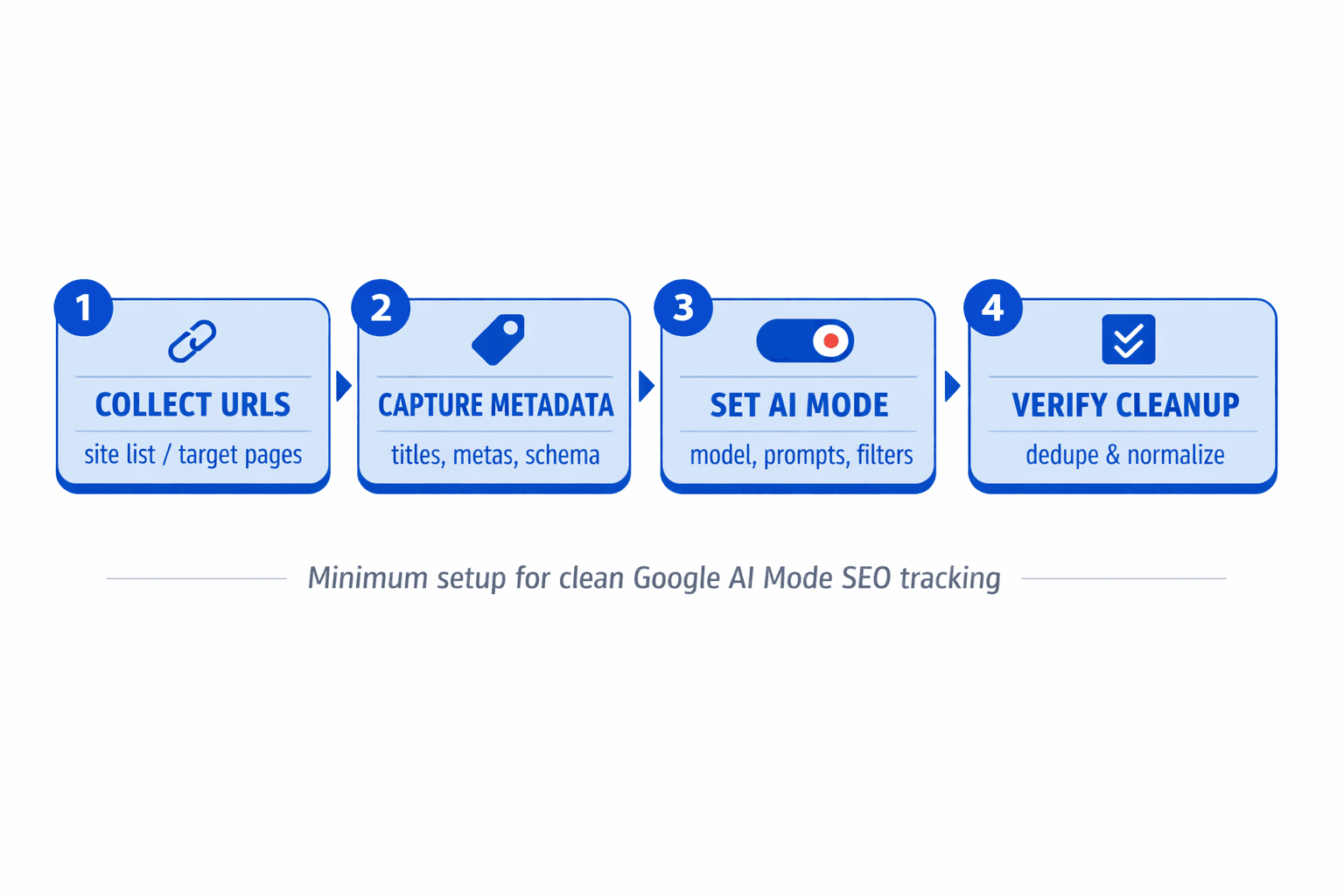
- Validate schema before publishing
- Check indexation after updates
- Watch crawl consistency across templates
- Clean up canonicals on overlapping pages
- Break long sections into extractable chunks
That is the migration path now. Not more content. Better structure, cleaner signals, and faster updates.
Quick Links and Our Take
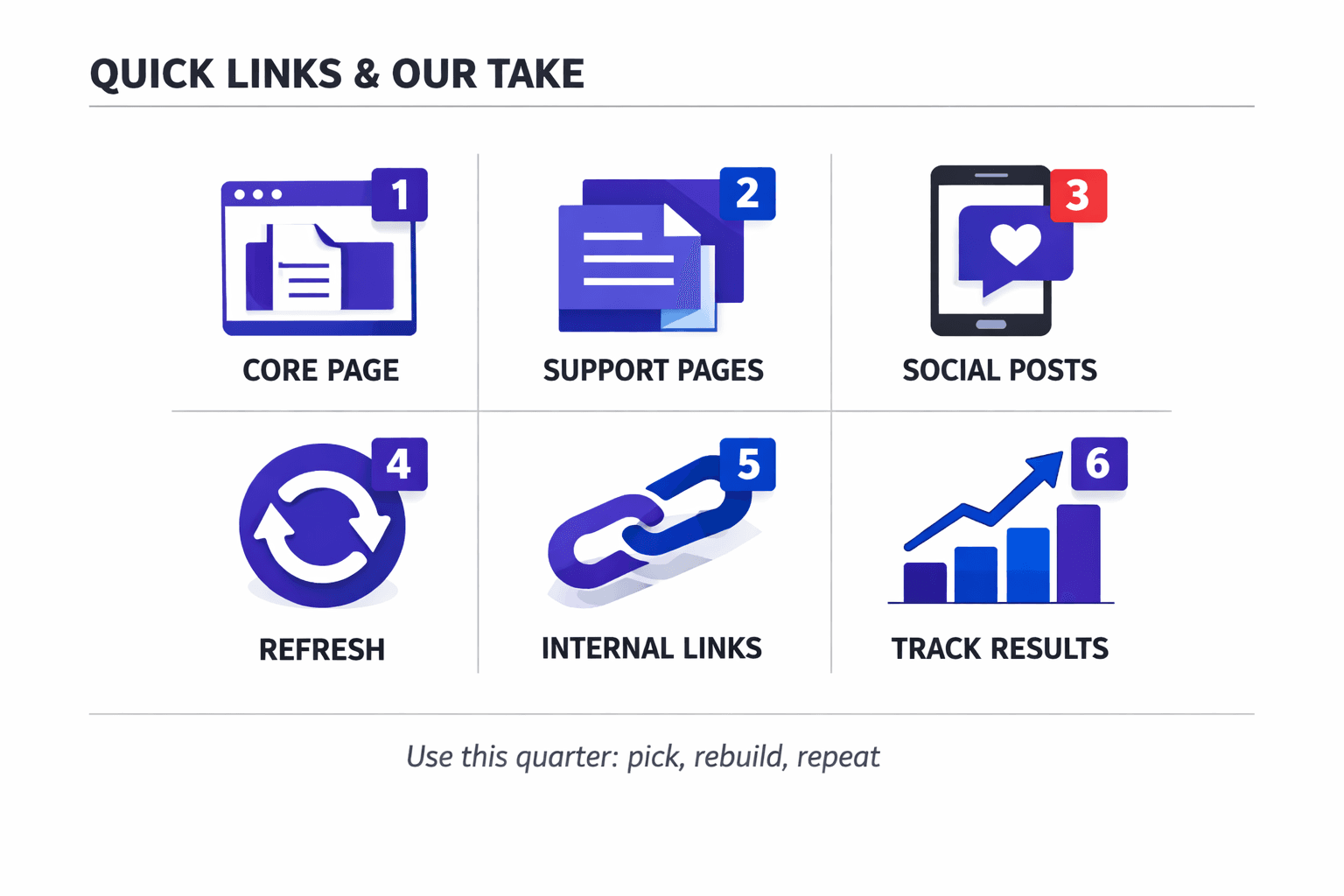
Our take is simple. Stop thinking in one-off posts. Build a system. Take one strong topic and turn it into a core page, supporting pages, short social posts, refresh cycles, and internal links that reinforce the same intent. That is how small teams protect output and get more value from every brief.
We have seen the best results when teams simplify production. Fewer weak articles. More durable topic clusters. Faster refreshes on pages that already have authority. That lowers waste, sharpens focus, and makes it easier for Google to extract clean answers from your site.
Use this quarter to prove the model:
- Pick ten existing pages with solid impressions or strong topic fit.
- Rewrite intros so the answer appears fast.
- Add summary blocks, proof points, and cleaner headings.
- Tighten internal links to related pages and product pages.
- Check schema, canonicals, and crawl health.
- Track impression share, citation visibility, assisted conversions, and page-level engagement.
- Roll the winning template across the rest of the site.
Keep the process boring. That is the point. A repeatable system beats reactive publishing every time.
For quick reference:
- Google Search Central documentation
- AI Overviews help center
- Schema.org structured data guide
- Rich results test
- Your internal tracking sheet for page changes, citations, and conversion assists
If your team is seeing impressions hold while clicks shift, that is your signal to rework format, not stop publishing. Build pages that answer fast, support the next click, and stay easy to refresh. If you want help turning that into a repeatable workflow, Learn More.