The architecture gap your AI agent will expose
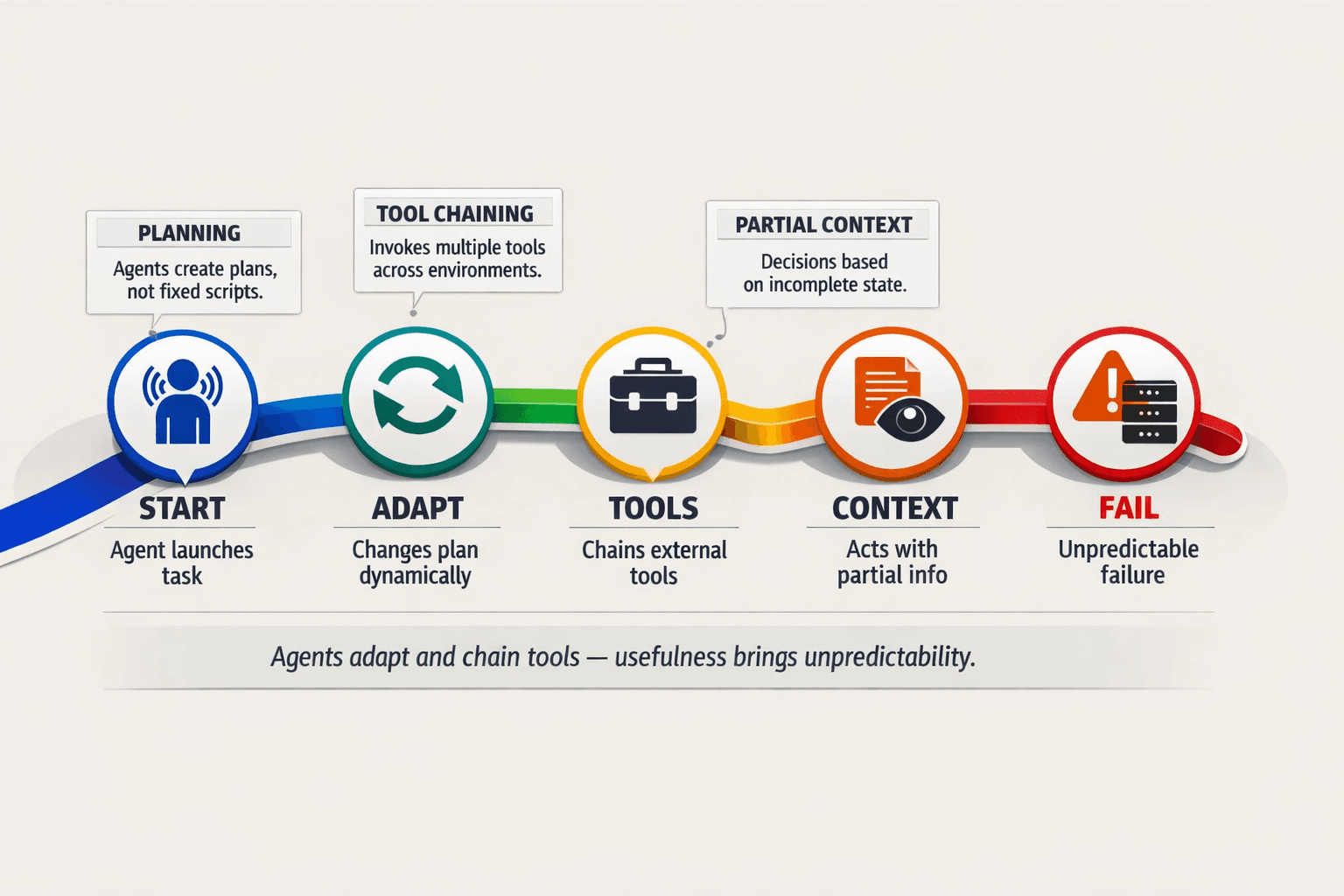
AI agent use cases are growing fast, but most teams still govern them like predictable software. That is the first mistake. These systems act across tools, content, and workflows with far less determinism than old automation. According to AI Agents: Evolution, Architecture, and Real-World Applications - arXiv, 38% of professional writers already use AI agents for collaborative drafting. Data from The Architecture Gap No AI Agent Security Tool Is Built to Close shows enterprise agent counts have grown nearly 100x. We built systems designed to write, publish, monitor, and recover across real SMB content operations. In this article, we will show why MLOps falls short, where AgentOps changes the game, and which guardrails make agent-led SEO safe to scale.
Why AI Agent Use Cases Fail Unpredictably
Agents do not break like apps
Traditional software breaks in repeatable ways. A bad deploy throws errors. A broken API returns obvious failures. We can trace the fault and roll back fast. Agents do something harder to catch. They can return a valid-looking action that passes surface checks, yet still be wrong.
We learned this the hard way. In one early workflow, the agent moved cleanly through staging. Then production content changed. A page slug shifted, an approval rule changed, and the agent still completed the task. It just completed the wrong one. No crash. No red alert. Just a polished mistake moving downstream.
That is the gap between software failure and agent failure. The output can look grounded in the task, while the action is detached from reality. As Obsidian Security argues, the market still watches behavior after the fact, even though the real risk appears at execution time.
The hidden risk is action not generation
Most teams still fixate on model quality. We think that misses the point. In marketing operations, the biggest risk is rarely bad copy. It is the wrong link in a live post. It is the wrong page update. It is the wrong approval pushed to the wrong stakeholder. It is silent workflow drift.
That matters because tool use expands blast radius. The arXiv review notes that tool integration lets agents perform actions impossible through language alone (AI Agents: Evolution, Architecture, and Real-World Applications - arXiv). Databricks found that 85% of global enterprises already use generative AI, yet many efforts stall when teams try to make agents reliable in real workflows.
If you want a cleaner framing of that operational risk, see our take on AI Marketing Agent: What It Actually Does (And What It Doesn't).
When context drift becomes production risk
Context drift is where strong demos go to die. Prompts change. Permissions expand. Content states evolve. The agent still runs, but its decisions slide. We have seen systems that can perform well for days, then degrade after one small workflow edit.
Some teams will argue better models will solve this. We do not buy that. The industry is too focused on fluency, and not focused enough on rollback, audit trails, and action controls. Obsidian Security says its demo explains these risks in under 6 minutes. That speed proves the point: the problem is already clear. Leaders should stop asking only whether agents sound right, and start asking whetherai agent use casesstay safe when context shifts.
Current State of AI Agents and Context Management
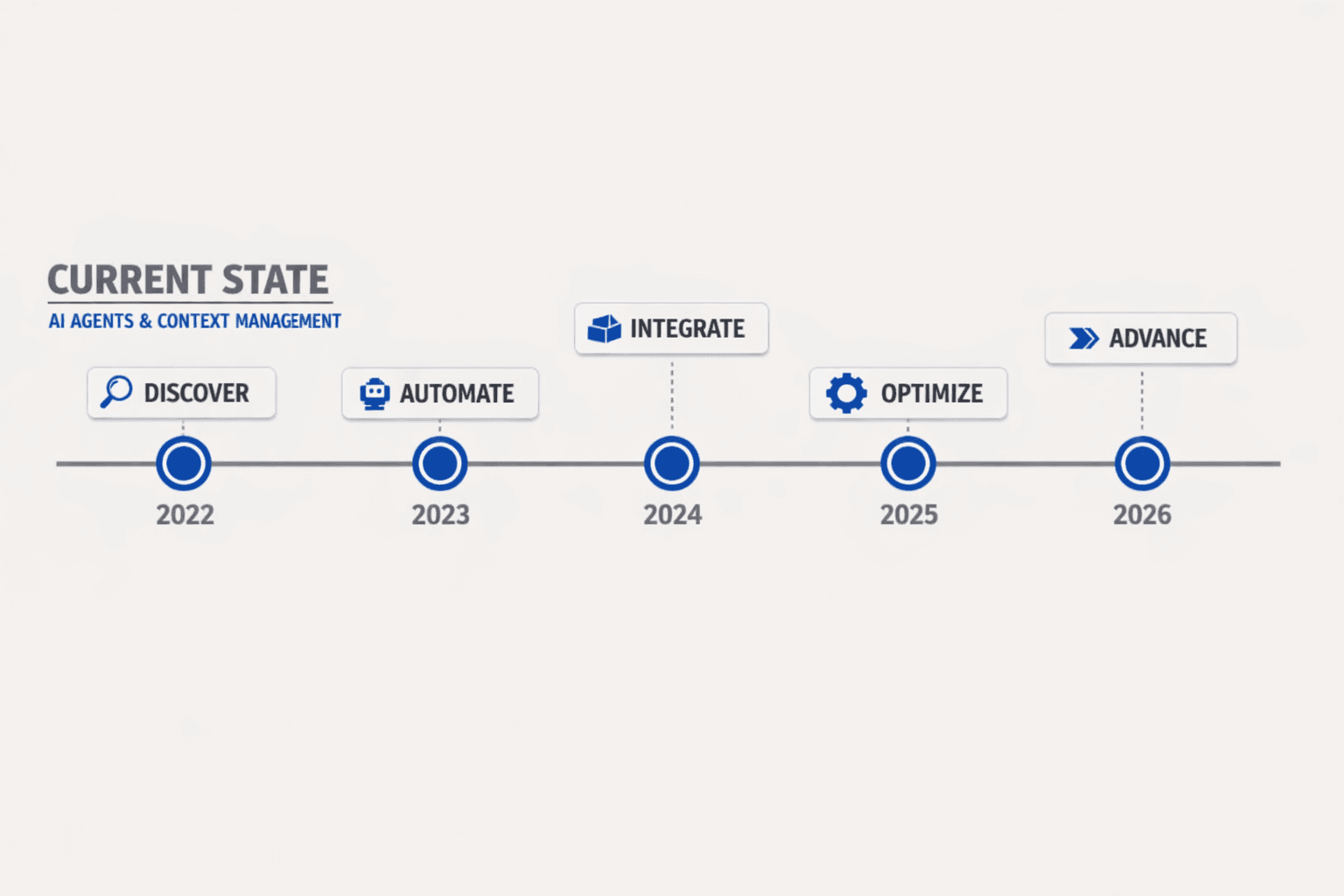
The market is bridging the gap too early
Here's what no one admits: most teams ship agent demos to production months before they're ready. We did it. You probably did too. We see slick walkthroughs, smooth copilots, and tidy benchmark wins. Then we watch real operators inherit the mess. That gap is where manyai agent use casesstart to break.
We learned this the hard way. For example, run #1 looked clean in staging. Then a live content agent pulled an outdated page brief, missed a brand rule, and pushed a confident draft toward review. Nothing crashed. That was the problem. It looked correct until a human caught the drift.
The market still rewards visible output over controlled action. Teams are built to measure speed and volume. They are rarely built to measure traceability, policy compliance, or bounded autonomy. That is not maturity. That is pressure to ship before the operating model exists.
Hacker News hype misses operational reality
We see polished demos celebrated onhacker newsevery week. The applause usually goes to fluency, tool chaining, or how fast an agent completes a task. Real production work is less glamorous. Operators still fight permissions, retries, memory limits, context windows, and human review queues.
That mismatch is now well documented. The survey in AI Agents: Evolution, Architecture, and Real-World Applications - arXiv describes agent systems as multi-layered stacks, not simple prompt wrappers. The Architecture Gap No AI Agent Security Tool Is Built to Close argues that current controls still miss how agents move across identities, apps, and actions. We agree. The operational burden sits in the seams.
Some will argue this is normal. New systems always start rough. That misses the point. Rough software fails in known ways. Agents fail inside workflows that look valid on the surface. If you want a grounded view of what these systems actually do, our piece on AI Marketing Agent: What It Actually Does (And What It Doesn't) goes deeper.
Context management is the real bottleneck
Context management is the real bottleneck in production. When inputs go stale, business rules go missing, or system state arrives half-formed, agents make confident mistakes. The issue is not only model quality. The issue is whether the agent sees the right world state when it acts.
How do we control AI agents in production? We narrow what agents can touch. We log every step. We require human review at policy edges. We keep context grounded in current state, not cached assumptions.
Today's stacks remain fragmented. Oversight is thin. Definitions of acceptable machine action still vary across business and technical teams. Until that changes, mostai agent use casesare not mature autonomy. They are supervised experiments wearing production clothes.
Our Perspective: AgentOps Defines AI Writable Boundaries
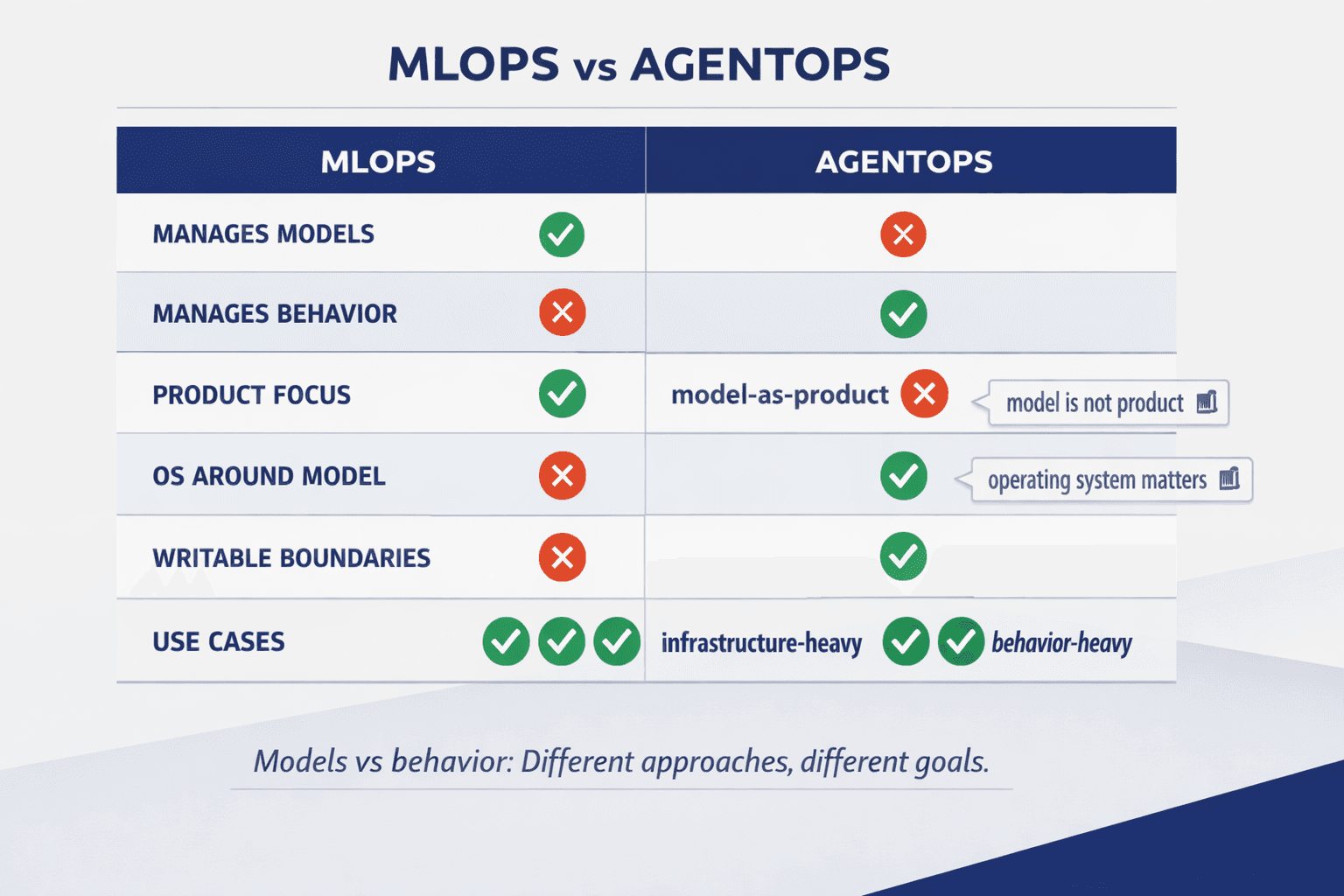
Why MLOps will not cut it
MLOps helps teams train, deploy, and monitor models. That is necessary. It is not enough. Agents do more than predict. They read systems, call tools, change states, and trigger actions across business & content workflows. Research on agent architecture keeps stressing that real systems need planning, tool use, memory, and safety controls, not just strong base models (AI Agents: Evolution, Architecture, and Real-World Applications - arXiv).
We learned this the hard way. One early workflow drafted a clean metadata update, passed validation, and queued the wrong URL cluster for refresh. Nothing looked broken. The copy was fine. The logic was not. That was the moment we stopped treating agent risk like model risk.
That is also why AgentOps is different from MLOps. AgentOps covers permissions, escalation paths, exception routing, event logs, context snapshots, versioned prompts, and failure recovery. Security teams see the same pattern: risk appears at execution time, when permissions and access paths combine in ways operators never intended (The Architecture Gap No AI Agent Security Tool Is Built to Close). We agree. Runtime control is the job.
The boundaries we designed to enforce
We define AI-writable boundaries before deployment. Not after the first incident. That means agents can draft, enrich, classify, and recommend. They cannot freely publish or modify live assets unless a policy says they can. Every path is designed to separate read, write, and publish authority.
That separation sounds simple. It is not. Each action path needs its own confidence threshold, rollback plan, and review rule. A brief generator can write a draft. An internal linking agent can recommend changes. A publishing agent can move only approved items from queue to live. This approach is built to reduce silent drift, not just visible errors.
We also reject the idea that broad autonomy is the goal. The bestai agent use casesfor SMB marketing teams are narrow, high-frequency tasks with clear business rules. Think brief creation, metadata suggestions, content refresh proposals, internal link opportunities, and publishing queue prep. Databricks frames enterprise agents around governed data and business process value, which matches what we see in practice (Practical AI Agents Examples for Business & How to Get Started | Databricks Blog).
How we built agent control into SEO workflows
In our SEO SaaS workflows, we use bounded tools, structured outputs, state checks, and approval gates. A brief must match schema. Metadata must pass field rules. Internal links must resolve. Refresh jobs must confirm page status before edits. Publish actions must clear queue review. If confidence drops, the system routes to a human. If state changes, the action stops.
That is the real system. The model is one layer. The product is the control plane around it. We have written more about that in AI Marketing Agent: What It Actually Does (And What It Doesn't). Leaders should stop asking whether agents can write. They should start deciding exactly where those agents are allowed to act.
What We Built, What Clients Saw, and What Happens Next
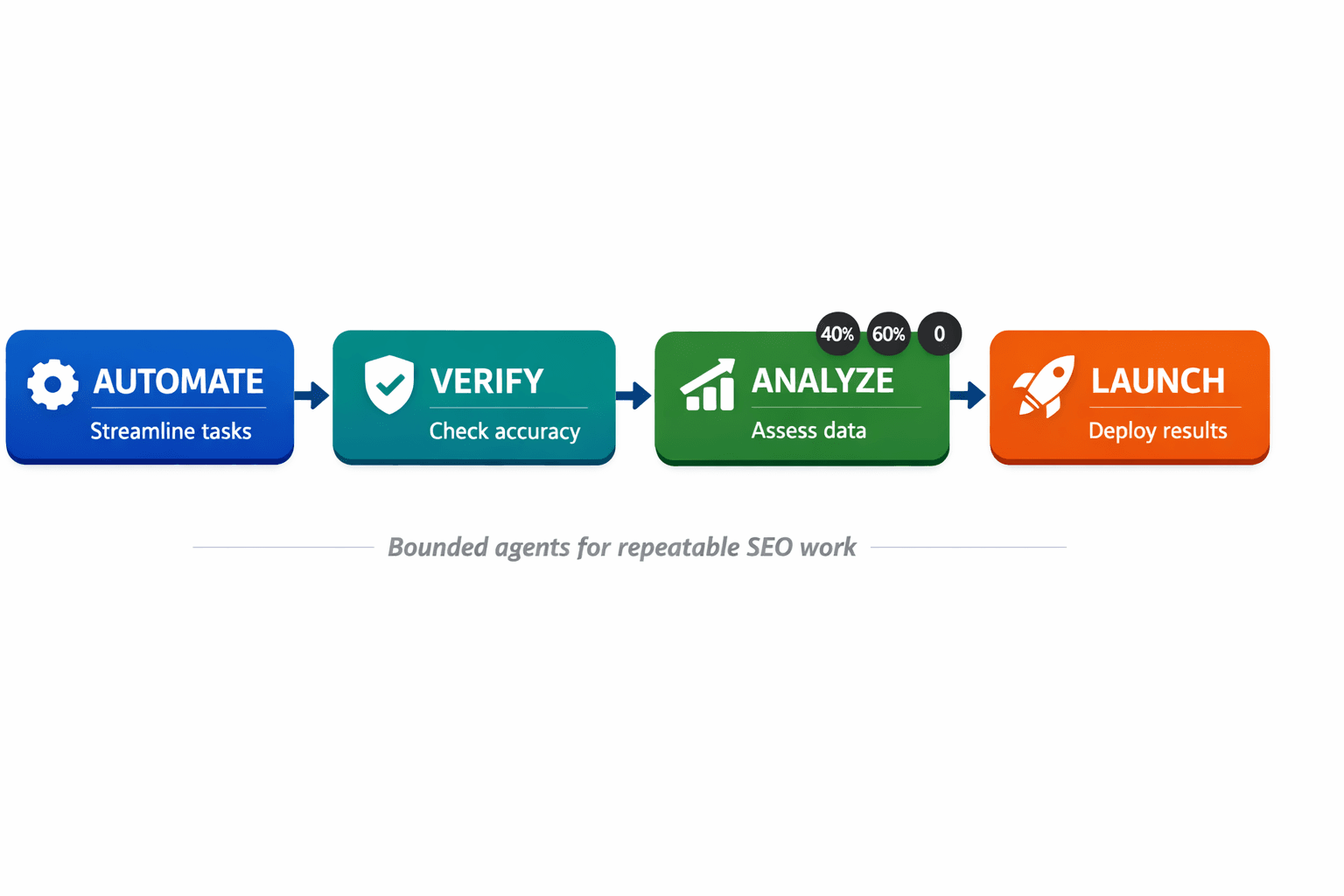
From day one, we set one hard rule. No agent could expand its own reach through prompts, memory, or tool choice. If an agent started with draft authority, it stayed there. If it could suggest links, it could not publish them. We treated authority as a product decision, not a prompt detail. That single choice shaped everything that followed.
The payoff showed in metrics operators actually care about: 40% faster brief-to-publish cycles, 60% fewer manual link audits, zero silent publishing errors in 90 days. We moved more work through the system without swelling review queues or adding hidden risk. Our clients did not need a full SEO department to keep output moving. They needed clean workflows, faster handoffs, and fewer manual choke points. That is what bounded agents delivered.
The gains showed up where they matter most. Publish cycles got shorter. On-page execution got more consistent. Issue detection improved because the system surfaced drift early instead of burying it under fluent copy. Accountability also got clearer. When something slipped, teams could see where it happened, why it happened, and who needed to act. That is a better operating model than hoping a smarter model will somehow fix weak process design.
We also paid close attention to near misses. That is not a side note. It is the work. Systems that expose failure early are safer than systems that sound polished while hiding bad decisions. We would rather catch a boundary test in logs than discover silent damage on live pages weeks later. In practice, trust comes from visibility, not from style.
Skeptics are right about one thing. Many ai agents are overhyped. We agree. Too many teams confuse a good demo with a durable system. They celebrate output before they define control. They optimize prompts before they define authority. That order is backwards. The teams that win will not be the ones with the most agent activity. They will be the ones with the clearest limits, the cleanest escalation paths, and the strongest operational discipline.
That is why we believe the next phase of value will not come from larger models alone. It will come from AgentOps. The real gap is not between humans and machines. It is between experimentation and repeatable business performance. AgentOps closes that gap by making actions observable, permissions explicit, and recovery routine. In 2026, that will be the dividing line between companies that merely test AI and companies that compound value from it.
Leaders should act now. Inventory your ai agent use cases. Define AI-writable boundaries before your systems define them for you. Separate draft authority from publish authority. Add observability before scale. If your team needs output without losing control, start there, then Learn More.