AI Overviews Tracker Deep Dive: How to Know When Google's AI Sees You

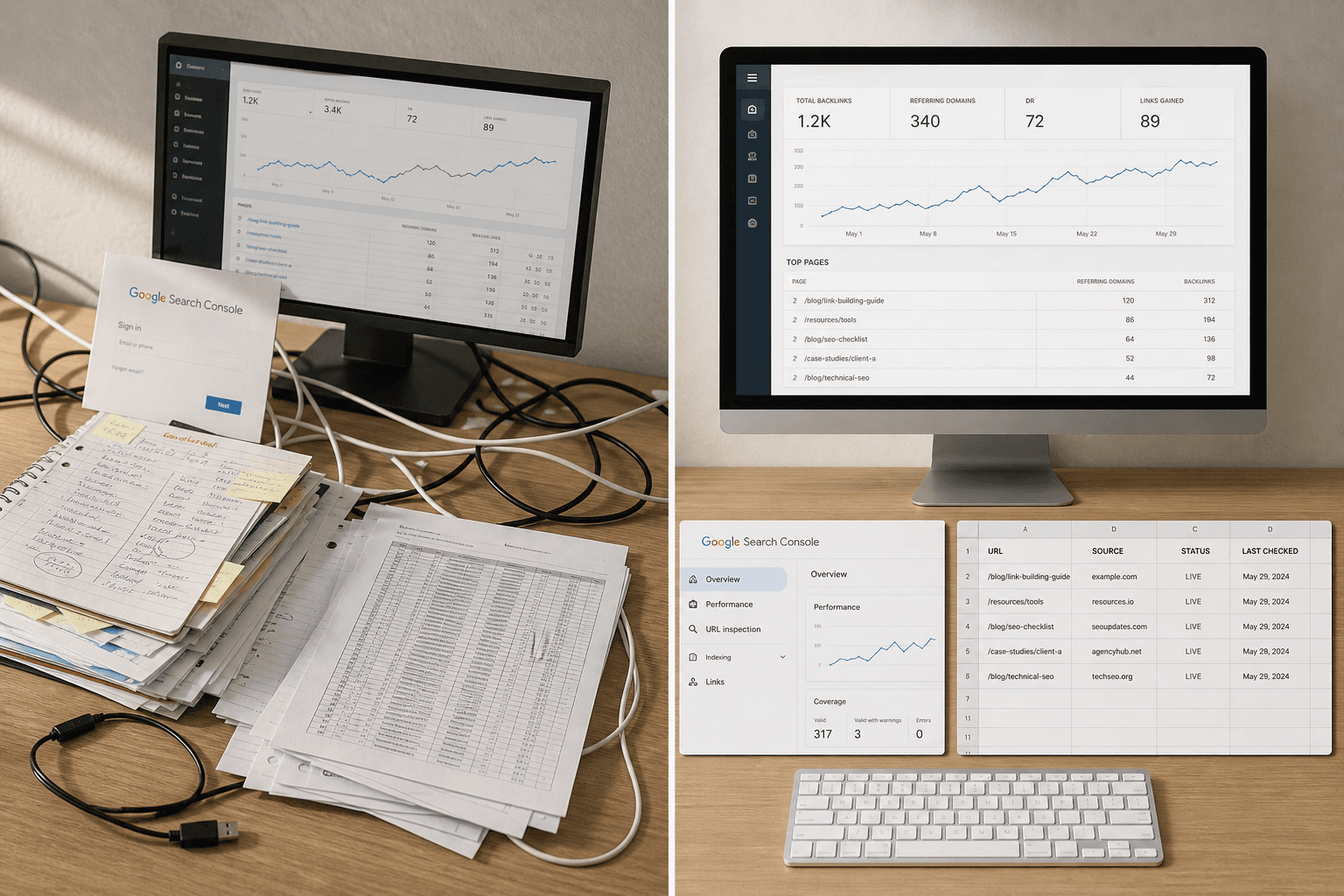
AI overviews tracker is no longer optional for serious SEO teams. If you still measure success with blue-link rankings alone, your reporting is already behind. Google keeps shifting attention toward answer-level visibility, and that changes how brands earn clicks, trust, and demand. How AI Is Changing Google Search and SEO shows this shift has been building for 15 years - part of a larger evolution in how users interact with search results.
We built our ai overviews tracker because most teams cannot see that change clearly inside old dashboards. Our view comes from building AI-driven SEO workflows and watching client visibility move in live search environments.
In this article, we will show why this matters now, what we built, and how teams should adapt content strategy fast. Data from How AI Is Changing Google Search and SEO also points to a 10-year change in search behavior.
Why Most AI Overviews Tracker Tools Miss the Point
Ranking alone is not visibility
What is an ai overviews tracker? At its best, it shows when your brand appears, why it appears, which page earned the mention, and how often Google cites it across prompts. That is very different from simple ai overview ranking.
Most tools flatten that into one number. That sounds neat, but it hides the truth. An overview can mention your brand once, cite three competitors, and still count as a win. We do not call that visibility. We call that false precision.
Snapshots without context create false confidence
We learned this the hard way. For example, run #1: GPT gave us “LithuaniaTech.com.” We clicked. 404. The answer looked polished, but the source trail was weak, unstable, and hard to trust.
That moment changed our thinking. A screenshot of one result tells you almost nothing. A useful system should connect the prompt, the cited URLs, the live SERP, and what changed from the last run. How AI Is Changing Google Search and SEO shows that teams can spend 30 minutes checking this by hand. That is exactly the problem.
Can you track ai overview ranking accurately? Only partly. You can track appearance, placement patterns, and citation frequency. But without context, the metric creates confidence your team did not earn.
Why small teams need workflow level automation
This matters even more for startups and SMBs. Research from New front door to the internet: Winning in the age of AI search shows 50% of users already use AI-powered search today. That means content strategy cannot stop at monitoring.
A real tracker should tell a team what to do next. Which prompt lost coverage? Which cited page gained ground? Which article needs an update? Which draft should publishing push today? That is the bridge between generative ai visibility and actual execution.
Some will argue dashboards are enough. We disagree. New front door to the internet: Winning in the age of AI search found traffic shifts can spike as high as 1536% in AI search journeys. When movement happens that fast, reporting alone is too slow.
Leaders should stop buying prettier dashboards. They should start building systems that turn signals into action. The winner in AI search will be the team that ships faster, not the team that stares longer.
Current State of Google AI Overviews and AI Search
What is actually changing in the SERP
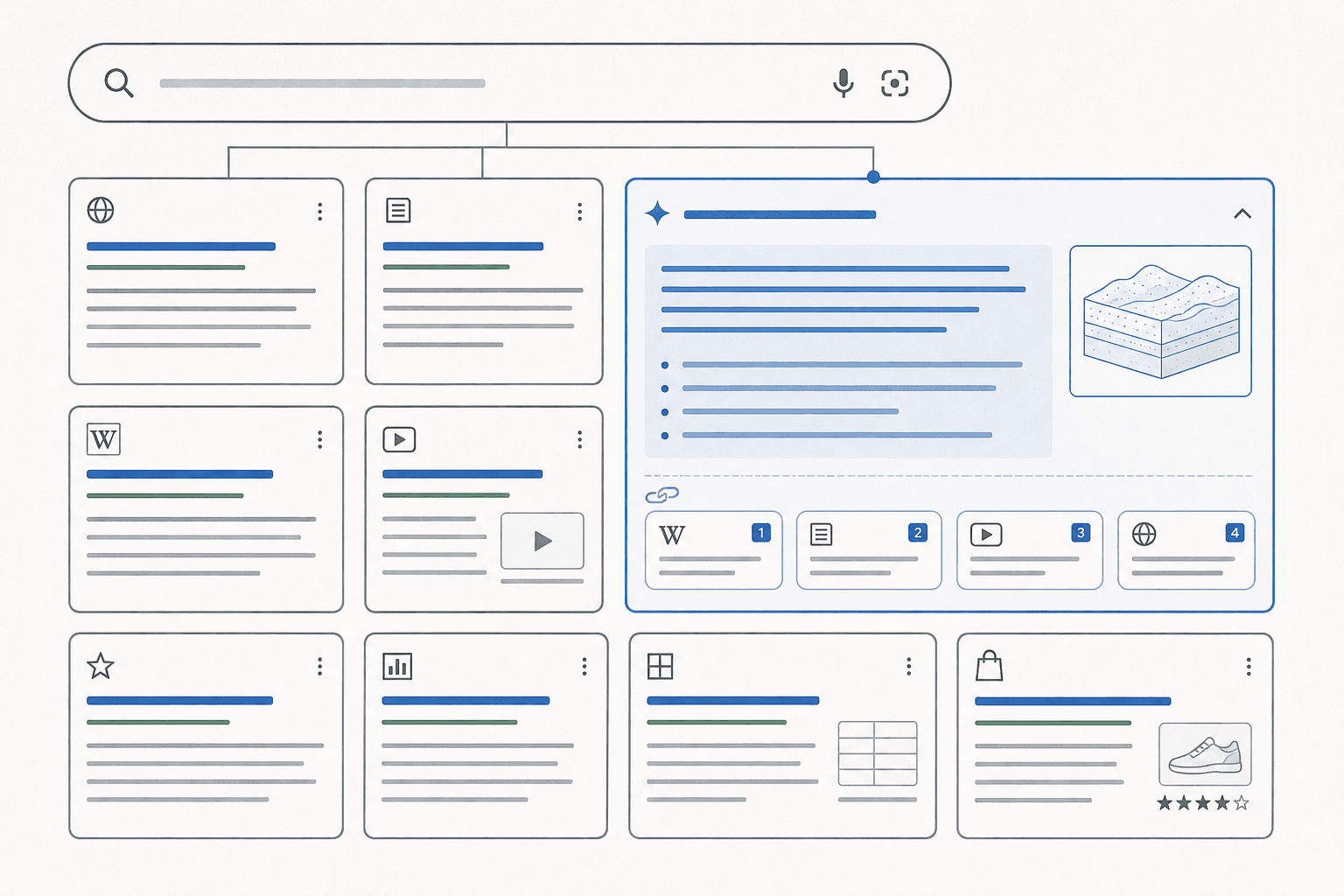
Google AI Overviews are changing SEO before rankings fully explain the shift. Users now judge the answer, the sources, and the brand cue first. The click often comes later, if it comes at all. That is how google ai overviews affect SEO in practice.
What changed is not one new box. It is a moving answer layer. Formats shift by query. Citations rotate. Page links appear, disappear, then return. Evergreen Media's 2025 analysis shows that AI Overviews are constantly evolving, with their appearance and format shifting based on query type and user context.
We felt this mess early. One week, we had 47 browser tabs open. We were comparing the same query across devices and times of day. Nothing held still long enough for a clean report. That was the moment we stopped treating AI visibility like a normal rank check.
Why reporting lag is now a growth problem
Most teams still measure this shift too late. They wait for traffic loss, then panic. That is backwards. By the time sessions dip, the answer layer may have already shaped brand preference and filtered which clicks remain.
Research from New front door to the internet: Winning in the age of AI search found that AI powered search is already influencing consumer decisions earlier in the journey. That means impression quality matters more than raw volume. An informed click is different from a casual one.
This is why an ai overviews tracker cannot just log presence. It has to show answer context, citation churn, and query intent. Otherwise, teams confuse volatility with failure and miss assisted discovery happening upstream.
For a visual walkthrough of this process, check out this tutorial from Surfer Academy:
The signals marketers keep misreading
The biggest mistake is overreading traffic dips and underreading source inclusion. If your page gets cited, mentioned, or shapes the answer, that still has value. SEO now includes influence before the visit, not just clicks after it.
Some marketers respond by declaring classic SEO dead. I think that misses the point. Generative Engine Optimization (GEO) can help teams frame how generative AI pulls answers together. But it's still useful as a lens, not a scoreboard. It's not a replacement for disciplined SEO measurement.
Data indicates major money will move through AI search soon (New front door to the internet: Winning in the age of AI search). That makes sloppy measurement expensive. Leaders should stop chasing every wobble in clicks and start measuring answer visibility with far more discipline.
Our Perspective on AI Overview Ranking and Content Strategy
Why we built our tracker
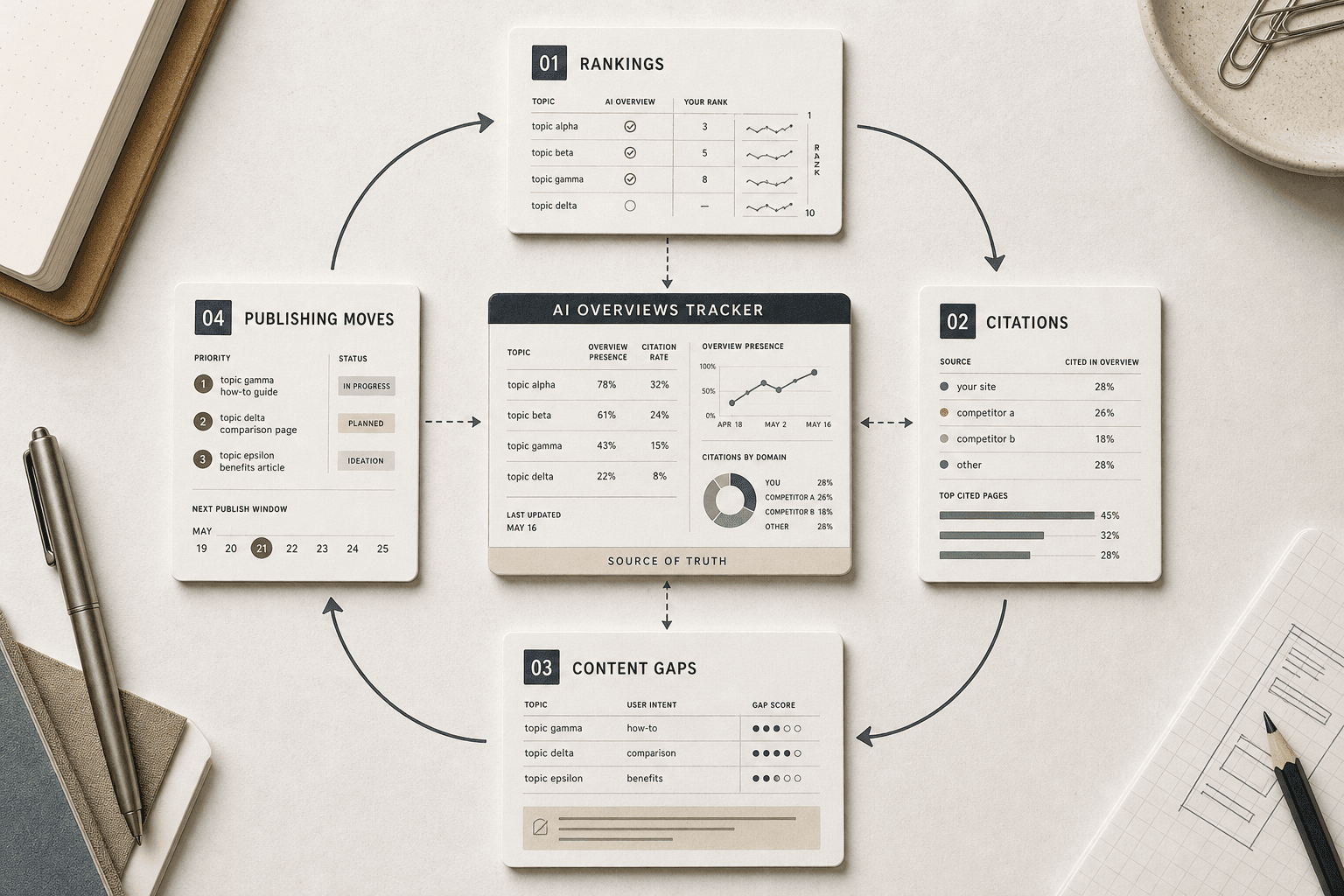
We built it after watching smart teams lose time in the wrong places. One week, we had 47 browser tabs open. Query exports sat in one sheet. AI answers sat in screenshots. Content briefs lived somewhere else. Nobody could say which page to fix first.
That was the break point. We saw that standard reports answered the wrong question. They showed position changes, then told teams to learn more: watch the trend, inspect the SERP, and make a judgment call. That's not a system - it's delay disguised as analysis.
The bigger shift made that gap impossible to ignore. According to New front door to the internet: Winning in the age of AI search, AI-driven discovery could influence $750 billion in US commerce by 2028. At the same time, Google AI Overviews: What's Changing for SEO & SEA in 2025 found AI Overviews appeared for up to 12.5% of queries in its analysis. Flat rank charts were no longer enough.
How our implementation works
Our implementation begins with query clustering. We group close variants by intent, not just by shared words. Then we run prompt variation, capture the SERP, extract citations, map each cited URL to a live page, and push alerts tied to the next action.
That last part matters most. We don't tell teams to 'learn more' and disappear. We show what page to update, what angle to expand, and which terms deserve fresh content now. If a comparison query cites weak third-party pages, we know where authority is thin. If an explainer query skips a core guide, we know the page structure or framing missed the mark.
We also learned that visibility needs context. Google AI Overviews: What's Changing for SEO & SEA in 2025 notes some query sets show rates near 3%, while others run much higher. That volatility is why anai overviews trackermust connect rank movement to answer inclusion, not treat them as separate worlds.
What changed for clients after rollout
Client impact is where this gets real. After rollout, refresh cycles got faster. Prioritization got tighter. Teams stopped debating what looked interesting and started shipping what had clear search value.
We saw the biggest change on queries where standard rank reports looked flat. A page could hold its position and still gain or lose answer-level presence. Once teams saw that, their content strategy changed. They refreshed sections with missing definitions, added tighter comparison blocks, and published new pages where citation gaps stayed open.
Some teams will argue this adds process. We think it removes waste. How AI Is Changing Google Search and SEO reinforces the same idea: search is becoming more answer-driven, so content teams need clearer inputs and faster edits. Leaders should stop treating AI visibility as a side metric and start using it to drive content decisions every week. In AI search, speed beats perfection.
What Generative AI Means for Search Next
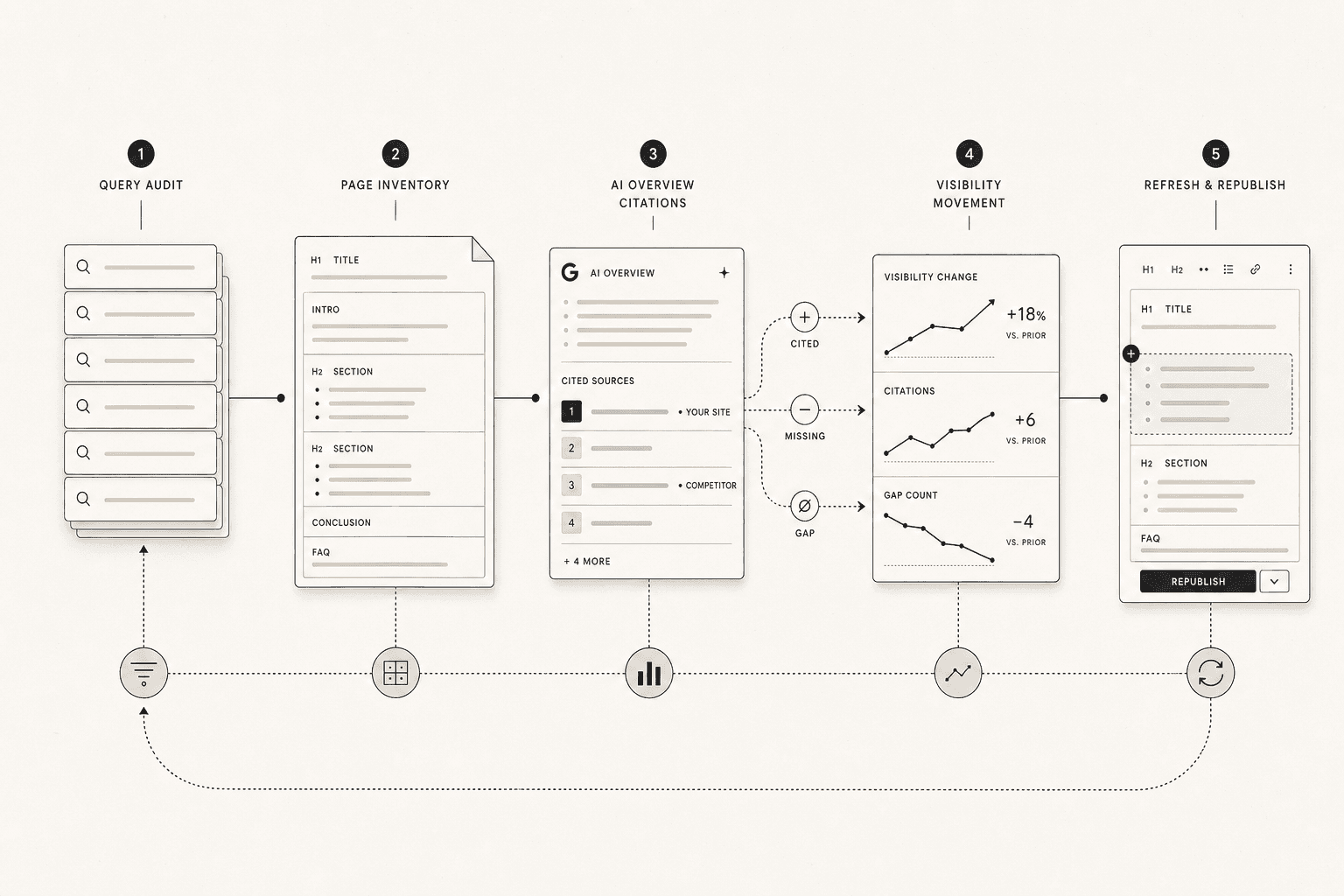
That is why an ai overviews tracker matters now. Not as another dashboard. As an operating system for action. We need to see which queries trigger google ai overviews, which pages earn citations, and where answer quality breaks down. That is the real job in ai search. Track the surface. Find the pattern. Ship the fix.
There is a fair counterargument here. AI Overviews are volatile. Citation patterns move. Query coverage rises, then drops. We agree. That is not a reason to ignore measurement. It is the reason to improve it. When a search environment changes this fast, weak reporting becomes expensive. Teams do not lose because the signal moved. They lose because they were not watching the right signal.
Our prediction is blunt. Winners will not be the teams chasing one perfect ai overview ranking number. Winners will connect visibility to output. They will tie ai search performance to content production, refresh velocity, internal linking, and distribution. They will treat generative ai search as a live content system, not a static SEO report. That shift will separate serious operators from teams still debating old dashboards.
Some will argue the space is too early to systemize. We think that misses the point. Volatility does not remove the need for process. It increases it. If citations rotate, your content strategy must tighten. If answer formats shift, your pages need source worthy structure. If discovery spreads across more surfaces, your publishing flow must keep up. Insight only matters if it changes what your team does on Monday morning.
The move now is practical.
- Audit your core query set.
- Track AI citations and page contribution.
- Update weak pages with clearer structure and stronger evidence.
- Increase refresh speed.
- Automate the boring publishing work that slows execution.
We built our workflow around that reality, and the payoff is simple: faster decisions, cleaner priorities, and stronger visibility across the queries that actually drive growth. If your team wants a simpler way to act on that data, try our AI Overviews tracker.