AI Spam Killed Generic SEO Content — Here's What Google Rewards Now

AI SEO content used to be enough. Now it is not. Google wants proof, not polished filler, and thin pages are losing ground fast. In July 2026, that shift got harder to ignore as Reddit threads, niche forums, and trusted brands took more space in search results. Google's official guidance on AI-generated content notes the company has spent 10 years improving systems to surface reliable, high-quality results.
We built MygomSEO for this reality. Our AI-assisted publishing workflows help teams turn first-hand experience, original research, and brand signals into content Google can trust.
In this article, we will show what changed, what Google rewards now, and how to adapt your seo content strategy fast. If your ai seo content still sounds smooth but says nothing new, it will not win.
TLDR for AI SEO Content Teams
What changed fast
- AI SEO content still works in 2026, but only with proof.
- Google now favors pages that show lived use.
- It also favors unique data and clear trust signals.
- Generic AI-generated content is easier to ignore now.
- Reddit and forum threads keep climbing in search results.
- They often sound human because they are human.
- They show edge cases, failures, and real buyer language.
- We felt this hard one night: 47 tabs open, still guessing.
Who should care now
- In-house teams should care if traffic depends on non-brand terms.
- Founders should care if one blog post must pull leads.
- Agencies should care if content creation still means volume first.
- If your pages read like everyone else, risk is rising.
- Reddit and forums rank higher in Google now because they show real expertise in public.
- They also capture honest comparisons and messy use cases.
- Google's own guidance says quality matters more than production method in Google Search's guidance about AI-generated content.
What we would stop doing first
- Stop shipping interchangeable pages built from the same prompt.
- Stop hiding experts behind polished but empty copy.
- Stop treating publishing speed as the main win.
- Start building systems that pull quotes, proof, and opinions.
- Start turning customer evidence into stronger content creation.
- Start making brand authority visible on every page.
- According to SEO Techniques for AI-Generated Content \| Overdrive, 2% is not a moat.
What Google Helpful Content Rewards Now

EEAT SEO 2026 is the real gatekeeper
EEAT SEO 2026 matters because it filters out thin content fast. Google’s own guidance says automation is not the issue on its own. The issue is low-quality content made mainly to manipulate rankings. Google Search's guidance about AI-generated content
That changes how you should think about trust. An author box helps, but it is not enough. Google helpful content leans toward pages that show real examples, screenshots, source links, and clear claims tied to real outcomes. The proof on the page matters more than decorative trust badges.
We learned this the hard way. During a recent competitive research sprint, we kept hitting the same problem: dozens of tabs open, all saying exactly the same thing. The pages that actually helped us had receipts. They showed examples, named tools, and explained what happened next.
Original research beats generic summaries
Generic summaries are easy to produce. They are also easy to replace. If your page just rewrites what ten other pages already said, Google has little reason to keep ranking it.
Original research gives a page staying power. That can mean first-party data, customer patterns, internal tests, expert commentary, or a fresh angle from your own workflow. Research from SEO Techniques for AI-Generated Content | Overdrive shows 80% of consumers prefer human-written copy over AI-written copy. That does not ban automation. It raises the standard for content creation.
The best ai seo content now starts with raw material only your team has. Then AI helps shape it. That is a very different process from prompting a blank page.
Brand signals matter more than ever
Brand trust no longer lives only on your domain. It travels across every place you publish, reply, and share on. Mentions, reviews, branded searches, podcast appearances, customer quotes, and consistent positioning all help reinforce credibility.
This matters because search engines do not evaluate pages in a vacuum. Content marketing platform Skyword notes that search engines now evaluate brand mentions across the web, not just on-domain signals. They can see whether a brand shows up elsewhere and whether people talk about it with context.
If your site says one thing and the wider web says nothing, that gap hurts. If your brand keeps appearing in communities and niche conversations, trust compounds.
Why real voices are winning clicks
Content that sounds like everybody else fades into the background. It gets skimmed, ignored, and replaced. Real voices win because they carry judgment, tension, and specifics.
That is what Google appears to reward instead of generic AI-generated content. Not robotic polish. Not endless sameness. It rewards useful perspective, clear evidence, and a voice readers remember and click to again.
Breaking Changes for Helpful Content and Search Results
What stopped working
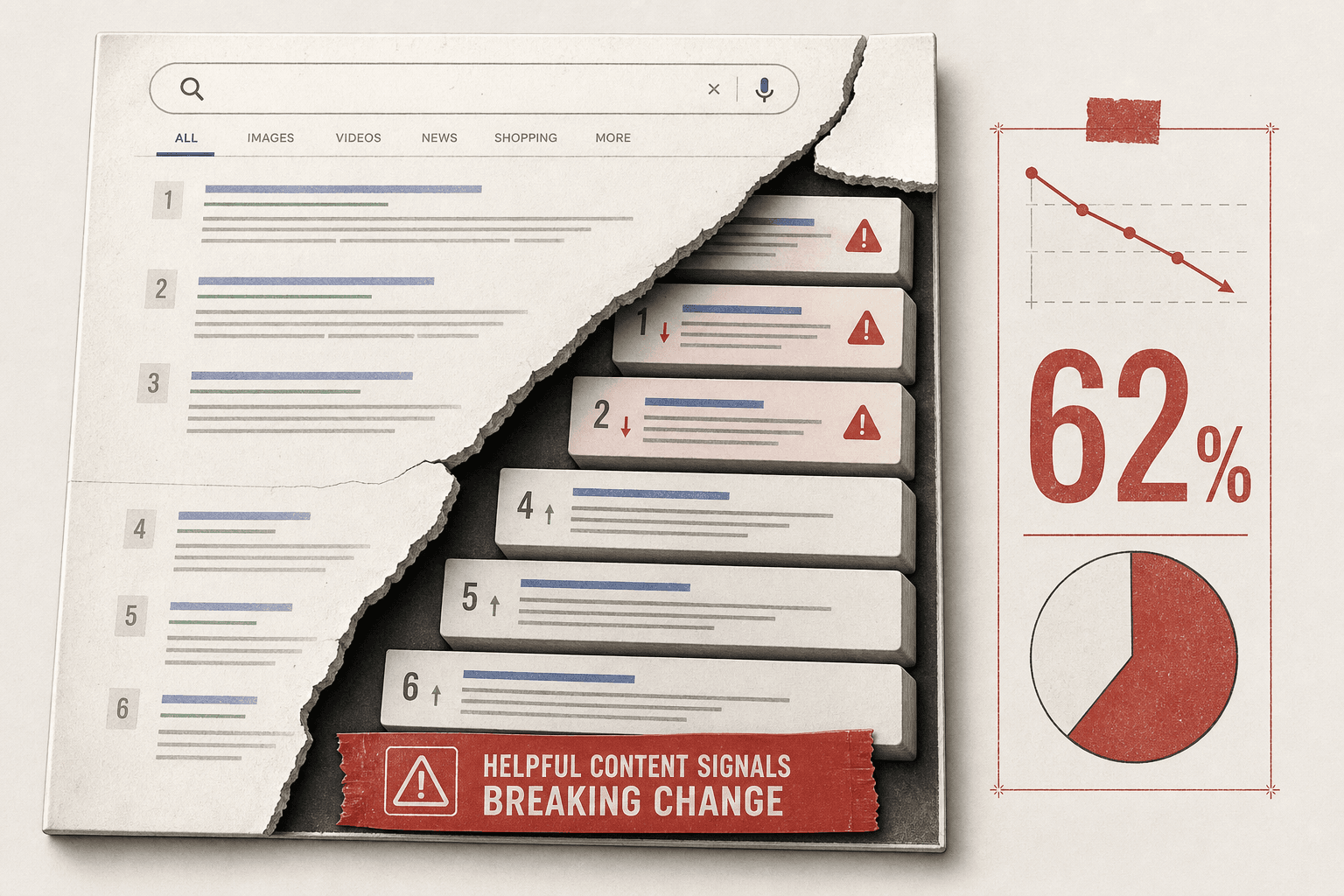
The first break is simple. High-volume AI output with low originality is no longer a reliable growth play. Pages built from summaries, rewrites, and thin keyword swaps now fail more often because they add no clear reason to rank. Google’s guidance says automation is not the issue by itself. The issue is content made mainly to manipulate rankings, not help people Google Search's guidance about AI-generated content.
The second break is more subtle. Search results now reward language that feels used, tested, and specific. Generic intros, padded definitions, and polished nothingness read like stitched summaries. They may still look clean, but they feel detached from real use. That weakens trust.
The third break hits conversion-first pages. If the page exists only to push readers to click to a demo, lead form, or affiliate step, it has less value on its own. Helpful content must solve the query first. Then it can guide the next action.
This is why weak ai seo content is slipping. The problem is not only the draft. It starts earlier, in how teams gather proof.
Before and after content examples
Before, a page might say, “Email marketing helps businesses improve engagement.” That line is neat, safe, and forgettable. It could fit any site.
After, the stronger version sounds grounded: “We cut unsubscribes after shortening our welcome series from five emails to three.” That sentence carries friction, choice, and outcome. It sounds lived in.
We learned this the hard way. For example, run #1: GPT gave us “LithuaniaTech.com.” We clicked. 404. That was the moment we stopped treating quality as a polishing step and started treating it as a research system.
Can helpful content still be created with AI tools? Yes. But AI works best as an assistant, not a substitute for judgment. Google’s own guidance supports using automation when the result is useful and people-first Google Search's guidance about AI-generated content.
Why forum style content now competes harder
Forum pages often sound messier, but they also sound real. They include doubts, tradeoffs, failures, and direct answers. That makes them harder to fake and easier to trust.
They also match what people want from search results. Users want specifics, not polished filler. Research from SEO Techniques for AI-Generated Content \| Overdrive shows a 20% lift in click-through rates in one cited example when AI-assisted content was improved through human editing and optimization.
So what types of AI content are losing rankings now? Mass-produced explainers, fake-expert listicles, and pages written only to click to the next funnel step. Helpful content still wins, but only when the workflow creates evidence during research, drafting, review, and publishing. That is the standard MygomSEO is built to support.
The Shift Favors Teams With Proof
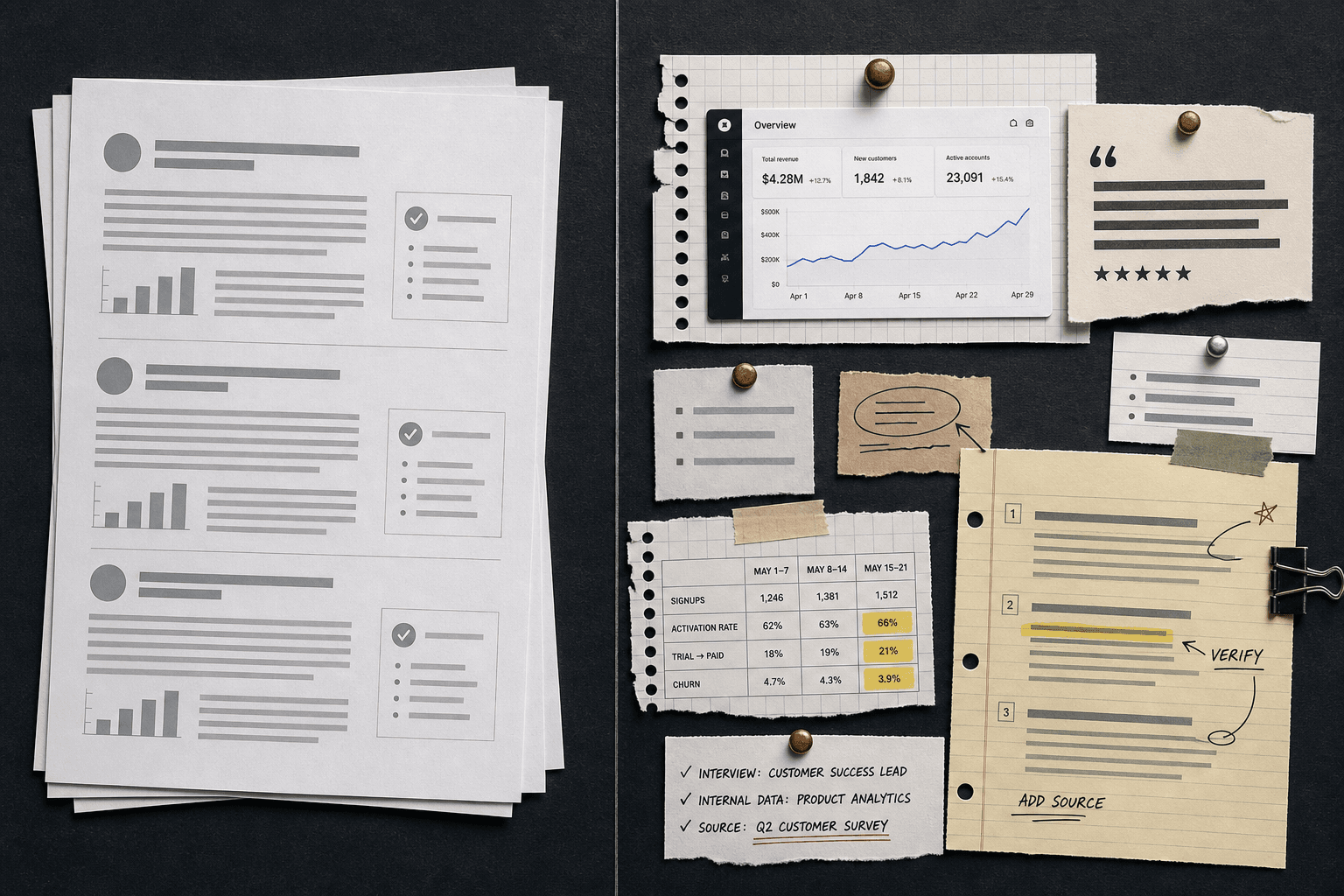
We built MygomSEO to help teams move from volume-driven publishing to evidence-backed execution. That means better briefs, cleaner source capture, tighter expert input, and stronger consistency checks before anything goes live. AI still does the heavy lifting, but it does not get the final word. Your operators, founders, customers, and product data supply the layer that generic content cannot fake.
In practice, the work usually starts with cleanup. We look for pages that feel thin, over-tuned, or too interchangeable to earn trust. Then we rebuild them around real inputs - product insight, customer language, internal expertise, screenshots, proof points, and source material that gives each page a clear reason to exist. That process turnsai seo contentfrom a drafting shortcut into a real publishing system.
That matters because Google is no longer rewarding polished sameness. It wants signs that a page came from people who know the topic, not just tools that can mimic it. Structured prompts help. Editorial guardrails help. Review workflows help. But the real advantage comes from combining speed with lived experience, so the final page sounds informed, useful, and connected to a real brand.
The impact is usually clear fast. You publish fewer pages, but each one carries more weight. Topic authority gets stronger because your content stops competing with itself. Branded engagement improves because readers find a point of view, not just a recycled answer. And bounce-prone traffic becomes more valuable because the page gives people a reason to keep exploring your company.
This is the practical path forward forai seo contentteams. Keep the efficiency. Drop the filler. Build workflows that pull in proof before publication, not after rankings slip. That is how you create pages that can survive tougher search results, stronger community competition, and a much higher bar for trust.
If your current content engine still runs on bulk output, now is the time to rebuild it around evidence, expertise, and brand signal. Try MygomSEO Free if you want a simpler way to create and share stronger publishing workflows.