Backlink Monitoring in 2026: The 7 Metrics That Actually Predict Ranking Changes
Backlinks monitoring is the difference between a small dip and a real ranking slide. It means tracking lost links, weak new links, anchor text changes, broken backlinks, and domain rank shifts before keyword rankings and organic traffic start slipping. According to SEO Performance 2026: Essential Metrics to Track, 70% of SEO performance depends on the right metrics, not more activity. That is why quiet link decay matters. A weak replacement link can hurt as much as a lost strong one. This list breaks down three tools that track the signals that actually matter, then compares which one alerts teams fastest. The focus stays practical: simple workflows for small marketing teams and founders, not bloated enterprise dashboards.
How Backlinks Monitoring Tools Were Evaluated
Core metrics that signal ranking risk
The review focused on backlinks monitoring that flags risk early. Each tool was scored on four core signals: domain rank changes, anchor text shifts, broken backlinks, and link velocity trends. Those metrics answer a basic question: what should a seo backlink monitor track? It should track link quality, link context, link status, and pace of acquisition.
For example, a trusted site can link today and vanish next week. A sharp drop in domain authority, or a sudden spike in exact-match anchors, can signal trouble fast. Research from Web Tonic™ shows rank tracking tools reach 90%+ accuracy, so backlink events should connect clearly to keyword rankings.
Alert quality and reporting speed
Secondary scoring looked at usability, alert depth, and reporting clarity. It also checked whether each seo link tracker tied backlink changes to organic traffic, not just raw link counts. That matters because a long report means little if the real issue stays buried.
For example, one broken homepage link may hurt more than ten weak directory links. According to SEO Ranking Factors Study 2026: 12 Signals That Actually Move Rankings, 40% can separate stronger results from weaker ones on key SEO signals. The best tools turn that kind of shift into clear alerts, fast.
Best fit for lean SEO teams
Lean teams need simple workflows and fast answers. Backlinks monitoring should run daily for active sites, and at least weekly for slower sites. The biggest differentiator was simple: which platform warns teams before keyword ranking losses hit, instead of logging damage after the fact.
For small teams, Mygomseo stood out on that point. It surfaces ranking risk early, without enterprise clutter.
1. Mygomseo
Best for proactive ranking protection
Mygomseo is the strongest pick for teams that need action, not noise. Its approach to backlinks monitoring focuses on ranking risk first. That makes it the clearest answer to one question: which tool alerts teams before rankings drop?
The difference is simple. Many tools log new and lost links. Mygomseo helps teams see which changes matter now. For example, a startup may lose two links in one week. A raw report shows the loss. Mygomseo flags whether those links came from stronger domains and whether the change could hit keyword ranking next.
That matters because small position shifts can change outcomes fast. According to 7 PR Analytics Metrics to Dominate 2026 Search & AI, one page moved from position 15 to position 4 in 90 days and saw a 340% increase in organic traffic. A tool that catches backlink risk early gives teams more time to protect those gains.
What it tracks best
Mygomseo stands out on four practical signals. It tracks domain rank changes, anchor text shifts, broken backlinks, and unusual link velocity. Those are the signals that often explain why search performance starts wobbling.
For example, an anchor text shift can look harmless at first. Then branded anchors fall, exact match anchors rise, and page intent gets muddier. Mygomseo turns that pattern into a clear alert instead of another spreadsheet tab.
It also helps answer the second key question. Yes, lost backlinks can hurt keyword rankings. They can remove trust, relevance, and referral paths at the same time. SEO Tracking: Metrics, Tools & Reporting Guide | Web Tonic™ notes that lost high-authority links can trigger ranking drops within days.
Behavior signals add another clue. SEO Ranking Factors Study 2026: 12 Signals That Actually Move Rankings found that click-through rate from search showed a 22% year-over-year gain in correlation strength. When links break and snippets lose trust, weaker clicks can follow.
Where it wins and where it fits
Mygomseo wins on clarity. It gives in-house teams, startups, and founders a cleaner seo tracking workflow. The platform connects link events to likely impact, then points to the next fix. That saves time during weekly reviews.
It fits best where lean teams need fast judgment. For example, a founder checking Monday reports does not need fifty link rows. That founder needs one alert, one cause, and one next step. Similar guides on SE Ranking and Web Tonic stress that SEO tracking works best when metrics lead to decisions, not more manual audit work.
If the goal is fewer surprises, Mygomseo fits.
Ahrefs Alerts
Best for broad backlink databases
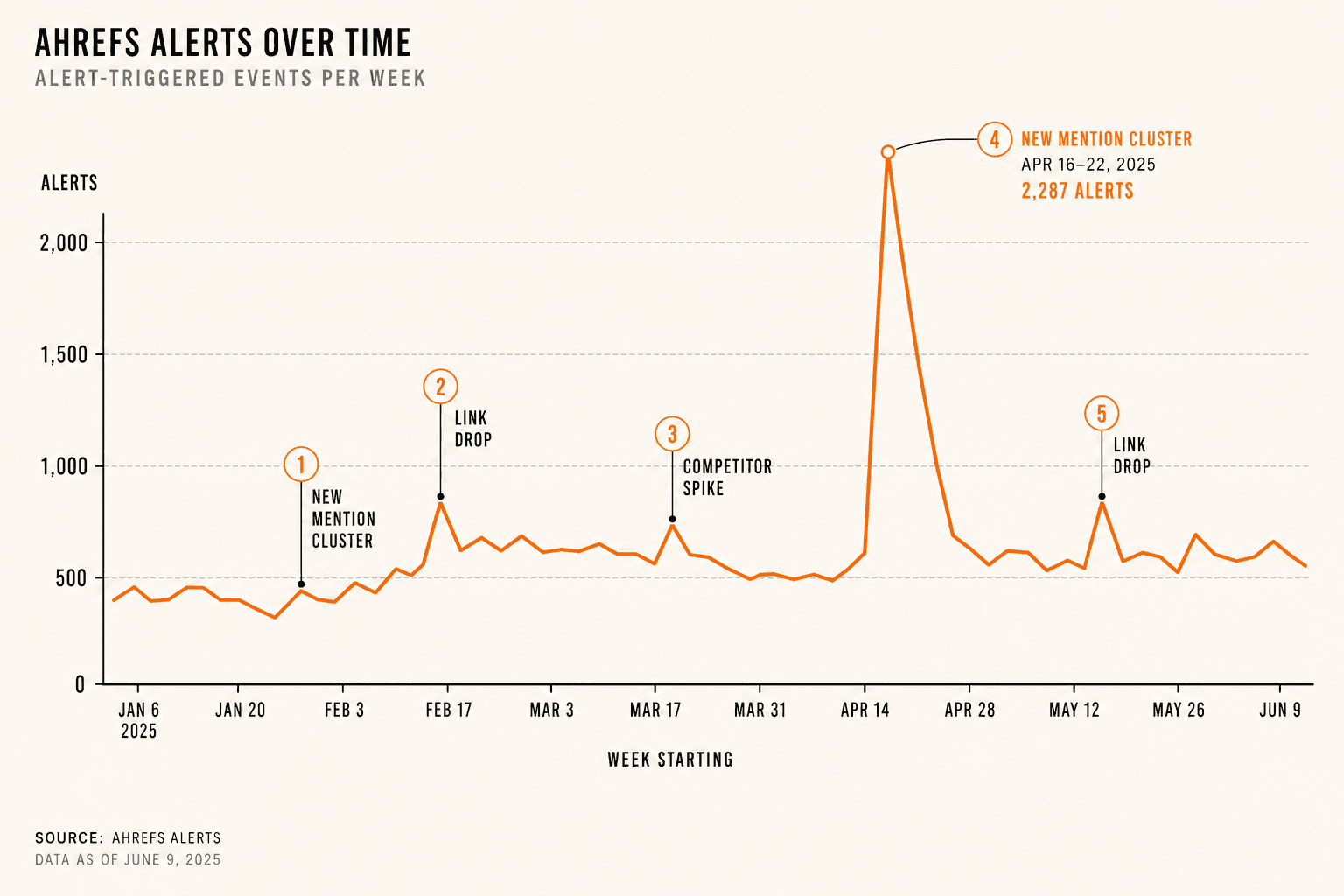
Ahrefs is a strong pick for teams with large link profiles. It pairs deep backlink tracking with a familiar dashboard. That matters when hundreds of referring domains change each month. For example, a content team can scan new links, lost links, and sitewide trends without leaving one workspace.
For backlinks monitoring, effective workflows start with a simple rule. Track new links, lost links, referring domains, and anchor text patterns in one view. Ahrefs handles that well. It also helps validate domain authority signals when a team needs a quick quality check. According to SEO Ranking Factors Study 2026: 12 Signals That Actually Move Rankings, 25% of ranking movement in one tested area came from information gain, which shows why link quality still needs context, not just volume.
What it tracks best
Ahrefs performs best when the goal is broad discovery. It surfaces fresh links, broken links, and lost referring pages with strong database depth. It also makes it easy to review anchor patterns and compare domains over time. That makes it a solid seo backlink monitor for larger sites.
The strongest setup is practical and repeatable. Teams should watch link gains, link losses, anchor text drift, and changes in domain authority side by side. For example, if a startup suddenly gains links with off-brand anchor text, Ahrefs makes that shift easy to spot. Research from 7 PR Analytics Metrics to Dominate 2026 Search & AI shows only 18.5% of digital PR professionals tie PR to stronger search visibility, which highlights why clean link review still gets missed.
Where it wins and where it fits
Ahrefs wins on database depth, interface familiarity, and all-in-one SEO utility. It is often the best seo link tracker for larger link profiles because it combines research, audits, and backlink tracking in one system. Similar tools may alert faster, but Ahrefs gives broader context around every link event. It feels more like a control panel than a single-purpose alarm.
That also explains its best fit. Ahrefs suits marketers already using it for audits, keyword research, and competitor reviews. Lean teams may find its alerts less action-led than tools built around ranking-risk warnings. Still, for businesses that want backlinks monitoring inside a wider SEO stack, it remains a reliable choice.
3. Monitor Backlinks
Best for simple link watchlists
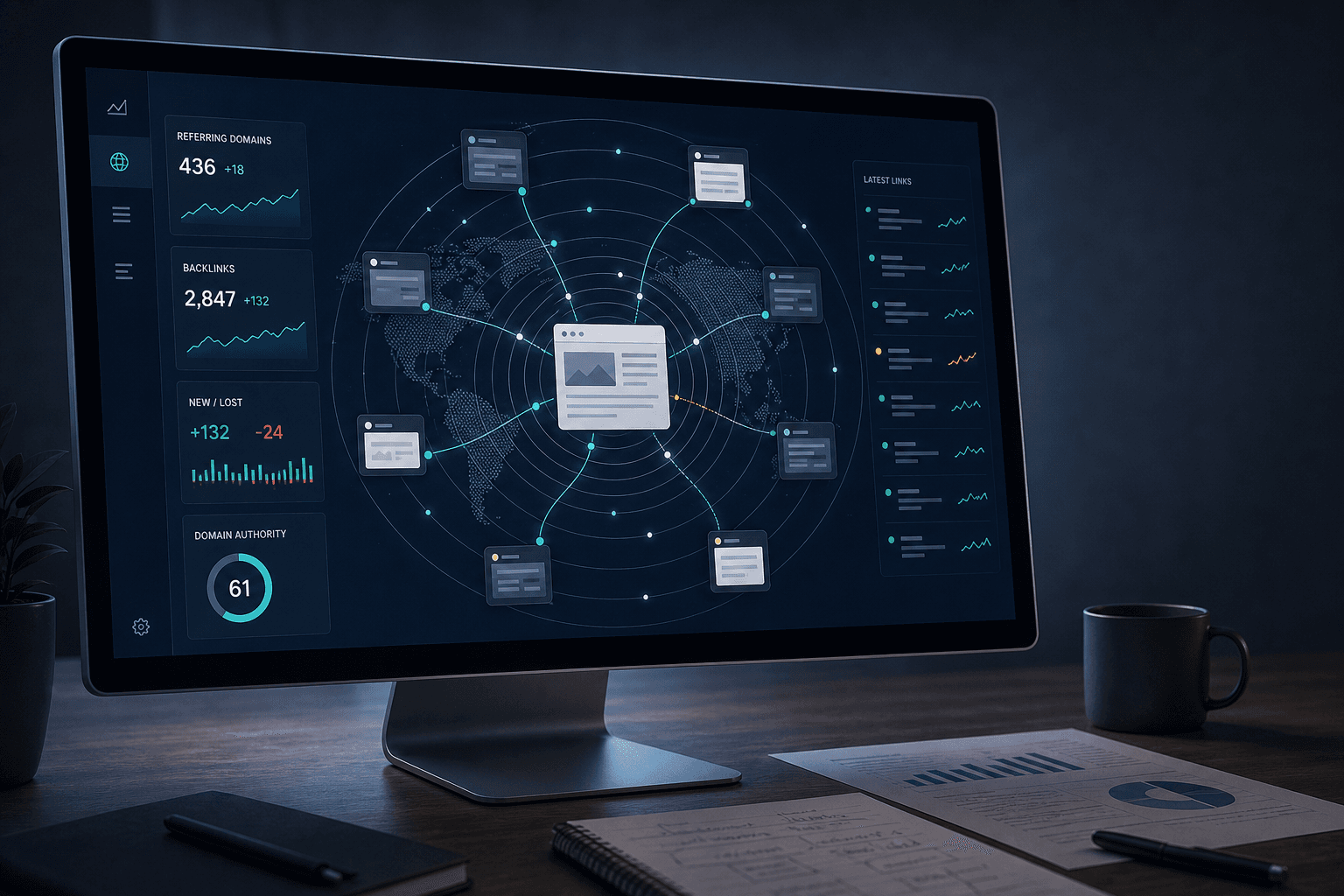
Monitor Backlinks is the lighter option in this group. It suits teams that want basic backlinks monitoring without a bulky platform. For example, a small SaaS site may only need a clean list of new links, lost links, and anchor text changes. In that case, Monitor Backlinks keeps the job simple.
Small websites can still benefit from link checks. SE Ranking notes that off-page SEO tracking should include new links, lost links, broken links, and link quality review (SEO Tracking: Tips and Tools to Monitor Your SEO Progress). That makes a lightweight seo link tracker worth it when budgets stay tight and reporting needs stay basic.
What it tracks best
Its best strength is coverage of the core tasks. It handles lost link alerts, anchor text review, and quick competitor checks well. For example, if a partner page removes a homepage link, the tool can flag that change before a monthly report misses it. That basic visibility matters for lean teams.
The gap shows up when analysis needs more context. Monitor Backlinks checks links daily but lacks velocity alerts - it won't flag when you gain 15 links in 3 days versus the usual 2 per week. For small sites tracking 20-50 priority links, that's acceptable. For growth sites needing anomaly detection, it's limiting. It's also less convincing for tying link changes to brand serp movement and keyword rankings. Web Tonic recommends reports that connect lost backlinks and competitor shifts to business decisions, not just raw lists (SEO Tracking: Metrics, Tools & Reporting Guide | Web Tonic™). Research from 7 PR Analytics Metrics to Dominate 2026 Search & AI shows high-trust PR backlinks can carry 3x the ranking weight of standard guest posts, which raises the value of richer quality analysis.
Where it wins and where it fits
Monitor Backlinks wins on clarity, cost, and setup speed. It fits early-stage SEO programs that need straightforward backlink tracking more than advanced forecasting. For example, a founder tracking ten priority links may prefer this over a full suite. It is less ideal when a team wants one dashboard for links, brand serp, and keyword rankings.
That makes the answer simple. Yes, backlinks monitoring is worth it for small websites. It helps catch preventable losses early, even when the program is still small.
Backlinks Monitoring Comparison and Verdict
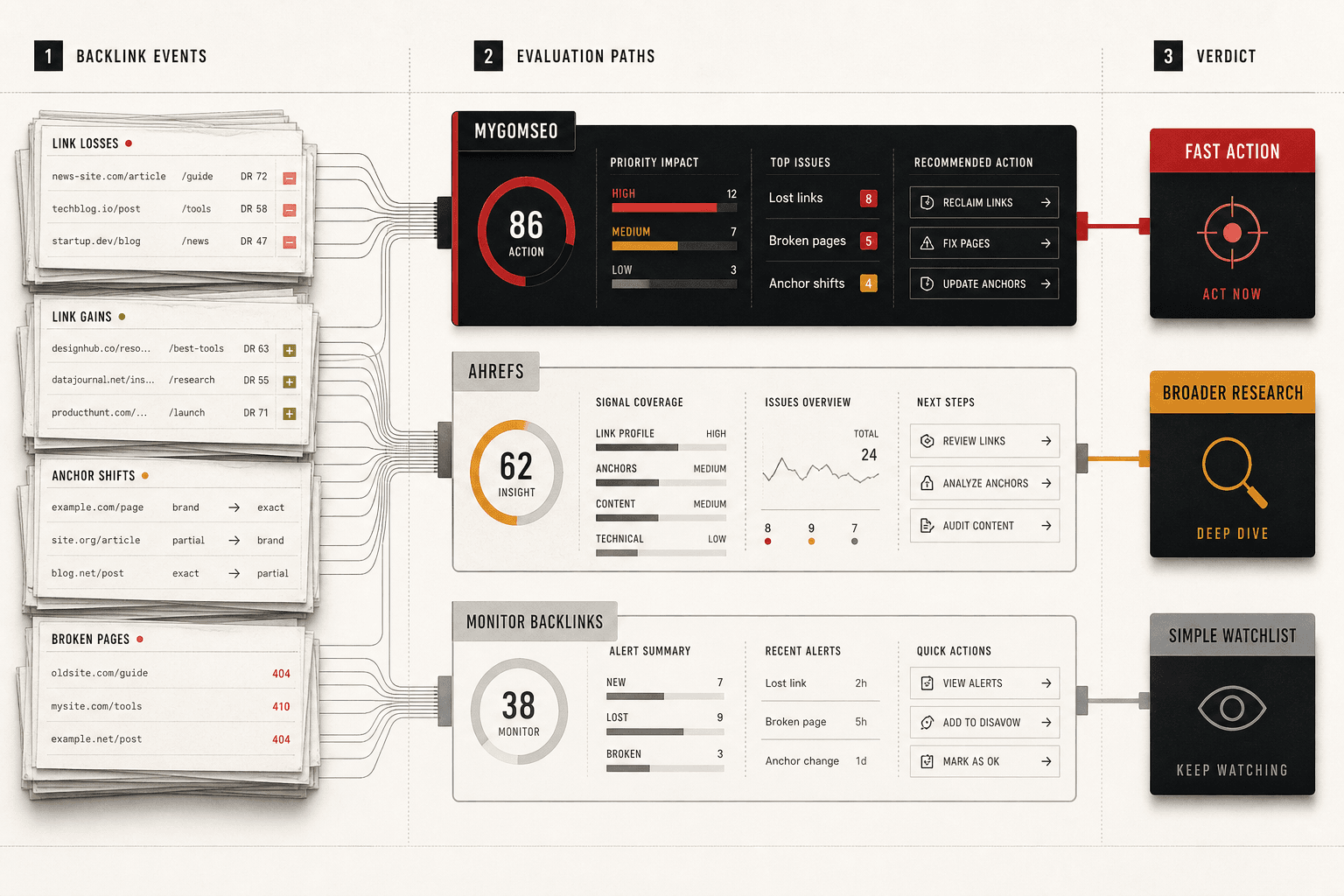
- Mygomseo — Alerts: Strong, action-led · Domain change tracking: Strong · Anchor text monitoring: Strong · Broken backlink detection: Strong · Velocity analysis: Strong · Pricing fit: Best for lean growth teams
- Ahrefs — Alerts: Reliable, broader SEO context · Domain change tracking: Strong · Anchor text monitoring: Strong · Broken backlink detection: Strong · Velocity analysis: Moderate · Pricing fit: Best for research-heavy teams
- Monitor Backlinks — Alerts: Basic and easy to follow · Domain change tracking: Moderate · Anchor text monitoring: Moderate · Broken backlink detection: Moderate · Velocity analysis: Limited · Pricing fit: Best for simple watchlists
The comparison makes the trade-offs clear. Mygomseo fits proactive teams that want early warnings tied to SEO outcomes. Ahrefs fits deeper research workflows where backlink tracking sits inside a larger audit stack. Monitor Backlinks fits smaller programs that need a lighter watchlist and simple reports.
The verdict is simple. The best backlinks monitoring setup is the one that helps a team react before time on site, organic traffic, and keyword rankings start sliding. That usually means choosing a seo backlink monitor that connects backlink tracking to ranking risk, not just raw reports. For most in-house teams, that makes Mygomseo the sharpest fit. It turns link losses, anchor text shifts, broken pages, and unusual velocity into fast action. That is the difference between spotting a problem and explaining one later.
Backlink risk will keep getting noisier as search changes, so the smart move is to pick a seo link tracker that keeps signal high and response time low. Want a simple next step? Try Mygomseo free to see ranking risk alerts in action.