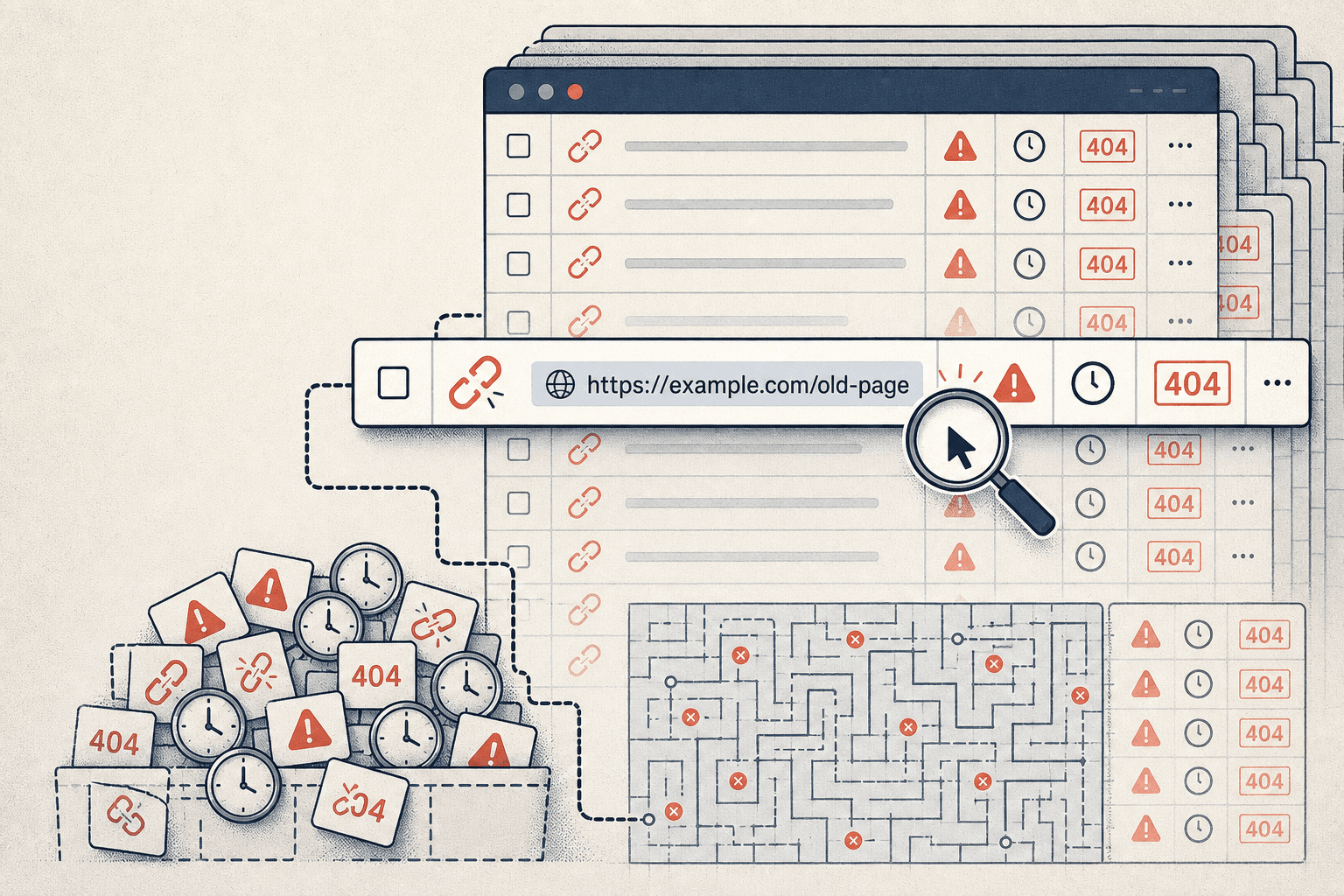
How to Turn Keyword Tracking Data Into a Smarter Weekly Content Queue
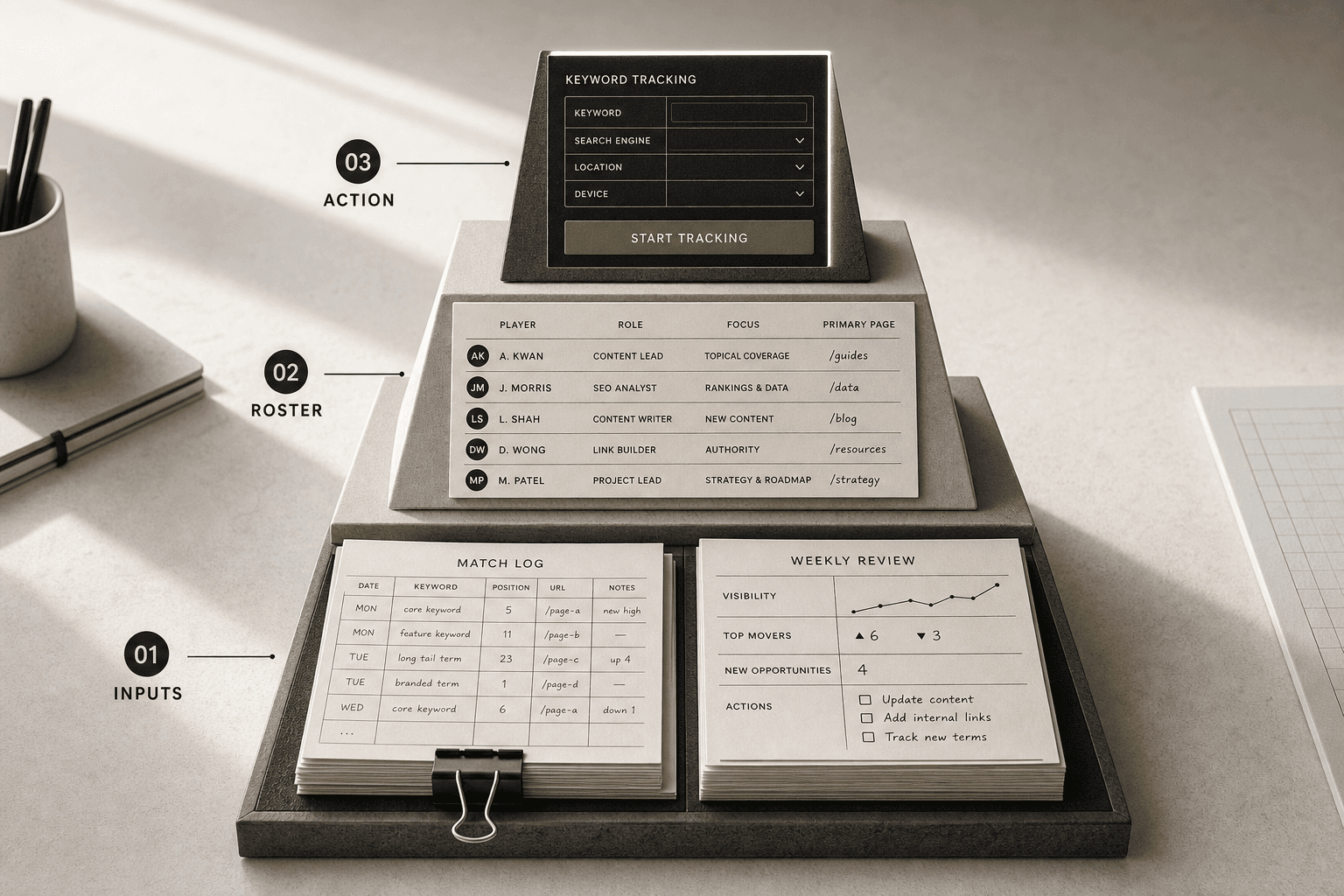
Your seo content strategy is only as good as your weekly decisions. If you wait for monthly reviews, you miss ranking movement, intent shifts, and the window to act. That is what an SEO content strategy really is: a system for choosing what to write, refresh, or stop based on evidence. According to Automate SEO Tasks with AI: Tools & Workflows That Save Hours, 70% points to how much teams can gain when they automate repetitive SEO work. The bigger win is speed. In this guide, you will build a simple weekly process that uses page-level data, keyword tracking, and content prioritization to decide your next move. You will go from setup to action to verification without bloated workflows or guesswork.
Step 1 Prerequisites for Keyword Tracking and Weekly Reviews
Tools and accounts you need
Connect three basics before you review anything.
- Set up your rank tracker for keyword tracking by page.
- Open your analytics tool for clicks, sessions, and conversions.
- Export your page list from your CMS, sitemap, or content audit file.
- Create one sheet in Google Sheets or Excel.
For example, pair one blog post with one main keyword set, not ten random terms. That keeps page performance clear. You should now have one place to match keywords, URLs, and business results.
Check that every tracked URL has an owner assigned before proceeding.
Data sources to pull each week
Pull the same inputs every week. Consistency matters more than volume.
- Export ranking data for the last 7, 14, and 28 days.
- Export clicks and impressions from search reporting.
- Export conversions and assisted conversions from analytics.
- Add any major page edits, publish dates, or campaign notes.
The core metrics to track for SEO content are rankings, clicks, impressions, conversions, and movement by page. Review SEO content performance every week. That cadence helps you catch swings before they become losses. You should now see which pages are rising, slipping, or stalling.
Verify that each row includes one URL and one keyword cluster.
What your weekly review sheet should include
Build one source of truth for content prioritization.
Include columns for:
- Primary keyword set
- URL
- Current rank
- Rank change
- Clicks
- Conversions
- Page notes
- Next action
Research from From Keyword → Brief → Draft → Publish: A Modern SEO Content Workflow shows strong keyword cluster structures can drive 60% higher session depth. That is why your sheet should connect ranking movement to real page performance. At this point, yourseo content strategyreview should show every tracked page, its main keyword set, and the last 7 to 28 days of movement.
Step 2 Read Ranking Data to Find Movement That Matters
Separate rising, slipping, and stalled pages
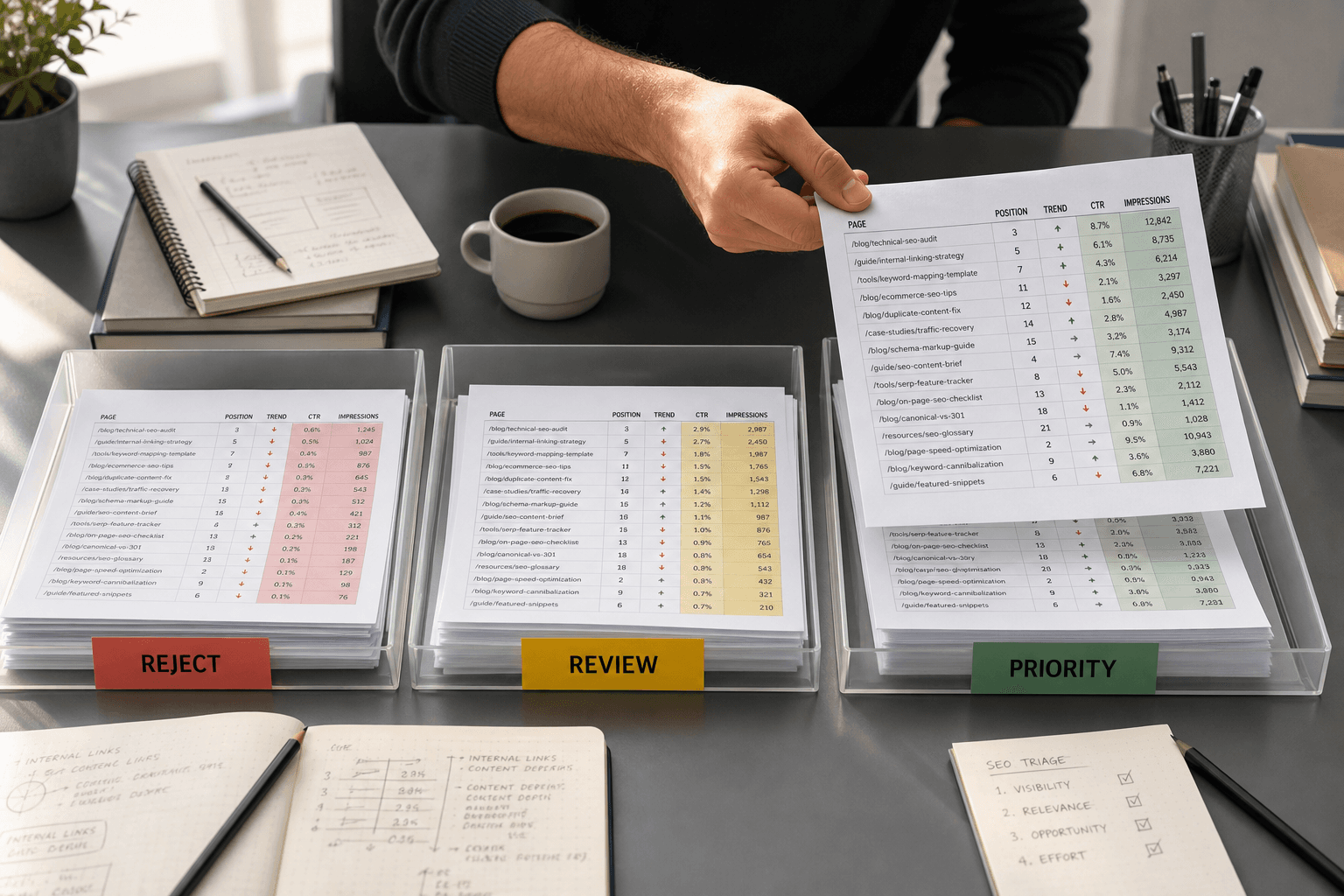
Create three buckets for weekly review.
- Label pages as rising when rankings move up.
- Label pages as slipping when rankings drop.
- Label pages as stalled when movement stays flat.
Use a simple rule set. For example, a page that moved from position 18 to 11 is rising. A page that fell from 6 to 12 is slipping. A page stuck between 29 and 31 is stalled.
You should now see raw movement in plain language. Verify that every tracked URL sits in one bucket before proceeding.
Flag quick wins by position range
Next, sort each bucket by position range. This is where content prioritization gets sharper.
- Pull pages ranking in positions 4 to 15.
- Mark positions 4 to 10 as near-page-one defense.
- Mark positions 11 to 15 as quick-win pushes.
- Leave positions below 20 for later review.
These ranges matter most because small gains can change traffic fast. For example, if a comparison page moved from 13 to 9, update it now. If a product page slipped from 8 to 11, protect it before clicks fall harder.
Your shortlist is now smaller and more useful. Verify that each flagged page has a current position, prior position, and next action.
Match movement to business value
Now connect movement to leads, pipeline, or revenue. This is how you prioritize SEO content without guessing.
- Add conversion or revenue data beside each flagged page.
- Mark pages tied to demo requests, trials, or sales.
- Move high-value pages to the top of your list.
- Assign an owner and deadline for each action.
A blog post rising for a low-intent term may wait. A service page slipping for a buyer term needs attention now. For example, if your pricing page drops three spots, that risk matters more than a blog post gaining one spot for an early research query.
Research from From Keyword → Brief → Draft → Publish: A Modern SEO Content Workflow shows systemized publishing can increase quarterly output by 50%. That matters because a repeatable seo content strategy helps you act on page performance faster.
You should now have a short list of pages and topics with clear upside or clear risk. At this point, you should see three buckets, named owners, and a ranked shortlist of highest-impact opportunities.
Step 3 Use Search Intent Gaps for Content Prioritization
Spot when the SERP changed
Open the live search results for each target keyword. Review the top five results, not just your page. Look for a clear pattern shift in format, angle, or audience.
For example, a term that once showed blog posts may now show product pages. A term that once rewarded broad guides may now favor templates or comparisons. That is your first clue that search intent moved.
Use a simple check:
- Record the dominant page type for the top results.
- Note the common angle, such as beginner guide, tool roundup, or pricing page.
- Mark any recent shift from your last review.
You should now see whether the keyword still supports your current page type. Verify that each shortlisted term has notes on SERP format and angle before proceeding.
For a visual walkthrough of this process, check out this tutorial from Surfer Academy:
Compare page type and intent mismatch
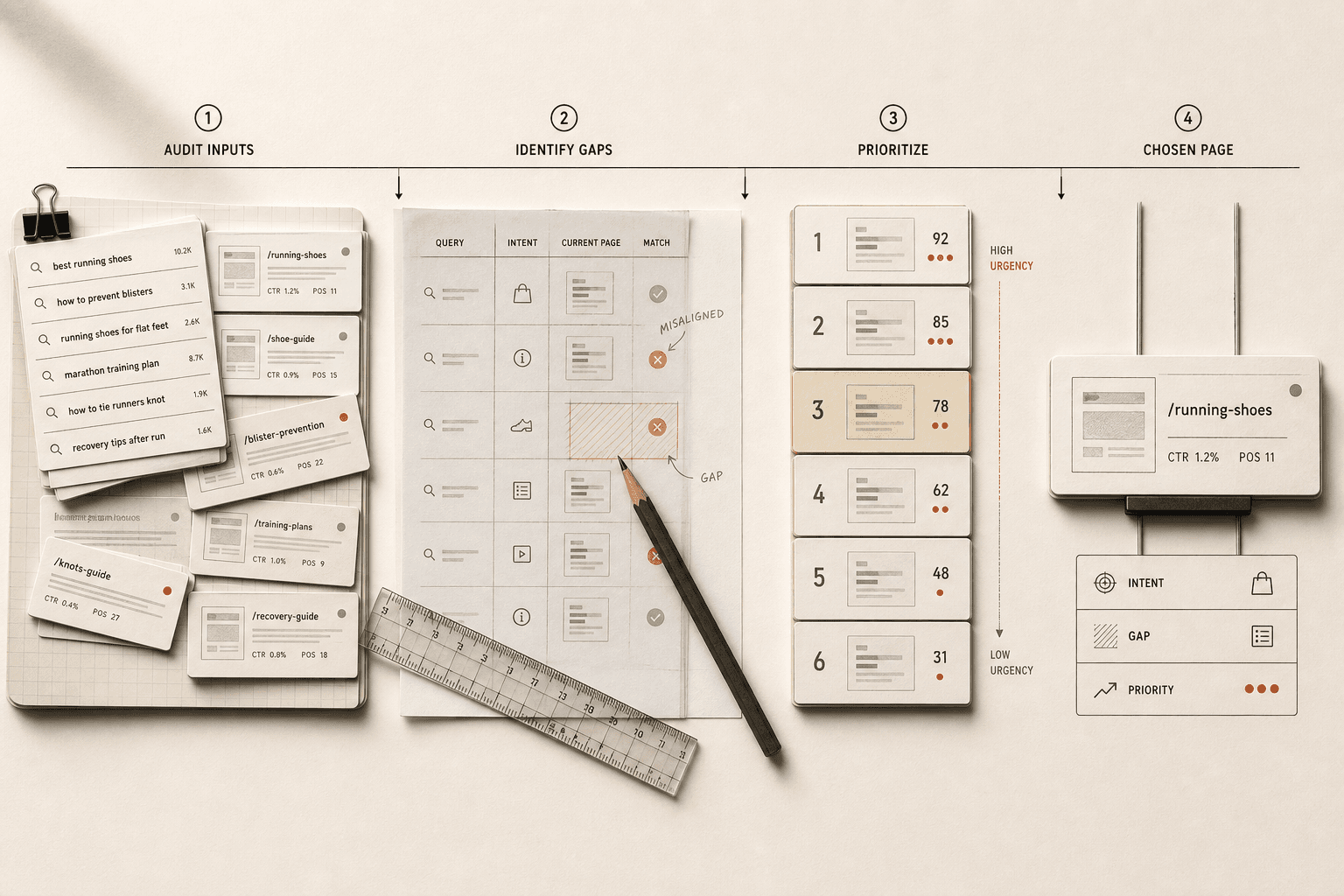
Match your page against the current winners. Compare format first. Then compare promise, depth, and call to action. This is how you find content gaps in SEO without guessing.
For example, you may rank with a thought leadership post. But the top results are all “best tools” lists. That means your page may target the topic, but miss the search intent.
Run this quick review:
- Label your page type: blog post, landing page, comparison, template, or product page.
- Label the top result types for the same keyword.
- Compare the searcher goal behind each page.
- Note the mismatch in one line.
You should now see whether the issue is weak execution or wrong format. Verify that every item has a mismatch note, such as “guide ranking for comparison intent.” A clear workflow helps here, as shown in Averi.
Score ideas as write, update, or pause
Score each opportunity on three points: intent fit, effort, and expected impact. Keep the scale tight, like 1 to 3. This makes content prioritization faster during weekly reviews.
Use these rules:
- Choosewritewhen intent changed and your current page type cannot stretch.
- Chooseupdatewhen the page matches intent but needs a better angle, structure, or depth.
- Choosepausewhen the SERP is unstable, low value, or not a fit.
When should you create a new page instead of updating an old one? Create a new page when the keyword now demands a different format. For example, do not force a product page to act like a tutorial. Research from Neil Patel shows the right process can improve results by 5x.
You should now know what to write, refresh, or ignore. At this point, your seo content strategy should show every shortlisted item labeled write, update, or pause, with a reason tied to intent.
Keep Your SEO Content Strategy Running Weekly
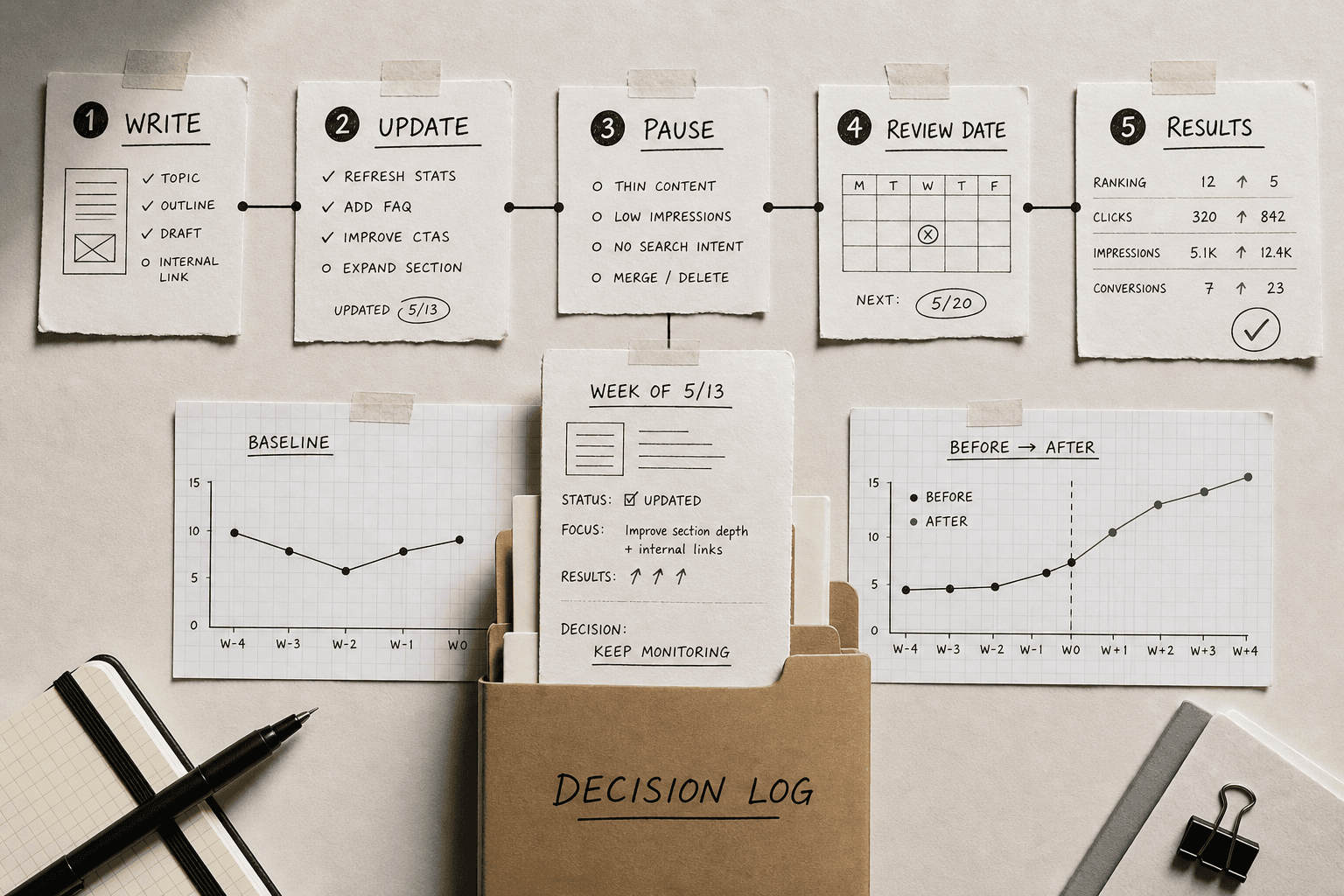
Run this final step with discipline. Assign every write, update, or pause task to one owner. Set a review date before work starts. Then check results against the baseline after the change goes live. Look at rankings, clicks, and conversions side by side. If a page moved, you should know why. If it did not move, you should know what to test next or what to stop doing.
This is where content prioritization gets real. A good plan is helpful. A repeatable loop is better. When you review page-level outcomes each week, you stop guessing. You build a record of what formats, topics, and updates actually earn traction. You also spot the blockers that slow decisions down, like unclear ownership, missing due dates, weak briefs, or pages that never get reviewed after launch.
Your goal is simple. Turn every weekly review into a decision log. Keep it clean. Keep it visible. Track the action taken, the owner, the due date, the review date, and the result. Over time, that log becomes your playbook. It shows which ranking data led to wins, which intent gaps were worth acting on, and which ideas should stay paused.
At this point, you should see a weekly log for each page with decisions, owners, due dates, and measurable outcomes. Verify that every task has a status and every changed page has a before-and-after view. If that record is missing, fix the process before you add more work. More output will not save a messy system.
The big takeaway is this: your seo content strategy improves when your team can make small, evidence-based decisions every week. Keep the loop tight. Protect the review cadence. Use keyword tracking, ranking data, and content prioritization to decide the next best action with less debate and more proof.
Stay consistent, and your weekly process will get sharper every cycle.
Want a simple way to keep projects moving? Try It Free to export and share projects, and design simple connections.