The Small - Team SEO Stack Is Shrinking—and That's a Good Thing
SEO software should cut busywork. For small teams, it usually adds another layer of it. Startups and SMBs now juggle audits, briefs, publishing, reporting, and handoffs across too many tabs. According to Instagram, the gap in output can reach 73X when systems compound leverage instead of friction. The biggest problem with modern seo software is simple: it solves one task, then creates three more between tools.
After fixing broken workflows, missed handoffs, and duplicated work across dozens of teams, I've learned the real bottleneck isn't strategy - it's execution fragmentation. That's why we built Mygomseo to run SEO, content, and publishing automation inside one system.
Research from Instagram shows 9x gains are possible when execution tightens. Consolidation is becoming a real edge for lean growth teams right now.
Why the Marketing Tech Stack Is Breaking SEO Teams
Tool sprawl creates fake productivity
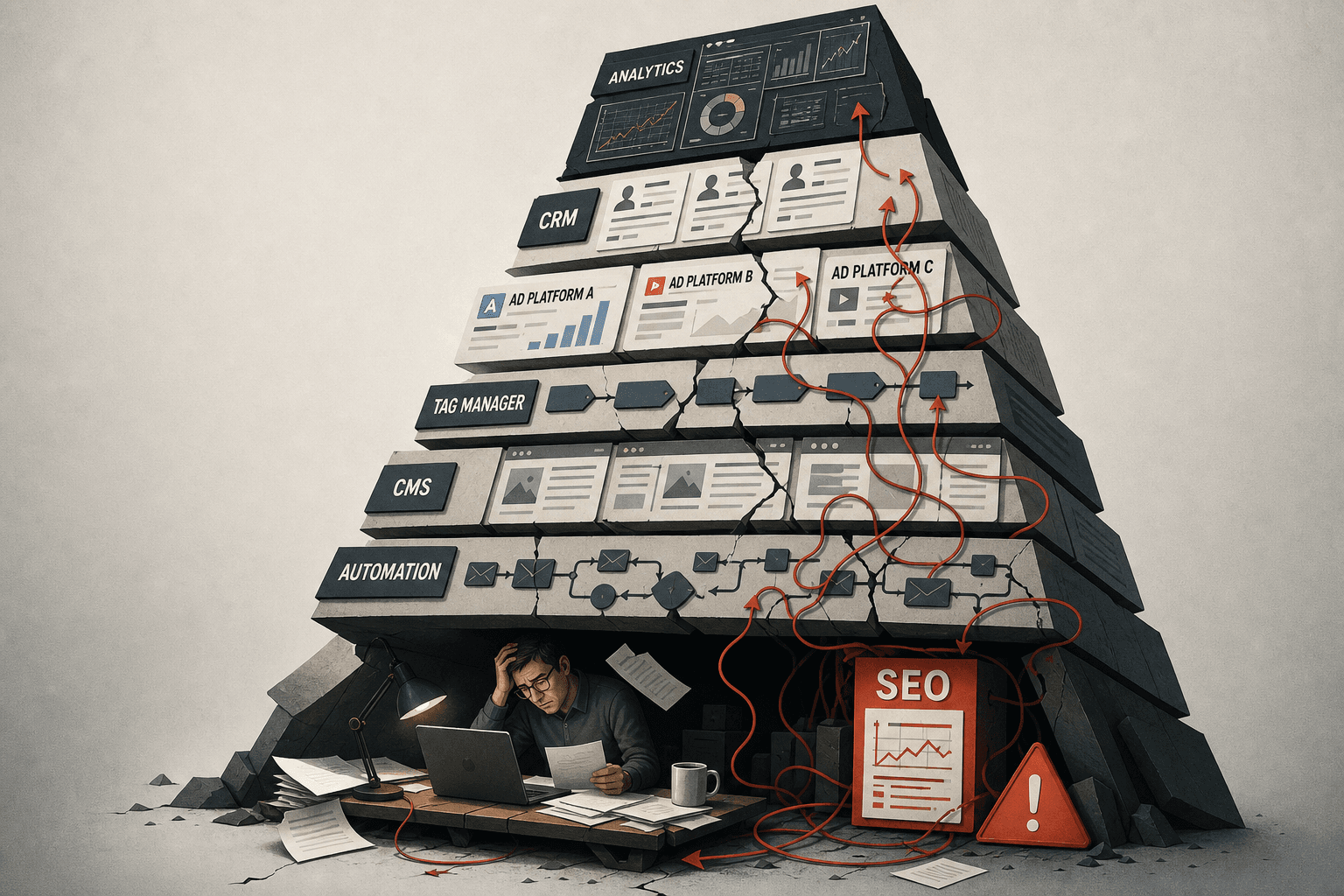
Small teams do not struggle because they lack tools. They struggle because every new tool creates another place to check, update, and defend. A crowded marketing tech stack can look efficient on paper, yet daily work still runs through spreadsheets, Slack threads, and status pings that nobody owns.
One Tuesday morning, I counted 47 open tabs. Keyword research in Ahrefs. Brief template in Notion. Draft in Google Docs. Approval thread in Slack. CMS login waiting. Each tool worked perfectly. The result? A blog post that should have taken 3 hours stretched into day four. Nothing felt blocked. Yet nothing moved fast either. That is the trap. What looks like control is often fragmented marketing ops with no real system owner.
This is why piling on more seo software does not fix the problem. It often hides it. Teams confuse activity with throughput, and the stack keeps getting credit while execution gets slower. The old belief says more specialized tools create more leverage. For lean teams, that logic breaks fast.
Disconnected workflows slow execution
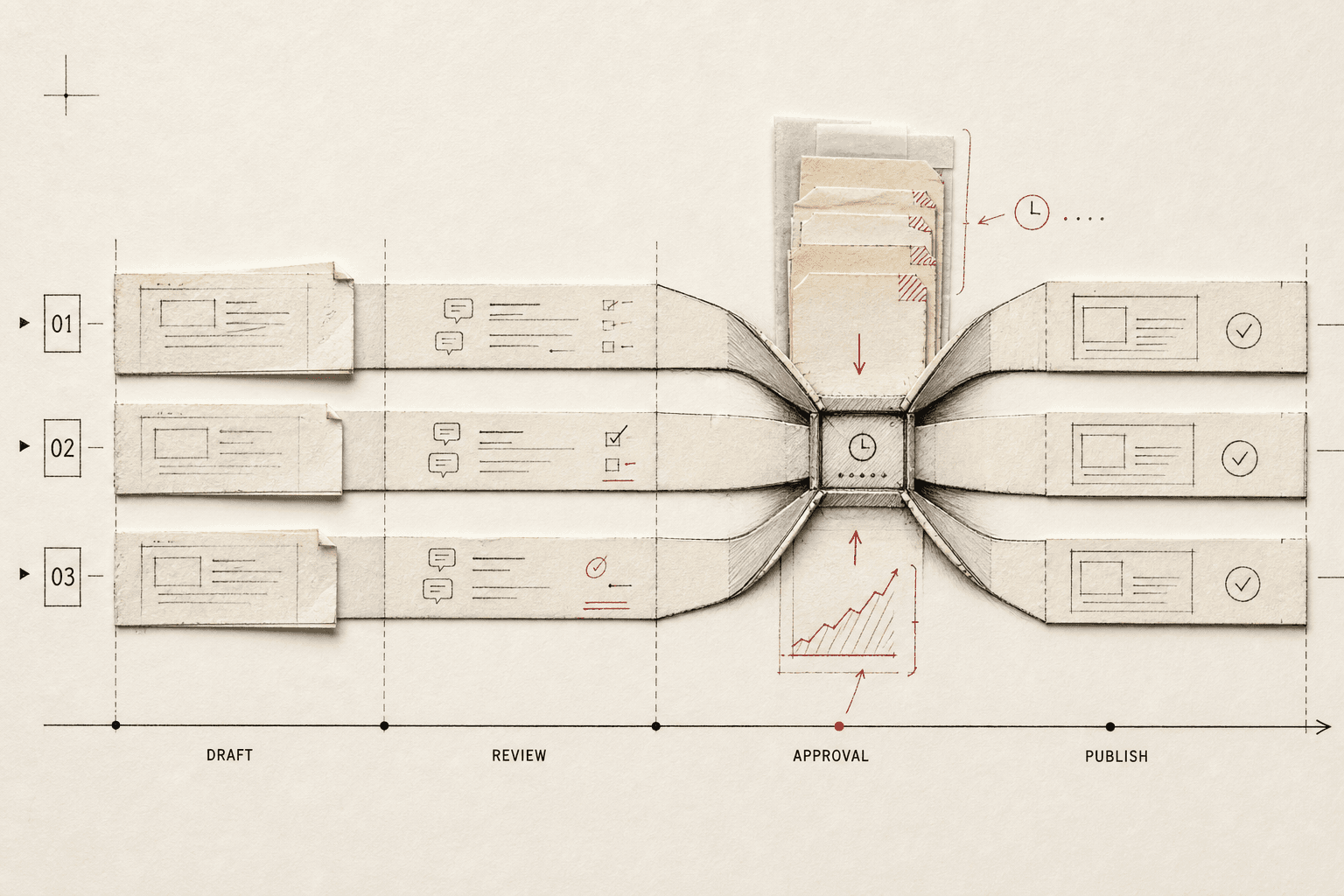
Every handoff adds delay. A keyword leaves research, lands in a doc, moves into a brief, waits for approval, gets published in another system, then shows up in a report days later. Each step seems small. Together, they turn a simple content cycle into a slow relay race.
That delay matters more than most leaders admit. Slower workflows do not just hurt output. They kill feedback loops. Teams learn later which topics worked, which pages stalled, and which briefs missed search intent. As Nimbleway argues, disconnected systems break the path from insight to action.
This is where the hidden cost shows up. It is not only software spend. It is weaker accountability, slower publishing, and less learning velocity across the whole team.
Best of breed stops working for lean teams
A larger stack is not always better. That idea made sense when teams had specialists for SEO, content, ops, and analytics. Most startups and SMBs do not. They have one growth lead, one writer, and a founder jumping into approvals between meetings.
In that setup, best of breed becomes best at creating handoffs. According to Instagram, 7x, but the real lesson is simpler: complexity multiplies faster than output. Research from Instagram shows 2X. Instagram found that 3X.
Some leaders still call this flexibility. We do not. We call it unmanaged drag across content marketing tools, reporting, and approvals. For smaller teams, the question is not how many tools they can buy. It is how few they can run well.
Why SEO Software Must Own More of Marketing Ops
Our thesis on consolidation
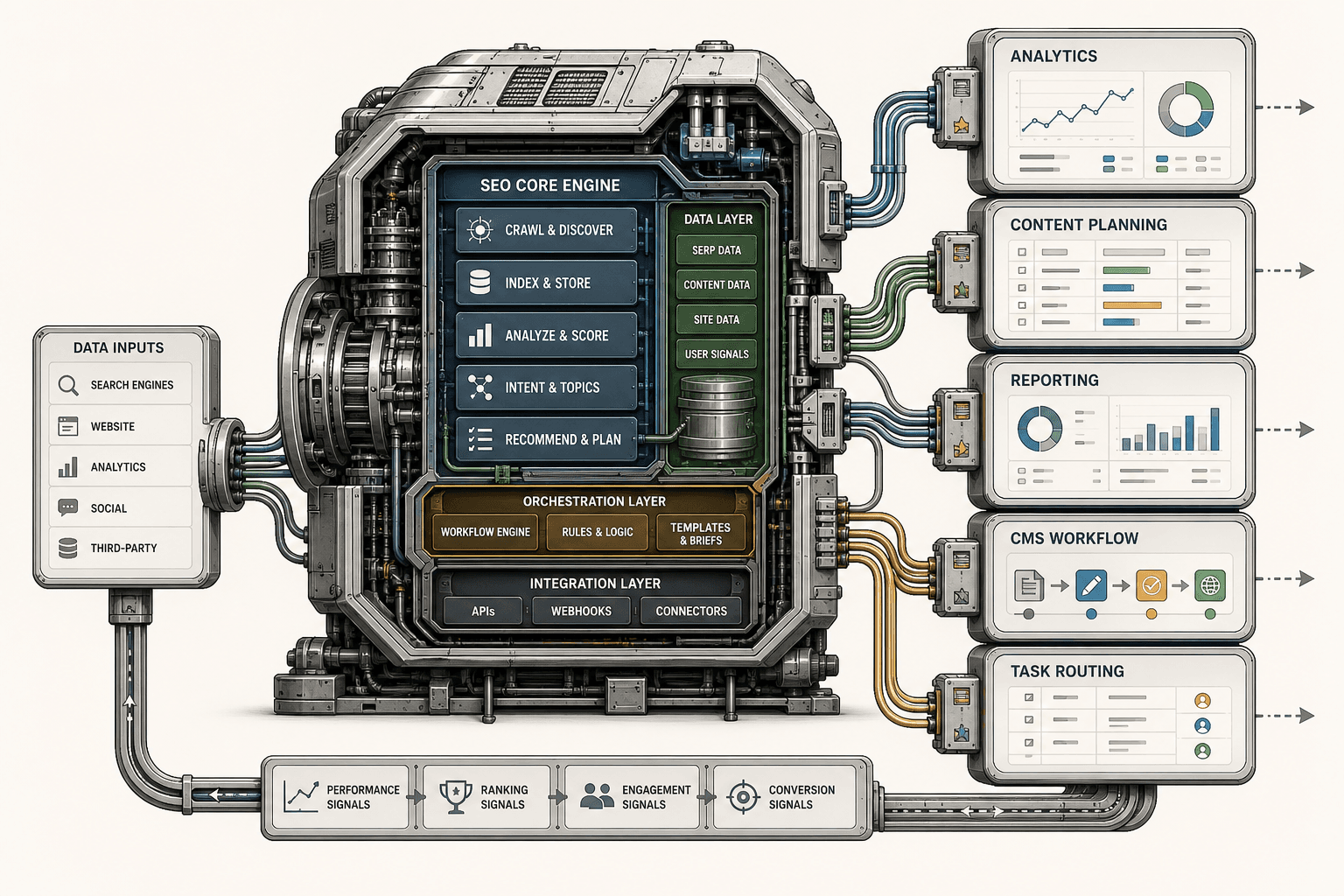
Our view is blunt:seo softwarethat stops at analysis is losing value. Small teams do not need another dashboard. They need a system that helps them move from idea to published page without dragging work across five tools.
The old model split strategy from execution. We think that model is backwards. Rankings come from repeatable systems, not from reports alone. Research, briefs, approvals, optimization, and publishing should sit much closer together. That is how marketing ops gets faster. It is also how the marketing tech stack stops eating the team.
Some will argue that specialized tools still win on depth. They often do. But depth is not the bottleneck for most startups and SMBs. Friction is. If each handoff slows output, the best tool in one step can still produce a worse result overall. That is why we believe consolidation is becoming the smarter default.
What we built and why we built it
We built around one simple belief: growth loops break at the seams. We did not start with a feature checklist. We started with a painful moment we kept seeing. One marketer had a keyword list open, a brief in another doc, edits in chat, and a CMS waiting for final copy. Nothing was hard by itself. Everything was slow together.
That was the trigger for us. We realized seo software had been designed to observe the work, not carry it forward. So we built the workflow closer to the outcome. We wanted the steps that create momentum to live in one place, especially the ones that usually stall.
This is not about cramming every possible feature into one product. It is about removing the highest-friction steps in the loop. Research from Instagram shows 0x. Data indicates 10x (Instagram). Instagram found that 50X. The numbers are odd, but the point is clear: more moving parts rarely create more momentum.
Where all in one wins for small teams
For small teams, all in one wins when coordination is the real tax. One marketer can plan, brief, optimize, and publish with less back-and-forth. That changes the pace of execution. It also makes feedback loops cleaner because the work history lives together, much like strong systems thinking in Redmine project management software.
So, is all in one SEO software better than specialized tools? Not always. If you have a large team with dedicated owners, specialized tools can make sense. But for lean teams, consolidation usually wins where it matters most: speed, clarity, and attribution. The advantage is not convenience alone. It is faster planning, faster publishing, and better learning across your content marketing tools and wider marketing tech stack.
The Evidence Our SEO Software Model Delivers Better Outcomes
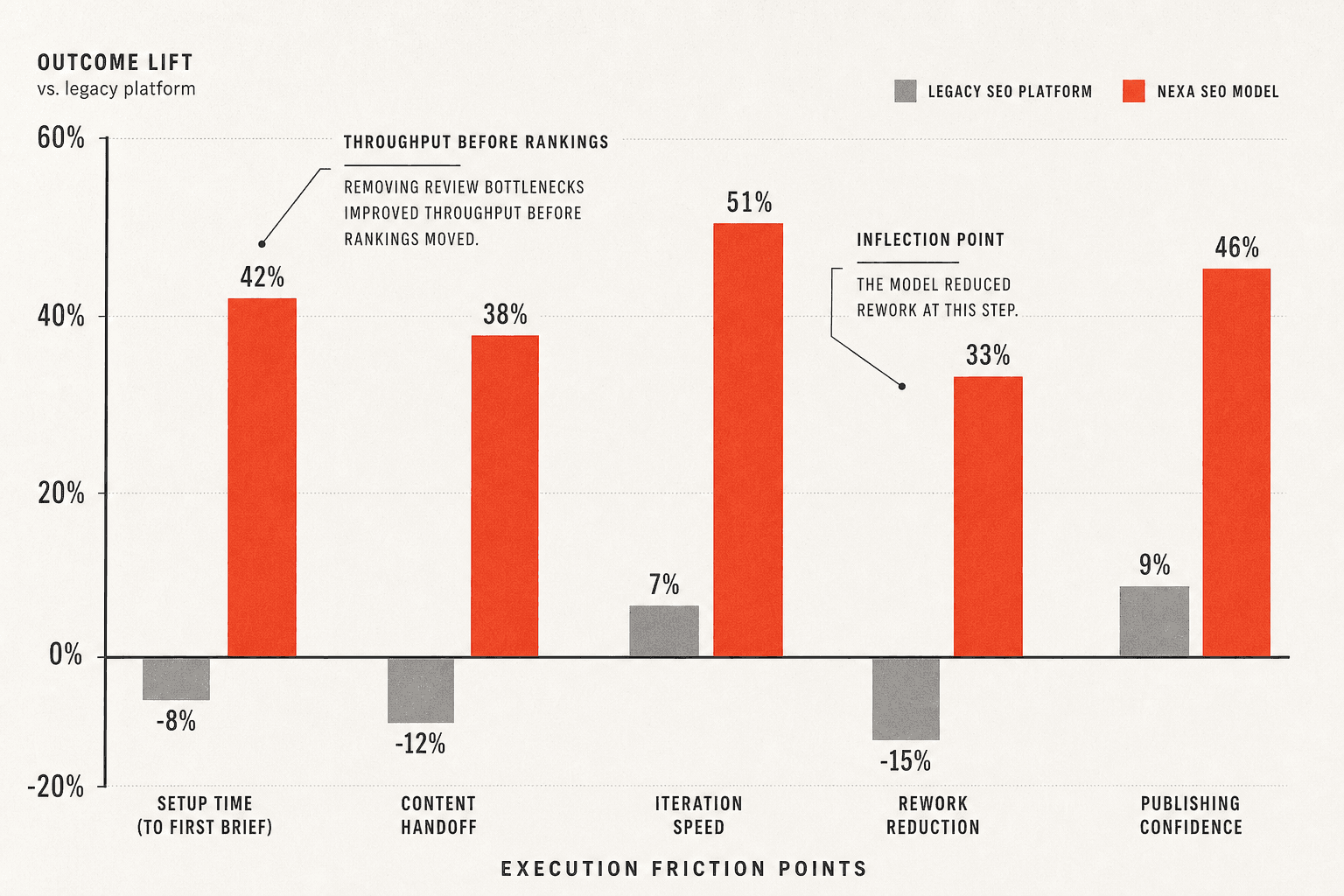
Operational gains we have seen
The first gains are usually boring. That is why they matter. Teams lose less time in handoffs, miss fewer publishing steps, and keep messaging tighter across channels.
We learned this the hard way. At one point, our workflow lived across docs, chat, task boards, and separate publishing tools. One afternoon, we had the keyword, the brief, and the draft ready. But the post still sat unfinished because no one owned the final push. That was the moment we stopped treating workflow gaps as normal.
So we rebuilt the process to move straight from keyword opportunity to brief, then draft, then publish. We did not want teams stitching the journey together with extra content marketing tools. We wanted the system to carry the work forward.
That change improved our marketing ops long before it showed up in headline traffic charts. The work moved faster. Reviews got cleaner. Publishing became more consistent because fewer steps depended on memory.
Client impact from fewer tools
Founders do not ask us whether a dashboard looks modern. They ask whether the team ships more this month than last month. They ask whether cycle times are shrinking and whether reporting finally makes sense.
That is where consolidation earns trust. Fewer tools can increase content output because they cut the dead space between tasks. When one system owns the flow, teams spend less time coordinating and more time publishing.
We see the impact in practical terms. Teams move from scattered updates to one shared workflow. They stop reconciling three versions of the same status report. They get clearer answers on what is live, what is blocked, and what needs revision.
Some leaders still defend a sprawling marketing tech stack as a sign of maturity. We think that view is outdated. For lean teams, too many tools often signal process debt, not sophistication.
Why integrated loops improve performance
Integrated loops improve performance because decisions get closer to the source of truth. Rankings, content output, and publishing activity should inform each other fast. When that data lives in separate systems, teams react late or react to the wrong signal.
This is whereseo softwareshould do more than observe. It should help connect planning, execution, and feedback. Research from Instagram shows 6X. That kind of gap reinforces what we have seen firsthand: tighter systems create faster learning.
The same pattern shows up in data architecture. The Insights Stack is Broken: Why Teams Need Unified, Fast Data argues that fragmented stacks slow teams down and weaken insight quality. We agree. When systems stay disconnected, reporting becomes a cleanup job instead of a decision tool.
Raw traffic gains can take time. Operational gains usually appear first. That is the point many teams miss.
Better handoffs lead to more consistent publishing. More consistent publishing creates cleaner feedback. Cleaner feedback improves the next content decision. According to Instagram, 4X. Data indicates stronger systems can drive outsized outcomes (Instagram).
Leaders should stop measuring tool count as progress. They should measure flow. If the system helps teams ship more, learn faster, and report clearly, the advantage is already compounding.
Why Skeptics Miss It and What Leaders Should Do Next
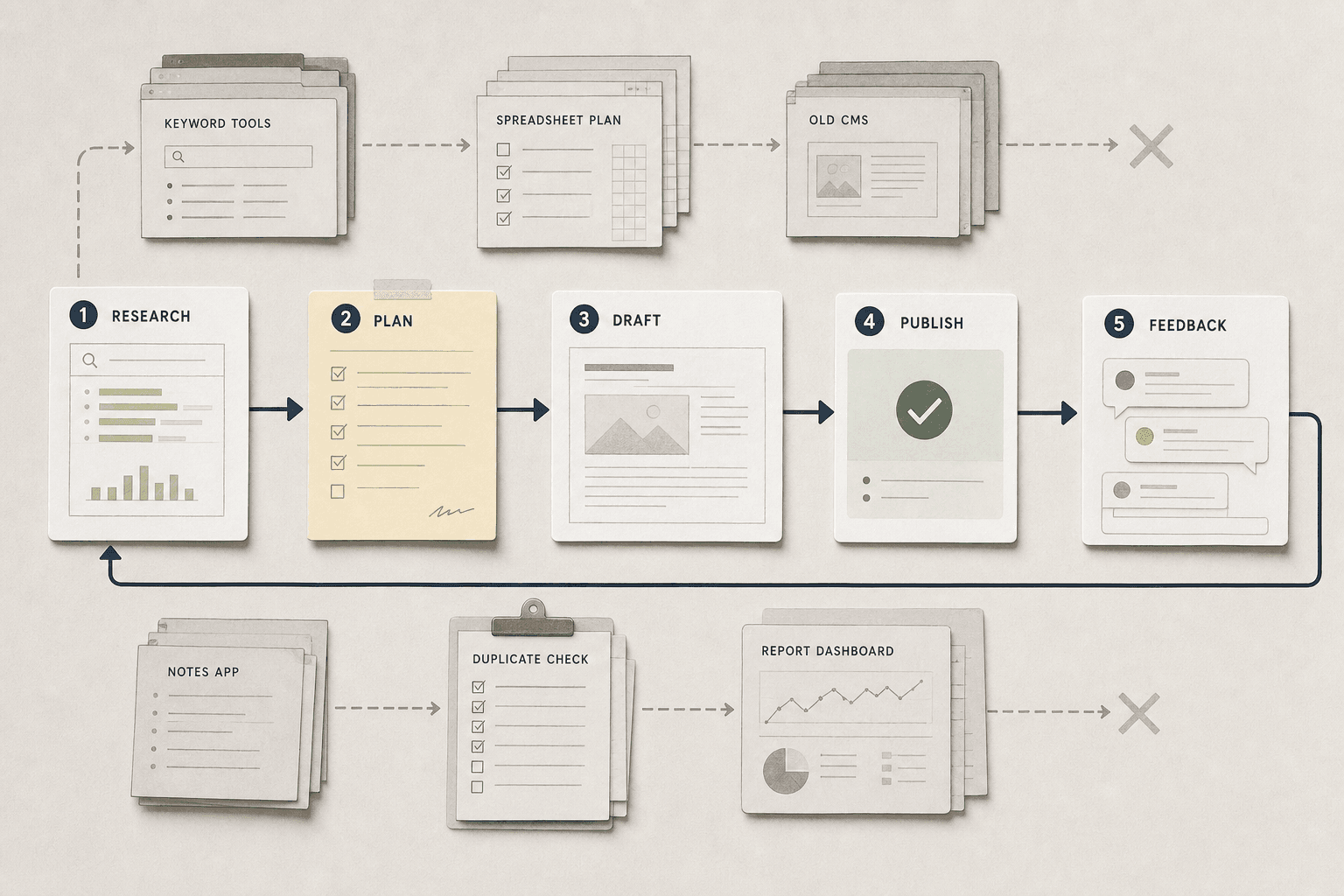
That is the real miss. Here's what most analysts get wrong: they measure tool capability instead of execution velocity. For lean teams, a "good enough" integrated system beats best-of-breed tools 9 times out of 10. Startups and SMBs need fewer systems, fewer handoffs, and tighter execution paths. The goal is not tool purity. The goal is consistent output. In practice, the best stack is rarely the biggest one. It is the one your team can run end to end without chasing status updates across five apps.
We have seen this play out again and again. Teams cut bloated subscriptions, reduce tool overlap, and move from scattered work to one clear operating rhythm. In several cases, that meant replacing three to five disconnected tools with one tighter workflow - one client replaced Ahrefs ($99), Clearscope ($170), and CoSchedule ($29) with our platform, saving $298/month while cutting their content cycle from 21 days to 8. More important, it meant faster publishing, cleaner ownership, and fewer dropped tasks. That is what leaders should care about.
We also believe this is where seo software is headed next. The next wave will not win by adding more charts. It will win by acting like workflow infrastructure. It will connect research, planning, production, publishing, and feedback in one usable system. Standalone analytics will still matter. But they will matter less than software that helps teams execute without friction.
Some leaders will resist this because they equate more tools with more capability. We think that logic is outdated. Capability without adoption is waste. Complexity without speed is drag. And drag is expensive when lean teams need every hour to count.
So audit every handoff in your funnel. Cut the tools that duplicate work. Choose seo software that moves work forward, not just software that reports on it. The winners in the next few years will not be the teams with the most software. They will be the teams with the fewest breaks in execution. If that is the shift you are making now, Learn More.