How to Use Content Analyzer Data Without Falling Into Endless Micro - Edits

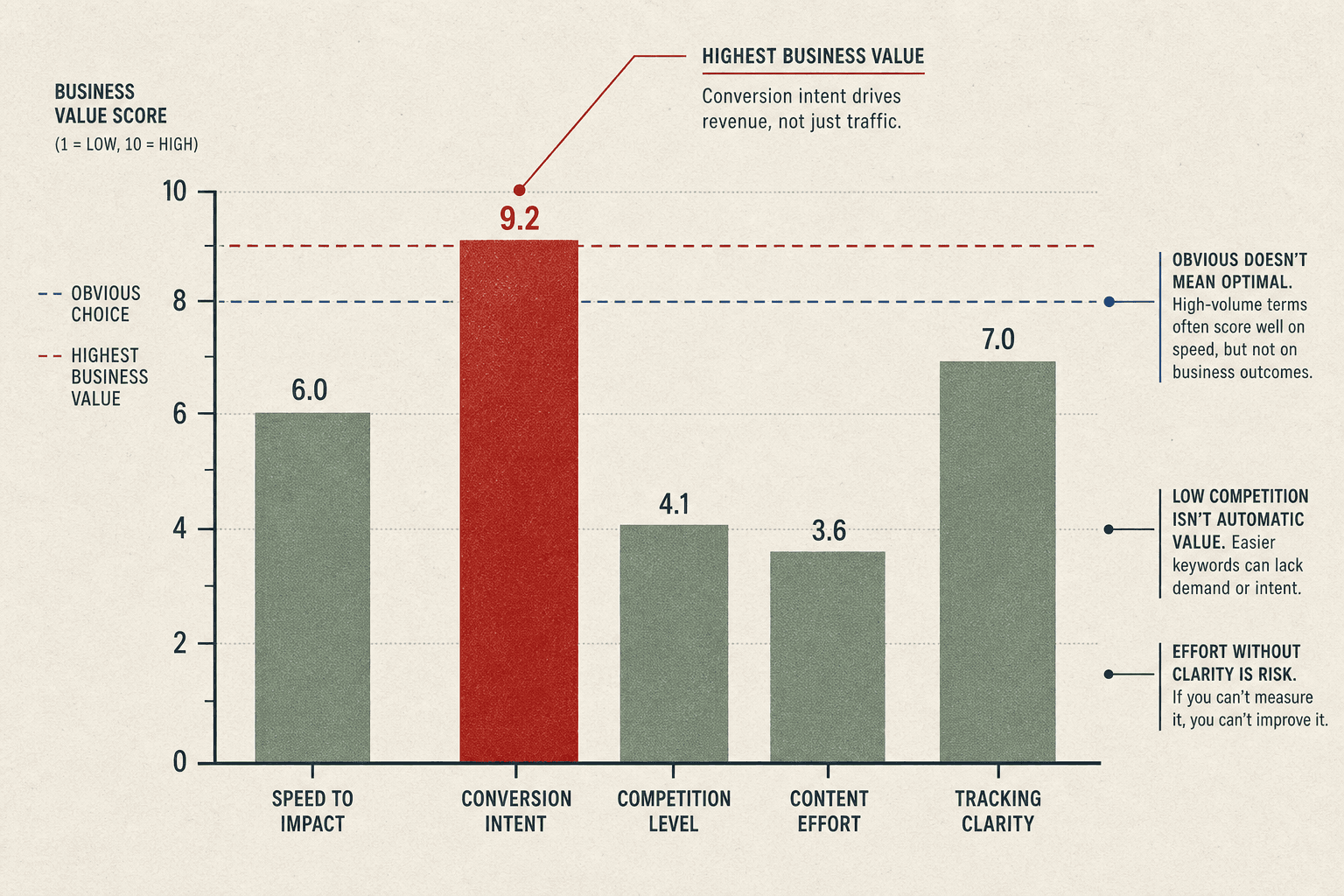
On page seo can lift rankings - or waste weeks chasing fake wins. On page seo means improving the elements on your page, like copy, headings, metadata, links, and layout, so search engines and visitors both get more value. The problem is simple: teams often treat a higher seo content score like proof. It is not. Many problem-solving sessions get stuck in endless analysis rather than action, and that trap shows up in content optimization fast. According to Most problem-solving sessions die in endless analysis. \| Robin Ross, this pattern of analysis paralysis affects how teams approach optimization work. In this guide, you will learn how to read scoring tools wisely, make content edits that matter, and check whether rankings or conversions actually improved. You will follow a clear process with checkpoints, so you know what changed and what worked.
Prerequisites for Smarter On Page SEO Audits
Tools and accounts to have ready
Before you start any review, gather four essentials: one scoring tool, Google Search Console, your analytics platform, and CMS access. Make sure you have full edit rights, not just view-only access.
For example, use Surfer or Clearscope for scoring. Then open Search Console for queries and impressions. Open GA4 for conversions and engagement. Keep your CMS ready so content edits do not stall.
You should now have every system open in one workspace. Verify that each tool loads the same page URL before proceeding.
What data to collect before you edit
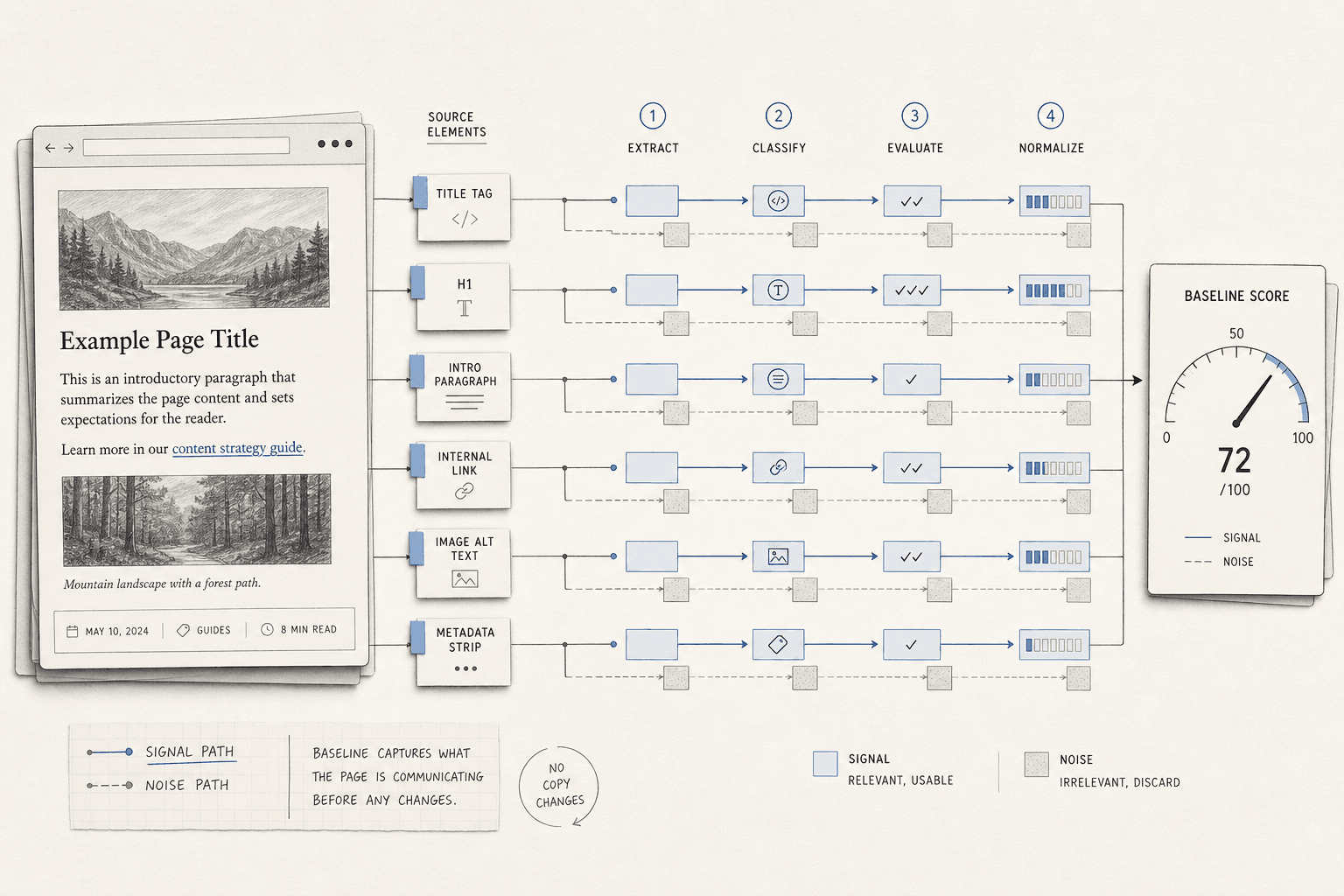
Pick one page only. Record its current rankings, clicks, impressions, conversions, andseo content score. Add the page title, target query, and date in one shared sheet.
This step keeps your team focused on one set of ranking signals. For example, if a blog post ranks in position 11, note that exact number. If it gets 240 clicks and 8 conversions, log those too.
At this point, your baseline should fit on one row. Verify that one document holds all numbers for one page.
How to define a page success metric
Choose one primary outcome before you edit anything. That goal tells your team if the update worked. Good options include more clicks, higher conversions, or better average position.
Do not chase every metric at once. According to Social Drivers and Algorithmic Mechanisms on Digital Media - PMC, tracking too many data points creates noise that obscures meaningful signals. Pick one result, then support it with secondary checks.
You should now have a single source of truth. Verify that your page, baseline numbers, and success metric are all documented.
Step 1 Build a Useful SEO Content Score Baseline
Audit the page before touching the copy
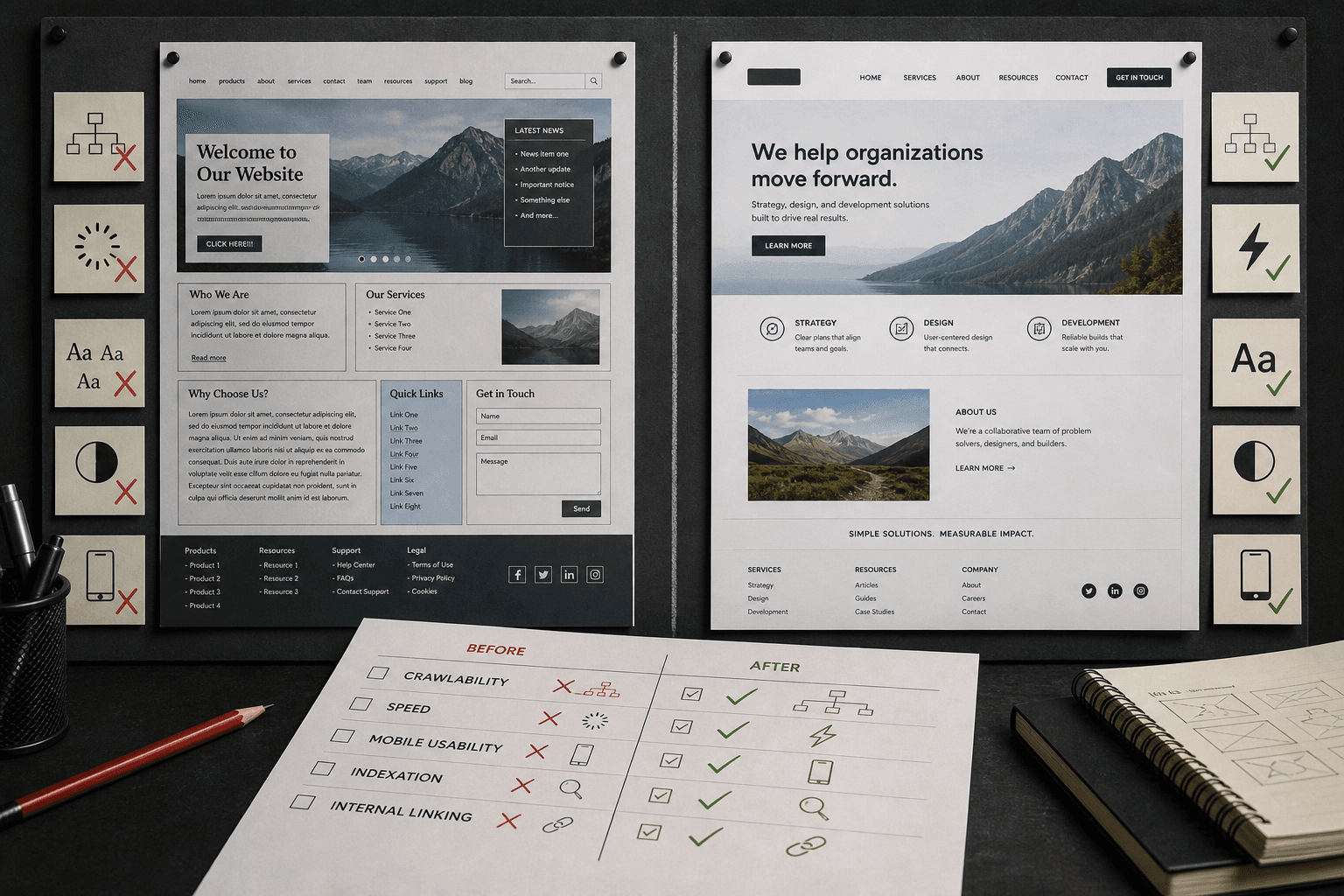
Review the page title first. Then check the H1, the search intent, the internal links, and the conversion path. If any of those miss, body copy tweaks will not save the page.
Use this quick sequence:
- Check whether the title matches the query.
- Confirm the H1 supports the same promise.
- Compare the page with the searcher’s likely user intent.
- Count internal links that help users reach this page.
- Test the next action, such as a demo, signup, or contact form.
For example, a product page may have a strong seo content score but still fail. The title may target “best CRM for startups,” while the page pushes enterprise features. That mismatch hurts relevance and confuses buyers.
You should now see whether the page has a structural problem. Verify that the title, H1, and offer all support the same intent before proceeding.
Separate score factors from ranking factors
List every recommendation from your scoring tool in one place. Then label each one as likely meaningful, cosmetic, or unclear. This step keeps your team from chasing points that do not improve rankings or conversions.
Use these labels:
- Mark aslikely meaningfulif it improves relevance, clarity, or user experience.
- Mark ascosmeticif it only changes phrasing, repeats keywords, or inflates word count.
- Mark asunclearif you cannot connect it to a user need or business outcome.
A high seo content score is not the goal by itself. A useful target is “high enough to remove obvious gaps.” If the page already matches intent and converts, do not force extra terms into it for content optimization.
Want to see AI-assisted content scoring in action? This video demonstrates building Claude skills for SEO content optimization:
Research from Most problem-solving sessions die in endless analysis. | Robin Ross shows that most teams get stuck in analysis paralysis. That's a useful reminder: chasing tiny score gaps (like 99% vs 99.9%) can pull you into endless polishing with little payoff.
You should now have every tool suggestion labeled. Verify that each “meaningful” item has a clear reason tied to the searcher or the business.
Create a keep fix ignore list
Turn your labels into action. Create three buckets: keep, fix, and ignore. This is where better on page seo choices become clear.
- Keep what already supports relevance and conversions.
- Fix items that improve clarity, intent match, links, or calls to action.
- Ignore edits that only raise the score without helping the page.
Which changes matter most? Start with intent match, headings, internal links, and conversion clarity. Leave keyword stuffing, awkward synonyms, and forced content edits at the bottom of the list.
At this point, you should see a short list of high impact fixes and a longer list of edits you can safely ignore. Verify this checkpoint now: if you cannot explain how a recommendation helps the searcher or the business, do not prioritize it.
Step 2 Make Content Optimization Edits That Matter
Improve intent match and topic coverage
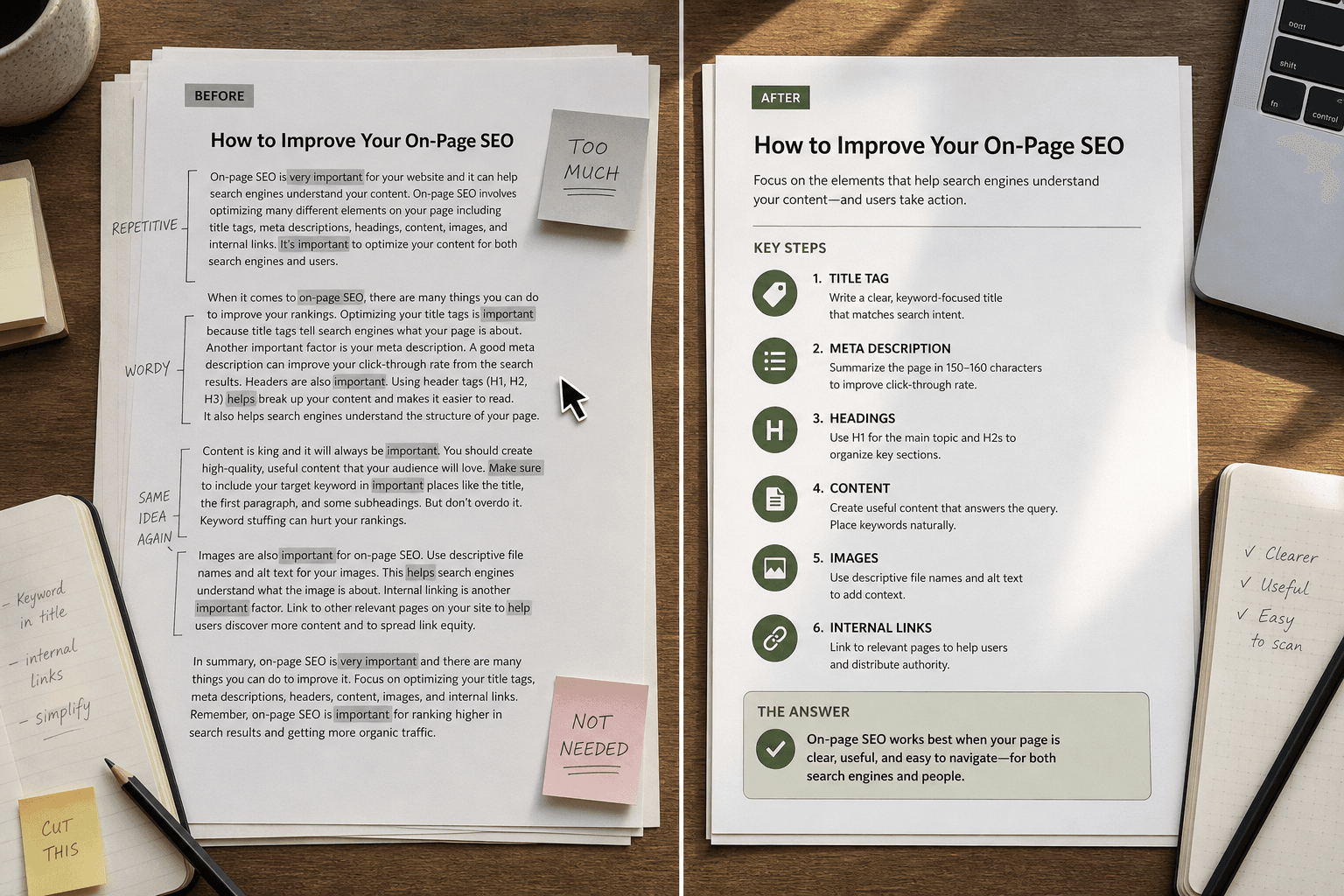
Rewrite weak sections first. Cut slow intros, vague claims, and filler that hides the answer. Then move the most useful information higher on the page.
For example, if your CRM migration page opens with "Founded in 2015, we've helped 500+ companies...", cut it. Start with "CRM migration typically takes 4-8 weeks and involves three risk points: data loss, downtime, and user adoption. Here's your timeline..." That shift improves search intent match fast.
Use your scoring tool as a prompt, not a boss. If it suggests missing terms, check whether those terms help the reader. Add examples, definitions, or comparisons only when they make the page clearer.
Focus your content edits on gaps that block understanding. Add one short example where a claim feels abstract. Replace broad statements with direct answers. Break dense paragraphs into tighter chunks.
Chasing 99.99% perfection can get brutal, as Robin Ross notes. Treat that as a warning. Do not spend hours polishing text that does not change rankings or decisions.
You should now have a faster, clearer page that answers the query sooner.
Verify that your revised intro and first sections solve the visitor's main question before proceeding.
Tighten headings copy and internal links
Strengthen headings so each one promises a clear outcome. Weak headings like "Additional Considerations" waste attention. Replace them with specific labels like "How Long Migration Takes" or "Common Setup Mistakes."
Use content optimization to improve structure, not to repeat keywords. Headings should guide scanning. Internal links should help the next click. Examples should remove doubt.
Add internal links where readers naturally need more detail. For example, link "pricing model" to your pricing guide or "implementation checklist" to your setup resource. Keep anchor text plain and specific.
Improve scannability at the same time. Shorten long paragraphs. Turn feature lists into bullets. Pull key steps higher if readers need them before a form or CTA.
At this point, your page should feel easier to scan and easier to trust.
Verify that every heading is specific, every link supports the journey, and no edit exists only to raise an seo content score.
Protect conversions while you optimize
Keep conversion elements visible while you edit. Better rankings mean less if demo requests drop. Do not bury forms, remove proof points, or push CTAs below long blocks of rewritten copy.
Check the page like a buyer, not just an editor. Can you still spot the demo button fast? Is the value proposition still near the top? Does social proof still support the ask?
For example, if you add a long comparison section above the CTA, trim it or move it lower. If you shorten copy, keep the strongest proof nearby. Good on page seo should support the business goal, not compete with it.
Track every change in a simple version log. Record what changed, why you changed it, and what stayed untouched. That history helps your team reverse weak edits fast.
You should now have a cleaner page with fewer but stronger content edits and a version history of every change.
Verify that the revised page matches your keep, fix, ignore list. Confirm each edit had a clear purpose.
Conclusion: Verify What Actually Moved
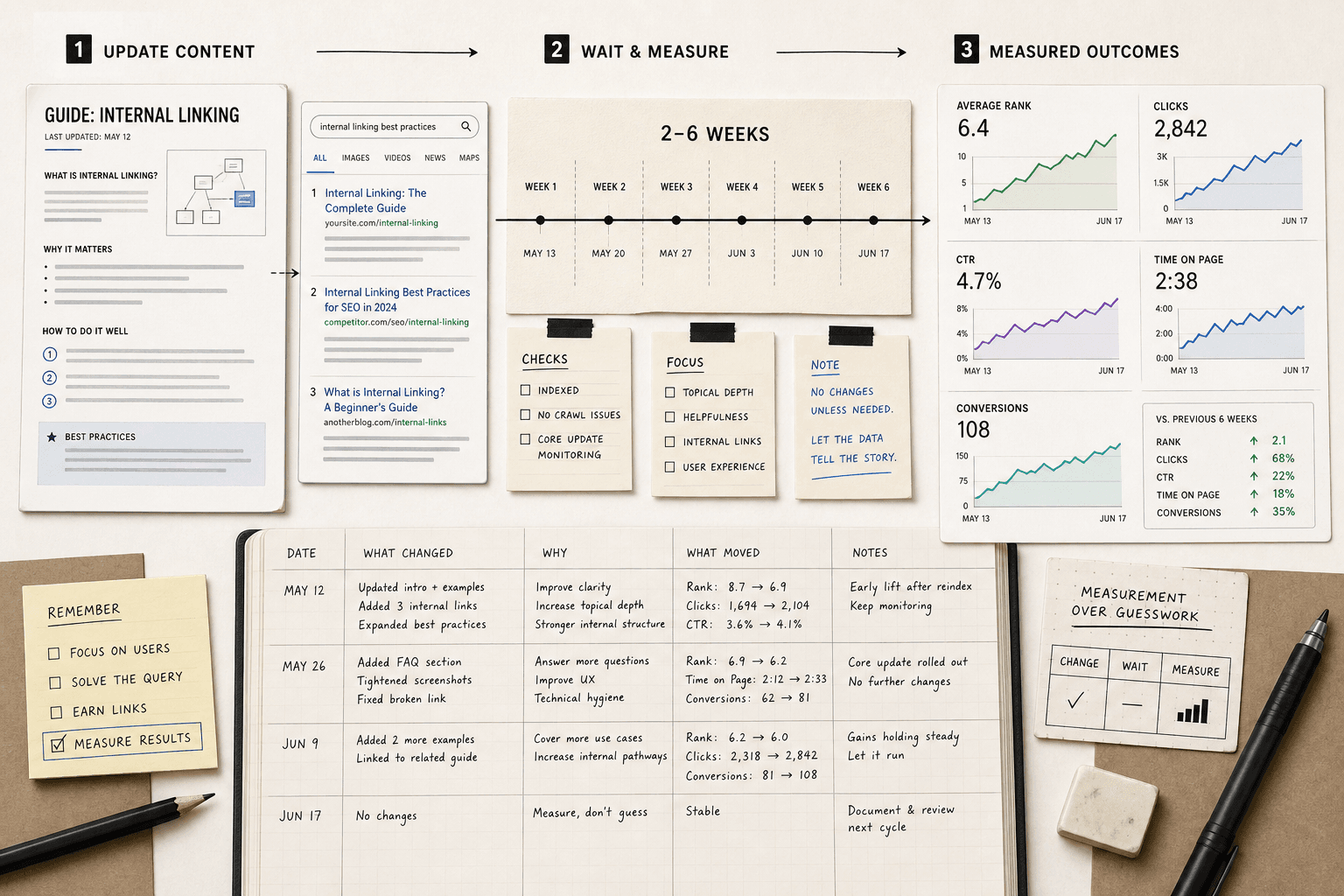
The big lesson is simple. A higher seo content score is not the finish line. It is only useful if it connects to better visibility, stronger engagement, or more pipeline. If the score improves but traffic stays flat, stop polishing copy for the tool. Check whether the page still matches search intent. Review the SERP again. Compare your page against stronger competitors. Then inspect weak offers, soft calls to action, and missing internal links that may block results even when the page reads better.
Your next move is to document everything. Record what you changed, when you changed it, and what moved after the update. Keep notes on ranking shifts, click changes, engagement patterns, and lead impact. That record helps your team spot which content edits created measurable gains and which ones only made the page look cleaner. Over time, you build a repeatable playbook instead of relying on guesses.
At this point, you should know whether your on page SEO update improved visibility, engagement, or pipeline. That is the real checkpoint. A successful update shows movement in at least one business or search metric. It does not just produce a prettier score in a dashboard.
Keep using scoring tools. Just use them like instruments, not judges. Let real performance data make the final call. That is how you turn content optimization into a system your team can trust and repeat.
Want to streamline your on-page SEO workflow? Try our content optimization platform free or book a demo to see how teams automate their SEO audits.