Keyword Tracking for SMBs: The Exact Segments to Watch When You Can't Monitor Everything
SEO for small business fails when teams chase every keyword at once. SEO for small business works better when clear keyword priorities drive the plan. Small teams face the same problem: limited time, tight budgets, and a messy list of ideas. According to Effective Keyword Research for Small Business Growth - MacMillan Design, its founder brings 25 years of experience to keyword research. That matters because smart prioritization usually beats more activity. This article compares the main keyword groups side by side, based on effort, speed, and ROI. It shows what a small business should focus on first, without turning SEO into a bloated project. Research from Instagram shows a 6x result, which reinforces the upside of choosing the right targets early.
SEO for Small Business Evaluation Criteria
How the keyword groups will be compared
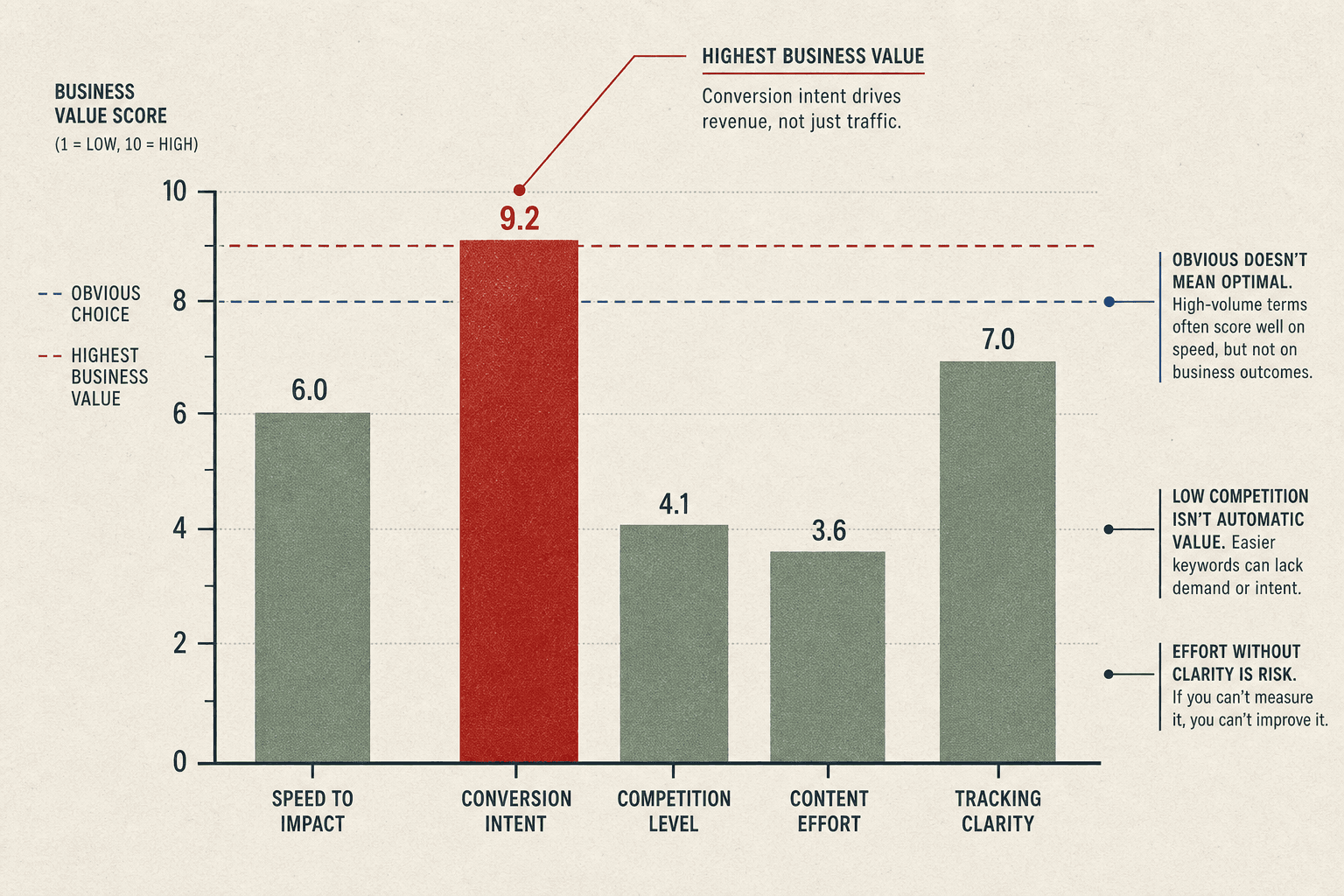
Each keyword group will be scored against identical criteria. Brand keywords often show the clearest intent, because the searcher already knows the company. Informational terms can reach earlier-stage demand, but they usually need more content effort and longer keyword tracking before results become obvious. Local money terms sit closer to purchase decisions, so they often bring stronger conversion keywords into focus.
For example, a plumber comparing “ACME Plumbing,” “how to fix a leaking pipe,” and “emergency plumber Austin” should not score them by preference. The better method is business usefulness. Which one can drive qualified traffic faster? Which one has lower competition? Which one makes performance easy to measure?
What matters most when resources are limited
When budget and time are tight, the core rule is simple: start with the keyword group that offers the fastest path to qualified traffic and measurable demand. That usually means terms with strong search intent and clear next steps, such as calls, form fills, or booked visits. In practice, this also answers how small businesses choose the right keywords: they choose the terms most likely to lead to action.
SEO for small business also takes patience. Informational pages may take months to build traction, while branded or local service pages can show signals sooner. Research from 5 Best Local Rank Tracking Tools for Marketers in 2026 shows 46% in a local search context, which reinforces how much listing visibility can affect action.
The scoring framework for priority
The table in the next section compares brand keywords, informational keywords, and local money keywords side by side. Each group gets a transparent score for the same factors. According to 5 Best Local Rank Tracking Tools for Marketers in 2026, 30% appears in current rank tracking tool messaging, which highlights how closely teams now watch movement and demand.
SEO for Small Business Keyword Groups Compared

Brand KeywordsOverviewBrand keywords target searches for the company name, product names, and branded variations. These terms usually capture people who already know the business. For example, a prospect may search a bakery’s name after seeing its van, Instagram post, or referral. That makes branded demand one of the cleanest signals in keyword tracking.Key Features- High intent from already aware searchers
- Strong click confidence when the business owns the result
- Useful for reputation control across search results
- Easier to monitor with basic rank tracking toolsStrengthsBrand keywords often produce the fastest organic wins. The business already has relevance for its own name. Clicks also tend to feel safer to searchers because the result matches what they expected. Effective Keyword Research for Small Business Growth - MacMillan Design notes that branded terms often reflect stronger intent than broad discovery terms.WeaknessesThe ceiling is limited when brand awareness is low. A new plumbing company cannot depend on searches nobody makes yet. These terms also get ignored until a competitor runs ads on the brand name or ranks for review pages and directory listings. That is usually when the gap becomes obvious.Best ForBrand keywords fit businesses with existing awareness, referrals, repeat buyers, or active offline marketing. They also help companies managing reviews, branded SERP clutter, and name confusion. For example, a local law firm with radio ads should protect those searches early.Common Pain PointsThe biggest problem is false confidence. Strong branded rankings can look healthy while non-branded visibility stays weak. Another issue is weak ownership of the full first page, including reviews and social profiles. So, are brand keywords important for SEO? Yes. They are essential for demand capture and reputation control, but they rarely create new market reach on their own.
Informational KeywordsOverviewInformational keywords target questions, problems, and early research searches. They often include long tail keywords with clear context. For example, a roofer may publish content on “how to spot storm damage on shingles” before the reader is ready to request a quote. This group supports discovery earlier in the funnel.Key Features- Broad topic coverage across questions and subtopics
- Strong fit for blogs, guides, FAQs, and resource hubs
- Good entry point for long tail keywords
- Helpful for building topical depth over timeStrengthsInformational terms help small businesses expand beyond existing demand. They can attract first-time visitors who have never heard of the brand. They also create internal linking opportunities toward service pages and comparison pages. Effective Keyword Research for Small Business Growth - MacMillan Design highlights this role in building relevance across related topics.WeaknessesThis group usually monetizes slower. A page can rank, earn visits, and still produce little revenue if the topic sits too far from purchase intent. Teams also overproduce here without a plan. They publish articles, but skip clear paths to conversion, rank tracking, or service-page support.Best ForInformational keywords work best for businesses with sales cycles that involve research. They also fit markets where buyers need trust before purchase. For example, a financial planner, clinic, or B2B software firm can use educational content to answer early objections.Common Pain PointsThe common issue is drift. Content expands into low-value topics because search volume looks tempting. Attribution also gets messy since the first click rarely becomes the sale. In seo for small business, this group works best when each topic supports a real offer, service, or follow-up step.
Local Money KeywordsOverviewLocal money keywords target searches with clear purchase intent and local context. Examples include “emergency plumber Austin” or “divorce lawyer near me.” These terms sit closest to the lead stage. They usually map to service pages, location pages, and core local SEO assets.Key Features- High commercial intent
- Strong alignment with service pages
- Direct support for leads, calls, and form fills
- Requires close keyword tracking by city and offerStrengthsLocal money keywords often drive the fastest near-term results for a small business. They reach people looking for a provider now, not someday. Research from 5 Best Local Rank Tracking Tools for Marketers in 2026 shows that76%of people who search locally on a phone visit a business within a day. The same source notes that44%of clicks go to the local pack, which shows how much visibility depends on strong local SEO execution.WeaknessesThese terms are usually more competitive than they look. The business competes with local firms, directories, map results, and sometimes lead aggregators. They are also location dependent. Scaling cleanly across many cities or service variants gets messy fast, especially when pages become thin or repetitive.Best ForLocal money keywords fit service businesses that need calls, booked jobs, or qualified local leads. Think dentists, HVAC companies, med spas, and accountants. For example, a pest control company may get more immediate value from “termite treatment Phoenix” than from broad educational content.Common Pain PointsThe main pain points are duplication and weak local proof. Teams create dozens of near-identical city pages without unique reviews, offers, or case examples. Tracking also becomes harder across neighborhoods and map results. What type of keywords drive the fastest results for a small business? In most cases, local money keywords win because they sit closest to the sale.
Rank Tracking and Keyword Tracking Comparison
Side by side comparison table
- Brand keywords — Traffic potential: Low to medium · Lead potential: High · Speed: Fast · Difficulty: Low · Content cost: Low · Best use case: Protecting branded demand and owned search visibility
- Local money keywords — Traffic potential: Medium · Lead potential: Very high · Speed: Medium · Difficulty: Medium to high · Content cost: Medium · Best use case: Driving calls, form fills, and local service leads
- Informational keywords — Traffic potential: High · Lead potential: Low to medium · Speed: Slow · Difficulty: Medium · Content cost: Medium to high · Best use case: Building topic coverage and spotting future demand
For example, a dentist should not read these groups the same way. Brand keywords protect searches for the practice name. Local money terms show whether service pages appear when buyers are ready. Informational terms help spot rising questions, but they rarely deserve daily rank tracking.
What to track for each keyword group
Brand keywords need defensive tracking. The team should watch the homepage, review pages, and branded location pages. If a competitor, directory, or review site starts outranking the brand, that is a direct visibility problem. Effective Keyword Research for Small Business Growth - MacMillan Design
Local money terms need lead-focused tracking. That means watching keywords tied to service pages, map visibility, and city pages with real offers. For example, “emergency plumber Austin” matters because it can lead to a call today. Local tools matter here. 5 Best Local Rank Tracking Tools for Marketers in 2026 and The Most Accurate & Delightful Local Rank Tracker on Earth | Rank Tracking Software | Monitor Local Rankings | Whitespark
Informational terms need lighter monitoring. These keywords work best for trend spotting, not weekly stress. If impressions rise for a guide, the team can expand that topic cluster. If rankings dip slightly, that is not always a fire. That mindset keepsseo for small businesstied to business value, not vanity charts.
Where small teams usually waste effort
Small teams often chase broad informational terms too early. They publish blog posts, track hundreds of keywords, and still cannot tie movement to pipeline. That is busy work, not useful rank tracking.
Another miss is ignoring brand keywords until a problem appears. That usually happens after a competitor ad, directory page, or bad review gains visibility. A short list of branded terms can prevent that blind spot.
The last waste is tool-heavy reporting without decisions. According to 15 Best Rank Tracking Software We're Using for 2026, entry plans can start at $32. The same source lists higher tiers at $249. More tracking does not help if no one changes pages, offers, or conversion paths after reading the report. Small businesses should check rankings weekly, then review deeper trends monthly.
Conclusion: SEO for Small Business Priorities

For most small businesses, the practical order is clear. Protect brand terms first. That means owning the search results tied to the company name, core service names, and branded variations. Build local money pages second. Those pages usually create the shortest path from search to lead. Then layer in informational content. That content supports long-term growth, fills gaps around buyer questions, and gives rank tracking a bigger surface area over time.
That is the real value of this comparison. It closes the gap between a vague keyword list and a usable decision system. Instead of tracking everything at once, small teams can assign priority by revenue impact, demand clarity, and page readiness. That makes keyword tracking more useful. It also keeps rank tracking tied to action, not reporting theater.
A simple framework helps:
- Start with brand keywords if demand already exists.
- Move to local money terms when lead generation is the main goal.
- Add informational topics once core service pages are live.
- Expand keyword tracking only when new pages, offers, or locations are ready.
A short operating checklist keeps execution clean:
- Create or improve pages for branded terms first.
- Publish local service or location pages next.
- Review rank tracking weekly for core terms, then monthly for broader trends.
- Add new keyword buckets only after existing pages are stable and measurable.
The smartest SEO for small business plan is not bigger. It is better sequenced.
For teams that want a simple place to organize and share work, Try It Free with free community tools.