Website Audit vs Live Monitoring: Which One Catches Revenue - Leaking Issues Faster?
A site audit tool can do two very different jobs. It can power periodic checks, or it can monitor site changes all week. That choice matters because growing teams need to catch SEO issues before traffic, leads, or revenue slip. Lean marketing teams feel this pressure fast. A delayed fix to broken canonicals or missing meta tags can cost thousands in lost organic traffic before the next review cycle. According to Revenue Leakage: Definition, Causes, and Prevention Strategies, 252042% can disappear through missed issues and weak controls. This comparison breaks down the real difference between a site audit and ongoing monitoring. It scores both options against clear criteria, including speed, cost, and coverage. It also shows which setup fits in-house marketers and founders who need better SEO coverage without adding bloated process.
Site Audit Tool Evaluation Criteria
What is being compared
This section compares two operating models inside a site audit tool. Periodic audits act like scheduled inspections. Teams run a website audit weekly, monthly, or before major launches. Ongoing monitoring works more like a smoke alarm. It watches pages, templates, and technical SEO signals between reviews.
The focus is broader than a basic seo software comparison. The article compares how teams use the software day to day. The same platform can feel very different under each model. For example, one team may only check crawl errors each quarter. Another may monitor site changes after every release.
How the comparison is scored
Both approaches are scored against the same six criteria. Those criteria are issue detection speed, coverage depth, workflow effort, cost predictability, reporting value, and team fit. This keeps the comparison fair and easy to scan. It also answers what teams should look for in a site audit tool.
A platform can often support both audits and monitoring. The real question is how well each workflow fits the team. For example, a tool may crawl deeply once a month, but send light alerts every day. That mix changes the value of the same feature set.
Criteria that matter most for lean teams
Lean teams usually need fewer dashboards and clearer action. Fast detection matters when small technical SEO issues can spread across templates. Research from How to Check Revenue Leakage in SaaS - xfactrs shows 42%, which illustrates how hidden loss often grows between reviews. The analogy fits SEO risk too.
No option wins in every case. A high-change site needs faster feedback. A stable site may prefer planned reviews and cleaner reporting. Internal ownership, release pace, and risk tolerance should drive the choice. Plugging Revenue Leakage in the Telecom Industry references 15 years of industry experience, a reminder that process maturity shapes results as much as software.
Ongoing Monitoring for SEO Teams

Overview
Ongoing SEO monitoring watches key signals all week. It tracks page changes, metadata edits, indexability issues, internal link shifts, uptime problems, and ranking movement as they happen. For active teams, that matters because a small release can break website health before the next review cycle starts. In practice, this model helps asite audit toolmonitor site changes continuously instead of checking the site only at fixed intervals.
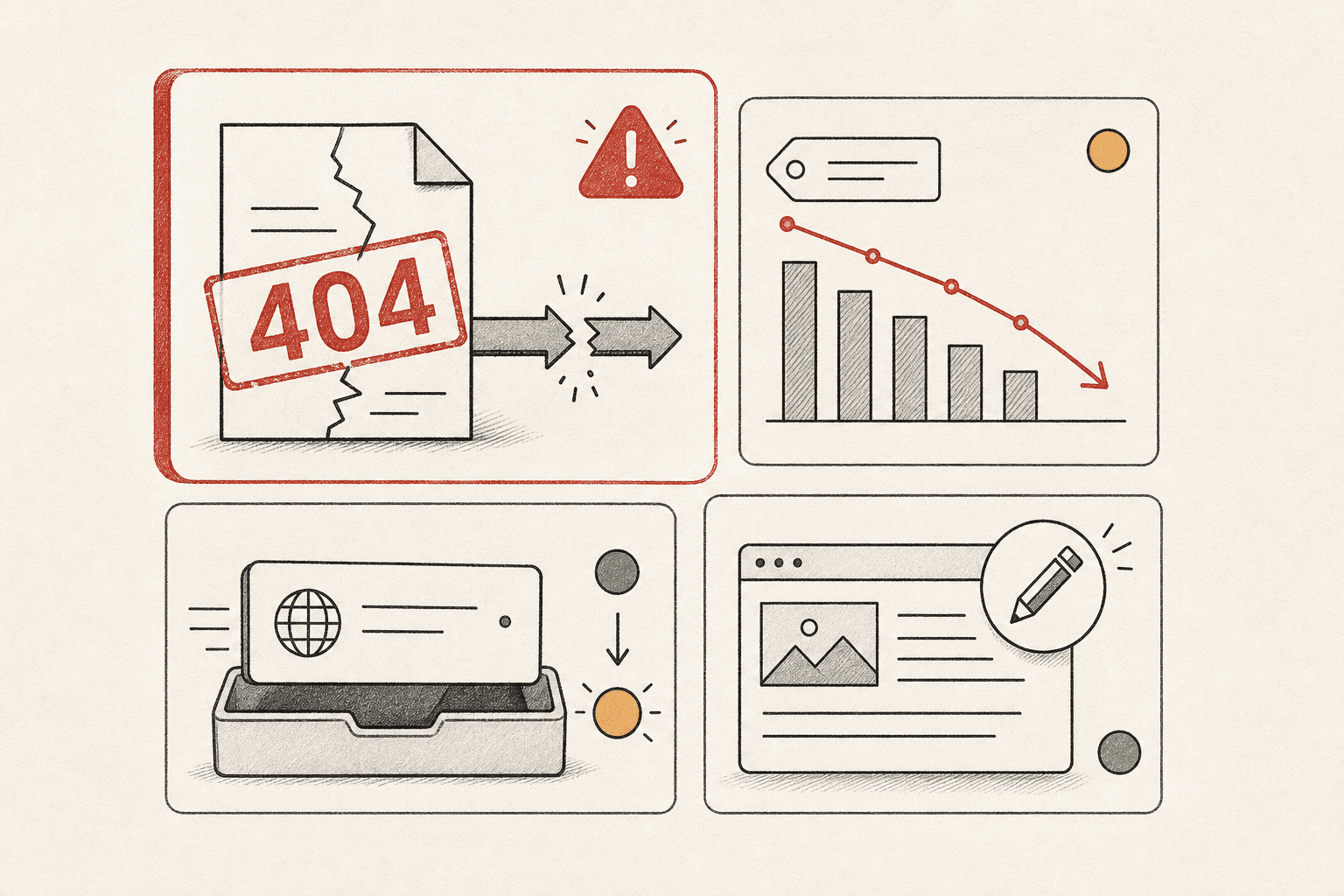
For example, a product team may ship a template update on Monday. By Tuesday, title tags could be missing across category pages, or canonicals could point to the wrong URLs. Ongoing monitoring works like a smoke alarm, not a yearly inspection. It flags the problem early, so the SEO team can fix it before traffic loss spreads.
Key Features
Most SEO monitoring setups share the same core features. Common capabilities include automated alerts, change detection, scheduled crawls, page-level monitoring, issue prioritization, and integrations with dashboards or reporting workflows. Some systems also group alerts by impact, which helps small teams focus on revenue-facing pages first.
That does not mean every alert deserves action. A strong setup filters noise and highlights the few changes that matter most. The team at MR VYAS demonstrates this concept clearly:
For teams new to monitoring setups, tutorials like MR VYAS's Semrush walkthrough show how alerts can be configured in minutes.
Strengths
The biggest strength is speed. Monitoring reduces detection lag, helps teams review releases faster, and supports quicker fixes when pages change without warning. For content-heavy sites, that wider coverage matters because new pages, redirects, and link changes appear constantly.
This model also answers a common question: is ongoing SEO monitoring worth it for small teams? Often, yes - if the site changes often and errors carry business risk. According to AI vs. Invisible Revenue Losses: A Deep Dive into Proactive Revenue Leakage Prevention, 23% can disappear through leakage when problems go unnoticed. The analogy fits SEO well: unnoticed technical loss compounds quietly.
Weaknesses
The trade-off is operational load. Constant alerts can create fatigue, especially when rules are broad or poorly tuned. Costs also rise over time because ongoing coverage usually requires higher-tier plans, more crawl credits, or tighter workflow ownership.
It also does not replace a deep website audit. Asite audit toolcan monitor site changes in near real time, but that is not the same as a broad structural review. Research from Plugging Revenue Leakage in the Telecom Industry shows even a 2% loss matters when small issues stack up. Monitoring catches motion. A website audit explains root cause.
Best For
This setup fits ecommerce teams, content publishers, fast-moving startups, and businesses with frequent deployments. In those environments, small SEO issues can become revenue problems within days. Where periodic reviews favor depth, ongoing monitoring favors speed, coverage, and faster response.
Periodic Website Audit Workflows
Overview
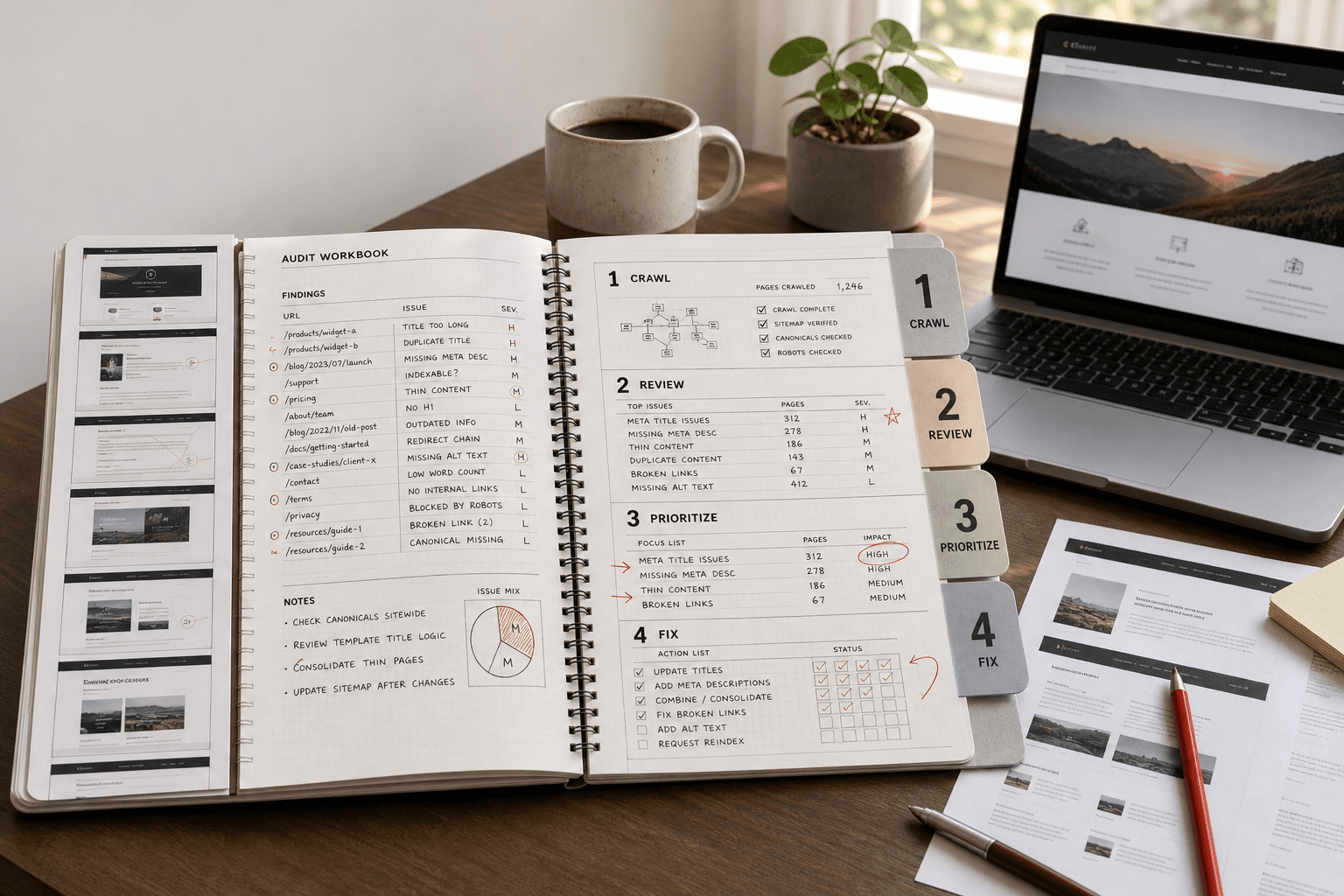
A periodic website audit reviews a site on a set schedule. Teams usually run it monthly, quarterly, or before a major launch. The goal is simple: find technical SEO and content issues in one structured pass.
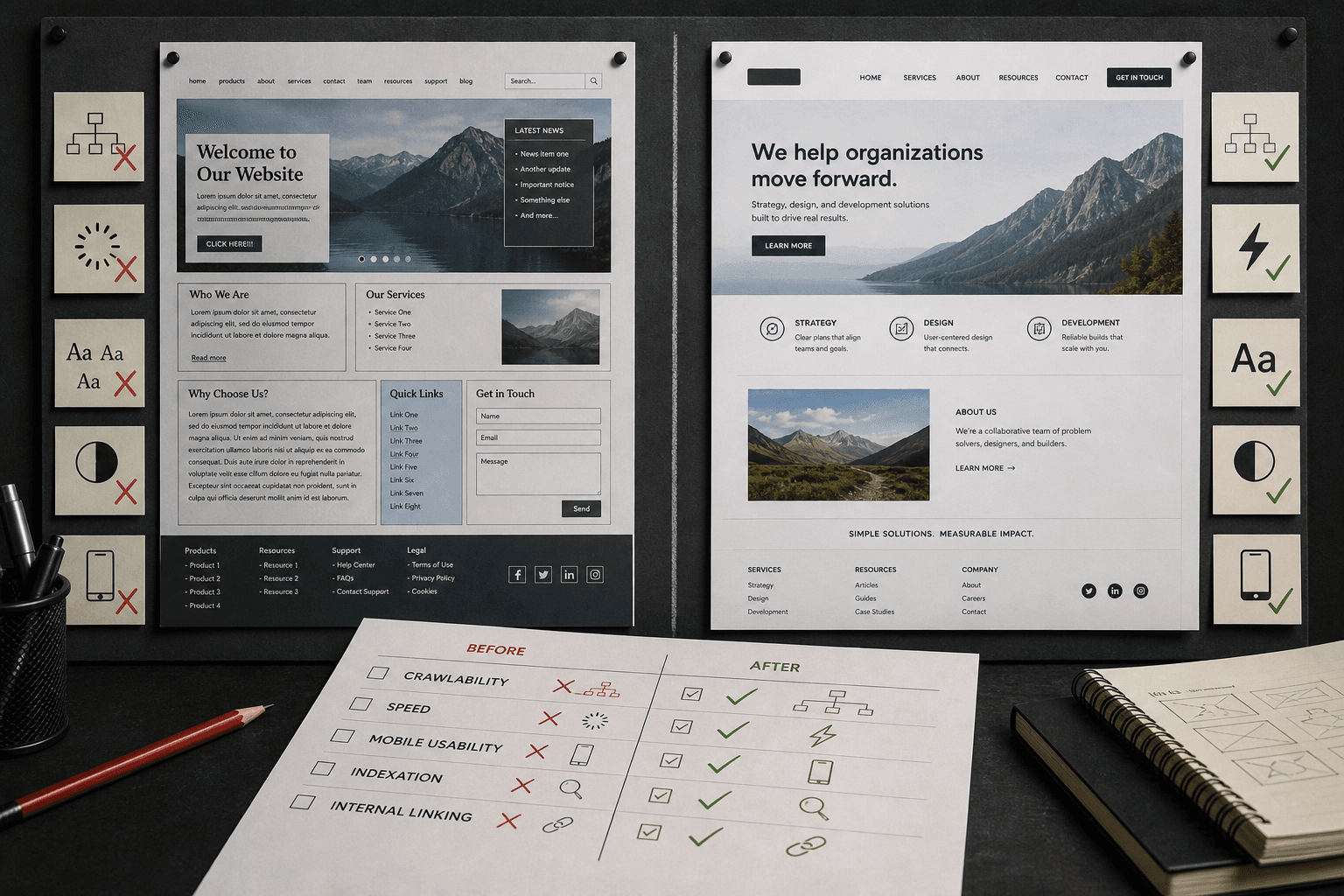
This model works like a routine inspection. For example, a marketing team might run a full site crawl at the end of each month, then review broken links, metadata gaps, and indexability problems together. A site audit tool supports that batch workflow well because it turns a large review into a repeatable checklist.
How often should a website audit be done? Most smaller sites can audit monthly or quarterly. Sites with large launches, migrations, or heavy publishing often need an extra review before and after those events.
Key Features
Periodic audits follow a clear sequence. The process often starts with a full site crawl, then moves into issue scoring, trend snapshots, and exported reports. From there, teams build a prioritized task list and a summary for managers or clients.
That structure helps non-technical stakeholders stay aligned. For example, a consultant can show what changed since the last website audit, what matters now, and what can wait. A good site audit tool also makes reports easier to share across marketing, product, and development teams.
Strengths
The biggest advantage is control. Periodic audits are usually cheaper than always-on systems, and they ask for less daily attention. That makes them easier to manage for lean teams with limited SEO ownership.
They also create a clean operating rhythm. Instead of reacting to alerts every day, teams review findings during planned check-ins and assign fixes in batches. For businesses with slower release cycles, that structure often feels more practical than trying to monitor site changes all week.
Weaknesses
The trade-off is delay. Problems can sit between audits, especially after template edits, CMS updates, or rushed launches. By the time the next review starts, traffic or indexing may already have taken a hit.
Context can also fade. A developer may not remember why a change happened six weeks earlier, which makes root-cause analysis harder. That is why periodic audits alone are not always enough for technical SEO on active sites. They work best when change is limited and risk is lower.
Best For
Periodic audits fit smaller sites, lower-change environments, and consultant-led reviews. They also suit teams that want a clear recurring process without daily oversight. For example, a local services company with a stable brochure site may only need a quarterly website audit plus a pre-launch check before major redesigns.
Are periodic audits enough for technical SEO? Sometimes, yes. They are often enough for stable sites with modest publishing volume. They are usually not enough for large, fast-moving sites where problems can appear between reviews.
SEO Software Comparison and Best Fit Scenarios
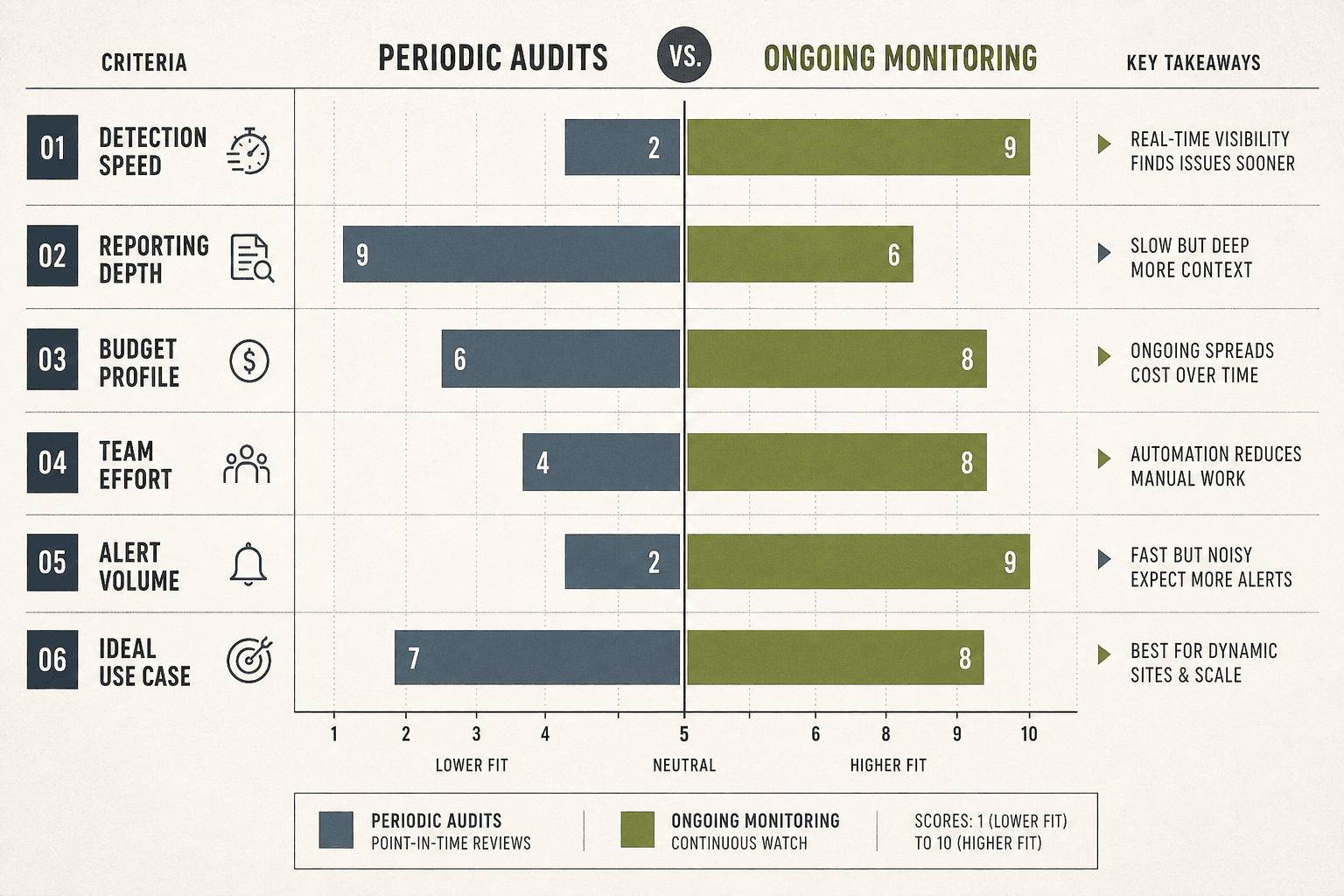
- Detection speed — Periodic audits: Slow · Ongoing monitoring: Fast
- Reporting depth — Periodic audits: Deep, batch-based · Ongoing monitoring: Lighter, event-based
- Budget profile — Periodic audits: Lower, predictable · Ongoing monitoring: Higher, ongoing
- Team effort — Periodic audits: Lower weekly effort · Ongoing monitoring: Higher operational effort
- Alert volume — Periodic audits: Low · Ongoing monitoring: High without tuning
- Ideal use case — Periodic audits: Stable, low-change sites · Ongoing monitoring: Active, high-change sites
The trade-off is simple. Audit-only teams often find issues after rankings, traffic, or conversions already slipped. Monitoring-first teams face the opposite problem. They can drown in noise when alerts lack thresholds, routing, or a clear owner.
That is why the best fit depends on site behavior, not vendor hype. For high-change sites, ongoing monitoring usually deserves priority. It helps teams monitor site changes as they happen and respond before small problems spread. For low-change sites, a recurring website audit process may be enough. It gives lean teams a practical way to review SEO health without adding daily overhead.
The middle ground matters most for teams with larger stakes. Ecommerce brands, multi-author content sites, and businesses with frequent deployments often need both. Monitoring catches fast-moving issues. A scheduled website audit finds deeper structural problems that alerts can miss. In many cases, the smartest seo software comparison is not either-or. It is deciding which model should lead, and which should support it.
A practical rule works well here. If the cost of delayed detection is high, monitoring deserves more attention. If resources are tight and change is slow, audits may be enough to start. For teams that want a simple next step, exploring free SEO audit tools can help organize and prioritize site health checks.