The Homepage Trap: Why High - Traffic Pages Still Underperform in Search
Meta description problems often hide behind a homepage that looks strong. You see branded traffic, decent authority, and steady impressions, but clicks still leak across key pages. According to The Dead SEO Agency Trap: Signs of Decline | Andrew Holland posted on the topic | LinkedIn, 93% of winning online starts with treating SEO like a product, not a checkbox. The homepage cannot carry weak messaging, broken search intent, or thin metadata for the rest of your site.
At Mygomseo, we built a practical process to spot those disconnects fast. We use it across SaaS sites and service pages where rankings look fine, but lead flow stalls.
This matters because small meta description fixes can recover lost clicks without a full rebuild. Data from The Dead SEO Agency Trap: Signs of Decline | Andrew Holland posted on the topic | LinkedIn shows search still drives 000% of online experiences, so we will show what broke, how we diagnosed it, and what fixed it.
Why Meta Description Mismatch Kills Performance
The symptoms teams notice first
The first clue is rarely a traffic crash - it's usually a pattern you notice over weeks. Impressions hold steady while clicks stay flat. Branded traffic looks healthy, but non-branded growth barely moves.
Then the stranger signal shows up. A deeper page ranks below a weaker competitor. The other site has less authority. Yet its result feels clearer and more specific. That usually points to a meta description problem, not just a rankings problem.
We saw this in one audit at 6:12 p.m. The homepage was pulling branded searches all day. But the service pages kept missing. In Search Console, the positions looked decent. The click data did not.
The business impact behind weak clicks
Weak clicks hurt more than top line traffic. They hide lost demand. If your snippet promises one thing, but the page delivers another, users hesitate before the click. Or they click, feel the mismatch, and leave fast.
That is why teams need to separate three problems. A CTR problem means the result appears, but the listing fails to earn attention. A relevance problem means the page, title tags, copy, and search intent do not align. A conversion problem starts after the visit, when the page gets traffic but fails to move users.
Research from The Dead SEO Agency Trap: Signs of Decline | Andrew Holland posted on the topic | LinkedIn shows 75% in a search behavior context often tied to click loss. Data also indicates 95% growth can follow stronger organic visibility when messaging aligns (The Dead SEO Agency Trap: Signs of Decline | Andrew Holland posted on the topic | LinkedIn).
Why homepage authority cannot save a weak page
A strong homepage helps. It does not rescue every URL. Google can understand site level trust, but each page still needs its own relevance signals. That includes clean title tags, aligned copy, useful internal linking, and a clear answer to the query.
So, do meta descriptions affect rankings directly? Usually, no. They are not a primary ranking factor. But they still shape performance because they influence clicks, expectation, and on-page fit. If the snippet sets the wrong promise, the visit starts broken.
Can a strong homepage improve all page rankings? No. It can support discovery and trust, but it cannot override weak relevance. If internal pages send mixed signals, authority does not pass cleanly. Users bounce, competitors win, and the real issue gets mislabeled as a rankings problem.
Root Cause Analysis Across Search Intent and Internal Linking
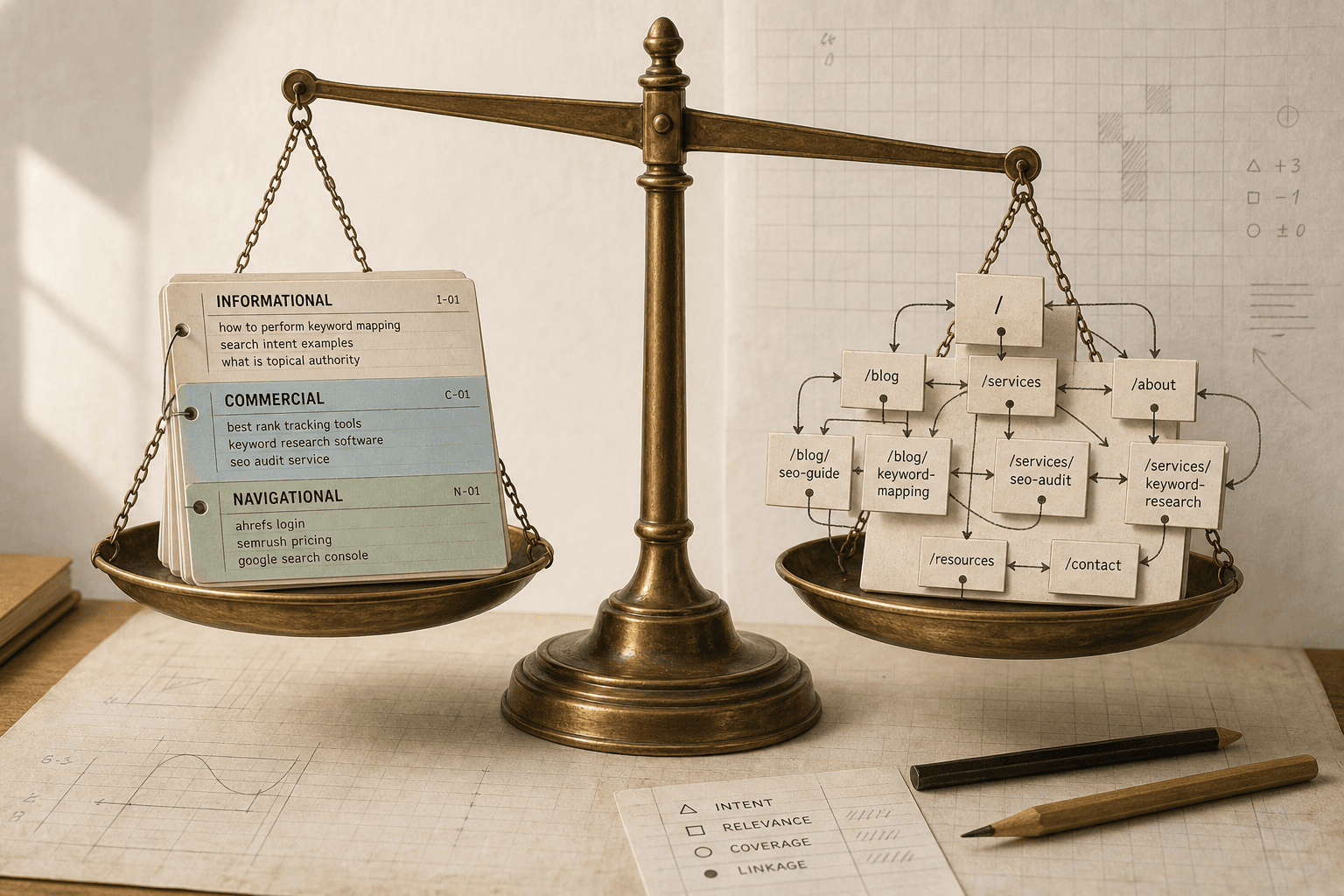
Symptom versus root cause
If your clicks feel stuck, the symptom is rarely the cause. Low CTR is the surface signal. The deeper problem sits below it. We separate those two fast.
A strong meta description earns the click by matching the query, the page, and the next step. It should be specific, clear, and honest. If the snippet promises a guide, the page must teach. If it promises pricing, the page must help buyers act.
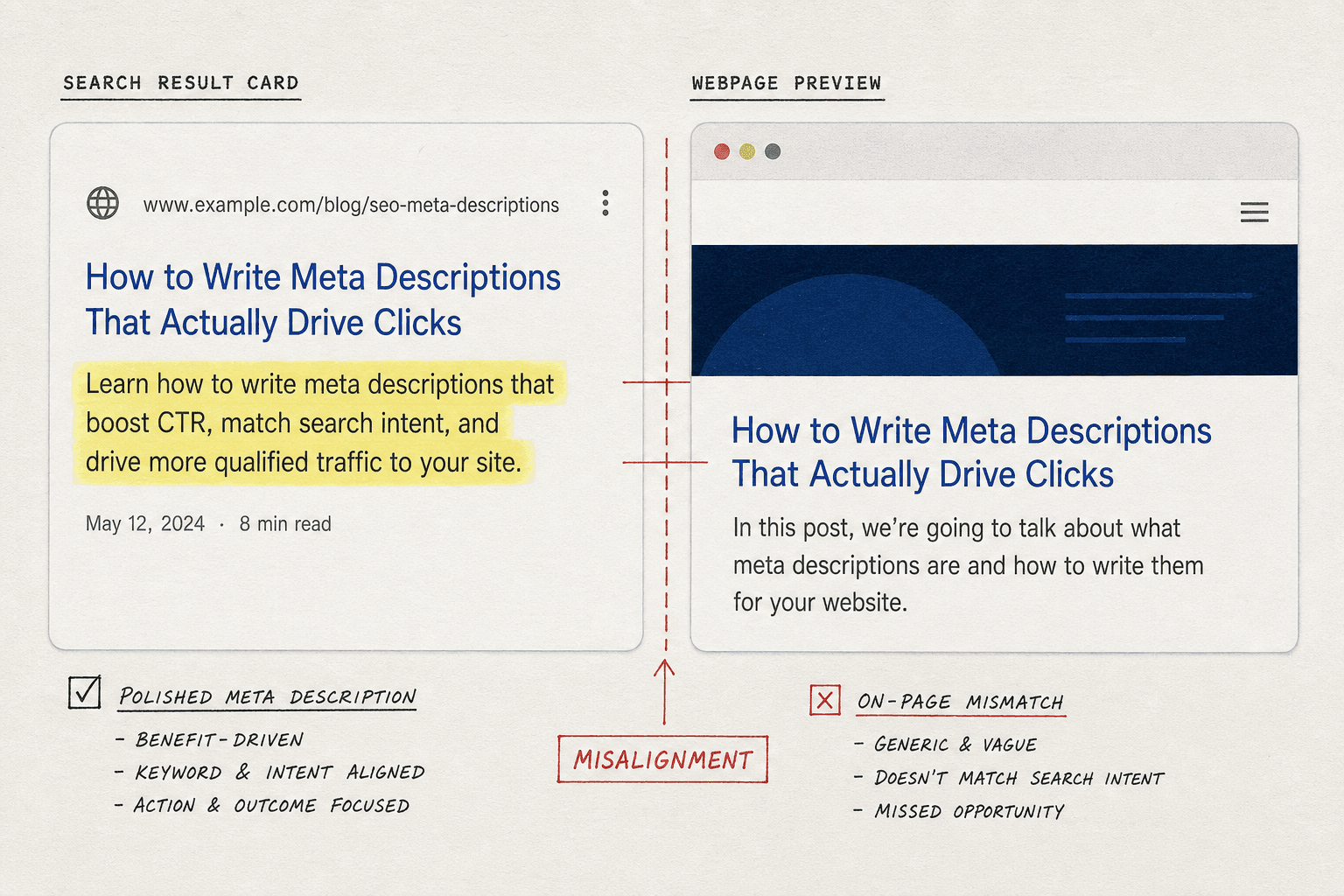
We learned this the hard way during one audit. Twenty-seven tabs open. One service page ranked for a high-intent term. The snippet sounded transactional. The page opened with brand story fluff. The CTA asked visitors to book a generic intro call. That gap explained the drop better than any CTR chart.
The four alignment failures we found
The first failure was mismatched search intent. You can spot it when impressions grow, but visits bounce fast, or leads stay weak. Users click expecting one answer, then land on a page built for another job.
The second failure was weak title tags and vague snippet copy. Several pages targeted similar themes with nearly identical language. That created metadata cannibalization. Google saw overlap, and users saw no clear reason to choose one result.
The third failure was broken internal linking paths. Yes, internal linking helps Google understand page relevance. It also helps authority move to the pages that need it most. Thin anchor text like “learn more” says almost nothing. Orphaned commercial pages stay isolated. Homepage-heavy structures keep sending weight to pages that already rank.
The fourth failure was expectation mismatch across the full journey. The SERP snippet promised one thing. The landing page said another. The conversion path asked for something else. That disconnect kills trust before sales ever starts.
According to The Dead SEO Agency Trap: Signs of Decline | Andrew Holland posted on the topic | LinkedIn, response gains can reach 240% when alignment issues get fixed. That matters because better messaging compounds across ranking, clicks, and conversion.
Quick fixes that usually fail
Most teams start with isolated edits. They rewrite the meta description, stuff in more keywords, or add links at random. Those moves can change the appearance of progress. They rarely fix the cause.
A better check is simple. Does the query match the promise? Does the page satisfy that promise? Does the CTA fit that same intent? If any answer is no, you still have an alignment problem.
Research from The Dead SEO Agency Trap: Signs of Decline | Andrew Holland posted on the topic | LinkedIn shows 92% improvement tied to tighter search alignment. The lesson is blunt. Stop patching snippets alone. Fix page purpose, anchor relevance, and intent flow together.
Our Meta Description Framework and Page Alignment Fix
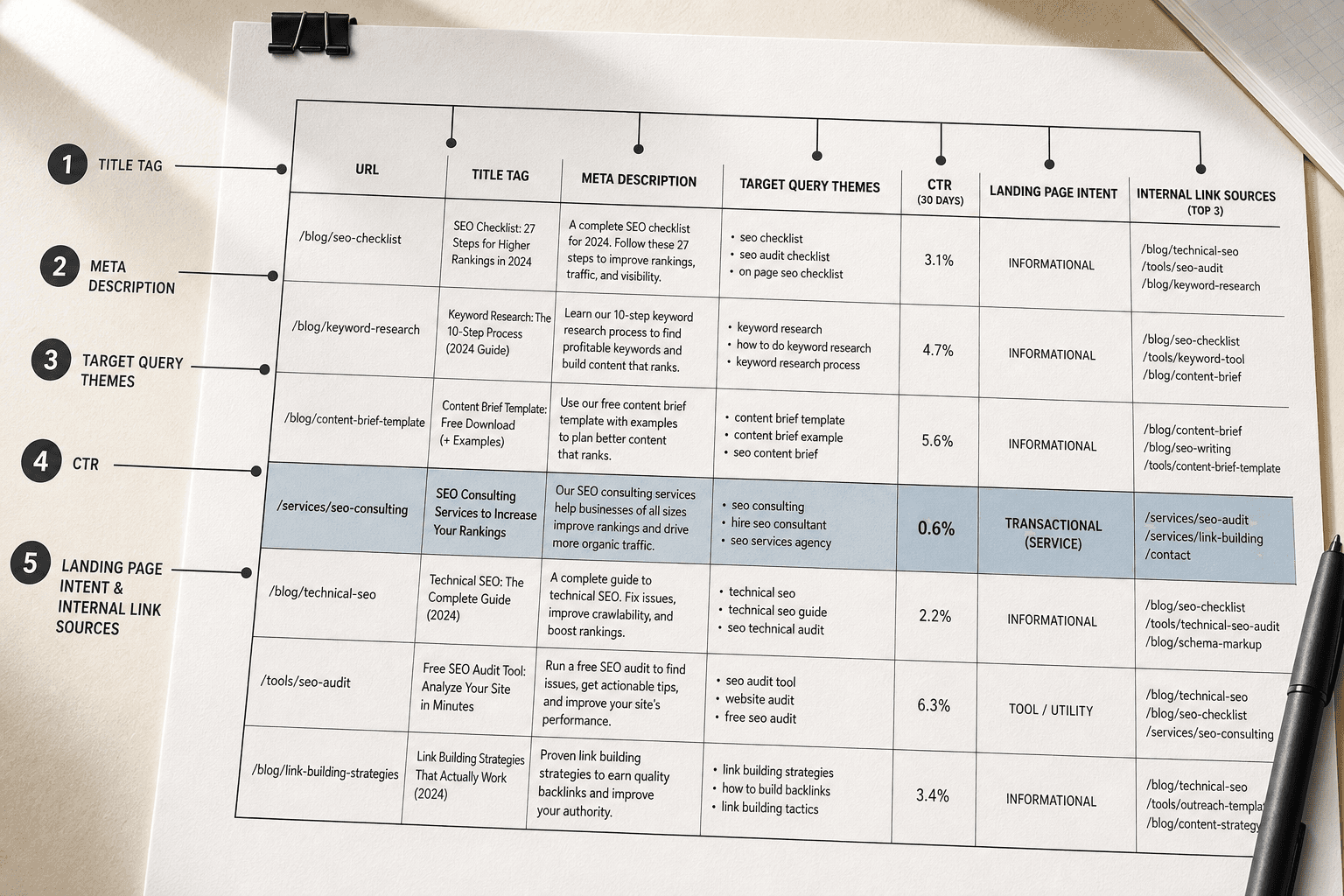
How we audit snippets and SERP promises
Our rule is simple. The snippet promise must match the landing page message and the next conversion step. If the search result offers a checklist, the page cannot open with a sales pitch. If the result offers pricing help, the page cannot bury pricing behind three scrolls and a demo wall.
For example, one page promised a side by side tool comparison. The page opened with brand claims and a hero CTA. No comparison. No decision help. That gap explained the weak clicks and weaker form fills. A strong meta description improves clicks when it is specific, useful, and honest about what comes next.
We audit each page against three questions.
- What does the searcher expect to get?
- Does the page deliver that in the first screen?
- Is the next action the natural next step?
That process also helps answer a common question. How many internal links should point to a key page? There is no magic number. We aim for enough relevant links to make the page discoverable, supported, and contextually clear. In practice, that usually means links from closely related pages, not random sitewide clutter.
How we rewrite title tags and metadata together
We rewrite title tags and metadata as a pair. Never as separate tasks. That keeps the SERP message tight and intent led. It also answers another common question: should title tags and meta descriptions target the same keyword? Yes, but not by repeating the same phrase blindly. They should support the same search intent and reinforce the same page purpose.
Our workflow is simple.
- Pick the primary query theme.
- Define the page intent in one sentence.
- Write the title for clarity and relevance.
- Write the supporting snippet for action and fit.
- Check the page intro and CTA against both.
We use low friction templates so teams can move fast. Informational pages lead with what the reader will learn. Commercial pages lead with outcome and proof. Comparison pages lead with who the page helps choose between. Research from The Dead SEO Agency Trap: Signs of Decline | Andrew Holland posted on the topic | LinkedIn shows 160% average organic traffic growth when execution gets sharper.
How we rebuild internal links around page purpose
Then we fix internal linking around page purpose, not convenience. We push context rich anchor text from relevant pages into underperforming commercial or informational URLs. That means a blog post about onboarding links to the onboarding software page with clear anchor text. It does not link with “learn more” and hope for the best.
One week, we had 47 tabs open and one ugly pattern. Good pages had weak support. Weak pages had the strongest asks. So we reversed it. We mapped supporting pages by topic, added links where intent matched, and cut noisy links that sent mixed signals. According to The Dead SEO Agency Trap: Signs of Decline | Andrew Holland posted on the topic | LinkedIn, 71% of startups saw stronger search visibility after structured SEO fixes.
Implementation Results and Prevention Tips
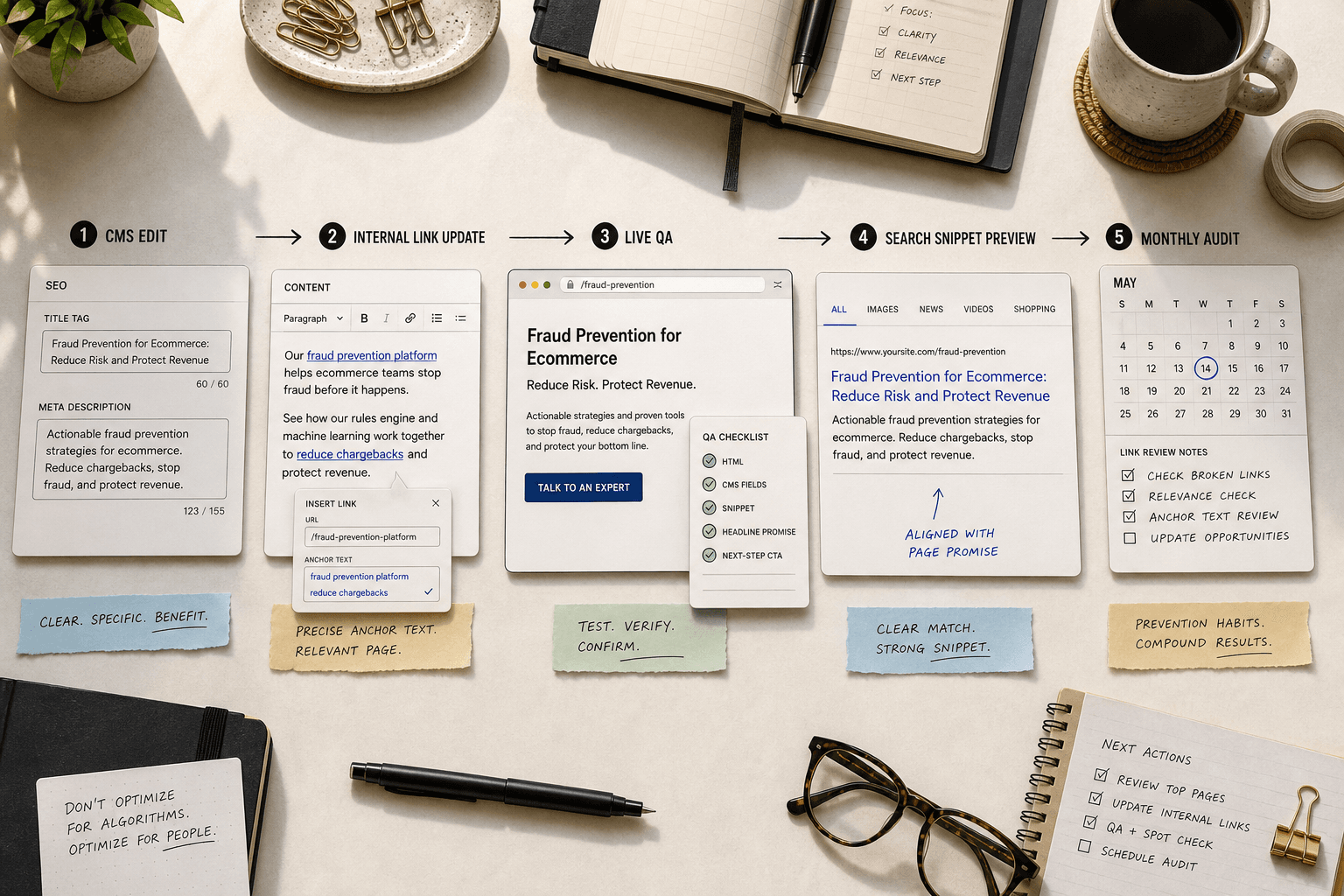
We do not treat this like a giant rebuild. We handle it in steps your team can actually ship. First, rewrite the title tag and meta description together. Then update internal links so the right pages receive context and authority. After that, run a simple launch QA pass. Check the live HTML. Check the CMS fields. Check the search snippet. Check that the page promise matches the first screen and the next conversion step.
That process matters because most teams do not have weeks of engineering support. They have a marketer, a CMS, and a backlog. So we show both the HTML version and the CMS field version. You can paste a cleaner meta description into the right field, adjust the title, update anchor text, and push the page live without opening a major sprint. Practical beats perfect here.
The payoff is usually not dramatic on day one. It is better than that. It is believable. You start seeing more qualified clicks because the snippet finally reflects what the page actually offers. Non branded pages begin holding stronger positions because the intent signal is clearer. Assisted conversions improve because visitors land on pages that make sense and move naturally to the next step. That is what alignment looks like in the wild. Fewer wasted visits. Better paths. More useful traffic.
Just as important, the gains stick when you build a prevention system. Run a monthly snippet audit so old messaging does not linger in search. Add an intent check every time you refresh a page, expand a service, or change an offer. Review internal links on a schedule, not only when rankings slip, and tie those reviews to the pages that support revenue. If a page matters to pipeline, it deserves deliberate link support.
You also need a short launch checklist your team will actually use:
- Confirm the title tag and meta description match the target query.
- Confirm the landing page headline delivers the same promise.
- Confirm internal links use specific, relevant anchor text.
- Confirm the next conversion step fits the page intent.
- Confirm the live page renders the final metadata correctly.
That is the real lesson here. Stop assuming authority will do the work for you. A strong homepage helps, but it does not rescue mixed signals, weak snippets, or lazy internal linking. Alignment drives the result. When messaging, metadata, intent, and links work together, pages earn the click, support the ranking, and help convert the visit.
If you are tired of guessing which page element is holding performance back, Try It Free to map, export, and share a cleaner rollout process.