Search Is Splitting in Two: How to Create Content for Google Results and AI Answers
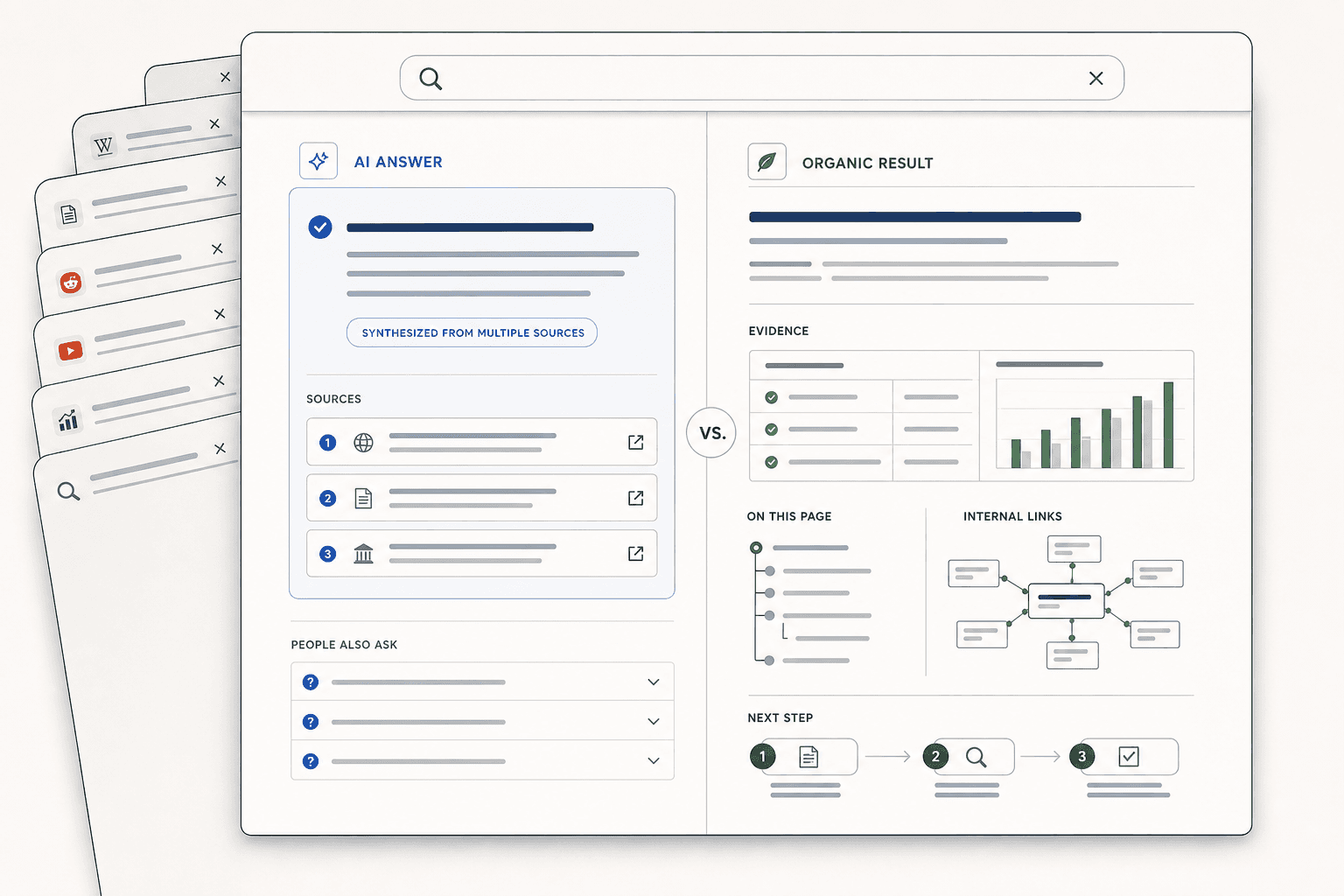
AI answers are changing who gets seen first. They reshape discovery, clicks, and trust before a user ever reaches your site. Classic SEO still matters, but loose pages now lose ground. According to AI Search Is Splitting in Two, and Agencies Need a Different Strategy for Each | Emarketed, 25.5% signals a real shift in how AI search visibility works. We built Mygomseo to help teams keep core SEO strong while making content easier for models to extract and cite. That matters because you should not need a full workflow reset to stay visible. In this article, we will show what changed, what we built, and how to adapt fast. We have seen client pages win when solid fundamentals and citation-ready formatting work together.
TLDR on AI Answers and Search Strategy
Traditional rankings still matter. They shape discovery, trust, and source selection. They also feed the pages models review, quote, and summarize in an effective search strategy.
What changed is the page format that performs best. Clear entity signals help. Tight headings help. Short summaries, original evidence, and cleaner information architecture help even more for llm seo.
Who cares? In-house teams, founders, and developers do. They need content that ranks in search, then survives the jump into answer engines without losing context or credit.
We felt this shift in a very real moment. Week three. Forty-seven browser tabs open. We kept finding polished pages with vague claims, thin sourcing, and no fast answer block. They looked optimized. They were hard to cite.
So we are not throwing out classic SEO. We keep technical health, on-page basics, and internal linking. Then we add citation-friendly sections, schema, answer blocks, and tighter page relationships built for fast retrieval.
Research from AI Search Is Splitting in Two, and Agencies Need a Different Strategy for Each | Emarketed shows ad presence in AI-generated results rose 394%, which raises the stakes for sharper organic execution.
Whats New in AI Answers SEO Content Strategy
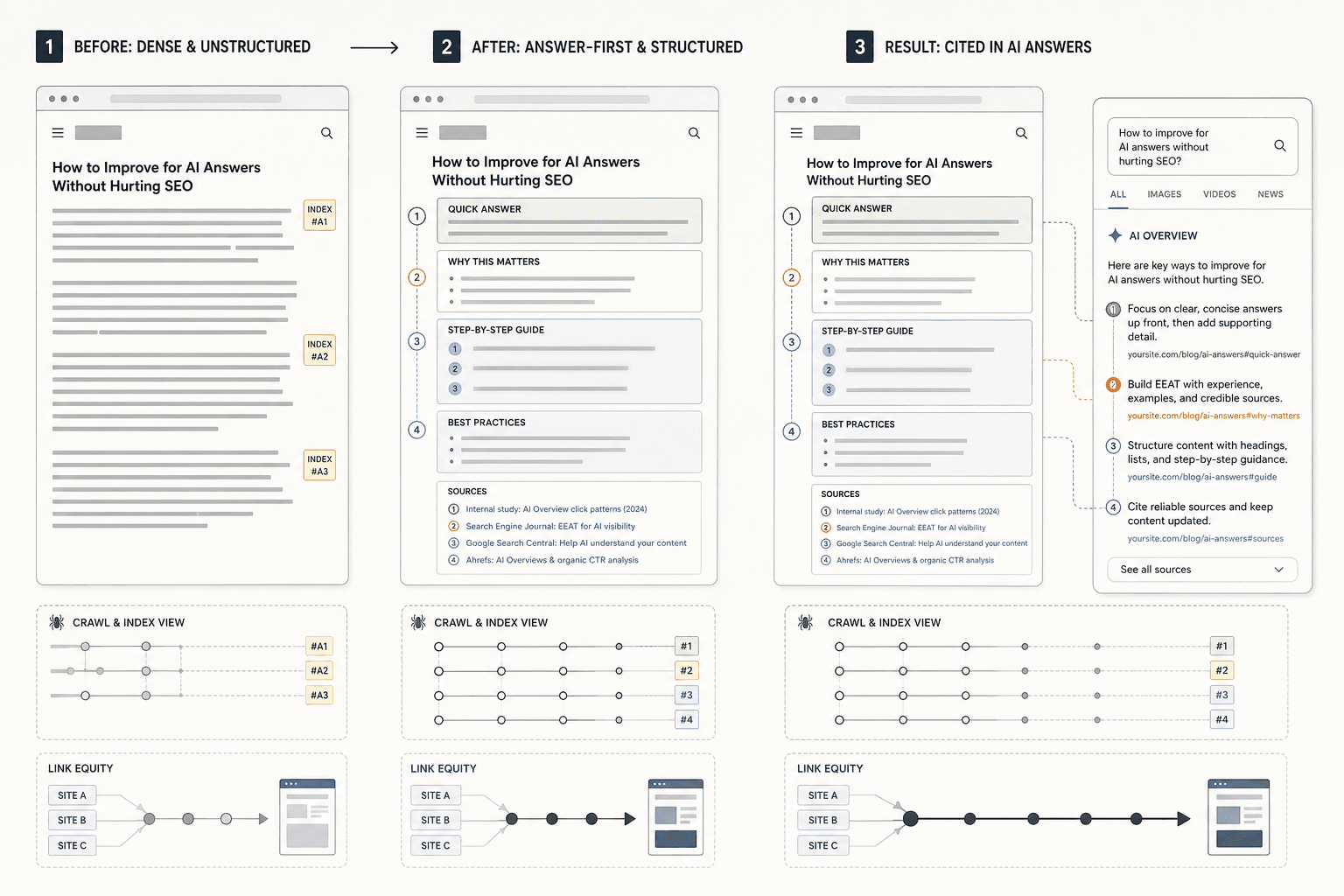
What we built into our workflow
The biggest change happened before writing starts. We tightened briefs so each page maps the main intent, likely follow-up questions, and short lines worth quoting. That gives writers a cleaner target.
One moment made the gap obvious. We had 47 browser tabs open, three drafts in review, and still no clean answer block. The page had facts, but no obvious extractable summary. That was the point we rebuilt the workflow.
Now we use a layered page structure from the first outline.
- Direct answer summary
- Supporting detail
- Evidence
- FAQs
- Linked context
That structure helps users scan faster. It also helps models parse the page without guessing where the main answer lives. In practice, this makes llm seo feel less mysterious and more operational.
We also expanded internal linking across topic clusters. Each page now points to nearby supporting pages with a clear reason. That improves crawl paths and gives stronger context for answer synthesis.
How we structure pages for extraction and citations
The short version is this: cited content tends to be clear, direct, and easy to verify. Pages that get pulled into summaries usually answer the question early, then support that answer with proof. They do not bury the lead.
So what kind of content gets cited in AI answers?
- Pages with a clean answer in the opening lines
- Pages with clear headings that match user intent
- Pages with visible evidence, not vague claims
- Pages with examples, definitions, and FAQs
- Pages with strong topical context from internal links
Our templates now reflect that pattern. We prioritize heading clarity, short answer-first paragraphs, clean schema, and consistent entities from top to bottom. We also push for source-worthy proof, such as stats, examples, and original observations.
That does not mean writing for robots. It means removing friction. A strong page should help a reader and a model reach the same conclusion fast.
We also changed how we handle linked context. Instead of isolated articles, we build cluster support around the page. For example, even niche supporting pages can strengthen context when they sit inside a broader search strategy, much like a focused page such as Technical Channel Manager APAC (SG) gains meaning from the pages around it.
Research from AI Search Is Splitting in Two, and Agencies Need a Different Strategy for Each | Emarketed shows that 48% of queries trigger overviews. That makes extractable structure more important, especially on informational pages.
So how should you optimize for AI answers without losing SEO value?
- Keep core SEO intact
- Put the answer near the top
- Support it with proof
- Add FAQs for follow-up intent
- Strengthen cluster links and entity consistency
That is the balance. You are not choosing between ranking and citations. You are making the same page work harder in both places.
Results we are seeing across client content
The early pattern is encouraging. We are seeing stronger visibility on long-tail informational terms and better engagement on summary-first layouts. More pages also look structurally ready for citation.
We are also seeing better editorial discipline. Writers know the main answer sooner. Editors can spot weak proof faster. Content moves with less drift.
That matters because the best-performing pages now do two jobs at once. They rank like solid search content, and they read like something worth quoting. That is the real shift inside modern seo content strategy.
We are not treating this as a shortcut. We still need clean site architecture, healthy indexing, and authority signals. But when those basics are in place, better structure gives the page a clearer shot at visibility in both classic search andai answers.
For teams building out clusters, the practical move is simple. Keep your fundamentals. Then make each page easier to extract, verify, and connect. That is the upgrade.
Breaking Changes for LLM SEO and Migration Guide
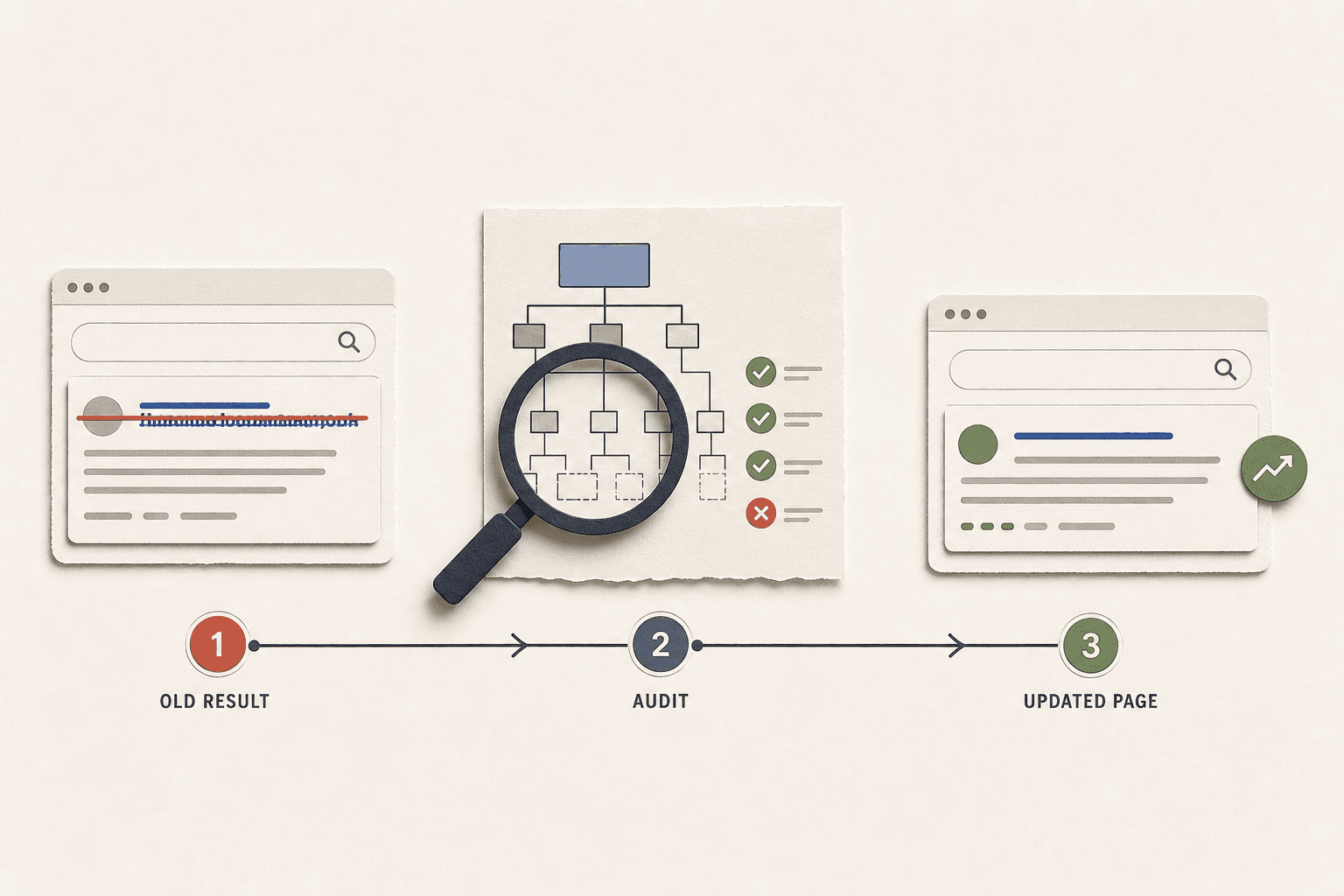
What stops working as well
The biggest shift in llm seo is simple. Pages that hide the answer behind soft intros lose value fast. In ai answers, extraction speed matters.
Another break is thinner content. If a page leans on keyword repetition, models can ignore it. They can paraphrase the page away and move on.
That does not mean classic SEO is dead. It means your seo content strategy needs tighter packaging. You need direct claims, clear entities, and proof that earns trust.
We felt this the hard way. One draft opened with 140 words of throat clearing. It sounded polished. It also gave the model nothing useful to grab.
Research from Ridge Marketing shows only 12% trust AI-assisted answers often or always. That raises the bar for clarity and evidence.
Before and after content examples
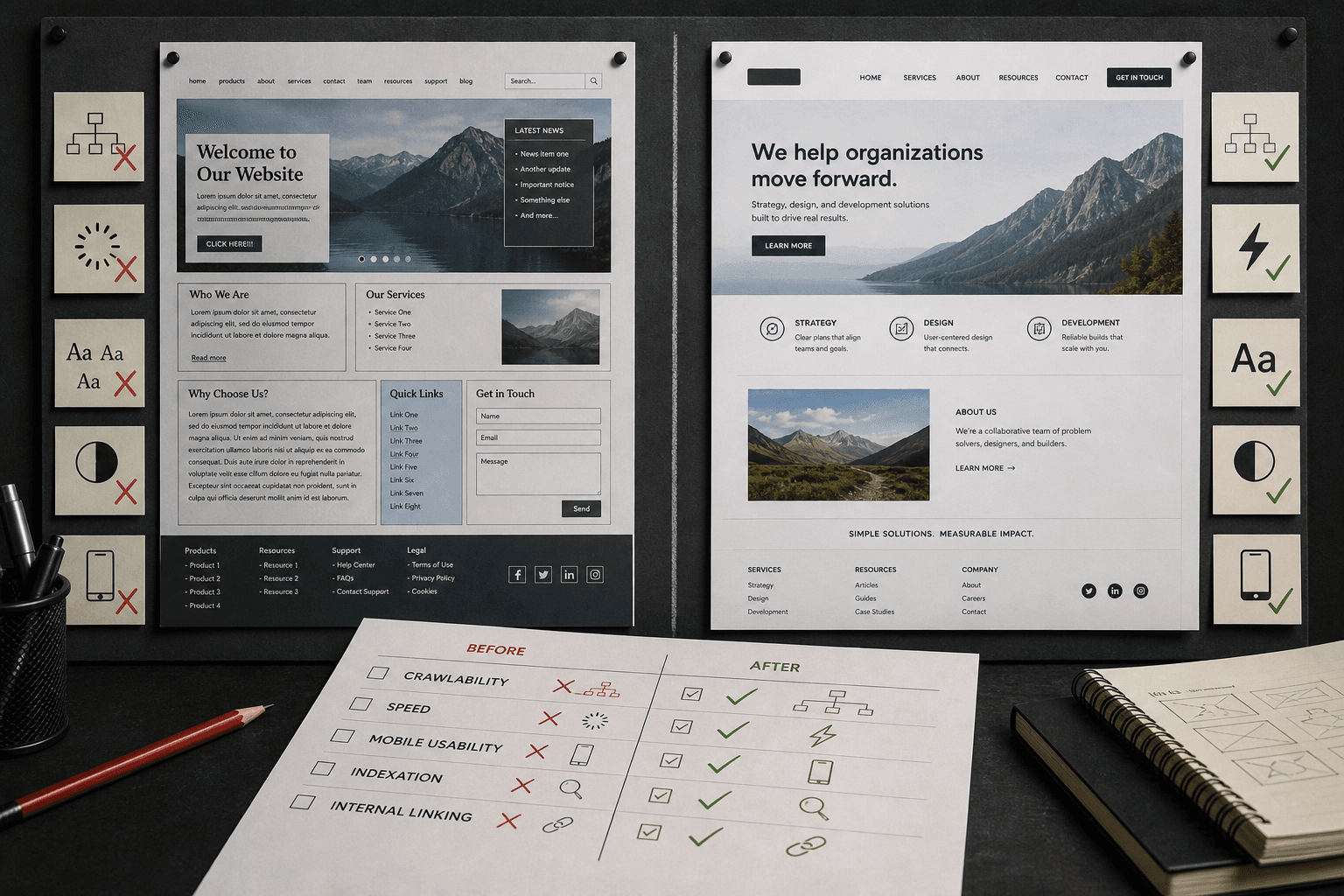
Before, many pages followed the old search strategy playbook too closely.
- Long opener that delayed the core answer
- Vague headings that said little
- No schema markup
- Weak internal links
- No clear answer block near the top
That format can still rank. But it is less useful when systems need fast extraction. That is one reason Emarketed argues teams now need content built for different search behaviors.
After, the page should feel easier to scan.
- A concise answer-first intro
- Explicit headings tied to the user question
- Short bullets and examples
- Schema where it helps
- Supporting links to related pages
For example, a services page can answer first, then link to deeper support pages like Technical Channel Manager APAC (SG) or Structural Engineer (SG). That gives both users and systems more context.
For a visual walkthrough of this process, check out this tutorial from Leveling Up with Eric Siu:
Step by step migration guide
You do not need to rewrite your whole site. Start with your top informational URLs. That is the fastest path if you want better visibility in ai answers.
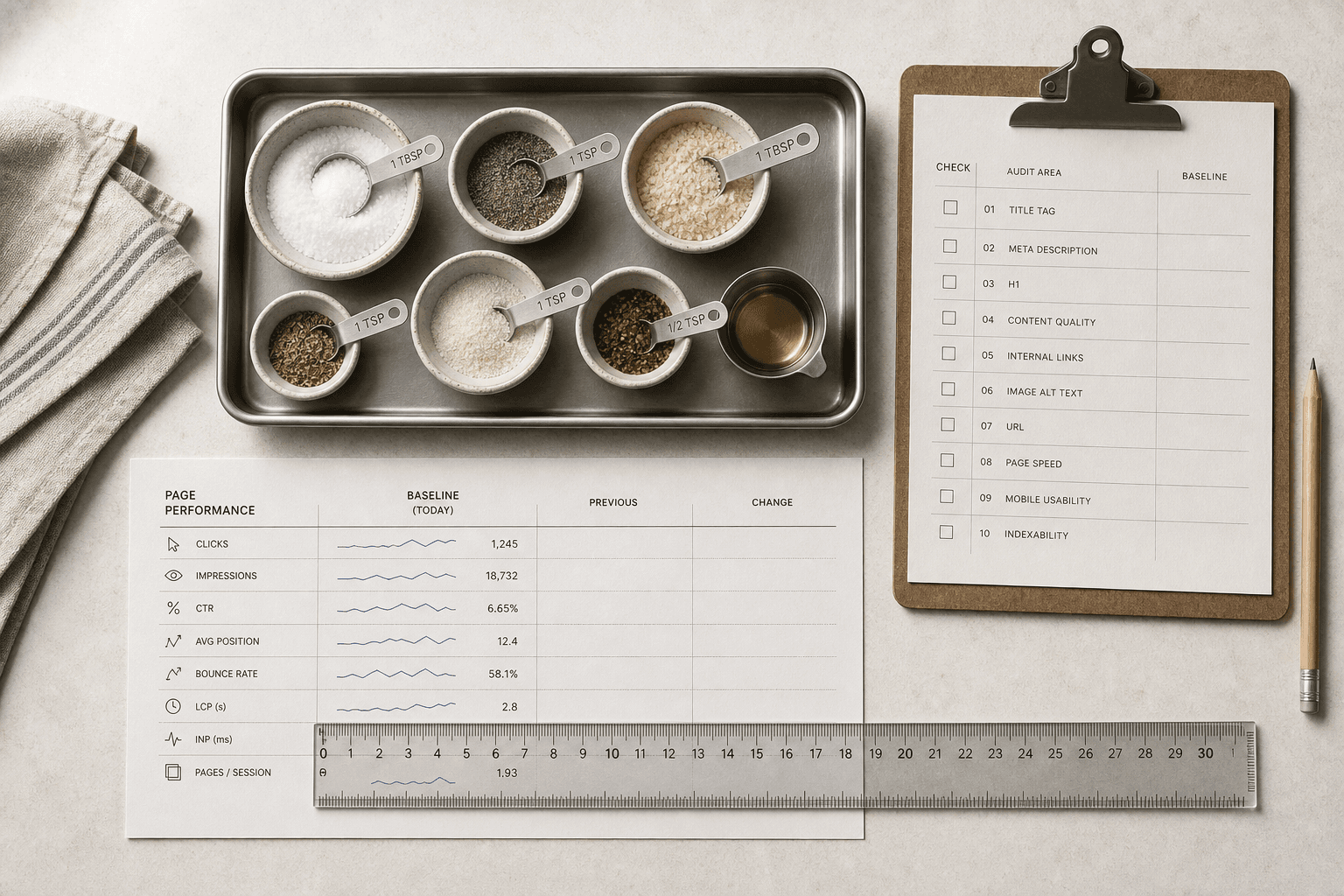
- Audit high-value pages first.
Flag weak summaries, shallow subheads, and fuzzy entity language. Focus on pages that already earn impressions.
- Rewrite the first 100 words.
Answer the core query right away. Keep the primary keyword. Keep the page aligned with search intent.
- Add proof and structure.
Use examples, FAQs, tables, and schema where useful. Then strengthen internal links to adjacent pages, such as Channel Manager APAC (SG), when the connection is real.
- Track the right signals.
Watch impressions, click-through rate, branded searches, assisted conversions, and citation pickup. Convert also stresses the value of structured, supportable content blocks.
The biggest content changes are not massive. They are sharper openings, better proof, and clearer structure. Yes, you can optimize for this without rebuilding everything. Start with your best pages, then expand.
Our Take on Search Strategy and Quick Links
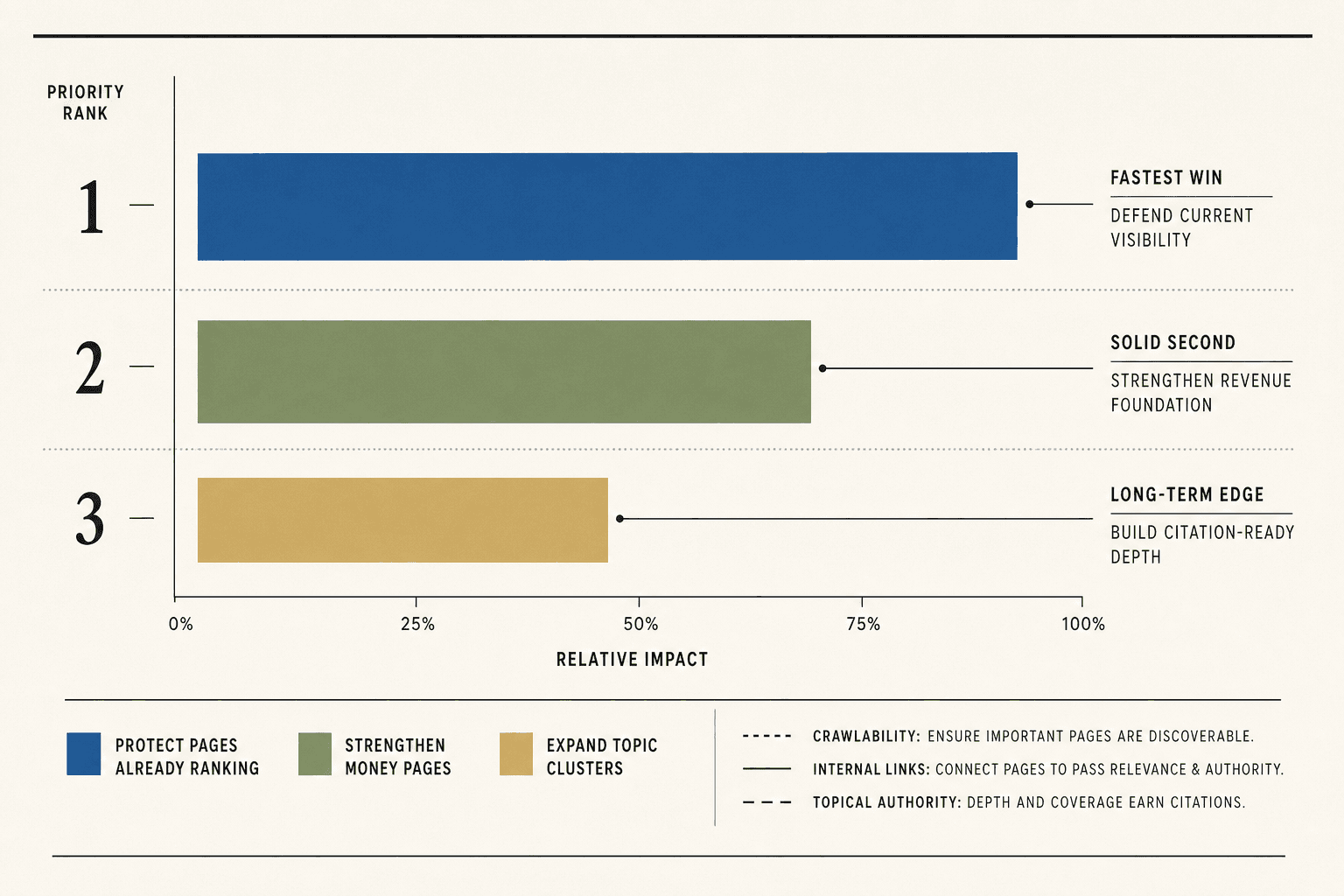
Our take is simple. Do not abandon classic SEO. If crawl paths are messy, key pages are not indexed, and internal links are weak, no formatting trick will save you. Start with the basics: crawlability, indexing, internal links, and topical authority. Then improve the page so machines can parse it fast and people can verify it fast.
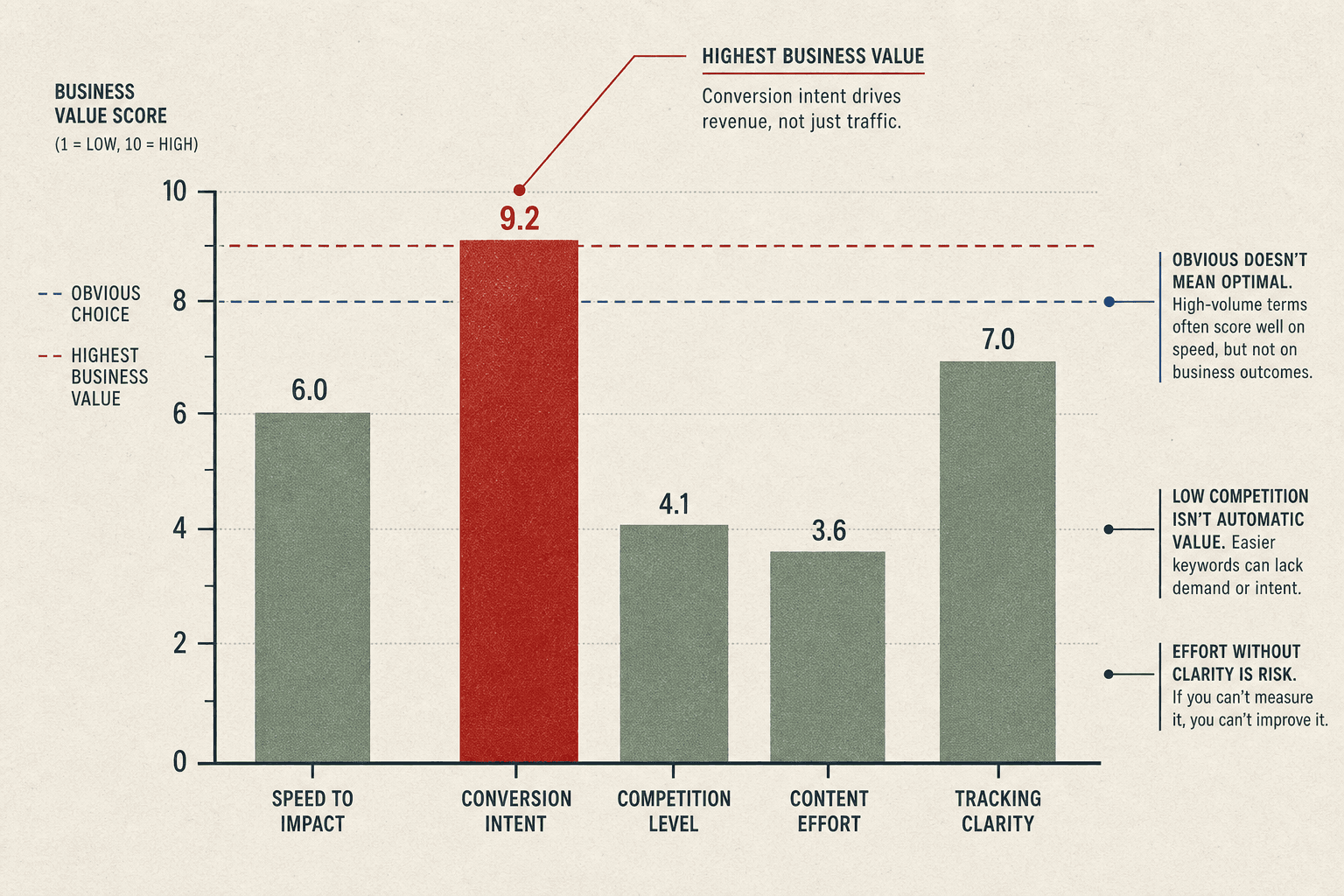
For most teams, that means changing the order of operations. Stop assuming more output equals more growth. In many cases, the better move is to upgrade the URLs that already rank, already earn clicks, or already support revenue. Turn those pages into answer-first assets with clear claims, useful structure, and visible evidence. That is usually a faster win than publishing ten more posts nobody will find.
If you need a practical stack, keep it tight:
- Protect pages that already rank and drive demand.
- Strengthen commercial support pages around money terms.
- Expand topic clusters with citation-ready informational content.
That sequence helps you defend current visibility before chasing new surface area. It also gives your seo content strategy a cleaner path into llm seo without blowing up the system your team already uses.
This is the new search strategy reality. Rankings still matter. They still drive discovery, trust, and conversion. But more visibility will come from being the easiest trustworthy source to extract, summarize, and cite in ai answers. If your page is clear, specific, and well-supported, you give both search engines and answer engines fewer reasons to skip you.
Keep your quick links close and current. Point teams to official guidance on AI in search, schema documentation, analytics annotations, and your internal content quality checklist. Those four resources do more work than another bloated playbook.
We see the best results when teams tighten structure, refresh proven pages, and make trust obvious on the page. That shift does not require a full reset. It requires better priorities and cleaner execution. If you want a simple place to start testing that workflow, Try It Free with our free community tools.