The Agentic Loop Explained: How AI Observes, Decides, and Fixes SEO Without You
Agentic SEO turns search from a checklist into a living system. Most teams still run SEO through handoffs, tool sprawl, and one-off campaigns that stall momentum. According to Agentic SEO: How AI Agents Transform Search Optimization, 30% gains are possible when AI-driven SEO improves how teams build authority. That gap matters now because search rewards speed, relevance, and constant learning.
At Mygomseo, we built an engine for that shift. We use an Observe, Analyze, Act, Learn loop to turn AI from helper into operator. A #semrushpartner | Kieran Flanagan | 65 comments post points to 80% of search work moving toward agent-led execution. In this article, we will define the loop and show how modern teams win with systems, not scattered tasks.
Why Traditional SEO Workflows Fail at Scale
The current state of SEO is too manual
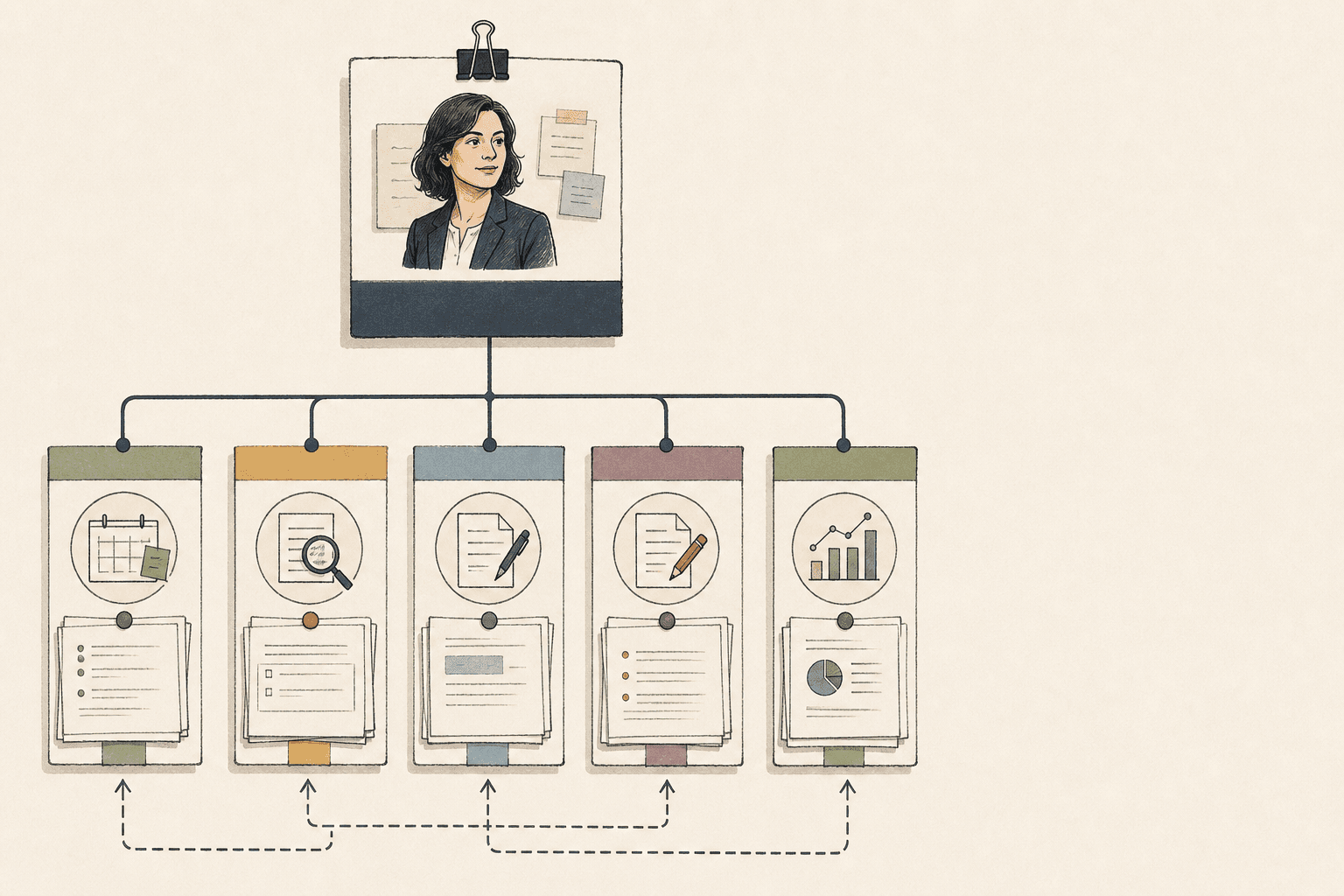
Most SEO teams still work in fragments. One person runs audits. Another writes briefs. A third updates pages. A fourth checks reporting. Each task gets done, but the system stays broken.
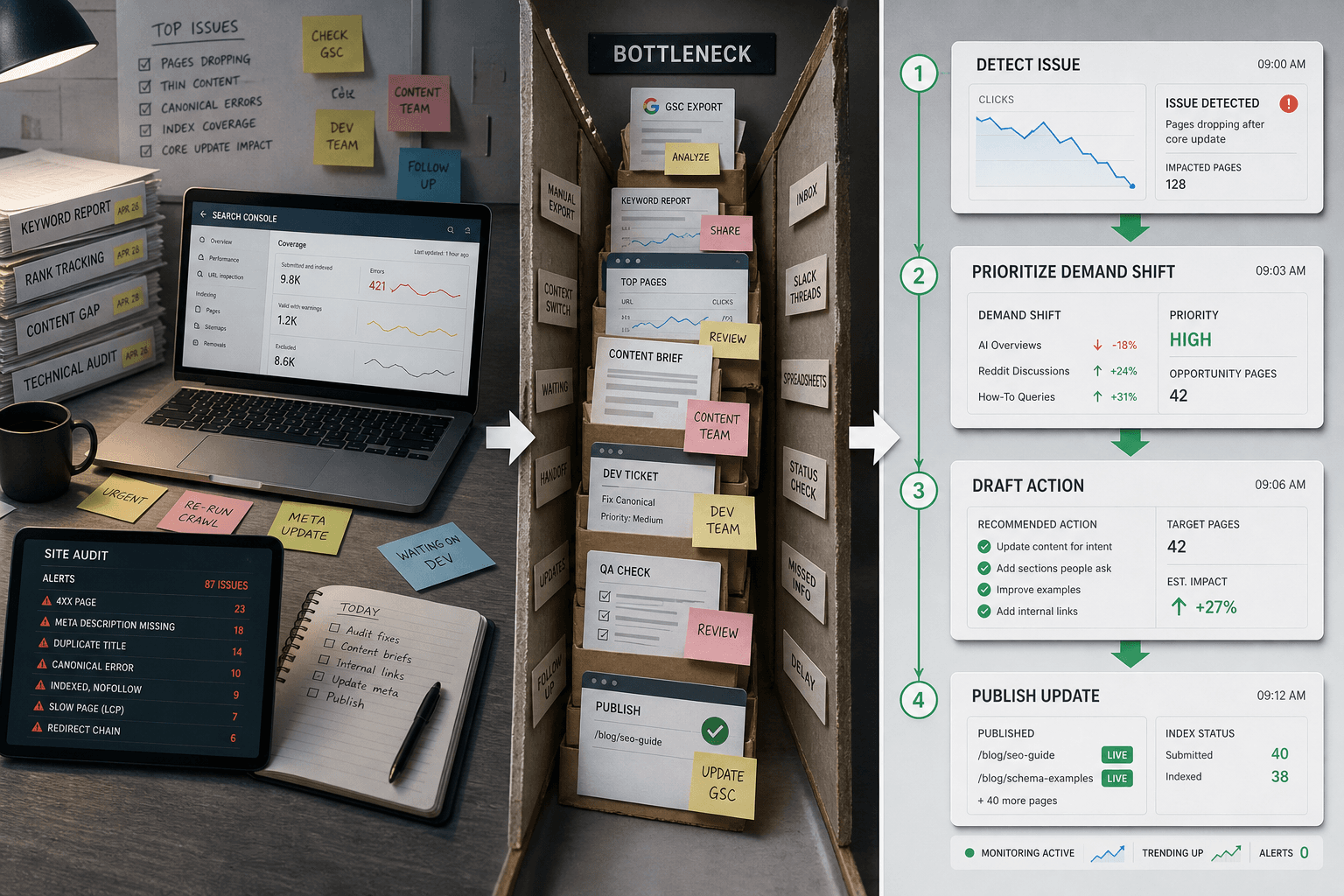
We have lived this ourselves. At one point, we had 47 browser tabs open, week three of research, and we were still guessing which page to fix first. That is the real cost of manual SEO. It is not effort alone. It is delay.
That delay sits between signal and action. Rankings slip while pages wait for approval. Content goes stale while briefs sit in docs. Internal links, metadata, and refreshes stack up in backlogs. Opportunity cost grows quietly, then all at once.
More tools did not fix the operating model
The industry answered this problem with more software. We got crawlers, dashboards, content platforms, and workflow apps. Useful? Yes. Enough? No.
More tools did not fix the operating model because the work still moves through handoffs. Teams still treat SEO as separate tasks instead of one connected loop. Data lives in one place. Decisions happen in another. Publishing happens later. Reporting comes after the fact.
That gap is the failure point. Research from Search Engine Land shows autonomous systems can drive 200% gains when execution moves closer to insight. According to WordLift, agent-led optimization has produced 321% growth in the right conditions. The lesson is clear. The upside comes from speed and connection, not just visibility.
Why autonomous SEO is rising now
Autonomous SEO means a system can observe changes, decide what matters, and trigger action with limited human prompting. In practice, that means ai agents can monitor rankings, spot decay, update content that has drifted, and push the next step forward.
Why now? Because execution can finally sit near the data. Kieran Flanagan on LinkedIn highlighted a world where the cost of inaction trends toward 0% tolerance. We agree. Teams no longer win by knowing more. They win by moving sooner.
Some will argue this removes control. We think it removes lag. Autonomous seo does not replace strategy. It gives strategy hands. And that is the shift Mygomseo is built for.
How the Agentic Loop Powers Agentic SEO
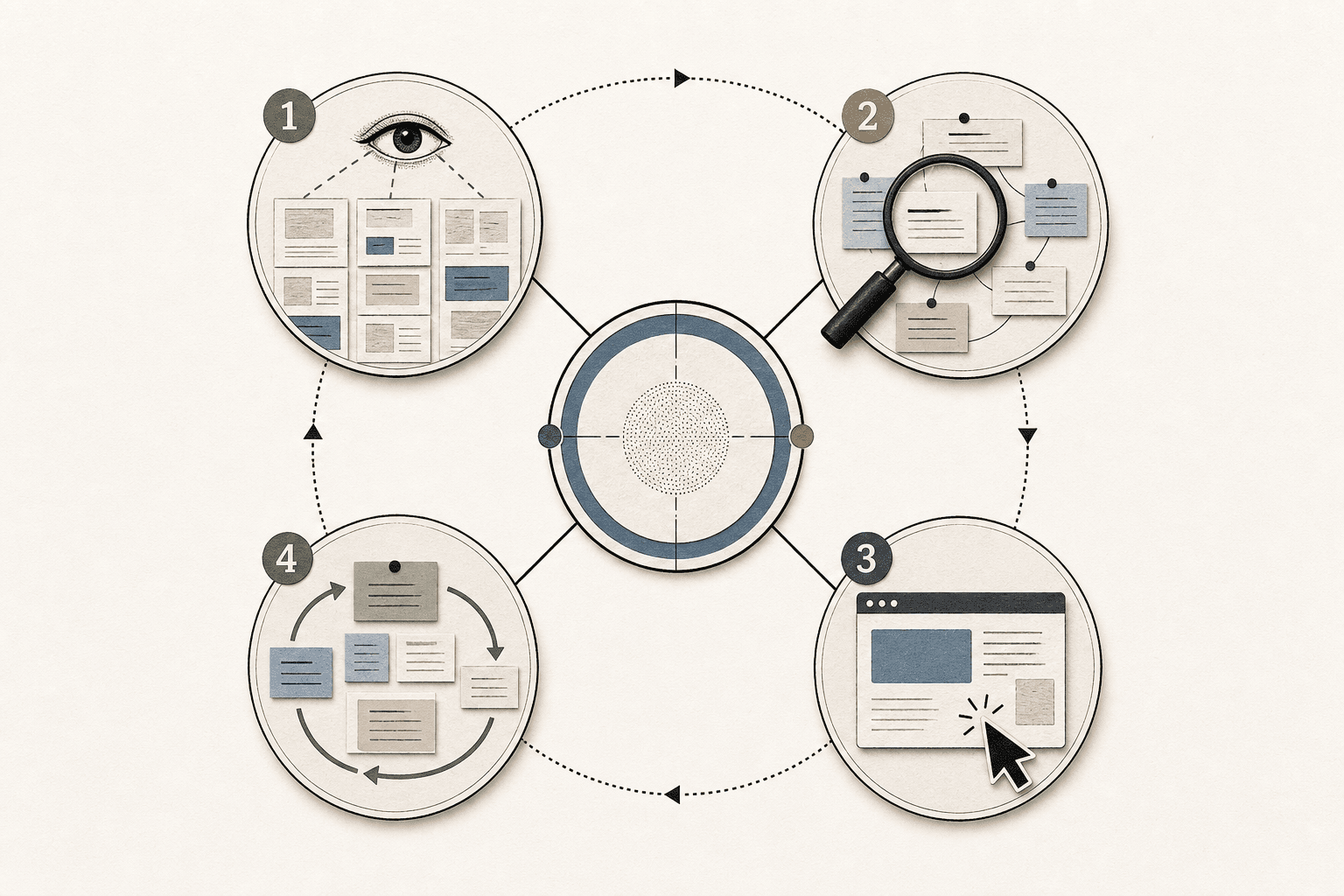
Observe means collecting the right signals
Observe is not just rank tracking. It is the discipline of watching the full search environment. That includes ranking shifts, SERP movement, crawl signals, content performance, conversion patterns, and competitor changes across the pages that matter most.
This is where most teams get lazy. They watch just one dashboard alert, then assume they understand the problem. We do not. Search changes in layers, and weak signals often show up before the obvious drop. If impressions stall, crawl depth changes, and a competitor refreshes a page on the same week, that pattern matters.
I still remember one stretch with 47 browser tabs open. Week 3 of research. We were still guessing. That was the moment it became clear that observation had to become systematic, not heroic. The job was too big for humans to piece together by hand.
Analyze means turning noise into decisions
Analyze is where an ai seo agent earns its keep. Raw signals do not help unless the system can sort them, weigh them, and decide what deserves action now. That means connecting ranking volatility to page intent, technical issues, internal linking gaps, and business value.
The conventional SEO workflow still overvalues isolated metrics. A dip in clicks triggers panic. A crawl warning triggers a ticket. None of that is strategy. Analysis should rank opportunities by likely impact, urgency, and effort, so teams know what matters as part of the wider system.
Research from Agentic AI and SEO: How autonomous systems redefine search shows some workflows can compress output by 20x when agents handle structured decisions at speed. That matters because SEO does not suffer from lack of inputs. It suffers from slow judgment between inputs and action.
Act means shipping changes without bottlenecks
Act is the leap most teams still avoid. They gather insight, make slides, and wait for someone else to do the work. That is not modern SEO. That is manual SEO with better packaging.
In a real loop, decisions trigger execution. Titles get updated. internal links get added. Pages get refreshed. Schema gets deployed. Briefs get generated. Content gets published. The point is not to replace people. The point is to remove the lag that turns obvious fixes into month-long projects.
According to Agentic SEO: How AI Agents Transform Search Optimization, some businesses have seen 3X lead growth from agent-driven SEO programs. That result is not magic. It comes from moving from insight to implementation without the usual bottlenecks.
Learn means closing the loop with outcomes
Learn is what makes the system agentic. Every action feeds back into future decisions. The loop checks what changed after the update, what moved in rankings, what improved in conversions, and what failed to produce lift. Then it adjusts.
That is the difference between automation and adaptation. Automation repeats instructions. Learning changes the next decision. Data from Agentic SEO: How AI Agents Transform Search Optimization found rapid gains within 5 Months in some publishing contexts, which shows how fast feedback can compound when execution and learning stay connected.
Some will argue this removes human judgment. We think the opposite is true. The best agents to support SEO do not replace strategy. They make strategy executable. That is why the agentic loop matters: observe broadly, analyze clearly, act fast, and learn continuously.
Our Perspective on Building an AI Driven SEO Workflow
What we built and why we built it
At Mygomseo, we never saw AI as a thin assistant added to an old SEO workflow. That model keeps the same bottlenecks. It just decorates them. We built our approach toagentic seobecause the real problem was not writing faster. The real problem was moving from signal to shipped work without chaos.
The turning point was painfully simple. We had the issue list. We had the brief. We had the draft. We still had a lag between knowing and doing. So we asked a harder question: how do we let agents to execute real work while keeping a human firmly in control? That question shaped the system more than any model choice did.
Some vendors frame AI as a replacement for the SEO team. We think that misses the point. AI agents do not replace strong operators. They remove the drag around them. Strategy, judgment, brand standards, and tradeoff calls still need people. What should disappear is the dead time between discovery, decision, and action. Agentic SEO: How AI Agents Transform Search Optimization and Agentic AI and SEO: How autonomous systems redefine search both point toward systems that can act across connected tasks, not just assist with isolated ones.
How we connect observation to action
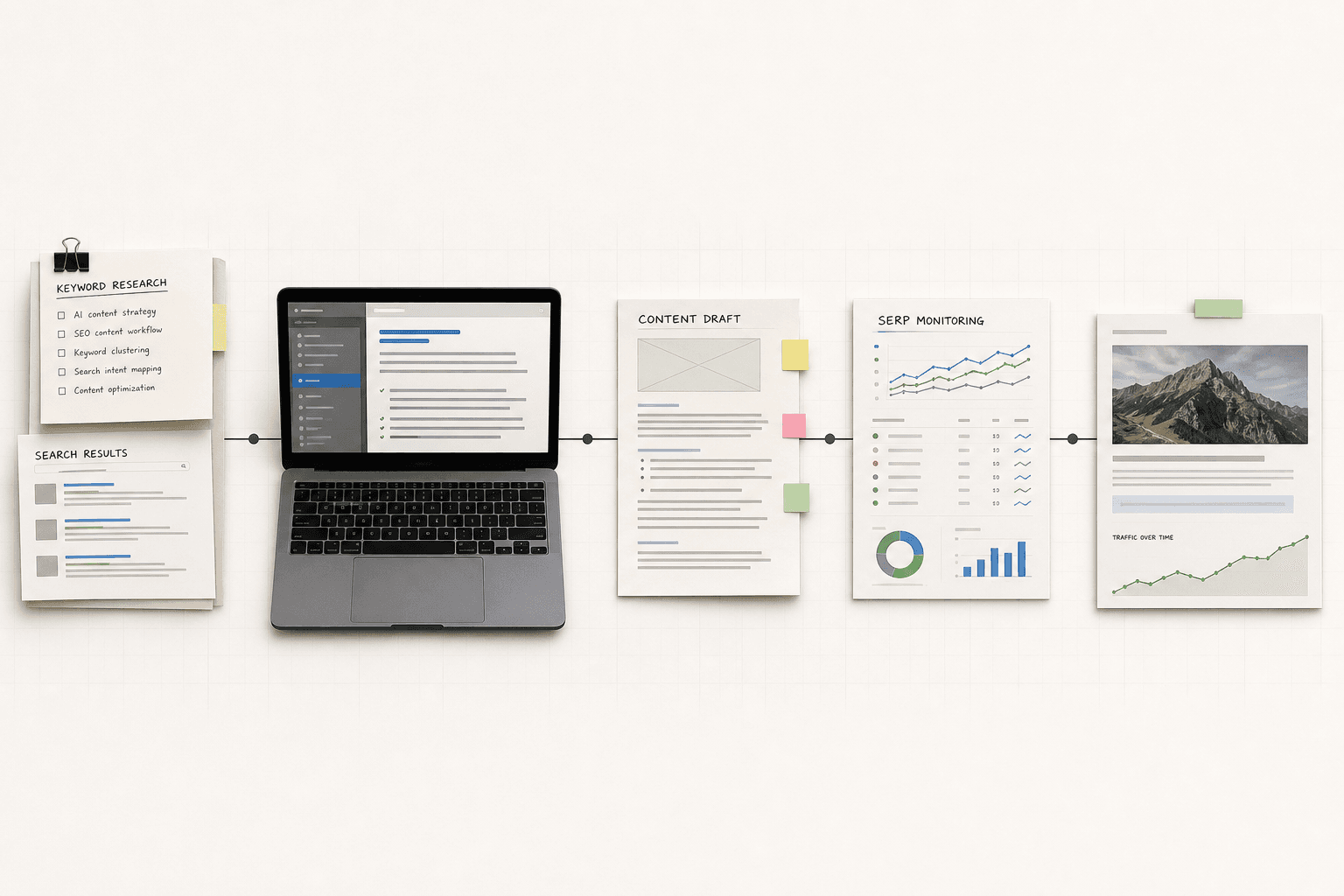
We designed the workflow as one connected path. Data comes in. Priorities get scored. Drafts get generated. pages get optimized. Changes get prepared for publishing. But each step runs inside constraints set by humans. That matters because speed without control creates expensive messes.
For example, one early run exposed the gap fast. We spotted a decaying page cluster, generated updates, and queued internal links. Then we stopped. The copy was technically sound, but the brand voice drifted, one citation was weak, and the page template needed a manual check. That moment clarified the build. We did not need agents that act alone. We needed agents to work within review rules, content standards, and publishing gates.
For a visual walkthrough of this process, check out this tutorial from Useractiv:
That is how we use AI agents to improve SEO without losing control. We connect collection, prioritization, generation, optimization, and publishing in one system. Then we decide where humans must approve, edit, or stop the flow. Research from Agentic AI and SEO: How autonomous systems redefine search shows 2020%. The number itself is loud. Our takeaway is more practical: execution only matters when it works inside real operating limits.
What client impact looks like in practice
In practice, clients feel the difference in rhythm first. Teams stop chasing scattered tasks. They start running a tighter SEO workflow with clearer ownership. Content that gets shipped is easier to trace back to the signal that triggered it. That visibility changes reporting, planning, and trust.
The business result is not magic. It is shorter cycles, steadier output, and fewer dropped opportunities. According to Agentic AI and SEO: How autonomous systems redefine search, 20298%. Agentic AI and SEO: How autonomous systems redefine search found that 20318%. We cite those numbers carefully because hype is cheap. What matters to our clients is simpler: they can see what changed, why it changed, and what growth that work produced.
That is our view ofagentic seo. AI should not replace the team. It should extend the team’s reach. Leaders should stop buying isolated AI helpers and start building workflows where observation can become action, with humans still holding the wheel.
What Skeptics Miss About AI Agents and What Comes Next

This is where weak AI rollouts break. Teams remove human judgment, keep old incentives, and expect better output. That never lasts. The issue is not the presence of automation. The issue is poor system design. If an agent can observe, analyze, act, and learn, it also needs clear boundaries, review rules, and business context. Otherwise, speed turns into mess.
Our view is simple. Human expertise should stay in the system, but it should not stay buried in repetitive execution. People should set strategy. People should define constraints. People should decide what quality bar must be met before changes go live. That is where experience creates leverage. We do not need experts spending half a day rewriting metadata line by line. We need them shaping direction, approving exceptions, and teaching the system what good looks like.
When we build loops this way, the gains are operational and strategic. We reduce manual handoffs. We shorten the gap between signal and response. We publish more consistently without handing the keys to a blind machine. In practice, that means our teams spend less time chasing tasks and more time improving performance, sharpening messaging, and finding the next search opportunity before competitors do.
That shift matters because the next wave of SEO will not be led by teams waiting for the next audit, the next sprint, or the next quarterly reset. It will be led by teams running small, continuous improvements every day. The winners will use AI agents to test internal links, refresh aging pages, tighten on-page structure, respond to ranking movement, and learn from each result. That is what agentic seo actually changes. It turns search from a backlog into a living system.
Some will argue that this sounds too automated for serious brands. We think that misses the point. Strong brands need tighter control, not slower workflows. Agentic seo gives that control a real operating model.
We have seen the payoff clearly: fewer bottlenecks, faster updates, and a system that compounds instead of stalling between campaigns. That is the real result - not more activity, but better momentum.
If your team is still treating AI like a bolt-on writing tool, stop. Build or adopt an agentic loop that can observe, analyze, act, and learn every day. Ready to put that into practice? Try It Free.