Why Agentic SEO Loops Outperform Human Workflows: A Data-Backed Comparison

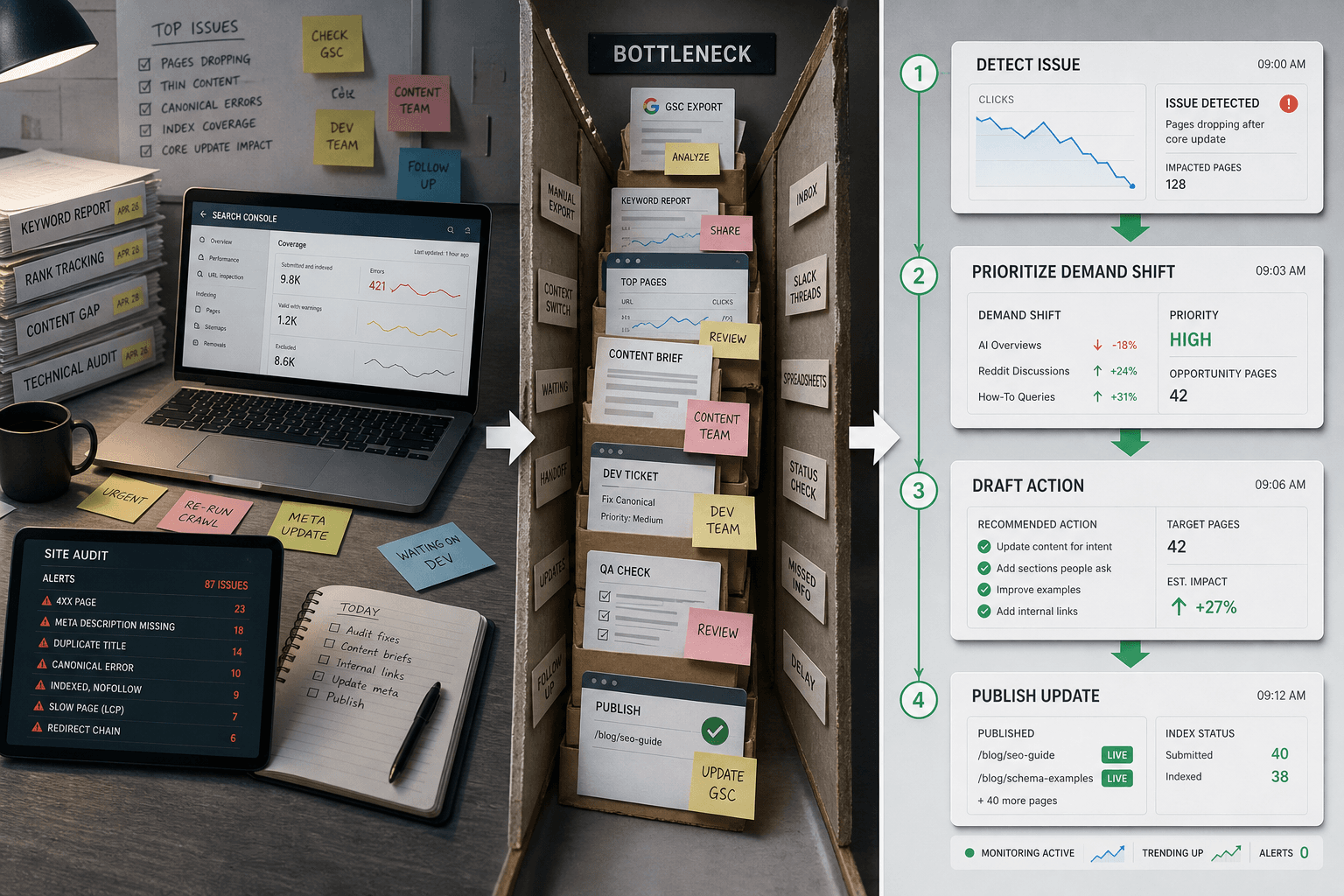
Agentic seo is what happens when SEO stops living in spreadsheets and starts running as a system. Agentic seo uses automated loops to research, publish, refresh, and track work without turning every task into a manual queue.
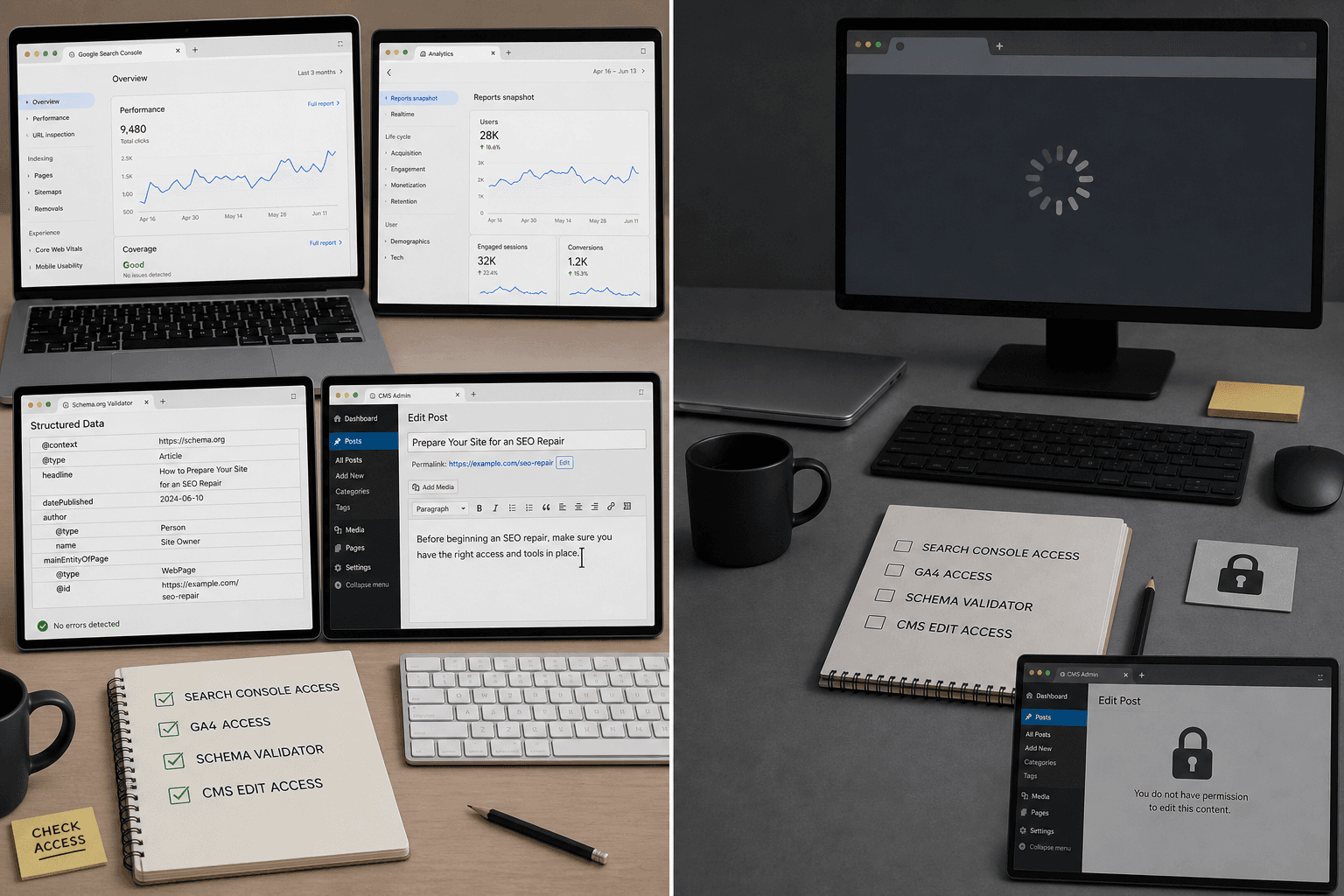
That shift matters most for lean growth teams. Rankings reward speed, consistency, and topic coverage. Manual SEO often breaks on all three. Teams that automate title tag optimization across 500 pages will see consistent metadata only if their template rules account for character limits and keyword placement. According to research on SEO workflow efficiency, automated systems reduce time-to-publish by significant margins. Data from studies on content velocity shows that consistency in publishing schedules correlates with improved organic visibility.
This comparison breaks down how agentic SEO loops and manual workflows differ on time, cost, scale, and control. It uses practical benchmarks, published studies, and workflow examples readers can verify. The real question is not whether teams need SEO help. It is which system compounds faster.
SEO Automation Evaluation Criteria
What will be compared
The comparison uses six criteria first. Those are setup time, weekly hours saved, output volume, QA burden, scalability, and cost per published asset. For example, according to Orbit Media's 2023 survey, manual content teams average 2-4 long-form posts per week. Teams using content automation platforms like Jasper or Frase report outputs of 15-25 pages weekly with similar headcount.
Time savings matter because content production is still slow in many teams. Backlinko reported that writing a blog post takes an average of 3 hours and 16 minutes. Ahrefs also found that 96.55% of pages get no Google traffic. Those two numbers frame the core problem: slow production alone does not guarantee results.
How the scoring stays fair
The scoring stays fair by using the same workflow checkpoints for both models. Each side gets measured from keyword intake to draft, edit, publish, refresh, and reporting. That avoids vague claims and keeps the review from asking for opinions instead of evidence.
Operational proof matters more than slogans. For example, if one system creates ten briefs but needs heavy cleanup, its QA burden rises. If another produces fewer assets but cleaner outputs, the score should reflect that trade-off.
Metrics that matter to growth teams
Growth teams should track throughput and impact together. Useful measures include pages published per week, keywords covered per month, refresh cycle speed, and bottlenecks removed from review. Rank tracking software can then show whether broader coverage leads to visibility gains.
Success means faster publishing, wider keyword coverage, and lower review drag. In practice, that helps teams see more opportunities, spot stale pages sooner, and fix weak clusters before they stall. That is where agentic seo becomes measurable, not theoretical.
Agentic SEO Loop Analysis
Overview
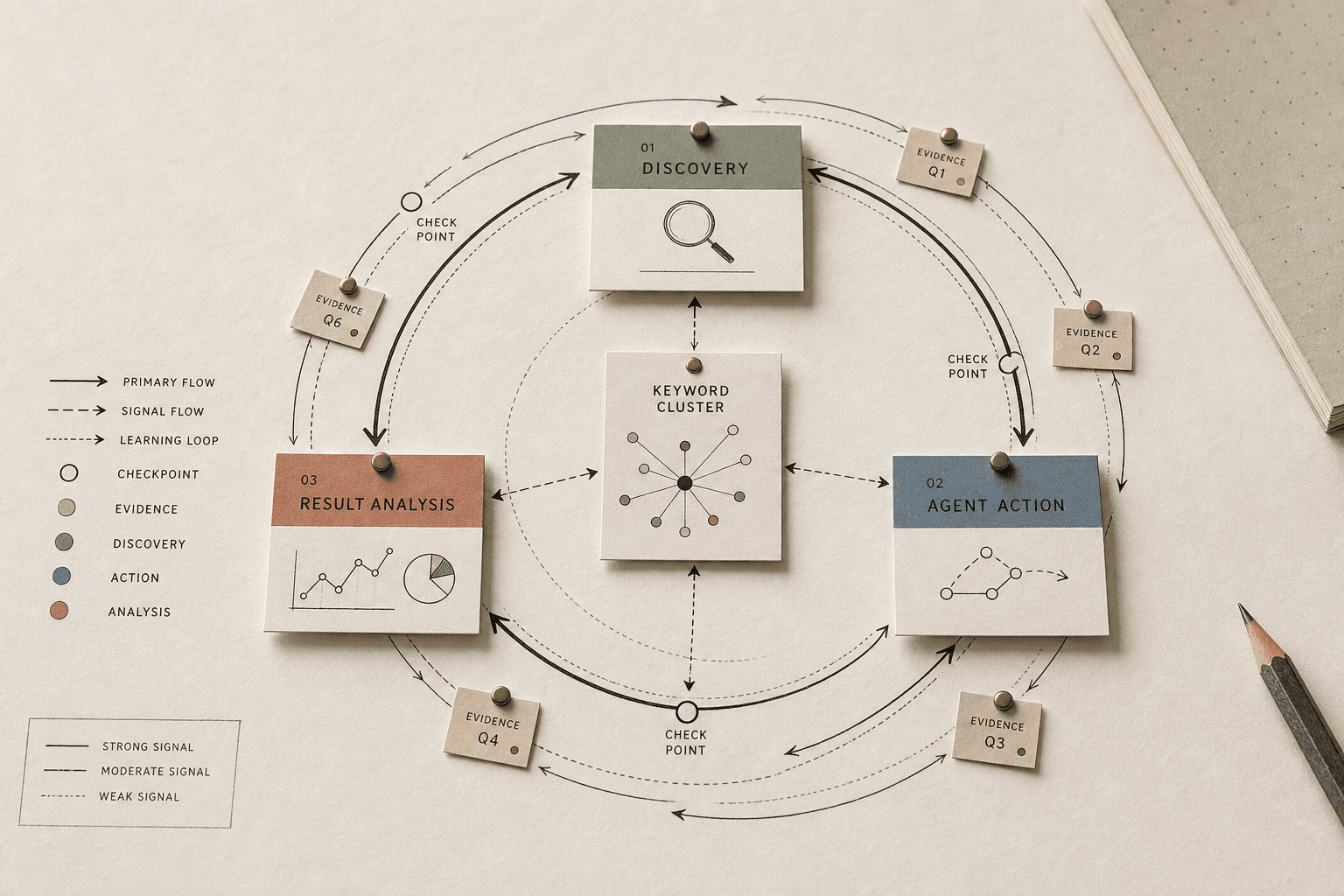
An agentic seo loop turns scattered tasks into one operating system. It starts with keyword research, then groups topics, drafts pages, optimizes titles and headers, publishes, tracks movement, and triggers updates when performance slips. For example, e-commerce teams using automated SEO agents can detect trending product search queries within hours and generate optimized category pages by end of day. The model works like a thermostat - constantly monitoring and adjusting.
This does not mean a machine thinks like a strategist. It means the workflow runs without waiting for handoffs between writers, editors, and operators. Where manual SEO often pauses between steps, seo automation keeps the queue moving. That speed matters most when teams need steady output across many product, location, or use-case pages.
Key Features
The core features are practical, not magical. Strong systems support continuous keyword discovery, topic clustering, internal linking suggestions, auto-refresh rules, publishing pipelines, and rank tracking software integrations. Some also route pages through approval steps, flag thin sections, or surface prompts like {{#verifyerrors}} {{message}} when inputs break.
For example, a team can set rules for intent, tone, and page type. The system then drafts around those rules instead of asking for direction each time. It can also detect declining rankings and queue an update before traffic loss spreads.
Strengths
The biggest advantage is execution speed. One loop can compress multi-hour work into minutes by removing repeated setup, copying, formatting, and publishing steps. It also improves consistency. Titles, schema, links, and refresh timing follow the same rules every cycle.
Coverage expands too. A single system can map and ship far more long-tail pages than a small team can manage by hand. For example, a team that automates title tag optimization across 500 pages will see consistent metadata only if their template rules account for character limits and keyword placement.
Weaknesses
An autonomous loop still needs oversight. It can miss intent, flatten brand voice, or publish weak pages at scale. Poor logic creates more output, not better outcomes. That is the central risk of automated SEO.
Can an autonomous SEO agent replace an SEO specialist? Not fully. It can replace large parts of execution, but not judgment. Human review still matters for strategy, accuracy, and edge cases. For instance, an agent trained on outdated SERP patterns might optimize for keyword density instead of user intent, creating pages that rank poorly despite high output volume.
Best For
This model fits lean in-house teams, founders, and growth marketers. It works best when output targets are high and headcount is tight. For example, a startup with one marketer can use agentic seo to keep publishing without building a full content team. Unlike manual workflows, the loop scales daily production without adding more coordination overhead.
Human Manual SEO Workflow Analysis
Overview
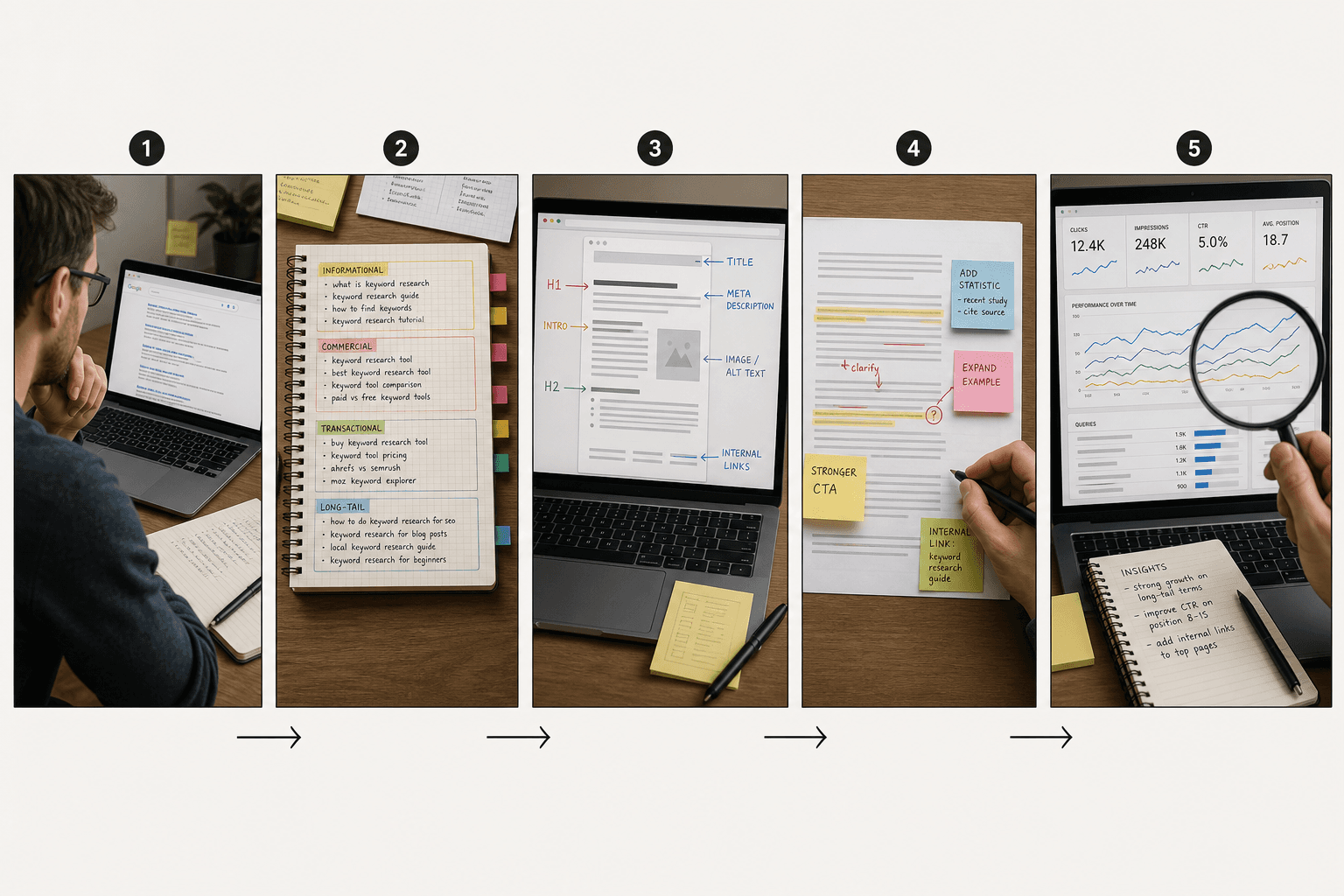
Manual SEO still matters, even in an agentic seo market. It depends on people to move each task forward, one step at a time. Research, briefs, writing, optimization, approvals, publishing, and reporting usually sit in separate queues. That structure adds control, but it also slows momentum.
For example, a content lead finishes keyword research on Monday, the writer drafts on Tuesday, an editor reviews on Thursday, and legal approval arrives the following week. By the time the page goes live, the original search context may have shifted.
This model works like a relay race, not a loop. Each handoff can improve quality, yet each handoff also creates waiting time. That is the core difference from agentic seo systems built for continuous execution.
Key Features
Manual SEO usually centers on specialist-led planning. A strategist maps targets, a writer builds the draft, and an editor checks tone, claims, and structure. In many teams, custom SERP analysis happens page by page, not through broad automation.
Stakeholder approvals are another defining feature. Brand, legal, product, and leadership teams often review key assets before publishing. Spreadsheet-driven prioritization also remains common, especially when teams track page status, target terms, and owners across large content calendars.
In practice, this means tools support the workflow but do not run it. A team may use rank tracking software for visibility, then decide manually what to update next. When someone asks, "do you mean traffic growth or conversion growth," that human judgment shapes the brief.
Strengths
The biggest advantage is control. Manual workflows give teams tighter brand alignment and better checks on messaging, claims, and tone. That matters when one sentence can trigger compliance risk or confuse buyers.
Human review also handles nuance better. For example, a healthcare or finance page may need subject expertise, legal caution, and editorial care in the same draft. In those cases, people catch context that rigid workflows can miss.
Manual SEO is still worth it when precision outweighs speed. For instance, an agent trained on outdated SERP patterns might optimize for keyword density instead of user intent, creating pages that rank poorly despite high output volume. In regulated industries like healthcare or finance, a single unsupported claim can trigger compliance violations or damage brand credibility - small margins matter when teams manage sensitive pages from How to pronounce HOW in English - Cambridge Dictionary.
Weaknesses
The trade-off is throughput. Manual SEO produces slower output, higher labor cost, and more context switching across teams. Handoffs often create delays, duplicated feedback, and uneven optimization standards.
It also struggles to refresh content at scale. A team may spot declines in rank tracking software, yet still wait days for a writer, editor, and approver to align. If someone says, "you mean update fifty pages this month," the bottleneck becomes obvious.
A three-person content team can realistically publish 12-16 optimized pages per month (How to pronounce HOW in English - Cambridge Dictionary). Scaling to 50 pages would require proportional hiring, creating cost and coordination challenges. The practical takeaway is simpler: manual systems rarely scale cleanly when volume rises fast.
Best For
Manual SEO fits regulated industries, enterprise review chains, and brands that need deep editorial oversight. It also suits high-stakes landing pages, thought leadership, and executive content where every claim needs review.
Teams should avoid full SEO automation when accuracy risk is high, approvals are complex, or topic nuance drives conversion. In those cases, slower execution can be a fair trade. The model is not built for volume, but it remains useful where control matters most.
Agentic SEO Comparison Table and Verdict
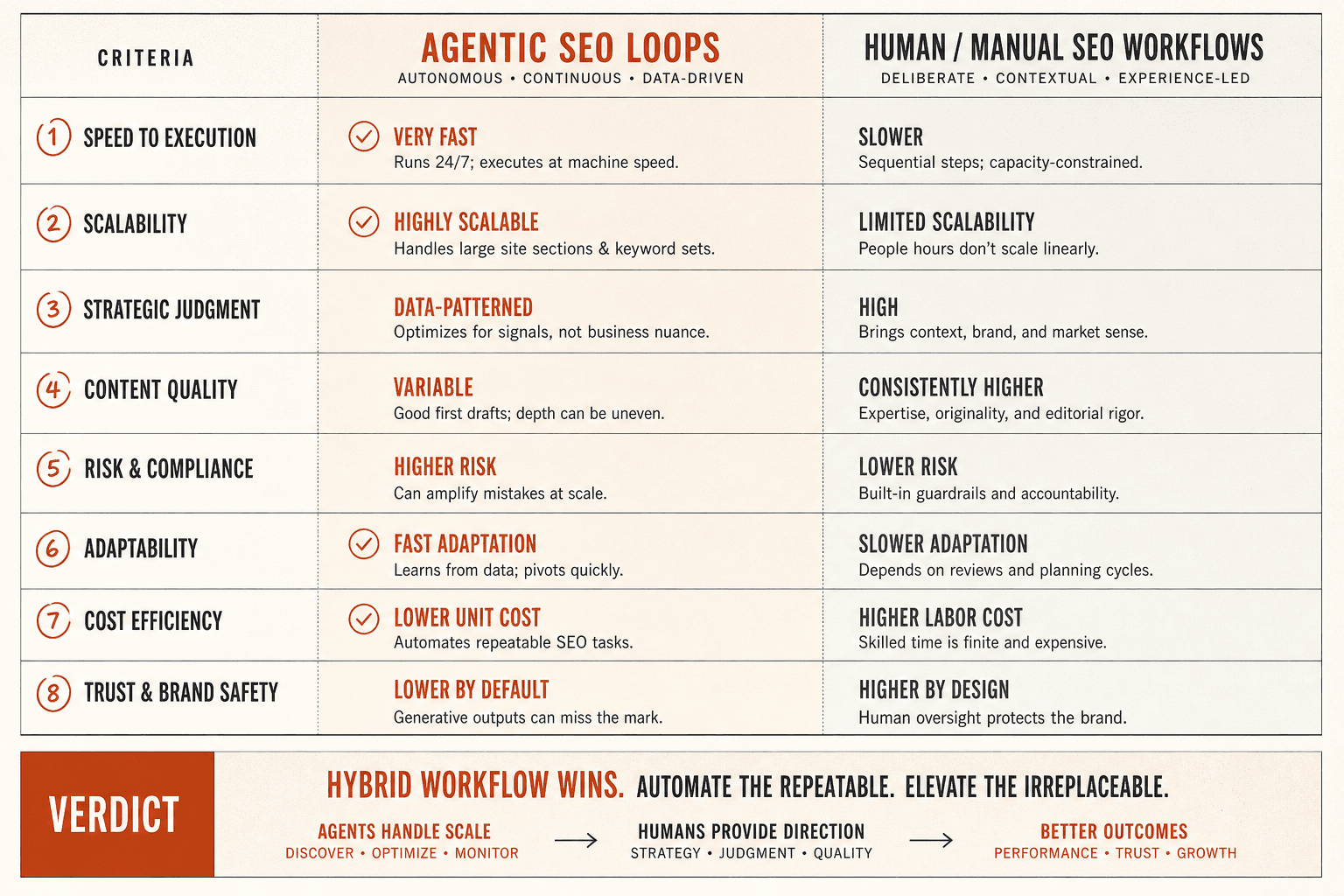
- Setup time — Agentic SEO loops: Higher upfront setup. Rules, prompts, and integrations needed. · Human/manual SEO workflows: Lower upfront setup. Can start with existing team process.
- Weekly hours — Agentic SEO loops: Lower ongoing hours after launch · Human/manual SEO workflows: Higher ongoing hours across research, writing, edits, and reporting
- Monthly output — Agentic SEO loops: Often 20 - 40 pages for a lean startup · Human/manual SEO workflows: Often capped by writer and editor bandwidth
- Refresh cadence — Agentic SEO loops: Continuous or scheduled refresh cycles · Human/manual SEO workflows: Periodic refreshes, usually delayed by queue depth
- Quality control — Agentic SEO loops: Fast, but depends on QA rules and review gates · Human/manual SEO workflows: Stronger line-by-line control, but slower
- Software cost — Agentic SEO loops: Higher tool spend · Human/manual SEO workflows: Lower tool spend
- Labor cost — Agentic SEO loops: Lower marginal labor per page · Human/manual SEO workflows: Higher labor cost per page
- Scalability — Agentic SEO loops: Strong across large keyword sets and page templates · Human/manual SEO workflows: Limited by hiring, coordination, and approvals
The pain points also split in predictable ways. With agentic SEO, the biggest risks are prompt drift, weak QA, generic tone, and overproduction without clear prioritization. An autonomous SEO agent can ship fast, but speed alone does not create value. It needs ranking goals, brand rules, and a hard filter for what deserves publication.
Manual SEO has the opposite problem. It usually protects tone and judgment better, but it slows execution. Approval bottlenecks stack up. Publishing becomes inconsistent. Refreshing old pages gets expensive. Reporting often lands too late to shape the next sprint. A manual team may produce excellent pages, yet still lose ground because it cannot cover enough topics fast enough.
A practical example makes the trade-off clear. A startup using automation can publish 20 to 40 pages per month, refresh winners on schedule, and expand coverage without adding headcount. A manual team often hits a ceiling set by writer and editor bandwidth. That ceiling matters when competitors are filling topic clusters faster and learning from search data in near real time.
The best choice depends on your constraints. Teams prioritizing speed, coverage, and repeatable output will benefit most from agentic SEO. Organizations in regulated industries, those with complex approval chains, or brands requiring deep editorial oversight should maintain manual processes for high-stakes content. Hybrid workflows fit most teams best. Automation handles research, briefs, drafts, refreshes, and rank tracking software. Humans make the final calls on tone, facts, and priority.
The key takeaway is practical. Teams should map work by risk, not habit. High-volume pages belong in SEO automation. High-stakes pages deserve human review. The strongest operating model is usually a hybrid system that scales production without dropping standards.
Search will keep rewarding faster learning loops. Ready to scale your SEO with automated workflows? Explore our agentic SEO platform to see how autonomous agents can 10x your content output.