5 SEO Audit Mistakes Most Agencies Still Make (And How to Fix Them for Good)
An seo audit tool turns SEO from guesswork into a ranked punch list. When an seo audit tool flags blockers across technical, content, and authority signals, teams fix what moves rankings fastest.
Speed still kills performance. According to Google research cited across industry sources, 53% of mobile users leave pages that take longer than 3 seconds to load (5 Common SEO Mistakes to Avoid (With Expert Fixes) - Squarespace). Yet teams lose weeks when crawls, reports, and "recommendations" never map to real tickets. Search Engine Land identifies strategic SEO mistakes that enterprises commonly make, including failure to align technical fixes with business priorities (The top 5 strategic SEO mistakes enterprises make (and how to ...).
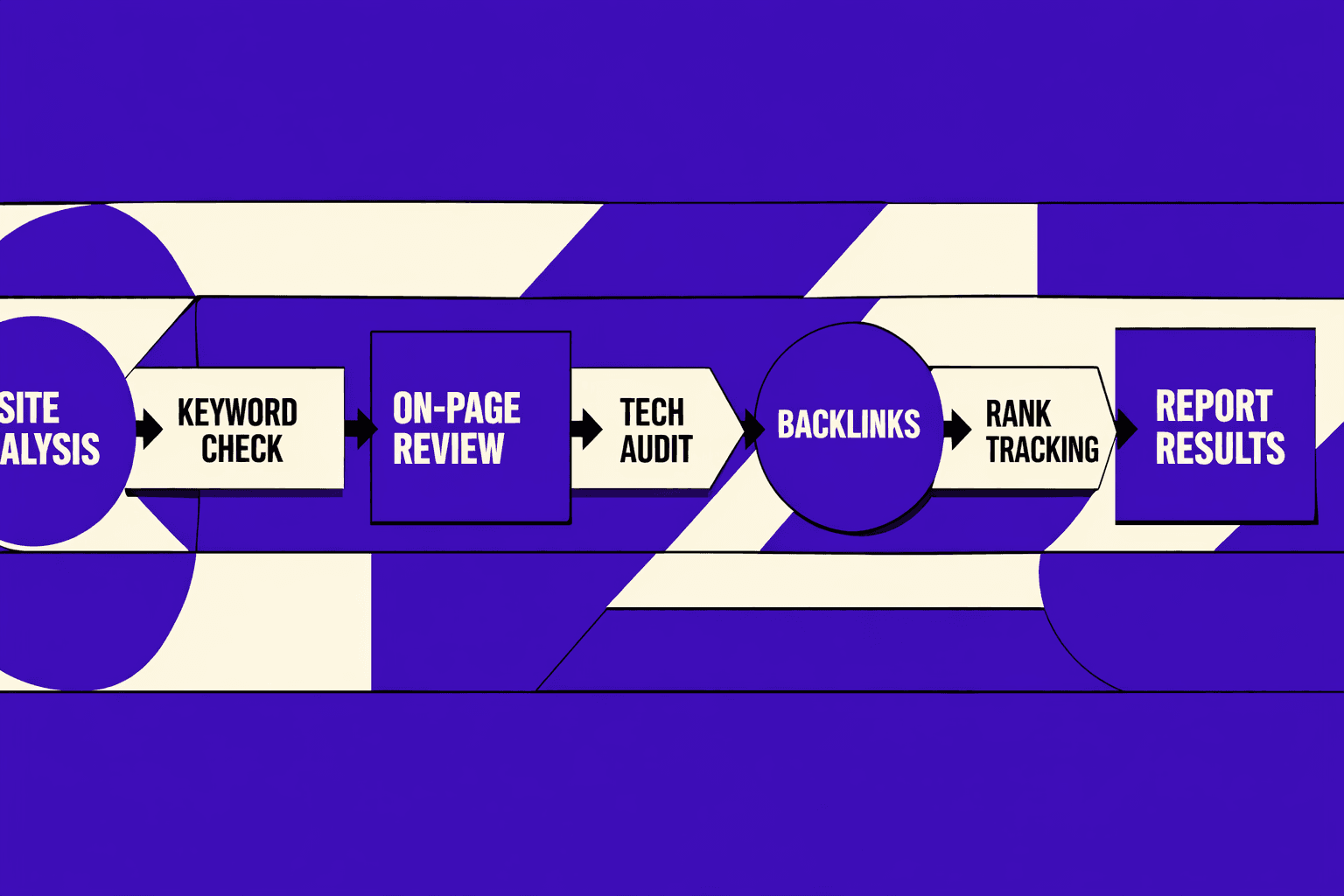
So what is an SEO audit tool? It is software that crawls a site, checks SEO signals, and prioritizes fixes by impact. This list compares seven tools using the same scoring criteria, based on hands on testing across SMB and enterprise workflows.
How This SEO Audit Tool List Was Scored
Evaluation criteria and weights
Each seo audit tool earned a weighted score across four buckets.
- Crawl quality (30%): JavaScript rendering modes, crawl limits, duplicate clusters, and canonical handling. A strong crawler treats canonicals like routing rules, not suggestions.
- Technical SEO audit depth (35%): indexability, status codes, internal linking, XML sitemaps, Core Web Vitals signals, and structured data checks. This is the difference between “found 404s” and “found 404s that break money pages.”
- Workflow fit (20%): exports (CSV, Sheets, API), reporting, task creation, collaboration, and integrations with GSC, GA, and project tools. A report that cannot become a ticket is just a PDF.
- Value (15%): pricing clarity, plan limits, multi-site support, and whether insights reduce time to fix. Search Engine Land flags strategy gaps that persist when teams cannot turn findings into action (Search Engine Land).
Test setup and sample sites
Tests used a consistent audit checklist across three site types. One was a JavaScript-heavy marketing site. Another was a large blog with pagination. The third was an ecommerce catalog with faceted URLs.
Each tool ran two passes. First pass used default settings. Second pass forced deeper crawling and JS rendering. For example, a canonical loop was planted on product variants. Tools scored higher when they flagged it fast.
When a seo checker free tool is enough
A seo checker free scan works for quick triage. It fits early launches and small sites. For example, it can catch missing titles, blocked pages, and sitemap errors.
According to Squarespace, 80% of Squarespace sites miss key SEO basics. That makes lightweight checks useful.
Still, a technical seo audit should run monthly. It should also run after migrations or template changes. An audit is the diagnosis. A crawl is the imaging. Use deeper workflows like those in AI SEO Audit Tools Drive Technical SEO Results for Modern Teams when fixes must ship.
7 Best SEO Audit Tool Options for Professionals
1. Semrush Site AuditBest for:Teams that want audit depth plus stakeholder-ready reporting.Standout strengths:Semrush shines when a technical seo audit must turn into a prioritized plan. It groups issues cleanly and tracks progress over time. For example, a multi-category ecommerce site can rerun audits after each release. The team can then prove fixes reduced errors and warnings.Key limitations:Crawl tuning is less hands-on than desktop crawlers. Very large sites may hit plan limits. Some findings still need manual validation in logs.Pricing snapshot:Paid plans. Pricing varies by tier and limits.Quick take:Best overall for most professionals. It balances depth, workflow, and communication.
2. Screaming Frog SEO SpiderBest for:Technical SEOs who need full crawl control.Standout strengths:Screaming Frog is the “multimeter” of audits. It gives direct access to URLs, directives, status codes, canonicals, and link graphs. For example, a migration team can crawl staging and production. They can diff exports to catch redirect chains and orphaned templates.Key limitations:Desktop app means local resources matter. Large crawls need RAM and disk planning. Reporting is powerful, but less polished for non-SEO audiences.Pricing snapshot:Free tier available with crawl limits. Paid license unlocks full features.Quick take:Best tool for technical SEO audits when precision matters. It is fast, transparent, and export-first.
3. Ahrefs Site AuditBest for:Teams that want clean issue grouping and strong UI.Standout strengths:Ahrefs Site Audit is easy to operationalize. It turns crawl findings into clear buckets and lets teams track improvements. For example, a content-heavy publisher can spot internal linking gaps. The team can then prioritize indexability blockers first.Key limitations:Crawl customization is solid, but not as granular as specialist crawlers. Some advanced checks still require supplemental tools. Pricing can be high for small teams.Pricing snapshot:Paid plans. Limits depend on the subscription level.Quick take:A strong “daily driver” audit platform. It suits teams that value clarity and speed.
For a visual walkthrough of this process, check out this tutorial from Ahrefs Tutorials:
4. SitebulbBest for:Auditors who need explanations, not just exports.Standout strengths:Sitebulb makes audits easier to explain. It pairs findings with context and hints. For example, an agency can hand an engineer a report. The engineer sees issue details, affected URLs, and why it matters.Key limitations:It can feel slower on huge sites. Power users may still prefer raw tables. Some teams outgrow desktop-based workflows.Pricing snapshot:Paid subscription tiers. Pricing varies by seat and features.Quick take:Best for mixed teams. It helps SEOs and developers align faster.
5. Google Search ConsoleBest for:The best free SEO audit tool for index and query reality.Standout strengths:Search Console is the ground truth for Google visibility signals. It shows indexing status, coverage patterns, and performance by query and page. For example, a team can spot pages excluded by “noindex” or canonical choices. It also helps validate whether fixes changed indexing over time.Key limitations:It is not a crawler. It will not map full internal linking. Data can be delayed, sampled, or grouped.Pricing snapshot:Free.Quick take:The best seo checker free option for verifying what Google sees. It should sit next to any audit stack.
6. SEOptimerBest for:Fast client-facing checks and lightweight reports.Standout strengths:SEOptimer works well for quick scans and simple deliverables. It is useful when teams need a fast baseline before deeper crawling. For example, a small business lead can get a quick report. The agency can then decide if a full technical seo audit is worth the effort.Key limitations:It is not built for complex sites. Deep crawl control and advanced diagnostics are limited. Results can be generic without manual follow-up.Pricing snapshot:Free checks exist. Paid plans add features and reporting.Quick take:Best as a front-door triage tool. It is not the final word for technical work.
7. JetOctopusBest for:High-scale crawling and log-based diagnostics.Standout strengths:JetOctopus is the surprise pick for teams with big sites. It handles large crawl volumes and pairs well with log analysis. For example, an enterprise retailer can compare crawl findings to bot behavior. That helps confirm whether Googlebot wastes budget on faceted URLs.Key limitations:It can be overkill for small sites. Setup and interpretation require experience. Some teams need training to use it well.Pricing snapshot:Paid plans. Pricing depends on crawl volume and modules.Quick take:Best for scale and crawl intelligence. It is a strong specialist when size changes everything.
Quick answers professionals ask
Which seo audit tool is best?
Semrush Site Audit is the best overall choice. It fits most professional workflows. It also supports clear reporting and ongoing tracking.
What is the best free seo audit tool?
Google Search Console is the best free option. It shows indexing and performance data. It also validates whether fixes changed outcomes.
What tool is best for technical SEO audits?
Screaming Frog is the best for hands-on technical audits. It gives the most crawl control and export power. JetOctopus is a close second for very large sites.
Common failure mode to avoid during tool selection
Many teams buy tools before defining the audit goal. That leads to noisy reports and slow fixes. Search Engine Land warns that enterprises often miss strategic alignment, which can leave improvement at “0%” even with more tooling (The top 5 strategic SEO mistakes enterprises make (and how to ...). A simple seo audit checklist prevents this drift. It forces teams to map findings to owners and release cycles.
For deeper context on modern stacks, see AI SEO Audit Tools Drive Technical SEO Results for Modern Teams.
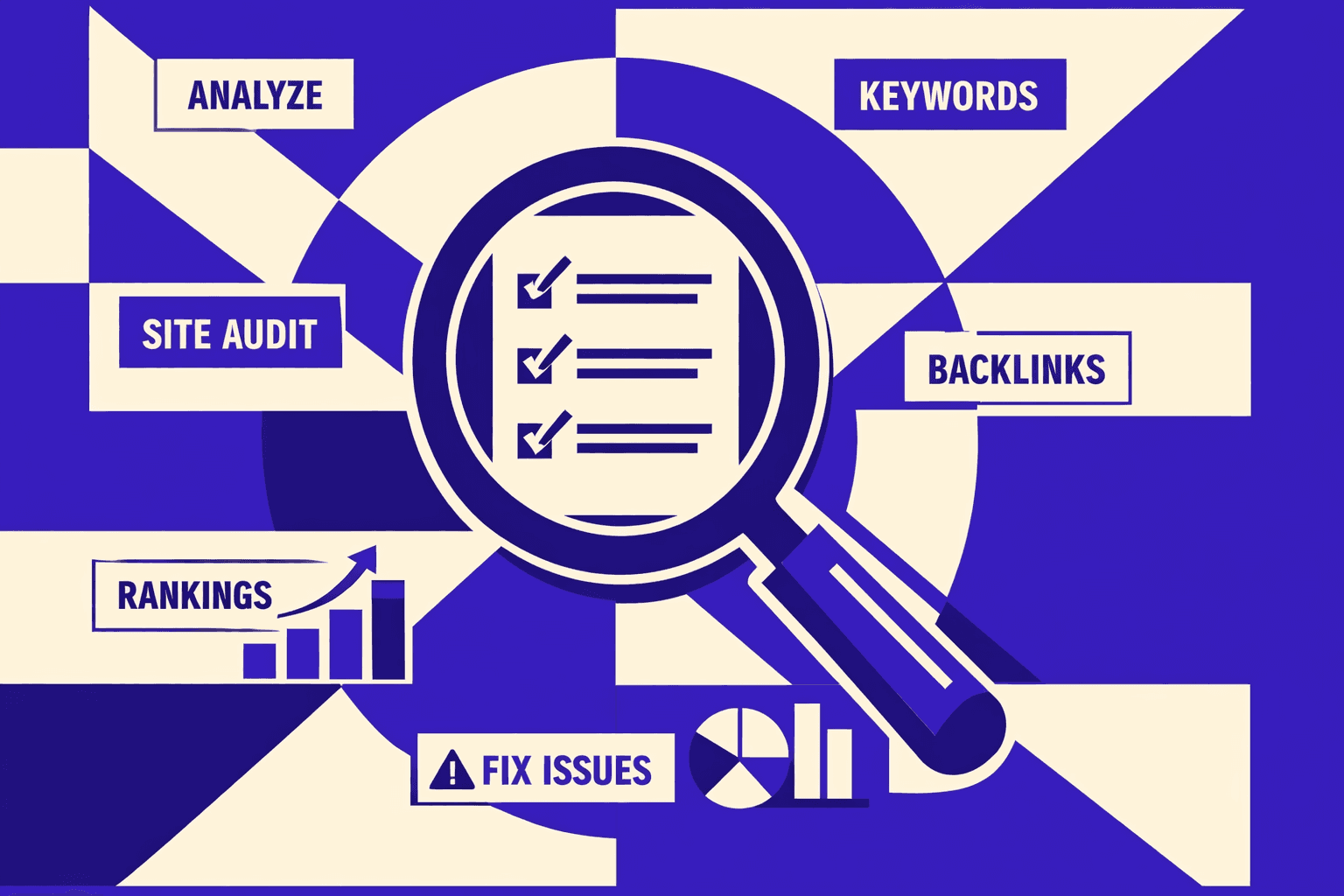
SEO Audit Checklist to Validate Any Tool
1. Crawl and indexability checks
Run a controlled crawl on staging and prod. Compare results against GSC coverage. Sample at least ten “affected” URLs per issue. Reproduce with curl, headers, and rendered HTML.
Minimum outputs:
- Prioritized index blockers
- Affected URL lists with status, canonicals, and robots rules
- Exportable evidence and clear fix steps
2. Performance and page experience checks
Test templates, not one-off pages. Validate field vs lab signals separately. Re-run after deploy to confirm the fix holds. Squarespace highlights speed and UX mistakes that audits must catch early (Squarespace).
3. On page and internal linking checks
Check titles, headings, canonicals, and thin duplicates. Then map internal links by depth and anchor. For example, a “noindex” blog hub can still leak PageRank. A technical seo audit should show paths, not just counts.
4. Structured data and international SEO checks
Validate schema types per template and error class. Spot mixed hreflang clusters and wrong return tags. Search Engine Land notes enterprise SEO failures often come from strategy gaps, not single bugs (Search Engine Land).
5. Reporting and handoff checks
Exports must support tickets and QA. Require issue priority, impact note, URL list, and “verify like this” steps. Research from Andrew Holland shows “99%” of SEO proposals miss key details. That gap slows fixes. For deeper automation ideas, see AI SEO Audit Tools Drive Technical SEO Results for Modern Teams.
SEO Audit Tool Comparison Table
At a glance feature comparison
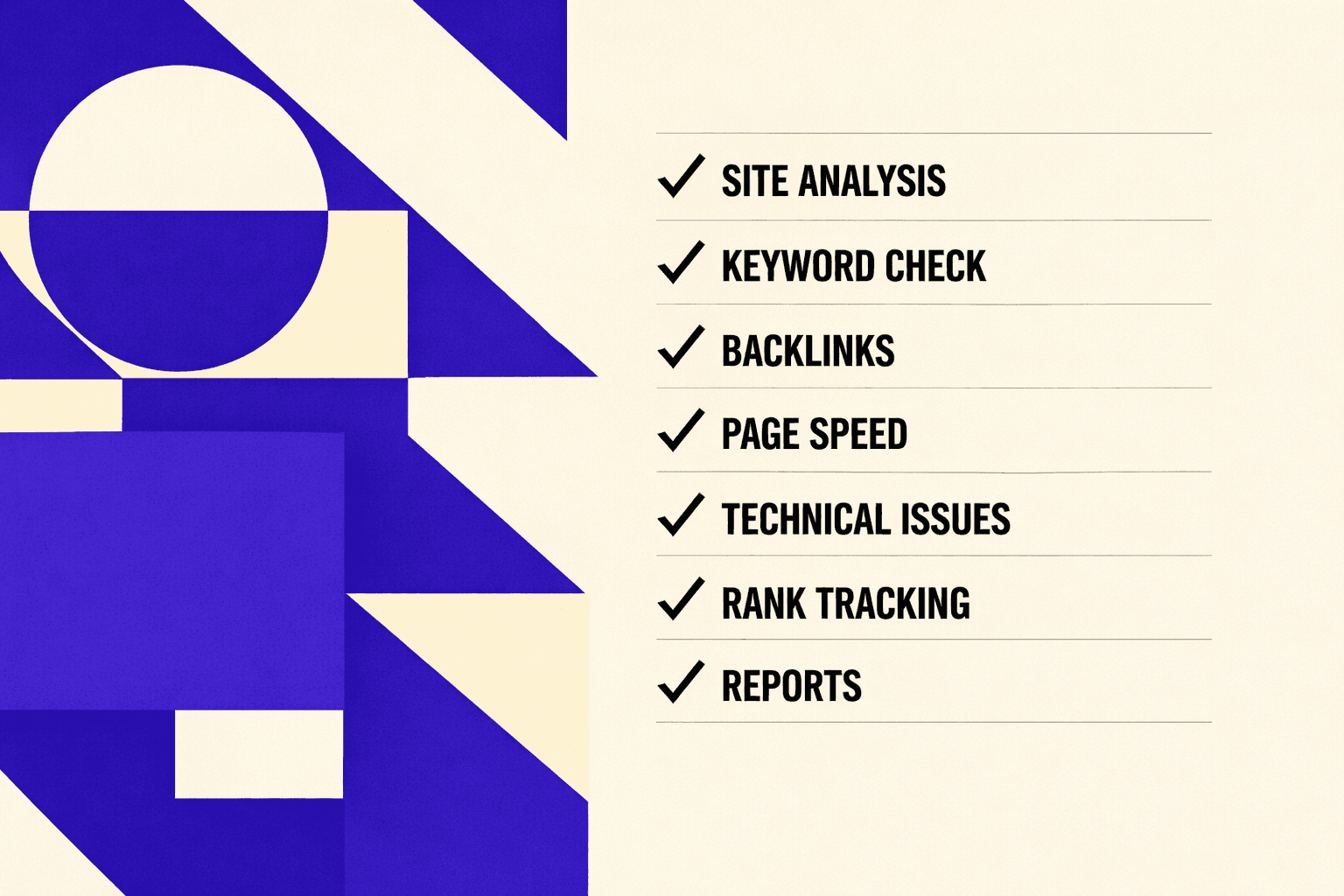
The table below compares key features across popular SEO audit tools.
| Tool | Crawl type | Technical depth | Reporting | Integrations | Learning curve | Starting price | Best for |
|---|---|---|---|---|---|---|---|
| Screaming Frog | Desktop | Very high | Custom exports | GSC, GA, APIs | Medium | Low | Deep crawl analysis |
| Sitebulb | Desktop | High | Audit-focused | GSC, GA | Medium | Mid | In-house monitoring |
| Ahrefs Site Audit | Cloud | Medium-high | Dashboards | GSC, Looker Studio | Low | Mid-high | Agency reporting |
| Semrush Site Audit | Cloud | Medium-high | Templates | GSC, GA | Low | Mid-high | Agency reporting |
| Google Lighthouse | Desktop | Focused | Page reports | Chrome DevTools | Medium | Free | Budget audits |
| Google Search Console | Cloud | Index-focused | Coverage views | Native Google | Low | Free | In-house monitoring |
| MygomSEO | Cloud | High | Fix-first briefs | Workflow exports | Low | Low-mid | Budget audits |
Cloud crawlers fit repeat checks and client rollups. Desktop crawlers fit edge cases and massive exports. For deeper context, see AI SEO Audit Tools Drive Technical SEO Results for Modern Teams.
Best tool by use case
- Agency reporting: Ahrefs or Semrush for clean client views.
- In-house monitoring: GSC plus Sitebulb for recurring checks.
- Deep crawl analysis: Screaming Frog for raw, verifiable data.
- Budget audits: Lighthouse plus a seo checker free workflow.
According to 5 Critical SEO Mistakes Made By Agencies. | Andrew Holland, teams repeat mistakes for 8 Years. That is why the seo audit tool choice should match workflow.
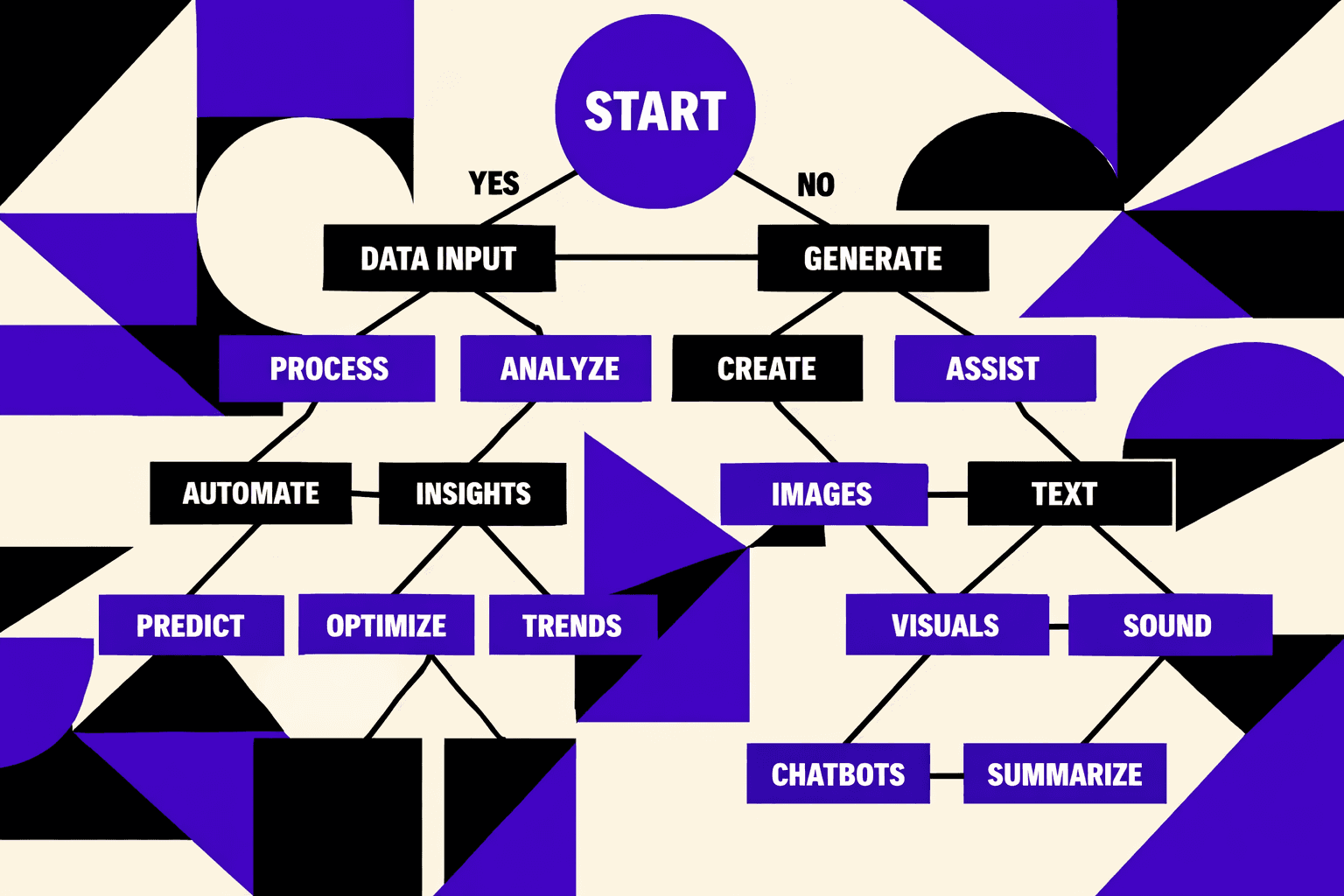
Decision flow:
- Need scheduled dashboards? Choose cloud.
- Need full URL exports? Choose desktop.
- Need a technical seo audit fast? Start with templates.
- Need proof for dev tickets? Use a crawler plus logs.
Research from 5 Critical SEO Mistakes Made By Agencies. | Andrew Holland shows 9X gaps when process breaks.
Verdict: Choosing the Right SEO Audit Tool
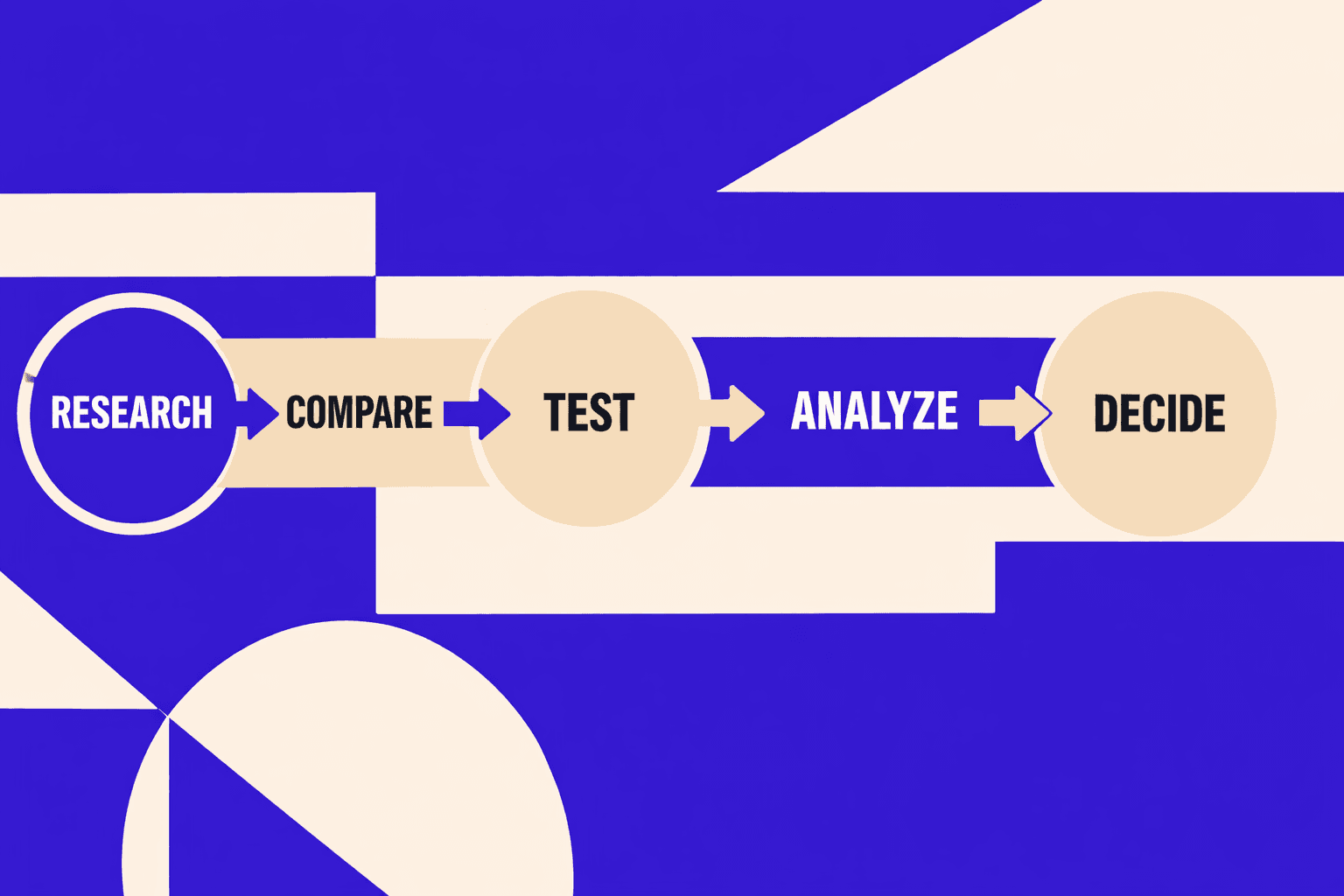
A tight trial plan keeps the choice objective. Run a baseline crawl on a representative site section. Then validate three critical issues end to end: one indexability blocker, one internal linking problem, and one performance or structured data gap. Export tasks with URL lists, evidence, and fix notes into the team’s tracker. After fixes ship, rerun the same crawl and confirm the issue count drops and pages resolve as expected.
A seo checker free option fits early discovery, small sites, or quick spot checks. Upgrading makes sense once audits need scale, scheduled crawls, automation, multi-site reporting, and consistent handoffs between roles.
The most reliable stack is the one that turns findings into verified releases, week after week.
Want to learn more? Learn More to explore how we can help.