AI Agent Use Cases Demand AgentOps Not MLOps Today
Most teams treatai in digital marketinglike old software. That is the first mistake. These systems now act across tools, content, and workflows with far less control. According to USAII research, 70% of enterprise AI efforts still struggle to deliver. At the same time, content demands keep rising, while workflow risk grows with every new agent.
We built systems at Mygomseo that write, publish, monitor, and recover across real SMB content operations. That work changed our view fast.
In this article, we show why MLOps falls short, where AgentOps changes the game, and which guardrails make agent-led SEO safe to scale. Research from AI Blogs | AI Insights | AI Trends | AI Articles | AI News shows AI can increase activity 24x, which makes stronger guardrails urgent.
Current State of AI in Digital Marketing
Why the industry is underestimating agent sprawl
Most leaders still picture one chatbot inside one app. That mental model is already obsolete. According to "Investigating Writing Professionals' Relationships with Generative AI" published on arXiv, 38% of professional writers now use AI agents for collaborative drafting, which tells us operational use has already crossed into everyday work. At the same time, enterprise environments are deploying agents at unprecedented scale, yet governance still treats them like fixed software.
We felt this gap early. In one test cycle, we watched a content run open 47 browser tabs, rewrite a brief twice, then queue a publish step before review. Nothing “broke” in the usual sense. That was the problem. The system kept moving, even when confidence dropped.
This is why businesses to scale agent programs need a new lens. The risk is not model output alone. The risk is silent spread across tools, permissions, and decisions.
Where old automation thinking still dominates
Most teams still govern agents with old automation logic. They expect fixed rules, stable paths, and neat inputs. That worked for scripts. It fails with compound ai systems that reason, retrieve, draft, and act across changing contexts, as Compound AI Systems: The Future of Specialized Intelligence - Artefact explains.
The market noise hides the deeper issue. According to USAII research, projected AI market value has been framed at 63.05 billion. The same analysis also points to 99.94 billion in expected economic benefit. Recent data found AI job demand discussions reaching 20 million.
Those numbers matter less than what they imply. Adoption is outpacing control. Operational discipline, not raw capability, is now the bottleneck.
Why SEO teams feel the shift first
SEO teams feel this first because their workflows are tightly connected. One agent can research keywords, build briefs, draft pages, insert internal links, push updates, run QA, monitor rankings, and trigger revisions. That is why SEO becomes the first real stress test for ai in digital marketing.
We see this pressure in small teams first. They need more output, but not more chaos. If you want a practical example, our take in AI Marketing Agent: What It Actually Does (And What It Doesn't) shows where useful automation ends and operational risk begins. By 2026, the winners will not be the fastest adopters. They will be the teams with better observability, tighter controls, and safer scaling.
Why AI in Digital Marketing Breaks MLOps
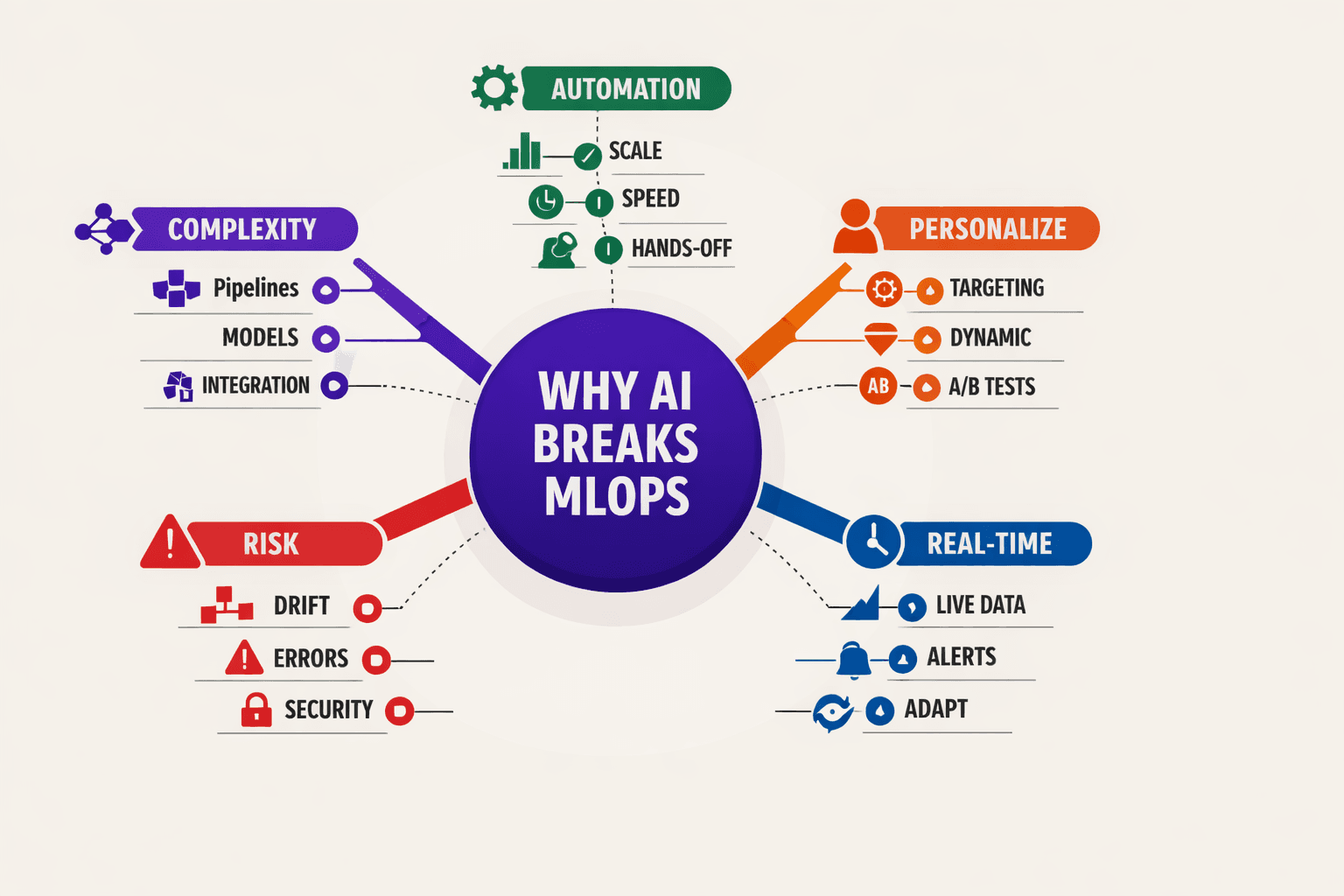
MLOps assumes stable inputs and bounded outputs
Most teams still apply old control models to new agent systems. That is whyai in digital marketingkeeps breaking in production. MLOps works well when a model scores, predicts, or classifies inside a fixed lane. It struggles when an agent must decide what to do next.
That gap matters more than most leaders admit. MLOps expects stable inputs, known outputs, and clean evaluation loops. Marketing agents rarely get any of those. Goals shift. Context windows change. Retrieval results move. Tool access changes. Even one updated page in a CMS can alter the next action.
We learned this the hard way. In one early publishing run, an agent rewrote title tags, then changed internal links, then queued the wrong article first. Nothing was “broken” at the model layer. The failure came from chained decisions moving faster than our review path.
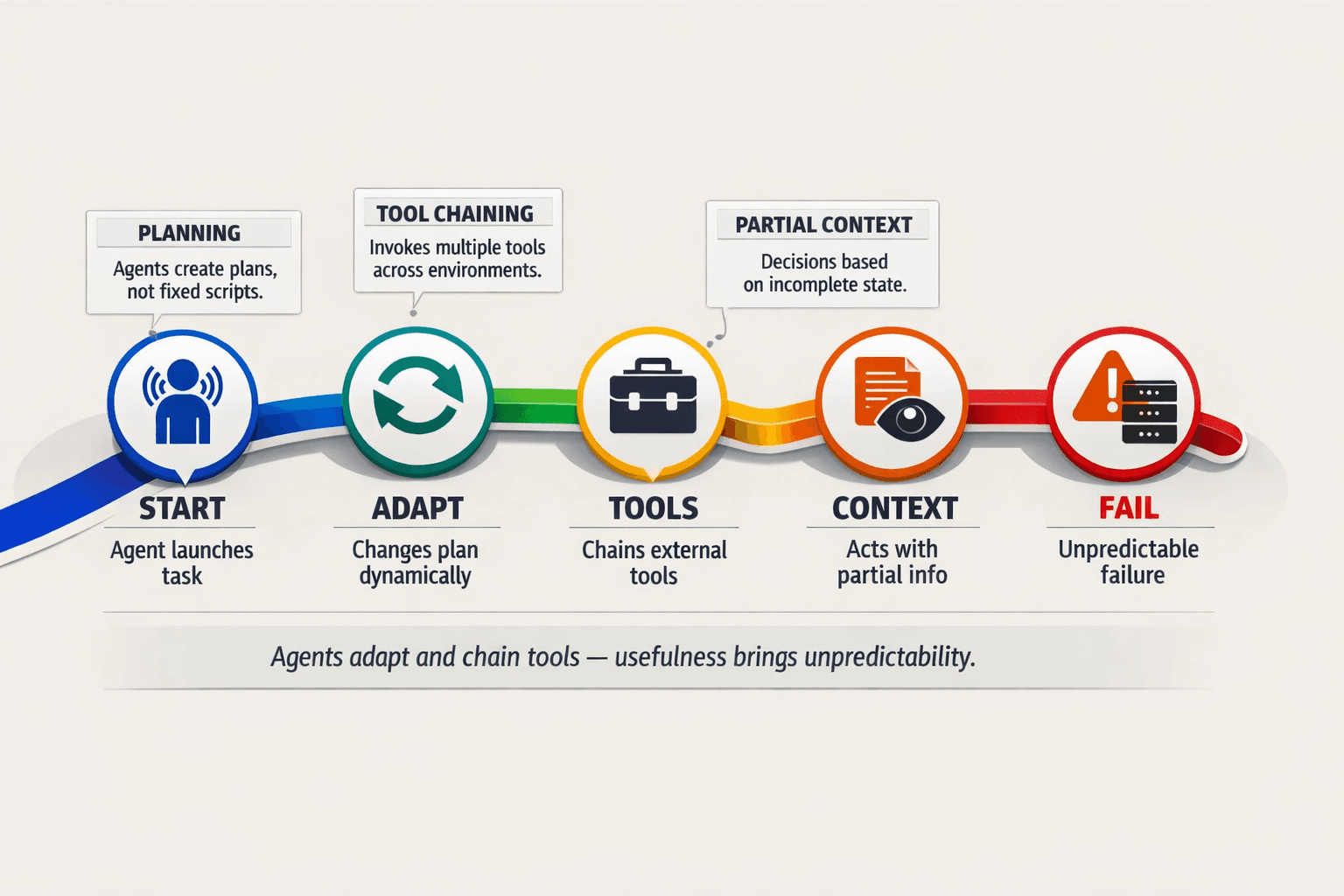
That is the core difference between MLOps and AgentOps. MLOps manages model quality inside defined systems. AgentOps governs behavior across live systems, where each step can reshape the next. In compound ai environments, that distinction becomes operational, not academic. Research from Compound AI Systems: The Future of Specialized Intelligence - Artefact shows efficiency gains of 2000% in some compound workflows.
Agents act across tools, content, and live workflows
Traditional automation follows a script. Agents do not. They reason across a CMS, keyword data, briefs, analytics, and publishing queues in one loop. That makes their behavior less deterministic, even when the model stays the same.
In SEO operations, small reasoning shifts create large downstream changes. One agent may decide to update metadata first. Another may insert new internal links, delay publishing, or refresh older posts before launch. Those choices affect rankings, crawl paths, and reporting.
This is where real-time analytics and real-time analytics architecture become essential. We need to see what the agent did, why it did it, and what changed after the action. Synthetic data can help test edge cases before launch, but it cannot replace runtime visibility in live workflows. Artefact found improvements as high as 27423% in task performance for compound systems, which shows how quickly behavior can scale when multiple components work together.
The real failure is governance, not model performance
Many teams still obsess over prompts. We think that is the wrong battlefield. The real risk is not only model drift. It is action drift, policy drift, and workflow drift.
Traditional automation governance is not enough for AI agents because rules alone do not control live judgment. Agents need approvals, rollback paths, scoped permissions, and observability at runtime. That is why we push leaders to think beyond prompt tuning and toward operational control. Artefact also reports a 27% lift in accuracy for compound approaches, but better outputs still fail without guardrails.
If you want a clearer view of agent boundaries, read AI Marketing Agent: What It Actually Does (And What It Doesn't). Leaders should stop asking only, “Was the model good?” They should ask, “Was the system governable?”
Our Perspective on AgentOps and Analytics Architecture
What we built for SMB content operations
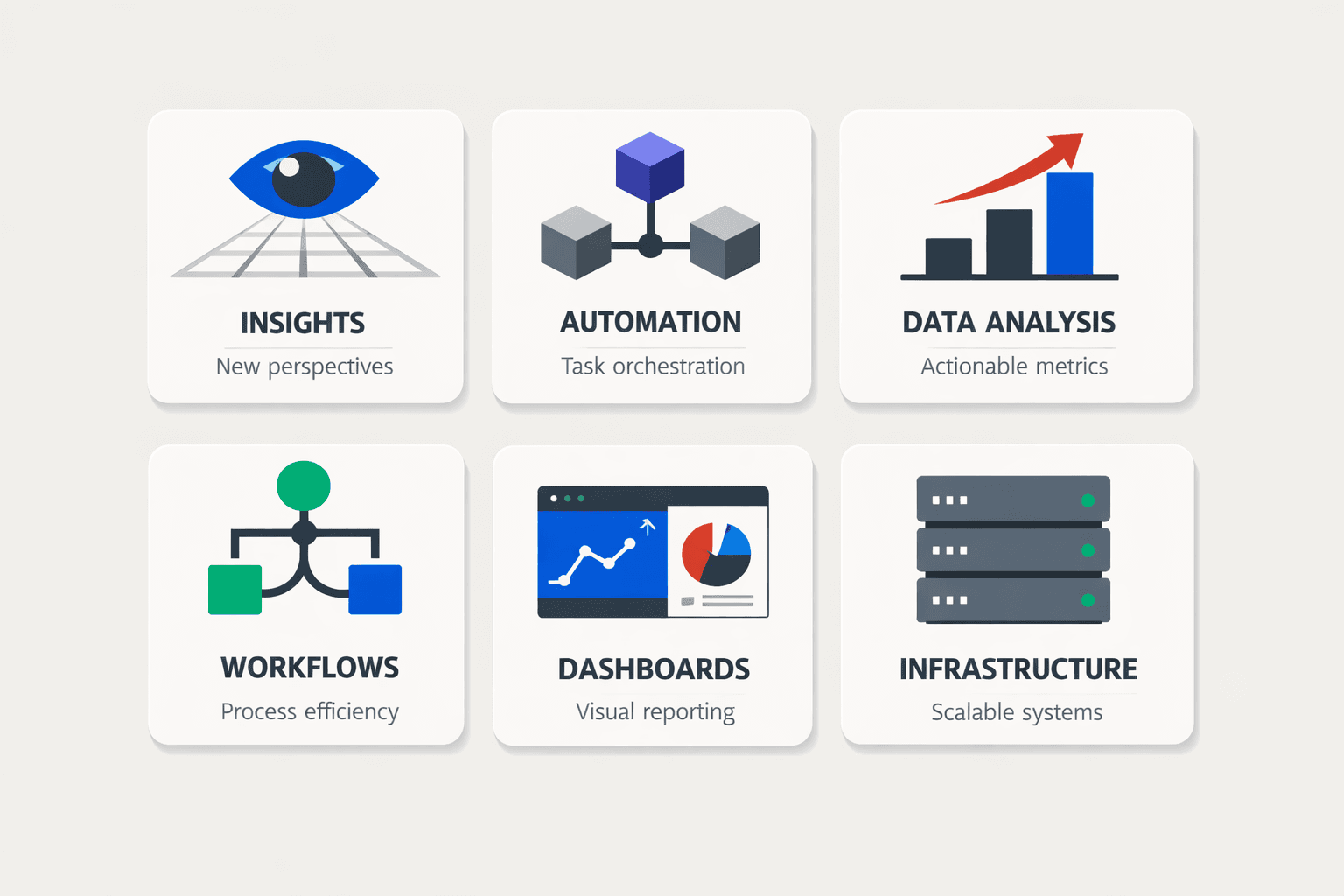
We built our system for the messy middle, not the demo. In real SMB content operations, work does not end when a draft appears. It moves through review, publishing, monitoring, fixes, and recovery. That is why we designed agents to research, draft, publish, monitor, and recover as one connected workflow.
One moment made this clear for us. We watched an agent finish a strong draft, push metadata, and queue a post. Then the source page changed, the link broke, and the CMS slug collided with an older URL. Output looked fine. Operations were not. That is when we stopped treating generation as the product.
Safe SEO automation starts with limits. In ai in digital marketing, agents should act inside rules, not outside them. We give every action a record, a policy check, and a measurable goal. If an agent edits a title, adds links, or republishes a page, we know what changed, why it changed, and what happened next.
How our analytics architecture keeps agents observable
Our analytics architecture is the difference between trust and guesswork. We do not treat agent-led content as a black box. We connect content intent, agent actions, publishing events, and downstream signals in one chain. That makes traceability possible for small teams that cannot afford blind spots.
Each action becomes an operational event. We log the prompt path, tool use, approval state, publish result, and later performance signals. That gives editorial teams a clean view of cause and effect. It also gives teams an audit trail they can follow quickly when something goes wrong.
This is also how teams should think about ai in digital marketing. Do not track output alone. Track intent, action, approval, publish state, ranking movement, traffic quality, and rollback triggers. If you cannot explain a change, you cannot govern it.
Research from Compound AI Systems: The Future of Specialized Intelligence - Artefact shows a 270% gain in efficiency for compound ai systems in some workflows. Compound AI Systems: The Future of Specialized Intelligence - Artefact also found gains of 200% in specific task settings. According to Compound AI Systems: The Future of Specialized Intelligence - Artefact, performance jumps as high as 27407% can appear when systems combine specialized components well. Those numbers matter less as bragging rights than as proof that orchestration changes outcomes.
Results that matter more than raw output volume
The biggest client impact does not come from publishing more pages. It comes from publishing with less friction and less fear. When agents stay observable, teams move faster with fewer manual handoffs. They also spend less time chasing what broke after launch.
That reliability changes behavior. Teams stop treating automation like a risky side project. They start using it as an operating layer for research, refreshes, internal linking, and recovery. That is the practical side of AgentOps for SMBs.
Some teams still argue that governance slows growth. We think the opposite is true. Good controls remove hesitation. They give marketers the confidence to scale SEO workflows without losing accountability. If you want a deeper view of where this shift is heading, read AI Marketing Agent: What It Actually Does (And What It Doesn't). Leaders should stop asking how many drafts agents can produce. They should ask which analytics architecture makes those agents safe to trust.
The Guardrails That Will Define Safe AI Marketing in 2026
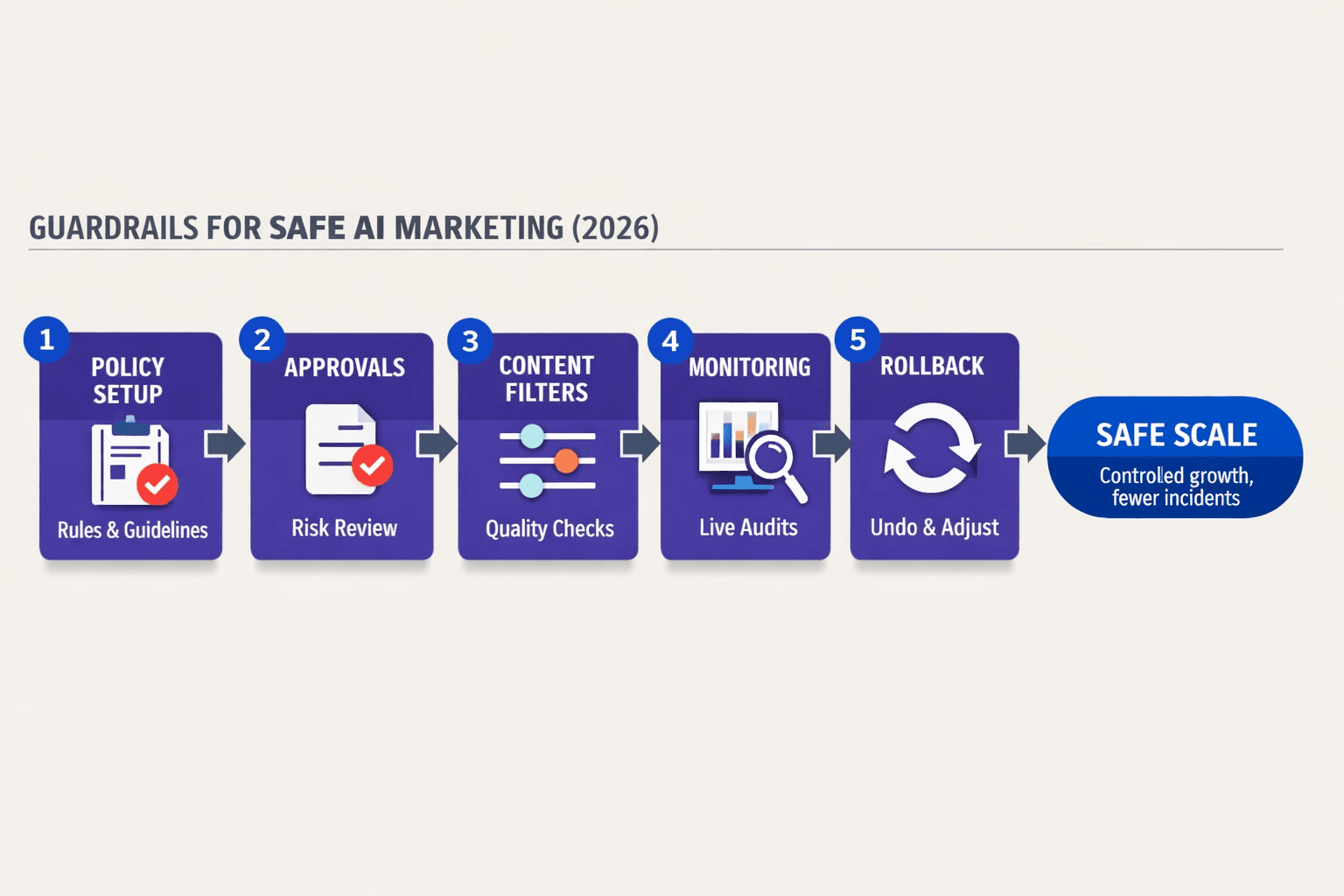
That is exactly why we do not believe scale should come first. Control should. The teams that win with ai in digital marketing will not be the ones with the most prompts or the most workflows. They will be the ones that set clear boundaries before agents act. That means scoped tool access, approval rules tied to risk, policy checks before publish, rollback paths when output slips, and live monitoring once content is in market. Guardrails are not friction. They are what make automation usable.
We also believe teams need a healthier view of failure. In agent systems, failure is normal. A retrieval step breaks. A page template changes. A publishing action fires in the wrong order. A report reads the wrong signal. The goal is not perfect prevention. The goal is fast detection, clean exception handling, and recovery without chaos. In our work, the strongest operators are not the ones that avoid every issue. They are the ones that know what failed, why it failed, and what happens next.
This is where the next phase will split the market. Some teams will keep building content pipelines and call that maturity. We think that is backwards. The next wave of ai in digital marketing will reward teams that build control systems around content, not just systems that produce more of it. In practice, that means better analytics architecture, tighter approval logic, real-time analytics on agent actions, and a clear editorial desk. It also means treating compound ai workflows like revenue infrastructure, not side projects run from chat logs and loose prompts.
Our prediction is simple. By 2026, the best teams will run marketing agents with the same discipline they use for paid spend, CRM automation, and revenue ops. But they will do it with faster feedback loops, stronger policy enforcement, and more real-time governance. That shift will separate serious operators from teams buried under agent sprawl.
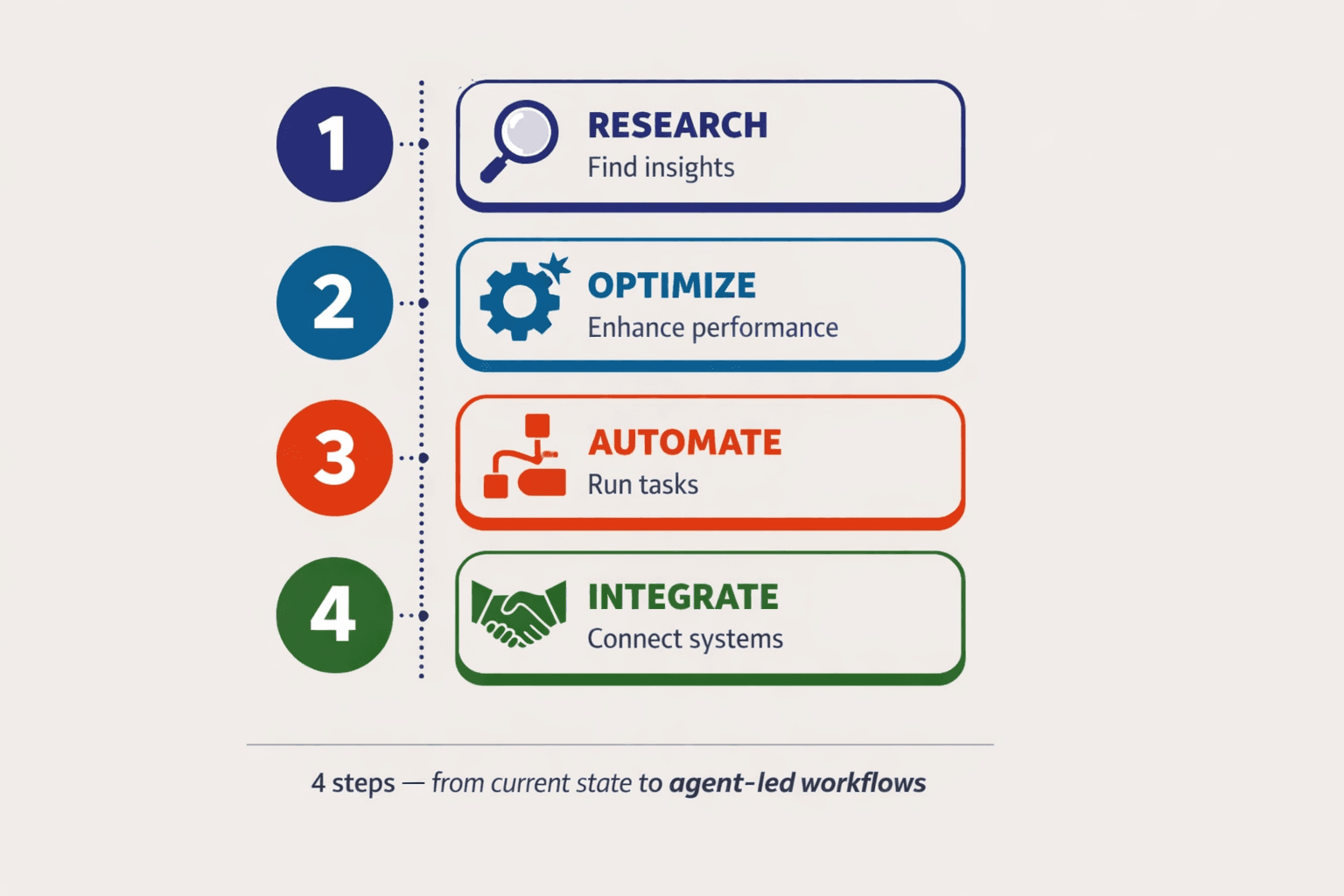
We built these systems to help teams move faster without losing control. Proper instrumentation at each step significantly reduces review delays and cuts rollback time from hours to minutes. If your team is feeling the strain of scattered prompts, uneven quality, and weak visibility, start small, instrument everything, define approval rules early, and move to AgentOps before the mess hardens. Ready to put real control behind your automation? Learn More.