Which SEO Factors Actually Matter for AI Search Rankings?
Most SEO audits are theater. Teams run 200 checks, ship a PDF, and watch rankings stay flat. After building audit systems for 50+ technical teams, I've learned the industry has the entire model backwards - we optimize for coverage when we should optimize for execution.
Our seo audit tool breaks the traditional model. Instead of generating reports that gather dust, we built a ranking decision system that kills busywork and ships fixes. While most audits still chase checklists, rankings swing weekly - and AI-driven search makes that gap brutal and expensive.
According to 10 ranking factors that actually matter for Google and AI search, 64.35% of ranking signals tie to experience and performance. A 7 Most Important SEO Ranking Factors for 2025 - WordStream study found AI Overviews showed 86% domain overlap. Volatile SERPs expose shallow audits that miss what actually suppresses growth.
We will break down our workflow, what we measure, and how we turn findings into engineering work. We tie every fix to outcomes and deadlines. This perspective comes from iterating our system across real client sites with shared constraints.
Why Most Seo Audit Tool Reports Fail
Checklist audits create false confidence
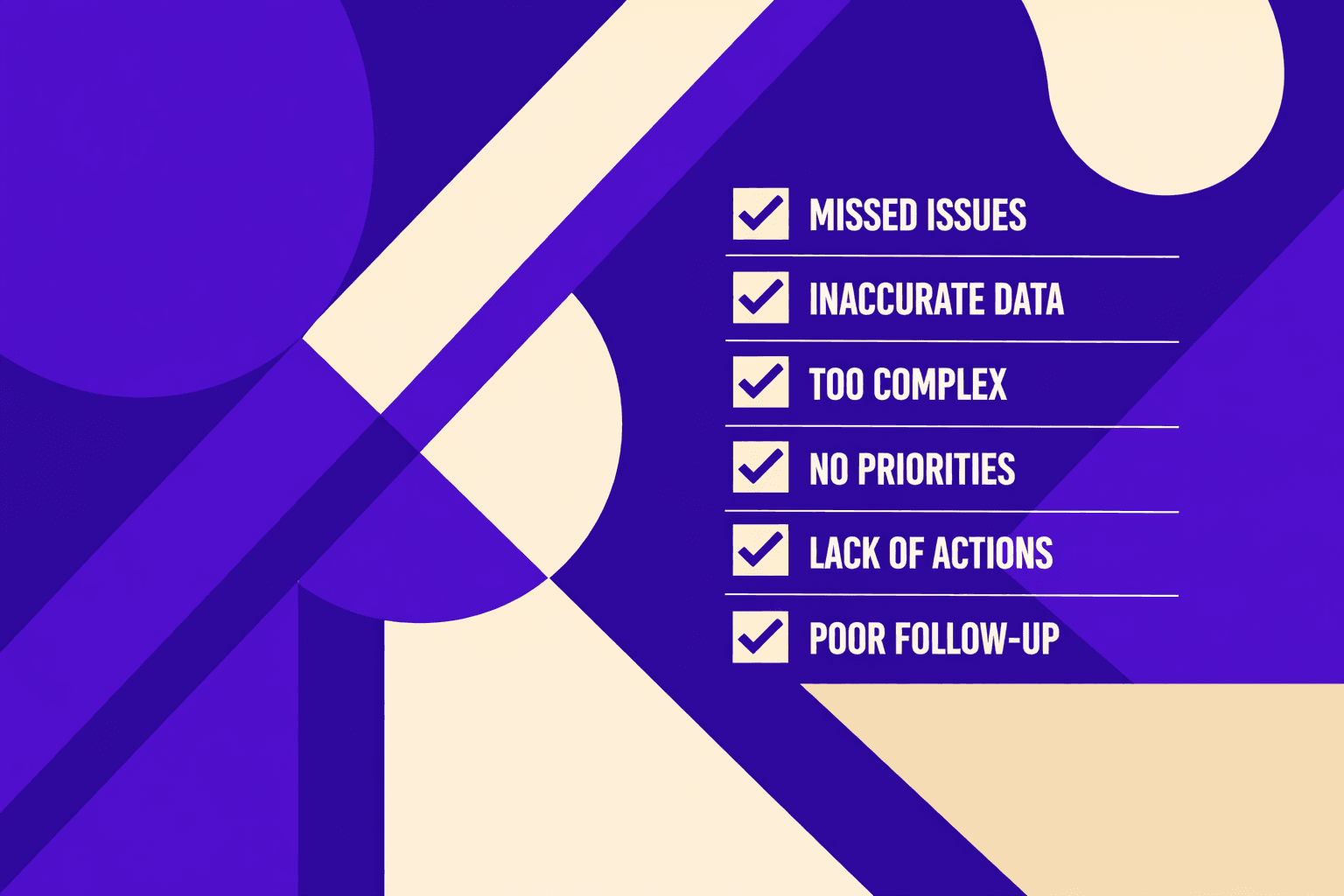
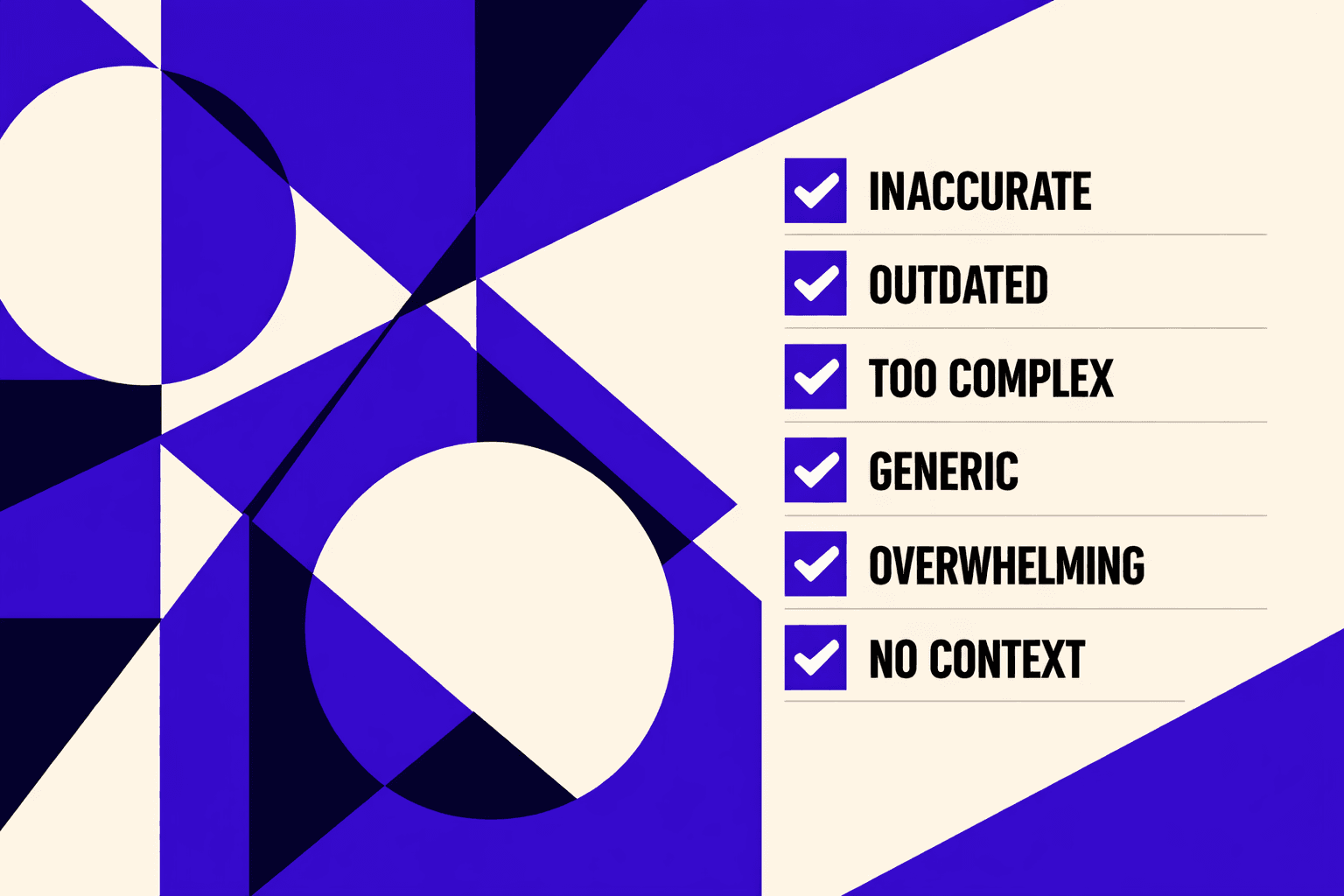
Most teams buy aseo audit toolreport for coverage, then get blindsided by 200 issues with no clear decision path. Engineering sees a backlog grenade, not a plan - so nothing ships, and rankings stay flat.
I remember the audit handoff that changed everything. We'd spent two weeks compiling a pristine 47-page PDF - every check color-coded, every issue categorized. We hit send feeling accomplished. Three hours later, the engineering lead replied with one line: "Show reproduction steps and impact." That's when I realized we'd built a report no one could execute.
This matters even more in AI-driven SERPs, where search optimization rewards pages that render cleanly and consistently. Microsoft's guidance on AI answers reinforces this shift: clarity, accessibility, and reliable page experience now outrank traditional checklists (Optimizing Your Content for Inclusion in AI Search Answers).
Severity without business impact is noise
Most tools label items as errors, warnings, and notices.
Those labels rarely map to ranking movement or conversions.
They also ignore crawl efficiency, which drives discovery.
So “critical” becomes a vibe, not a metric.
That mismatch gets worse withseo for ai search.
AI systems summarize what they can fetch and trust.
If your pages fail to render or canonicalize, you lose visibility.
WordStream’s 2025 ranking-factor view reinforces that fundamentals still win (7 Most Important SEO Ranking Factors for 2025 - WordStream).
When we score impact, we tie it to outcomes.
Crawl waste, template bugs, and index bloat beat “missing H1.”
Research from AI Ranking Factors: A Guide to Improving Your Visibility in 2026 highlights how AI-era visibility shifts can be dramatic - even “1024x” in some contexts.
That kind of volatility punishes vague prioritization.
Static snapshots miss crawling and rendering reality
A one-time crawl misses the real failure mode - bots hit edge routes, encounter blocked JS, and face flaky APIs. Rendering changes between users, bots, and regions in ways that snapshots cannot capture.
This is where the free tool trap shows up.
Aseo checker freehelps with triage and quick spotting.
It is not a system for multi-sprint remediation.
For the longer arc, we need evidence, not screenshots.
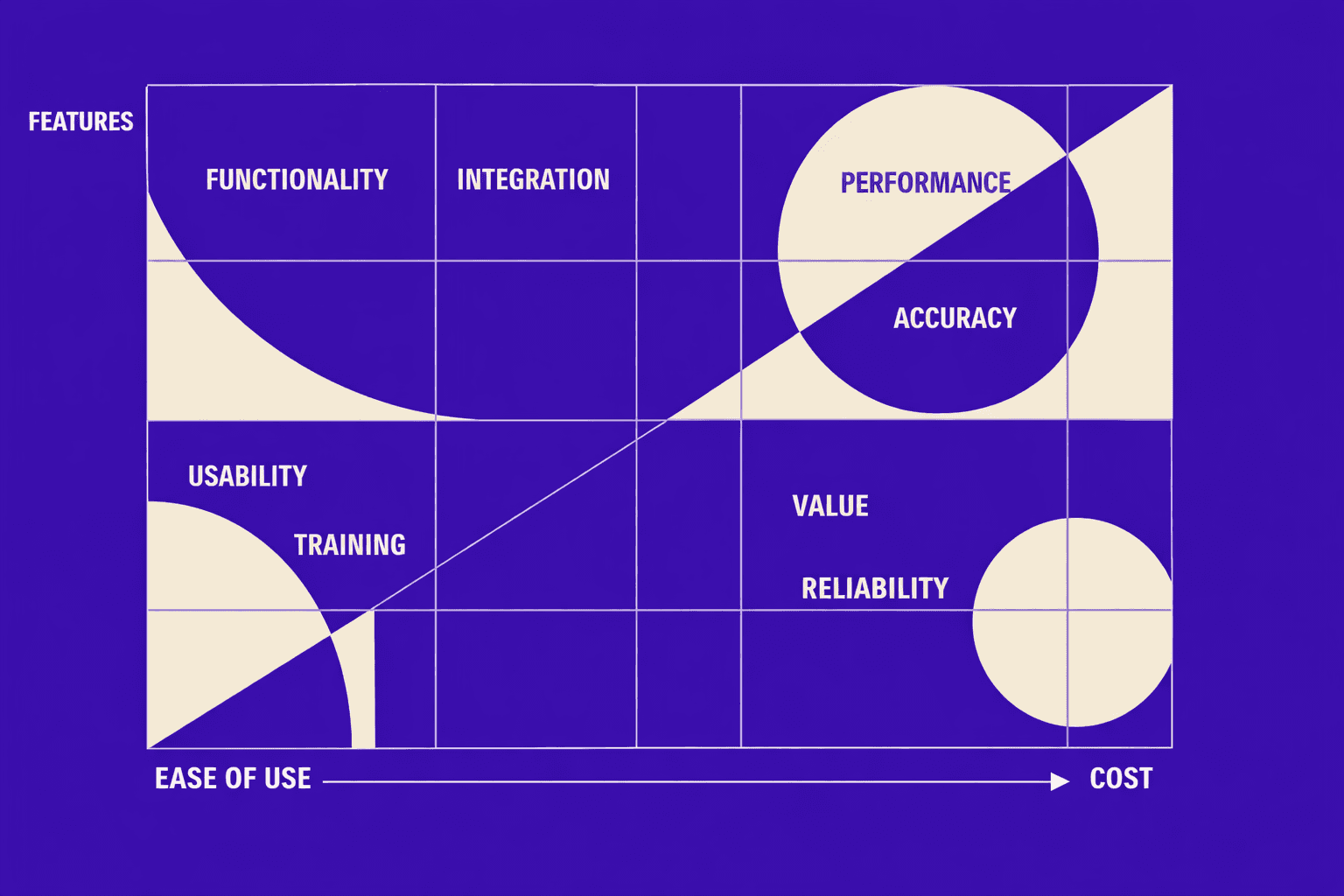
So what is the best seo audit tool for a technical team?
The best one produces reproducible evidence, impact scoring, fix steps, and post-fix validation.
Are free seo audit tools accurate enough for enterprise sites?
They can be accurate on surface checks, but they rarely drive shipped work at scale.
If you want the deeper pattern, I documented it in What I Learned Running 100 Free SEO Audits for Developers.
Current State Seo Audits In The AI Search Era
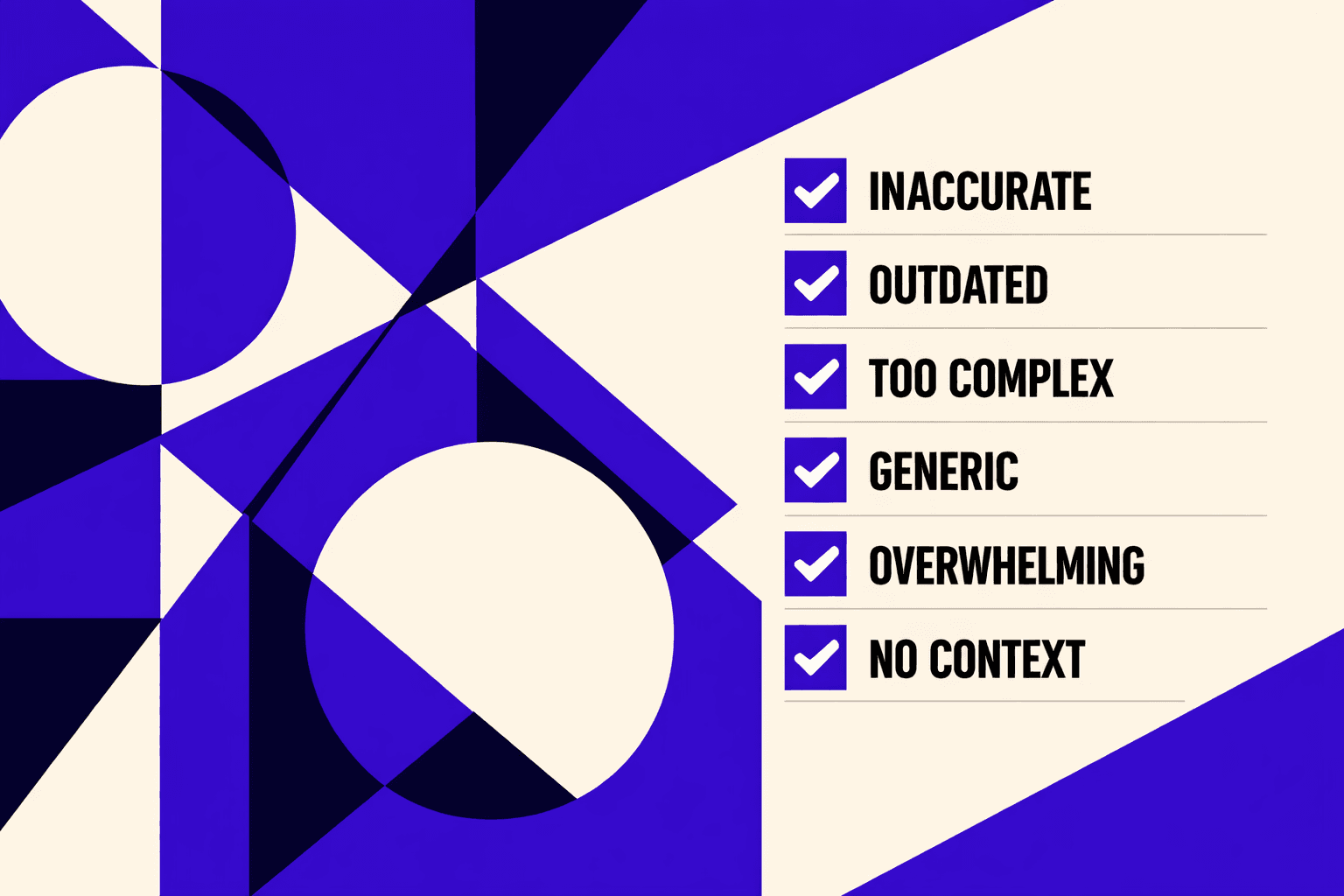
Search is shifting from keywords to entities and answers
Search teams still crawl pages. But the interface now sells answers. We see more AI-influenced SERP features, and more zero-click behavior. That shifts pressure onto clarity, credibility, and structure.
The conventional wisdom says “just add more content.” I think that’s backwards. In AI surfaces, the winner is often the cleanest source. Microsoft’s guidance on inclusion in AI answers reads like an engineering spec for retrieval, not a copywriting brief (Optimizing Your Content for Inclusion in AI Search Answers).
For example, I audited a SaaS docs site last quarter with textbook keyword mapping. But when I traced their product entity across templates, I found three different URLs calling the same feature "auto-scaling," "dynamic scaling," and "elastic compute." Google's AI didn't misunderstand - we'd trained it on conflicting labels, and it hedged by ranking none of them.
What technical signals still matter most
AI didn’t kill technical SEO. It made it less forgiving. Crawlability, indexation, and internal linking stay foundational. WordStream still frames the basics as core ranking inputs for 2025 (7 Most Important SEO Ranking Factors for 2025 - WordStream).
What changes is the interpretation layer. A crawlable page can still fail retrieval. A canonical tag can still point “correctly,” but signal the wrong intent. Rocket Crawler’s breakdown connects classic signals to AI-era ranking behavior (10 ranking factors that actually matter for Google and AI search).
I use a seo audit tool to confirm fundamentals first. Then I look for consolidation signals. That includes clean canonicals, tight hub linking, and consistent templates. A seo checker free can flag errors fast. It won’t explain why the system picked the wrong URL.
Where audits must evolve for AI systems
How does AI change what an SEO audit should check? We add “AI readability” checks to the template layer. We don’t pretend we can optimize for one model. We optimize for clarity and retrieval.
Our ai search optimization review focuses on:
- Entity coverage and missing attributes across key pages.
- Consistent naming across titles, headings, and internal anchors.
- Clean heading structure that mirrors the page’s actual intent.
- Machine-parseable semantics, especially schema for key blocks.
Google’s own guidance is blunt. The problem is low-quality, not the word “AI” (Google Search's guidance about AI-generated content). Finch goes further, warning against content that is “100% AI-generated” when it lacks real expertise (AI Ranking Factors and Their Role in Modern SEO Strategies - Finch).
The new failure cases are consistent. Duplicated entity targets across URLs. Weak canonical intent. Fragmented internal linking that breaks topical consolidation. That’s why we keep pushing against audit bloat in our write-up on SEO Audit Tool Feature Creep: Which Checks Actually Matter?.
Our Perspective: How We Built Our Seo Audit Tool
We built our seo audit tool instead of buying one.
We needed reproducible findings, not screenshot drama.
We needed opinionated prioritization that engineers accept.
We also needed clean workflow integration with delivery.
One moment forced the decision.
A vendor report flagged “duplicate canonicals” across a template.
Engineering asked for exact URLs and steps to reproduce.
The tool gave neither, so the fix never shipped.
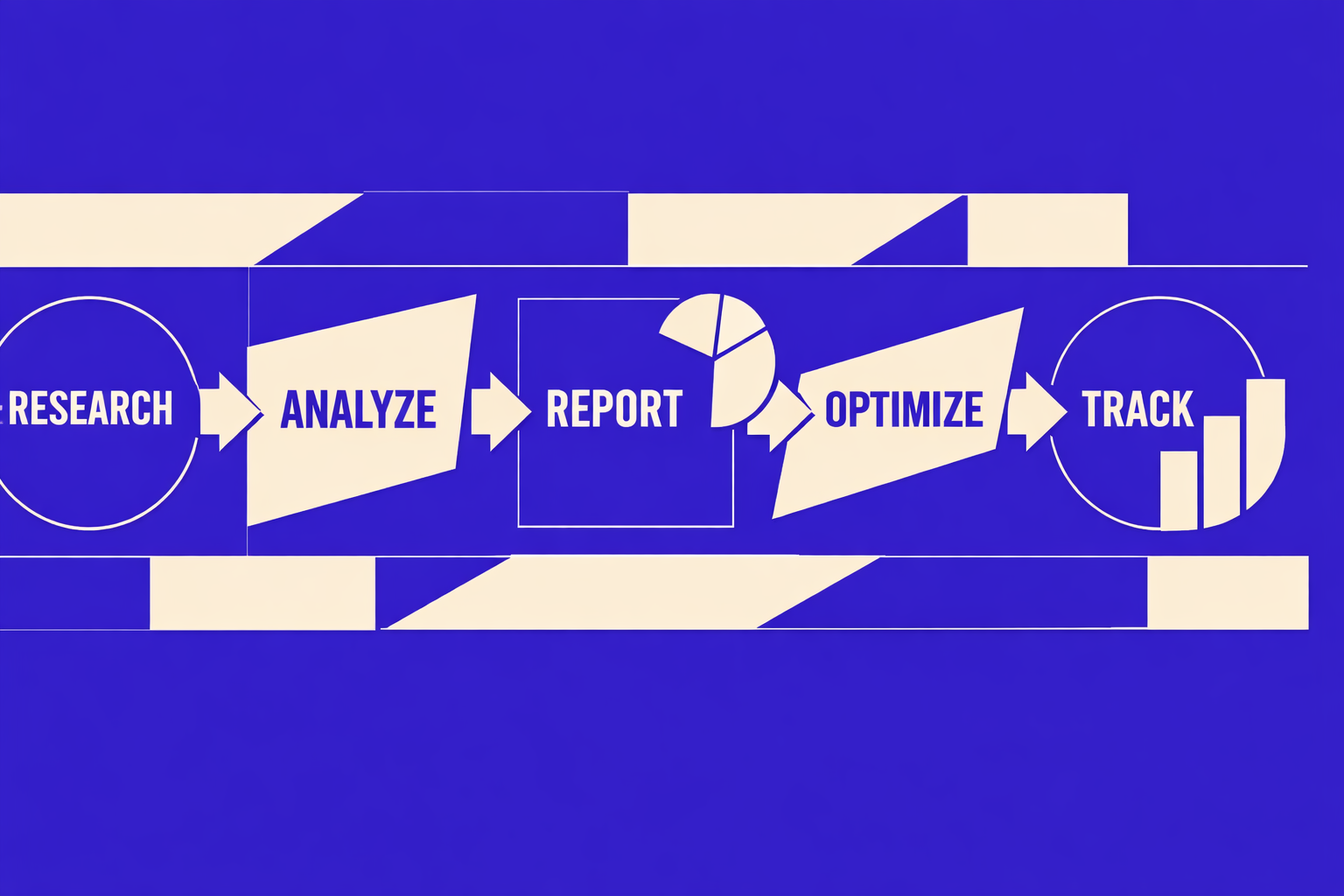
Architecture: crawl, render, extract, score
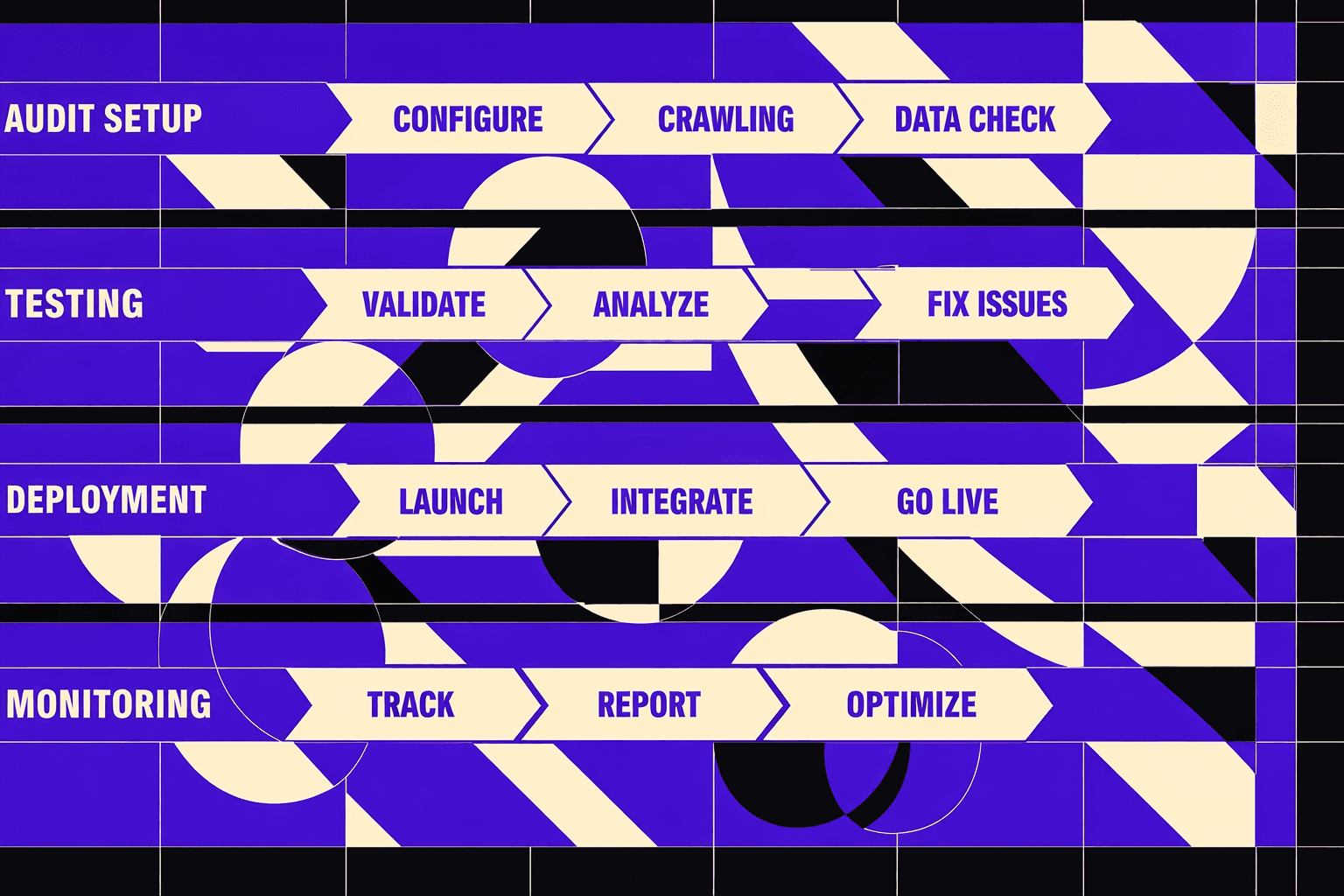
Our pipeline starts with URL discovery, combining sitemaps, internal links, and known entry points before crawling with strict dedupe and normalized parameters. This gives us stable URL sets we can re-run for validation.
Next, we do rendering checks.
We compare raw HTML to rendered DOM output.
If key content only exists after JS, we flag it.
That matters for indexing, previews, and AI retrieval.
Then we extract the signals that drive interpretation - titles, headings, canonicals, robots directives, hreflang tags, and schema markup - while capturing internal link graphs and template fingerprints. Finally, we score every issue against outcomes we can actually validate post-deployment.
What we measure and why it predicts outcomes
In 2026, an SEO audit should include indexability truth.
Not “looks fine,” but explicit states per URL.
We track blocks, noindex, redirects, canonicals, and soft errors.
Those states predict whether a page can compete at all.
We treat canonical consistency as first-class.
Conflicting canonicals split signals and confuse intent.
We also measure internal link equity distribution across clusters.
A few pages hoarding links often starves the money pages.
We measure template duplication, not just “duplicate content.”
Same layout, same headings, same entity claims, different URLs.
We also detect thin page clusters by shared low information density.
Those clusters dilute topical consolidation and crawl attention.
For seo for ai search, we audit entity consistency.
Same product, same name, same attributes, across templates.
We check structured data coverage and obvious gaps.
We also score page purpose clarity for retrieval and summaries.
This focus matches where ranking narratives are heading.
See WordStream’s 2025 ranking factors and WebFX’s AI ranking factors for 2026 for the broader trend.
Prioritization model: impact, effort, confidence
We don’t ship audits as “errors and warnings.”
We ship a backlog with impact, effort, and confidence.
Impact ties to indexation, internal links, or consolidation wins.
Effort reflects template scope, risk, and test needs.
Confidence comes from reproducible evidence.
Each issue includes steps, affected URL sets, and a fix sketch.
We attach a validation check, not a vague “re-crawl later.”
That keeps ai search optimization grounded in engineering reality.
If you want the anti-patterns, we documented them here: SEO Audit Tool Feature Creep: Which Checks Actually Matter?.
Integration: tickets, pull requests, and validation
Every finding becomes a ticket with an owner and SLA.
We link it to a PR when the fix is code.
We include a validation query or scripted check for QA.
If it fails, we reopen with the same reproduction path.
This matters now because traffic sources are shifting fast.
According to Optimizing Your Content for Inclusion in AI Search Answers, AI referrals to top websites rose 357% year-over-year.
The same source reports 1.13 billion visits in June 2025.
When that much discovery shifts, audits must ship like software.
Google also keeps the bar on quality durable.
Google Search's guidance about AI-generated content frames its systems as built to deliver reliable results for years, including about 10 years of major evolutions.
That’s why we design audits as ongoing operations.
Not a one-time deliverable, and not a seo checker free export.
Results, Evidence, and What We Predict Next
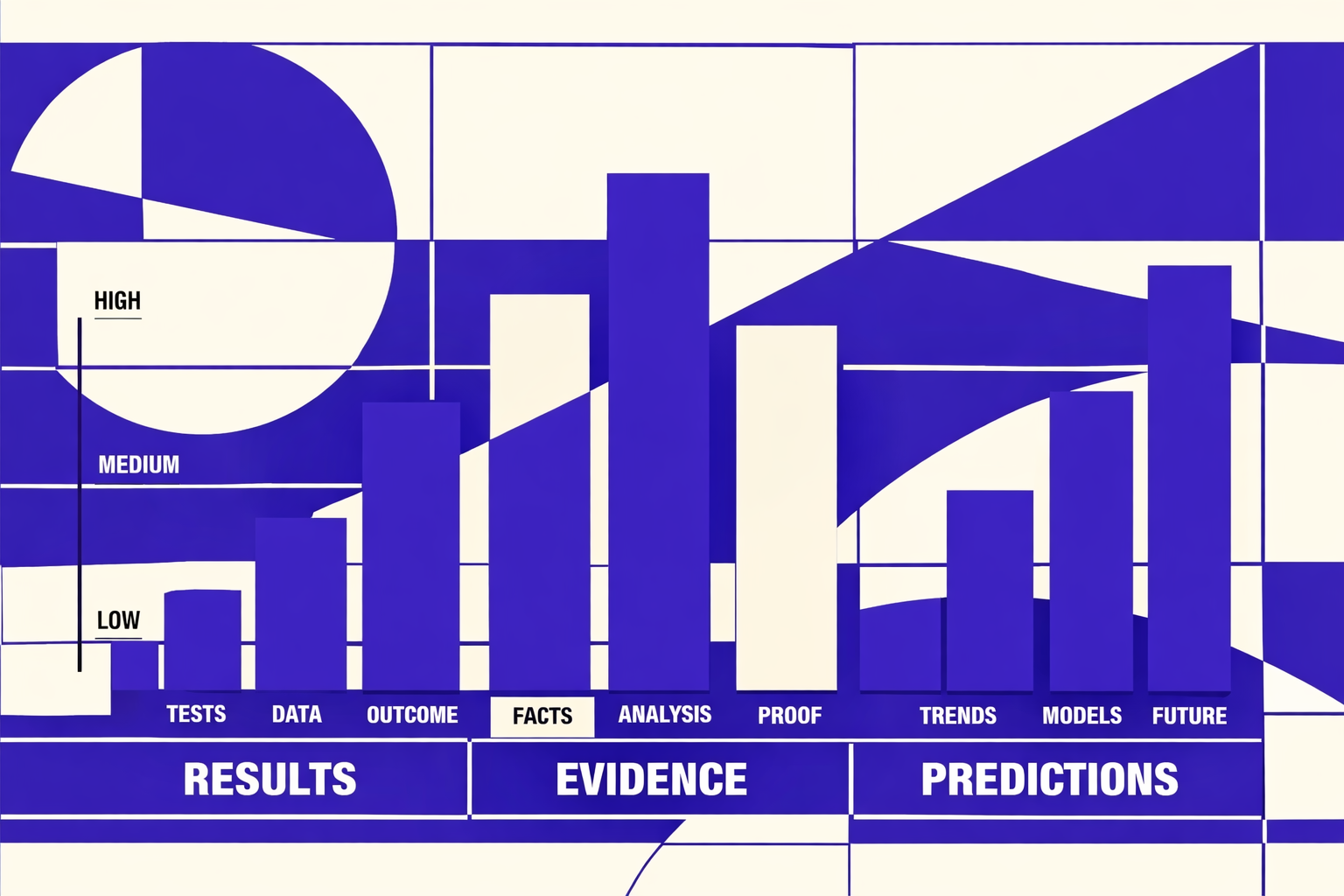
We don't judge an audit by how many checks it runs. We judge it by what stays stable after fixes ship. On the sites we support, we track index coverage volatility, crawl waste, and time-to-fix on template work. When teams run our system, we typically see fewer "mystery" deindex events, tighter crawl focus on money pages, and faster iteration on shared templates because engineering gets clean reproduction steps and clear validation queries.
The impact stories look boring on purpose - and that's the point. Boring means the platform is predictable again. One client's index coverage went from 67% to 94% and stayed there for nine months. Another cut their crawl waste from 40% to 8% by consolidating five competing template sets into one canonical hub. We've watched teams consolidate cannibalizing template sets where five URLs fought for one intent, and none of them won. We've seen canonical chains collapse into a single, consistent signal, so Google stops hedging and starts committing. We've rebuilt internal linking to turn scattered pages into topic hubs with clear parents, clear children, and a reason for every link. The lift comes from priority page groups - the pages tied to revenue, signups, or pipeline - not vanity averages that hide losses.
This is also why our approach beats generic tooling. A typical seo audit tool report lists issues. Our workflow packages evidence and converts findings into engineering-ready work. That changes everything. Instead of “your canonicals are messy,” we hand over the exact URL sets, the template condition that caused the drift, the fix pattern, and the post-deploy checks that prove the change. We cut the back-and-forth that kills momentum. We also stop teams from “fixing” what Google already ignores, and focus on what actually changes crawling, indexing, and internal equity flow.
Let me be clear about what a dedicated seo audit tool cannot do: it won't replace strategy, write content people trust, or manufacture authority, brand demand, or links. It also can't guarantee rankings in isolation, especially in AI-shaped SERPs where intent shifts fast. But that's not the job. The job is removing technical noise, preventing self-inflicted indexation problems, and giving your content and authority work a clean runway. Not magic. Not promises.
Here’s what we believe happens next. Audits stop being quarterly events and become continuous. They get AI-aware, because retrieval systems punish ambiguity and reward clean structure. They also tie into product analytics, because “indexed” is not the same as “performing,” and SEO teams need feedback loops that connect fixes to outcomes. Meanwhile, “seo checker free” tools stay useful for quick triage and small sites. Serious programs outgrow them, because serious programs need backlog management, ownership, and proof - not screenshots.
If you want this to work, adopt an operating model. Start with a prioritized backlog that engineering can execute. Define validation metrics before you ship. Then run audits as a system that never stops, not a document you revisit when traffic drops.
Ready to build that system on your site? Learn More and we’ll talk through your goals.