Why Your Technical SEO Audit Needs a Human Touch (Even With AI Tools)
The SEO audit industry has it backwards. We've trained teams to celebrate finding 500 issues when the real skill is shipping 5 fixes that matter. After watching 80+ engineering teams drown in audit debt, I'm convinced the problem isn't detection - it's our addiction to comprehensive reports that never compile. Most teams treat a seo audit tool like a report generator, creating tickets instead of production fixes. Engineers drown in low-value checks while high-impact technical debt quietly compounds release after release. Research from Thrive Agency shows that strategic prioritization transforms outcomes, yet most audits still stop at "findings."
We built MygomSEO to run audits like a production system. It plugs into engineering workflows, then turns issues into prioritized work that ships.
In this article, we’ll show how our approach was built, what worked in the field, and how to convert audits into measurable improvements. We measure outcomes in releases, revenue signals, and crawl efficiency, not PDF pages.
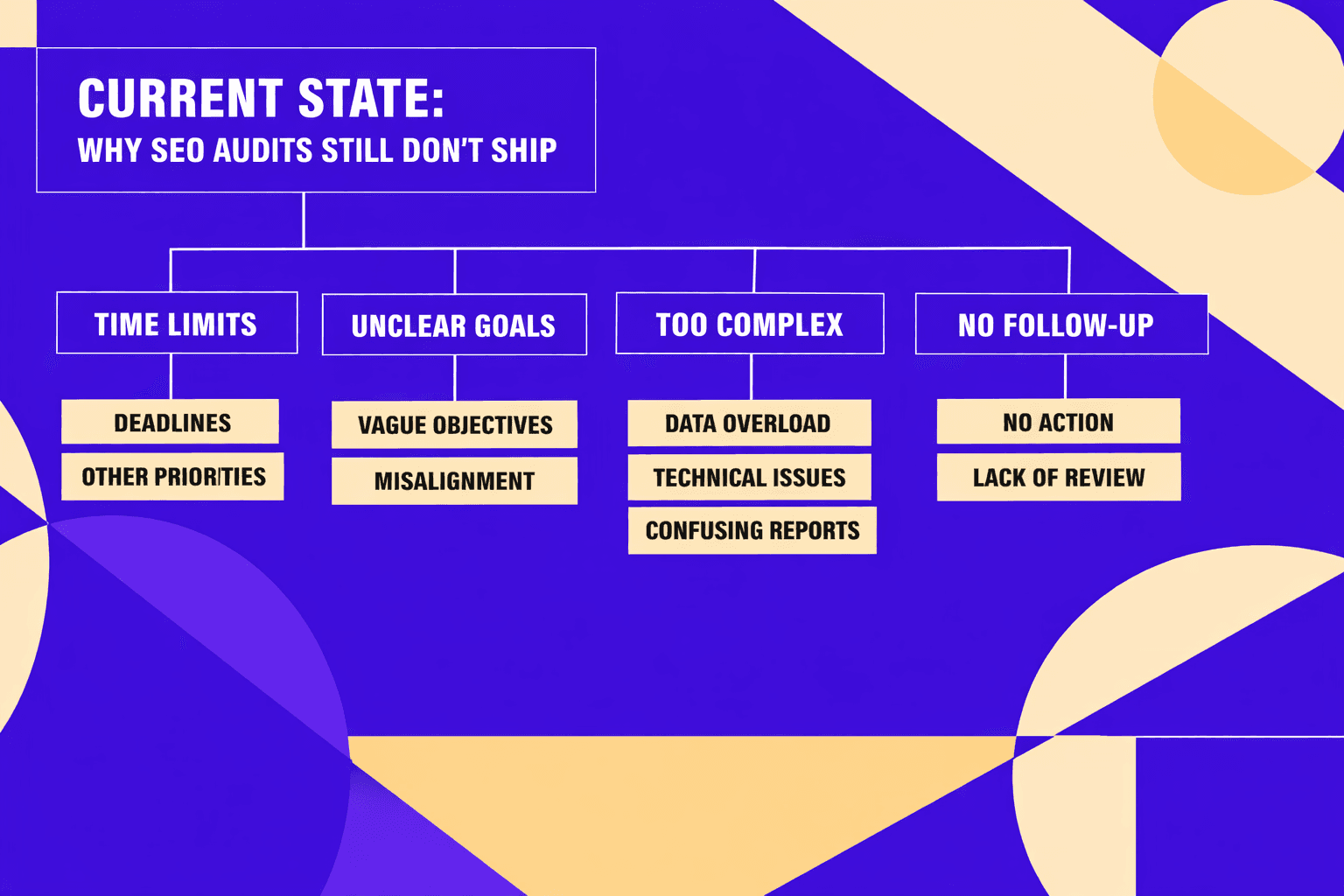
Current State: Why SEO Audits Still Don’t Ship
Most audits optimize for finding problems, not fixing them
Aseo audit toolshould answer one question: what ships next.
Most audits never get there. They stop at detection.
I see teams invest heavily in crawling and checks.
Then they skip the hard part: decisioning.
What do we fix first, who owns it, and what metric proves it worked?
For example, I watched an audit review devolve in real time.
One engineer opened 47 tabs.
Half the “issues” lived in shared templates.
No one owned the templates, so nothing moved.
Why generic scoring models mislead technical teams
Here’s what anseo audit toolis and how it works.
It crawls URLs, inspects HTML and headers, and flags patterns.
Some tools add rules for speed, indexation, and internal linking.
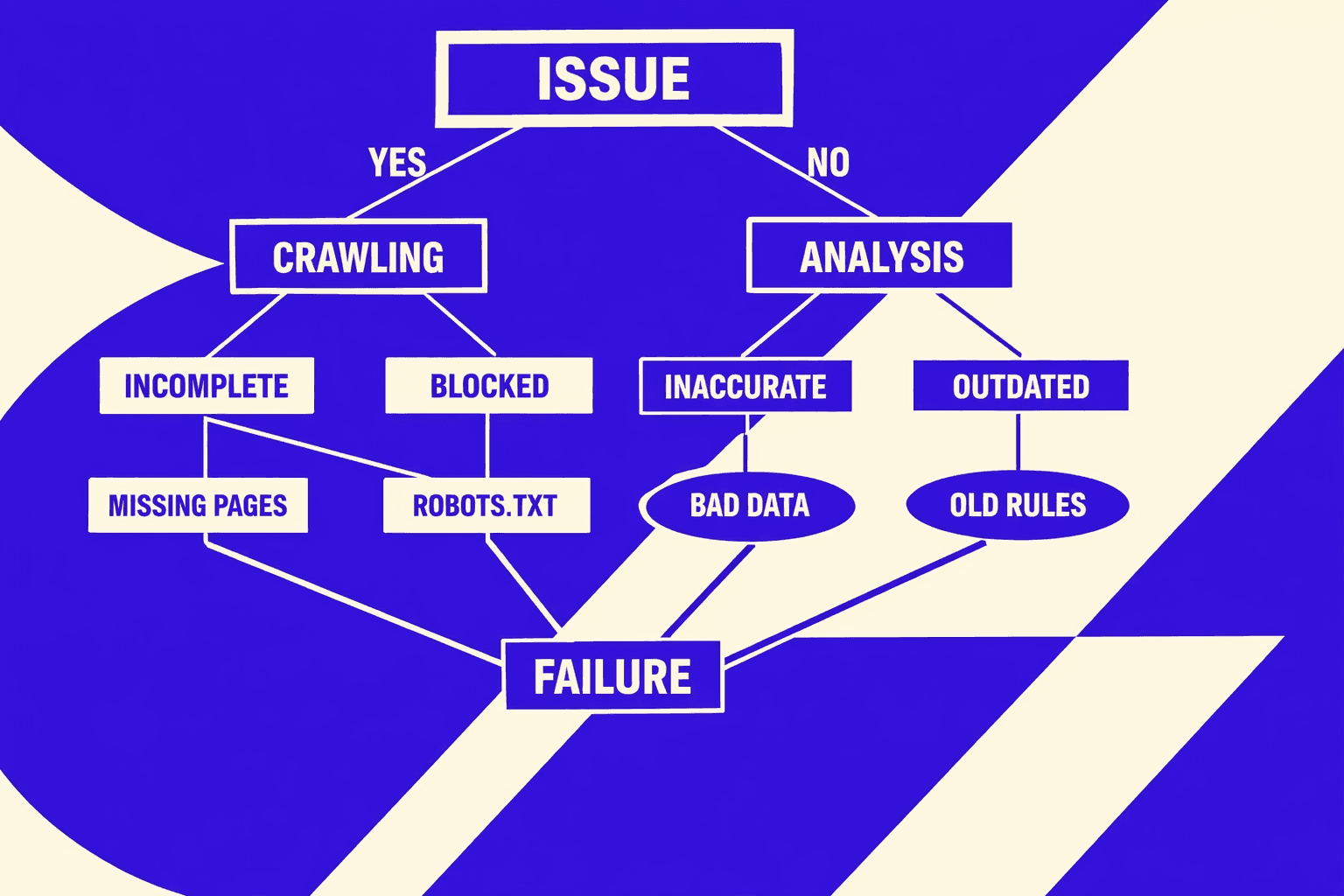
The failure happens when tools turn that into one big score.
Generic scoring models treat every warning as equal.
Engineering reality never works like that.
A missing canonical tag and a flaky 5xx burst are not peers.
We have to weigh risk, effort, and expected impact.
A technical lead needs an ordered backlog, not a red dashboard.
This is where “seo checker free” outputs are the most dangerous.
Free checkers often push broad rules with no context.
That pressure creates churn, not resolved defects.
The hidden cost of audit debt in modern release cycles
Modern sites change fast.
JS rendering, edge caching, and personalization shift the ground daily.
So a technical seo audit without context becomes noisy.
Without logs, template maps, and release history, tools guess.
They can’t tell if Googlebot sees the same page as users.
The rise of ai seo tools is amplifying the problem.
Output arrives faster, but the prioritization gap stays.
In practice, accountability drops when “the model said so.”
I also see a second cost: audit debt.
Teams keep reopening the same tickets every quarter.
We pay for re-triage, re-arguing, and re-testing.
And yes, agencies market that speed hard.
Thrive Agency's analysis highlights how polish often wins over proof - they point to high client retention rates that reward deliverable volume rather than measurable impact (AI Can't Replace Humans in SEO and Here's Why | Thrive).
Engagement percentages become the headline, not shipped fixes.
The same piece includes style asset callouts that remind me how often marketing artifacts drown engineering signals (AI Can't Replace Humans in SEO and Here's Why | Thrive).
I've seen this pattern firsthand: teams prioritize report aesthetics over the unglamorous work of validating fixes in production (AI Can't Replace Humans in SEO and Here's Why | Thrive).
If you want audits to ship, tie them to releases.
Start by treating findings as backlog items with owners.
Then demand evidence - before and after - not scores.
I've written more about how we designed our seo audit tool to solve these workflow problems in AI SEO Audit Tools Drive Technical SEO Results for Modern Teams.
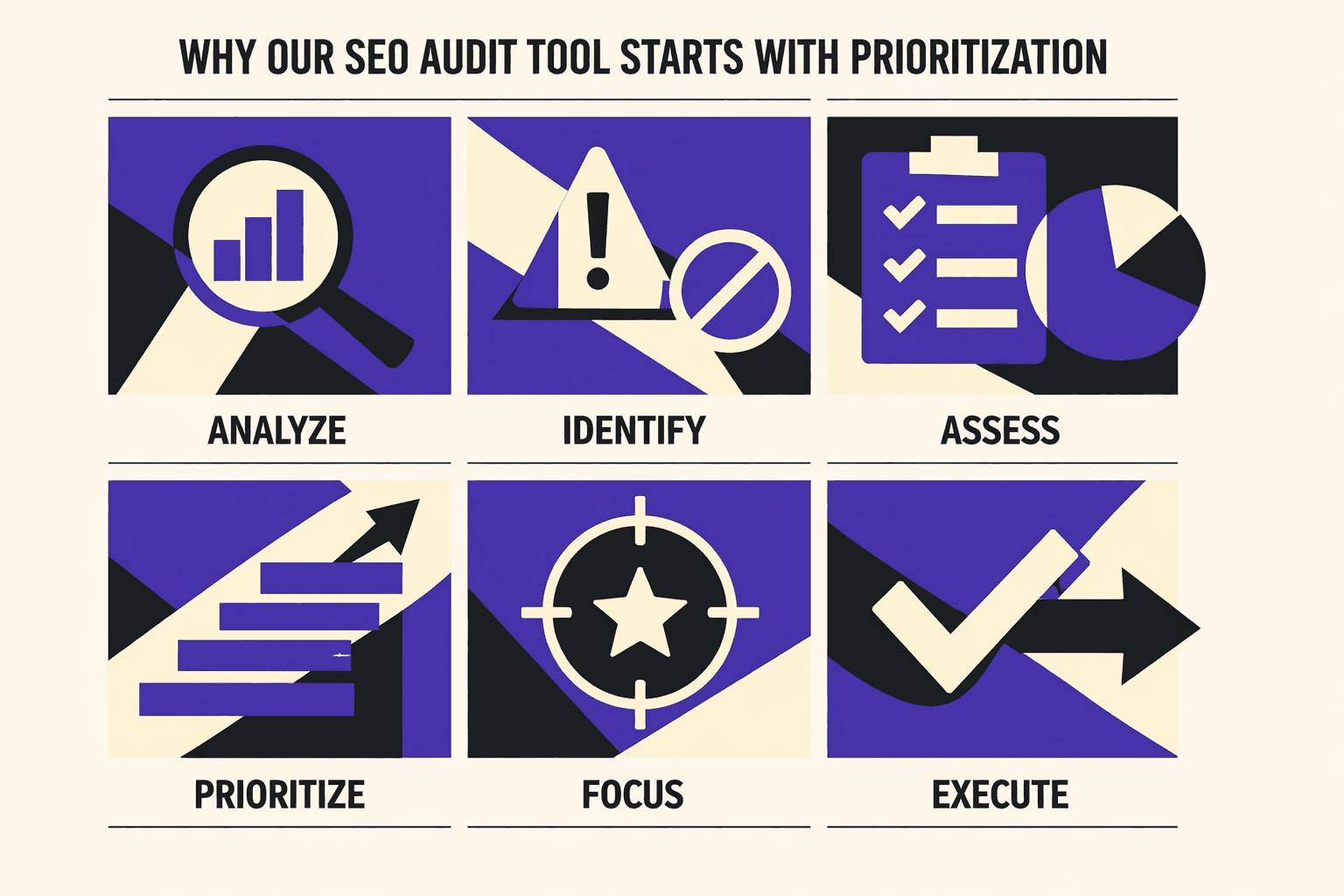
Why Our SEO Audit Tool Starts With Prioritization
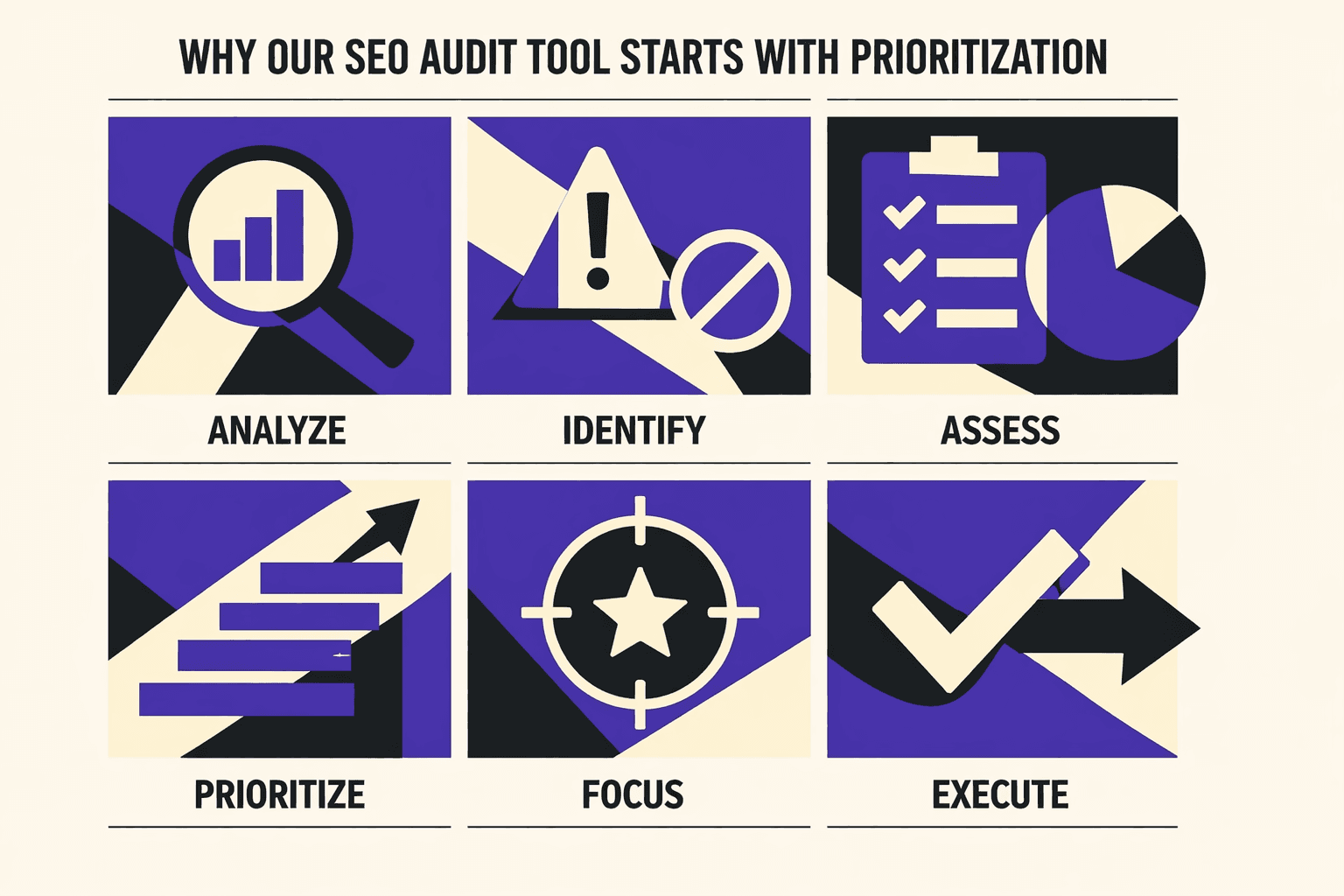
For example, one early run flagged “missing canonicals” across “the site.” I opened the sample URLs. Half were parameter variants. The other half were blocked by robots. We stopped the run and rewired the logic. Until we could name the template and the team, we refused to call it an issue.
Design principle one: impact over completeness
Most audits optimize for coverage. We optimize for change. That means we rank findings by what blocks discovery, rendering, and indexing first.
We still ingest the long tail. We just do not lead with it. Our first output answers three questions: What breaks crawl paths, what breaks rendering, and what breaks index eligibility.
This is also where “seo checker free” expectations belong. Quick triage helps onboarding. But the value comes from repeatable prioritization tied to releases.
Design principle two: evidence before recommendations
AI SEO tools are reliable for audits only when they sit behind evidence. On their own, they hallucinate certainty. They also miss the messy parts of modern stacks.
Our pipeline blends crawl data, Google Search Console signals, and server log patterns. That combination cuts false positives fast. It also exposes what crawlers actually request, what Google actually surfaces, and what your edge actually serves.
We do not recommend anything without a trail. If we cannot show the affected URLs, the template, and the signal source, we mark it as unproven.
Design principle three: engineering-ready output, not PDFs
PDFs do not compile. Tickets do. We design every finding to become a scoped work item that an engineer can debate.
We use AI selectively, and we keep it on a leash. It clusters duplicate issues, summarizes root causes, and drafts ticket-ready acceptance criteria. Engineers should challenge those drafts, not copy them blindly.
That human pushback is the point. Research from AI Can't Replace Humans in SEO and Here's Why | Thrive reinforces why humans still matter in SEO decisions.
Our implementation architecture (medium depth)
We run an ingestion layer, then a normalization layer, then a prioritization layer. Ingestion pulls crawl snapshots, GSC exports, and sampled log lines. Normalization resolves canonicals, template fingerprints, and URL grouping rules.
Prioritization scores issues by affected URL sets, observed bot demand, and search visibility signals. We then attach an owner based on template - to - repo mapping. If ownership is unclear, the issue stays in quarantine.
We also time-box speed checks. Data indicates “10 minute” style audit promises often hide shallow logic (AI Can't Replace Humans in SEO and Here's Why | Thrive). And when teams chase “0% errors” dashboards, they tend to game the tool, not fix the system (AI Powered SEO Audit and Website Audit Guide: 9 Powerful Steps to ...).
If you want the deeper philosophy behind this approach, see AI SEO Audit Tools Drive Technical SEO Results for Modern Teams.
Evidence: What Changed After We Deployed It
Operational metrics we track beyond rankings
I don’t judge progress by rank graphs. I judge it by whether Google can crawl, render, and keep our pages indexed without drama.
So we track leading indicators that correlate with growth. Crawl budget efficiency sits at the top. If bots waste cycles on junk URLs, we lose discovery velocity. We also track indexation stability by template group, not as a site-wide average.
Two more metrics keep us honest. First: template-level error rates, measured per release. Second: time-to-fix, from detection to production. When that gap shrinks, the whole technical SEO system gets stronger.
Client impact patterns we see repeatedly
Across deployments, the biggest wins don’t come from fixing 200 tiny flags. They come from fixing four systemic failure modes that keep repeating.
Canonicalization drift is the classic. One release changes a base URL rule. Suddenly, tens of thousands of pages point at the wrong “primary.” Faceted navigation control is next. If filters produce crawlable URL permutations, the site becomes its own denial-of-service.
Then we see render-blocking resources. Not because “Core Web Vitals,” but because Google can’t reliably paint key content. Pagination consistency rounds it out. When page 2 behaves differently than page 1, indexation fractures.
This is why our seo audit tool focuses on root-cause clusters. It forces a small number of decisive fixes.
Real examples of issues our system surfaced early
One Tuesday, our alert fired before coffee. The crawl graph looked fine at first. Then the template cluster view showed a spike in “self-referencing canonicals” on filtered category pages. The dev team had shipped a routing change. It quietly stripped query params from the canonical builder.
Rankings didn’t move yet. Search Console didn’t scream yet. But bots had started cycling. We opened one ticket. It mapped to the exact template and page group. It included test cases and “done” criteria. The fix shipped that day.
That moment changed how teams treat a technical seo audit. It stopped being a quarterly ritual. It became a release guardrail.
And yes, we use AI-assisted clustering to get there. It cuts duplicate work fast. It also helps non-SEO stakeholders understand why the item matters. That aligns with the broader reality that AI can accelerate audits, while still needing humans for judgment and tradeoffs, as research like Google's AI-assisted development studies and academic work on human-AI collaboration demonstrates.
Some vendors oversell what AI SEO tools can do. Vendor claims range wildly from 200% to 20,000%+ improvements, but without methodology transparency, these numbers don't inform architecture decisions. Our focus stays on measurable, reproducible outcomes. I don't build roadmaps on inflated claims. I build on shipped fixes.
If you want more on automation boundaries, I break it down in AI Technical SEO Strategies for Instant Detection and Audit Automation.
What we intentionally ignore to stay focused
We ignore any check that can’t name an owner and a template. We ignore “best practice” items without a failure mode. We also ignore vanity totals, like “errors found,” because they reward noise.
And no, a seo checker free can’t replace a full audit. It can spot obvious breakages. It cannot connect issues to releases, templates, and crawl behavior. It can’t tell you what to fix first, or how fast you ship.
Our best work happens when we create fewer, better tickets. We cluster by root cause. We prioritize by impact. We link every fix to the exact page groups affected. That’s how execution improves without pretending automation replaces engineering judgment.
Counterarguments What Skeptics Get Right And Whats Next
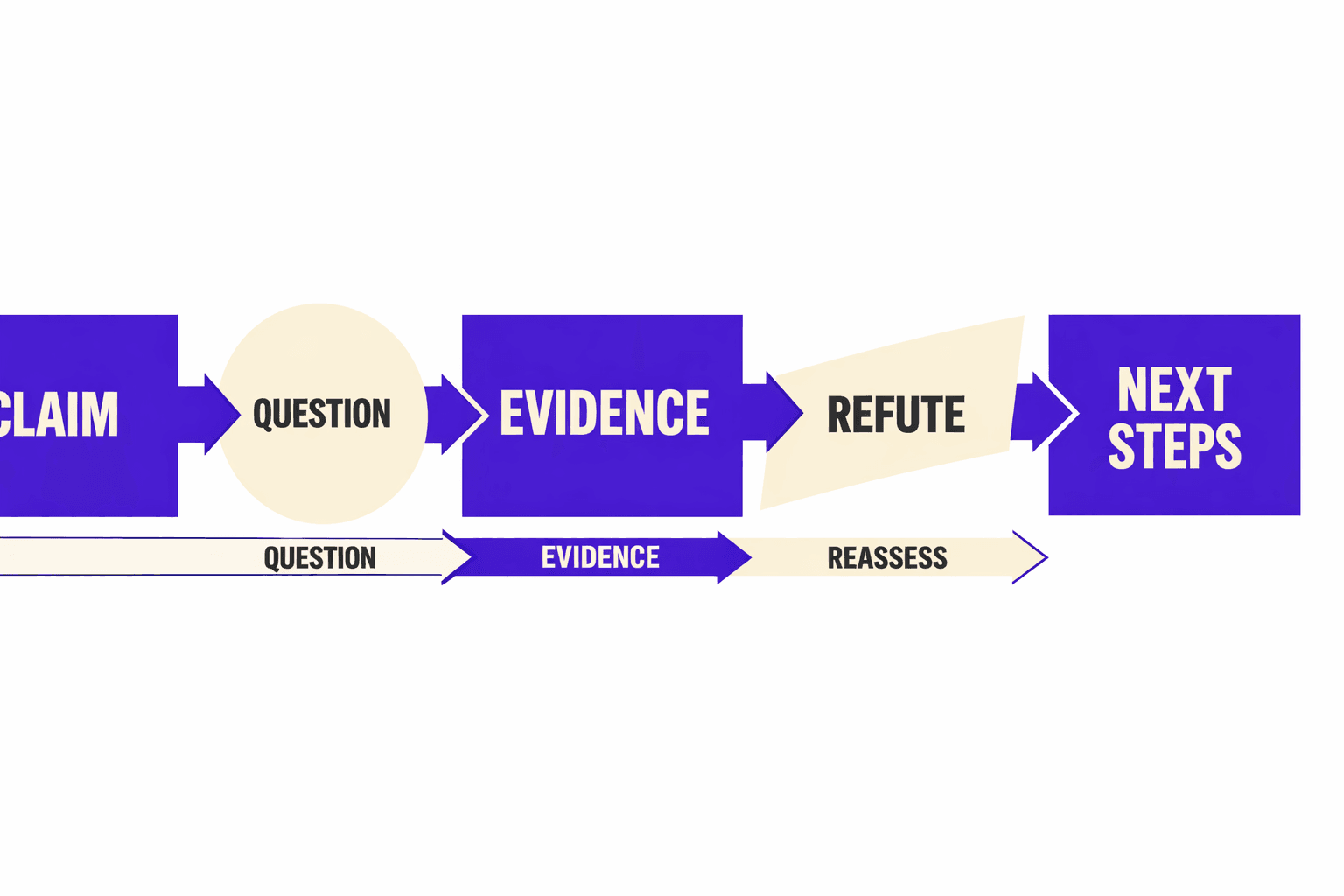
I also agree with the skeptics who think ai seo tools are over-credited today. AI accelerates triage, clustering, and writing. It does not own your architecture. It does not carry release risk. And it does not negotiate with platform teams who guard core templates. Modern sites are socio-technical systems. What ships depends on who owns the surface area, how brittle the codebase is, what the rollout process allows, and what you can safely measure after the change. Until a tool can reason about those constraints and be accountable for regressions, we are not outsourcing technical decisions to it.
What’s next is obvious if you’ve lived through a few migrations and incident reviews. The future is continuous technical seo audit coverage embedded into development cycles, not quarterly “big bang” reports. We’ll keep seeing “seo checker free” style surfaces thrive for fast triage, onboarding, and quick sanity checks. But serious teams will pair that with deeper systems that enforce governance: consistent naming, stable scoring, ownership mapping, and measurement tied to releases.
If you want this to work at scale, I’d standardize four things and treat them like engineering hygiene:
- A shared audit taxonomy that matches your templates and systems.
- A hard link between every audit output and a tracked ticket.
- A time-to-fix metric from detection to production verification.
- Tooling that proves ROI with before-and-after measurement, not louder alerts.
If your seo audit tool still ends as a report, you’re not auditing - you’re documenting. Ready to build an execution loop that engineering trusts? Learn More and reach out to learn more.