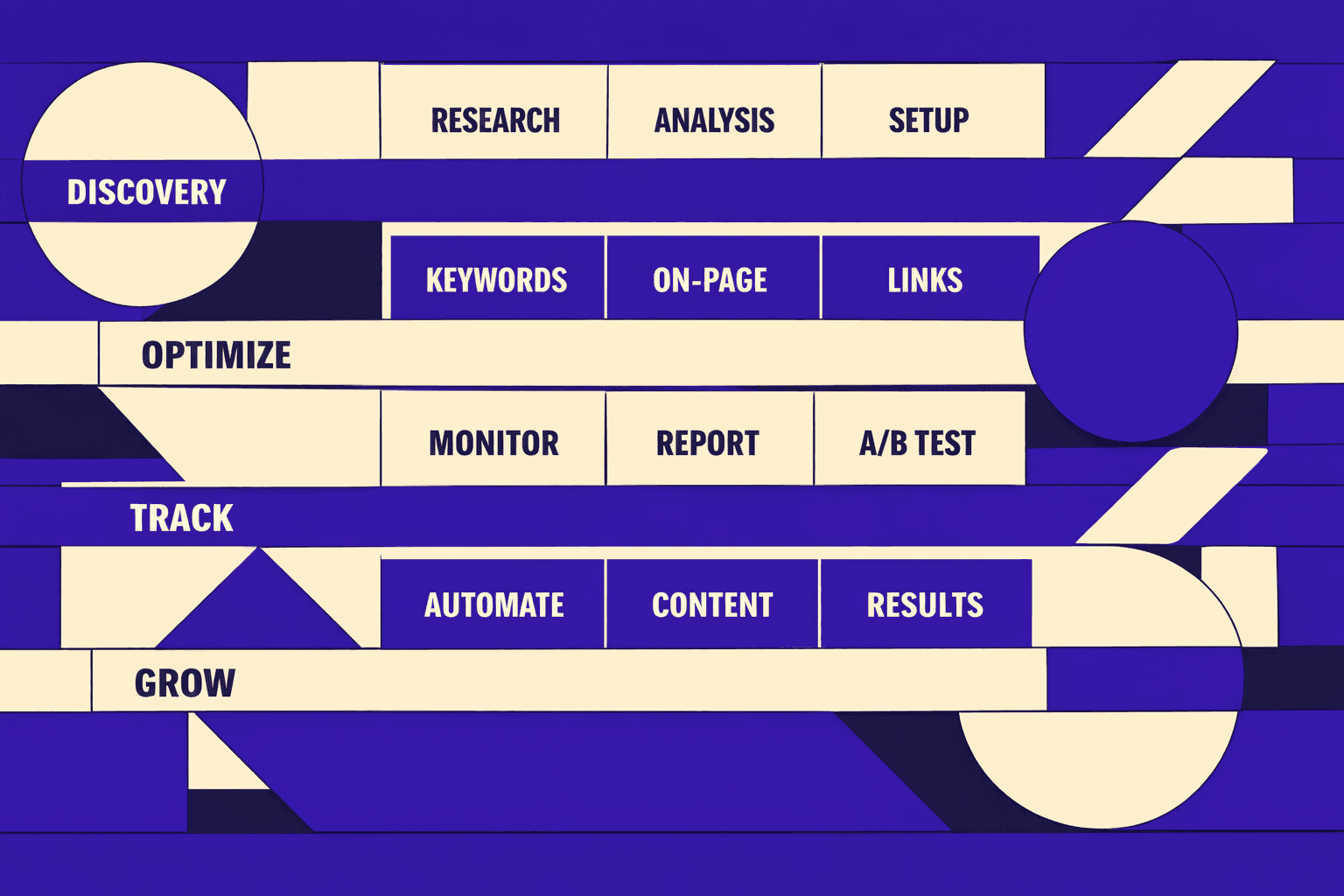
5 Technical SEO Issues You Can Fix in Under 10 Minutes
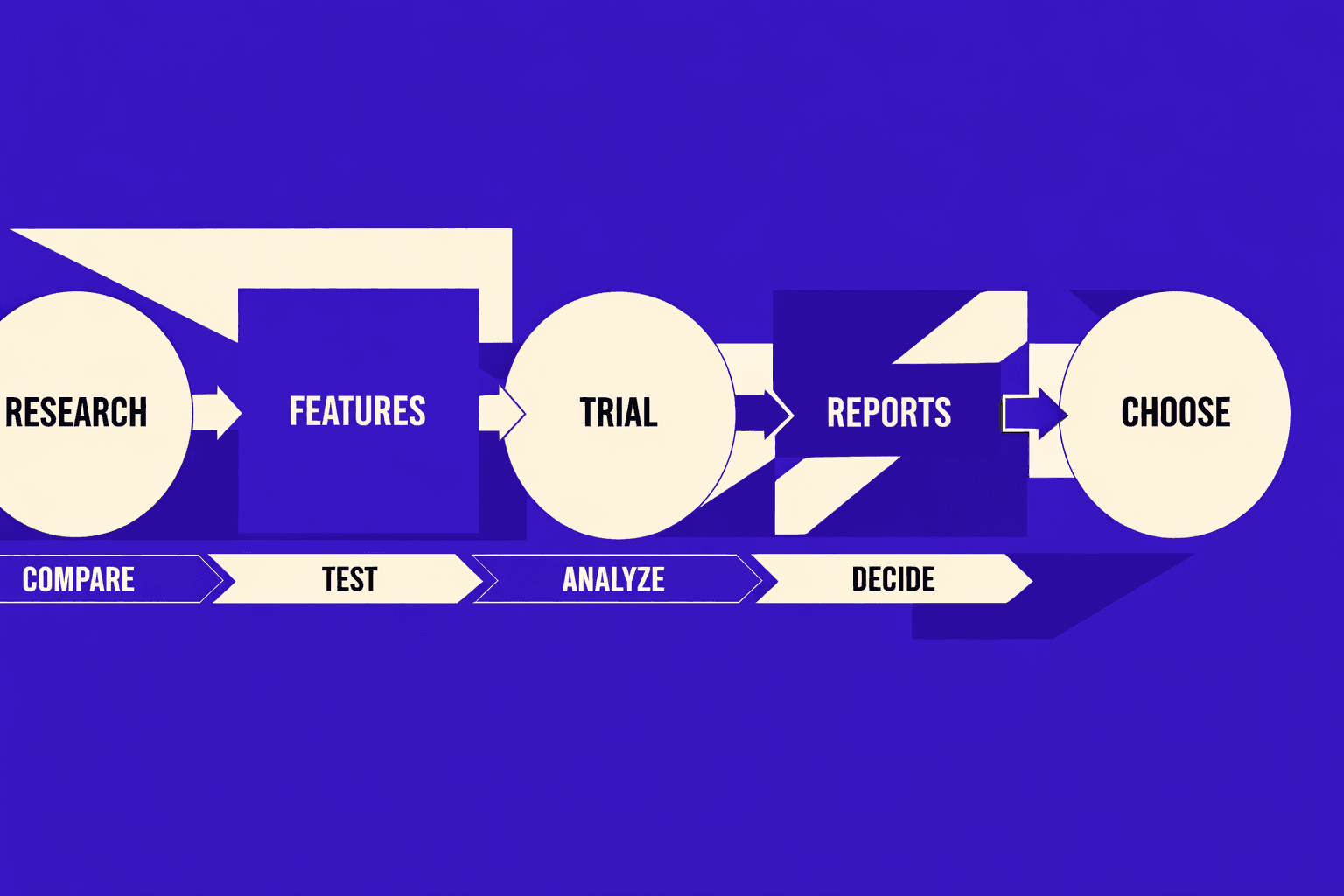
Aseo audit toolshould not feel like a scavenger hunt. Aseo audit toolis software that crawls a site, checks technical and content signals, and turns findings into a prioritized fix list teams can ship.
The problem is audit noise. Teams lose hours chasing low-impact warnings, while real blockers sit unresolved. According to Top 10 technical SEO issues (and how to fix them) - CIO, some performance gaps can reach1920x, which turns “minor” issues into outages for search crawlers.
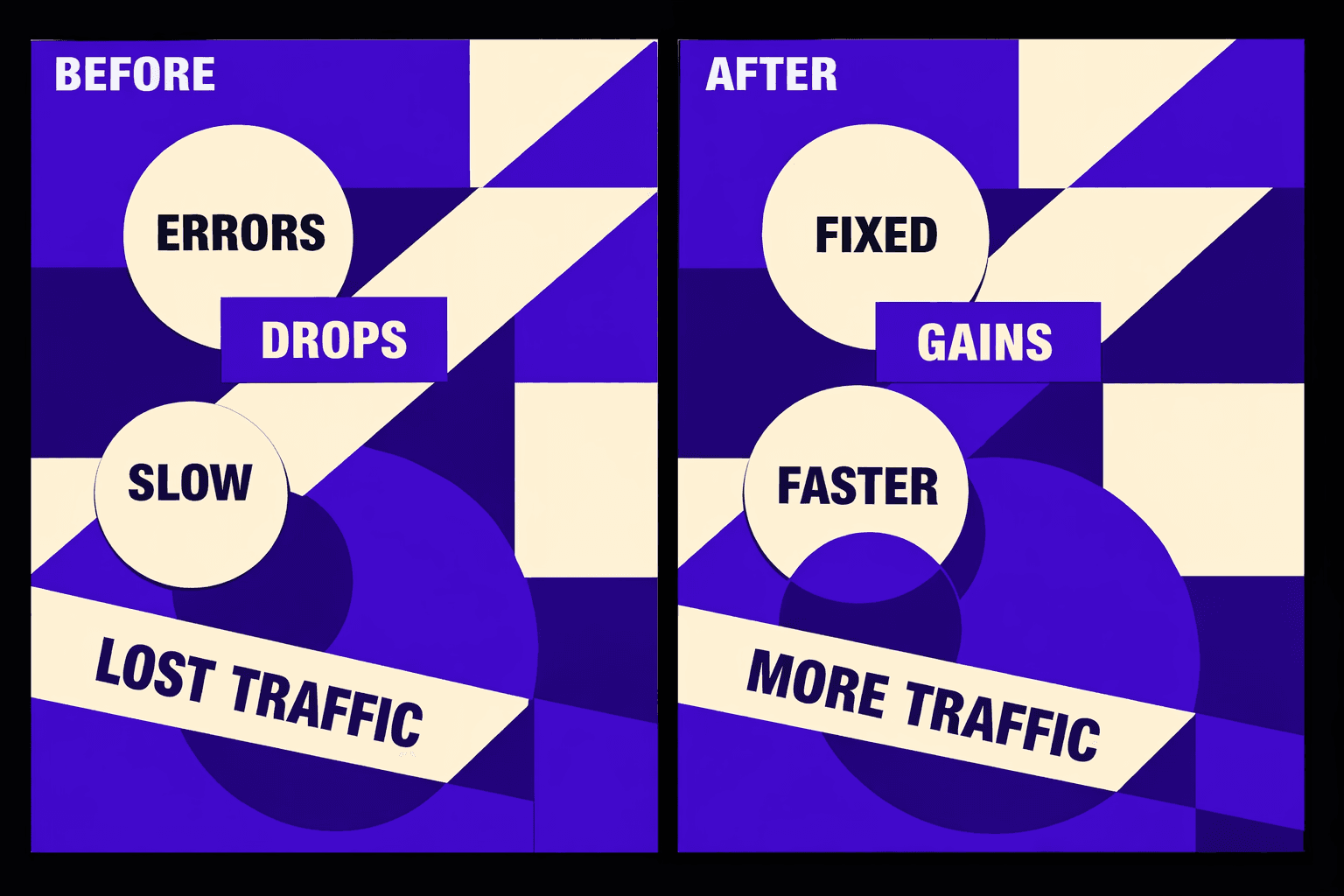
This list compares nine options and a practical workflow to run audits and ship fixes faster. Data from 33 Technical SEO Issues Affecting Most Websites - SE Ranking shows fixes can drive4Xgains, when teams focus on accurate crawling, actionable outputs, and team-ready reporting.
How to Choose a SEO Audit Tool
Evaluation criteria used in this list
The rightseo audit tooldepends on the site type first. A marketing site needs clean templates and fast pages. Ecommerce needs index control across facets. A SaaS app needs JS rendering checks. A documentation-heavy product needs crawl depth and internal links.
This list scores tools the same way each time:
- Crawl coverage: can it reach every important URL?
- Technical diagnostics: can it prove root cause fast?
- Reporting: can it explain fixes to mixed teams?
- Integrations: can it connect to GSC, CI, or Jira?
- Usability: can a developer reproduce the issue?
Teams should also favor tools that reduce rework. Look for grouped issues, clear evidence, and exportable tickets. CIO highlights common technical failures like broken links and performance problems, which are easier to fix when the tool shows exact examples and affected URLs (CIO).
Which tool category fits which team
Different teams need different audit styles.
- Lightweight checkers: best to audit website seo fast.
- Crawlers: best for large URL sets and rules.
- Log file and crawl analytics: best for crawl budget.
- All-in-one suites: best for shared dashboards and alerts.
For example, a two-person SMB can start with an seo checker free and a focused crawler export. A platform team needs automation and crawl control. SE Ranking’s issue list is useful here, since it maps to repeatable checks across site types (SE Ranking).
For a visual walkthrough of what a complete audit covers, check out this tutorial from Semrush:
XYOUTUBEX0XYOUTUBEX
Pricing expectations and hidden costs
Pricing should match scale. Small sites can stay lean. Large sites need scheduled crawls, segmented configs, and API access.
Hidden costs show up as time, not invoices. Wellows found that 53% of technical issues repeat across sites, which drives recurring cleanup work when audits lack clear prioritization (Wellows). Yokoco also notes speed gains can be dramatic, up to 1024x in some caching and delivery setups, but only when audits pinpoint the blocking layer (Yokoco).
How often should an SEO audit run? Monthly for most SMBs, weekly for active releases, and after migrations. What should an audit include? Crawlability, indexation, canonicals, redirects, internal links, performance, and structured data. For deeper tooling strategy, see AI SEO Audit Tools Drive Technical SEO Results for Modern Teams.
9 Best SEO Audit Tool Options Compared
These nine picks cover most real workflows.
They range from team dashboards to raw crawlers.
Each option helps audit website seo with less guesswork.
The fastest path is shortlisting two or three tools.
Before the list, one rule matters.
A seo audit tool only helps when teams validate findings.
That means one real crawl and one fix sprint.
Common technical issues repeat across sites (CIO, SE Ranking).
Are free SEO audit tools accurate?
Sometimes, but only for surface checks.
A seo checker free often flags titles, headers, and obvious index blocks.
It rarely reproduces edge cases in routing or rendering.
For example, JS hydration issues can look “fine” in a quick scan.
Free tools also miss context.
They cannot map issues to business pages.
They often skip crawl rules and segmentation.
That is why results must be tested with a controlled crawl.
1. Best overall for teams: Semrush Site Audit
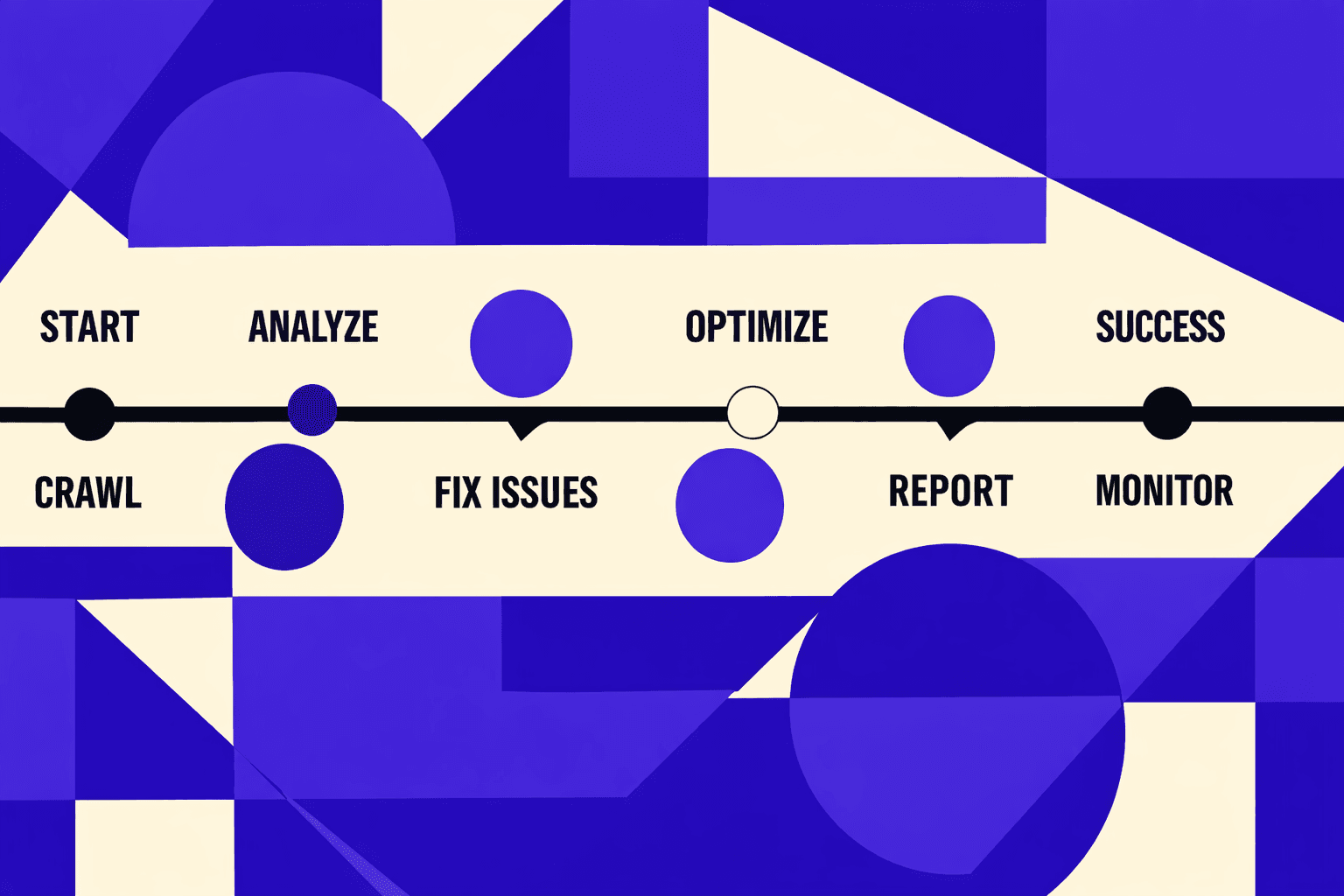
2. Best for deep crawling and technical controls: Screaming Frog
Screaming Frog is the technical baseline for many SEOs.
It runs locally and crawls with strict controls.
It is built for reproducible evidence.
It also supports custom extraction.Ideal forTechnical SEOs and seo for developers.
It suits audits where precision matters.StrengthsIt offers granular include and exclude rules.
It supports header checks and crawl configs.
It finds redirect chains and mixed canonicals.
It can export nearly any report needed.LimitationsIt needs setup and experience.
Large crawls require memory tuning.
Client-ready reporting takes extra work.Pricing snapshotFree tier exists with crawl limits.
Paid license unlocks full crawling features.Best fit scenarioA dev team needs proof, not opinions.
For example, a 404 spike appears after a deploy.
Screaming Frog isolates broken templates fast.
It pairs well with a log-based investigation.
3. Best for enterprise scale monitoring: Ahrefs Site Audit
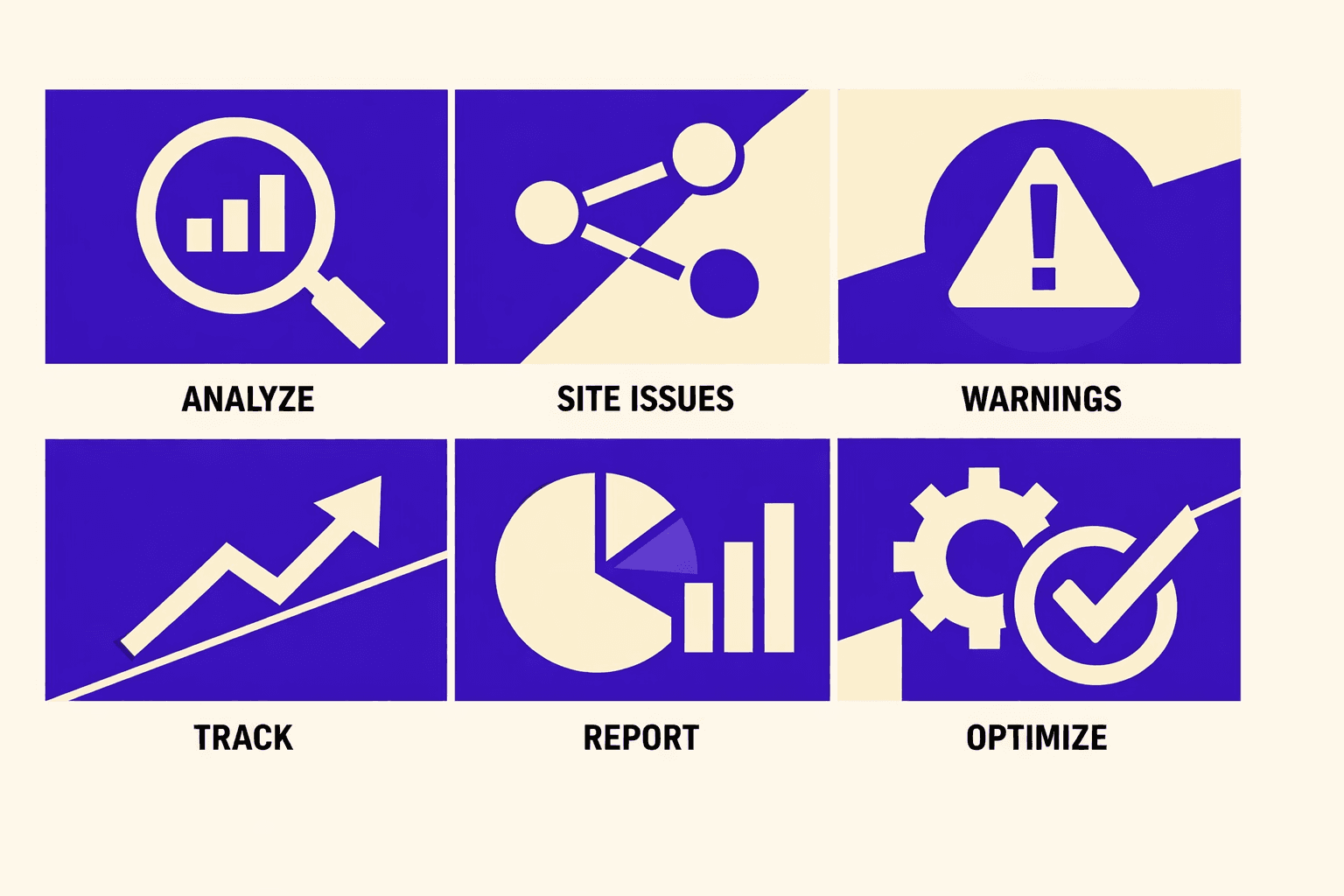
4. Best for JavaScript-heavy sites: Sitebulb
Sitebulb focuses on technical clarity and visualization.
It helps teams understand how issues connect.
It also supports rendering checks.
That matters when JS changes the DOM.Ideal forSites with heavy rendering or complex navigation.
It fits teams that need visual explanations.StrengthsIt highlights internal linking structure well.
It visualizes crawl depth and clusters.
It surfaces issues with clear context.
It is strong for audit storytelling.LimitationsIt is still a desktop workflow.
Large crawls can take time to tune.
Some teams prefer raw exports over charts.Pricing snapshotPaid license model.
Costs depend on tier and seats.Best fit scenarioA React app ships new routes.
For example, links exist only after hydration.
Sitebulb helps verify what bots can see.
It reduces debate during technical reviews.
5. Best for agencies needing client reports: SE Ranking

6. Best for WordPress-focused auditing: Yoast SEO
Yoast SEO is not a full crawler.
It is a WordPress-focused guardrail.
It helps reduce common on-page mistakes.
It also supports structured settings management.Ideal forWordPress sites needing basic hygiene.
It fits teams without dedicated SEO engineers.StrengthsIt guides titles, meta, and indexing settings.
It helps prevent accidental noindex usage.
It supports sitemaps and basic schema.
It fits common WP publishing workflows.LimitationsIt cannot replace a real crawl.
It does not inspect server behavior or redirects deeply.
Complex sites still need external auditing.Pricing snapshotFree and paid tiers exist.
Premium adds extra features and support.Best fit scenarioA content team publishes daily on WordPress.
For example, category pages start ranking by accident.
Yoast helps manage index rules without code.
It keeps mistakes from compounding over months.
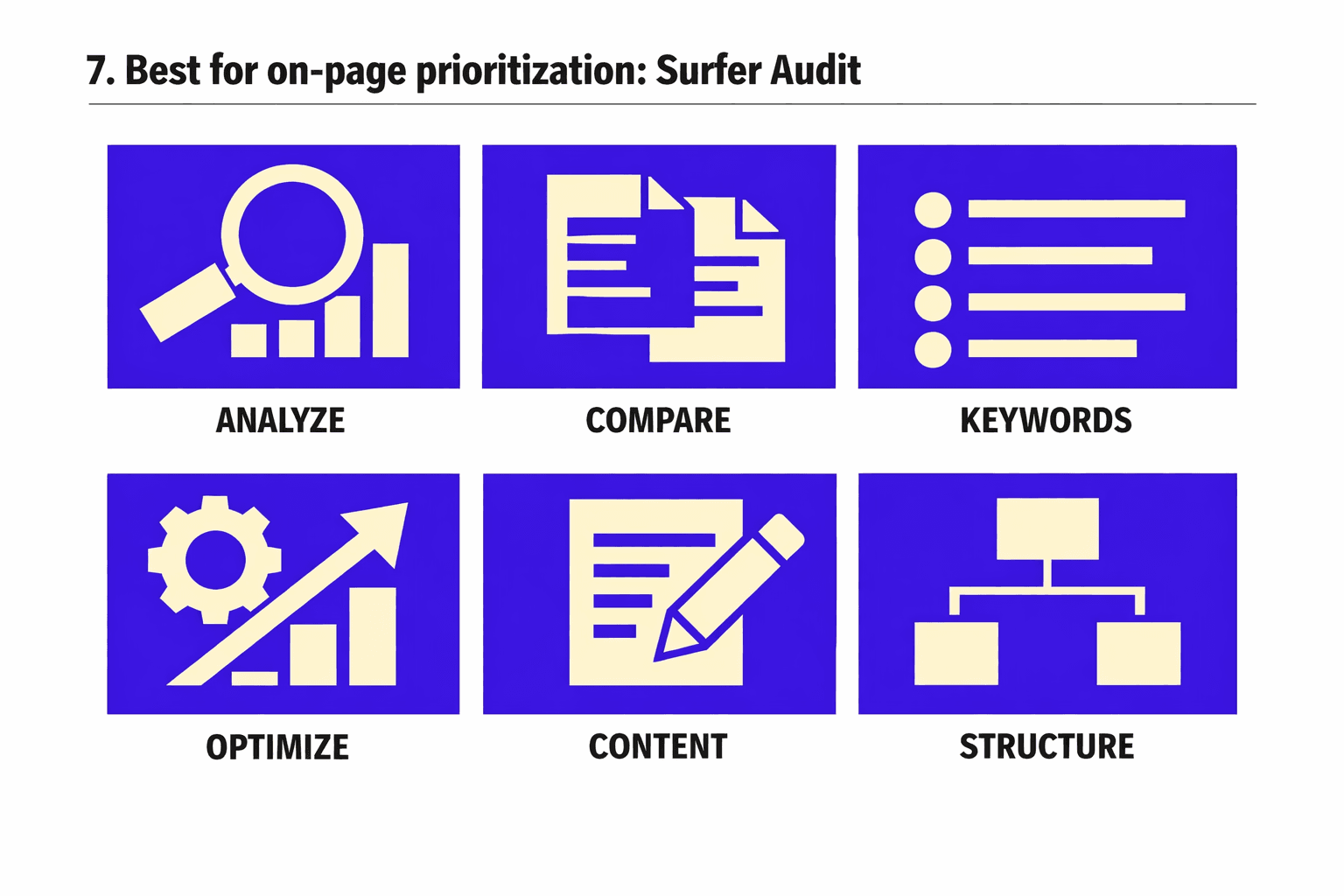
7. Best for on-page prioritization: Surfer Audit
8. Best for automated technical monitoring: ContentKing
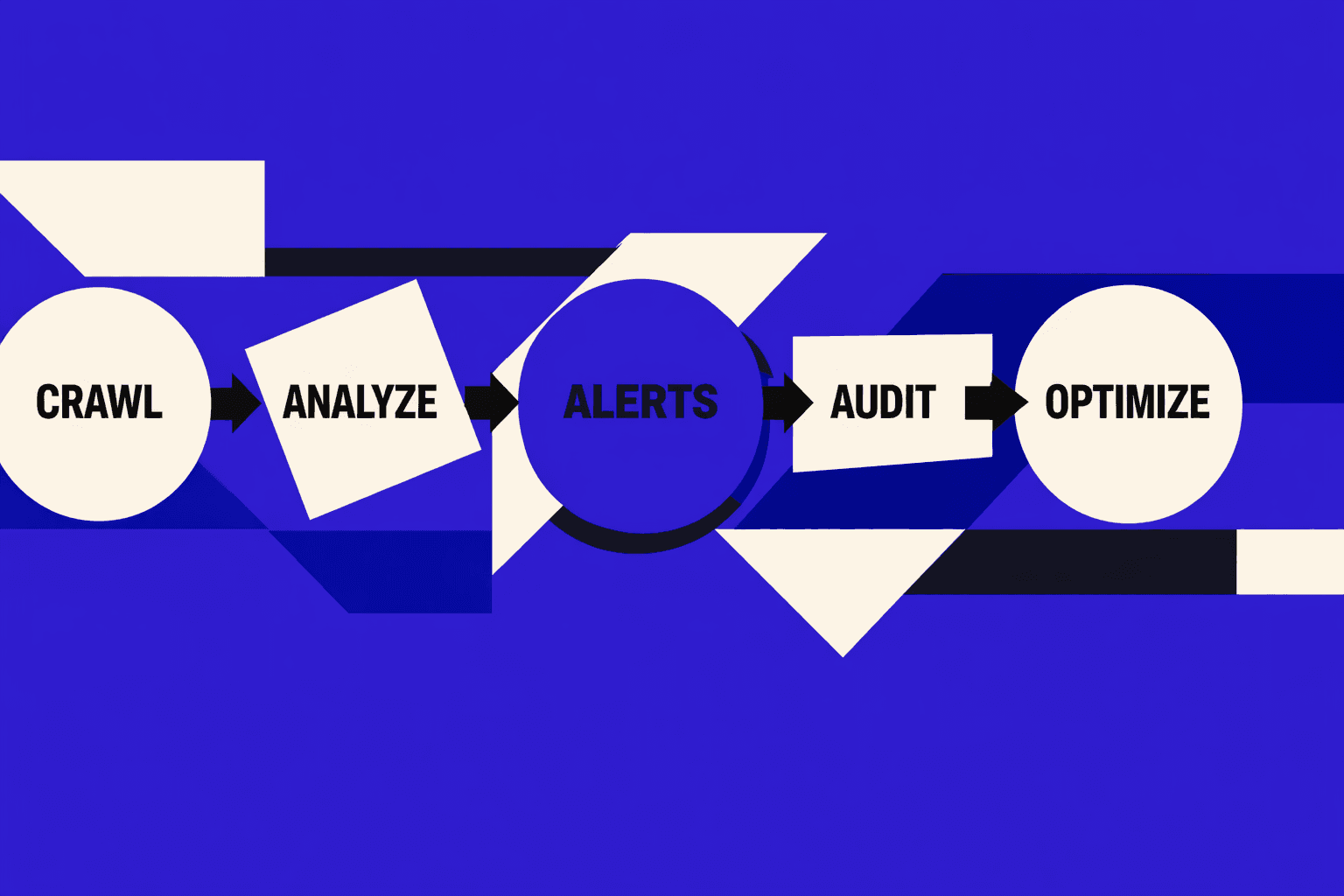
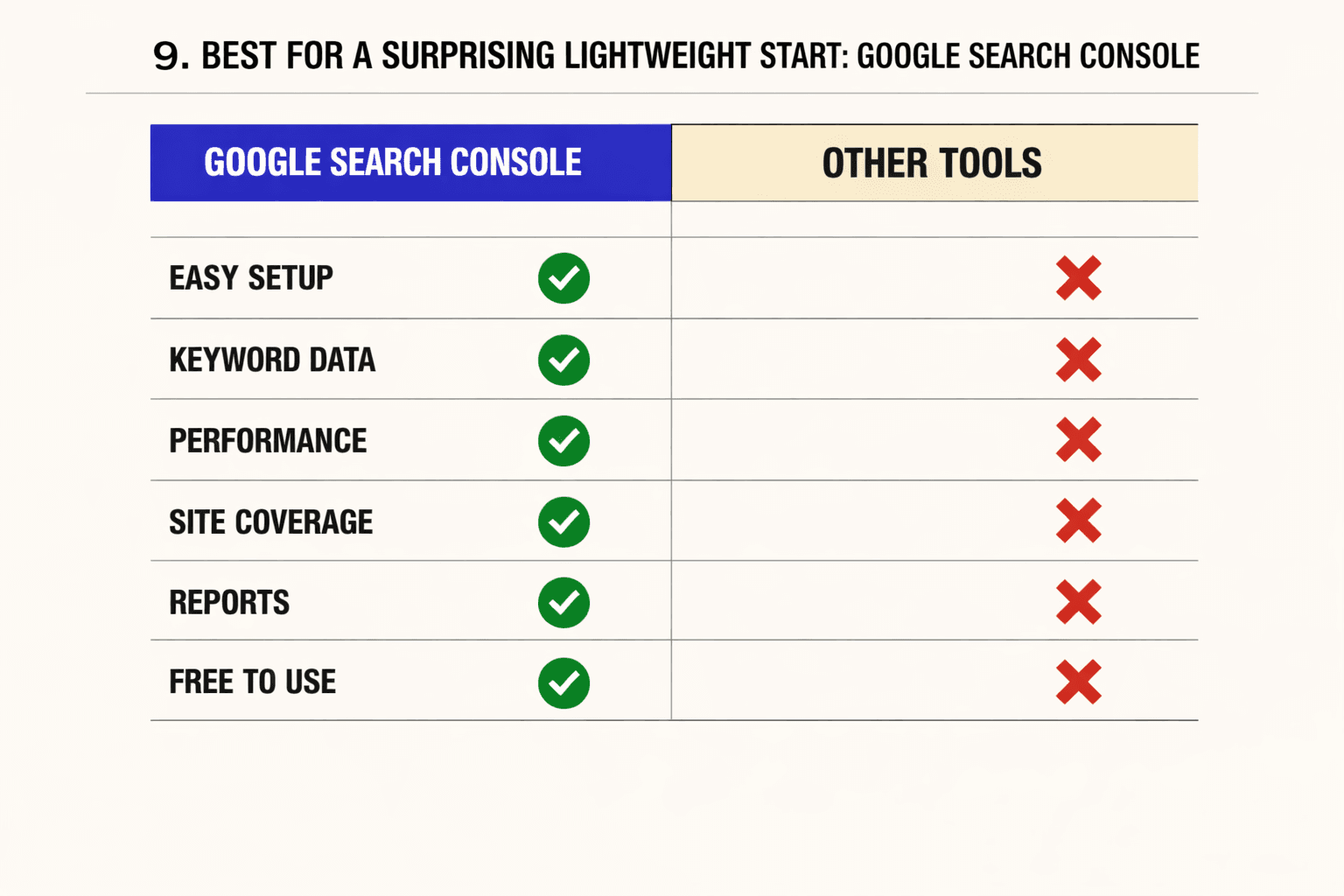
9. Best for a surprising lightweight start: Google Search Console
After shortlisting, teams should validate with a crawl.
That keeps tool output tied to real pages.
For common crawl failure patterns, see The 6 Most Common Crawl Errors That Sabotage Your SEO (And How to Fix Each).
The result is fewer debates and faster fixes.
Audit Website SEO Workflow That Teams Can Repeat
A repeatable audit website seo workflow starts with outcomes, not tools. Teams pick the pages that must rank. They list conversions that must not drop. They also name technical risks to remove, like blocked crawls.
This process runs two passes. First comes a crawl-based audit. Second comes a search performance and indexing review. A seo audit tool supports both passes with evidence and exports. Teams that want deeper automation can pair it with AI SEO Audit Tools Drive Technical SEO Results for Modern Teams.
Step 1 Set goals and benchmarks
Teams define one primary goal per page group. For example, a pricing page protects lead flow. A category page protects revenue. Benchmarks include current rankings, clicks, and conversions.
Pros
- Reduces “fix everything” churn
- Makes tradeoffs visible to stakeholders
Cons
- Needs agreement on what matters most
Step 2 Crawl and index coverage checks
The crawl pass finds broken templates and routing gaps. The indexing pass checks what search engines actually store. For example, a site can crawl fine but index thin variants.
Teams review sitemaps, robots rules, and canonical signals. They also check redirect chains and soft errors. Issue ideas can be cross-checked against lists like CIO and SE Ranking.
Step 3 Technical SEO triage and prioritization
Teams score each issue with a severity model. The model uses impact, effort, and confidence. High-impact and high-confidence work goes first.
For example, fixing a noindex on a top landing page wins. Cleaning a low-traffic tag archive waits. For common crawl traps, see The 6 Most Common Crawl Errors That Sabotage Your SEO (And How to Fix Each).
Step 4 Content and internal linking quick wins
Teams ship low-risk changes next. For example, add internal links from high-authority pages. Tighten titles and headings on revenue pages. Yokoco notes some fixes can take 30 minutes.
Step 5 Validation retest and reporting
Teams retest the crawl and index checks. They track changes in a simple changelog. According to Yokoco, some quick fixes can fit within 60 minutes.
Reporting closes the loop. It lists what shipped, what moved, and what is next. A recurring cadence keeps the workflow repeatable, not reactive.
SEO for Developers: What to Check and Export
A developer-ready audit website seo pass starts with crawl facts. A seo audit tool helps, but only if outputs map to tickets. Each finding needs a reproducible URL, a rule definition, and acceptance criteria. For example, “/pricing returns 200, indexable, canonical to itself.”
1. Developer-focused checklist
What should an SEO audit include for engineers? It should cover the parts that change crawl outcomes.
- Status codes: 200, 3xx chains, 4xx, 5xx
- Canonicals: self, cross-domain, or conflicting tags
- Redirect rules: http to https, slash, and trailing params
- Robots rules: robots.txt, meta robots, X-Robots-Tag
- Sitemaps: freshness, coverage, and index sitemap links
- Performance: TTFB, LCP, and heavy render paths
A quick reference list helps triage. CIO’s technical SEO issue list matches these core checks: https://www.cio.com/article/291111/top-10-technical-seo-issues-and-how-to-fix-them.html
2. What data to hand off to engineering
Each ticket should ship with machine-readable proof.
- Issue summary: one sentence, one rule
- Evidence: URL list, response headers, HTML snippet
- Scope: templates, routes, and percent of pages affected
- Fix approach: config change vs code change
- QA steps: retest crawl, then log sampling
For example, “Fix canonical mismatch in Next.js blog template.” SE Ranking’s issue taxonomy helps with naming and grouping: https://seranking.com/blog/seo-issues/
3. Common pitfalls with JavaScript rendering and crawling
JavaScript SEO breaks when HTML differs pre-render and post-render. That hides links, canonicals, or meta robots. QA should compare raw HTML vs rendered DOM. Then validate with recrawls and before after metrics. Research from 5 Quick Technical SEO Fixes You Can Do in an Hour - Medium shows 1% can still matter when fixes stack.
Conclusion: SEO Checker Free Options, Verdict, and Next Steps
Free tools earn their place for baseline diagnostics. They surface indexing visibility, obvious crawl blocks, and quick health issues fast. That fits small sites, one-off launches, and teams that need a reliable “is anything broken?” check. The best move is to run a free scan first, confirm the issue list, then decide what deserves deeper crawling.
Paid platforms win when scale becomes the problem. Larger sites need automation, segmentation by templates, recurring schedules, and reporting that survives stakeholder questions. They also reduce manual effort by turning raw findings into grouped patterns, exports, and repeatable audit cycles that developers can validate.
Verdict by scenario stays simple. Best overall: the tool that matches the team’s workflow and keeps audits repeatable. Best for technical crawling: the crawler that provides full coverage, rule control, and clear evidence per URL. Best for enterprise: the platform built for monitoring, access control, and multi-team reporting. Best free start: the checker that exposes indexing and basic technical gaps without setup friction.
Fast SEO results come from cadence, not hero audits. Want to learn more? Learn More to explore how MygomSEO can help.