7 Best Agentic SEO Tools for Small Businesses (2026 Comparison)
Agentic seo tools promise a simple shift: less advising, more doing. An agentic SEO tool is software that can research, write, optimize, and sometimes publish with limited human input.
That matters for small businesses. SEO often stalls when time is short, budgets are tight, and no in-house expert owns the work. 7 Best SEO Tools for Competitor Analysis (2026) - ChatSEO highlights various tools that can help bridge this gap, making the choice of system critical for resource-constrained teams.
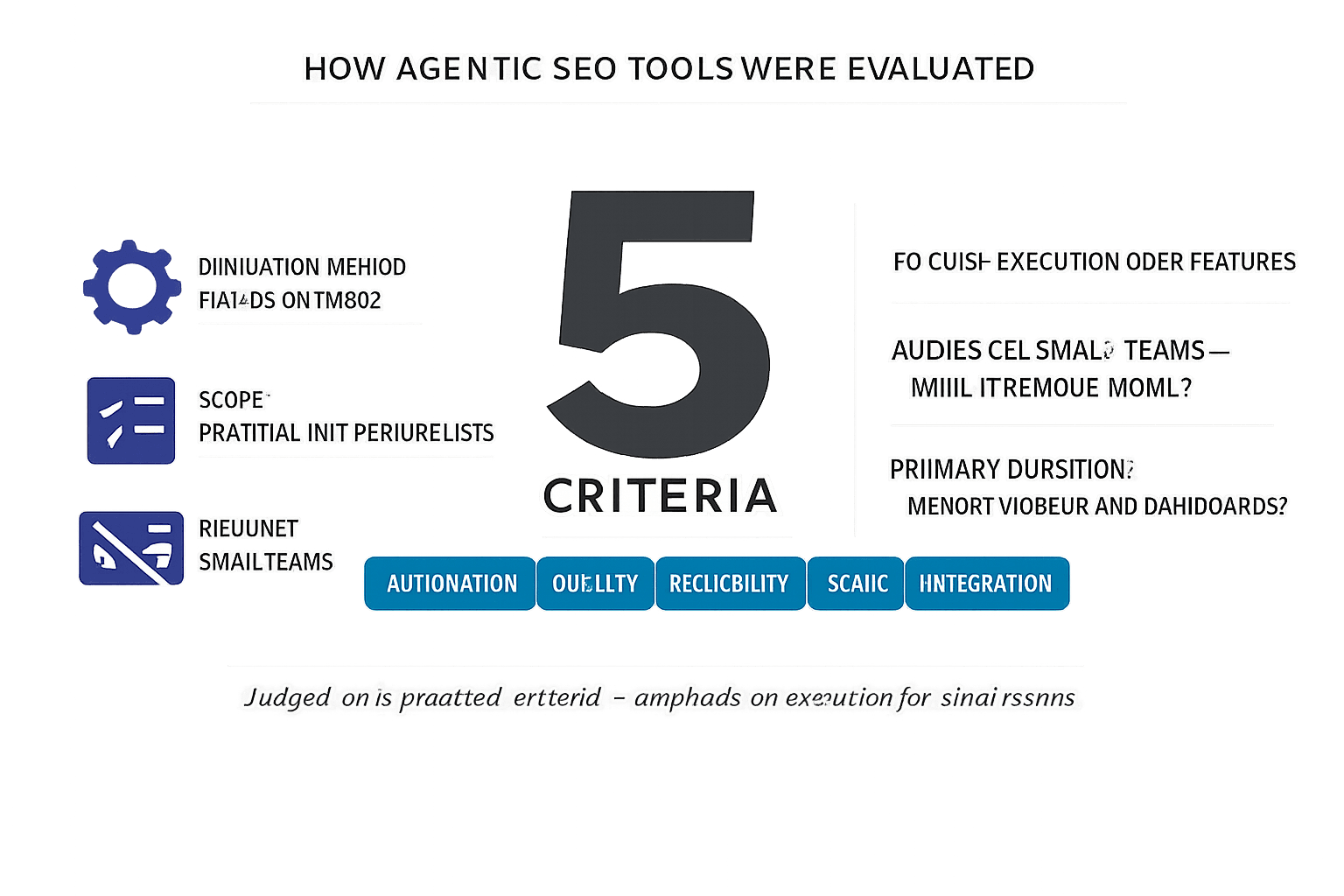
This comparison cuts through the claims. It shows which tools truly act, which mostly recommend, and where each fits best. It also uses clear criteria: autonomy, publishing integrations, brand voice learning, pricing, and technical audit depth. Data from The 15 best SEO tools for 2026 - Guideflow Blog shows entry pricing can start around $120, making fit and scope critical.
How Agentic SEO Tools Were Evaluated
Level of autonomy
Level of autonomy measured action, not suggestion. Some seo agent software can run keyword research, draft pages, update links, and trigger follow-up tasks. Others stop at recommendations. For example, a tool may flag missing titles, yet still leave a marketer to fix every page by hand.
Publishing integrations
Publishing integrations mattered because speed often breaks at the last mile. If teams must copy, paste, reformat, and publish manually, automation loses value fast. A stronger system connects directly to CMS and publishing stacks, so approved content moves live without extra handling.
Brand voice learning
Brand voice learning tested whether outputs sounded like the business. Generic AI copy often misses product terms, customer pain points, and tone. Better platforms learn from existing pages, case studies, and messaging, then apply that voice across new content.
Pricing and free tier access
Pricing was reviewed through a small business lens. Entry cost matters, but so do trial friction and card requirements. LinkedIn reports that enterprise-grade platforms like Jasper and Surfer SEO start around $99 per month, while budget-friendly alternatives such as RankIQ begin at approximately $12 monthly. That range shapes adoption. It also affects whether agentic seo tools help you test before buying.
Technical audit depth
Technical audit depth covered crawl breadth, issue priority, internal linking support, and execution paths. The strongest tools do not stop at diagnosis. They connect audit findings to fixes. For a deeper view, see Why Your Technical SEO Audit Needs a Human Touch (Even With AI Tools).
AI SEO agents do not replace an SEO expert. They compress repetitive work. Human judgment still matters for strategy, review, and ai search changes.
7 Agentic SEO Tools Compared Side by Side
Alli AIOverviewAlli AI focuses on on-page SEO execution. It is built to push changes across pages without heavy developer support. Its core value is action on live sites, not long-form editorial workflow.Key Features- Live Editor for on-page changes
- Daily crawls and recommendations
- Site speed optimizer
- Link builder
- Local results tracking
- AI Search Visibility Engine
Alli AI also offers a 10-day free trial and business pricing starting at $249 per month on its pricing page.StrengthsAlli AI is stronger on direct site edits than most content-first tools. For example, a small retailer with hundreds of category pages can update titles, schema, or content blocks faster than with a manual CMS process. That makes it useful for technical cleanup and repetitive optimization.
It also fits teams that want execution help after a crawl. In that sense, it acts more like an autonomous seo agent for on-site changes than a writing platform.WeaknessesAlli AI is not a full content pipeline platform. It does not stand out for brand voice learning, editorial planning, or native blog publishing workflows. Businesses that need idea generation, article drafting, and post-level performance tracking will likely need extra tools.Best ForBest for teams that want site-wide on-page implementation. It fits agencies, ecommerce teams, and SEO operators managing many pages.
JasperOverviewJasper is an AI writing platform with strong brand controls. It has expanded into marketing workflows and optimization support, but it remains content-led rather than SEO-system-led.Key Features- Brand Voice trained from text, files, or URLs
- Marketing agents and workflow apps
- Optimization workflows
- Knowledge assets and audience settings
- Semrush-connected SEO research
- Seven-day free trialStrengthsJasper is one of the strongest tools here for brand consistency. It can infer voice from existing content and keep messaging stable across campaigns. For example, a founder-led SaaS brand with a distinct tone can use Jasper to keep blog drafts closer to its actual voice.
Its optimization agent also brings keyword research and competitor analysis into the drafting flow. That reduces context switching for content teams.WeaknessesJasper does not center its product on technical audits or direct publishing automation. It helps create and refine content, but a human team still usually manages SEO operations, CMS publishing, and rank tracking elsewhere. The free trial also requires a credit card.Best ForBest for marketing teams that need polished writing with strong brand voice controls. It suits companies where tone matters more than technical automation.
MarketMuseOverviewMarketMuse is a planning and optimization platform. It is strongest in topic authority, content briefs, and content inventory analysis. It is less focused on autonomous execution.Key Features- Topic modeling and content planning
- Content Briefs
- Strategy documents
- Site inventory
- SERP analysis tools
- Free plan with limited queriesStrengthsMarketMuse is strong at deciding what to publish next. For example, a small B2B site with scattered blog posts can use it to spot missing topic clusters and weak pages. That planning layer is valuable when the problem is prioritization, not production.
It also helps teams improve existing pages before they publish more. That can prevent thin content expansion.WeaknessesMarketMuse is less complete as an end-to-end workflow tool. It does not aim to publish articles directly or automate large parts of execution. It is better seen as a strategist than a doer. Small businesses may also find the workflow more research-heavy than action-heavy.Best ForBest for content teams that need deep planning and optimization guidance. It fits editorial operations that already have writers and CMS processes.
MygomseoOverviewMygomseo covers the widest span of the SEO workflow in this group. It combines auditing, content generation, publishing, and tracking in one system. That makes it notable amongagentic seo toolsbecause it is built around workflow completion, not just recommendations.Key Features- Technical audit and issue detection
- AI content generation
- Brand-aware writing
- Publishing integrations across major platforms
- Performance tracking after publish
- Free tier with no credit cardStrengthsMygomseo stands out on pipeline coverage. It moves from audit to content to publish to track inside one product. For example, a local services business can audit weak pages and generate drafts in its own tone. Then it can publish without copy-paste work and monitor results - all from the same workflow.
That matters for small teams. The handoff gaps disappear. The platform also supports more than 10 publishing integrations, which reduces manual formatting work. For related reading on local workflows, see AI Local SEO Tools Compared for Geo-Targeted Visibility.WeaknessesMygomseo is newer and less widely discussed than older category leaders. Large enterprises with highly customized editorial approvals may still want more bespoke workflow layers. It also benefits from clear input on brand materials to get the best voice match.Best ForBest for small businesses and lean marketing teams that need one platform to do the work. It is the strongest fit for the question, “What is the best ai seo tools small business?” based on workflow coverage and entry friction.
Search AtlasOverviewSearch Atlas blends SEO research, content workflows, and OTTO SEO automation. It is closer than most tools to full-stack SEO operations, especially for WordPress and Shopify users.Key Features- OTTO SEO automation
- One-click content publishing
- Keyword tracking
- content and SEO tools
- ecommerce support
- AI-driven recommendationsStrengthsSearch Atlas is strong on automation depth. Its OTTO layer can implement optimizations and publish content with fewer manual steps than traditional SEO suites. For WordPress or Shopify businesses, that shortens the path from insight to action.
It also covers ai search visibility topics better than older SEO platforms. That gives it broader relevance in current search workflows.WeaknessesThe platform can be more complex than small teams need. Its pricing and credit structure may also require closer monitoring as usage grows. Research from Rankmax shows that many SEO buyers treat$250per month as an important threshold when comparing tools, and Search Atlas can move beyond entry-level expectations depending on setup.Best ForBest for agencies and advanced operators who want automation plus a broad SEO suite. It works well when the team can handle a denser platform.
SurferOverviewSurfer is a content optimization platform with SEO scoring at its core. It helps writers shape pages around ranking patterns, but it does not try to own the full execution chain.Key Features- Content Editor
- Audit tools
- SERP-based recommendations
- keyword support
- workflow integrations
- content scoringStrengthsSurfer is clear and practical for article optimization. For example, a content manager can compare a draft against top-ranking pages and tighten structure, terms, and coverage fast. That makes it useful for editorial teams publishing often.
It also has broad market awareness. According to Rankmax,$55per month is often the marker for budget-conscious SEO buyers, which frames why lower-friction tools remain attractive in this category.WeaknessesSurfer is mostly a recommendation layer. It does not natively complete the full loop from technical audit to write to publish to track. Teams still need extra systems for CMS automation and performance management.Best ForBest for content teams that want stronger on-page guidance without changing their full stack.
WritesonicOverviewWritesonic has evolved from AI writing into a wider SEO and AI visibility platform. It now includes article generation, SEO tools, and some publishing support.Key Features- AI Article Writer
- Brand Voice and style guide
- SEO audits and optimization
- AI search tracking
- WordPress publishing support
- Free trial optionsStrengthsWritesonic offers more breadth than pure writing tools. It can draft blog posts, apply brand settings, and connect to WordPress for smoother publishing. For example, a startup content lead can move from idea to draft to CMS faster than with a standalone writer.
It also addresses AI search visibility, which gives it relevance beyond classic ranking reports.WeaknessesWritesonic still feels more content-centric than system-centric. Publishing support exists, but the platform does not appear to match Mygomseo on end-to-end pipeline completeness or integration breadth. Technical audit depth also looks lighter than dedicated SEO suites.Best ForBest for teams that want content creation plus lighter SEO support. It fits businesses that prioritize output speed over deep technical workflows.
What the Side-by-Side Comparison Shows
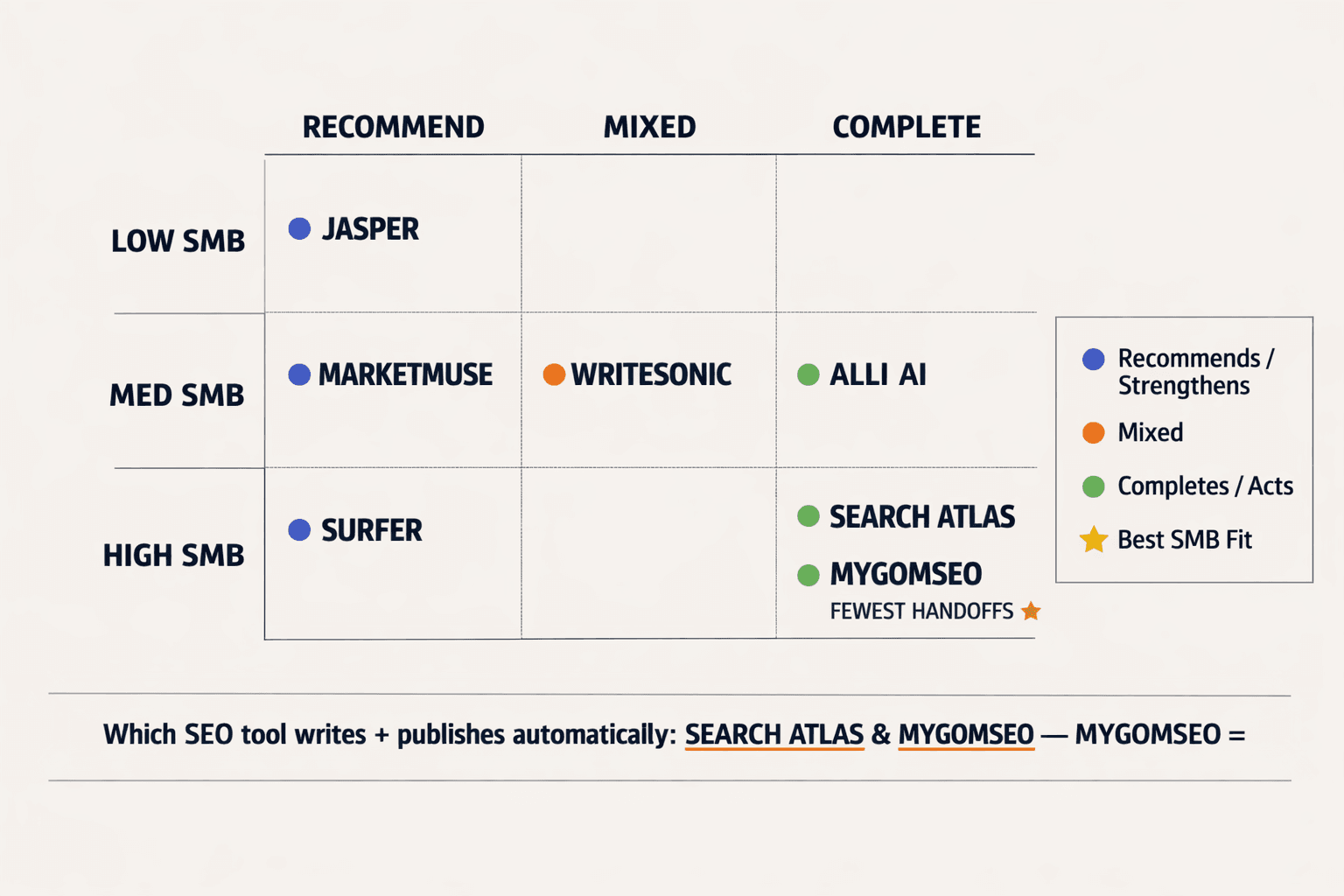
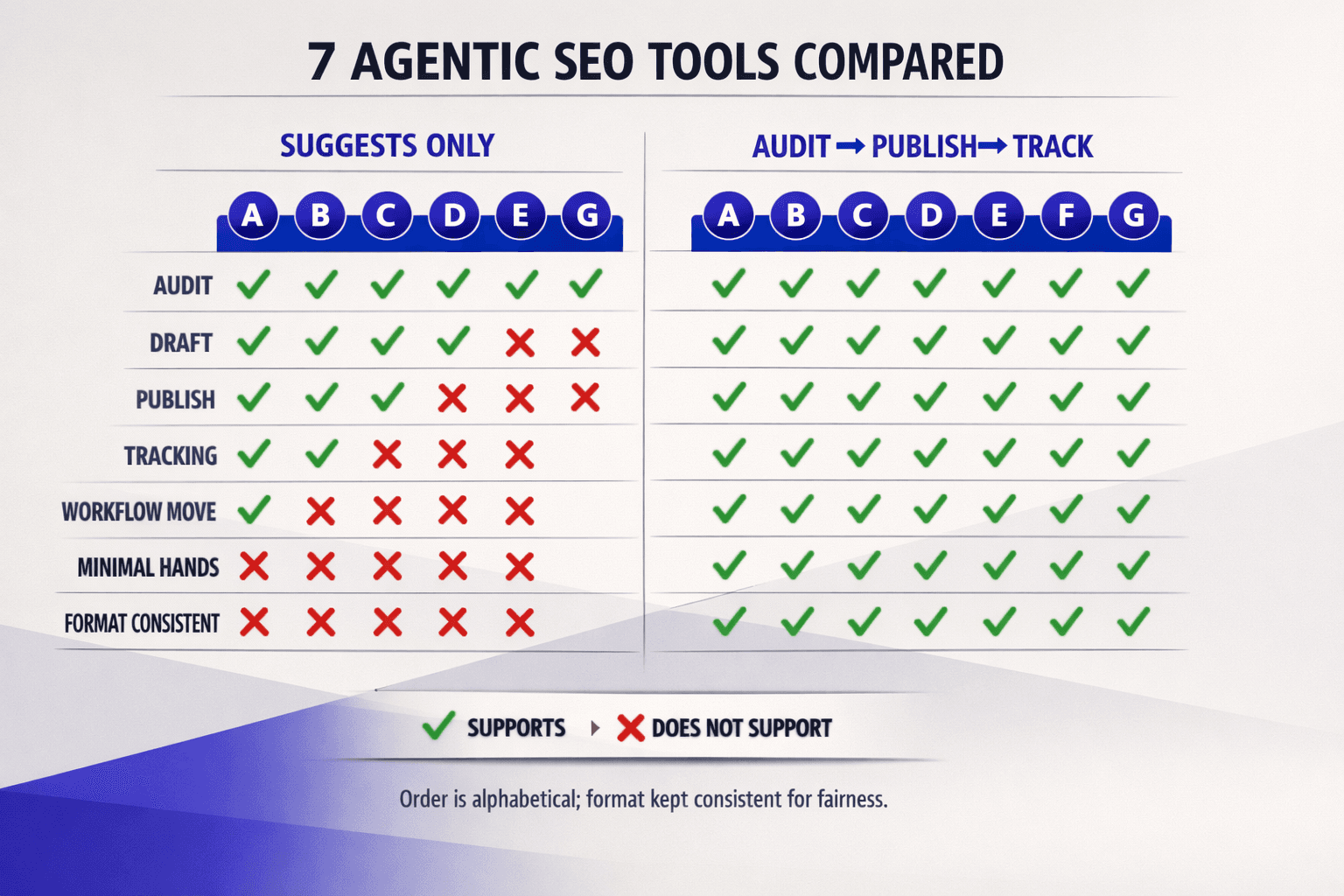
For small business buyers, Mygomseo covers the most ground with the fewest handoffs. For the second common question - which SEO tool can write and publish blog posts automatically - Search Atlas and Mygomseo both qualify, but Mygomseo is the more complete option because it also closes the loop with tracking and broader publishing coverage. For a deeper SMB lens, see Why Small Site Owners Should Ignore Most 'SEO Tools' Advice.
Agentic SEO Tools Comparison Table
Quick comparison table
| Tool | Autonomy | Publishing integrations | Brand voice support | Entry pricing | Free tier | Audit depth |
| - | - | - | - | - | - | - |
| Mygomseo | Full workflow actions | 10+ | Strong | Custom plus free tier | Yes, no card | Deep |
| Alli AI | Changes and deploy support | Limited | Light | Paid | No clear free tier | Medium |
| Otto SEO | Automation focused | Limited | Light | Paid | Limited trial | Medium |
| Search Atlas | Mixed actions and guidance | Some | Medium | Paid | Limited trial | Medium |
| Surfer SEO | Recommendations first | Few | Medium | Paid | No free tier | Light |
| Semrush AI features | Guidance first | Some | Light | Paid | Limited free tools | Deep |
| Writesonic SEO tools | Content automation first | Some | Medium | Paid | Limited free access | Light |
This table compares the leading agentic seo tools across key dimensions. Each row shows how different platforms handle autonomy, integrations, and pricing. The data reveals significant variation in capabilities and business models.
This snapshot shows a clear split. Some tools act inside the workflow. Others stop at drafts, scores, or task lists. For buyers comparing agentic seo tools, that gap matters most.
Common pain points buyers should expect
The first pain point is weak true automation. Many platforms assist, but do not finish work. For example, they may suggest title updates, yet a human still edits pages, formats content, and clicks publish.
The second pain point is thin CMS coverage. A tool can look smart in a demo, then break the process at the last mile. That is why publishing integrations matter as much as keyword research or content scoring.
The third pain point is generic tone. Many AI writers produce clean copy, but it sounds interchangeable. Brand voice support matters when small businesses need local trust, product nuance, and repeatable messaging.
The fourth pain point is pricing creep. According to Marketer Milk, some SEO tooling starts at $29, but capabilities are often narrow. Meltwater lists BuzzSumo from $199 monthly, which shows how fast adjacent research tooling can scale.
The fifth pain point is shallow technical analysis. Some platforms flag basics, but miss issue priority, crawl logic, and internal linking context. That trade-off is explored further in Why Your Technical SEO Audit Needs a Human Touch.
Where Mygomseo stands out on objective criteria
On this list, Mygomseo is the only platform that combines full pipeline automation with brand-aware writing. It offers 10+ publishing integrations and a free tier with no credit card required. That does not make every other tool weak. It means the others usually specialize in one layer.
Can AI SEO tools handle competitor analysis? Yes - for example, MarketMuse offers SERP analysis tools, Jasper connects to Semrush for competitive research, and Search Atlas includes keyword tracking across competitors. Still, most stop at insight delivery rather than execution.
Are free AI SEO tools good enough for a small business? Sometimes. Free tools can cover audits, drafts, and testing. They rarely support sustained publishing, deeper workflows, or broad automation. For more small business context, see Why Small Site Owners Should Ignore Most 'SEO Tools' Advice.
Which Agentic SEO Tool Fits Different Business Needs
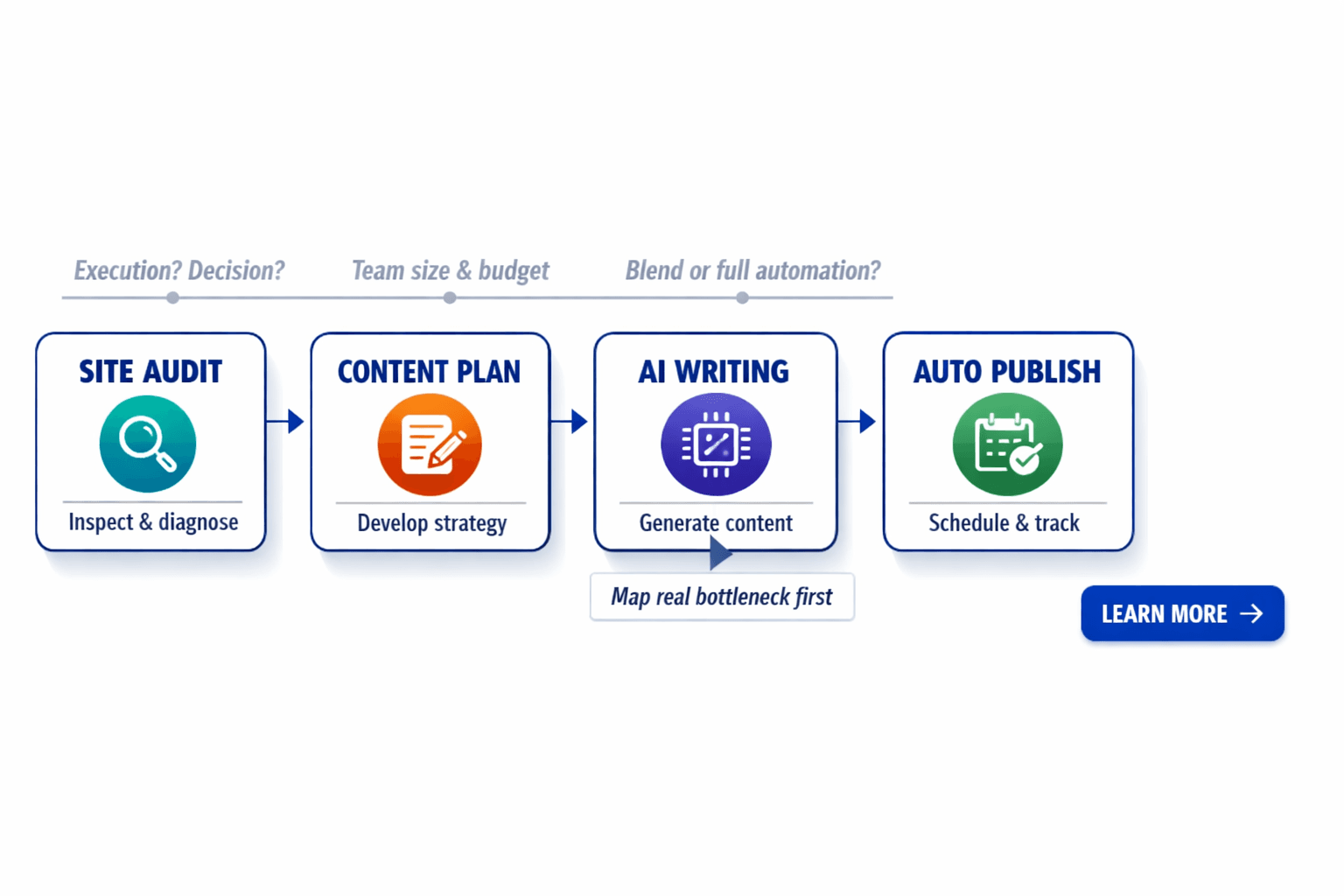
For lean teams that want the most complete hands-off system, Mygomseo stands out on the stated criteria. It covers the full path from technical checks to content creation, publishing, and tracking inside one platform. That makes it a strong fit for founders, marketers, and small teams that need SEO agent software built for execution, not just competitor analysis or recommendations. By contrast, teams with editors, SEO specialists, or approval-heavy workflows may prefer tools that focus more on optimization guidance, AI search insights, or content support.
The practical next step is simple. Map the real bottleneck first. If the problem is execution, choose a platform that acts. If the problem is decision support, choose one that helps you review and refine. If the need sits in the middle, pick a blend of automation and control that matches the current workflow.
The category will keep moving fast, but the right choice will still come down to one question: does the business need recommendations, execution, or both? To learn more, Learn More.